TANC Strategic Plan: From Identification to Solution; a Thesis on the New Testament Church Model
 Originally published August 23, 2013
TANC (Truth About New Calvinism) is a research organization that seeks to thoroughly understand Reformed theology and its effect on the church and culture. We believe that enough information has been accumulated to draw conclusions, and there are enough conclusions to begin the formulation of solutions.
It is our conclusion that Reformed theology is an ill-advised doctrinal construct for the church and has had a detrimental effect on culture in general. Currently, American church culture is in upheaval (note innumerable discernment/abuse blogs); yet, the new resurgence of Reformed theology began in 1970 and has dominated the American church for the past twenty years. Where are the results that supposedly always spring forth from the Reformation’s Post Tenebras Lux (After darkness….light)?
Though research will continue on the WHAT, there is enough information on the WHY to begin setting the solution in motion. The solution is the New Testament church model. The assumption has always been that the New Testament model was transitional, informal, and deliberately ambiguous to allow morphing for changing times. We now think that this is not the case at all. We think the Bible sets forth a specific model in detail. We think this model is the answer for the present condition of the American church.
1. The general form.
The New Testament church was made up of home fellowships and each church was designated by a geographical area, usually a city. Perhaps the clearest example of this is Acts 20:
17 Now from Miletus he sent to Ephesus and called the elders of the church to come to him. 18 And when they came to him, he said to them:
“You yourselves know how I lived among you the whole time from the first day that I set foot in Asia, 19 serving the Lord with all humility and with tears and with trials that happened to me through the plots of the Jews; 20 how I did not shrink from declaring to you anything that was profitable, and teaching you in public and from house to house, 21 testifying both to Jews and to Greeks of repentance toward God and of faith in our Lord Jesus Christ. 22 And now, behold, I am going to Jerusalem, constrained by the Spirit, not knowing what will happen to me there, 23 except that the Holy Spirit testifies to me in every city that imprisonment and afflictions await me. 24 But I do not account my life of any value nor as precious to myself, if only I may finish my course and the ministry that I received from the Lord Jesus, to testify to the gospel of the grace of God. 25 And now, behold, I know that none of you among whom I have gone about proclaiming the kingdom will see my face again. 26 Therefore I testify to you this day that I am innocent of the blood of all, 27 for I did not shrink from declaring to you the whole counsel of God. 28 Pay careful attention to yourselves and to all the flock, in which the Holy Spirit has made you overseers, to care for the church of God, which he obtained with his own blood. 29 I know that after my departure fierce wolves will come in among you, not sparing the flock; 30 and from among your own selves will arise men speaking twisted things, to draw away the disciples after them. 31 Therefore be alert, remembering that for three years I did not cease night or day to admonish every one with tears. 32 And now I commend you to God and to the word of his grace, which is able to build you up and to give you the inheritance among all those who are sanctified. 33 I coveted no one’s silver or gold or apparel. 34 You yourselves know that these hands ministered to my necessities and to those who were with me. 35 In all things I have shown you that by working hard in this way we must help the weak and remember the words of the Lord Jesus, how he himself said, ‘It is more blessed to give than to receive.’”
It was ONE “church” in Ephesus made up of several households. Paul taught the Ephesian church (singular) from “house to house.” “Public” doesn’t necessarily mean a building where they met corporately. In fact, in all cases where epistles are addressed, it would have to assume that each geography or city only had one church building—this is unlikely.
There were a group of elders who led the home churches in a particular city. This is who Paul calls together to give his last charge before his departure. One of the qualifications of an elder is “given to hospitality,” probably because many of the house fellowships were the homes of elders.
While many point to the seven letters in Revelation for proof regarding one pastor/ one church, again, this assumes there was only one place of gathering in each city. The “messenger” of each city was probably just that: a messenger responsible for delivering letters and other correspondence to each home fellowship in a given geography or city. In the case of Revelation, this could have been an actual angel assigned to each city church as well given the apocalyptic nature of the book.
Remember also that Titus was given the responsibility of appointing elders in “every town.”
2. Leadership structure and purpose.
The New Testament model combines strong structure with free fellowship. It rejects institutional authority while implementing strong planning and order. It focuses on the gifts of believers in order to execute the Lord’s strategic plan for the ages. We see this in Ephesians 4:
11 And he gave the apostles, the prophets, the evangelists, the shepherds and teachers, 12 to equip the saints for the work of ministry, for building up the body of Christ, 13 until we all attain to the unity of the faith and of the knowledge of the Son of God, to mature manhood, to the measure of the stature of the fullness of Christ, 14 so that we may no longer be children, tossed to and fro by the waves and carried about by every wind of doctrine, by human cunning, by craftiness in deceitful schemes. 15 Rather, speaking the truth in love, we are to grow up in every way into him who is the head, into Christ, 16 from whom the whole body, joined and held together by every joint with which it is equipped, when each part is working properly, makes the body grow so that it builds itself up in love.
I am not sure what could be clearer. There is equipping gifts and ministry gifts given to every believer for the building up of Christ’s body. Institutions, by virtue of their very nature begin to devalue individual gifts. Posit the idea if you will, that an institution can function like a body, but it has never been done. That is because caste systems and a body of believers are mutually exclusive concepts. The fellowship of the saints is focused on a purpose that requires all parts to be well equipped and functioning properly while building each other up in love.
Teachers equip an army of ministers with innumerable categories of ministry, love and good works. The floodgates of possibllity are opened. Administration and organization would be the focus of deacons and deaconesses. One must get past the present cultural conditioning that dichotomizes structure and fellowship. It is the same mentality that sets different standards for the church and homes. We act different in each setting; e.g., many would not attend a church that functions like their own home. But in contrast, “an elder must order his household well, for if he cannot manage his own household, how will he manage the household of God?” Homes are as informal as you get, but they need order. Instead of keeping homes separate from church, the New Testament model brings church to the home. In the book of Ephesians, Paul starts with the fellowship in 4:1, addresses the home, and then behavior in the secular realm.
This is not some weird communal concept; it merely puts strong emphasis on planning and order for the informal fellowship of the church. The unique concept is the fusion of informal fellowship with strong planning while eliminating the caste system inherent in institutions.
3. Expected problems.
Where humans are involved in any model, even born again creatures in mortal bodies, problems will arise. That is exactly what the letters to Corinth are about. When you have numerous fellowships led by teachers, the whole FAVORITE TEACHER thing arises followed by competition between the households. In a Reformed church where I was one of the pastors, we had midweek home fellowships as a replacement for Wednesday night services. I saw these Corinth-like problems develop firsthand. The congregants would gravitate to the households where the charismatic teachers taught, leaving the rest of the fellowships to their humble little huddles.
Of course, being ignorant Protestants, we fixed the problem through authority. Rather than not being jaded by tradition and correcting the problem by example and a study of Paul’s letters to Corinth, we implemented a rule that each congregant had to attend the home group in their vicinity. That is not how Paul dealt with the same exact problem at Corinth. By the way, note that the baptisms Paul mentions were unique to the home fellowships where their favorite teachers taught. These epistles shouldn’t be read as if the church at Corinth met together corporately. The problems were inherent throughout many of the home fellowships save a few. Apparently, a fellowship in the home of a woman named Chloe (literally, “them of Chloe”) sent word to Paul about what was going on in the other fellowships at Corinth. The following has also been suggested:
There are three interesting names to consider that come up in the closing of Paul’s letter: Stephanas, Fortunatus, and Achaicus were from Corinth and visiting Paul (who was in Ephesus at the time) when he wrote this letter containing Chloe’s name. It seems very plausible that Stephanas, Fortunatus, and Achaicus were “Chloe’s people.” It is also possible that these three returned to Corinth to deliver Paul’s letter to the Christians there (Theresa Doyle Nelson: Chloe and the Corinthians).
At any rate, the letters to the church at Corinth supply a painstaking detailed account concerning Christian living within the church and the procedure of it as well.
4. Authority and Fellowship
The only authority is Christ and His word recorded in the Bible. This guides the fellowship of believers whose unity is determined by the “one mind in Christ” found in the Bible. Churches have been given authority as Christ’s ambassadors on earth. We represent the kingdom that is presently in heaven and we have been given authority to make disciples on behalf of that kingdom. However, there is no authority among the ambassadors, only fellowship. The assemblies function in a fellowship construct. Elders are to lead by example and equip. The purpose of this treatise is to lay a basic thesis, so I am not going to take room here to build this case, but will touch on the most popular argument for authority in the church:
Hebrews 13:17 – Obey your leaders and submit to them, for they are keeping watch over your souls, as those who will have to give an account. Let them do this with joy and not with groaning, for that would be of no advantage to you.
The word for “obey” in this verse is πείθω (peithō) which means to persuade by argument. The word “submit” is ὑπείκω hypeikō which means “to surrender.” Here is the best rendering according to a heavy paraphrase:
Be persuaded by your leaders’ arguments from Scripture and don’t be stubborn in regard to the truth for this is no advantage to your own spiritual wellbeing. Besides, they have to give an account for how they led you, and let that account be a joyful recital to the Lord rather than a sorrowful report.
There is no authority, but rather fellowship modification in specified instances; for example,
A. We can’t hang out with you if you won’t let us help you with this problem.
B. You’re my brother in Christ, but I can’t have you over for dinner if you won’t work.
There would be no formal membership role. You either fellowship with the group or you don’t. You either recognize your gift and apply it within the body or you don’t. You identify with the group by fellowship, service, and obedience to the word of God, not church leaders.
I might add that almost all of the New Testament epistles are addressed to the church as a whole and not just the elders. Apostolic authority was a charge mandated to the whole assembly—that’s where the authority is, not with the elders.
5. Gatherings
The examples are consistent throughout the New Testament. The saints met in homes for a meal, general fellowship, a time of teaching, a time of encouraging others unto good works, the singing of hymn’s, and an informal breaking of bread and drinking of the cup to remember the Lord’s return. In the house churches of Corinth, the aristocracy that didn’t work were eating all of the food before the slaves got there. So, the salves were showing up hungry and tired after work and there was no food left. This is one of the issues Paul addressed.
6. Practical Considerations
The Protestant Reformation was predicated on a false gospel with a Gnostic application and has no authority. No Protestant linage of authority can be traced back to the apostolic church. Moreover, the father of the Reformation, St. Augustine, never repented of being a Catholic and never vacated the Catholic Church’s spiritual idolatry or murderous ways. The tyranny of Catholicism and Protestantism is only tempered by the rule of law spawned by the Enlightenment Era. The remnants of its tyranny in our day only has use for threatening to withhold absolution. Its authority model mires the so-called church in all sorts of legal red tape required of institutions in a secular society. In church state societies, its construct does little more than spawn civil wars and inquisitions.
The fellowship model focuses on strong sanctification and wise living. Practically, this New Testament model could begin with one fellowship in a city. This is what we have done here at the Potter’s House. The church is “The Fellowship in Xenia,” and we consider the Potter’s House the first household of faith thereof. Others who would like to join this movement could simply begin by joining us here, or start their own fellowship. The two groups would then work together to refine the movement’s mode of operation moving forward. The applications are without end.
There is no room here to list all of the controversies in the formal church that would become non-issues in the fellowship model. Controversy among fellowships would be resolved within each city. The successful model would then be duplicated in other cities, but issues within those fellowships would be resolved within that geographical fellowship. Of course, the evangelism angle here has deep ramifications.
7. Conclusion
This model is based on the authority of God’s word and fellowship. The authority is vertical, not horizontal. Its focus is aggressive sanctification leading to a natural outflow of evangelism, and a strong emphasis on individual gifts.
JC Ryle Verses John Calvin on the Separation of Justification and Sanctification
Originally published April 20, 2012
“Christ cannot be torn into parts, so these two which we perceive in him together and conjointly are inseparable—namely, righteousness and sanctification. Whomever, therefore, God receives into grace, on them he at the same time bestows the spirit of adoption [Romans 8:15], by whose power he remakes them to his own image. . . Yet Scripture, even though it joins them, still lists them separately in order that God’s manifold grace may better appear to us.” — John Calvin, Institutes of the Christian Religion (Philadelphia: The Westminster Press, 1960), Bk. 3, chap. 11, sec. 6).
“But the plain truth is, that men will persist in confounding two things that differ–that is, justification and sanctification. In justification the word to address to man is believe–only believe; in sanctification the word must be ‘watch, pray, and fight.’ What God has divided let us not mingle and confuse” (JC Ryle, Holiness: Introduction).
When the Truth UnCalvinizes a Calvinist
 Originally published July 18, 2014
A TTANC 2 Freewriting post and book review of Dr. Robert Congdon’s latest booklet in his New Calvinist series.
Dr. Robert Congdon, according to his own bio, is an “international Bible teacher, conference speaker, author, and radio commentator on subjects relating to current trends in Christianity. He holds a B.S. in mechanical engineering from the University of Illinois, a M.Div. in theology from Grace Theological Seminary, and TH.D in theology from Trinity Theological Seminary.”
Dr. Congdon, according to him, was compelled to write a series of booklets on the New Calvinist movement because he has observed its ill effects on the church*; specifically, the dividing of churches and families, fear in regard to assurance of salvation, and a fatalistic mentality leading to a mindset of irresponsibility.[1]
Correctly, Dr. Congdon also charges that New Calvinism is “traditional Reformed/Covenant theology that has been repackaged in post-modern ‘wrappings.’” This is true in that both New Calvinism and Postmodernism interpret reality from a narrative standpoint. This is meta-narrative in regard to metaphysical narrative. New Calvinists believe that all of reality is a prewritten gospel narrative. Postmoderns believe the same thing, but there is a distinction in how we “enter into the plot,” or “make the Bible story our story—the story of every believer.” New Calvinists believe you participate by living the Christian life the same way you were saved, by faith alone. You then merely watch what unfolds in God’s pre-written narrative with a focus on how He is glorified by what happens. Life events merely make us better see’ers in regard to what “Jesus has done, not anything we do.”
Faith is an eye that can only see outward. Inner light depends on how we see the world, and the payoff is joy regardless of circumstances because circumstances are part of the narrative that increases our faith as we see what God is doing in the world. Also, inner light is a partial experience of the light we will actually experience in heaven. This philosophical** side of Calvinism will be addressed in volume III of The Truth About New Calvinism series.
The Postmoderns believe that you “enter into the plot” by doing what Jesus would do. Both camps see “entering into the plot” as an act of faith, but this brings a charge of works salvation by the New Calvinists against the Postmoderns because salvation is seen as a PROCESS and not a finished work, so what people do or believe in the middle between beginning justification and final justification determines justification by faith alone or works justification. The Postmoderns would cry foul by insisting that they are merely participating in works prepared ahead of time in the metaphysical narrative of reality. By participating, they are merely experiencing the works pre-wrought by Christ—the works are being done to us not by us.
____1______________________________________________________
* Throughout this book, “church” is used in regard to the institutional church, not the called out assembly.
** The metaphysic is a plenary progression of all things from the material to the spiritual in time.
New Calvinists believe the same thing. Seemingly, the difference is that Postmoderns believe participation is a choice which robs God of His sovereignty.*
As a short aside, Congdon’s mention of the divisive nature of New Calvinism needs to be addressed. The so-called “factious” man of Titus 3:10 (ASV) is interpreted in all English Bibles as pertaining to individuals [who question elder authority]. Actually, the Bible has little to say about individuals who cause strife. The overarching concern is groups who divide with a particular false doctrine. The actual word for this so-called divisive individual in Titus 3:10 is…
g0141. αἱρετικός hairetikos; from the same as 140; a schismatic:— heretic (the Greek word itself). AV (1)- that is a heretic 1; fitted or able to take or choose a thing schismatic, factious, a follower of a false doctrine, heretic.
Therefore, New Calvinism takes its place among one of the mountain peak concerns of the Scriptures: sectarian groups that divide with false doctrine (See Addendum A).
Congdon qualifies as the quintessential hybrid Calvinist. Often, he refers to himself as grammatical, premillennial, and dispensational. In the latest booklet of his New Calvinist series[2], he reiterates this and describes himself as a former four-point Calvinist. A grammarian interpretation of reality is mutually exclusive from Calvinism which he apparently now realizes because the theses of his newest addition to the series follows:
- New Calvinism is Old Calvinism.
- Both are false gospels.
- He misunderstood what the five points of Calvinism really represented.
- He is now a Biblicist, not a Calvinist.
His journey into researching New Calvinism has led him to this conclusion: (more…)
Calvinism and Urine Technology
 Originally published February 1, 2013
Calvinists often intimidate us with oceans of ink left behind by the brilliant, spiritual, educated children spawned by John Calvin: the Puritans. Calvinists like John Piper display their spiritual swagger by quoting the Puritans and making everyone aware that they read them daily. Of course, this plays on the utter ignorance of present-day Christians. Their authority is no longer the really thick pamphlet dropped down from heaven called the Bible—its orthodoxy. Orthodoxy is an analysis of God’s mass publication to people indwelt by His illumining Spirit by the church’s “Divines” of whom many were Puritans. They repackaged God’s word for consumption for the unenlightened masses.
So, when these brainiacs took the urine of accused witches and made cakes from it, and then fed the cakes to dogs in order to watch their reaction for a verdict, we need to understand that what the Divines do at times is the “foolishness of the cross.” We wouldn’t understand. This is activity that is on another spiritual plane; so, recite Luther’s Small Catechism and keep your mouth shut. The Small Catechism is one of Voddie Baucham’s recommendations for use in family devotions. He is really big on husbands being the “family shepherd” and leading the family Bible studies with….orthodox creeds, not anything that would come from their own brains.
Much could be discussed in regard to the lovely traditions that the Puritans brought with them when they were driven out of Europe as political refugees. But let’s talk about urine. Actually, urine tasting was the state of the art research born of European theocracies during Medieval times. How the urine of the subject tasted was used to determine what ailed them. Several examples of medical charts are displayed below for your educational enjoyment. Click to enlarge them, but if you are a Calvinist, don’t try this at home—it’s not orthodoxy!
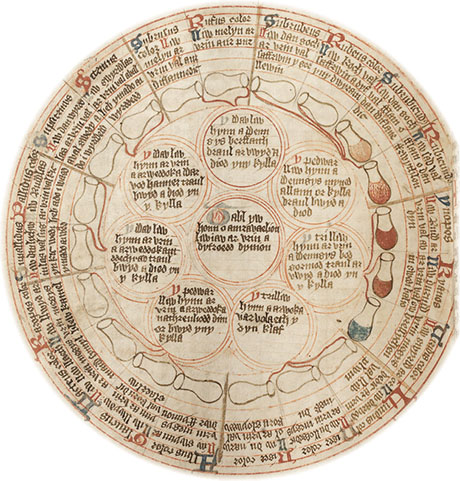
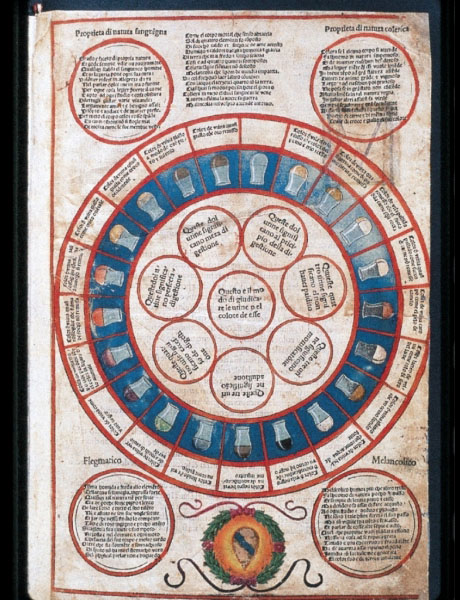
“But Paul, didn’t the Puritans have a lot of awesome things to say about God? Isn’t there much to be learned from them?” No, not in the long run because of their flawed logic. Notice that they aren’t around anymore. Why not? Because Puritanism cannot function without theocracy. Their logic led to the persecution of the Quakers via hanging etc., and when society had enough, an end was forced in regard to their theocracy. No theocracy—no Puritanism. And frankly, the same goes for authentic Calvinism. Calvinism exists today because their logic had to be adjusted for survival. Here at TANC, we call them “sanctified Calvinists.” Yes, they have done the church some good because they don’t share the same logic.
I really wonder if this latest resurgence of authentic Calvinism will put an end to it because of the Information Age that we are in. Nobody calls themself a “Puritan” in our day. Will the day come when few will call themselves a Calvinist? Authentic Calvinism doesn’t work, and people will only use a clock that doesn’t work for so long; the fact that it is useful twice a day does not end up being enough. Once again, the same old superstitions of authentic Calvinism are showing themselves in the contemporary church. The basis is the idea of spiritual caste: the idea that preordained enlightened mediators should rule over the unenlightened masses. Theocracy comes part and parcel with that logic.
“But Paul, Neo-Calvinism is thriving right now in America and America doesn’t allow theocracies.” Oh really? Many New Calvinist “ministries” in our day are nothing less than Little Geneva. They have their own in-house police stations, and control parishioners by almost every means of the past save the death penalty alone. This ministry is compiling a list of various means that these ministries are using to control people through first-hand testimony. Other than the intimidation of armed in-house security forces, they are using “biblical counseling” to compile information on people that can be used to control them. That angle can be seen in living color via the public transcript of CJ Mahaney telling the cofounder of SGM that confidential counseling records would be made public if he left SGM for doctrinal reasons. Let there be no doubt: this is standard protocol in New Calvinist churches. And if they don’t have the dirt on you, they will fabricate it. That’s just fact.
Getting back to superstition—that is also the inevitable result of caste logic. Many blogs document the weirdness in this movement that gets crazier each month. And dismissal of comparisons due to medieval ignorance doesn’t cut it. Sure, urine isn’t used in counseling today (at least not yet), but instead we have rapists counseling their own victims in the church office!
It’s the logic. And in the Information Age, what happens in Salem doesn’t stay in Salem.
Know Your Cuts of Calvinism
Originally posted July 2, 2013
1. Total Depravity: Pertains to the saints also.
2. Justification by Faith Alone: Pertains to sanctification also.
3. Mortification and Vivification: Perpetual death and rebirth for living by faith alone in sanctification to maintain justification. The reliving of our baptism “again and again.”
4. Double Imputation: Christ’s passive obedience to the cross for justification, and His active obedience as a substitution for our obedience in sanctification.
5. Deep Repentance (aka Intelligent Repentance): Seeks the death of mortification in re-experiencing our new birth.
6. New Obedience (aka New Fruit): The experience of Christ’s active obedience in sanctification (vivification).
7. The New Birth: Perpetual mortification and vivification.
8. The Objective Gospel: All reality is interpreted through the redemptive works of Christ.
9. Christ for Us: Christ died for our justification, and lived a perfect life for our sanctification.
10. The Imperative Command is Grounded in the Indicative Event: Biblical commands show forth what Christ has accomplished for us and what we are unable to do in sanctification. Works are experienced only as they flow from the indicative event of the gospel.
11. Neo-Nomianism (New Law, aka New Legalism): The belief that we can please God by obeying the law in sanctification.
12. Progressive Sanctification: The progression of justification to glorification.
13. Progressive Imputation: Whatever is seen in the gospel narrative and meditated upon is imputed to our sanctification, whether mortification or vivification.
14. The Golden Chain of Salvation: See cut 12.
15. Good Repentance: Repenting of good works.
16. In-Lawed in Christ: Christ fulfilled the law perfectly and imputed it to our sanctification.
17. Redemptive Historical Hermeneutics (the Christocentric Hermeneutic, aka the Apostle’s Hermeneutic): The Bible as historical narrative for the sole purpose of showing forth Christ’s redemptive works.
18. Faith: A neutral entity within us with no intrinsic worth that is able to reflect the object of its focus outside of us. The object of focus can be experienced within, but remains outside of us.
19. The Heart: The residence of evil desires and faith. It can be reoriented (the “reorientation of the heart” or “reorientation of desires”) to reflect Christ via mortification and vivification.
20. Flesh: The world realm where evil is manifested and experienced.
21. Spirit: The Spirit realm where the imputed works of Christ are manifested and experienced (not applied through our actions).
22. Christian Hedonism: Seeks to experience the joy of vivification.
23. Obedience of Faith: New Obedience.
24. Christ in Us: “By faith,” and faith only has substance and reality to the degree of the object it is placed in; i.e., Christ outside of us.
25. Vital Union: Makes experiencing the gospel possible. Makes mortification and vivification possible.
26. Eclipsing the Son (aka the Emphasis Hermeneutic): Focusing on anything other than Christ. Anything that is not seen through a Christocentric prism creates shadows that we live in. The obstacles that create the shadows may be truth, but they aren’t the “best truth.” “They may be good things, but not the best thing.”
27. Sabbath Rest: Sanctification. We are to “rest and feed” on Christ for our Christian life. The primary day this is done is Sunday. Through preaching and the sacraments we “kill” (mortification, or the contemplation of our evil and misery) resulting in vivification throughout the rest of the week.
28. The Subjective Power of the Gospel: The manifestation of the gospel that flows from gospel contemplationism. We never know for certain whether it is a result of our efforts or the Spirit’s work (although the Spirit’s work is always experienced by joy); hence, the power of the objective gospel is subjective (Heidelberg Disputation: Thesis 24).
29. Mortal Sin: Good works by the Christian not attended by fear that they may be of one’s own effort (HD 7).
30. Venial Sin: Good works by the Christian attended with fear (HD 7).
31. Power of the Keys (aka Protestant Absolution): Reformed elders have the authority to bind or loose sin on earth (Calvin Institutes 3.4.12).
32. Redemptive Church Discipline: In all cases to convert one to cuts 1-31. This redeems them to the only one, true faith. This can be a long process, and said person is not free to leave a given church until the elders bind or loose.
33. Preach the Gospel to Yourself: See cuts 1-32.

 Paul's Passing Thoughts
leave a comment