The Heavenly B-52s Can Save American Christianity From Its Present Dark Age
 We must remember that the Dark Ages were a European thing. And we must remember that Greco-Roman philosophy was the source and then it was turbocharged with the integration of European style religiosity. European religion has always been grounded in Plato’s disdain for humanity. Hence, one philosopher stated well that faith and force together are the destroyers of the modern world. One of the most notable historians of our time, K.R. Popper, fingered Plato specifically in regard to the logic that has wreaked havoc on Western culture through Communism, Islam, Catholicism, and Reformed theology. Augustine, one of the fathers of the Reformation, called Plato a pre-Christian Christian, and the juggernaut of faith and force was thus born.
And primarily, American religion was imported from Europe via the Puritans who were a European style religious political sect. They wanted to create a theocracy of their own in the new world. That’s the “religious freedom” they sought in America—a political one. Ironically, this importation of a European pandemic is romanticized by the Thanksgiving holiday. Somehow, deep in our evangelical American psyche, we think the Puritans could have led us to the religious utopia that we all lust for. And in-fact, deep in our evangelical psyches, we think the war still rages between our Puritan foundations and the evils of Enlightenment philosophy. And if Enlightenment philosophy would surrender, all would be well and the heavenly Jerusalem would finally come down to Earth.
Nothing could be further from the truth. Enlightenment thought, even with its many abhorrent shortcomings, launched America to unprecedented greatness as a nation because of three basic principles that God agrees with: man is free; man is capable; and man is responsible for the sum and substance of his own life before God. Men “small and great” will all stand before God. Plato’s philosopher kings do not stand before God in our stead regardless of the priestly garb that the Reformers have adorned them with.
In the movie, Moneyball, based on a true story, the General Manager of the Oakland A’s baseball team set all time league records with a meager budget and has-been players by breaking tradition with the ways big league teams have always been built. The player’s manager of the team was against the plan, and was a constant hindrance to its implementation. But when the Oakland A’s became the talk of the sports world because of the plan, the player’s manager got all of the credit. In the same way, the manager of American Christianity, the one of 95 Theses fame, Martin Luther, is given credit for America’s greatness. God has blessed America because of the Puritan missionary children that he spawned. Their roots are the lifeblood of America. We were “founded on their Christian principles.” This is a significant departure from reality.
Luther despised reason. He believed that reasoning was a dangerous stunt that the unenlightened masses shouldn’t try at home. And because they are not capable, they have to be protected from themselves; hence, neither are they free. To the degree that we are free the world is in a spree. Man must be saved from himself; by force if necessary, and for the good of the world. Martin Luther to the rescue. Stalin to the rescue. Muhammad to the rescue. The Moral Majority to the rescue. And on every Thanksgiving Day, deep, deep in our American psyche, a small still voice cries out: “Oh but for the Puritans! What could we be?” It’s all the same logic. You can dress it up in different doctrines, but it’s all the same. Logic comes in many doctrinal forms—both secular and religious.
The founding fathers of this country were children of the Enlightenment era. Until America popped up on the history radar screen, force and faith was the big league tradition. Our founding fathers proposed something different: government as the protector of man’s right to be free, capable, and responsible. And a government that served at the pleasure of the people to do so. It is a testimony to the power that is displayed when merely three ideas from God are implemented in our realty. Three ideas from God made America the envy of all world history. In the end, the motif that any child can perceive in the book of Revelation will fill the world with blood up to the horse’s bridles: force and faith. To what is said here, the proffers of force and faith, the Reformed of our day, answer in all of their Puritan glory, “I beg your pardon! Jesus Christ should be the envy of the world!” But which Jesus Christ? The Puritan Jesus Christ? And enlightened minds want to know: “Are we free to decide that for ourselves?” And: “Are we capable of even knowing that?” We fear that the answer to both of these questions is, “No.” And that is why giving you power in our lives at any level is a really bad idea.
Hence, To the degree that the Reformed Dark Age feigns, darkness in the American church does rein. And we are in that Dark Age. It came in essence as logic stowed away in the Mayflower’s diseased European rats bringing the same plague with it. I could drag out all of the apocalyptic data and its many faceted manifestations, but a recent televised top of the hour newscast introduction will suffice:
Here we go again, another sex scandal in the Evangelical church.
You notice they said, “Evangelical” and not “Catholic.” Anybody that knows the facts knows that sexual abuse and the subsequent cover-ups are just as prevalent in the Protestant Evangelical Church as it is in the Catholic Church. The scandals are the same, and the silence among clergy is the same, along with the same disregard for victims. Different doctrines—same logic—same results. Logic always has an endgame; there are many different doctrines that can get you there.
But the American Dark Age takes on a different appearance than the open fires of European religious wars and unspeakable terrors for it is tempered with freedom, capability, and responsibility. In the same way that God’s spies found refuge with a harlot, the American church has been saved from itself by Enlightenment thought. The result has been Reformed Light, and the carnage has been greatly limited. The European Reformers believed that children should be seen and not heard; American Reformed Light allows their children to play in a sandbox. Children are happier when they have a sandbox to play in, and they can form all kinds of ideas in what they make in the sand. But when it is time for dinner, it’s also time to put our little buckets and shovels away, run to the dinner bell, and obey mommy and daddy. They protect us from truth that can cause division because we are unable to handle truth, and they make truth a storybook that we can understand. They read it to us at night, and we are much comforted. We can pretend in the backyard, and we feel safe because mommy is watching from the kitchen window.
But the children of Reformed Light do not grow up. For certain, the American church is every bit like grown adults playing in a sandbox. The real Reformers now come forward and scoff at the pathetic sight, and say they are the answer. Yes, not playing with ideas at all must be the answer. Adults in a sandbox is not the problem, the sandbox is the problem. Sandboxes tempt people to play with truth. The Reformers to the rescue—those half breed Semi-Pelagian parents be damned.
Children in adult bodies will always rape, hate, pillage and steal. It is what it is: spiritually, they were born slaves, born incapable, and born irresponsible. Reformed theology is a bus of misfits, but all believe that it is the only bus going to heaven—the bus of faith alone in Puritan sanctification. All kinds are on the bus, but the tie that binds is womb to the tomb total depravity.
Some do not persevere in accepting their total depravity and the total depravity of others. Some do not trust God’s anointed to get the bus of misfits to heaven, so an Inquisition is needed. The European Reformers used the gallows and the burning stake (if the victim was lucky), brainwashing, and orthodoxy. The American Reformers can use brainwashing and orthodoxy, but because of the founding fathers, the American Reformers must replace the gallows and burning stake with character assassination, authority to condemn eternally, and false criminality. And all of the aforementioned paints the portrait of the present-day American Dark Age in the church. There is a little metal plate on the bottom of the spectacular painting hanging in the gallery of human history, and it reads:
Here we go again.
The Bible is written for mass consumption. All Bible books, save a few, were written to assemblies and not leadership. God has also written his word on the hearts of every person ever born into the world (Romans 2:14). We are all responsible before God, free to obey Him or not Obey Him, and obviously, must exercise our minds for understanding. We also live in the information age; so, if man was without excuse in the days of the apostolic church (Romans 2:1) we are certainly without excuse today.
Nations, particularly the USA, have used heavy bombers to drop propaganda leaflets on cities before an invasion or in an attempt to turn the population at large against the enemy leadership. Each bomb usually weighs about 250 lbs. and rains about 60,000 leaflets on a given area. During the Iraq/US war, leaflet bombings resulted in the mass surrender of Iraqi soldiers. In the same way, regardless of what’s going on in the world, God has a message of truth for every person. Invariably, it is man’s responsibility to do what God wants him to do in any given situation.
God has given the truth to all men, and only the truth will set us free. We need to pick up and read the leaflet and surrender to the Chief Shepherd. The Reformation is responsible for this present Dark Age in the American church. It is a doctrine that must be rejected with prejudice, and we must disdain anything that has touched its filthy garments.
A little leaven leavens the whole lump.
paul
Calvinism and Urine Technology
Calvinists often intimidate us with oceans of ink left behind by the brilliant, spiritual, educated children spawned by John Calvin: the Puritans. Calvinists like John Piper display their spiritual swagger by quoting the Puritans and making everyone aware that they read them daily. Of course, this plays on the utter ignorance of present-day Christians. Their authority is no longer the really thick pamphlet dropped down from heaven called the Bible—its orthodoxy. Orthodoxy is an analysis of God’s mass publication to people indwelt by His illumining Spirit by the church’s “Divines” of whom many were Puritans. They repackaged God’s word for consumption for the unenlightened masses.
So, when these brainiacs took the urine of accused witches and made cakes from it, and then fed the cakes to dogs in order to watch their reaction for a verdict, we need to understand that what the Divines do at times is the “foolishness of the cross.” We wouldn’t understand. This is activity that is on another spiritual plane; so, recite Luther’s Small Catechism and keep your mouth shut. The Small Catechism is one of Voddie Baucham’s recommendations for use in family devotions. He is really big on husbands being the “family shepherd” and leading the family Bible studies with….orthodox creeds, not anything that would come from their own brains.
Much could be discussed in regard to the lovely traditions that the Puritans brought with them when they were driven out of Europe as political refugees. But let’s talk about urine. Actually, urine tasting was the state of the art research born of European theocracies during Medieval times. How the urine of the subject tasted was used to determine what ailed them. Several examples of medical charts are displayed below for your educational enjoyment. Click to enlarge them, but if you are a Calvinist, don’t try this at home—it’s not orthodoxy!
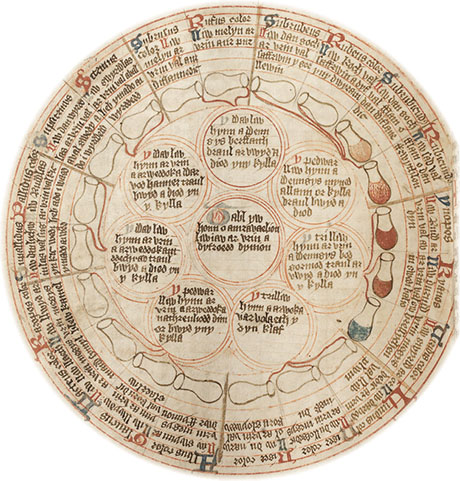
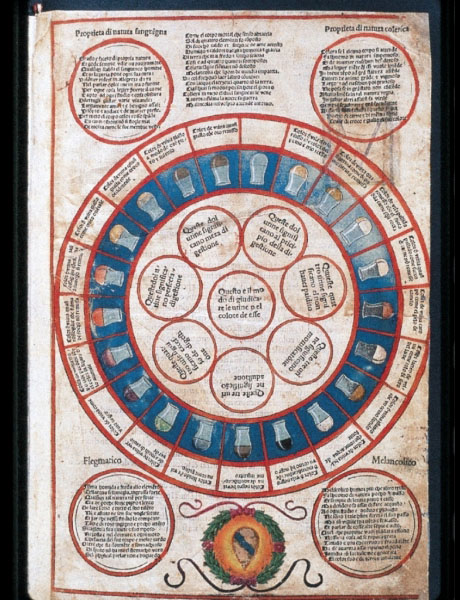
“But Paul, didn’t the Puritans have a lot of awesome things to say about God? Isn’t there much to be learned from them?” No, not in the long run because of their flawed logic. Notice that they aren’t around anymore. Why not? Because Puritanism cannot function without theocracy. Their logic led to the persecution of the Quakers via hanging etc., and when society had enough, an end was forced in regard to their theocracy. No theocracy—no Puritanism. And frankly, the same goes for authentic Calvinism. Calvinism exists today because their logic had to be adjusted for survival. Here at TANC, we call them, “sanctified Calvinists.” Yes, they have done the church some good because they don’t share the same logic.
I really wonder if this latest resurgence of authentic Calvinism will put an end to it because of the Information Age that we are in. Nobody calls themself a “Puritan” in our day. Will the day come when few will call themselves a Calvinist? Authentic Calvinism doesn’t work, and people will only use a clock that doesn’t work for so long; the fact that it is useful twice a day does not end up being enough. Once again, the same old superstitions of authentic Calvinism are showing themselves in the contemporary church. The basis is the idea of spiritual caste: the idea that preordained enlightened mediators should rule over the unenlightened masses. Theocracy comes part and parcel with that logic.
“But Paul, Neo-Calvinism is thriving right now in America and America doesn’t allow theocracies.” Oh really? Many New Calvinist “ministries” in our day are nothing less than Little Geneva. They have their own in-house police stations, and control parishioners by almost every means of the past save the death penalty alone. This ministry is compiling a list of various means that these ministries are using to control people through first-hand testimony. Other than the intimidation of armed in-house security forces, they are using “biblical counseling” to compile information on people that can be used to control them. That angle can be seen in living color via the public transcript of CJ Mahaney telling the cofounder of SGM that confidential counseling records would be made public if he left SGM for doctrinal reasons. Let there be no doubt: this is standard protocol in New Calvinist churches. And if they don’t have the dirt on you, they will fabricate it. That’s just fact.
Getting back to superstition—that is also the inevitable result of caste logic. Many blogs document the weirdness in this movement that gets crazier each month. And dismissal of comparisons due to medieval ignorance doesn’t cut it. Sure, urine isn’t used in counseling today (at least not yet), but instead we have rapists counseling their own victims in the church office!
It’s the logic. And in the Information Age, what happens in Salem doesn’t stay in Salem.
paul
Moses Indicts Luther and Calvin on the Reformation’s False Gospel
Fundamentally, there is no difference between Catholicism and Protestantism. Both see salvation as linear. In other words, sanctification finishes justification. The Reformers were hell-bent on seeing salvation as linear—probably because of the Romanism that gave birth to them.
Therefore, the Reformers accused Rome of “infusing grace” into the believer which made them, in the linear gospel construct, a participant in building the road from justification to final justification named Sanctification. Rome’s “infusion of grace” (the new birth) “enabled” believers to participate in the finalization of our just state. Gee whiz, that’s not “justification by faith alone.”
So, the Reformers had to come up with something different: Jesus does all the paving of the road named Sanctification as long as we live our Christian life the same way we were saved; by faith alone. Hence, this required an “alien” righteousness that is in heaven, NOT IN US. A Reformed think tank devised the following illustration to demonstrate this idea:

The true gospel sees justification as a finished work and completely separate from sanctification. We are free to aggressively pursue fruit in sanctification because our justification is a settled issue. The infusion of grace within us does not contribute to the finished work of justification, only the progressive work of sanctification. Sanctification is progressive because it involves us—justification is by God alone and not confined to time, mortality, or any kind of weakness. That’s why it was completed before the foundation of the Earth and guarantees glorification. This is a parallel gospel. Our progress in the Christian life and the completed work of justification are separate.
The Reformers believed in an “objective gospel completely outside of us.” Anything inside of us always leads to subjectivism. Supposedly. This wasn’t even true in the Old Testament. This is what Moses preached to the Israelites:
Deuteronomy 30:11- “For this commandment that I command you today is not too hard for you, neither is it far off. 12 It is not in heaven, that you should say, ‘Who will ascend to heaven for us and bring it to us, that we may hear it and do it?’ 13 Neither is it beyond the sea, that you should say, ‘Who will go over the sea for us and bring it to us, that we may hear it and do it?’ 14 But the word is very near you. It is in your mouth and in your heart, so that you can do it.
Not only did Luther say that keeping the commands is too hard for us to do as believers, he stated that it was impossible. So did Calvin. “It is not in heaven, that you should say, ‘Who will ascend to heaven for us and bring it to us, that we may hear it and do it?’” In fact, that’s exactly what Luther did say: God’s righteousness is an alien righteousness that is in heaven.
And the crux—Moses taught an infused grace: “It is in your mouth and in your heart, so that you can do it.”
Choose ye this day who you will follow, Moses or the Reformed crowd. Moses or Luther? Moses or Calvin? An easy choice for me.
paul
The Potter’s House: January 27, 2013; Romans Chapter 7
Pastor Jake received a phone call from a husband and father who is new in town. “Bob” in his mid-forties, has been visiting churches for purposes of making a decision on church membership for his family. Bob seems a little upset and asks Jake if they can meet for lunch:
“Sure Bob. Twelve o’clock at Bob Evans? ‘That would be great Pastor Jake.’”
Jake secures a table before Bob arrives and watches him as he approaches their table. Bob sits down and is obviously troubled about something:
“Uh, thanks for this Jake. Uh, can I ask you something? ‘Sure Bob, what’s up?’”
Bob: Are some dreams sinful?
Jake: That depends Bob, why don’t you tell me more. When did this dream take place?
Bob: Last night.
Jake: Where?
Bob: At home, last night.
Jake: What was the dream about Bob?
Bob: Uh, well, this is really weird.
Jake: Most dreams are Bob, but you are obviously troubled by this dream and I am hoping that I can help you in some way.
Bob: I was in bed with some young foreign girl, but we were fully clothed. And Jane’s sister [Jane is Bob’s wife] was there watching TV. And I was concerned about what Jane’s sister would think.
Jake: That’s understandable, and it’s never Miss Piggy [the cartoon character who has unrealistic visions of grandeur concerning her own beauty] in the bed.
Bob: [Chuckling uncomfortably] Uh, ya, anyway, she started taking off her clothes.
Jake: I kinda saw that coming.
Bob: But anyway, though she was beautiful, and her figure was exhilarating, I stopped her because of what I believe, and she became very angry.
Jake: [Leaning forward with great interest] Really? Tell me Bob, what is this belief that caused you to stop her?
Bob: Well, I believe lust is just a strong feeling, and if we don’t let it control us, great blessings are the result. Obeying our lust is initially exhilarating, but ends with death. That’s what James said, right? [Jake nodes in agreement]. As I have told you Jake, my job requires me to be on the internet all day. Woe, the way some things are introduced on the internet are very stimulating, but I know that if I let that control me, it will do damage to the wonderful love-life that Jane and I have. I also believe that when I abstain from lust, that makes my marriage more blessed and stronger.
Jake: Bob, I think the counselor just became the counselee. First, you’re right, the world is an expert at enticing us into sin; like I said, it’s never Miss Piggy in the bed, or in the advertisement. You rightly assess, and as you were speaking, several different Scriptures were coming to mind.
Bob: But what about being in bed with that girl? What’s that all about? Isn’t that indicative of sin in my heart? How could I even think something like that?
Jake: Bob, we never just find ourselves in bed with a girl one day. Many bad choices and deaths lead to the big deaths. Like all dreams, yours was especially unrealistic. Because of your Biblical thinking, you are not going to suddenly find yourself in bed with some girl not your wife, and certainly not with her sister in the same house. Bob, did you eat anything before you went to bed?
Bob: Uh, ya, you know, a midnight snack.
Jake: What did you eat?
Bob: Some strawberry custard pie.
Jake: [Trying not to laugh] That will do it Bob. However [regaining his composure on a serious note], I do believe that dreams often reflect our fears, and I think it’s good that you fear sin and failure. There is good reason to fear such. But you have committed no sin, and I cannot point to any biblical text that would instruct us to ask forgiveness for the content of our dreams.
Bob: That’s contrary to what the pastor at the other church we are visiting said.
Jake: Really? What did he say about this?
Bob: He said the dream reflects sin in my heart. Obviously, I have a desire to be with a beautiful foreign woman, and the dream reflects the desire of an adulterous idol in my heart. He said that this is a great opportunity to partake in repentance. He said this would result in the joy of receiving God’s grace in my life.
Jake: Bob, if this dream is bothering your conscience, by all means take it to the Lord in prayer, but let me clarify; he said that the source of our sin is idols in the heart?
Bob: Right.
Jake: So Bob, what’s the game-plan for preventing this idol from returning in the future?
Bob: Well, you really can’t prevent it. He said that our hearts are idol factories that continually produce idols that cause sinful desires. Repentance enables us to experience the joy of grace each time we see them and repent of them. By God’s grace, the idol was revealed in a dream which means I can repent of it before it manifests into the sin of adultery.
Jake: Bob, I see that it is almost time for you to return to work, but I would like to discuss this with you further. Are you in agreement?
Bob: Sure. Let’s get together after Sunday worship.
Bob has a choice. He has two ways of sanctification before him. Our sanctification presents a gospel to our families and the world; much is at stake. This is why the apostle Paul did not want the Romans to be in the dark about the living dynamic of sanctification and how it works in the reality of life.
How does the Christian do battle with sin? This is the next question after the gospel of first importance, “How can I be saved?” God’s full council is not only about how we are saved—it is also about how we “control [our] own body in holiness and honor” (2Thessalonians 4:4). This is the very definition of sanctification; the knowledge of how we control our bodies to God’s glory.
And do we actually change? Can we change? Yes, because as we saw in Romans chapter six, we are now slaves to righteousness through the new birth. Furthermore, Paul states the following in Romans 8:6-8;
6 For to set the mind on the flesh is death, but to set the mind on the Spirit is life and peace. 7 For the mind that is set on the flesh is hostile to God, for it does not submit to God’s law; indeed, it cannot. 8 Those who are in the flesh cannot please God.
Therefore, it goes without saying that those who are not in the flesh can indeed please God. And in fact, that is our goal as Christians (2Corinthians 5:9). I want to begin by revisiting Romans 6:20-23 before we begin in Romans seven:
20 For when you were slaves of sin, you were free in regard to righteousness. 21 But what fruit were you getting at that time from the things of which you are now ashamed? For the end of those things is death. 22 But now that you have been set free from sin and have become slaves of God, the fruit you get leads to sanctification and its end, eternal life. 23 For the wages of sin is death, but the free gift of God is eternal life in Christ Jesus our Lord.
What Christians need more than ever in our day is hope that they can really change. And through Bob’s testimony we learn of a powerful Scriptural concept in making that happen: the choosing of life or death. Even though choosing life is the primary life pattern of the believer, and choosing death is the primary life pattern of the unbeliever, Christians can choose death in this life and often do so through ignorance. Christians must know where our sin comes from, and why it is able to make such a strong appeal to us in regard to choosing death. We must know that choosing life strengthens us spiritually and makes future obedience easier. We must know that obedience leads to spiritual wellbeing. We must know that death leads to more death, and ends with eternal death, while the life of the believer is life upon life ending with eternal life. In regard to assurance of salvation, where death is experienced, death as an end will be feared, and rightfully so. Where life is experienced, and experienced with increase, eternal life will be the expected end. Hence, the devaluing of obedience has crippled innumerable Christians in our day. I believe it is a crisis.
Note Romans 6:22 once again. As Christians, we strive to “get” fruit. We strive for God’s will—our sanctification. We strive for spiritual wellbeing in increase. Paul was saying very little different than what Moses said:
Deuteronomy 30:9 – The Lord your God will make you abundantly prosperous in all the work of your hand, in the fruit of your womb and in the fruit of your cattle and in the fruit of your ground. For the Lord will again take delight in prospering you, as he took delight in your fathers, 10 when you obey the voice of the Lord your God, to keep his commandments and his statutes that are written in this Book of the Law, when you turn to the Lord your God with all your heart and with all your soul.
11 “For this commandment that I command you today is not too hard for you, neither is it far off. 12 It is not in heaven, that you should say, ‘Who will ascend to heaven for us and bring it to us, that we may hear it and do it?’ 13 Neither is it beyond the sea, that you should say, ‘Who will go over the sea for us and bring it to us, that we may hear it and do it?’ 14 But the word is very near you. It is in your mouth and in your heart, so that you can do it.
15 “See, I have set before you today life and good, death and evil. 16 If you obey the commandments of the Lord your God that I command you today, by loving the Lord your God, by walking in his ways, and by keeping his commandments and his statutes and his rules, then you shall live and multiply, and the Lord your God will bless you in the land that you are entering to take possession of it. 17 But if your heart turns away, and you will not hear, but are drawn away to worship other gods and serve them, 18 I declare to you today, that you shall surely perish. You shall not live long in the land that you are going over the Jordan to enter and possess. 19 I call heaven and earth to witness against you today, that I have set before you life and death, blessing and curse. Therefore choose life, that you and your offspring may live, 20 loving the Lord your God, obeying his voice and holding fast to him, for he is your life and length of days, that you may dwell in the land that the Lord swore to your fathers, to Abraham, to Isaac, and to Jacob, to give them.”
It is clear that as we pursue the fruits of the Spirit as Paul instructed Timothy to do in 1Timothy 6:11 that these fruits are increased:
2Peter 1:5 – For this very reason, make every effort to supplement your faith with virtue, and virtue with knowledge, 6 and knowledge with self-control, and self-control with steadfastness, and steadfastness with godliness, 7 and godliness with brotherly affection, and brotherly affection with love. 8 For if these qualities are yours and are increasing, they keep you from being ineffective or unfruitful in the knowledge of our Lord Jesus Christ.
Let’s look at one more before we begin in Romans chapter 7:
Philippians 4:8 – Finally, brothers, whatever is true, whatever is honorable, whatever is just, whatever is pure, whatever is lovely, whatever is commendable, if there is any excellence, if there is anything worthy of praise, think about these things. 9 What you have learned and received and heard and seen in me—practice these things, and the God of peace will be with you.
Paul prayed that we would be “strengthened” in the inner man (Ephesians 3:14-21) and would be “renewed” in our minds. But how does all of this work? It all starts by being set free from the law. That may seem strange, but that’s step one, and goes hand in hand with being saved. Paul will explain:
7:1 – Or do you not know, brothers—for I am speaking to those who know the law—that the law is binding on a person only as long as he lives? 2 For a married woman is bound by law to her husband while he lives, but if her husband dies she is released from the law of marriage. 3 Accordingly, she will be called an adulteress if she lives with another man while her husband is alive. But if her husband dies, she is free from that law, and if she marries another man she is not an adulteress.
4 Likewise, my brothers, you also have died to the law through the body of Christ, so that you may belong to another, to him who has been raised from the dead, in order that we may bear fruit for God. 5 For while we were living in the flesh, our sinful passions, aroused by the law, were at work in our members to bear fruit for death. 6 But now we are released from the law, having died to that which held us captive, so that we serve in the new way of the Spirit and not in the old way of the written code.
From Paul’s opening statement we might conclude that there was a large number of Christians at Rome who didn’t have an abundance of Scriptural knowledge, so Paul refers to those who know the law (Old Testament Scriptures); specifically, those laws pertaining to marriage. The woman was bound to the marriage law as long as her husband lived, but if he died, she was no longer bound to the law of marriage and free to remarry. Likewise, we are now free from the law as believers. But key is the fact that we also died, and are no longer in bondage to the reaction of the former self to the law. This makes it possible for us to bear fruit for God because when we lived as unbelievers, there was a natural adverse reaction to the law; specifically, it provoked us to sin leading to death. So we are now free from the law.
Paul then vindicates the law. It is not the law that caused us to sin when we were unbelievers, but our former sinful nature’s reaction to the law:
What then shall we say? That the law is sin? By no means! Yet if it had not been for the law, I would not have known sin. For I would not have known what it is to covet if the law had not said, “You shall not covet.” 8 But sin, seizing an opportunity through the commandment, produced in me all kinds of covetousness. For apart from the law, sin lies dead. 9 I was once alive apart from the law, but when the commandment came, sin came alive and I died. 10 The very commandment that promised life proved to be death to me. 11 For sin, seizing an opportunity through the commandment, deceived me and through it killed me. 12 So the law is holy, and the commandment is holy and righteous and good. 13 Did that which is good, then, bring death to me? By no means! It was sin, producing death in me through what is good, in order that sin might be shown to be sin, and through the commandment might become sinful beyond measure. 14 For we know that the law is spiritual, but I am of the flesh, sold under sin.
Now that the former unbeliever that we were died with Christ, we are no longer in bondage to this kind of reaction to the law. We are now free to bear fruit for God. However, we are still captive in our mortal bodies (what Paul later refers to as a body of death) which still bear a remnant of the former, and tempts us to sin. Mortality’s appeal to sin is primarily executed through our emotions, or desires. This conduit (desires) has not changed from our former selves, but we are now able to say no in all respects. Before, we were enslaved to our sinful desires which were provoked by the law.
In fact, the law was death to us, but now it is life. Life? Yes. Remember, Paul said the law that promises life was death to the former self (Romans 7:10). Also, the former reaction to the law constantly showed us our need for salvation—the need to be free from enslavement to the former self’s reaction to law and the threat of being judged by it in the end. Being judged by the law is the unbelievers worst nightmare. Christ paid the penalty of death that the law demands, God imputed His righteousness to our life account apart from the law, and the law is now our guide for bearing fruit for God. All of this creates a certain life experience, or warfare, that Paul explains:
Romans 7:15 – For I do not understand my own actions. For I do not do what I want, but I do the very thing I hate. 16 Now if I do what I do not want, I agree with the law, that it is good. 17 So now it is no longer I who do it, but sin that dwells within me. 18 For I know that nothing good dwells in me, that is, in my flesh. For I have the desire to do what is right, but not the ability to carry it out. 19 For I do not do the good I want, but the evil I do not want is what I keep on doing. 20 Now if I do what I do not want, it is no longer I who do it, but sin that dwells within me.
Remember, all of this is being explained by Paul in human terms. If God showed us the actual schematic, for certain, we wouldn’t understand it. We don’t know how our mortal bodies continue to live though the soul of it is dead. Nevertheless, Paul describes the warfare and locates the source of our sin: “in my flesh.” In Romans 6:12, Paul describes the same location as our “mortal bodies.” Mortality is opposed to our love for God and His truth. Somehow, it is alive in a big way, but its ultimate power over us is broken. In fact, it is tenacious enough to even wage war against the indwelling Holy Spirit!
Galatians 5:16 – But I say, walk by the Spirit, and you will not gratify the desires of the flesh. 17 For the desires of the flesh are against the Spirit, and the desires of the Spirit are against the flesh, for these are opposed to each other, to keep you from doing the things you want to do. 18 But if you are led by the Spirit, you are not under the law.
If you are not, “under the law” you do not have to gratify the desires of the flesh. And the part about being “led by the Spirit” will be discussed by Paul in Romans chapter eight. We are to consider the strong dichotomy here between the old us which is dead, and the new us—to the degree that Paul says it is not we who are sinning, that is, the new us, but sin that dwells in us. There is an inner self that is redeemed, and has to fight this mortal body that we temporarily dwell in. Hence:
Romans 7:21 – So I find it to be a law that when I want to do right, evil lies close at hand. 22 For I delight in the law of God, in my inner being, 23 but I see in my members another law waging war against the law of my mind and making me captive to the law of sin that dwells in my members. 24 Wretched man that I am! Who will deliver me from this body of death? 25 Thanks be to God through Jesus Christ our Lord! So then, I myself serve the law of God with my mind, but with my flesh I serve the law of sin.
The same principle applies: our flesh is still provoked by “the law of sin” (law: nomos), but no longer possesses the power to make us obey its desires. There is obviously a redeemed part of us that delights in the law (also nomos), and is at war with sin “that dwells in my members.” Paul calls the renovated or new part of us “the law of my mind.” This is the part of us, the mind, is sometimes referred to in Scriptures as “the heart.” It is the part of us that is to be “renewed.”
Ephesians 4:17 – Now this I say and testify in the Lord, that you must no longer walk as the Gentiles do, in the futility of their minds. 18 They are darkened in their understanding, alienated from the life of God because of the ignorance that is in them, due to their hardness of heart. 19 They have become callous and have given themselves up to sensuality, greedy to practice every kind of impurity. 20 But that is not the way you learned Christ!— 21 assuming that you have heard about him and were taught in him, as the truth is in Jesus, 22 to put off your old self, which belongs to your former manner of life and is corrupt through deceitful desires, 23 and to be renewed in the spirit of your minds, 24 and to put on the new self, created after the likeness of God in true righteousness and holiness.
When supplementing our understanding here with Ephesians 4:17-24, we can deduct that “the flesh” affects all parts of our being, especially the mind. It takes intellect to “wage war” against not only the “law of our minds,” but the indwelling Holy Spirit. But let us remember that our new creaturehood also resides in the whole being and presents our “members” to God’s service:
Romans 6:19 – I am speaking in human terms, because of your natural limitations. For just as you once presented your members as slaves to impurity and to lawlessness leading to more lawlessness, so now present your members as slaves to righteousness leading to sanctification.
In Romans 7:24, the word, “wretched” is a very interesting word. Paul wasn’t calling himself “wretched” as in wretched sinner. The word is talaiporos (tal-ah’ee-po-ros) which means “misery in enduring a trial.” Paul is saying that he is persevering in his fight against sin and longs to be delivered from his body of death. In other words, if we are partaking in the warfare, we long to be delivered from it. We long for His appearing—something to think about.
Let me also reemphasize that Paul said this transformation results in us being “obedient from the heart” (Romans 6:17). Let’s now revisit what the other pastor taught Bob. In this critical treatise by Paul regarding how sin is conceived in our lives, where is there any discussion at all about idols of the heart? From this chapter, can we conclude that our transformed hearts are “idol factories?” To begin with, is the sin in our heart, or in our flesh? A layman by the name of Brian Jonson once did an extensive biblical word study on the location of sin in the believer. He was not able to find one instance where the Bible states that the heart of a believer is sinful, or the heart being the location of sin in the believer. I have included a copy of his study with your notes. See layman Jonson’s study here.
To the contrary, one of God’s purposes of salvation is so that the righteous requirement of the law can be fulfilled “in us” (Romans 8:4). Furthermore, the paramount necessity that justification and sanctification be separate is demonstrated in Romans 8:7,8;
7 For the mind that is set on the flesh is hostile to God, for it does not submit to God’s law; indeed, it cannot. 8 Those who are in the flesh cannot please God.
We please God in sanctification by obeying His law. Our minds were hostile to God before our conversion, unable to obey His law, and in danger of being judged by it. Our good works due to the works of the law written on every heart and being created in His image notwithstanding.
Now that we are saved, we have full pardon from sin because of Christ’s death, and are new creatures because of His resurrection and the gift of the Holy Spirit. Also, we have the full righteousness of God credited to our account apart from the law. Our sin in sanctification will not be judged by the law against our justification because our justification is apart from the law, the penalty required of the law has been paid in full before the foundation of the world, the offender is dead and no longer under the jurisdiction of the law, and the new creature is not the one sinning in the eyes of justification. Hence:
Romans 8:31 What then shall we say to these things? If God is for us, who can be against us? 32 He who did not spare his own Son but gave him up for us all, how will he not also with him graciously give us all things? 33 Who shall bring any charge against God’s elect? It is God who justifies. 34 Who is to condemn? Christ Jesus is the one who died—more than that, who was raised—who is at the right hand of God, who indeed is interceding for us. 35 Who shall separate us from the love of Christ? Shall tribulation, or distress, or persecution, or famine, or nakedness, or danger, or sword?
We may sin in sanctification, but who can bring charges against us? It’s God who justified. Who can pass a sentence against us? Christ paid the penalty. We lay aside fear of a future judgment, and pursue fruit leading to more and more life. This gives assurance of eternal life while putting to death the deeds of our old life that died with Christ. The new us is strengthened, the old us is diminished. And to God be the glory.

Emerging From New Calvinism: We Must Persevere to Complete Our Salvation
 I am presently reviewing an equitable, well written, well-argued position on the idea that our justification is connected with the “[foot] race” of the Christian life. The authors start by presenting four positions, but have not yet used them to clearly state their own position which well be articulated further along in the book. Is the reward of the race salvation? Or rewards for our work in the Christian life? The race involves perseverance and assurance. Does not the Bible speak of obtaining salvation by persevering to the end? Does it not speak of salvation as being the reward? This is a hefty issue. I highly recommend the book as an honest debate on the subject; the fact that I will probably end-up rejecting it in the end notwithstanding. Nevertheless, the book contributes valuable clarification to the issue.
The authors of this book correctly state that we all come to the Bible with presuppositions, and I am reading their book with a particular biblical presupposition in the background: nothing we do in sanctification can be connected in any way to justification. Salvation comes with justification, but salvation’s power is credited to our account in full when we are saved and receive the Spirit. Our race cannot be for an OBTAINING of final salvation which is intrinsically connected to our justification—only the EXPERIENCE of it. Through the Reformed already—no yet construct, an obtaining of final justification is the reward.
That’s a problem—even if Jesus obeys for us in the race via faith alone. One of the verses used to posit this idea is 2Timothy 2:5;
An athlete is not crowned unless he competes according to the rules.
The “crown” is seen as salvation. Justification (our righteous [righteousness] standing) cannot be separated from final salvation. BUT, justification cannot be united to our Christian life in any way as a road for obtaining a final salvation. Why? Because Paul plainly states in this verse that “rules” are involved. Final salvation cannot be obtained through “rules” because the justification that comes with it is “apart from the law” (Romans 3:21, 28, 4:15, 7:1,8). Also, righteousness came before the law (Galatians 3:17,18) and justification is obtained by promise only. A final salvation cannot be obtained via rules because justification is declared apart from any standard. There are simply no rules to guide the race. There are no rules to disqualify anyone.
Secondly, proponents of this view often fail to cite the very next verse that follows 2Timothy 2:5;
It is the hard-working farmer who ought to have the first share of the crops.
Rewards CANNOT be attached to justification in any way, shape, or form (Romans 4:2). So, what about all of the verses in Scripture that seem to say that we will be rewarded with salvation if we persevere to the end? I am presently looking into that issue deeply, and to some extent with the help of the aforementioned book. But closer examination of some of those verses has yielded some interesting findings. Let’s take a look at Revelation 2:11;
He who has an ear, let him hear what the Spirit says to the churches. The one who conquers will not be hurt by the second death.
Clearly, the “second death” refers to the Great White Throne Judgment where those who were not part of the first resurrection will be judged by the law. This will be an eternally tragic epoch. This verse, in the English translation, has a flavor of finality, or past tense. According to my Interlinear that is based on the Received text, the verse is better rendered this way: The one who is presently persevering shouldn’t fear the second death. The obedience they see in their life should give them confidence, or assurance. This better fits with a recognized theme throughout Scripture.
Furthermore, there are many incentives given in Scripture to be diligent in sanctification; why would this be if the prize is salvation? It would seem that lesser incentives would be irrelevant when compared to an actual consummation of salvation that would involve us.
paul

 Paul's Passing Thoughts
1 comment