Calvinism and Urine Technology
 Calvinists often intimidate us with oceans of ink left behind by the brilliant, spiritual, educated children spawned by John Calvin: the Puritans. Calvinists like John Piper display their spiritual swagger by quoting the Puritans and making everyone aware that they read them daily. Of course, this plays on the utter ignorance of present-day Christians. Their authority is no longer the really thick pamphlet dropped down from heaven called the Bible—its orthodoxy. Orthodoxy is an analysis of God’s mass publication to people indwelt by His illumining Spirit by the church’s “Divines” of whom many were Puritans. They repackaged God’s word for consumption for the unenlightened masses.
So, when these brainiacs took the urine of accused witches and made cakes from it, and then fed the cakes to dogs in order to watch their reaction for a verdict, we need to understand that what the Divines do at times is the “foolishness of the cross.” We wouldn’t understand. This is activity that is on another spiritual plane; so, recite Luther’s Small Catechism and keep your mouth shut. The Small Catechism is one of Voddie Baucham’s recommendations for use in family devotions. He is really big on husbands being the “family shepherd” and leading the family Bible studies with….orthodox creeds, not anything that would come from their own brains.
Much could be discussed in regard to the lovely traditions that the Puritans brought with them when they were driven out of Europe as political refugees. But let’s talk about urine. Actually, urine tasting was the state of the art research born of European theocracies during Medieval times. How the urine of the subject tasted was used to determine what ailed them. Several examples of medical charts are displayed below for your educational enjoyment. Click to enlarge them, but if you are a Calvinist, don’t try this at home—it’s not orthodoxy!
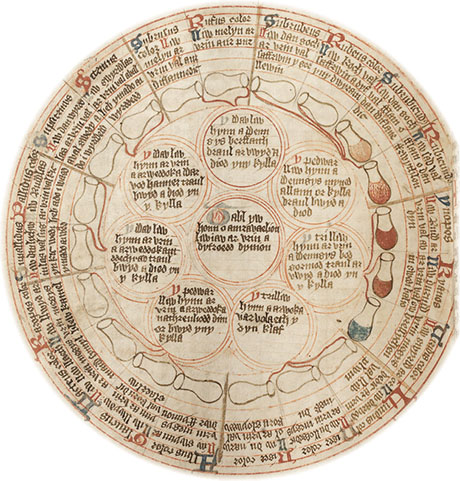
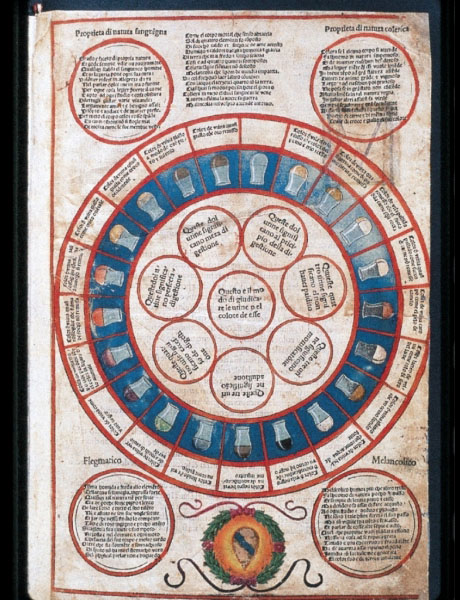
“But Paul, didn’t the Puritans have a lot of awesome things to say about God? Isn’t there much to be learned from them?” No, not in the long run because of their flawed logic. Notice that they aren’t around anymore. Why not? Because Puritanism cannot function without theocracy. Their logic led to the persecution of the Quakers via hanging etc., and when society had enough, an end was forced in regard to their theocracy. No theocracy—no Puritanism. And frankly, the same goes for authentic Calvinism. Calvinism exists today because their logic had to be adjusted for survival. Here at TANC, we call them, “sanctified Calvinists.” Yes, they have done the church some good because they don’t share the same logic.
I really wonder if this latest resurgence of authentic Calvinism will put an end to it because of the Information Age that we are in. Nobody calls themself a “Puritan” in our day. Will the day come when few will call themselves a Calvinist? Authentic Calvinism doesn’t work, and people will only use a clock that doesn’t work for so long; the fact that it is useful twice a day does not end up being enough. Once again, the same old superstitions of authentic Calvinism are showing themselves in the contemporary church. The basis is the idea of spiritual caste: the idea that preordained enlightened mediators should rule over the unenlightened masses. Theocracy comes part and parcel with that logic.
“But Paul, Neo-Calvinism is thriving right now in America and America doesn’t allow theocracies.” Oh really? Many New Calvinist “ministries” in our day are nothing less than Little Geneva. They have their own in-house police stations, and control parishioners by almost every means of the past save the death penalty alone. This ministry is compiling a list of various means that these ministries are using to control people through first-hand testimony. Other than the intimidation of armed in-house security forces, they are using “biblical counseling” to compile information on people that can be used to control them. That angle can be seen in living color via the public transcript of CJ Mahaney telling the cofounder of SGM that confidential counseling records would be made public if he left SGM for doctrinal reasons. Let there be no doubt: this is standard protocol in New Calvinist churches. And if they don’t have the dirt on you, they will fabricate it. That’s just fact.
Getting back to superstition—that is also the inevitable result of caste logic. Many blogs document the weirdness in this movement that gets crazier each month. And dismissal of comparisons due to medieval ignorance doesn’t cut it. Sure, urine isn’t used in counseling today (at least not yet), but instead we have rapists counseling their own victims in the church office!
It’s the logic. And in the Information Age, what happens in Salem doesn’t stay in Salem.
paul
A Day to Remember Those Lovable Puritans: International Religious Freedom Day
Mark it on your calendar: October 27th; International Religious Freedom Day (IRFD). PPT and TANC will start commemorating this day on October 27, 2013 on an annual basis. Actually, we are going to make a really big deal out of it. We are talking pig roast galore at the Potter’s House with a shameful array of food and drink, games, and drama plays. Our inaugural IRFD will feature a reenactment of Anne Hutchinson’s trial.
The day commemorates the execution of three Quakers in Boston for being, well, Quakers. They were hung by those lovable Puritans that came over on the Mayflower, also known as the Pilgrims. Being a Quaker in the Puritan theocracy of the Massachusetts Bay Colonies was a capital crime. Two men and one woman, a friend of Anne Hutchinson named Mary Dyer were scheduled to hang on October 27th 1659. Dyer received a last second reprieve, but returned to Boston and was hanged the following year. Quakers believed that the average Christian could interpret the Bible by themselves without the help of clergy. One of the two men hanged on October 27th thought it fit to preach exactly that to the crowd before he was executed:
The execution day was Thursday 27 October (the usual weekly meeting day for the Church in Boston) 1659, and the gallows stood on Boston Common. They spoke as they were led there, but their words were drowned out by the sound of drums. After they had taken leave of one another, William Robinson first ascended the ladder. He told the people it was their day of visitation, and desired them to mind the light within them, the light of Christ, his testimony for which he was going to seal with his blood. At this the Puritan minister shouted “Hold thy tongue, thou art going to die with a lie in thy mouth.” The rope was adjusted, and, as the executioner turned the condemned man off, he said with his dying breath, “I suffer for Christ, in whom I live and for whom I die.” Then Marmaduke Stephenson stepped up the ladder and said “Be it known unto all this day that we suffer not as evil-doers, but for conscience sake.” He was turned off the gallows, saying ” This day shall we be at rest with the Lord.” In memory of this, October 27 is now International Religious Freedom Day to recognize the importance of Freedom of religion (Wikipedia: Boston Martyrs).
paul
Reformed Caste System: The Puritans Saw Violation of Caste as Equal to Violation of the 5th Commandment

“But with this considered, the Puritans believed that the idol of upward social mobility was a specific violation of the 5th commandment. Yes, wanting to improve the lot you were born into was dishonoring one’s parents.”
There is a reason for everything. I like reasons; the “why.” I understand that “Stupid is—is stupid does,” but I want to know why people are stupid. “They’re just stupid”; that’s easy, discovering why they are stupid can enable us to save them from their stupidness and thus give them hope. See, I really am a loving, hopeful kind of guy.
Why do New Calvinists constantly quote and point to the Westminster Confession to make their points? And why does that irritate us so much? The second why is easy; they act like the Confession has the same authority as Scripture. An added third why changes our irritation to fear: the Westminster Confession was a standard of civil law compiled by Calvinistic Puritans at the beckoning of the Church of England. Hence, when New Calvinists cite the confession, they are exposing their kinship, knowingly or ignorantly, to a theocratic document (“Theocracy is a form of government in which official policy is governed by immediate divine guidance or by officials who are regarded as divinely guided, or is pursuant to the doctrine of a particular religion or religious group”[and I will give you three wild guesses as to who the New Calvinists believe are the “divinely guided” ones]).
Later, the Church of England and the Puritans had a lovers quarrel over control of European mutton, and the Puritans were labeled, “nonconformists.” Other groups of Baptist origin were labeled the same regardless of their devotion to the same totalitarian principles as the Church of England; ie., The 1689 Baptist Confession of Faith which was drawn from the Westminster Confession and written by Puritans as well. After this totalitarian plague landed in America, another document was drafted from the Westminster model, this time by the “Pilgrims” (alien European Puritans): The Savoy Declaration.
These documents encompass a conviction for state and church to rule together at the supposed pleasure of God, and with all of His authority by proxy. Ooopsies and boo-boos are covered by diplomatic immunity. Be not deceived: the spirit of the Westminster Confession is the lust of every New Calvinist. That’s the why behind their obsessive citation of it.
 However, the central idea of the Westminster Confession that totally depraved mankind must be ruled with a divine iron fist is going to manifest itself in a number of different applicable elements. New Calvinists use this for cover; the “fact” that they don’t “agree with everything” in the Confession supplies cover for the fact that they are totally sold out for the central idea that is the foundation of the document. That would be the control of the totally depraved by the “Westminster divines” of whom they are kin.
The heart of the document and its sentiment is revealed in the applicable elements—one being a caste system modeled after the extreme European social caste system of that day. Misrepresenting your social class to marry into a family that was in a higher social stratum was a capital offence. Different social classes dressed differently, and entitlements were also determined by class as well.
The Puritans were really, really big on the whole idea of being content with were God had sovereignly placed you in life. In all caste systems, your social stratum is determined by what stratum you were born into; ie, determined by the social stratum of your parents. The system disallowed mobility between the social strata, or for all practical purposes: improvement. Of course, there were rare exceptions born of the milieu of life combined with intentionality for those who dared.
Notwithstanding, the Puritans saw a desire to climb the social strata as a “heart” problem: pride, discontent, thinking that your totally-depraved-self deserves more than your sovereignly appointed lot in life—which is a magnificent gift compared to what you deserve: hell. Today’s New Calvinist Puritan wannabes would say that you have “idols of the heart.”
But with this considered, the Puritans believed that the idol of upward social mobility was a specific violation of the 5th commandment. Yes, wanting to improve the lot you were born into was dishonoring one’s parents:
The essence of the Puritan idea of status is found in the Larger Catechism of the Westminster Confession of Faith, that comprehensive body of theology hammered out by the Puritan scholars of Cromwell’s England in the mid-1640′s. The question of status was basic to the Puritans’ interpretation of the Fifth Commandment, “honor thy father and thy mother.”
By father and mother, in the fifth commandment, are meant not only natural parents, but all superiors in age and gifts; and especially such as, by God’s ordinance, are over us in place of authority, whether in family, church, or commonwealth…. The general scope of the fifth commandment is, the performance of those duties which we mutually owe in our several relations, as inferiors, superiors, or equals (Gary North: The Freeman; June 1974 • Volume: 24 • Issue: 6).
The logical conclusion is borne out by what the Americanized Puritans (Pilgrims) instituted as civil law in their own New England old England way. Undoubtedly, due to European influence that connected dress to status, the Pilgrims included what is known as Sumptuary Laws (laws regarding what one may or may not wear) in their theocratic laws:
Colonial Laws of Massachusetts, 1651
Sumptuary Laws (Laws Regarding What One May or May Not Wear)
ALTHOUGH SEVERAL DECLARATIONS and orders have been made by this Court against excess in apparell, both of men and women, which have not taken that effect as were to be desired, but on the contrary, we cannot but to our grief take notice that intolerable excess and bravery have crept in upon us, and especially among people of mean condition, to the dishonor of God, the scandal of our profession, the consumption of estates, and altogether unsuitable to our poverty. And, although we acknowledge it to be a matter of much difficulty, in regard of the blindness of men’s minds and the stubbornness of their wills, to set down exact rules to confine all sorts of persons, yet we cannot but account it our duty to commend unto all sorts of persons the sober and moderate use of those blessings which, beyond expectation, the Lord has been pleased to afford unto us in this wilderness. And also to declare our utter detestation and dislike that men and women of mean condition should take upon them the garb gentlemen by wearing gold or silver lace, or buttons, or points at their knees, or to walk in great boots; or women of the same ran to wear silk or tiffany hoods, or scarves which, though allowable to persons of greater estates or more liberal education, we cannot but judge it intolerable. . . .
It is therefore ordered by this Court, and authority thereof, that no person within the jurisdiction, nor any of their relations depending upon them, whose visible estates, real and personal, shall not exceed the true and indifferent value of £200, shall wear any gold or silver lace, or gold and silver buttons, or any bone lace above 2s. per yard, or silk hoods, or scarves, upon the penalty of 10s. for every such offense and every such delinquent to be presented to the grand jury. And forasmuch as distinct and particular rules in this case suitable to the estate or quality of each perrson cannot easily be given: It is furtber ordered by the authority aforesaid, that the selectmen of every town, or the major part of them, are hereby enabled and required, from time to time to have regard and take notice of the apparel of the inhabitants of their several towns respectively; and whosoever they shall judge to exceed their ranks and abilities in the costliness or fashion of their apparel in any respect, especially in the wearing of ribbons or great boots (leather being so scarce a commodity in this country) lace, points, etc., silk hoods, or scarves, the select men aforesaid shall have power to assess such persons, so offending in any of the particulars above mentioned, in the country rates, at £200 estates, according to that proportion that such men use to pay to whom such apparel is suitable and allowed; provided this law shall not extend to the restraint of any magistrate or public officer of this jurisdiction, their wives and children, who are left to their discretion in wearing of apparel, or any settled militia officer or soldier in the time of military service, or any other whose education and employment have been above the ordinary degree, or whose estate have been considerable, though now decayed.
And:
By 1674, Cotton Mather’s father, Increase Mather, was convinced that the continual violation of the Fifth Commandment — the status commandment — was the chief sin of his generation. (That someone named Increase could take this position only serves to emphasize the irony.) Inferiors were rising up against superiors in the commonwealth — in families, schools, churches. It was not an uprising that he feared, but this incessant rising up. “If there be any prevailing iniquity in New England, this is it…. And mark what I say, if ever New England be destroyed, this very sin of disobedience to the fifth commandment will be the ruin of the land.” Samuel Willard agreed with Mather.
The problem, as the Puritan divines saw it, was that men were not satisfied with their lot in life. Daniel Dension’s last sermon, appended by another famous preacher of his day, William Hubbard, to Hubbard’s funeral sermon for Denison, cities ambition as the curse of the land, along with envy:”… Ambition is restless, must raise commotions, that thereby it might have an opportunity of advancement, and employ envy to depress others, that they fancy may stand in their way….” Such ambitious men are unwilling “to abide in the calling, wherein they are set; they cannot stay for the blessing, nor believe when God hath need of their service, he will find them an employment, whatever stands in the way of their design, must give place…”(Ibid).
Of course, New Calvinists would reject this outwardly, but what they can’t deny is that they are merely rejecting a nuance of the central idea that they embrace with all passion.
Caste is king.
paul
The Reformed Agenda: Finish the Job Started by the First Gospel Wave; Destroy Justice
 “It is no surprise then that the world which unknowingly has the law of God written on their hearts, will be greater lovers of justice than believers who think that justice is just another story about the gospel.”
For those of us left who would dare partake in the dangerous stunt of studying the Bible on our own at home—do a word search on “justice.” If your local Reformed elder finds out, simply diffuse the situation by telling him that you were looking for Jesus in every verse. Make it the truth by doing so, but look for additional information like, what does the word “justice” mean? And is it important to God? And should an understanding of it incite us to think differently and act differently?
However, a warning: this is “leaping from reason to action” instead of contemplating the works of Jesus in every verse that will result in a “mere natural flow” of the manifested active obedience of Christ. The sharing of this dangerous behavior with others should be done with much discretion.
Let’s do a state of the word “justice” in the Church assessment as an introduction. Like many biblical words, it has been replaced with, “gospel.” Where is the emphasis on justice that is in the word of God? It is a massive theme throughout Scripture by use of the specific word, not including the same concept expressed in different words with the same meaning. So, where is the same emphasis in teaching and action within the church? And has this lack of emphasis yielded any fruit?
An emphasis on justice disrupts the easy believism gospel wave of circa 1950-1970, and the second gospel wave of the authentic Reformed gospel wave of 1970-present. Both movements are heavily predicated on the idea that elite groups lead the incompetent masses:
1. The gospel must be kept simple. Attempting to understand more than, “Jesus died for our sins” could keep many of the ignorant masses from entering the kingdom.
2. The sheep, are well, sheep, and we all know about sheep: they have to be led to water and grass or they will starve to death (they have no survival instinct at all); they are not created with any defense anatomy (like horns etc.)—they have to be protected; they are skittish—sudden loud noises can cause them to fall dead of a heart attack; if they fall over, they can’t get up on their own. In a word: helpless.
3. God has appointed special men (and sometimes women) to lead the hapless sheep safely home to heaven. They are the ones “called to the ministry.”
4. All of God’s enlightened are not saved because the unsaved ignorant masses need an elite group to guide them as well (or else the world would be in chaos)—otherwise known as “government.” But as far as the full spectrum of life, the unsaved enlightened ones have enlightenment that can help Christians because “all truth is God’s truth.” Therefore, the Bible doesn’t have all of the answers for life’s deepest problems, it is a mere continual feeding for the hapless sheep—the water and grass of “Christ died for our sins.” The full revelation of God to the saints contained in the Bible doesn’t add up in the philosophy of incompetence.
5. On the church side, the enlightenment that comes to the ones “called to the ministry” and distributed to the sheep as the authoritative word is referred to as “orthodoxy.” The form in which it is then distributed to the dumb sheep in a way that they can understand it is referred to as, “creeds and confessions.” On the secular side, it is called “psychology.” On the secular side, psychology is the priesthood of enlightenment, and government enforces the truth that prevents chaos. On the church side, the truth is orthodoxy presented in creedal form, and enforced by “church polity.”
6. This explains why very little evangelism takes place outside of the church—the dumb sheep must bring the other dumb sheep to the temple where the enlightened ones dwell and know how to present the gospel in wiser ways. It also explains why the vast, vast, majority of Christians are unable to help each other with the word of God. And besides, dumb sheep can’t change anyway. Hence, the enlightened ones, being few, must depend on the lesser enlightened ones to help with the sheep; ie, the secular priesthood of psychology.
The biblical concept of justice throws a monkey wrench into this concept—big time. First, the concept of biblical judgment infers value. That poses a huge problem for both gospel waves.
In the first gospel wave, while “high self-esteem” was heavily touted, it was framed in context of why Christ died to save us: we are valuable to God because He created us, and God doesn’t “create junk.” But on the other hand, “what amazing grace that God would love SINNERS like us!” We are still, “sinners saved by grace.” The first gospel wave, though a proponent of high self-esteem, was nevertheless predicated on the incompetence of the saints who are still “sinners,” making no distinction between sinning as a life style verses sin that manifests itself in our war against it.
This translated into the whole, “We are all in the same boat named Sinners, so who are we to judge?” “We should forgive the way we were forgiven; ie, ‘forgive and forget.’” “If you don’t forgive others, God will not forgive you.” “Your willingness to forgive and forget shows that you understand God’s grace.” And if you don’t understand God’s grace—you don’t understand the gospel, and if you don’t understand the gospel, well, you do the math.
Justice doesn’t get invited to this party. To seek justice is to supposedly reveal the fact that you don’t understand grace, and assumes that you are a lesser sinner than someone else. We should rather all be like the Apostle Paul who wrote, “I am the chief of all sinners.” To seek justice is to be the unmerciful servant that Jesus spoke of who executed judgment on a fellow servant after being forgiven of the same thing by his master.
The trend that always follows this philosophy is tyranny which is the antithesis of justice. We have all heard of the “awesome testimonies” of parents who were able to forgive the serial killer who threw their daughter away like a piece of trash after torturing her. These testimonies are often heralded as “awesome displays of God’s grace” when really, they say more about the value of human life and the lack of God’s righteous indignation within the image bearer. This same philosophy has always resulted in the ruling elite viewing the masses in a demeaning way. In some cases, less than human. The Inquisition, The Jewish Holocaust, and many other historical events come to mind.
The second gospel wave’s twist on all of this is total depravity. Look, I was Reformed for twenty years—they laugh at the idea of righteous indignation. “You want justice? Are you sure about that? If God gave you justice, you would be going to hell!” Anger, Justice’s kissing cousin, is said to be indicative of our heart’s sinful notion that we deserve something other than hell. This type of thinking is exemplified in the often used parable about the Puritan who worked all day, and was then served nothing but a nickel sized piece of meat by his wife; he, without hesitation, exuberantly exclaimed, “What! Christ, and this also!”
Sounds honorable, but what is discussed little is the kind of behavior and indifference towards human life that this philosophy spawned among the Reformers and their Puritan children. When the Bible is gospel narrative only, and not a guide for life and godliness in the hands of capable Chrsitians—superstation and many other things will fill the void. The 300 years of European witch hunting should serve as an apt example among many others on this point.
If you go to Bible Gateway .com, select “Whole Bible,” and do a word search on “justice,” you will see hordes of Scriptures that point to a moral responsibility before God to execute fair judgment as morally competent people. The Bible is also fraught with warnings from God that He will execute judgment on those who refuse to do so. Biblical justice has innumerable spiritual ramifications as well as practical necessity.
What are the fruits of both gospel waves that refuse to agree with God’s heart on this issue? Well, just look at the ABWE/GARB Bangladesh missionary children nightmare. In that whole twenty-year ordeal, getting any kind of justice has been like pulling teeth that don’t need pulling. In fact, in like situations where justice is called for, persecution of the ones calling for justice soon follows.
It is no surprise then that the world which unknowingly has the law of God written on their hearts, will be greater lovers of justice than believers who think that justice is just another story about the gospel. “It’s about Jesus, not us. He was God, but quietly endured the injustice of the cross for us. But you want justice for merely being raped? How dare you!”
This is the problem with interpreting the whole Bible through a Reformed gospel prism that isn’t even a complete gospel. “Christ died for our sins” is not the complete gospel. It’s a glorious part, but by itself—it’s a half gospel that excludes our enablement to repent and glorify God in many, many ways which includes the execution of what is right and just. In contrast, the narrow Reformed gospel narrows everything the Scriptures state about justice to justification alone.
This isn’t the Bible, it’s orthodoxy. And it will not endear the world to Christ when they are better informed about God from the works of His law written on their hearts and what they plainly see in the world.
paul

 Paul's Passing Thoughts
20 comments