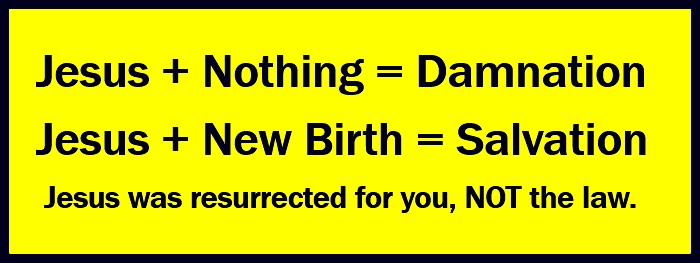
Why People Say No to the Gospel and Yes to Evangelicalism
 What I have come to learn is the lost world understands more about the gospel than professing Christians. The longer a professing Christian goes to church, the less they know about the things of God. I am not saying they don’t know things and learn a bunch of stuff, it’s just that none of it is biblical.
As a born again Christian in 1983, I was totally full of joy and on fire for God, and then church happened. And worse yet, I added to the calamity by going to seminary. What followed was a long dark path of doubting my salvation, being unnecessarily enslaved to sin, and total confusion in regard to what the Bible clearly stated as set against what happens in church. I went through periods where I just threw in the towel and said, “Just keep your mouth shut and serve the church; obviously, I am the problem, all of these people couldn’t be wrong.” Then the stupidity would once again become more than I could bear, and I would start asking questions again.
Finally, I got too good at asking questions in 2007 and the church folks put a full court press on me. After being cast outside of the camp, I sat alone save a few, but there was only one thing that I could see: the promise that “If you seek me you will find me.” And so the journey began at the place where I came from, the joy of my original salvation, but this time with the addition of real knowledge. I believed the promise, and I would find the truth in this life or run out of time and find it in the next—either way was fine with me at that point.
This post is about one of the things I have learned in the journey. People don’t say no to the gospel because they are “totally depraved and have not been shown the kingdom by God’s divine providence,” they say no to the Evangelical gospel because they know it’s not the gospel. Actually, they say no to the Evangelical gospel for the same reason evangelicals say yes to their own false gospel; neither want to lose their own lives to find it.
That’s right, unbelievers don’t want to lose their present life, and they know being saved means exactly that. For the most part, they know this intuitively because the “works of God’s law” have been written on their hearts as with everyone born into the world. As an unbeliever, I said no to many evangelicals who told me that I only needed to believe, and it had nothing to do with anything regarding behavior as that would be “works salvation.” As an unbeliever, I agreed with the basic framework of the wording, but knew that wasn’t the gospel. A demand to cease from the present things that I enjoyed was not the issue, I knew that those things would no longer be part of my being. I would indeed lose my present life, and would be launched into a life that would be something totally new apart from what I had lived with all of my life.
What is it that I didn’t like about the Evangelical gospel? Basically, no new birth. You remain the same, and maybe God will change you and maybe he won’t—it’s totally by faith alone. I knew do’s and don’ts wasn’t the issue, I knew it was a faith alone gospel without the new birth. They plainly told me that any change that would occur in my life was totally up to God because it’s faith alone apart from works, but I intuitively interpreted that as no new birth. Granted, I wasn’t ready to change, but if I ever was, I wanted real change/salvation. They plainly stated, and we hear this today, all of the time, that CHANGE isn’t the issue, but rather “seeing more Jesus.” I interpreted that as no new birth, though I wouldn’t have used that terminology. They were selling a no loss of present life gospel. It sounded tempting; you can keep your present life while merely seeing more Jesus, but I knew it was a pipe dream. I knew what the true result of believing is: new birth; the loss of present life and a future completely entrusted to Christ.
This is why evangelicals say no to the true gospel of new birth and embrace the idea that justification is nothing more than a “legal declaration.” If justification is a legal declaration, new creaturehood doesn’t justify us, a mere declaration does. Skeptical? Let me prove my point with “waist deep theology” rather than Jesus seeing. Evangelicals further state that the declaration alone would be “legal fiction.” Why so? Well, because we are in essence unchanged, but yet God is calling us “justified.” What to do? Their solution is a double denial of the new birth known as double imputation. Supposedly, Christ came to not only die for us, but to keep the law perfectly in our stead. If we continue to live by faith alone, Christ’s BEHAVIOR is also imputed to our account totally apart from any behavior we have. We hear it all the time: “It’s not about anything we do—it’s about what Jesus has done.” Obviously, this makes a real and literal new birth completely unnecessary. OUR behavior is completely irrelevant… “We proclaim the gospel, we don’t try to be the gospel.” If you’re an evangelical, you can have your cake and eat it to. And look at the church accordingly; any questions?
As a new believer, I assumed the church did not deny the new birth as a whole, and that I would find bliss on earth frolicking about with God’s new creatures. Chuckle. Oh the naivety of youth. I took the new birth so seriously, that as I began to live out my Christian life, the fact that I still sinned dismayed me. I searched for answers within the church in regard to reconciling present sin with the new birth. Of course, I wasn’t able to find satisfactory answers because the evangelical definition of new birth is not the biblical definition. Hence, I wallowed in weakness and confusion for years. And sadly, in every church I was ever in, I was one of the leaders! It would be hilarious if not so utterly pathetic.
The home fellowship movement is the freedom and hope believers need. It holds forth the true gospel of new birth. It is the literal family of God, and that’s why we worship where we live. A false gospel has no authority. Come out from among them and be free.
paul
Spurgeon’s False Gospel
 Meme Post #4
Where to start in all the ways that this meme contradicts Scripture and denies the new birth and true gospel? Let’s start with a few blatant contradictions.
Our faith does NOT rest. Our faith WORKS through love (Gal 5:6). Faith is a GIFT, but that doesn’t mean we don’t put the gift to work. In fact, the belief that our faith doesn’t work suggests that we must continue to keep ourselves saved through “rest.” Spurgeon, like most lying Calvinist heretics, held to the Reformation’s Sabbath Rest Salvation. It holds to the idea that the Old Testament Sabbath rest is New Testament sanctification and we must continue to live by faith alone in our Christian lives to keep ourselves saved. This, according to Calvin, happens through receiving continued forgiveness for “present sin” through church membership.
And remember, Spurgeon once said that Calvinism isn’t “just a nickname,” but “is the gospel” itself.
True faith doesn’t rest–it works. There is no true love in a faith that rests.
Secondly, the Bible makes it clear that we grow spiritually through obtaining knowledge; what’s up with the idea that knowledge doesn’t define who we are as believers? Frankly, I don’t care how many people think this guy is a spiritual icon–you know, kinda like the Bereans who held Paul accountable to Scripture.
Thirdly, the idea that who we are doesn’t point to the legitimacy of our faith and is therefore not a resting faith contradicts a vast number of Scriptures and Hebrews 11 in particular.
Fourthly, how we feel is most certainly important because the Bible says that faith not working in love will cause the believer to be full of fear.
Why is it ok for Spurgeon to blatantly contradict Scripture? Because Baptists have a longstanding tradition of being man-followers, that’s why.
Furthermore, note that we supposedly rest in the idea that who we are is NOT who Christ is! HUH!!!! Say what???? If Jesus is your big brother because you are literally born into the same family, you had better be like Him or you aren’t born again (see 1John).
And finally, note that we rest in what Christ has both DONE and is DOING. This is the Reformed doctrine of Double Imputation. It teaches that Christ came to secure our salvation by both dying for sin and keeping the law in our stead. It teaches that justification is based on perfect law-keeping rather than the new birth. Jesus could die for us because He lived up to the standard of the law, and presently keeps the law for us if we are “resting” in what He has “done and is doing.” This is a blatant contradiction to Galatians chapter 3. This is the very idea that Paul is refuting in that chapter.
This makes the law a co-life-giver with God and promotes an additional seed (offspring), but their is only ONE SEED (see Gal 3). In essence, Paul was arguing that this very idea makes the law a fourth member of the Trinity. And in fact, Calvinists state this openly when they say that “the empty hand of faith presents the doing and dying of Christ to the law and the law is satisfied.”
So, instead of God electing the means of salvation, Christ dying to end the law, and the Spirit fulfilling “The Promise” of resurrection and baptism to Abraham and Christ, we now have that added fourth element of the law being the standard for justification instead of new birth obtained by faith alone in The Promise. The contrary view of this meme keeps the so-called believer under law rather than under grace, and that’s supposedly ok because Jesus keeps the law for us.
But this also keeps the believer from performing the purpose of the law for sanctification, faith working through love. Instead, we must rest because Jesus is the only one that can keep the law perfectly as the law supposedly gives salvific life when fulfilled. In contrast, the Old Covenant kept sin captive until Christ came and ended it. The law was ended by Christ’s death in regard to its ability to condemn, and we are now free to serve the law in regard to love (Rom 7 and Heb 6:10). The Old Covenant still holds all sin captive that is committed against it (“all sin is against the law”) until a person believes in Christ resulting in the law being ended for condemnation and the person being set free to “use the law lawfully” (1Tim 1:8ff.) for purposes of loving God and others. Those who do not believe on Christ will be condemned by the law, but there is “NOW NO condemnation for those in Christ.” Rather, true believers are free to fulfill the law in aggressive love for God and others (Rom 8).
For the outcome of Spurgeon’s “rest” see the Parable of the Talents. Resting in love that Christ supposedly fulfills for us evokes this response from Him: “You lazy, wicked servant.”
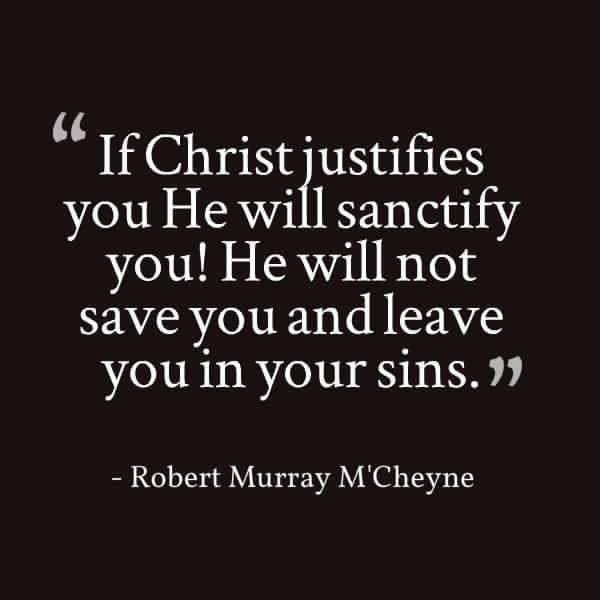
Protestant/Baptist Theological Stupidity: A Mother Can Give Birth and Leave the Baby Unborn
 Meme Post #3
Thank goodness your mother didn’t give birth to you and leave you unborn! Such is the logic of this meme because those who hold to progressive justification do not understand the new birth. The new birth ends sin—there is no sin to be left in or to deal with in regard to justification. Christ does not finish justification through sanctification. The new birth justifies completely apart from the law whereas sanctification needs the law (Jn 17:17, Matt 4:4). The weakness of the flesh yields no condemning sin that Christ could theoretically “leave us in.” There is NO “your sin” as that sin died with the old you. Your so-called “present sin” is not the same sin that once condemned you. The new birth ends condemning sin and you cannot be unborn.
How Church Ruins Your Life
 Meme Post #1
“Church” was never meant to be an institution, but rather a family meeting in private homes because that’s what families do. During the soon approaching Thanksgiving Day, extended families will meet together locally. In others words, for example, the Dohse family is a large family with descendants living all over the world, but more than likely, only the descendants living in the Dayton, OH area will gather together in one place. Few families maintain a purpose-built facility for meeting together. In fact, that would be deemed rather strange.
The 1st century assembly of Christ had a family mindset that is hard for us to comprehend. “They had all things in common” is not a socialist statement, it is a statement regarding their family mindset at that time. The “Church” concept did not really get a foothold in Christianity until the 4th century. The word “church” is a replacement word added to Bible translations and goes hand in glove with the institutionalization of Christianity.
One reason this is important is because families operate differently than institutions. In families, order and unity is achieved through what families are supposed to be about – love and respect. Thanksgiving dinner will go well this year because of family cooperation. Yes, there will be organization, but it will be based on many considerations other than authority. Mom and grandma will tell the men to stay out of the kitchen, and they will obey. When mom says its time to eat, everyone will come to the table. Everyone recognizes that the food part is mom’s gift. If some of the men tarry in front of the football game, aunt Beth will enter the room with a pair of scissors and threaten to cut the power cord on the big screen TV, and so it goes.
Much could be discussed here (this is a many-faceted dynamic), but the family concept circumvents cultism. Cults are predicated on authority—always. No authority, no cult; they must have authority. The integration of authority and religion always results in cultism. It starts with an authoritative presupposition resulting in a mind-control mandate. The institutional church was clearly founded on authority supposedly mandated by Christ through what we call apostolic succession. Immediately after the demise of the most prominent apostles, the so-called church fathers began clamoring for a centralized religious authority based in Rome. The home fellowships led by elders vigorously resisted this attempted transition. After a messy power struggle that lasted for more than 200 years, for the most part, home fellowships succumbed to the Roman church’s claim of apostolic succession and divine authority.
This was the beginning of the Roman Catholic Church from which Protestantism came, but the latter claimed no less authority whatsoever. The Reformation created many splinter groups that attempted to revive home fellowships, but were met with equal persecution from both Rome and Geneva. Catholics and Protestants never ceased fighting accept for the purpose of working together unofficially to persecute the various home fellowship movements that emerged. The Catholics nor Protestants had any tolerance for those who would not come under the auspices of their authority. And, if you think the vast majority of wars fought throughout history are the result of differences regarding religious authority—you rightly assess.
The claim of authority has always been, and always will be, twofold: God ordained governments to enforce religious orthodoxy, and the church’s oversight of salvation. One gets saved in the church, and through “faithfulness to the church,” the church, in turn, doles out more and more salvation until the day of judgment.
Let’s look at this in regard to meme #1. Where does God get “full custody” of his children? Look at the picture—it’s the church building. The implication follows: if you are a casual church attender, you only do business with God on the weekends or a mere one hour during Sunday service. The other implication is that you only do business with God at the temple. On the one hand, we are His “children,” but on the other hand, apparently, we only fellowship with Dad at an institution.
The idea is flawed, unnatural in regard to truly being born again into God’s family, but also has unfortunate cause and effect ramifications. If you go to a purpose-building twice on Sunday, once on Wednesday, and for whatever else is going on during the week (e.g., choir practice, visitation, revivals, men’s Bible study, women’s Bible study, youth activities, church softball league, etc., etc., etc.), when does one have any time with their own families? They don’t.
But the following is the kicker, especially in Reformed churches: on the one hand, families have little private time together, but on the other hand, they are spending what little free time they have hearing about how everyone in their family is a “sinner” or totally depraved. Then, when certain family members begin to display an aversion to the results of this construct, the church recommends separation or shunning. This is resulting in the division of families within the institutional church that is even unprecedented in the secular realm.
The institutional church is bad for your family and will destroy your marriage at worst, and will result in mere coexistence at best. Don’t sacrifice your family at the alter of showing faithfulness to God by being present at the purpose-building “every time the doors are opened.”
There should be NO disconnect between your family life and your life with God, that’s why the family of God should fellowship together right where we live, in the home.
paul

 Paul's Passing Thoughts
leave a comment