What Your Sanctification Says About Your Justification: Is Your Gospel True or False?
Originally published February 27, 2015
“No false religion teaches that you earn your justification by perfect law-keeping—there is always a system that prescribes sanctified do’s and don’ts that in turn fulfill the law for you, otherwise known as ‘the traditions of men.’”

What do you believe about salvation? Your Christian life will tell you. Therefore, the parable of the talents in Matthew 25:14-30 should not confuse us. The “wicked” servant was not cast into outer darkness because he didn’t put his talents to work, but rather what he thought it meant to be a servant. In other words, in order to be saved, you need to know what a Christian is. That should be fairly evident.
Do you live your Christian life by “faith alone”? That is a statement in regard to what you believe about salvation, or what happened to justify you; viz, justification.
This is not complicated. Don’t complain that I am making your touchy-feely “simple” gospel a theological treatise. I am sure you concur that some Bible words have to be understood in order to be saved. The Bible splits humanity into two categories: saved and unsaved; i.e., “under law” or “under grace” (Romans 6:14).
“Under law” is the biblical nomenclature for the unregenerate lost. Under law means that sin rules you. Not in a plenary sense, because man’s conscience and fear of punishment from civilian law restrains people. Yet, they are under the condemnation of God’s law and every violation is documented. Unless they are saved, they will be judged according to their works in the final judgment. Though some who followed their conscience more than others will receive a lesser condemnation, it is still eternal separation from God. They are under law, and enslaved to sin. The last judgment DOES NOT determine justification; it ONLY determines the degree of eternal condemnation. It doesn’t determine justification; it only determines the wages of sin.
Moreover, sin uses the condemnation of the law to provoke people to sin. Primarily, sin uses desires to tempt people, but sin’s incentive is the law because it condemns. Sin lives for the purpose of condemning people, and uses desire to get people to sin against God’s law. This leads to present and eternal death. Sin’s desire is to bring death. When the Bible speaks of “the desires of the flesh” it is referring to instances when the flesh is serving the desires of sin.
The flesh can also be used to serve the desires of the Spirit (Romans 12:1). The flesh has NO desires; it is used by the dweller for good or evil purposes. We will either use our bodies to serve the desires of sin or the desires of the Spirit. Of course, people have their own desires, but unfortunately, the unregenerate are guided by the desires of sin. They assume sinful desires are their own desire which is true. In contrast, sinful desires are not part and parcel with the regenerate soul.
Said another way: among the lost, the desires of sin are very much the same desires possessed by the individual who are indifferent to the law of God. A desire for God’s law is absent while their life is continually building a death and condemnation dividend. Some of that dividend is paid in this life until the full wages of death are paid at the final judgment.
Under grace is not void of law. The law (same as “Scripture” or same as “Bible”) has a different relationship to the saved, or those under grace. A literal baptism of the Holy Spirit takes place, as symbolized in water baptism, which puts to death the old person under law and resurrects the new person under grace. The saved person is now a new creature created by the Spirit of God. The person under grace is literally born of God—he/she is God’s literal offspring.
Therefore, the old person is no longer under the condemnation of the law in the same way a dead person cannot be brought under indictment for a crime. Consequently, the motivation for sin is gone. The power of sin is the law’s condemnation that leads to death (1Corintians 15:56, 57). In addition, the person under grace has been given a new heart that loves God’s law and its way of life. The book that could only bring death is now a book that brings life. Either way, it is the Spirit’s law; He uses it to condemn those that are under it, or uses it to sanctify those who are under grace (John 17:17).
THEREFORE, how you see the law determines what you believe about salvation. If you believe that you can somehow obey the law in a way that unwittingly seeks to be justified by law-keeping, you are still under law. If you believe justification is defined by perfect law-keeping, you are still under law. Those who believe this also believe they need a salvation system that filters all their works into a category of faith alone. The Christian life is categorized or departmentalized into works that attempt to be counted for justification and faith alone works that qualify as “living by faith alone.” Do not miss the point that this also includes abstaining from certain things that aren’t necessarily sin as defined by the Bible.
Yes, hypothetically, a person would need to keep the law perfectly to be justified by the law, but that doesn’t make perfect law-keeping the standard for righteousness. If that were the case, the law is a co-life-giver with the Holy Spirit, and a death would not be necessary. We are justified APART from the law—law has NO part in justification. The Bible defines justification, but it’s not a standard of justification (Rom 3:21, Gal 2:19, 4:21). Law-keeping by anyone does not justify.
If one is trusting in a system that fulfills the law for justification, particularly if it calls for not doing something in order that the law is fulfilled in our place, that is works salvation through some kind of intentionality whether passive or active. These kinds of systems are always indicative of being under law rather than under grace. One such system that has several variances calls for doing certain things or not doing certain things on the Sabbath which can be Saturday or Sunday depending on the stripe of system. If you follow the system on the Sabbath, all works done by you during the week are considered to be by faith alone.
In Reformed theology, particularly authentic Calvinism, contemplation on your sin leading to a return to the same gospel that saved you imputes the perfect law-keeping of Christ to your life. Notice that a fulfillment of the law is required to keep you saved, but we do faith alone works in order that Christ’s perfect law-keeping is imputed to our account. The problem here is that a fulfillment of the so-called “righteous demands of the law” is the standard for justification. Hence, clearly, this keeps so-called “Christians” UNDER LAW. In addition, a so-called faith alone work is still a work.
Not so with under grace. We are now free to follow our new desire to obey the law out of love without fear of condemnation. The law is the standard for love, not justification. In all of the aforementioned systems of sanctified justification by works, faith doesn’t work (or love) because it can’t lest salvation be lost. In the Christian life (sanctification) faith works because it can for the sake of love without condemnation (Galatians 5:6).
Knowing that justification is a settled issue that has nothing to do with the law anyway, the true Christian only sees law-keeping as an opportunity to love. Christians not only have the anthropologic law of conscience written on the heart, the new birth writes the Bible there as well. In other words, they love the law. Obviously, those who must focus on faith alone works in order to remain justified cannot focus on aggressive obedience to the law that defines love.
This is exactly what the books of James and 1John are about. Faith is not afraid to work because there is no condemnation. Faith without works is dead, “being alone” (James 2:17 KJV).
Are you in a religious system that propagates faith “alone” in the Christian life? Your faith is not only dead, it speaks to what you believe about justification. You believe justification has a progressive aspect and is not completely finished. Secondly, you believe the law has a stake in justification. Thirdly, your system categorizes works as faith alone works (an oxymoron of sorts) or works that are unfiltered in some way and therefore are efforts to “self-justify.”
If you believe the right gospel, you know that it is impossible to unwittingly partake in an endeavor to justify yourself. It’s a metaphysical impossibility—it’s not in the realm of reality. No false religion teaches that you earn your justification by perfect law-keeping—there is always a system that prescribes sanctified do’s and don’ts that in turn fulfill the law for you, otherwise known as “the traditions of men.”
It’s the fallacy of faith alone works for justification. But any work for justification is justification by works whether doing nothing (abstinence is still doing something), something passive (contemplationism or prayer is also a work) or anything active.
Law and justification are mutually exclusive, and true faith is “faith working through love” (Galatians 5:6). Faith works because there is no fear in love (1John 4:18). Don’t be like the servant who was afraid and hid his talents in the ground. Christ said it best:
“If you love me, keep my commandments.”
paul
Galatians: Protestantism is No New Thing Under the Sun; Law-Based Justification is Functioning Antinomianism
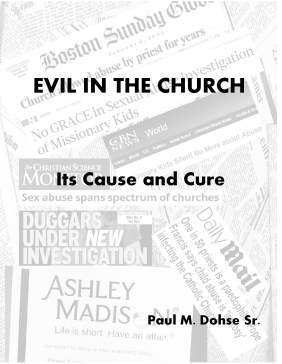
Projected Publication: 2017
The law was NEVER the standard for righteousness, but it is the standard for love and the work of faith.
Protestantism is the Galatian problem all over again. In Paul’s letter to the Galatians he attacks law-based justification, but functioning antinomianism has a slick way of dissing the law while applauding it. On the one hand the law is applauded as the standard for righteousness; ie., justification, but on the other hand some sort of substitute for the law fulfills it. This is anti-law while presaging to applaud it. And by the way, antinomianism is really anti-love.
Hence, while Protestants proudly proclaim themselves people of the book, evil and tyranny reins in the church. Those who show themselves reasonably equitable are really just good Germans. Why is this? Answer: law-based justification. Protestants are perhaps the wiliest in this falsehood because the banner over them is “justification by faith.” While proclaiming justification by faith alone apart from the law, it is really justification by the law. The key here is that like all law-based religions before it, Protestantism makes the law justification’s standard.
As a result, that standard must be met by some sort of substitutional ritual that fulfills the law FOR the “believer.” This actually leads to a “relaxing” of the law because we can’t fulfill its…watch for it….”righteous demands.” Why strive to obey the law when it demands perfection? In fact, Martin Luther and John Calvin both stated that any little falling short makes one guilty of violating every point of the law. Will this lead to a “relaxing” of the law which was the very thing that Christ accused the Pharisees of? Of course it will. As the institutional Protestant church rediscovers its true roots more and more will antinomianism increase? Of course it will. Is that the very thing we are witnessing in our day? Absolutely.
With the Judaizes, the substitute for functioning righteousness was a litany of manmade traditions including the recognition of days and circumcision:
Galatians 4:9,10,11 – But now that you have come to know God, or rather to be known by God, how can you turn back again to the weak and worthless elementary principles of the world, whose slaves you want to be once more? You observe days and months and seasons and years! I am afraid I may have labored over you in vain.
Again, Protestants are really slick at this game. One of their rituals is “living by faith alone.” Instead of salvation being a onetime act that makes us righteous, our salvation is maintained by ritual faith alone works. This is the sort of thing James addressed in his epistle and why Martin Luther had open contempt for that particular New Testament letter.
In Protestantism, like all law-based false gospels, the law is the standard. Righteousness is defined by perfect law-keeping coupled with a substitute for fulfilling the law. Let me repeat that:
In Protestantism, like all law-based false gospels, the law is the standard. Righteousness is defined by perfect law-keeping coupled with a substitute for fulfilling the law.
With the Judaizes it was circumcision et al, with Protestantism it is the manmade tradition of “double imputation.” What’s that? It is the idea that Jesus kept/keeps/fulfills the law for us. If we keep the law we will fall short of its “perfect demands” and will be guilty of violating the whole standard for righteousness. The very verse they use to prove this makes the opposite point (James 2:10) as we shall see further along. But, this very error can be addressed using Paul’s letter to the Galatians:
Galatians 5:2 – Look: I, Paul, say to you that if you accept circumcision, Christ will be of no advantage to you. 3 I testify again to every man who accepts circumcision that he is obligated to keep the whole law. 4 You are severed from Christ, you who would be justified by the law; you have fallen away from grace.
Note that in order to be justified by the law, the receiver of the justification must be the one who keeps it. Unless they alone keep the whole law, they are severed from Christ. “Every man” that wants to be justified by the law must keep it himself. This is why double imputation doesn’t cut it. And in regard to the whole idea of a substituted righteousness, what is the result in every case? A relaxing of the law, and a righteousness that does not exceed that of the Pharisees who substituted the law with their manmade traditions.
This is where double imputation keeps the so-called believer under the condemnation of the law and calls the “believer” to live by faith alone works (ritual) invented by men. Jesus is a substitute for perfect law-keeping which completely misunderstands the purpose of the Old Covenant. The OC uses the law to hold all sin captive. All sin is against the law. The OC imputes all sin to the law, and then Jesus came to end the law (Romans 10:4).
Galatians 3:19 – Why then the law? It was added because of transgressions, until the offspring should come to whom the promise had been made, and it was put in place through angels by an intermediary. 20 Now an intermediary implies more than one, but God is one. 21 Is the law then contrary to the promises of God? Certainly not! For if a law had been given that could give life, then righteousness would indeed be by the law. 22 But the Scripture imprisoned everything under sin, so that the promise by faith in Jesus Christ might be given to those who believe. 23 Now before faith came, we were held captive under the law, imprisoned until the coming faith would be revealed. 24 So then, the law was our guardian until Christ came, in order that we might be justified by faith. 25 But now that faith has come, we are no longer under a guardian, 26 for in Christ Jesus you are all sons of God, through faith.
When one believes on Christ, he/she is baptized in the Spirit and is no longer under the OC to which all sin is imputed. The believer is saved by “the promise” of new birth, NOT the law. In fact, if the law has anything to do with being made righteous, even if it is fulfilled by a substitute, that would make the law an additional “seed” BUT there is only ONE seed:
Galatians 3:15 – To give a human example, brothers: even with a man-made covenant, no one annuls it or adds to it once it has been ratified. 16 Now the promises were made to Abraham and to his offspring. It does not say, “And to offsprings,” referring to many, but referring to one, “And to your offspring,” who is Christ. 17 This is what I mean: the law, which came 430 years afterward, does not annul a covenant previously ratified by God, so as to make the promise void. 18 For if the inheritance comes by the law, it no longer comes by promise; but God gave it to Abraham by a promise.
Protestantism, like all law-based salvation plans, makes the law an additional life source other than the new birth made possible by “the promise” of the Spirit who raised Christ from the grave. This changes the true believer’s relationship to the law. Instead the law condemning, it is the standard for loving God and others.
The law was NEVER the standard for righteousness, but it is the standard for love and the work of faith:
Galatians 5:6 – For in Christ Jesus neither circumcision nor uncircumcision counts for anything, but only faith working through love.
This is the whole point of James 2:10 as set against many verses noting that love fulfills the whole law. The contrast is the point. The new birth is the standard for righteousness—not the law. This makes the whole Protestant “sinners save by grace” a lie from the pit of hell. Those who sin against the law are still under law. Grace in not a covering for sin, it is an ending of the law and its condemnation. Grace has a law: the law fulfilled by the believer’s work of love; read Romans 8 and…
1John 3:3 – And every man that hath this hope in him purifieth himself, even as he is pure. 4 Whosoever committeth sin transgresseth also the law: for sin is the transgression of the law. 5 And ye know that he was manifested to take away our sins; and in him is no sin. 6 Whosoever abideth in him sinneth not: whosoever sinneth hath not seen him, neither known him. 7 Little children, let no man deceive you: he that doeth righteousness is righteous, even as he is righteous. 8 He that committeth sin is of the devil; for the devil sinneth from the beginning. For this purpose the Son of God was manifested, that he might destroy the works of the devil. 9 Whosoever is born of God doth not commit sin; for his seed remaineth in him: and he cannot sin, because he is born of God. 10 In this the children of God are manifest, and the children of the devil: whosoever doeth not righteousness is not of God, neither he that loveth not his brother (KJV).
Christ didn’t come to cover sin via obedience to Protestant orthodoxy which holds to a law-based standard for justification like all other false religions. He came to end enslavement to sin and the law’s condemnation in order to free us to live by love. The law is good for that purpose. In this sense, the law and its truth sanctifies us (John 17:17). In this sense, “If you love me keep my commandments.”
paul
Sin, Sin, Sin, Sin, Sin, Sin, Sin, Sin
Originally published on July 28, 2015
 Got sin? You do if you are a Protestant, and you have a lot of it. The “T” in TULIP doesn’t stand for total depravity for no good reason, no pun intended. The only good thing is focusing on the bad thing: your nasty, wicked self.
Sin is a really big deal in Protestantism because we get ourselves into heaven by dwelling on the fact that we are “sinners.” If we can do any good work, if ALL of our works are NOT filthy rags—that’s not living by “faith alone” for our justification. Supposedly, if we think we can do anything good, that’s not living by faith alone in what Jesus has accomplished for us, but rather living in the “confidence of the flesh.”
The foundation of Protestant soteriology is the idea that “Christians” live under the possibility of condemnation and should fear accordingly. Christians remain under the condemnation of the law and remain covered by professing that they can do no good work. By continually returning to the same gospel that saved us for forgiveness of works, both good and bad, the righteousness of Jesus continues to be imputed to us. Hence, “We have no righteousness of our own in salvation or the Christian life.”
In contrast, the emphasis of our Christian lives should be LOVE. We still sin, but it is not sin unto condemnation, but rather sin against our Father as a family matter. We may receive chastisement, but we are in no danger of condemnation. Not so with the Protestant gospel: the “Christian” remains under eternal condemnation and is only covered through faith alone by returning to the same gospel that saved us. This is why Protestantism has always been weak in the area of discipleship. This is why there is an obsession with making saved people rather than disciples. And by the way, the only place we can find continued forgiveness for “sin that removes us from grace” (Calvin/Luther) is under the “authority” of the local church. Go figure.
Even in Baptist churches, pastors bemoan the fact that “10% of the congregants do 90% of the work.” Well, duh, I am surprised that even 10% are doing anything as the focus is keeping oneself saved by focusing on how inept we are.
More and more in counseling, I am telling people to stop focusing so much on sin. Clearly, especially in the Protestant contemporary biblical counseling movement, the specific instruction is to “find the sin beneath the sin” as a means of growing your salvation as if salvation grows to begin with. If our focus is sin- searching as a means of spiritual wellbeing, and good works tempt us to think we did something good (again, Luther/Calvin), what in the world will be the results? Well, look around for yourself—it’s called “the church.”
 A focus on sin will not prevent sin or promote love. If there is something to be gained by finding sin, it will be far from us to fight against it. Why would we cut off our supply of blessings by making the cross smaller? It becomes a supply and demand issue.
The Bible endorses a focus on love, not sin-searching. We are to look for ways to love God and others, not ways to find the “sin beneath the sin” or some endeavor to “peel back the layers of sin.” No doubt, there is a CONTROL conspiracy involved with this supposed method of sanctification as well. Stripping people of an accurate evaluation of self is a very efficient way of controlling them. Being worthy enough to hold others accountable for their own good will not get you into heaven—only returning daily to the same gospel that saved you for a fresh set of downs to get into the salvation end zone.
And what will eventually happen to any marriage if the constant focus is your spouse’s sin? No wonder then that the present-day biblical counseling movement (mostly sponsored by Reformed churches) is overflowing with marriage counseling cases. Week in, and week out, teaching will knock down any notions that either spouse can do any work that is not “filthy rags.” And, the only real sin is not knowing that everything you do is sin; if you don’t know that, you may find yourself in so-called church discipline. We do know this: those who will not accept this premise are deemed “unteachable.”
We have not been given a spirit of fear under the law of sin and death and its condemnation. We, instead, have been given the Holy Spirit and boldness to love God and others without any fear of condemnation.
We are to be enslaved to love—not to a fear of condemnation.
paul
What a Protestant Would Say to the Mentality Disabled Guy
 A close friend of mine shared something with me witnessed in a residential care facility that happened recently. My gig in the world of home health care (HHA) is not in the realm of mental health, but I enjoy hearing how our trade applies there.
At any rate, a lot of God-happenings occur in both realms. As readers here at PPT know, one reason among many that I chose this career is to facilitate a greater knowledge of Christian living (sanctification) which is devalued in Protestantism by design. Protestant orthodoxy dismisses the idea that Christians have a separate life that is Christ-like-in-kind because we have the same Father, and propagates the idea that we have NO life apart from Christ’s life. In other words, Protestantism redefines biblical new birth and is therefore a false gospel.
As the children of God exit the church and begin fellowshipping in a home setting; i.e., family-of-God setting, viz, “household of God” setting, we will see people actually being saved not the reshuffling of sheep within the denominational/institutional church. It’s all about Christ’s mandate to make disciples.
This is where the event shared with me is apt in furthering this point. As the friend walked through a mental health facility, one resident said to another: “You aren’t going to come over here where I am because you know I will kick your ass.” It is not uncommon for some mentality disabled persons to be aggressive in nature. According to my friend who witnessed the event, the other resident responded, “No, no, I prayed to God this morning that He would help me be perfect today. So, I am not paying you any mind; I am not going to get sucked into your sin.”
This event is barely less than a perfect opportunity to illustrate the difference between the Protestant false gospel of progressive justification and the true biblical gospel. The Protestant would show this precious soul a “better way” as follows:
No, no, God is not going to HELP you be perfect because it is impossible for any person to be perfect—saved or unsaved. But, in fact, you must be perfect in order to be accepted by God. You must be perfect to be justified. This is why Christ came to die: to pay the penalty for our sin. ALSO, He lived a PERFECT life according to the law so that your imperfect life could be substituted for His.
Therefore, you must presently live life by faith alone in what “Jesus has done, not anything you do.” You must be faithful to church and its sacraments, and other faith-alone-works that fulfill the law through what Jesus has done, not anything you do…except faith alone works. Whatever works Christ wills to do through you will then be manifested according to His will…Not yours.
At this point, we may imagine for illustration purposes that a truly born again believer joins the conversation. It might go something like this:
Excuse me, but I must object to what the Protestant has just told you. First of all, he has redefined the word “perfect” as defined by the Bible. In the Bible, “perfection” is not defined by flawless law-keeping, but rather means, “maturity.” It also pertains to those who are already justified/righteous/saved. So, you were actually praying to be something that you already are; you are already perfect. This is why the Bible calls believers “holy” in many places…because we are.
Let me show you a better way to pray—pray that God would help you to love Him with all that is in you and love others the same way as well. We obtain reward in this life and the life to come for doing so. Unfortunately, we also reap consequences for failing to love because we are “weak,” but not “wicked.” We do not remain as “sinners” which is the biblical definition for the unregenerate. This is where the Protestant has also redefined “sin.” He interprets the word “sin” from a single perspective. Sin is the same for the saved or the unsaved: it condemns according to the law’s “righteous demands.” In contrast, the believer has a willing spirit to love, but the flesh is “WEAK” not inherently sinful. This is why the believer can use their bodies for holy purposes or what the Bible calls living sacrifices acceptable to God.
Because the believer has been literally born again, he/she has died with Christ and is no longer judged by the law. There is now no condemnation for the believer. A continual imputation of Christ’s payment for sin and good works are not needed for the believer because there is no law to judge him or her. Christ died to end the law and its condemnation for all those who believe.
The believer is also resurrected to new life with Christ, and this results in a different relationship to the law. Instead of being under its condemnation and therefore needing the continual imputation of Christ’s death and obedience to the law via “the means of grace” according to Protestant orthodoxy, the law is now something the believer is endeared to for purposes of wisdom in loving others. What was previously used by the Spirit to condemn is now used (in cooperation with the believer) to mature or perfect the believer in love.
Your goal is not perfection according to the law; your goal is maturing in love. You are under grace NOT under law and a perpetual imputation of Christ’s love in substitution for your obedient love is not only unneeded—it is a FALSE gospel that denies the new birth. Protestants remain as “sinners” yet under law and therefore need to continually return to the cross for “double imputation.”
One does well in asking God for perfection according to mature love, but not a love that is substituted for the fulfilment of a law that is ended.
We are under grace, not law. You don’t fear the law; you love the law. That doesn’t mean there is no law in grace it means that it is a law for love NOT condemnation.
paul
A Call to the Laity: The New Birth is the Infusion of God’s Word
 Other than the use of a few facts in the commission of first-degree premediated falsehood, the Protestant Reformation did not get one thing right. The Protestant Reformation is plenary falsehood. This post is about the Reformation’s most grievous falsehood; the denial of the new birth as defined by the Bible.
John Piper once stated that the Reformation’s cardinal argument with Rome was the issue of “infused grace.” He is absolutely correct in that self-condemnation. The Protestant Reformation, as constantly stated by the Neo-Calvinists of our day, was all about an objective gospel that remains completely outside of us. What they call the “Objective Gospel.” This is Martin Luther’s “alien righteousness.”
Fundamentally, the objection was grounded in Augustine’s Neo-Platonism that disallowed the fusion of goodness with evil matter, but this post is not about that aspect.
If there is ever an escape from the present Protestant Dark Age, it will be the result of the laity’s collective study of God’s word to the exclusion of Protestant caste scholarship. The laity must recognize that we are God’s elect, and once again seize our rightful calling in the prevention of losing full reward. Our present day represents the Corinthian problem once again in which philosopher kings subjugate the gifts assigned to God’s offspring.
After more than 500 years of making every verse in the Bible about justification, there is much work to be done for the glory of God and His truth. One place where study is much needed regards the word, “seed.” Before one is born again, the law (God’s word) judges and condemns, but the new birth makes the same word a living seed that is infused within the believer. This is what the Bible teaches.
Seed theology, so to speak if I may, is a deep and vast continuity throughout the Bible and an element of the new birth. There is a link between the one seed, Christ, and Him as “the word,” and how the truth of Scripture is life to the believer as opposed to death and condemnation.
James 1:21 – Therefore, get rid of all moral filth and the evil that is so prevalent and humbly accept the word planted in you, which can save you (NIV).
Got that? The word of God, also called a “seed” that is planted and gives life (see the parable of the sower etc.), is planted IN US. Is there a more glaring contradiction as set against the Reformation’s Objective Gospel? Also, in the Bible, “saved” doesn’t always mean the salvation of the soul. And, it NEVER means a progressive saving of the soul. In sanctification, the believer can still make life or death decisions by saying yes or no to proper or improper desires. There is also a saving of the body that saves us from the weakness of the flesh (redemption). At any rate, the point here is that the life giving word of God is In US via the new birth.
Jesus answered, “It is written: ‘Man shall not live on bread alone, but on every word that comes from the mouth of God.'” (NIV).
Like newborn babies, crave pure spiritual milk, so that by it you may grow up in your salvation, (NIV).
In these verses, growth/nourishment from the word of God refers to the putting on of the new man (Eph 4:24) who is already a new man. The new creature grows up in newness, not some striving to finally achieve a state of newness. This is a true progressive holiness that is already holy, not progressive justification posing as progressive sanctification. Sanctification does not flow from a “legal declaration,” it flows from a state of being defined by an infusion of God’s life-giving word.
Well, there you have it; the vast seed doctrine of the Bible. This post is meant to point you in that direction. Get busy and obey your calling and teach me a few things about it. That’s how this all works.
Strive for your full reward and be transformed by the renewing of your mind with God’s word. This is your “reasonable” (literally, “logical”) service.
paul

 Paul's Passing Thoughts
leave a comment