Helping Tim Challies and Other Calvinists with Evangelism
Originally published January 29, 2015
 Yesterday, I was sent the following article about Calvinist evangelism written by blogger Tim Challies: How To Offend a Room Full of Calvinists. Miffed by the suggestion that somebody knows better than me how to offend Calvinists, I immediately read the article.
Apparently, according to Challies, Calvinists get offended when people suggest that their soteriology hinders evangelism. According to Challies, the argument goes like this:
Many people are firmly convinced that there is a deep-rooted flaw embedded within Reformed theology that undermines evangelistic fervor. Most blame it on predestination. After all, if God has already chosen who will be saved, it negates at least some of our personal responsibility in calling people to respond to the gospel. Or perhaps it’s just the theological-mindedness that ties us down in petty disputes and nuanced distinctions instead of freeing us to get up, get out, and get on mission.
Protestants en masse think Calvinism’s greatest sin is weak evangelism, and of course, that makes them very angry because it’s supposedly the last criticism standing. I could start with the fact that Calvinism is works salvation under the guise of faith alone, or progressive justification, or salvation by antinomianism. Pick one; any of the three will work. But I have a mountain of data on that subject already; let’s do something different. Yes, let’s use Challies’ own words in the post to refute his argument. Before we call on Challies to refute his own protest, we will address his take on church history.
We go to history to show that the great missionaries, great preachers, and great revivalists of days past were Calvinists, and that Reformed theology was what fueled their mission… There are only so many times I can point to Jonathan Edwards, George Whitefield and the Great Awakening, or William Carey and the great missionary movement of the nineteenth century, or Charles Spurgeon and the countless thousands saved under his ministry. Sooner or later I have to stop looking at my heroes and look to myself. I can’t claim their zeal as my own. I can’t claim their obedience as my own.
In the post, Challies argues that we know that a straight line can be found from Reformed theology to evangelistic zeal because of history. Supposedly, Calvinists throughout history were driven directly by this deterministic gospel to reach thousands. It is very interesting when you consider the examples given which will aid in making my point.
The Great Awakening had absolutely nothing to do with Reformed soteriology. We should know this as a matter of common sense to begin with because the Holy Spirit doesn’t colabor with a false gospel. The Great Awakening was fueled by the ideology of the American Revolution and was expressed to a great degree in churches, especially among African Americans. Fact is, guys like Edwards and Whitefield then got on their horses and rode around the countryside bloviating and taking credit for the freedom movement tagged with “The Great Awakening” nomenclature.
Fact is, the Great Awakening was a pushback against the Puritan church state driven by Reformed soteriology that came across the pond as a European blight on American history. I would liken Challies’ assessment to our present President taking credit for things he is against when the results are positive.
What about Spurgeon? That example is just too rich because it makes the last point for me. Spurgeon, who once said Calvinism was no mere nickname but the very gospel itself, was the poster boy for getting people to come to church in order to get them saved. That’s important, hold on to that because it’s our last point.
But before we get to the last point, let’s look at the major point: Challies argues against the idea that fatalism hinders evangelism, and then confesses that he doesn’t evangelize like all of the great Calvinists in history because of…fatalism. Calvinism doesn’t cause fatalism resulting in lame evangelism, but Challies doesn’t evangelize because of fatalism.
After all, if God has already chosen who will be saved, it negates at least some of our personal responsibility in calling people to respond to the gospel… We go to the pages of Scripture to show that God’s sovereignty and human responsibility are not incompatible, but that people truly are both free and bound, that God both chooses some while extending the free offer of the gospel to all.
So why does Challies not evangelize according to him? First, because he just doesn’t, but secondly, he is responsible:
It is my conviction—conviction rooted in close study of God’s Word—that Calvinism provides a soul-stirring motivation for evangelism, and that sharing the gospel freely and with great zeal is the most natural application of biblical truth. But it is my confession—confession rooted in the evidence of my own life—that my Calvinism too rarely stirs my soul to mission. The truths that have roared in the hearts and lives of so many others, somehow just whisper in me. The fault, I’m convinced, is not with God’s Word, or even with my understanding of God’s Word; the fault is with me.
He is responsible, but not often stirred. And what’s his solution? There isn’t one, it is what it is; he is responsible, but not called to evangelism. No corrective solution is offered in the post. Why not? Because, as he said, we are responsible, but unable. Responsibility and inability are not incompatible. So, Calvinism doesn’t hinder evangelism, but if you don’t evangelize, there is no solution. Others did it, and you don’t, the end. Well, I suppose that approach doesn’t prevent evangelism either!
And funny he should cite Edwards. Susan is doing a session on Edwards for TANC 2015 and is studying his sermon Sinners in the Hands of an Angry God. She approached me and wanted to discuss something about the sermon that she was perplexed about. Edwards spent the better part of an hour addressing the total hopelessness of man and his likelihood of ending up in an eternal hell, but in the end offers no counsel on how to escape. Why? Because if God is going to do something, he is going to do it, and man is responsible either way.
This now brings us to the final point with a bonus; we are going to help Challies with his evangelism shortcomings. There is, in fact, a solution for Tim’s lack of evangelistic zeal. He doesn’t properly understand Calvinism and its history. This isn’t about saving Tim from the false gospel of Calvinism, this is about being a good evangelist in the context of Calvinism. If I can’t save a Calvinist, I can at least teach them how to be a better Calvinist. Really, it’s disheartening when Calvinists don’t properly understand Calvinism.
This is how we will help Tim Challies. We will bring him back to the historical significance of Spurgeon using some of his own observations. First, let’s get a lay of the land; how does true Calvinistic evangelism work? First, it is the “sovereign” gospel which means the subject must not be told that they have a choice. This is some fun you can have with Calvinists. Ask them if they tell the recipients of their gospel message that they have a choice. Most will avoid answering because they don’t want to admit the answer is, “no.” By their own definition, that would be a false gospel speaking to man’s ability to choose God.
Secondly, if God does do something, if “the wind blows,” that puts the subject in two categories according to Calvin: the called and those who persevere. The called are those that God temporarily illumines, but later blinds resulting in a greater damnation. Those of the perseverance class are the truly elect. So, the “good news” is that you have a chance to make it. But, if you don’t make it according to God’s predetermined will, your damnation is greater than the non-elect. God has either chosen you for greater damnation or the jackpot, but I guess it’s worth a try if God so chooses.
But hold on, and this is huge: all of that can be bypassed by Calvin’s “power of the keys.” What’s that? If you are a formal member of a Reformed church, and the elders like you, whatever they bind on earth is bound in heaven and whatever they loose on earth is loosed in heaven.
Furthermore, according to Calvin, sins committed in the Christian life remove us from salvation, but membership in the local church and receiving the “impartations of grace” that can only be found in church membership supply a perpetual covering for sin. And here is the crux: one of those “graces” is sitting under “gospel preaching” of which Spurgeon was chief. In one way or the other, Spurgeon sold this wholesale and the results speak for themselves.
See, the solution for Challies is simple. There is a solution for the disobedience he himself is responsible for: simply invite people to church in order to “get them under the gospel.” And that often looks like this…
Or perhaps it’s just the theological-mindedness that ties us down in petty disputes and nuanced distinctions instead of freeing us to get up, get out, and get on mission.
Problem solved. That’s how Calvinism is a straight line from its theology to evangelism—you are saved by being a formal member of a Reformed church, and your salvation is sustained by remaining a faithful member of that church and obeying everything the elders tell you to do and think. But let’s not call it intellectual rape, let’s call it “keeping ourselves in the love of Jesus.” Let’s call it “preaching the gospel to ourselves every day.” Let’s call it “being faithful to the church every time the doors are opened.” Let’s call it “putting ourselves under the authority of Godly men.” Let’s call it “trusting God with our finances.”
You’re welcome Tim, glad I could help.
paul
John MacArthur Jr. is Prime Example of a Confused Calvinist

Few Calvinists really know what Calvin believed. One of the best examples is the scholarly John MacArthur. In an article MacArthur wrote in 2014, he claims that sanctification is a paradox:
In Philippians 2:12–13, Paul presents the appropriate resolution between the two. He makes no effort to rationally harmonize the believer’s part and God’s part in sanctification. He is content with the paradox and simply states both truths, saying on the one hand, sanctification is of believers (Philippians 2:12), and on the other hand, it is of God (Philippians 2:13).
The truth is that sanctification is God’s work, but He performs it through the diligent self-discipline and righteous pursuits of His people, not in spite of them. God’s sovereign work does not absolve believers from the need for obedience; it means their obedience is itself a Spirit-empowered work of God.
John MacArthur Jr. ~ The Apparent Paradox of Sanctification: Wednesday, July 2, 2014
John Calvin believed no such thing. In fact, like Martin Luther, he believed that any merit given to man for works in sanctification amounted to a false gospel. So, in other words, while MacArthur proudly proclaims himself a Calvinist, Calvin would have deemed him unregenerate and the propagator of a false gospel. MacArthur is also a confused Protestant (as most are) because Luther would have attested to the same view of sanctification.
Both Luther and Calvin believed that sanctification is the progression of justification, so both (sanctification and justification) must be obtained by faith alone. A paradox view makes man a participant in some respect; Luther and Calvin both would have deemed that works salvation. While Calvinists are fond of accusing people of semipelagianism, this is what MacArthur would have been accused of by Calvin and Luther both. Calvin referred to salvation as “twofold” in regard to justification and sanctification (“twofold grace” or “double grace”). In his soteriology both are a part of the salvation process.
In order to present salvation as a twofold process, Luther presented the “believer” as a passive being; specifically, dead before and after salvation. Therefore, ALL acts performed by the “believer” are dead works according to Luther unless God acts and brings about a resurrection act in the life of the “believer” who is unable to distinguish between his own passive dead acts and God’s active acts. In this way, the Christian life was said to be “subjective.” The “believer” merely experiences the acts of God as if he/she is conducting them, but must believe that any good work experienced is of God and not ourselves. According to Luther, every act of people lost or saved can be forgiven if they believe every action by man is sinful. This is venial sin. But, the belief that one can do a good work is mortal sin and cannot be forgiven.
While Luther primarily framed all of this according to state of being, Calvin framed it in context of law. According to Calvin, perfect law-keeping defines justification, and it is impossible for anyone saved or otherwise to sufficiently obey any law at any time to the satisfaction of God. Calvin made this absolutely clear in 3.14.9-11 of his Institutes of the Christian Religion. He begins 3.14.11 by stating that no believer has ever performed a work that falls short of God’s condemnation.
Paradox allows for the possibility of a believer to perform a work pleasing to God other than a confession that we can’t. That’s antithetical to Reformed ideology.
People who call themselves Calvinists should know what Calvin believed. But we shouldn’t expect such because most Protestants don’t even know what Protestantism is to begin with. Including John MacArthur.
paul
What Your Sanctification Says About Your Justification: Is Your Gospel True or False?
Originally published February 27, 2015
“No false religion teaches that you earn your justification by perfect law-keeping—there is always a system that prescribes sanctified do’s and don’ts that in turn fulfill the law for you, otherwise known as ‘the traditions of men.’”

What do you believe about salvation? Your Christian life will tell you. Therefore, the parable of the talents in Matthew 25:14-30 should not confuse us. The “wicked” servant was not cast into outer darkness because he didn’t put his talents to work, but rather what he thought it meant to be a servant. In other words, in order to be saved, you need to know what a Christian is. That should be fairly evident.
Do you live your Christian life by “faith alone”? That is a statement in regard to what you believe about salvation, or what happened to justify you; viz, justification.
This is not complicated. Don’t complain that I am making your touchy-feely “simple” gospel a theological treatise. I am sure you concur that some Bible words have to be understood in order to be saved. The Bible splits humanity into two categories: saved and unsaved; i.e., “under law” or “under grace” (Romans 6:14).
“Under law” is the biblical nomenclature for the unregenerate lost. Under law means that sin rules you. Not in a plenary sense, because man’s conscience and fear of punishment from civilian law restrains people. Yet, they are under the condemnation of God’s law and every violation is documented. Unless they are saved, they will be judged according to their works in the final judgment. Though some who followed their conscience more than others will receive a lesser condemnation, it is still eternal separation from God. They are under law, and enslaved to sin. The last judgment DOES NOT determine justification; it ONLY determines the degree of eternal condemnation. It doesn’t determine justification; it only determines the wages of sin.
Moreover, sin uses the condemnation of the law to provoke people to sin. Primarily, sin uses desires to tempt people, but sin’s incentive is the law because it condemns. Sin lives for the purpose of condemning people, and uses desire to get people to sin against God’s law. This leads to present and eternal death. Sin’s desire is to bring death. When the Bible speaks of “the desires of the flesh” it is referring to instances when the flesh is serving the desires of sin.
The flesh can also be used to serve the desires of the Spirit (Romans 12:1). The flesh has NO desires; it is used by the dweller for good or evil purposes. We will either use our bodies to serve the desires of sin or the desires of the Spirit. Of course, people have their own desires, but unfortunately, the unregenerate are guided by the desires of sin. They assume sinful desires are their own desire which is true. In contrast, sinful desires are not part and parcel with the regenerate soul.
Said another way: among the lost, the desires of sin are very much the same desires possessed by the individual who are indifferent to the law of God. A desire for God’s law is absent while their life is continually building a death and condemnation dividend. Some of that dividend is paid in this life until the full wages of death are paid at the final judgment.
Under grace is not void of law. The law (same as “Scripture” or same as “Bible”) has a different relationship to the saved, or those under grace. A literal baptism of the Holy Spirit takes place, as symbolized in water baptism, which puts to death the old person under law and resurrects the new person under grace. The saved person is now a new creature created by the Spirit of God. The person under grace is literally born of God—he/she is God’s literal offspring.
Therefore, the old person is no longer under the condemnation of the law in the same way a dead person cannot be brought under indictment for a crime. Consequently, the motivation for sin is gone. The power of sin is the law’s condemnation that leads to death (1Corintians 15:56, 57). In addition, the person under grace has been given a new heart that loves God’s law and its way of life. The book that could only bring death is now a book that brings life. Either way, it is the Spirit’s law; He uses it to condemn those that are under it, or uses it to sanctify those who are under grace (John 17:17).
THEREFORE, how you see the law determines what you believe about salvation. If you believe that you can somehow obey the law in a way that unwittingly seeks to be justified by law-keeping, you are still under law. If you believe justification is defined by perfect law-keeping, you are still under law. Those who believe this also believe they need a salvation system that filters all their works into a category of faith alone. The Christian life is categorized or departmentalized into works that attempt to be counted for justification and faith alone works that qualify as “living by faith alone.” Do not miss the point that this also includes abstaining from certain things that aren’t necessarily sin as defined by the Bible.
Yes, hypothetically, a person would need to keep the law perfectly to be justified by the law, but that doesn’t make perfect law-keeping the standard for righteousness. If that were the case, the law is a co-life-giver with the Holy Spirit, and a death would not be necessary. We are justified APART from the law—law has NO part in justification. The Bible defines justification, but it’s not a standard of justification (Rom 3:21, Gal 2:19, 4:21). Law-keeping by anyone does not justify.
If one is trusting in a system that fulfills the law for justification, particularly if it calls for not doing something in order that the law is fulfilled in our place, that is works salvation through some kind of intentionality whether passive or active. These kinds of systems are always indicative of being under law rather than under grace. One such system that has several variances calls for doing certain things or not doing certain things on the Sabbath which can be Saturday or Sunday depending on the stripe of system. If you follow the system on the Sabbath, all works done by you during the week are considered to be by faith alone.
In Reformed theology, particularly authentic Calvinism, contemplation on your sin leading to a return to the same gospel that saved you imputes the perfect law-keeping of Christ to your life. Notice that a fulfillment of the law is required to keep you saved, but we do faith alone works in order that Christ’s perfect law-keeping is imputed to our account. The problem here is that a fulfillment of the so-called “righteous demands of the law” is the standard for justification. Hence, clearly, this keeps so-called “Christians” UNDER LAW. In addition, a so-called faith alone work is still a work.
Not so with under grace. We are now free to follow our new desire to obey the law out of love without fear of condemnation. The law is the standard for love, not justification. In all of the aforementioned systems of sanctified justification by works, faith doesn’t work (or love) because it can’t lest salvation be lost. In the Christian life (sanctification) faith works because it can for the sake of love without condemnation (Galatians 5:6).
Knowing that justification is a settled issue that has nothing to do with the law anyway, the true Christian only sees law-keeping as an opportunity to love. Christians not only have the anthropologic law of conscience written on the heart, the new birth writes the Bible there as well. In other words, they love the law. Obviously, those who must focus on faith alone works in order to remain justified cannot focus on aggressive obedience to the law that defines love.
This is exactly what the books of James and 1John are about. Faith is not afraid to work because there is no condemnation. Faith without works is dead, “being alone” (James 2:17 KJV).
Are you in a religious system that propagates faith “alone” in the Christian life? Your faith is not only dead, it speaks to what you believe about justification. You believe justification has a progressive aspect and is not completely finished. Secondly, you believe the law has a stake in justification. Thirdly, your system categorizes works as faith alone works (an oxymoron of sorts) or works that are unfiltered in some way and therefore are efforts to “self-justify.”
If you believe the right gospel, you know that it is impossible to unwittingly partake in an endeavor to justify yourself. It’s a metaphysical impossibility—it’s not in the realm of reality. No false religion teaches that you earn your justification by perfect law-keeping—there is always a system that prescribes sanctified do’s and don’ts that in turn fulfill the law for you, otherwise known as “the traditions of men.”
It’s the fallacy of faith alone works for justification. But any work for justification is justification by works whether doing nothing (abstinence is still doing something), something passive (contemplationism or prayer is also a work) or anything active.
Law and justification are mutually exclusive, and true faith is “faith working through love” (Galatians 5:6). Faith works because there is no fear in love (1John 4:18). Don’t be like the servant who was afraid and hid his talents in the ground. Christ said it best:
“If you love me, keep my commandments.”
paul
Galatians: Protestantism is No New Thing Under the Sun; Law-Based Justification is Functioning Antinomianism
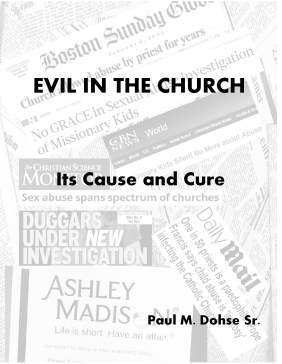
Projected Publication: 2017
The law was NEVER the standard for righteousness, but it is the standard for love and the work of faith.
Protestantism is the Galatian problem all over again. In Paul’s letter to the Galatians he attacks law-based justification, but functioning antinomianism has a slick way of dissing the law while applauding it. On the one hand the law is applauded as the standard for righteousness; ie., justification, but on the other hand some sort of substitute for the law fulfills it. This is anti-law while presaging to applaud it. And by the way, antinomianism is really anti-love.
Hence, while Protestants proudly proclaim themselves people of the book, evil and tyranny reins in the church. Those who show themselves reasonably equitable are really just good Germans. Why is this? Answer: law-based justification. Protestants are perhaps the wiliest in this falsehood because the banner over them is “justification by faith.” While proclaiming justification by faith alone apart from the law, it is really justification by the law. The key here is that like all law-based religions before it, Protestantism makes the law justification’s standard.
As a result, that standard must be met by some sort of substitutional ritual that fulfills the law FOR the “believer.” This actually leads to a “relaxing” of the law because we can’t fulfill its…watch for it….”righteous demands.” Why strive to obey the law when it demands perfection? In fact, Martin Luther and John Calvin both stated that any little falling short makes one guilty of violating every point of the law. Will this lead to a “relaxing” of the law which was the very thing that Christ accused the Pharisees of? Of course it will. As the institutional Protestant church rediscovers its true roots more and more will antinomianism increase? Of course it will. Is that the very thing we are witnessing in our day? Absolutely.
With the Judaizes, the substitute for functioning righteousness was a litany of manmade traditions including the recognition of days and circumcision:
Galatians 4:9,10,11 – But now that you have come to know God, or rather to be known by God, how can you turn back again to the weak and worthless elementary principles of the world, whose slaves you want to be once more? You observe days and months and seasons and years! I am afraid I may have labored over you in vain.
Again, Protestants are really slick at this game. One of their rituals is “living by faith alone.” Instead of salvation being a onetime act that makes us righteous, our salvation is maintained by ritual faith alone works. This is the sort of thing James addressed in his epistle and why Martin Luther had open contempt for that particular New Testament letter.
In Protestantism, like all law-based false gospels, the law is the standard. Righteousness is defined by perfect law-keeping coupled with a substitute for fulfilling the law. Let me repeat that:
In Protestantism, like all law-based false gospels, the law is the standard. Righteousness is defined by perfect law-keeping coupled with a substitute for fulfilling the law.
With the Judaizes it was circumcision et al, with Protestantism it is the manmade tradition of “double imputation.” What’s that? It is the idea that Jesus kept/keeps/fulfills the law for us. If we keep the law we will fall short of its “perfect demands” and will be guilty of violating the whole standard for righteousness. The very verse they use to prove this makes the opposite point (James 2:10) as we shall see further along. But, this very error can be addressed using Paul’s letter to the Galatians:
Galatians 5:2 – Look: I, Paul, say to you that if you accept circumcision, Christ will be of no advantage to you. 3 I testify again to every man who accepts circumcision that he is obligated to keep the whole law. 4 You are severed from Christ, you who would be justified by the law; you have fallen away from grace.
Note that in order to be justified by the law, the receiver of the justification must be the one who keeps it. Unless they alone keep the whole law, they are severed from Christ. “Every man” that wants to be justified by the law must keep it himself. This is why double imputation doesn’t cut it. And in regard to the whole idea of a substituted righteousness, what is the result in every case? A relaxing of the law, and a righteousness that does not exceed that of the Pharisees who substituted the law with their manmade traditions.
This is where double imputation keeps the so-called believer under the condemnation of the law and calls the “believer” to live by faith alone works (ritual) invented by men. Jesus is a substitute for perfect law-keeping which completely misunderstands the purpose of the Old Covenant. The OC uses the law to hold all sin captive. All sin is against the law. The OC imputes all sin to the law, and then Jesus came to end the law (Romans 10:4).
Galatians 3:19 – Why then the law? It was added because of transgressions, until the offspring should come to whom the promise had been made, and it was put in place through angels by an intermediary. 20 Now an intermediary implies more than one, but God is one. 21 Is the law then contrary to the promises of God? Certainly not! For if a law had been given that could give life, then righteousness would indeed be by the law. 22 But the Scripture imprisoned everything under sin, so that the promise by faith in Jesus Christ might be given to those who believe. 23 Now before faith came, we were held captive under the law, imprisoned until the coming faith would be revealed. 24 So then, the law was our guardian until Christ came, in order that we might be justified by faith. 25 But now that faith has come, we are no longer under a guardian, 26 for in Christ Jesus you are all sons of God, through faith.
When one believes on Christ, he/she is baptized in the Spirit and is no longer under the OC to which all sin is imputed. The believer is saved by “the promise” of new birth, NOT the law. In fact, if the law has anything to do with being made righteous, even if it is fulfilled by a substitute, that would make the law an additional “seed” BUT there is only ONE seed:
Galatians 3:15 – To give a human example, brothers: even with a man-made covenant, no one annuls it or adds to it once it has been ratified. 16 Now the promises were made to Abraham and to his offspring. It does not say, “And to offsprings,” referring to many, but referring to one, “And to your offspring,” who is Christ. 17 This is what I mean: the law, which came 430 years afterward, does not annul a covenant previously ratified by God, so as to make the promise void. 18 For if the inheritance comes by the law, it no longer comes by promise; but God gave it to Abraham by a promise.
Protestantism, like all law-based salvation plans, makes the law an additional life source other than the new birth made possible by “the promise” of the Spirit who raised Christ from the grave. This changes the true believer’s relationship to the law. Instead the law condemning, it is the standard for loving God and others.
The law was NEVER the standard for righteousness, but it is the standard for love and the work of faith:
Galatians 5:6 – For in Christ Jesus neither circumcision nor uncircumcision counts for anything, but only faith working through love.
This is the whole point of James 2:10 as set against many verses noting that love fulfills the whole law. The contrast is the point. The new birth is the standard for righteousness—not the law. This makes the whole Protestant “sinners save by grace” a lie from the pit of hell. Those who sin against the law are still under law. Grace in not a covering for sin, it is an ending of the law and its condemnation. Grace has a law: the law fulfilled by the believer’s work of love; read Romans 8 and…
1John 3:3 – And every man that hath this hope in him purifieth himself, even as he is pure. 4 Whosoever committeth sin transgresseth also the law: for sin is the transgression of the law. 5 And ye know that he was manifested to take away our sins; and in him is no sin. 6 Whosoever abideth in him sinneth not: whosoever sinneth hath not seen him, neither known him. 7 Little children, let no man deceive you: he that doeth righteousness is righteous, even as he is righteous. 8 He that committeth sin is of the devil; for the devil sinneth from the beginning. For this purpose the Son of God was manifested, that he might destroy the works of the devil. 9 Whosoever is born of God doth not commit sin; for his seed remaineth in him: and he cannot sin, because he is born of God. 10 In this the children of God are manifest, and the children of the devil: whosoever doeth not righteousness is not of God, neither he that loveth not his brother (KJV).
Christ didn’t come to cover sin via obedience to Protestant orthodoxy which holds to a law-based standard for justification like all other false religions. He came to end enslavement to sin and the law’s condemnation in order to free us to live by love. The law is good for that purpose. In this sense, the law and its truth sanctifies us (John 17:17). In this sense, “If you love me keep my commandments.”
paul


 Paul's Passing Thoughts
5 comments