The Greatest Threat to Civilization in the 21st Century: Protestantism’s Doctrine of Death
 In researching the Reformation, one finds the “terror” of ISIS (Islamic State of Iraq and Syria) wanting in regard to its overall threat to civilization. Islam has always been inept in the politics of logic that despises life. Even many who agree with them will not buy into their means or politics. Per the usual since the 6th century, the likes of them only succeed in stirring up what little wrath there may be in the most passive among us.
A far greater threat, if not the threat, is Protestantism. While it is thought of by and large as a force for good in the world, if not the force for good in the world, its core logic is no whit different from Islam. Both are rooted in zero sum life value (not to be confused with life as zero sum game). The fallen creation is not merely weak by God’s metaphysical standards, it is utterly evil. If you can see it, feel it, smell it, taste it, or hear it—it is evil. The definition of faith is to believe that and nothing else, and a man’s highest calling is to set the masses free from placing value in this life. Protestant leaders are selfless souls in their own estimation, enduring the horrors of life for the sake of those who are in bondage to finding happiness here.
What people think they believe and how they function are two different things. This is where the intelligence of Martin Luther and John Calvin were far superior to their Islamic kinsmen. The latter think it important for people to know why they function the way they do; that wasn’t important to Luther or Calvin at all. In fact, they didn’t think the average person has the ability to know that anyway. Islam is considered fringe because they openly proclaim zero sum life. In contrast, Protestants claim to uphold the “sanctity of life,” but the core value is Luther’s doctrine of death. Islam is always too hasty—Protestantism is patient in its endeavor to plunge the whole world into its identity of darkness and death.
This fact is undeniable: while Protestants proclaim life, their father was a purveyor of zero sum life. Protestants have an appearance of loving life, and many actually think they do, but the core value of their hero and founder is death—this is an unavoidable metaphysical fact. We will first examine what Luther believed about life and reality, how that functions in life, and finally, why it is the greatest threat to the wellbeing of civilization in the 21st century.
The doctrine of zero sum life ALWAYS has three primary elements: material is evil and invisible is good; preordained mediators between the material world and the invisible world, and the goal of utopia. Though the varied assessments in each category are vast, the three fundamentals remain fixed with the SAME results: death and darkness. The only difference is the quality and experience in getting to the predictable end. These are ancient principles found in the cradle of civilization that play themselves out in myriad cyclic progressions of history. The Protestant Reformation was nothing new; it was a biblical version of the same worn-out caste system that has wreaked havoc on the earth since the Garden of Eden, and continues to do so in various and sundry expressions.
Obviously, the Protestant Reformation was not founded on Luther’s 95 Theses. That was a “Remember the Alamo” sort of thing. The doctrinal foundation of the Reformation came about six months later in Luther’s Heidelberg Disputation of 1518 to the Augustinian Order. In it, we find the three basic elements of ancient spiritual caste defined by zero sum life. Luther equated ALL human works with the natural and material:
Much less can human works, which are done over and over again with the aid of natural precepts, so to speak, lead to that end (Theses 2).
The manifest and visible things of God are placed in opposition to the invisible, namely, his human nature, weakness, foolishness (Theses 20).
That wisdom which sees the invisible things of God in works as perceived by man is completely puffed up, blinded, and hardened (Theses 22).
In other words, nothing that man does in this life can be based on wisdom from the invisible because he can’t comprehend it. He is enslaved to “natural precepts.” ALL visible things are defined by “human nature, weakness, foolishness.”
Because the material is supposedly evil, Luther believed that the deprecation of everything human and natural was the only way to experience wellbeing. Man cannot do anything good, but can experience wellbeing that comes from the invisible realm through suffering. Luther believed that Christ came to suffer in order to establish suffering and the annihilation of the natural as an epistemological gateway to the wellbeing of the invisible realm:
The manifest and visible things of God are placed in opposition to the invisible, namely, his human nature, weakness, foolishness. The Apostle in 1 Cor. 1:25 calls them the weakness and folly of God. Because men misused the knowledge of God through works, God wished again to be recognized in suffering, and to condemn »wisdom concerning invisible things« by means of »wisdom concerning visible things«, so that those who did not honor God as manifested in his works should honor him as he is hidden in his suffering (absconditum in passionibus). (Theses 20).
Viz, ALL knowledge of God is hidden in suffering. This is suffering as a plenary epistemology. Stated simply, spiritual wisdom cannot be known, but only experienced through suffering. The material cannot produce anything good which of course includes mankind. By the grace of God, mankind can experience the glory of heaven, but he cannot perform any work that has merit in the material realm.
This brings us to Luther’s preordained mediators for the great unwashed masses between the visible and invisible. He called them, Theologians of the Cross, or in other words, theologians of suffering:
That person does not deserve to be called a theologian who looks upon the »invisible« things of God as though they were clearly »perceptible in those things which have actually happened« (Rom. 1:20; cf. 1 Cor 1:21-25).
This is apparent in the example of those who were »theologians« and still were called »fools« by the Apostle in Rom. 1:22. Furthermore, the invisible things of God are virtue, godliness, wisdom, justice, goodness, and so forth. The recognition of all these things does not make one worthy or wise (Theses 19).
He deserves to be called a theologian, however, who comprehends the visible and manifest things of God seen through suffering and the cross (Theses 20).
These are men specially gifted, if that’s your perspective, in interpreting ALL reality, or at least reality that means anything significant, through redemption or the suffering of the cross. This was Luther’s version of Plato’s philosopher kings. While Plato’s epistemology was based on immutable elements in the shadow world such as geometry and math, for Luther it was the cross of suffering. The gateway to freedom from the bondage of “natural precepts” is the study and meditation of suffering, and better yet, the experience of it.
This is where Luther prescribed law and Scripture as a tool to pursue suffering as an epistemology and way of life. The Bible’s purpose, according to Luther, is to show us the depths of our depravity and worthlessness:
The law wills that man despair of his own ability, for it »leads him into hell« and »makes him a poor man« and shows him that he is a sinner in all his works, as the Apostle does in Rom. 2 and 3:9, where he says, »I have already charged that all men are under the power of sin.« However, he who acts simply in accordance with his ability and believes that he is thereby doing something good does not seem worthless to himself, nor does he despair of his own strength (Theses 18).
Luther’s focus was on the wellbeing of the individual and not necessarily that of society, but obviously, individual wellbeing defines the collective wellbeing of community. The use of the law for self-depravation and the embrace of suffering are key to experiencing wellbeing. Humble, broken individuals lead to a humble society.
The payoff for this way of life is a well-known Reformed doctrine till this very day: Vivification. Luther saw the Christian life as a perpetual cycle of death and rebirth. As man strives to see his depravity in the Scriptures and is driven to despair, the result is a recurring and deepening experience of future glory. This is the formal Reformed doctrine of Mortification and Vivification supposedly pictured in baptism. Hence, baptism doesn’t picture a onetime transformational event—the old self dying with Christ and then resurrected to new life, it is supposedly a picture of Christian life defined by perpetual death and rebirth:
He, however, who has emptied himself (cf. Phil. 2:7) through suffering no longer does works but knows that God works and does all things in him. For this reason, whether God does works or not, it is all the same to him. He neither boasts if he does good works, nor is he disturbed if God does not do good works through him. He knows that it is sufficient if he suffers and is brought low by the cross in order to be annihilated all the more. It is this that Christ says in John 3:7, »You must be born anew.« To be born anew, one must consequently first die and then be raised up with the Son of Man. To die, I say, means to feel death at hand (Theses 24).
Protestants of our day are in no wise confused about the doctrine Mortification and Vivification:
Progressive sanctification has two parts: mortification and vivification, ‘both of which happen to us by participation in Christ,’ as Calvin notes….Subjectively experiencing this definitive reality signified and sealed to us in our baptism requires a daily dying and rising. That is what the Reformers meant by sanctification as a living out of our baptism….and this conversion yields lifelong mortification and vivification ‘again and again.’ Yet it is critical to remind ourselves that in this daily human act of turning, we are always turning not only from sin but toward Christ rather than toward our own experience or piety” (Michael Horton: The Christian Faith; mortification and vivification, pp. 661-663 [Calvin Inst. 3.3.2-9]).
At conversion, a person begins to see God and himself as never before. This greater revelation of God’s holiness and righteousness leads to a greater revelation of self, which, in return, results in a repentance or brokenness over sin. Nevertheless, the believer is not left in despair, for he is also afforded a greater revelation of the grace of God in the face of Christ, which leads to joy unspeakable. This cycle simply repeats itself throughout the Christian life. As the years pass, the Christian sees more of God and more of self, resulting in a greater and deeper brokenness. Yet, all the while, the Christian’s joy grows in equal measure because he is privy to greater and greater revelations of the love, grace, and mercy of God in the person and work of Christ. Not only this, but a greater interchange occurs in that the Christian learns to rest less and less in his own performance and more and more in the perfect work of Christ. Thus, his joy is not only increased, but it also becomes more consistent and stable. He has left off putting confidence in the flesh, which is idolatry, and is resting in the virtue and merits of Christ, which is true Christian piety” (Paul Washer: The Gospel Call and True Conversion; Part 1, Chapter 1, heading – The Essential Characteristics Of Genuine Repentance, subheading – Continuing and Deepening Work of Repentance).
This is Luther’s utopian ideal: perpetual death and rebirth towards ultimate freedom from the natural.
What is the appeal of such a belief? It is the same as it has always been: this life that we are in bondage to does not have to be taken seriously; don’t worry, be happy. Life is worthless, and we are therefore not obligated to invest in it. This life is not what really matters, so don’t sweat it. Sure, if you want to excel in the shadow world, that’s fine, but it’s not really relevant. You can experience life in a completely relaxed mode because it is all just an illusion anyway. As with all trifold spiritual caste systems, EVERYTHING is predetermined, therefore, you are really not responsible for anything that happens. Neither is this point missed among Protestants as well:
What is the appeal of such a doctrine? I think it was stated best by the popular Reformed Mockingbird blog. They wrote an article entitled, The Subjective Power of an Objective Gospel. The following is an excerpt:
What, then, is the subjective power of this message? Firstly, we find that there is real, objective freedom, the kind that, yes, can be experienced subjectively. We are freed from having to worry about the legitimacy of experiences; our claims of self-improvement are no longer seen as a basis of our witness or faith. In other words, we are freed from ourselves, from the tumultuous ebb and flow of our inner lives and the outward circumstances; anyone in Christ will be saved despite those things. We can observe our own turmoil without identifying with it. We might even find that we have compassion for others who function similarly. These fluctuations, violent as they might be, do not ultimately define us. If anything, they tell us about our need for a savior (David Zahl and Jacob Smith: Mockingbird blog). (Paul M. Dohse Sr.: Pictures of Calvinism; TANC Publishing 2013, p. 34).
When it gets right down to the crux of it, this is the appeal in a nutshell. And what are the consequences for our 21st century culture? Dire. A return to the original articles of the Reformation and a proper understanding of it has been growing since 1970. In our day, “New Calvinism” which is a return to Reformation fundamentals has all but completely taken over the evangelical churches worldwide. The political consequences, especially in the United States, could be catastrophic.
 Why? For the first time in world history, the American idea adopted a government for the people and by the people. It was the first government in history to reject the ancient threefold caste system of man’s inability, oligarchy, and utopia. The common three-fold caste system has never produced anything other than suffering and tyranny. Protestantism is merely one of many different versions of three-fold spiritual caste. American Protestants of the past have been a strength for freedom because of their integration with capitalism, but with Protestantism returning to its original European roots, that has already changed dramatically. New Calvinists are markedly anti-American, and this should not surprise us in the least.
Compounding the problem is the aforementioned issue of beliefs versus function. American Protestants profess to believe in individual responsibly and capability, but they function as those totally dependent on experts to understand reality. While they would verbally reject the three-fold caste system based on beliefs, they clearly function by all three elements.
This is confirmed by what evangelicals profess as set against blatant contradictions. The most glaring contradiction is the idea that America is a “Christian nation.” Worse yet, we must be a Christian nation because if we weren’t, that only leaves “secular,” and secular equals evil because, well, it’s not Christian. This is a mentality spawned from element one of spiritual caste: material is evil—invisible is good, and Christianity represents the invisible. My wife Susan, after being a Christian for more than 50 years, is beginning to recognize this. Though she would have always rejected the idea of spiritual caste as a lifelong professional educator, there was a time when she thought the only good teacher was a Christian teacher. In her mind, only Christian teachers had a proper grasp of reality. Where did she get such ideas?
In regard to groups that threaten American liberty, patriots would do well to add Protestants to the list. And unwitting Protestants who think they are patriots should wise up and do their own research. To the New Calvinists, anybody being in control is better than “We the people.” American exceptionalism is based on individual ability, not total depravity. For the most part, New Calvinists do not vote, and if they do, they vote socialist. Why? Because there is only one thing worse than communist rule in their minds: the collective will of totally depraved individuals. This ministry researches in the realm of New Calvinism, and anti-American rhetoric is a constant theme among them.
First, New Calvinism is a huge movement, and growing; second, if America goes south, so goes the world. Right now, America has, at the very least, a 45% leaning towards socialism, and the ever-growing New Calvinist movement will continue to chip away at the remaining 55%. What needs to be done?
Those who get it must stop arguing with New Calvinists on their own terms. They must be confronted in regard to their interpretation of reality and what their mentors really believed. In light of their massive and blatant contradictions to the plain sense of Scripture, why does this movement continue to grow by leaps and bounds? Answer: most Christians would say that we must interpret Scripture for ourselves, but we don’t function that way. If a leader states something that seems like a blatant contradiction to us, we chalk it up to our own inability and assume them to be the experts.
We must come to grips with the fact that these “experts” are no different from the chanting Buddhist monks sitting on the ground dressed in orange bath towels and shaved heads. Such do not benefit American freedom—you have never seen any of them in line at a voting location. New Calvinist numbers are growing at an alarming rate among what is left of evangelicalism, and that could very well tip the balance of influence and America’s future political landscape, and where America goes, so goes the world.
That’s why Protestantism is now the greatest threat to civilization in the 21st century.
paul
Roger Olson, Bikers, Calvinists, and Arminians: Can’t We All Just Get Along?
 “EXACTLY like Calvinists, Olson decries the Christian message of ‘Do, do, do, do,’ while unwittingly propagating the false gospel of keeping ourselves saved by doing nothing. Making sure that we don’t do anything is in fact doing something while begging the question: why is it so important that we continue to do the same thing that originally saved us lest it be a false gospel?”
“Be not deceived: antinomianism is defined by an aversion to the law in sanctification. Antinomianism is defined by ‘one way love’… Be not deceived by the philosopher kings of the institutional church, or simply ‘church.’ When they decry ‘Do, do, do do,’ they are really decrying, ‘Love, love, love, love.’”
There is one reason and one reason only why New Calvinism has completely taken over the institutional church; fundamentally, Protestantism has always been predicated by weak sanctification because of its foundational beliefs in regard to justification. In other words, our functional sanctification is the true indicator of what we believe about justification. And in Protestantism, that has never changed. Therefore, the institutional church has always been primed for a return to the original article.
In the same way, all outlaw biker clubs should unite into one happy family; after all, they all believe in hedonism by unfettered lust alone. Why quibble about the best way to rob a liquor store or beat your “biker bitch”? Those are matters of hedonology. If I am not mistaken, a famous biker once said…
In essentials, unity; in non-essentials, liberty; in all things, charity.
However, bikers wouldn’t let some Protestant sins be named among them once; e.g., pedophilia. One biker club has even formed an effective child abuse advocacy program where they support victims through the legal process and accompany them when they testify in court. This is in stark contrast to Protestants, like their Catholic kin, who defend the pedophiles and blame the victims. Pedophiles have to be isolated in prison, but among Protestants they find that good old fashioned “grace.” While many Neo-Calvinists tacitly support ISIS, biker clubs in Europe have joined the Kurds in fighting ISIS on the ground in Iraq. So, a unification of outlaw biker clubs and Protestantism is unlikely—the bikers wouldn’t have them, but there is still hope for the unification of Protestant factions and even the Catholic Church that spawned them.
Roger Olson, the Mr. Rogers of Protestantism, bemoans the reality that he was forced into a situation where he must defend Arminianism. It is a gig he didn’t want. Good Protestants should be above the fray of public debate. After all, public brawls are biker-like. He argues that Calvinists and Arminians believe the same gospel, and he is absolutely correct about that. And what is that gospel? According to Olson’s spot-on assessment, progressive justification. Of course, he doesn’t use those particular synonyms because it undresses the Protestant emperor, but as we shall see, it is the same thing. Calvinists and Arminians believe the same false gospel that is foundational to Protestant “essentials.”
At one point in Olson’s call for Calminianism, he notes his respect for moderate Calvinists as opposed to the radical Young, Restless, and Reformed (YRR). But of course, he loves the Calvinist, but hates the Hyper Calvinism, not the moderate Calvinism. This is the constant mantra of Baptist leaders who say that a playing card can barely be slipped between moderate Calvinism and Arminianism, and again, they are absolutely right about that. Only one adjustment needs to be made: there is no difference between “moderate” Calvinism and “radical” Calvinism. That’s the same difference between moderate and radical Islam. To show that he knows what he is talking about, Olson cites examples of moderate Calvinists from his contemporary church history mojo. He cites Donald Bloesch and G. C. Berkouwer as examples of moderate Calvinists.
Only problem is, Bloesch, as I document in The Truth About New Calvinism, was one of the forefathers of the present-day New Calvinist movement. He was a champion of the “gospel recovery” movement that was spawned by the Australian Forum. As documented, he promoted the Australian Forum study groups in Presbyterian circles. One of the Forum’s most quoted Reformed teachers was G.C. Berkouwer, who stated unequivocally that Reformed soteriology is predicated on the belief that there is absolutely NO difference whatsoever in an unbeliever and a believer in their state before God. Bloesch was a strong advocate of the EXACT theology that drives YRR.
And what is that theology? What is that gospel? Olson tells us in his Calminian treatise:
Evangelical Calvinists and evangelical Arminians need to reach an accord, an agreement, to put down the long knives and cooperate with each other in opposing the real “default heresy” of American Christianity—moralism.
And what is this “moralism” that is the common foe of the Calminians?
The true, biblical, evangelical gospel is difficult to find in American churches or hear from their pulpits…Not far from my house is a church that purports to be evangelical. For weeks now the marquee has said simply “Decide to grow.” Decide to grow? What does that mean? Ah, much to my dismay I think I know what it means: “Being a good person, even a good Christian, is totally up to you. Use your will to decide to change and become the person that pleases God.” The missing all-important truth is that no one can do that by themselves, on their own, just using their will power.
This is Calvinism to a T including its Gnostic either/or emphasis interpretation of reality. Notice that Olson excludes any discussion of colaboring between us and the Spirit. It’s either ALL of our will, or ALL of the Spirit. We hear this coming forth from the Calvinist camp constantly along with the deliberate use of the words “us alone” as a red herring to throw you off the antinomian scent. When you read, “no one can do that by themselves,” which goes without saying, what isn’t discussed is the truthful discussion of colaboring: out of sight, out of mind.
Olson then goes on to present the same worn-out misuse of Scripture used by Calvinists constantly:
“Work out your own salvation with fear and trembling.” End of story, for most American Christians. Do, do, do. Work harder at being a disciple, a good citizen, a church person, a good neighbor, a successful person.
But Philippians 2:12 can no more be taken alone, without 2:13, than 2:13 can be taken alone without 2:12. “For God is at work in you, to will and to do for his good pleasure.” The Greek word translated “work” in 2:12 is not the same translated “work” in 2:13. So it’s not a sheer contradiction or even a paradox (as many have claimed). The message is: “Carry your salvation out to its best possible conclusion in being Christ-like and do it with care knowing all the time that you aren’t really doing it at all because God gives you everything you need to do it and is even the one doing it in you.”
From beginning to end, everything about being a Christian, in more than a merely nominal sense, is gift. All we have to do, all we can do, is receive the gifts—forgiveness, regeneration, justification, sanctification, glorification. At no point in the process does anyone have the right to claim some good accomplished or achieved as his or her own.
The American gospel, however, is that you must use your will power to change and grow. It’s totally up to you—so just “do it.” The vast majority of sermons focus on that message of moralism. “God would be more pleased with you, you would be more pleasing to God, if you exercised your will to change and grow and become a better person than you are.” That’s not the gospel. The gospel is that you can’t do it. As songwriter Jeremy Camp said in a song popularized by Amy Grant: “Being good is just a fable; I just can’t ‘cause I’m not able. Gonna leave it to the Lord”—the “Lord” being the Holy Spirit.
That’s Calvinism plain and simple that can be tagged with all the Reformed essential truisms: “Christ 100% for us” (in both sanctification and justification), “The vital union” (we keep ourselves “in the love of Christ” by faith alone), “Justification by faith alone” (in sanctification also), and the idea that the Christian life is a “rest” in which we “rest and feed on the saving works (plural) of Christ.”
EXACTLY like Calvinists, Olson decries the Christian message of “Do, do, do,” while unwittingly propagating the false gospel of keeping ourselves saved by doing nothing. Making sure that we don’t do anything is in fact doing something while begging the question: why is it so important that we continue to do the same thing that originally saved us lest it be a false gospel?
Because it demonstrates the fact that both Calvinists and Arminians believe that justification is not a finished work and that it must be maintained the same way it was initiated—by faith alone.
This is irrefutable and unavoidable: note once again the very words of Olson:
From beginning to end, everything about being a Christian, in more than a merely nominal sense, is gift. All we have to do, all we can do, is receive the gifts—forgiveness, regeneration, justification, sanctification, glorification.
Hence, all we can do is receive, and this includes love. Sanctification, like justification, can only be received. Pray tell, what is the difference between this and Tullian Tchividjian’s Liberation 2014 theme “One Way Love.”?
Christ stated clearly what the results of the latter-day religion of lawlessness (anomia) would be: “the love of many will wax cold.” Are we to assume that this love doesn’t include love for God? Just what would be our first clue in all of this? What does “one way” mean? What does it mean to “receive” only?
And lest Olson fall short of defining himself as a pure Calvinist, he dissed the first thinkers in human history to stop the constant flow of blood from determinism’s spiritual caste system of the church state:
This is the gospel, folks. But, by and large, we have lost it. For it we have substituted false gospels of morality, prosperity, “success in life,” niceness, effort, churchmanship, citizenship, the “American way.”
Sigh. Again, we see Olson’s kinship with Calvinism’s Gnostic dualism: if you believe in individualism, you are also guilty of everything in column A, including a prosperity gospel. If you believe you can do anything, that means you believe you must do it all, etc. It’s either material evil, or invisible good. It’s either Luther’s cross story, or the glory story. It’s either all about your glory, or Christ’s glory. It’s either about what you do, or what “Christ has done.”
It’s all the same antinomian false gospel. Sure, “the law is good,” but Jesus must keep it for us lest we do something. Be not deceived: antinomianism is defined by an aversion to the law in sanctification. Antinomianism is defined by “one way love.”
Olson put the icing on the cake by stating the following:
Now I’m sure some readers are wondering how this is not Calvinism. Well, it is! It’s also Arminianism!
Precisely. He goes on to say, in essence, that It’s Not About Election. That’s a title of a book. It’s about Protestantism’s false gospel of progressive justification which both Calvinists and Arminians hold to. Both deny the new birth and new creaturehood that is troubled by a profession of faith not accompanied by a changed life, or denoting a changed life as works salvation. Love is one way. Love is redefined as believing you are loveless. That’s what Calvinists and Arminians alike are saying when they say they love you: it is a statement that you are both loveless.
Also, Olson, like the Calvinists, makes sanctification the exact same gift that justification is.
 So what is the true gospel? The true gospel demands a radical gulf between justification and sanctification. How wide is that gulf? 430 years apart. As far as the east is from the west. It also denies that regeneration is powered by the finished work of justification. It also denies that sanctification is a rest. There remains a rest for God’s people, and it is not sanctification. No, the heretic Roger Olson has it wrong: justification is the free gift, sanctification is a responsibility. We have been assigned as “ambassadors.” That’s not a gift—it’s a job. The Hebrew writer stated that God would be “unjust” if he forgets our works and service of “love.” Unjust? How can that be? Because sanctification has to do with rewards, and that is totally different than justification. Rewards are earned, the free gift of justification cannot be earned. Roger Olson, like the Calvinists he pines away for, is a false teacher who will lead many to hell at worst, and will rob many Christians of their reward at best.
Why? Because not doing something to maintain your salvation is doing something. You may not do anything at Mass to get absolution, but you had to do something to get there in order to keep your salvation. Progressive justification is no different.
Justification is a finished work and there is no law to judge the Christian. The law that formally condemned us is now our instruction for loving God and others. In regard to justification, we are perfect because there is no law to judge us and we are literally born of God. We are the holy ones of God saved by grace, NOT “sinners saved by grace.” Where there is no law, there is no sin. We are born anew and long for salvation from mortality. There may be fear in working out that salvation, but there is NO fear in love. Our sanctified life of love drives the fear of judgment far from us. We are free to labor aggressively in love without fear of condemnation.
Be not deceived by the philosopher kings of the institutional church, or simply “church.” When they decry “Do, do, do, do,” they are really decrying, “Love, love, love, love.”
Come out from among the wicked false teachers and their false antinomian gospel of lovelessness.
paul
Calvinism: The Root of All Evil in the American Church
 Originally posted August 21,2013
Show me the Money.
Why has New Calvinism taken the American church by storm? Because the American church was already primed for it. Before authentic Calvinism was rediscovered by a Seventh-Day Adventist in 1969, America was, and always has been half-pregnant with the Puritan form of Calvin’s Geneva.
Calvinism makes everything about justification while excluding sanctification for a very simple reason: control. If justification is a finished work, and all that is at stake is eternal rewards in heaven, the church would not be nearly the institution that it is today. Why is there big money in religion? Why is there a church every two miles in America with a 500,000 dollar annual budget? Why did 3,000,000 people show up on a beach to see the new Pope? Why does the Catholic Church have so much power? Because salvation is big business my friend. If salvation is found in an institution, it will all but rule the world.
Plain and simple: the Reformers taught that the same forgiveness for sin that saved you needs to be continually sought out to maintain salvation (justification), and that forgiveness can only be found in the Protestant church. Sola Fide indeed, there is no money in sanctification; the big bucks are in justification. From a worldly perspective, Christ had a horrible business plan:
Go therefore and make disciples of all nations, baptizing them in the name of the Father and of the Son and of the Holy Spirit, teaching them to observe all that I have commanded you. And behold, I am with you always, to the end of the age.
There is no money or power in making disciples; the money is in making saved people and requiring them to be faithful to the institution in order to stay saved. In business, we call that RMR (reoccurring monthly revenue).
A finished justification and focus on discipleship empowers the individual, not the institution. Who the Master is—is a settled issue and the focus is preparing for His return by making maximum use of the individual talents given by grace. But when keeping our justification is the focus, individual responsibility to the Master is relegated to the closets. Come now, let’s be honest, how many Christians in the American church even know what their spiritual gifts are? How often do we see church “services” where we “encourage each other unto good works” as opposed to being there to “receive more Jesus.”
The parable of the talents is teaching about a servant who sought to only give back to the Master what he had originally received. And that is exactly what the Reformers promoted. Calvin et al believed that sanctification replaced the Old Testament Sabbath. We will make it to heaven if we “rest” in our salvation.
Enter a conversation I had with a brother not but two days ago:
Ya know Paul, this New Calvinism stuff is supposedly so great, but I have been a member of this church for ten years now, and what? Maybe five people have been saved in that time.
Exactly. Let’s face another fact, people aren’t being saved, if anything, they are just being shuffled around or convinced they were never saved to begin with. The reason for this is simple: Christ said to let our good works shine before men so that our Father in heaven would be glorified. That concept was anathema to Calvin. The fact that sanctification is a Sabbath rest should speak for itself.
The double myth of Arminianism.
Arminianism is another Protestant myth. It centers on the election debate, a doctrine that Calvinists don’t even believe to begin with. The Arminian/Calvinist debate is a double myth. Start thinking for crying out loud, what power and control would there be in election? There is no money in election either. Election portends a settled eternal destiny. If there is election, what do we need the institutional church for? “Election” only gets you into the race for “final justification,” but the race must be run in the church so that you can get your perpetual forgiveness that keeps you in the race. My friend, always follow the money. Always.
While arguing for free will versus total depravity, Arminians have always functioned like Calvinists. Since the Pilgrims Puritans landed on our Eastern shores, we have had Calvinism Lager and Calvinism Light. Arminianism is closet Calvinism. Both devalue sanctification. Calvinism completely rejects sanctification as “subjective justification.” Arminians give tacit recognition to sanctification while completely rejecting it by the way they function. The lager form proudly shows forth Calvin’s doctrine of ecclesiastical justification while Arminians live by John Calvin bumper stickers:
We are all just sinners saved by grace.
This is Calvin’s view of Christians remaining totally depraved while receiving justification in the present-continuance tense.
Just this week, I saw the following John Calvin bumper stickers posted by people who would vehemently deny that they are Calvinists:

This is based on Calvin’s Redemptive Historical hermeneutic and Luther’s Cross Story epistemology. The idea is that the Bible was not written for the purpose of grammatical exegesis, but rather to contemplate the redemptive narrative only leading to subjective, perpetual justification that is necessary to achieve “final justification.” Knowing the Bible factually is Luther’s Glory Story, knowing the Author is Luther’s Cross Story. In other words, every verse in the Bible is about justification and not wisdom for sanctification, the proverbial, “living by lists” and “do’s and don’ts.”
And….

Right, because sanctification is “subjective justification.” Any concern with our outward behavior is, as Calvinist hack Dr. Michael Horton states it, “trying to BE the gospel rather than preaching the gospel.” This fosters the very thing that makes Christianity contemptible to the world—preaching the gospel and not living it. It is the Sabbatical sanctification fostered by John Calvin himself and promoted by Arminians wholesale.
Calminianism is the real reality.
Sanctification?
So ok, the Bible has much to say about justification by faith alone, but where is this standalone subject of sanctification that is a different matter of Christian living altogether? One place among many would be 1Thessalonians 4:3ff:
3 For this is the will of God, your sanctification: that you abstain from sexual immorality; 4 that each one of you know how to control his own body in holiness and honor, 5 not in the passion of lust like the Gentiles who do not know God;
Obviously, sanctification is all about KNOWing HOW to control our bodies. And even more obvious is the fact that justification has nothing to do with that at all. And also obvious is the fact that the two aforementioned Calminian metaphysical bumber stickers totally reject this biblical definition. Let’s have another moment of honesty. How many Christians know more about controlling their body today than they did yesterday? And does that affect how the world sees us, and God?
Fusion and dichotomy.
Sanctification is a continued endeavor to learn more and more how to control our bodies from the Scriptures. Calvinism rejects that as the Glory Story. A focus on controlling our own bodies makes life about us and “eclipses the Son.” It fuses justification and sanctification together while dichotomizing anthropology. The opposite should be true in regard to both categories. Calminianism is an upside down Christian life.
Anthropological concepts; i.e., what makes people tick, are deemed pragmatic and unspiritual. Rather than seeing these subjects as wisdom where Christians ought to be outdoing the world, they are rejected as “living by lists” and “living by do’s and don’ts.” I like what one pastor had to say about those truisms:
They are telling us the following: “Don’t live by do’s and Don’ts.”
A prime example is something that everyone is born with: a conscience. The only Psychiatrist in history that really had a track record of helping people was O. Hobart Mowrer. The main thrust of his therapy was an emphasis on keeping a clear conscience. He believed that most mental illness was caused by a guilty conscience. He cured people by insisting that they deal with unresolved issues of guilt. Mowrer, once the President of the APA along with a long list of distinguished awards and appointments, wrote The Crisis in Psychiatry and Religion. The book rejected the medical model of Psychology and fustigated Christianity for relegating the care of the “mentally ill” to Freudian Psychology. Mowrer was not a Christian.
Nevertheless, he is the one who most inspired the father of the contemporary biblical counseling movement, Dr. Jay E. Adams, who applied Mowrer’s practical approach to biblical counseling. Adams did this because he observed Mowrer’s astounding results while doing an internship with him in the summer of 1965.
This only makes sense. The apostle Paul instructed Christians to “keep a clear conscience before God.” The Bible has much to say about the subject of conscience. Christians should use the Bible to be wiser in all areas of human practicality and should excel at it far beyond those who live in the world. Let’s have another honesty moment: how many sermons do we hear on the importance of practicality in the Christian life? Subjects such as, planning, accountability, etc. Unfortunately, these biblical subjects are dichotomized from the “spiritual” and deemed pragmatic.
At the same time, justification and sanctification are fused together in an effort to live out a Sabbatical sanctification; i.e., sanctification by faith alone. This is nothing new, James rejected the concept in his epistle to the 12 tribes of Israel that made up the apostolic church. It is also a Gnostic concept that sees the material as evil and only the spiritual as good. Therefore, since anthropology is part of the material realm, any practicality thereof cannot benefit the spiritual. Supposedly.
Another concept, along with conscience, is that of habituation. Through discipline, habit patterns can be formed that lead to change, ask anyone who has been in the military. People who inter the military come out as changed people. Because of our Protestant heritage and conditioning, these concepts seem grotesquely pragmatic. But according to the Bible, we are to make use of them.
Sanctification is a many-faceted colaboring with the Holy Spirit, and the Spirit’s power is unleashed through wisdom and obedience (James 1:25). We must know assuredly that justification is a finished work, and absolutely nothing that we do in sanctification can affect it for better or worse. This is what purifies our motives in our love for Christ in sanctification. “If you love me, keep my commandments” has absolutely nothing to do with our justification. It’s for love only, not a working for justification. We are thankful for our justification, but that thankfulness doesn’t save us or keep us saved. Only Christ saves—the new creature now loves Christ because that’s who he/she is. Christ’s love made it possible for us to love Him in sanctification, but nothing in sanctification keeps us saved. Sanctification looks not for a “final justification,” but readies itself for the Master’s return and longs to hear the words, “Well done faithful servant!”
When I was a young boy, I often lived with my grandparents during the summer. My grandfather was a real-life John Wayne type. He worked as a construction foreman for a large company. And he was my hero. Before he left for work in the morning, I would sheepishly await for him to depart before beginning a flurry of tasks around their small farm. I would always have the tasks done well before his arrival home and waited at the end of the drive to hear his truck’s humming wheels come down State Route 125. I would then take him around the property and show him the finished tasks. His smile and compliments were my reward. These are tasks that I didn’t have to do; our love for each other was always something totally different from those tasks. I knew assuredly that he would love me whether I did those tasks or not because I was his grandson—his pride and joy. Some idea that the withholding of serving him in order to elevate the reality of his love for me would have been a ridiculous notion.
Justification and sanctification must be separate. Anthropology and the spiritual must be fused. Our bodies must be controlled and set apart for good works. This will lead to the showing forth of our good works and the glorification of the Father leading to salvation for others, not sheep redistribution.
Spiritual abuse and disdain for justice.
A devaluing of our own holiness for fear that it will eclipse the holiness of God, coupled with salvation being sought in the institutionalized Calminian church, has led to the same indecencies seen in the mother of the Reformers; the Roman Catholic Church. Rome has never repented of its abject thirst for blood, and the fruit does not fall far from the tree.
The family split for the time being, but the Reformers never departed from Rome’s ecclesiastical justification found through absolution by church leaders. When this is the case, any vehicle going to heaven will suffice for heaven’s sake alone. The institution will never be threatened for the sake of the few. To the leaders, their existence and power is threatened, to the parishioners, their salvation is threatened. The institution must be preserved.
This is no new thing, in the minds of the Jewish leaders; Jesus Christ was sacrificed to preserve the Jewish religious system. If even Christ Himself was expendable in this mentality, what will be of the molested and raped? Besides, we are all just sinners saved by grace anyway, right? Is justice therefore anywhere on the radar screen in this discussion? Hardly. Besides, the raped and spiritually abused should be thankful because what they deserve is hell anyway, right? Once this is understood, the landscape we see today in the American church should be no surprise whatsoever.
What is the answer?
The church is a sanctified body and not an institution for final justification. We are in the business of making disciples and not keeping people justified by faith alone in sanctification. The sanctified body doesn’t justify, it is God who justifies. Men must stop worshiping at the altar of ecclesiastical justification. Justification is free to us and finished, sanctification isn’t. Sanctification is where we show our love to the savior as servants, not leaches. Evil men like Paul David Tripp who posit the idea that the Christian’s whole duty is to “rest and feed” and wait for “new and surprising fruit” because Christians only “experience” fruit and don’t participate in it must be rejected with extreme prejudice. Their evil seed was spawned in 1970, but they have been in firm control of the American church for 25 years while proclaiming each year a “resurgence.” What do we have to show for it?
It is time for men and women to recognize their calling, their new birth, their indwelling counselor, their gifts, and the authority of Christ and His word alone. There is NO traceable lineage back to the apostolic church like the genealogy documents burned by Titus. Murdering mystic despots have no claim on any authority of the church.
Godly authority is continued wherever a spirit-filled Christian picks up a Bible and obeys its words. A church is a sanctified, obedient fellowship, not a justified institution drunk with its own visions of grandeur.
paul

Charles Haddon Spurgeon: The Prince of Preachers?
Originally published July 29, 2013
“The problem is the fusing of law and grace, not election. People on both sides of that argument can fuse law and grace together and often do….Notice that who does the work is not the issue. Work period is the issue.”
Protestantism is the foundation of the American church. Our heroes of the faith are those who protested Rome but never left Rome. Augustine, Luther, and Calvin merely believed they could do Rome better. Luther and Calvin in particular were fed-up with the popes and gave birth to a resurgence of Plato’s moral tyranny. The popes were in the tyranny business for money and the fulfillment of sinful desires; the Reformers were in the tyranny business for the glory of God. Their mentor, Augustine, boldly proclaimed that the Bible was useless without Plato’s insight and proclaimed Plato a pre-Christian Christian.
Plato’s philosophical principles and anthropomorphic presuppositions laid the foundation for every political and religious caste system in Western culture. Plato’s DNA is in every tyrant ever born in the West whether political or religious. His philosophy lives in both anemic form and viral, fleshing itself out in either philosophical capitulation or the zealot’s bloody axe. Only God knows the number buried in that landfill named, “The Traditions of Men.”
During the first advent, Christ spoke often of two concerns: the traditions of men and antinomianism. Anti-law of God is made possible to the degree that the authority of men usurp the authority of God’s word. Tradition is powerful and often relegates truth to a metaphysical anomaly. Such is the case with American religious heroes. Their stardom defies logic and truth. While Americans shake their heads in disbelief at documentary films that show Hitler pontificating to swooning masses, we celebrate the Pilgrim Puritans who hung Quakers and baptized women in waters of death. Tradition knows no limits in regard to hypocrisy and ignorance. Better to skim the Cliff Notes of tradition than to suffer a possible stroke by the exercise of thinking.
Calling Charles Haddon Spurgeon the “Prince of Preachers” is perhaps the grandiose example of illogical tradition. Spurgeon was a shameless Calvinistic hack. He once said,
There is no such thing as preaching Christ and Him crucified, unless we preach what nowadays is called Calvinism. It is a nickname to call it Calvinism; Calvinism is the gospel, and nothing else.
The most inconvenient thing ever for admirers of Spurgeon is the truth. He constantly disregarded the plain sense of Scripture, though eloquently. While comparing Augustine and Calvin to the apostle Paul in the same sermon (A Defense of Calvinism), any concern for Paul’s warning of being a proponent of a doctrine named after a man was totally disregarded by Surgeon in open defiance to the truth (1COR 3:1-9).
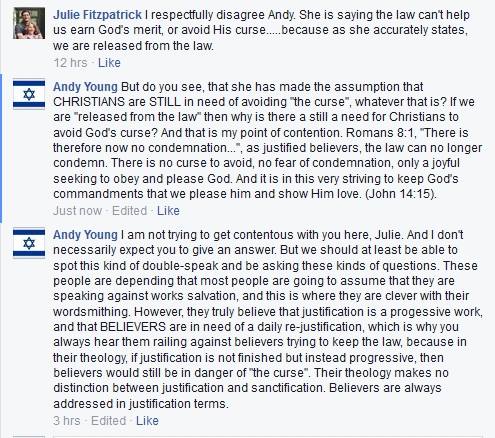
But the fundamental problem is the fact that Calvin taught a blatant false gospel. He believed that grace was not possible unless Christ fulfilled the law for us (CI 3.14.9-11). He believed that Christians are still “under law” which is the very definition of a lost person in the book of Romans and the premise for Calvin’s total depravity.
Hence, Christians remain under the law for justification and must live their Christian lives by faith alone in order to keep their salvation. If Christians live by faith alone in sanctification, the perfect obedience of Christ is perpetually imputed to us and we remain saved. Of course, this requires a complex doctrinal judgment in regard to what is works in sanctification and what is not a work in sanctification in order to live our Christian lives by faith alone resulting in the maintaining of our salvation. This is the very reason for the anemic sanctification that has plagued Protestantism for centuries. We either throw Law out the window completely, or live in fear regarding what is a work and what isn’t a work in our Christian lives lest we find ourselves in “works salvation.”
The problem is the fusing of law and grace. Not election. People on both sides of that argument can fuse law and grace together and often do. Unbelievers are “under law” while believers are “under grace.” We are justified APART from the law (ROM 3:21). Christ didn’t come to fulfill the law FOR OUR JUSTIFICATION; He came to die for our sins so that a righteousness APART from the law could be credited to our account. If Christ had to fulfill the law…. for our justification, law is still the BASIS for our justification and justification is then NOT OF GRACE. The basis of our justification is not law, we are rather UNDER GRACE. This is what the apostle Paul wrote:
Romans 11:6 – But if it is by grace, it is no longer on the basis of works; otherwise grace would no longer be grace.
Notice that who does the work is not the issue. Work period is the issue. The BASIS of grace is the issue here, and if the basis of grace is works it is no longer grace. If Christ had to keep the law for us to make grace possible, according to Paul, grace is no longer of grace. To the contrary, Paul states that Christ came so that he could fulfill the law through us in sanctification completely separate from justification:
Romans 8:1 – There is therefore now no condemnation for those who are in Christ Jesus. 2 For the law of the Spirit of life has set you free in Christ Jesus from the law of sin and death. 3 For God has done what the law, weakened by the flesh, could not do. By sending his own Son in the likeness of sinful flesh and for sin, he condemned sin in the flesh, 4 in order that the righteous requirement of the law might be fulfilled in us, who walk not according to the flesh but according to the Spirit. 5 For those who live according to the flesh set their minds on the things of the flesh, but those who live according to the Spirit set their minds on the things of the Spirit. 6 For to set the mind on the flesh is death, but to set the mind on the Spirit is life and peace. 7 For the mind that is set on the flesh is hostile to God, for it does not submit to God’s law; indeed, it cannot. 8 Those who are in the flesh cannot please God.
Notice that a perfect keeping of the law is not required for us in sanctification to please God for justification. Why? Because the two are separate and there is no law in justification for the believer. The two are separate. We are saved apart from the law for justification and the law informs our sanctification (ROM 3:21, GAL 4:21). Calvinism propagates a grace based on works. Its consummation is an antinomianism where Christ must keep the law for us because we are unable to please God through the perfect fulfillment of it in our Christian lives—perfection as a goal not withstanding in sanctification, but not for justification. According to Calvinism, we have no faith that is alive; we are still dead in our trespasses and sins. It is of the variety that separates us from the fulfillment of the law in sanctification as well. Only Calvin was genius enough to devise a doctrine that combined the best of works salvation and antinomianism.
Only truth sanctifies (John 17:17). The idea that Spurgeon ever helped anyone with his preaching is an illusion grounded in the traditions of men.
paul

 Paul's Passing Thoughts
6 comments