
Is The Baptist Tithe Nothing More or Less Than a Catholic Indulgence?
 “Christians” need to understand church isn’t what it used to be. It was ok for about a 100 years due to a mixture of Scriptural truth and Protestant orthodoxy, but once again, the church is returning to authentic Protestantism—Protestantism was ok when it was misinformed by grammatical vestiges of Scripture, but those days are gone; Protestantism is returning to the original article at breakneck speed.
And few misinformed sanctified pastors of the old school are standing their ground; yes indeed, everybody is doin’ it.
The likes of John Piper and John MacArthur Jr., who clearly represent mainline evangelicalism, have said in no uncertain terms that being a church member is synonymous with being part of the body of Christ (8:25 mark). Ministries like 9 Marks aka Mark Dever make it clear that church leaders, according to them, have authority over salvation on earth via John Calvin’s “power of the keys.” TANC Ministries has written on these facts extensively with accompanied citations numbering in the hundreds.
Also in vogue by church leadership is bringing people up on church discipline for not tithing. This is heavily endorsed by the who’s who of the Southern Baptist Convention like Al Mohler and David Platt. Church discipline is the Catholic version of excommunication. It’s their way or the highway, and in this case, a highway to hell according to them. While attending a local SBC pastors conference some time ago in Springboro, Ohio, I got into a serious tiff with one of the workshop teachers over tithing cash. In other words, somebody who merely puts cash directly into the golden plate or sacred basket without personal identification. His argument at the time to me follows: “That’s not being accountable to the church leaders.”
As a longtime SBC pastor, let me share the paramount SBC pastor fib: “I don’t know what the members tithe.” And the same SBC pastor hacks that would tell you that will also stick out their chests and say, “I am on my way to the hospital to visit ________, God put him there to extract the tithes he has been robbing from God.” In the past, half pregnant Protestant pastors used fear, the kickback of prestige, and the allurement of tax deductions to get the tithe, now in keeping with a more accurate Protestantism, they will take away your salvation if you don’t pony up. Shockingly, many evangelical churches require a financial statement in lieu of membership, and people actually cooperate accordingly.
How can this be? While the populous is becoming more and more irreligious, the church infrastructure that continues to be supported by private funds defies belief in light of the church’s steroidal hypocrisy and indifference to justice. One example among myriad follows: while the church doth protest abortion contentiously, statistics show that abortions are higher in number among evangelicals than those of the secular realm. Regardless of outrages perpetrated by both churches, Catholic and Protestant, the money keeps pouring in. There is only one answer that makes any sense at all: the church brokers salvation. And the linchpin of the deal is good ole’ fashioned forgiveness of “present sin.”
Whether Protestant or Catholic, the brokerage of forgiveness knows no bounds. In medieval times, Catholics could purchase forgiveness for premeditated murder before they committed the act in case fate would prevent one from making it to the parish after the deed was accomplished. The price list for Catholic indulgences is fairly easy to find online via Google. TANC possesses some actual cash receipts for indulgences from the 1940’s. Actually holding them in one’s hand and reading them is downright creepy. The concept certainly gives new meaning to the truism, “It’s easier to get forgiveness than permission.”
Protestants are a little bit more discreet in brokering forgiveness for “present sin.” The idea here is that justification is defined by fulfilling the “righteous demands of the law” instead of new birth into the literal family of God. Think about it: if we are once born again always born again and sealed by the Holy Spirit until redemption, what do we need the institutional church for? Trust me, merely being better informed on how to love God and others does not raise the stakes high enough to support four million dollar aquariums in the church lobby; no my friends, it is our very salvation that must be at stake—that’s what brings in the big greenbacks. In an envelope with your name on it of course, and studiously recorded lest you not get a tax deduction (wink, wink).
But should I pay the 10% temple tax on net or gross income? According to everyone, gross, who knew? When you give saint to saint you give from net income because that’s all you have realistically to contribute to a specific need, but when it comes to tithing so the church can decide how to use your money to “meet need,” it’s based on gross income. Go figure.
Luther and Calvin both were huge on the present sin going against our justification gig, and forgiveness of present sin, according to them and Protestant orthodoxy, can only be found where “God has assigned it,” namely, your local Protestant church. So, is this nothing more or less than a Catholic indulgence? The rhetorical answers follow: Did you sin today? Will you sin tomorrow? Is forgiveness only found in the church? Can the church take away your salvation? Can you be brought up on church discipline for not tithing? Or the short version: Does a bear poop in the woods?
Justification has NOTHING to do with “present sin.” We can suffer present consequences for sinning against our father in regard to family sin, and such sin is not love as articulated in the Bible, but in regard to sin against justification, there is NO law and no sin accordingly which means we don’t need the church for any reason whatsoever except to support the egos of the rich and famous.
All we need is like-minded fellowship that encourages us unto good works and the giving of our money to N-E-E-D, not institutions. We are a holy nation of priests with ONE authority ONLY: Christ the King. Our unity comes through agreement on the truth we love—not shameless Protestant orthodoxy. We are guided by the indwelling of the Spirit, not lovers of filthy lucre. We are slaves to no man save Christ…
…come out from among them and be free.
paul
Protestant/Baptist Theological Stupidity: A Mother Can Give Birth and Leave the Baby Unborn
 Meme Post #3
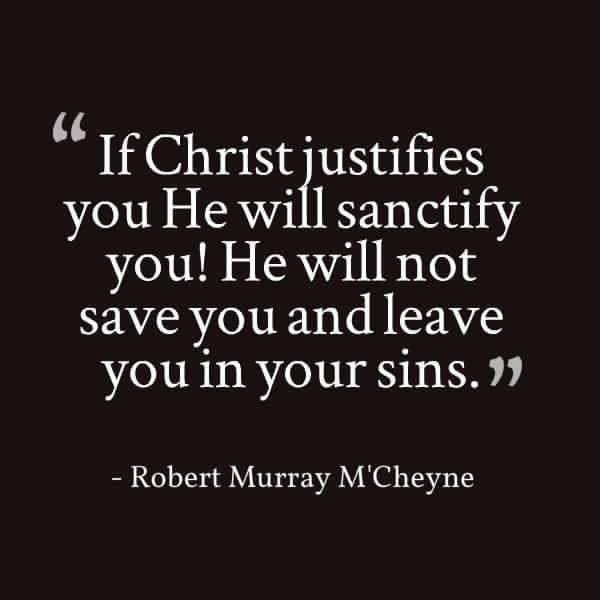
Thank goodness your mother didn’t give birth to you and leave you unborn! Such is the logic of this meme because those who hold to progressive justification do not understand the new birth. The new birth ends sin—there is no sin to be left in or to deal with in regard to justification. Christ does not finish justification through sanctification. The new birth justifies completely apart from the law whereas sanctification needs the law (Jn 17:17, Matt 4:4). The weakness of the flesh yields no condemning sin that Christ could theoretically “leave us in.” There is NO “your sin” as that sin died with the old you. Your so-called “present sin” is not the same sin that once condemned you. The new birth ends condemning sin and you cannot be unborn.
John Piper Proclaims “Christians” Condemned and in Need of Continued Salvation
 One of the major truths that will be emphasized in the present TANC book project is that the Protestant Reformation was NOT based on the Bible. The Protestant kerfuffle with Rome concerned differences in world philosophy—not theology. Sola scriptura is a blatant falsehood. Martin Luther concocted a contending worldview in opposition to an increased influence of Thomism in the Catholic Church. Luther then dressed up his philosophy in Bible verses. Actually, to be more specific, he dressed up Neo-Platonism in biblical garb. This is hardly some deep, dark secret; a cursory observation of church history reveals this, unless you get your church history from a Protestant seminary.
Since the Protestant Reformation was really based on Plato’s Republic, the necessary theological fit was/is progressive justification for those who are preselected and the last to know if they are really selected or not. They get the news at the final judgment. Until then, EVERYBODY is presently under condemnation and in need of continued justification because we have “present sin.” In order to be perpetually rejustified, we must “preach the gospel to ourselves every day,” obey the pastors, and be a faithful church member.
Due to the fact that sola scriptura is a farce, the present-day expression of authentic Protestantism via New Calvinists routinely contradicts the plain sense of Scripture in insane fashion, and nobody blinks an eye. Moreover, cowardly pastors who know better even as confused Protestants allow the New Calvinists to be named and quoted among their sheep.
Let’s talk about one example, the one that prompted this post. On August 22, 2015, John Piper prayed at a Christian anti-abortion rally at a Planned Parenthood location in St. Paul, Minnesota. In that prayer, he stated:
And we acknowledge in the face of your holiness and power that we are sinners. Everyone standing here in this gathering is a sinner in desperate need of salvation that you offer in Jesus Christ. We know that our conscience condemns us, and if our own consciences do, how much more your holy law. So we have not lived up even to our own standards, let alone to your standards. And we confess our sins corporately before you as individuals.
In direct conflict to the Bible’s clear definition of a believer, Piper proclaimed everyone at the gathering as condemned under the law; this is the Bible’s succinct definition of a lost person. In addition, Piper clearly proclaimed in the prayer that Christians are still in need of salvation.
How does he get away with this and stand as one of the most beloved evangelicals of our day? Because he supposedly has authority, and we the believers have no real ability to perceive truth. Clearly, if it comes down to what we understand our Bibles to say versus what John Piper says, he will win the day every time.
So then, for all practical purposes, he speaks for God.
paul
The Protestant Twisting of 1John, Part 4 – A Clarification: Gospel and Obedience
 Originally published April 20, 2015
Listen to audio or download audio file.
Welcome to Blogtalk Radio False Reformation this is your host Paul M. Dohse Sr. Tonight, part 4 of “The Protestant Twisting of 1John: A Clarification.” If you would like to add to our lesson or ask a question, call (347) 855-8317. Remember to turn your PC volume down to prevent feedback. Per the usual, we will check in with Susan towards the end of the show and listen to her perspective.
If you would like to comment on our subject tonight, you can also email me at paul@ttanc.com. That’s Tom, Tony, Alice, Nancy, cat, paul@ttanc.com. I have my email monitor right here and can add your thoughts to the lesson without need for you to call in.
Initially, I wanted to just address 1John 1:9 in a thorough way to debunk this whole Protestant idea that we keep ourselves saved by returning to the same gospel that saved us. And, the way we reutilize the same gospel that saved us is a continued repentance for “present sin.” It’s this whole idea that Jesus died for our past sins, but we must ask forgiveness for known present sin in order to keep ourselves saved. When we do that, it’s a reapplication of Jesus’ death for present sin. Hence, 1John 1:9.
But it doesn’t stop there in Protestant soteriology. They then concern themselves with the question of true righteousness. If our sins are forgiven, that keeps us out of hell, but it doesn’t make us truly righteous. What to do? So here is what they came up with: Jesus came to die for our forgiveness, past and present IF we return to the same gospel that saved us by faith alone, but He also came to keep the law perfectly so that His perfect obedience could be imputed to “Christian” life. The Reformed call this “double imputation.”
And it turns the true biblical gospel completely upside down. First, it makes the law the standard for justification. There is no law in justification, we are justified APART from the law. Why would Christ obey the law for us when justification is apart from the law? Then what is the standard for righteousness? NOT the law, but rather God’s righteousness. What’s that? For one, and primarily, it’s the new birth. For us, the standard of righteousness is being a child of God. Being the offspring of God is what makes us righteous. Kinship, not law.
Secondly, we are not justified by the law, no matter who keeps it—who keeps it is not the point, the law itself is the point, because there is no law that can give life. Only the new birth gives life (Galatians 3:21).
Thirdly, double imputation is obviously a covering for sin with the righteousness of Christ and not an ENDING of sin. Our sins are not “taken away” they are only covered. “Christianity” is about living a life of faith only to maintain a covering for sin. Therefore, we are not the ones really obeying, and therefore, we are not the ones performing love either.
And boy does this notion land us right where we are at in 1John. I have invested so much in the untwisting of 1John 1:9 in this series, that I thought, “I might as well finish the book out and make it our 1John commentary.” And so it is.
This is our theses: the new birth creates us anew into people who love the truth, and therefore practice oblove. That’s a new word that I made up. What is the definition of oblove? It’s the combination of the words “love” and “obedience.” Biblically, you cannot separate these two words, they are synonymous. The law is the Bible, and it is a book of condemnation to the unsaved and a beloved love manual for those born again. This is also why our sins are not covered, they are taken away (1John 3:5). Christ came to take away sin, not cover it.
You know, many go to church and sing the hymns, and many listen to Christian radio and raise their hands in praise while stopped at red lights, but a lot of that good Protestant music is just really bad theology that imperils the soul and stops far short of inciting the curiosity of the unsaved. One example is a beautiful song by Steve Camp titled, “He Covers Me.” But again, the premise of the song is that our sins are covered and not ended.
You know, there is a quiet revolution going on in Christianity. Christian husbands are beginning to stand up and assume their rightful role as spiritual leaders. This necessarily means leaving the institutional church which deliberately seeks to emasculate the men among us. One thing that I hear back is that fathers are beginning to stand silent and not sing traditional songs that are deviations from the truth. Good for them. I even hear back that their children ask, “Daddy, why aren’t you singing?” And they tell them why. Undoubtedly, children and wives will get way more out of these types of examples rather than 365 different versions of the same gospel that saved us.
“Why is it that all we ever hear about in the church is the gospel?” Because we have to keep returning to the same gospel that saved us to keep ourselves saved, and by the way, the only place that this continued atonement is valid is in the institutional church. Sure, Protestants will deny salvation by church membership; they will rather become indignant and state that salvation is only found in the gospel. However, the fact remains that they also believe that authority to preach the gospel is vested in the institutional church.
If our sins are only covered, the focus of the Christian life is to keep ourselves covered, not obedience because now obedience is defined by law-keeping. We have been trained mentally to think of obedience as something demanded by the law. This makes the law a co-life-giver with God. At least in one regard, the idea of one God connects with this idea. There is only one life-giver (Galatians 3:10-21).
I strongly suspect that when the Bible talks about God being one, it in no way includes the context of the Trinity. It’s interesting to note that in context of Galatians 3:10-21, the point is that the law is not a coequal with God—there is only one God.
1John 3:1 – See what kind of love the Father has given to us, that we should be called children of God; and so we are. The reason why the world does not know us is that it did not know him. 2 Beloved, we are God’s children now, and what we will be has not yet appeared; but we know that when he appears we shall be like him, because we shall see him as he is. 3 And everyone who thus hopes in him purifies himself as he is pure.
4 Everyone who makes a practice of sinning also practices lawlessness; sin is lawlessness. 5 You know that he appeared in order to take away sins, and in him there is no sin. 6 No one who abides in him keeps on sinning; no one who keeps on sinning has either seen him or known him. 7 Little children, let no one deceive you. Whoever practices righteousness is righteous, as he is righteous. 8 Whoever makes a practice of sinning is of the devil, for the devil has been sinning from the beginning. The reason the Son of God appeared was to destroy the works of the devil. 9 No one born of God makes a practice of sinning, for God’s seed abides in him, and he cannot keep on sinning because he has been born of God. 10 By this it is evident who are the children of God, and who are the children of the devil: whoever does not practice righteousness is not of God, nor is the one who does not love his brother.
11 For this is the message that you have heard from the beginning, that we should love one another. 12 We should not be like Cain, who was of the evil one and murdered his brother. And why did he murder him? Because his own deeds were evil and his brother’s righteous. 13 Do not be surprised, brothers, that the world hates you. 14 We know that we have passed out of death into life, because we love the brothers. Whoever does not love abides in death. 15 Everyone who hates his brother is a murderer, and you know that no murderer has eternal life abiding in him.
16 By this we know love, that he laid down his life for us, and we ought to lay down our lives for the brothers. 17 But if anyone has the world’s goods and sees his brother in need, yet closes his heart against him, how does God’s love abide in him? 18 Little children, let us not love in word or talk but in deed and in truth.
19 By this we shall know that we are of the truth and reassure our heart before him; 20 for whenever our heart condemns us, God is greater than our heart, and he knows everything. 21 Beloved, if our heart does not condemn us, we have confidence before God; 22 and whatever we ask we receive from him, because we keep his commandments and do what pleases him. 23 And this is his commandment, that we believe in the name of his Son Jesus Christ and love one another, just as he has commanded us. 24 Whoever keeps his commandments abides in God, and God in him. And by this we know that he abides in us, by the Spirit whom he has given us.
The law is not the standard for justification; it is the standard for our love, obedience, and submission. If there is a standard for justification at all, it would simply be defined by the new birth. We are justified by virtue of being in God’s family. The first man was a created being. God did not decide to save man by restoring a covenant of works, or restoring man’s image created in the likeness of God, or to restore paradise lost. He decided to save man by making him His literal family. The gospel isn’t about restoring things; it’s about making all things new. This defines you as pure, albeit in mortality. Nevertheless, being born of God in mortality results in the inevitable morphing into more and more purity:
See what kind of love the Father has given to us, that we should be called children of God; and so we are. The reason why the world does not know us is that it did not know him. 2 Beloved, we are God’s children now, and what we will be has not yet appeared; but we know that when he appears we shall be like him, because we shall see him as he is. 3 And everyone who thus hopes in him purifies himself as he is pure.
Let’s ask an interpretive question here. What did Jesus mean when He told John the Baptist that His baptism by John would fulfill all righteousness? I think it fulfilled all righteousness by representing the literal new birth, or Spirit baptism. Though we still reside in mortal bodies, the decision to be saved is a decision to follow Christ in baptism, or a decision to be born again. That’s the gospel. That’s what the gospel is.
Romans 6:1 – What shall we say then? Are we to continue in sin that grace may abound? 2 By no means! How can we who died to sin still live in it? 3 Do you not know that all of us who have been baptized into Christ Jesus were baptized into his death? 4 We were buried therefore with him by baptism into death, in order that, just as Christ was raised from the dead by the glory of the Father, we too might walk in newness of life.
5 For if we have been united with him in a death like his, we shall certainly be united with him in a resurrection like his. 6 We know that our old self was crucified with him in order that the body of sin might be brought to nothing, so that we would no longer be enslaved to sin. 7 For one who has died has been set free from sin. 8 Now if we have died with Christ, we believe that we will also live with him. 9 We know that Christ, being raised from the dead, will never die again; death no longer has dominion over him. 10 For the death he died he died to sin, once for all, but the life he lives he lives to God. 11 So you also must consider yourselves dead to sin and alive to God in Christ Jesus.
12 Let not sin therefore reign in your mortal body, to make you obey its passions. 13 Do not present your members to sin as instruments for unrighteousness, but present yourselves to God as those who have been brought from death to life, and your members to God as instruments for righteousness. 14 For sin will have no dominion over you, since you are not under law but under grace.
The more you study the apostle John, the more you will see the apostle Paul. Romans 6 is key here. The perfection of the law is not the standard for righteousness, passing from life to death is the standard. Though we still sin, we are dead to sin. Being deemed righteous in our present state is defined by a reversal of slavery leading to a new direction in life. Romans 6 explains, as we shall see, 1John 3. The literal new birth, in essence reverses slavery (Romans 6:20). This also debunks the whole Reformed total depravity song and dance. Before the baptism of the Spirit that comes by believing on Christ, the unregenerate are free to do good, but enslaved to the law of sin and death (Romans 8:2).
Being under the curse of the law is both a forensic statement and a state of being. It is true, while under law, a perfect keeping of the law is demanded. But this is key: when it gets right down to it, unbelievers are indifferent to the Bible or the law of God. And remember, the law and the Bible are the same thing. Man is capable of doing good, and in fact does do good, but because he/she has no love for God’s truth, and in fact are indifferent to it, life decisions lead to many-faceted forms of death, and ultimately, eternal death. Unbelievers that live according to conscience will suffer a lesser punishment in this life and the life to come.
Believers can in fact make life and death decisions, but are inclined towards obeying the law because of the new birth. Clearly, the Bible states that there is a reversal of slavery. The believer is enslaved to righteousness, but unfortunately free to sin. But according to Paul, a believer can stupidly enslave themselves to certain sins by obeying the desire that the sin produces. The believer is no longer enslaved to sin, but can be ignorant of this fact. And keep in mind, Protestantism is predicated on the idea that we are still enslaved to sin as believers which goes part and parcel with still being under the law and law continuing to be the standard for justification.
Listen, here is why the home fellowship movement is going to eventually take off: the alternative is Protestantism which defines the believer according to how the Bible defines an unbeliever. Eventually, people are going to figure out that they have been proudly proclaiming themselves as unregenerate in the name of Christ.
Lastly, this is defined by the fact that believers have the freedom to present their bodies as living sacrifices, or in other words, present their members for holy purposes that please God. The body is not inherently evil because it is part of the material world. Whether saved or unsaved, the body can be used for good purposes. However, in the case of an unbeliever, good behavior doesn’t lead to life more abundantly, it just leads to lesser punishment and a more bearable eternal state. For the unbeliever, good behavior merely leads to less death. For the believer, obedient love leads to more life.
Now with all of this in mind, let’s read further in 1John Chapter 3:
4 Everyone who makes a practice of sinning also practices lawlessness; sin is lawlessness. 5 You know that he appeared in order to take away sins, and in him there is no sin. 6 No one who abides in him keeps on sinning; no one who keeps on sinning has either seen him or known him. 7 Little children, let no one deceive you. Whoever practices righteousness is righteous, as he is righteous. 8 Whoever makes a practice of sinning is of the devil, for the devil has been sinning from the beginning. The reason the Son of God appeared was to destroy the works of the devil. 9 No one born of God makes a practice of sinning, for God’s seed abides in him, and he cannot keep on sinning because he has been born of God. 10 By this it is evident who are the children of God, and who are the children of the devil: whoever does not practice righteousness is not of God, nor is the one who does not love his brother.
John wrote what he wrote in 1John 3 because of what Paul wrote in Romans 6—it’s saying the same thing. Obeying the law isn’t the issue, a “commitment” to obey the law isn’t the issue, the reality of the new birth is the issue.
1Corinthians 15:1- Now I would remind you, brothers, of the gospel I preached to you, which you received, in which you stand, 2 and by which you are being saved, if you hold fast to the word I preached to you—unless you believed in vain.
3For I delivered to you as of first importance what I also received: that Christ died for our sins in accordance with the Scriptures, 4 that he was buried, that he was raised on the third day in accordance with the Scriptures, 5 and that he appeared to Cephas, then to the twelve. 6 Then he appeared to more than five hundred brothers at one time, most of whom are still alive, though some have fallen asleep.
This is, as Paul called it, the gospel of “first importance” or literally “the gospel of first order of importance.” There is way more behind this than a mental ascent to the facts of the gospel. You have to believe that this first happened to Christ in order to believe that it really happened to you spiritually. Repentance is a change of mind in regard to many things concerning your life and the life of Christ.
By the way, there was an evangelical movement for a while that emphasized the new birth. It peaked in the 70’s and was considered to be the most egregious of all false gospels. The Australian Forum, the think tank that gave birth to the present-day return to authentic Reformed soteriology, actually published an article titled, “The False Gospel of the New Birth.”
John continues in chapter 3 to explain one of the characteristics of being born again, love. But let me insert this, and this is VERY important: the characteristics of the new birth are framed in what the Bible refers to as “abiding.” If God’s seed “abides in” us (1John 3:9), other things also abide in us: the fact that we abide in Him also; the truth abides in us; we know the truth; we love the truth; we love fellow Christians; we do not practice sin, but rather practice righteousness as a life direction and pattern; we love God’s law; we submit to need; we obey; we seek to please God; we have a hunger for learning more of God’s word, and many more can be listed.
Let’s read more of John 3 with this in mind:
11 For this is the message that you have heard from the beginning, that we should love one another. 12 We should not be like Cain, who was of the evil one and murdered his brother. And why did he murder him? Because his own deeds were evil and his brother’s righteous. 13 Do not be surprised, brothers, that the world hates you. 14 We know that we have passed out of death into life, because we love the brothers. Whoever does not love abides in death. 15 Everyone who hates his brother is a murderer, and you know that no murderer has eternal life abiding in him.
16 By this we know love, that he laid down his life for us, and we ought to lay down our lives for the brothers. 17 But if anyone has the world’s goods and sees his brother in need, yet closes his heart against him, how does God’s love abide in him? 18 Little children, let us not love in word or talk but in deed and in truth.
See, the order in which John discusses these things is in no wise disconnected. We need to start thinking about “obedience” in reference to love and the new birth. Really, the Christian life is about love. But listen, any love that flows from you starts with a love for truth. Also, please take note of a more biblical definition of love: love is a submission to need—that’s love. When the Scriptures tell women to submit to their husbands, that’s just another way of telling wives to love their husbands. When the Bible tells men to love their wives, it’s simply telling men to submit to their needs. Look at 1John 3:17 again. How does benevolence get parachuted into that body of text out of nowhere? John goes from discussing murder to meeting financial need; it seems like he is all over the map, but not really.
Lastly, working out the new birth with love leads to assurance.
19 By this we shall know that we are of the truth and reassure our heart before him; 20 for whenever our heart condemns us, God is greater than our heart, and he knows everything. 21 Beloved, if our heart does not condemn us, we have confidence before God; 22 and whatever we ask we receive from him, because we keep his commandments and do what pleases him. 23 And this is his commandment, that we believe in the name of his Son Jesus Christ and love one another, just as he has commanded us. 24 Whoever keeps his commandments abides in God, and God in him. And by this we know that he abides in us, by the Spirit whom he has given us.
Assurance of salvation comes through working out our new birth in fear and trembling. Assurance of salvation is grounded in the ending of the law because the old us died with Christ resulting in no condemnation, while our new relationship to the law leads us in love and life. Now listen, even a casual student of the Bible can begin to hang Bible verses all over this framework.
Next week, we will build on this as we go into chapter 4—let’s go to the phones.

 Paul's Passing Thoughts
leave a comment