

Comment By “Anodos” Is Indicative Of Sonship’s Dark Spirit
 All false doctrine has its consequences. It’s difficult to write about what one encounters personally with those who propagate Sonship Theology and its offspring, Gospel Sanctification, but a recent comment by “Anodos” on the Tchividjian post is telling. He commented as follows:
“The Pharisees had their doctrine nailed down – they had studied scriptures and worked on it for hundreds of years. Jesus was crucified over a doctrinal issue. The Pharisees’ understanding of that doctrine was correct, but they did not know their God even when He stood face to face with them.
Why?
You have your orthodoxy all worked out, but your spirit is the same as the Pharisee. The next time you stand face to face with Christ, the tables will be turned. It will be He who says, “I do not know you, depart from me you worker of iniquity.”
Repent. Humble yourself and admit that you might not know all that you think you know. Come to Jesus and ask Him to reveal Himself to you. He will come to those who are spiritually impoverished, to those who are broken hearted and mourn.
Jesus is not a fact. He is a person. Eternal life is not knowing about Jesus, it is knowing Jesus. Your entrance into heaven will not be based on your works or your doctrine, but on whether Jesus knows you. This is a relationship, not a quiz.”
This statement is very, very Sonshippy, and characteristic of the mentality among Sonship’s Koolaid drinking faithful. First, we see the misrepresentation of the Pharisees as a device for promoting their false doctrine. Supposedly, the Pharisees were really, really good at keeping the law and had a laser focus on correct doctrine, but missed the whole point of salvation which has nothing to do with truth, and everything to do with knowing Christ as a “person.” Only problem is—that’s not true.
Anodos’ contention that the Pharisees had Jesus crucified over correct doctrine is a classic GS proposition, but doesn’t square with what Scripture states. Just imagine how intimidating this is to those who are under it; your best intentions in regard to following the truth could result in you being a Pharisee without realizing it. Moreover, since a relationship with Christ has nothing to do with the truth (“Jesus is not a fact. He is a person”), you wouldn’t dare go to the Scriptures and make your own assessment because that is truth-based / doctrine oriented. Therefore, you must be able ascertain what the Scriptures are teaching you about Jesus’ personhood for relationship purposes, and not knowledge. Since you wouldn’t normally try that at home—yep, you guessed it—better depend on those who are really, really good with the Redemptive-Historical Hermeneutic. Do you think that I am insinuating that GS doctrine (which is based on Jesus as a “person [a no-brainer]—not a cognitive concept that we apply to life.” [Paul Tripp]) relegates GS followers to a Pope-like dependence on their leaders for understanding the Scriptures? Absolutely.
The fact is: the Pharisees were the sultans of false doctrine and lawlessness. All of the trials leading up to Jesus’ execution were completely unlawful. Jesus made it clear that they changed the law and replaced it with their traditions. In fact, Jesus accused them of nullifying the law and making it “void” (Matthew 15:16). Since law (Scripture: see Matthew 5:18) determines doctrine, the Pharisees didn’t have correct doctrine. Obviously.
Hence, the idea heard constantly among the GS crowd: those who form their beliefs from biblical facts make the same mistake the Pharisees supposedly made. I have heard this from GS leaders firsthand. Only the gospel, as seen in the Scriptures, is “Spirit”; “facts” are the “letter” of the law –not the Spirit. Therefore, supposedly, the “letter kills, but the Spirit gives life,” and they cite 2Corinthians 3:6 accordingly. Can I emphasize enough how dangerous this teaching is?
Secondly, this is postmodern thought. The following are statements by John MacArthur Jr. in “Truth War” concerning the Emergent Church and Postmodern thought. See if you can detect the parallels between GS hermeneutics / Anodos’ comments, and what MacArthur writes as follows:
“Uncertainty is the new truth. Doubt and skepticism have been canonized as a form of humility” (page 16).
“Even some professing Christians nowadays argue along these lines: ‘If truth is personal, it cannot be propositional. If truth is embodied in the person of Christ [my emphasis], then the form of a proposition can’t possibly express authentic truth. That is why most of Scripture is told to us in narrative form-as a story-not as a set of propositions” (Page 14, emphasis added).
“Propositions force us to face facts and either affirm or deny them, and that kind of clarity simply does not play well in a postmodern culture” (Page 16).
Quoting John Armstrong, a proponent of the Emerging Church: “Theology must be a humble human attempt to ‘hear him’ – never about rational [again, my emphasis] approaches to text” (page 21).
Thirdly, Anodos displays a common propensity among GS advocates to proclaim dissenters as unregenerate. Notice that Anodos, like most GS advocates, base this on my exegetical view of Scripture. Anodos might note in the verse that he uses to condemn me that the word for “iniquity” is “anomia” which means “anti-law” (negative article “a” and “nomia” [law]). That sounds more like the GS crowd than me.
Lastly, Anodos’ comment is indicative of GS/Sonship’s inadequacy in presenting the gospel. “Come to Jesus and ask Him to reveal Himself to you,” is not how one gets saved. I was involved in a situation where I was asked to counsel an individual who was living in unspeakable sin. Later, we became disassociated with each other when he started counseling with a GS / Sonship “elder.” Some time later, I was informed that the counselee spent hours on his knees begging God to save him, and to no avail. Why? Apparently, the counselee had been taught by the GS counselor that before he could be saved, God had to show him his salvation as a “treasure chest of joy.”
Anodos, that’s why you and your GS cohorts are wicked false teachers. And frankly, I don’t care if your names are Anodos, John Piper, Tim Keller, David Powlison, Paul Tripp, Francis Chan, etc, etc, etc. I don’t care how well any of you speak, how well you dress, how many followers you have, or even how good you smell. Your vile doctrine is ruining people’s lives and I will contend against it until God gives me my last breath.
paul
A Big Fat Lie: “Tripp Has Taken Powlison’s DBC Too Far”
No one is better than David Powlison for throwing people under the bus. He will throw you under it, and in some cases, continue to run you over: first forward, then backing up and running you over again. Strangely, he will then publicize (either in print or publicly) his reasons for running you over while flavoring the reasons with compliments—if you’re elderly, apparently, the younger suffer full traction without compliments.
Larry Crabb has suffered Powlison’s wrath since the early 90’s for not being nuanced enough. Supposedly, Crabb and he never agreed on anything, and of course, Powlison was dismayed by Crabb’s book, “Inside Out” which claimed that Evangelicals denied an “inside life,” and all truth is God’s truth. Crabb also said in IO that the church needed Freud’s wisdom to figure it all out. Powlison has no patience for that kind of honesty: you’re supposed to accuse them of denying that the heart has to change first and refer to truth as stuff in the Bible that the church forgets about. When rediscovered—you never, never, admit that God showed it to guys like Freud; instead, you cite really, really old Catholic bishops.
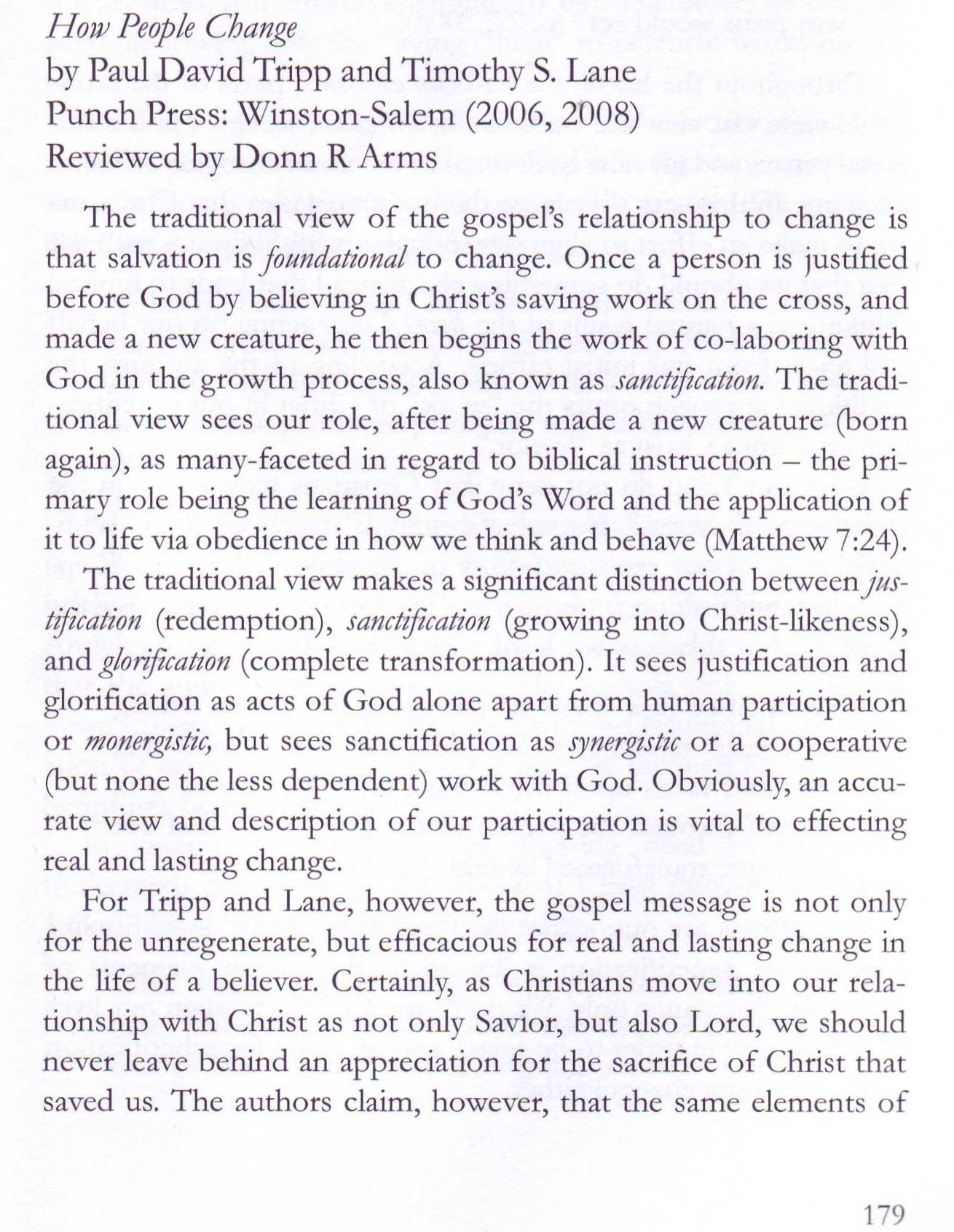
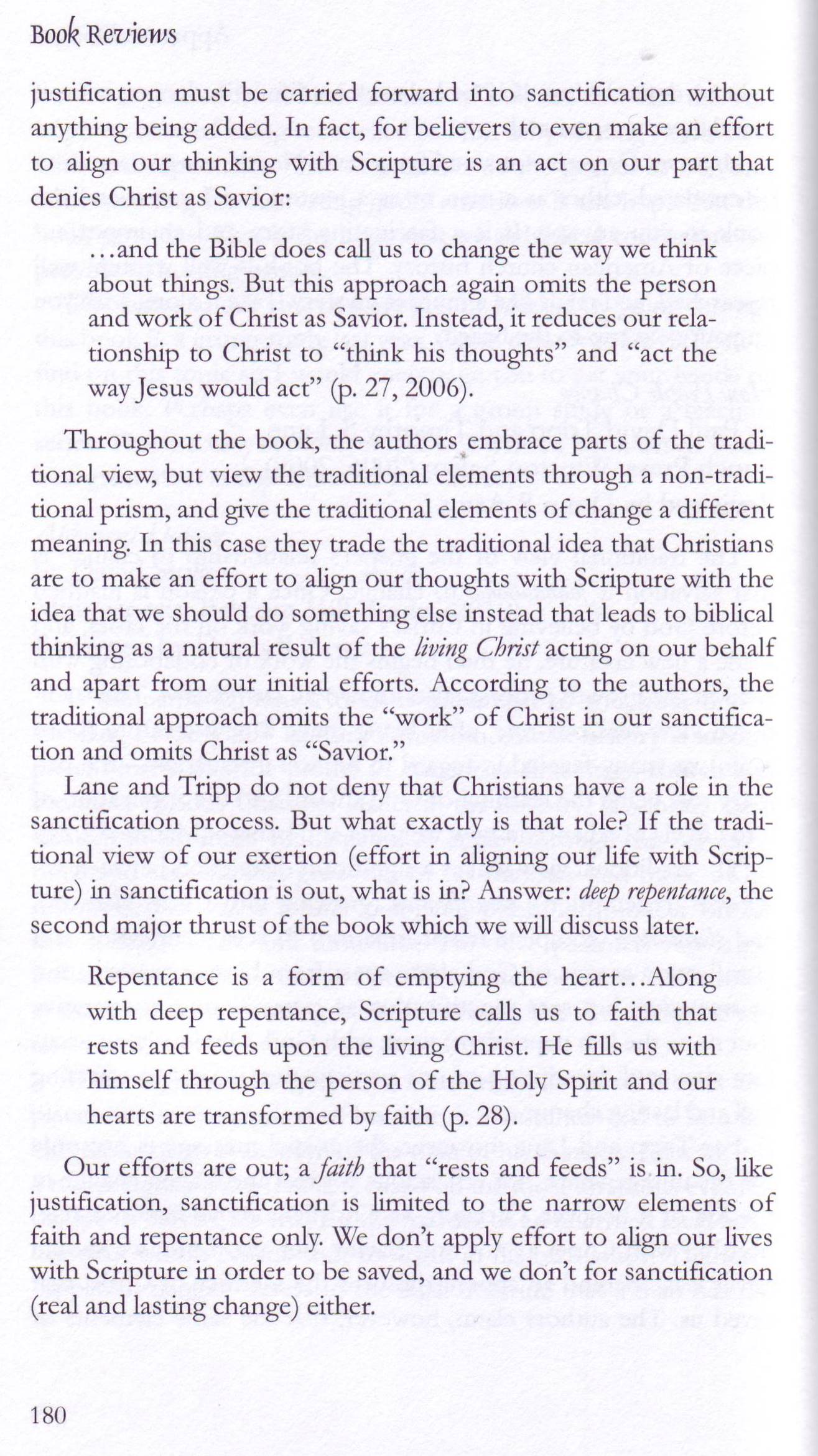
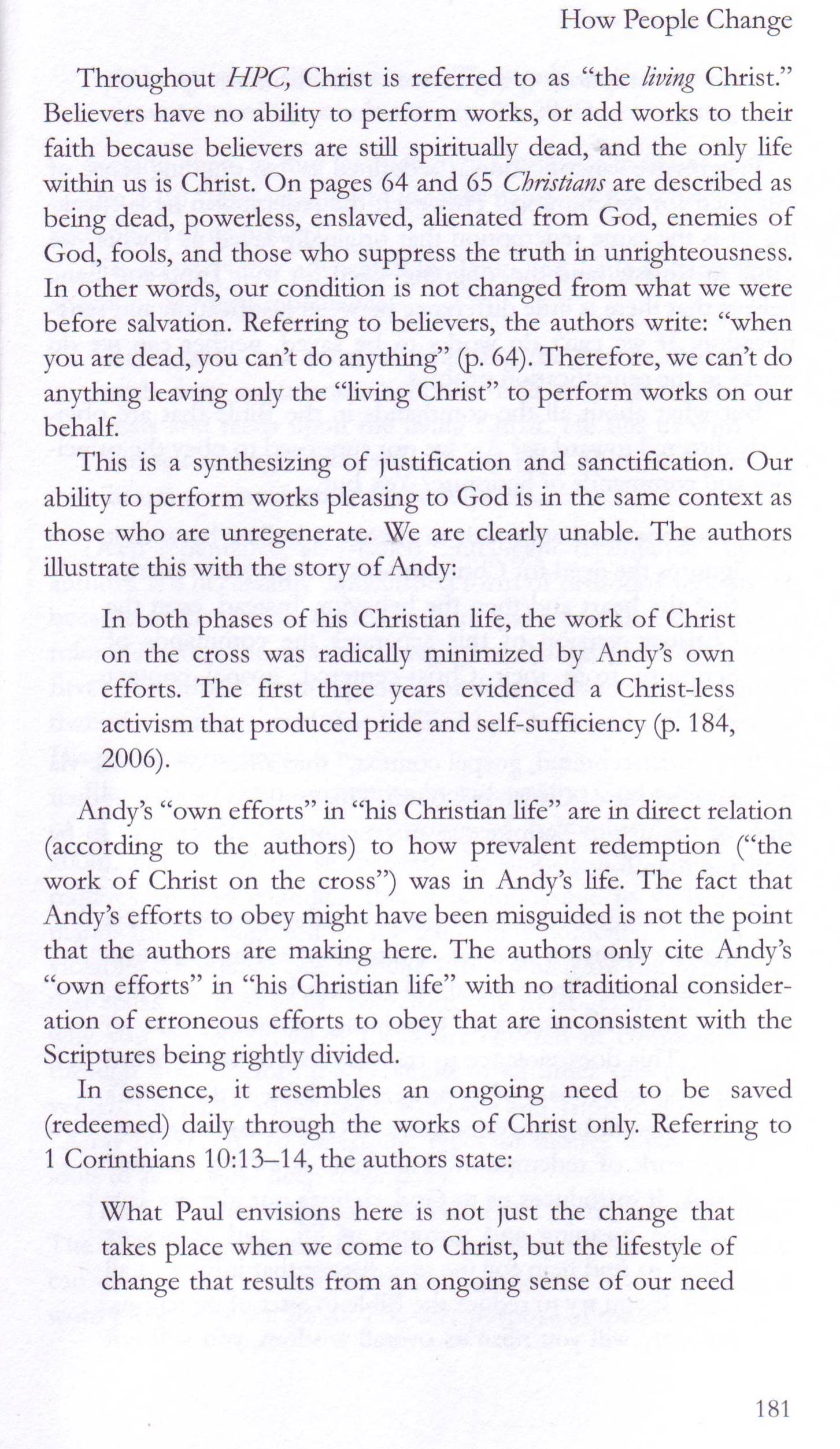
Apparently, Powlison now finds himself in the same dilemma with Paul Tripp who articulated his “Dynamics of Biblical Change” in a book authored by Tripp and Timothy Lane entitled, “How People Change.” Tripp plainly states in the book, among other things, that Christians remain spiritually dead, and passive endeavors such as changing our thinking to that of Christ is a denial of the gospel. Hence, I heard the rumor again last weekend: “Paul Tripp has taken DBC farther than Powlison intended.” Anybody smell diesel fuel?
However, the rumor must be working because Tripp and Powlison will be sitting on the new board of the Biblical Counseling Coalition together where they can once again giggle (because undoubtedly, the rest of the board thinks they’re orthodox), pass notes to each other, and sip lattés while cursing Moses under their breath. Only problem is—it’s a lie. I went ahead and copied documents for comparison purposes: things Tripp and Powlison wrote together at CCEF that can be compared to “How People Change.” It’s all the same stuff—stuff that the church has forgotten, but now interpreted in its “socio-historical context.” The information is almost identical, and was easily gathered in cursory fashion. It should be self explanatory, but I can produce more information if necessary.
Written by Tripp and Powlison in 2003:

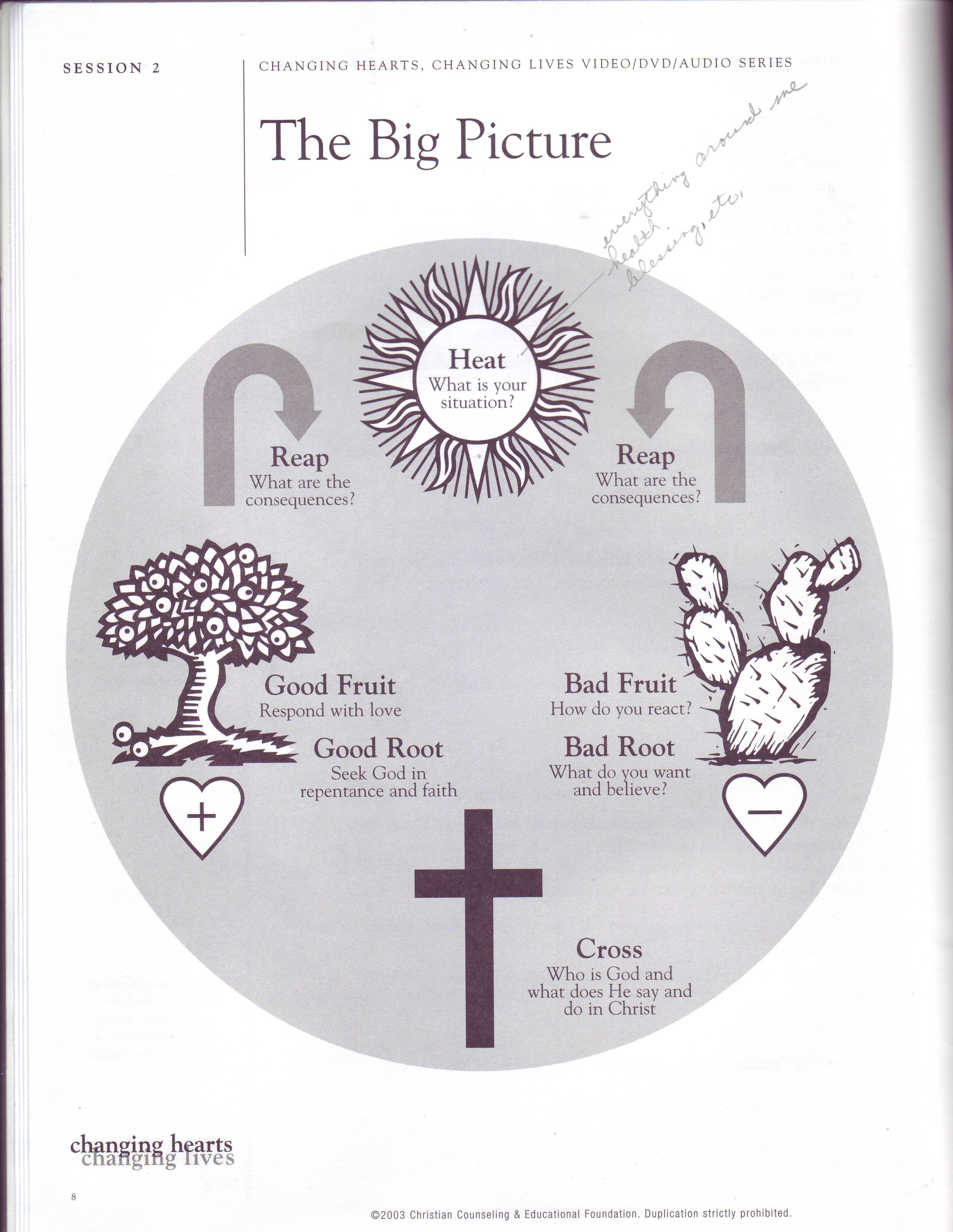
“How people Change,” Paul Tripp, 2006:


CCEF’s pilot / test program prior to the release of Tripp’s “How People Change”:


Tripp’s “How People Change” 2006:

Written by Powlison in CCEF’s Journal of Biblical Counseling:

Tripp’s “How People Change” 2006:

“The ‘Gospel’ Coalition” Series, Part 13: Dr. John Street Joins the Noun Coalition
Just yesterday, when I was introduced to the new gospel upstart organization in our everything gospel church culture, I was verbless. Somebody sent me a link to the upstart’s Facebook page (the “Biblical Counseling Coalition”) which posted this statement: “Sanctification is the art of getting used to our full salvation: justification, regeneration, redemption, reconciliation.”
Rush Limbaugh often says “Words mean things,” but [do] they really? After all, I did some investigation and this new coalition is overseen by the spiritual brain-trust of our day. So, when the apostle Paul described sanctification as “abstain[ing]” (1Thess 4:3), “running” by obedience (Gal 5:7), also through obedience: “work[ing] out….with fear and trembling” (Phil 2:12), beating our bodies into subjection, discipline, running a race, and for a prize (1Cor 9:24-27); surely, we peasants of this contemporary dark age must be misunderstanding him because that’s a lot of verb-iage. Since Michael Horton says the purpose of corporate worship is for reviving our valley of dead bones by contemplating the gospel, should we forget all that stuff in Hebrews about encouraging each other unto good works? Should we rather relax and say, “Hey bro, how are you coming along in the art of getting use to you salvation?”
Inquiring minds, what’s left of them, want to know. Because one of the board members of this coalition is David Powlison, we could have a clue. In an interview with Nine Marks, Powlison said that the church forgets stuff, but when it is rediscovered by CCEF’s Research and Development Dept., it has to be reevaluated in a contemporary historical context. Hmmmm. Powlison also believes that a thorough search must be made of all past and present philosophies, literature, history, etc., just in case God has shown other people stuff that he hasn’t shown the church, or has shown the church in the past, but was forgotten, because the church forgets stuff. At this years TGC (The Gospel Coalition) 2011 conference, Powlison will be conducting a seminar on “Recent Advancements in Biblical Counseling.” So, for all of you that draw propositional truth from interpreting the verb, noun, subject, preposition, etc. structure of sentences in the Bible, you may not want to miss that seminar if you really want to able to take the word and help people.
Yet another clue may come from another board member of the BCC, Paul David Tripp. He believes that biblical verbs must be seen in their “gospel context.” In other words, all verbs in the Bible pertain to Jesus. In “How People Change,” Tripp says that the art of getting use to our sanctification is “resting and feeding” on Christ. In the same book, Tripp also writes, like Michael Horton in “Christless Christianity” (or, “Verbal Christianity”), that Christians are dead, and as Tripp states it in HPC: “When you are dead, you can’t do anything.” Tripp also mentions in the same book that Christ is not a cognitive concept that we apply to life, but he is a “person.” Got that? No cognitive concepts, just the personal pronoun.
But another board member that caught my eye on the list was Dr. John D. Street who has actually counseled me in the past. I have been reluctant to write in regard to him previously because I am privy to the fact that he used to employ lots of verbs in counseling that applied to the counselee, and I didn’t want to get him into trouble. In fact, I was a perfect candidate for this new form of counseling when I came to him many years ago. I remember coming to one of our appointments and proudly proclaiming: “I have read my Bible and prayed for—four hours!” Now how do you like that for contemplative spirituality?! His answer? “I’m not going to tell you not to do that, but the power is in the doing.” Ouch! I can just imagine the look of horrific angst on Powlison’s face.
Back then, I think Street might have got this idea from the old way of interpreting the Bible. “But the one who looks into the perfect law, the law of liberty, and perseveres, being no hearer who forgets but a doer who acts, he will be blessed in his doing.” “But” is a coordinating conjunction which indicates contrast in this sentance; so being interpreted, don’t do the previous verses—hearing only, and not doing. But that exact contrast that James warns us of is the mantra of the new biblical counseling movement. I was recently sent a webinar conducted by a NANC Fellow who was clearly propagating a hearing only model of change that left the results up to being “amazed by the gospel.” Apparently, James didn’t get the memo. He presents hearing and doing as two components that work together to bring about—at the very least, blessings. The blessings occur where? Well, if we answer that question by finding the preposition, the blessings are “in” the “doing.” Also note that James does not present the gospel as the primary motivator, but rather blessings.
There is no misunderstanding about how this false approach to counseling fleshes itself out in real life. I was a longtime member and former elder at Clearcreek Chapel, the church John Street founded in Springboro, Ohio. The church is presently endorsed by both CCEF and NANC, and is a NANC training center. Two members on the upstart BCC board, Robert Jones and Paul Tripp, speak there often. My information regarding this doctrine includes hundreds of hours of discussion with the Clearcreek elders, who again, are highly respected in GS / Sonship circles. The pastor of the church, Russ Kennedy, has said, “Any separation of justification and sanctification is an abomination.” Obviously, this can only leave sanctification by justification as the dynamic for change. This can also be seen in the statement regarding sanctification as something we “get used to” as opposed to what the apostle Paul taught. Though the movement is hideously covert, if one pays attention, their noun-iage exposes them from time to time.
The former Clearcreek elder who was in charge of counseling at Clearcreek once announced from the pulpit (at Clearcreek) that he learned to read his Bible in “a whole new way” from Chad Bresson, Clearcreek elder and author of “Vossed World,” a blog that promotes the belief that the Spirit only illuminates the word of God in a gospel context. Bresson also believes the postmodern concept that because truth is in a person, it cannot be propositional or cognitive / objective, which is why the Bible is strictly a narrative and not for instruction. Presumably, this is why Dan Turner, another elder / counselor at Clearcreek, sometimes (if not all the time) draws diagrams of people’s lives and shows them where they are at in the diagram / picture / gospel narrative as a way of avoiding an instructive paradigm. I once heard Turner explain how a marriage was miraculously transformed before his eyes after showing them the glory of the gospel from the Scriptures. Turner also told me that I was like the Pharisees because I believed that Scripture should often be used to determine objective truth. No surprise then that the elders at Clearcreek were never heard (while I was there) saying, “How do we do that?” But were rather heard saying—often, “What does that look like.” In fact, we were taught that the “how” word was indicative of a heart problem, and the use of that word in a question to an elder resulted in a repeating of the word (how) back to the inquisitor in question form to correct the parishioner.
Will the BBC be able to help people with a counseling model based solely on nouns? I doubt it. Will John Street get kicked-off the BCC board for taking James literally? Or has he repented of such Phariseeism? Perhaps he now says: “I’m not going to tell you not to obey, but the power is in the contemplation.” I hope he hasn’t, but if not, what does that look like? “[Run] John, [run]!”
paul
“The ‘Gospel’ Coalition” Series, Part 12: The Creepiness Continues to Get Creepier
Not only is the GS / Sonship doctrine completely off the tracks theologically, it is inevitable that such doctrine will lead to many other things that followers “are not yet ready for.” However, as this hideous doctrine grows, for the most part, unchecked—proponents are now presenting teachings that would have been rejected out of hand a couple of years ago. In other words, probably surprised themselves by the lack of contention against their ridiculous doctrine—they are becoming more bold. For example, more and more, the GS concept of learning how to listen to a sermon is becoming more prevalent. Yesterday, a reader sent me two links.
First of all, the thesis itself is just plain creepy and should raise red flags all over the place. I became aware of it three years ago when I obtained a manuscript from a parishioner at Clearcreek Chapel in Springboro, Ohio, a bastion of GS / Sonship teachings and a NANC training center. As I carried the manuscript from place to place while I was slowly absorbing it, whether in the waiting room of my auto mechanic, or waiting for food at the local diner—the title caught the attention of many, and the following was usually the result: “Huh?” “That’s just really strange,” etc. In fact, one proponent wrote in one of the links sent to me, “I was first alerted to this issue by Christopher Ash’s leaflet entitled ‘Listen Up’. In it he claims that there’s been nothing written on the issue in the last 200 years.” Yep, I’m not really surprised by that. Nor was any reference given as to who supposedly wrote about it even then—go figure.
So what’s behind this creepy concept? I will use the manuscript from Clearcreek Chapel (hereafter: CCC) because it was one of the first independent sovereign grace churches in this country to adopt the Sonship doctrine. Not only that, CCC is a well respected and noted church in the movement. Paul David Tripp (speaks there often), David Powlison, and John Piper have close association with CCC, and the Pastor prides himself as a follower of John Piper—dressing like him and speaking like him as well. As far back as 1994 or 96, when the movement was barley fifteen years old, one or two respected Sonshippers (of course, nobody at CCC was aware of the doctrine) in the CCC congregation were instrumental in having the likes of Jerry Brides and DA Carson invited to speak there. I sat in the congregation myself and heard Jerry Bridges say: “We must preach the gospel to ourselves everyday.” The comment gave me pause, but I brushed it aside and continued to struggle to stay awake as I thought the guy would die standing there behind the pulpit at any moment. When the founding pastor moved to California, Russ Kennedy became pastor under false pretence—knowing grade-A-well that the vast majority of CCC parishioners would reject such a doctrine. In fact, Kennedy allowed me to be instrumental in his appointment while knowing that such a doctrine would cause me to jump in the river.
I will be writing a post in this series about CCC because it is a projected model of what churches will look like in the future who implement this doctrine. And it is also why I am using their model for this whole learning how to listen to a sermon concept which is eerily similar to Jack Hyle’s famous quote: “Now I want you to close your Bibles and listen to me.” Most of what I have written on this blog concerns the doctrine itself, but the subtle creepiness / cult-like elements of this movement is another story altogether. But without further ado, let us examine the GS / Sonship take on how to listen to a sermon. Actually, I have written on the crux of this concept before. What really drives this issue? Answer: elder authority. GS / Sonship has a very overemphasized view of elder authority and that is really at the heart of this concept. Devon Berry, the “elder” at CCC who delivered this message, is also one of the primary instructors for the NANC training center at CCC. The following is my critique of his message. I apologize for how difficult it is to unravel this clever twisting of God’s word. However, if you try to follow my argument thoughtfully, I think by the end it will come together for you. The title of his message was, How to Listen to a Sermon:
In the sermon, the elder strays away from the main point to strongly emphasis the idea that spiritual growth comes primarily from preaching and teaching, and is an absolute, paramount necessity accordingly:
“You think, perhaps, that [you] can fill up the other half of the plate with personal study, devotions, or quiet times, or a radio program. Beloved, you cannot. Scripture is relatively quiet on such practices. But on preaching, the case is clear and strong. Neglect preaching and neglect your soul. I know that some are kept from services for legitimate reasons which are out of their control, but I doubt that is the case for most. I beseech you, change your ways for the good of this people and for the good of your own selves. Give the Word its rightful place. As I have often said, there is no better place you could be than here, under the preaching of the Word.”
Actually, I believe “devotions,” “quiet times,” and “radio programs” are added in to mask the disturbing part of this statement: “personal study.” Nowhere , but nowhere, does the Scriptures ever say that personal study is expendable when compared to preaching or teaching. In fact, IF I wanted to make the case that preaching and teaching could be done without, I would cite the following:
1 John 2:27
”As for you, the anointing you received from him remains in you, and you do not need anyone to teach you. But as his anointing teaches you about all things and as that anointing is real, not counterfeit—just as it has taught you, remain in him.”
This verse clearly teaches that when it gets right down to it, the indwelling Holy Spirit is our teacher, and that human teachers are not an absolute necessity as this elder is clearly saying. At the very least, he is in grave error concerning the level of importance between the two.
But even more disturbing is the logical conclusion that must be drawn from this assertion. If personal study is expendable (please note; in his list of examples, he names devotions, quiet times, and radio programs in the same list. One can only assume that if they are in the same list to make his point, they share the same level of importance. Surely then, no one would deny that Christians could do without radio programs or devotionals), then how could it (personal study) be sufficiently empowered to discern the truthfulness of the sermon? The conclusion must necessarily be that personal interpretation is always at the mercy of preaching. Do you think my statement is a subjective conclusion in regard to what he is saying? Think again. He actually uses Acts 17:10,11 (a text that clearly states the importance of personal study to confirm truthfulness) to imply that preaching is a critical link in the learning process, with personal study being secondary:
“In addition to coming with anticipation, we must come to a sermon prepared. Coming to the hearing of the Word prepared is both a matter of our hearts and our behaviors. I think the example of the Bereans in Acts 17 is helpful. Verse 11 says, ‘Now these Jews were more noble than those in Thessalonica; they received the word with all eagerness, examining the Scriptures daily to see if these things were so.’ We can note from earlier in the chapter what exactly it was the Bereans were responding to – verses 2-3 tell us that Paul’s pattern was to reason with his hearers from the Scriptures, explaining and proving that Jesus was the Christ. What made the Jews in Berea more noble than the Jews in Thessalonica? Well for one, they did not run Paul out of town, and secondly, they took Paul’s preaching seriously enough to go to the Word to test it [he is not talking about a test in regard to the truth, but rather, a nebulous concept of testing the Christocentric interpretation in everyday life. He covers this idea in another part of the same sermon. Note that “it” in his statement refers to God’s word, not Paul’s preaching]. The text here implies that there was an interactive nature between three entities: The preacher, the hearers, and the Word. Note this cycle: Paul, from the Word, delivers words. The Bereans, from Paul’s words, go to the Word. The Word cycles from God, through the preacher, to the people, back to the Word, and this, verse 12 tells us, produced belief in the God of the Word. An important thing to note is that this happened daily – suggesting a regular interaction between preaching, personal study, and the Word. The Bereans eagerly prepared by paralleling their own Bible reading and study with Paul’s preaching. So a good preparation for the public preaching of the Word is the private consumption of the Word. It will be the seasoning that brings out the flavor – salt on your French fries, if you will.”
Where to begin in the unraveling of this hideous twisting of God’s word! First of all, I had to actually draw a diagram to unravel what he is saying in regard to this part of the quote:
“Note this cycle: Paul, from the Word, delivers words. The Bereans, from Paul’s words, go to the Word. The Word cycles from God, through the preacher, to the people, back to the Word, and this, verse 12 tells us, produced belief in the God of the Word.”
Read the quote carefully. Think about it. God’s word goes through the “preacher” first, before getting to the “people,” making the preacher’s words synonymous with God’s words. Also note that he cites 17:1,2:
“We can note from earlier in the chapter what exactly it was the Bereans were responding to – verses 2-3 tell us that Paul’s pattern was to reason with his hearers from the Scriptures, explaining and proving that Jesus was the Christ.”
Let me cut to the chase here: what he is saying is that all Christocentric and gospel-centered preaching is infallible. Hence, any preacher teaching from a Christocentric perspective is also infallible. He also emphasizes this in his conclusion (emphasis mine):
“On to our last point, then. It is simple. The lens set forth by Christ himself on the road to Emmaus, in Luke 24, is the lens through which we should hear every sermon. Here it is from the text: …everything written about me in the Law of Moses and the Prophets and the Psalms must be fulfilled… You should always listen to a sermon looking for Christ and the redemptive plan that God has set out in history to accomplish through his Son. We must be Christ-centered listeners.”
In other words, when the Scriptures are being taught from the Christ / gospel perspective, error is impossible, and likewise, neither can the preacher teaching from that perspective be in error as well. If the mere intention is to present Christ from the text, the Holy Spirit then becomes involved, making error impossible. Another elder at the same church (Chad Bresson) projected this same idea in an article entitled “The Word of God is a Person.” He quotes Robert Brinsmead to make his point:
“That which makes the Bible the Bible is the gospel. That which makes the Bible the Word of God is its witness to Christ. When the Spirit bears witness to our hearts of the truth of the Bible, this is an internal witness concerning the truth of the gospel. We need to be apprehended by the Spirit, who lives in the gospel, and then judge all things by that Spirit even the letter of Scripture.”
Said another way, the Holy Spirit “lives in the gospel,” so when your doin’ gospel, your doin’ truth, end of discussion.
Going back now to the elder’s use of Acts 17 and the original sermon of interests here, he completely ignores any sort of basic grammatical rules at all to draw his conclusions. He gives the following reasons for the nobility of the Bereans:
“What made the Jews in Berea more noble than the Jews in Thessalonica? Well for one, they did not run Paul out of town, and secondly, they took Paul’s preaching seriously enough to go to the Word to test it.”
But the excerpt he speaks of is a compound sentence:
“Now these Jews were more noble than those in Thessalonica; they received the word with all eagerness, examining the Scriptures daily to see if these things were so.”
In a compound sentence the ideas must be related, this is a hard-fast rule. Therefore, the specific reason for their nobility is obviously in the second independent clause, which does not include anything mentioned by the elder. Furthermore, in the second clause, the proving of what Paul taught is obviously the (purpose) object of both verb phrases, both directly and indirectly. Clearly, the reason for their nobility was the fact that they proved what Paul was teaching to be true through personal study. Not only that, the elder also said the following:
“An important thing to note is that this happened daily – suggesting a regular interaction between preaching, personal study, and the Word.”
But this is clearly an improper correlation. “Daily” in this sentence refers to “examining the Scriptures” and not Paul’s preaching (which is not even in the compound sentence which begins with “now“—introducing a separate idea). The elder is suggesting an inseparable correlation (“cycle”) between preaching and personal study that cannot be separated from the word for proper understanding. Instead of personal study proving the truthfulness of preaching or teaching, he is making preaching an absolute necessity to understanding truth, with personal study supplying a mere “seasoning” to the preaching, instead of testing its truthfulness. Besides this, he also assumes that the Bereans knew what Paul was going to teach before he came:
“The Bereans eagerly prepared by paralleling their own Bible reading and study with Paul’s preaching.”
Not only is this an assumption, given the technology of the time, it is also highly unlikely. What tense in the text even remotely suggests that the Bereans “examined” the Scriptures before Paul preached? Clearly, the intent of this elder is to discourage a proving of truthfulness in regard to Chrisocentric preaching after the fact, but rather a prior, personal study that merely “flavors” the preaching instead of proving its truthfulness. At any rate, it is a complete bastardization of the biblical text.
I might also mention that another elder in this same church, and previously mentioned, preached a sermon entitled “Adam’s Insurrection, Man Jettisons God from the Educational Process,” in which he argues that the essence of Adam’s fall was a rejection of Christocentric teaching that was outside of himself (Adam). The theme of that sermon seems to be similar to the sermon that is the subject of this post; namely, and at the very least, it strongly discouraged a mentality that elevates personal discernment to the same level of teaching outside of ourselves.
So, it now begs the question that is the subject of this post; in regard to elders teaching from the Christocentric perspective, does Christocentric theology teach that they are infallible? I suspect that this belief is more than likely to be prominent among churches that hold to Sonship / GS theology.
paul

 Paul's Passing Thoughts

2 comments