My Reply to a Reformed Pest
["pastor"],

Yawn, yawn, and more yawn. I am not moved in the least by your baseless ramblings. You
constantly go back to the same old Reformed elitist playbook. It won't work with me. It's
all the same worn out manipulation to throw thinking people off the scent leading them to
the truth. And the truth is: the Reformation is the biggest hoax ever perpetrated on
mankind. Never has something so vile ever been masterfully dressed to look so good. It is
nothing more than Communism in biblical garb.

The Reformation fruit can be seen in European church history where it incited war, after
war, after war. In this culture where law prohibits its collusion with government, it
propagates its tyranny through subtle manipulation and mind control. It is the exact same
metaphysical philosophy that drives all cults, but evades the accusation via its own
establishment of "orthodoxy." Its creeds, confessions, and counsels speak to the arrogant
idea that the totally depraved saints need to be told what their own copies of the word of
God state. There is a reason why Reformed churches behave no differently than the Catholic
Church though they prefer a different doctrine designed to control people; they have the
same father.

The Popes, and the Westminster Divines; what's the difference? Nothing. The Popes stating
that the saints need them to interpret the Bible, and the Westminster Divines saying they
need to explain to the saints how each and every verse is about Jesus and nothing else,
what's the difference? Nothing. Pedophile Priests, excommunication and slander used to
silence critics, and other various acts of tyranny and injustice while clergy stands
silent; what's the difference between the two? Nothing. The difference between all of that
and the latest SGM scandal: absolutely nothing.

I measure my success in communicating the truth by the persecution. Reformed folks can't
help themselves; challenges to their ideas are intolerable to their humble theological
egos. Their thoughts lust after the desire to have a theocracy like Calvin had where
people who ask too many questions are burned at the stake. For now, they can only try to
comfort their souls with the tools of excommunication, slander, dividing families, and
mind control.

paul
Prayer Request for Upcoming Book Project
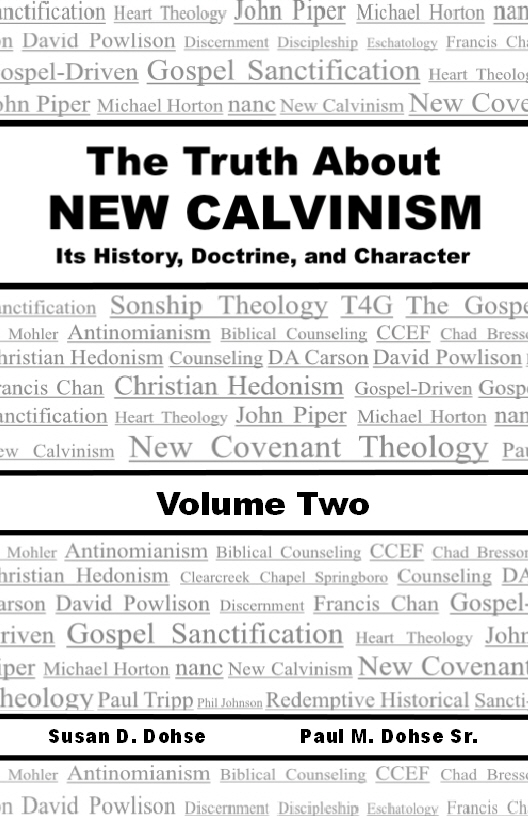
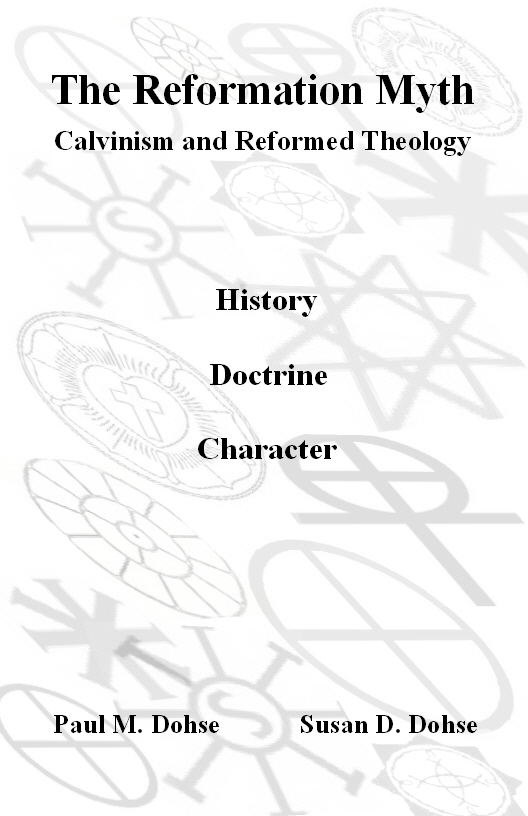
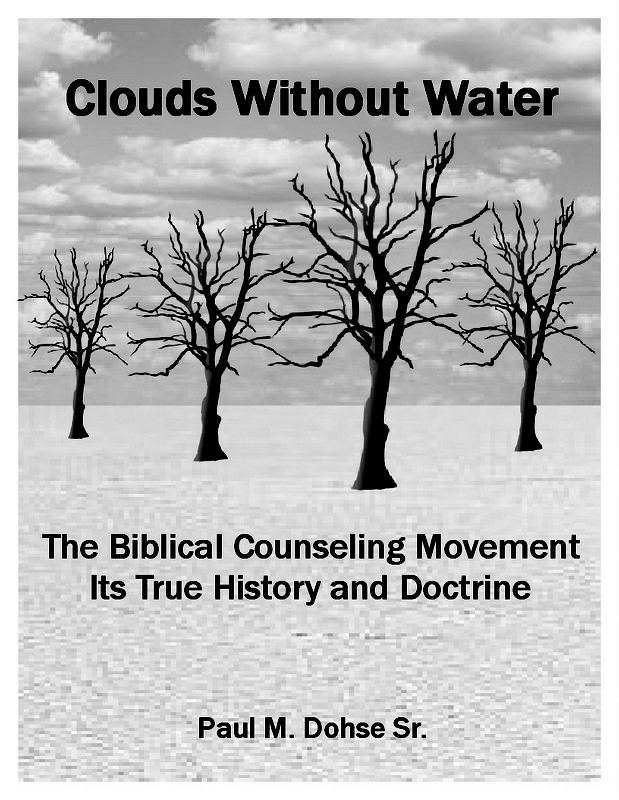
 I am in the process of organizing my life in order to clear my schedule for the writing of three books. This is feasible because the research for each book is closely related and has been in process for a number of years. Also, readers of PPT have contributed to the research in various ways. Words cannot explain my appreciation.
Susan will be posting weekly for PPT in my absence with the exception of the Potter’s House series from the book of Romans. Please pray for this project. As interim editor, I am sure she would also appreciate some help with contributing articles.
Also be praying about serving on the volunteer editing committee for these books, or one of the projects specifically. This means you would be emailed the drafts of the books as they are completed for purposes of pointing out errors of any kind while offering your opinions on the manuscripts in general. Only friends of this ministry should offer their service. And remember, the manuscripts are for your eyes only.
Completion? June 2013 prior to the 2013 TANC Conference.
The three books are following, and in the order that they will be published (click to enlarge image):
Some Proverbs for Dr. John MacArthur Jr.
I would affirm my love and appreciation for C. J. Mahaney, Wayne Grudem, John Piper, and other conservatives in the continuationist camp. I consider these men to be friends and allies for the sake of the gospel. Charismatic Chaos was primarily written against the excesses of the broader Pentecostal and Charismatic movements. And those excesses are not what these men are best known for.
~ John MacArthur
Proverbs 28:4
Those who forsake the law praise the wicked, but those who keep the law strive against them.
Proverbs 28:7
The one who keeps the law is a son with understanding, but a companion of gluttons shames his father.
Reformed Response to PPT Helps Me Make My Point About Their Heresy
 A Response to some of my recent posts is just too juicy to pass up because it helps me make my point. The article was written by one of the early advocates of New Covenant Theology which was a spin on Luther’s law/gospel concept that came out of the Australian Forum via Jon Zens. Zens was one of the core four of the Australian Forum along with Robert Brinsmead, Graeme Goldsworthy, and Geoffrey Paxton. They are the true, and original core four, not those other dorks.
I owe them a debt of gratitude for articulating so well what the Reformers really believed which is going to make the second volume of “The Truth About New Calvinism” much easier to write. I have actually corresponded with Brinsmead who owns a rockin’ fruit farm in Australia. I wanted to go over there and hang with him but Susan said we couldn’t afford it. Oh well. Some say he is an atheist now, but that isn’t true. Actually, what he now believes is much healthier than Reformed Theology.
The title of the post is, “Straw Man Arguments About Justification and Sanctification.” A Reformed definition of a “straw man” is: a man that burns really, really fast on a stake and doesn’t scream at all. That’s why “straw man” has such negative cogitations in Reformed circles.
I will skip the usual Reformed crybaby stuff that prefaces the introductions to Reformed writings about “unity,” “secondary issues” etc, and get to the meat of the issue.
The name of the blog is “Truth Unchanging” which has Platonist cogitations. Plato, the daddy of Reformed theology (as will be documented in “The Reformation Myth”), believed that anything that changes form cannot be truth. That would exclude the material world, and explains the crux of why Reformed hacks are so opposed to dispensationalism, albeit a lot of them don’t realize it. Basically, most of them don’t like dispensationalism because John Piper says it’s naughty.
The author’s first point follows:
In matters that concern the purity of the gospel, it is clear there are mis-statements that are so grave that the very gospel itself is in danger of being lost. For example, if a person denies the concept of imputation, he has denied the heart of God’s good news. If the sinner’s justification depends to any degree on his faithfulness to God’s covenant, the so-called “good news” would become bad news. Not only do the unconverted sinner’s best works of “righteousness” fall short of meeting God’s standard for justification, but the believer’s best obedience also fails to meet that standard. God requires perfect, continual, and internal obedience to his Law. What one of us can claim that we have loved God, perfectly, continually and from the heart? I would like to believe I love God, yet I would never profess that, even as a believer, I love him with all my heart, soul, mind and strength.
This is a shocking admission, but very indicative of Reformed theology. A perfect obedience to the law must be maintained during the believers sanctification. The apostle Paul went out of his way in his gospel letter to the Romans to refute this very tenet, but it is in fact the crux of the Reformation gospel. A change of standard is counter-intuitive to the Greek philosophy that Reformed theology was founded on. But Paul makes it clear: God imputed a righteousness that is “apart from the law.” This is also why the Reformers were against the dispensationalist idea of two judgments and two resurrections. Two different judgments suggest that one judgment can’t be based on the law because believers are no longer “under the law, but under grace” ….for justification. The Reformed view of imputation then becomes a progressive imputation of Christ’s perfect obedience to uphold the standard of the law during our sanctification. This is called “Christ’s active obedience.”
The author continues:
The reality is that God doesn’t declare righteous those who are righteous in and of themselves. Nor, does he justify sinners because through the infusion of grace, i.e., enablement, these sinners have attained a level of faithfulness to God’s covenant that God is now able to declare them righteous, despite their failure to attain the level of perfection the Scriptures teach us he requires.
Though the goal of perfection is required in sanctification, this is another clear-cut statement showing that a perfect keeping of the law is required to maintain the just standing of the believer. The usual argument is that since Christians sin, they have no righteousness in, and of themselves that can maintain the standard. But this is the exact idea Paul was refuting when he wrote, “….because the law brings wrath. And where there is no law there is no transgression.”
Notice that in true Reformed tradition, the author denies “the infusion of Grace”; ie, the new birth, of which Christ said we must have for salvation. The key here is the fact that we are considered Holy because there is no law that can judge us for justification, the penalty thereof has also been paid by Christ, we have the seed of God within us, and the old us has been crucified and is dead. And therefore, “….is no longer I who do it, but it is sin living in me that does it.” As Christians, we can therefore obey the law in a way that pleases God as opposed to the way we were before we were crucified with Christ.
The author then states a lot of things about justification that no one would disagree with, but then pulls the Reformed missing transition between justification and sanctification communication technique:
What, then, is God’s standard? Paul’s answer is clear. It is perfect, continual and inward obedience to God’s Law. He wrote, “For it is not the hearers of the Law who are righteous before, but the doers of the law who will be justified [declared righteous]” ( Romans 2:13).
The author cites Romans 2:13 as a standard for justification regarding believers, but it is not. That verse speaks of the direction of the saved, and not the perfection in comparison to those who are unsaved. This is clear if you observe the preceding text in 2:6-11:
He will render to each one according to his works: 7 to those who by patience in well-doing seek for glory and honor and immortality, he will give eternal life; 8 but for those who are self-seeking and do not obey the truth, but obey unrighteousness, there will be wrath and fury. 9 There will be tribulation and distress for every human being who does evil, the Jew first and also the Greek, 10 but glory and honor and peace for everyone who does good, the Jew first and also the Greek. 11 For God shows no partiality.
Why would those who keep the law perfectly need “patience” in well-doing? It speaks of the desire of the saved who are hindered by sinful mortality. This is a sanctification verse.
The author continues:
Now, we must ask two questions: 1. What sinner is there among us who has met that standard? Paul’s answer is, “not one!” 2. Who has been subjected to that standard who has met the standard perfectly? The answer is, only one! Paul argues that “since by man came death, by man came also the resurrection of the dead.” It is not a divine righteousness our case demands. It is a perfect human righteousness, defined by God’s perfect standard. Our case demands a righteousness defined as unbridled, wholehearted love for God that is manifested in an unswerving commitment to God’s revealed will.
The good news is that believers are given credit for that kind of love for God and obedience to his will that even in our best moments we do not possess personally.
Here is another shocking admission, but again, uniquely Reformed: God’s declaration of His imputed righteousness to the believer, based on their belief in Christ is not enough, it must be a perfect human righteousness! This is exactly why the preponderance of Scripture states that it is God the Father’s righteousness that was imputed to us, and with the exception of one or two verses where it is inferred, not the righteousness of Christ.
Romans 8:30 states specifically that God’s righteousness was imputed to us and our glorification guaranteed before creation. The significance of Christ’s perfect obedience is the fact that He was the only man “born under the law” (Galatians 4:4) that could go on to die on the cross for the world’s sins without being tempted by the law or condemned by it. All other men are provoked to sin by the law, will be judged by the law, and condemned by the law unless they believe on Christ. They are under law, not grace, and enslaved to sin. Christ’s perfect life on earth was not part of the atonement, but was necessary in order not to be condemned as one born under the law like all other people born into the world. He was the only man who ever lived on Earth that could have come in order to pay the penalty of sin for all of mankind because He was able to keep the law perfectly. But His obedience was not then imputed to our sanctification.
The rest of the article is just a bunch of doublespeak with intent to fog the issue. It can be summed up this way: we supposedly work, but our work is not in combination with God for a result in sanctification. We work because God works first, and oh, by the way, Christ’s obedience must be added to it as well. They make it sound like a colaboring, but in the end, remember that they reject a separate resurrection and judgment concerning rewards.
They instead believe in one resurrection and one judgment to determine who is justified….
….by maintaining our justification by faith alone in sanctification.
paul
The Reformed Ritual of Daily Re-Salvation
“Not only does Hebrews specifically call on believers to leave the basics of the gospel and move on to maturity, it condemns a ritualism for the purpose of a perpetual cleansing.”
“It would seem that an aggressive approach to sanctification shows our confidence that our salvation is a finished work. The Reformed gospel seems to be inhabited by servants like the one Christ spoke of that hid his talent in the ground out of fear—giving the Master what was His upon return, and without interest.”
“The same gospel that saved you also sanctifies you.” That is the authentic gospel of the Reformation. In the Calvin Institutes, there is a chapter dedicated to progressive justification: “The Beginning of Justification. In What Sense progressive.” Reformation heresy can be plainly seen if someone stops listening to the scholars long enough to think for themselves. A close examination of the doctrine reveals that there is hardly anything right about it—it turns truth completely upside down.
What do I have to say about the freewill/predestination debate? Not much, other than to note that Calvinism came from an egregiously-false doctrine. That is where the argument must refocus.
One day, I will chart all of the various categories in which Reformed theology is anti-biblical, but in this particular post, I will examine how the doctrine makes our faith a daily sacrifice for the remission of sins for justification. Rather than some kind of ritual to maintain justification akin to many other false gospels, faith alone is offered in sanctifiaction. When this is done, the “active obedience” of Christ is then either “manifested” or imputed to our sanctification, or both.
The Australian Forum, a Reformed think tank that researched and defined the tenets of Reformed theology, stated the following in regard to the Reformed gospel of progressive justification:
After a man hears the conditions of acceptance with God and eternal life, and is made sensible of his inability to meet those conditions, the Word of God comes to him in the gospel. He hears that Christ stood in his place and kept the law of God for him. By dying on the cross, Christ satisfied all the law’s demands. The Holy Spirit gives the sinner faith to accept the righteousness of Jesus. Standing now before the law which says, “I demand a life of perfect conformity to the commandments,” the believing sinner cries in triumph, “Mine are Christ’s living, doing, and speaking, His suffering and dying; mine as much as if I had lived, done, spoken, and suffered, and died as He did . . . ” (Luther). The law is well pleased with Jesus’ doing and dying, which the sinner brings in the hand of faith. Justice is fully satisfied, and God can truly say: “This man has fulfilled the law. He is justified.”
We say again, only those are justified who bring to God a life of perfect obedience to the law of God. This is what faith does—it brings to God the obedience of Jesus Christ. By faith the law is fulfilled and the sinner is justified.
On the other hand, the law is dishonored by the man who presumes to bring to it his own life of obedience. The fact that he thinks the law will be satisfied with his “rotten stubble and straw” (Luther) shows what a low estimate he has of the holiness of God and what a high estimate he has of his own righteousness. Only in Jesus Christ is there an obedience with which the law is well pleased. Because faith brings only what Jesus has done, it is the highest honor that can be paid to the law (Rom. 3:31) (Present Truth: “Law and Gospel” Volume 7 article 2 Part 2).
Note that the law is clearly the standard for maintaining our just standing. Romans 3:31 is cited as a proof text, but the question is: is the “upholding” of the law that Paul is writing about….for justification, or….for sanctification? Obviously, if the Forum represented Reformed theology and Luther correctly, it’s the former. But Paul states the following elsewhere in the third chapter of Romans:
But now apart from the law the righteousness of God has been made known, to which the Law and the Prophets testify….For we maintain that a person is justified by faith apart from the works of the law.
Note that justification is apart from “works of the law.” Who does the works ….for justification is beside the point—justification is “apart” from the law, and works of the law period. ONE act of obedience was necessary for the eternal justification of many minus an ongoing imputation of obedience to the law in our stead for the maintaining of our just standing (Romans 5:18).
New Calvinist John Piper echoes the Forum on law being the standard for maintaining the finished work of justification:
We are united to Christ in whom we are counted as perfectly righteous because of his righteousness, not ours. The demand for obedience in the Christian life is undiminished and absolute. If obedience does not emerge by faith, we have no warrant to believe we are united to Christ or justified (Matthew 6:15; John 5:28-29; Romans 8:13; Galatians 6:8-9; 2 Thessalonians 2:13;James 2:17; 1 John 2:17; 3:14). But the only hope for making progress in this radical demand for holiness and love is the hope that our righteousness before God is on another solid footing besides our own imperfect obedience as Christians. We all sense intuitively-and we are encouraged in this intuition by the demands of God-that acceptance with God requires perfect righteousness conformity to the law (Matthew5:48; Galatians 3:10; James2:10). We also know that our measures of obedience, even on our best days, fall short of this standard (John Piper: Counted Righteous in Christ, p. 123).
“Standard”? Standard for what? Piper states that “obedience,” not necessarily our obedience, but simply, “obedience” must “emerge from faith.” That would be by faith alone, because perfection is the standard and we “fall short of this standard.” He is saying the same exact thing as the Australian Forum; ie, justification must be maintained by offering the perfect works of Christ to the Father on a continual basis.
This amounts to a daily ritualistic “preaching the gospel to ourselves.” We are progressively saved and kept “in the love of Christ” by the same way we were originally saved: faith alone and repentance, or what is called “deep repentance.” We remain totally depraved and unchanged, and keep ourselves saved by faith alone:
The flesh, or sinful nature of the believer is no different from that of the unbeliever. “The regenerate man is no whit different in substance from what He was before his regeneration.” — Bavinck. The whole church must join the confession, “Have mercy upon us miserable sinners.” The witness of both Testaments is unmistakably clear on this point.
No work or deed of the saints in this life can meet the severity of God’s law. Apart from God’s merciful judgment, the good works of the saints would be “mortal sin” (Luther), and nothing is acceptable to God unless mediated through the covering cloud of Christ’s merits. Because of “indwelling sin,” we need mercy at the end as much as at the beginning, for the old nature is as evil then as ever. Growth in grace, therefore, does not mean becoming less and less sinful, but on the contrary, it means becoming more and more sinful in our own estimation.
It is this conviction of the wretchedness of even our sanctified state—which conviction comes by the law—that keeps sanctification from the rocks of self-righteousness. It keeps the Christian’s little bark constantly pointed toward his only star of hope—justification by faith in a righteousness that stands for him in heaven. The refuge of the sinner must ever also be the refuge of the saint (Present Truth: “Sanctification—Its mainspring,” Volume 16, article 13).
Therefore, all law in the Scriptures is not for the purpose of our obedience in sanctification, but to show us what only Christ can do for us to maintain our justification:
Concerning the preaching of the Ten Commandments, the Heidelberg Catechism, Lord’s Day 44, Q. 115 says this:
Q. Why will God then have the ten commandments so strictly preached, since no man in this life can keep them?
A. First, that all our lifetime we may learn more and more to know our sinful nature, and thus become the more earnest in seeking the remission of sin and righteousness in Christ; likewise, that we constantly endeavor, and pray to God for the grace of the Holy Spirit, that we may become more and more conformable to the image of God, till we arrive at the perfection proposed to us in a life to come.
Calvinist Paul David Tripp regurgitates this continual revisiting of the same gospel that saved us in How People Change, p. 28:
Along with deep repentance, Scripture calls us to faith that rests and feeds upon the living Christ. He fills us with himself through the person of the Holy Spirit and our hearts are transformed by faith.
Notice that Christ fills us in response to the same things that originally saved us: faith and repentance (or, preaching of the gospel to ourselves every day). Doing any more than that could cause us to lose our justification:
Where we land on these issues is perhaps the most significant factor in how we approach our own faith and practice and communicate it to the world. If not only the unregenerate but the regenerate are always dependent at every moment on the free grace of God disclosed in the gospel, then nothing can raise those who are spiritually dead or continually give life to Christ’s flock but the Spirit working through the gospel. When this happens (not just once, but every time we encounter the gospel afresh), the Spirit progressively transforms us into Christ’s image. Start with Christ (that is, the gospel) and you get sanctification in the bargain; begin with Christ and move on to something else, and you lose both (Michael Horton: Christless Christianity, p. 62).
This all flies in the face of the plain sense of Scripture, especially the book of Hebrews. Not only does Hebrews specifically call on believers to leave the basics of the gospel and move on to maturity, it condemns a ritualism for the purpose of a perpetual cleansing.
Regarding the idea that the Hebrew writer likened a revisiting of the elementary principles of salvation to immaturity, I am in good scholarly company:
….in Hebrews, 6:1, “maturity” is envisioned as leaving the “elementary principles” and going on, or advancing, to other things (Jay Adams: Biblical Sonship, p.39).
Remember, Horton stated in the aforementioned citation that such a “move onto something else” other than the gospel causes us to “lose both.” Both what? Answer: justification and sanctification. Do the math; it’s salvation by “revisiting the gospel afresh.” We have to do that unbiblical ritual to maintain our salvation.
Christ made it clear to Peter: those who have been “washed” no longer need a bath because they are “completely clean” (John 13:10,11 [1Cor. 6:11, Heb. 10:11, 2Peter 2:22, Rev. 7:14]). Clearly, the Reformed gospel requires a return to what washed us “afresh” in order to NOT LOSE “both” sanctification and justification.
Hebrews 6:1 speaks directly to leaving “cleaning rites” (ESV footnote#3 on Heb. 6:1). This is then associated with “repentance,” “doctrine of Christ,” and “faith toward God.” This is a clear call to leave behind the foundation of salivation for maturity in the faith.
Moreover, the Hebrew writer continues with a warning about revisiting rituals that pertain to washings, or justification:
11 But when Christ came as high priest of the good things that are now already here, he went through the greater and more perfect tabernacle that is not made with human hands, that is to say, is not a part of this creation. 12 He did not enter by means of the blood of goats and calves; but he entered the Most Holy Place once for all by his own blood, thus obtaining[b] eternal redemption. 13 The blood of goats and bulls and the ashes of a heifer sprinkled on those who are ceremonially unclean sanctify them so that they are outwardly clean. 14 How much more, then, will the blood of Christ, who through the eternal Spirit offered himself unblemished to God, cleanse our consciences from acts that lead to death, so that we may serve the living God! (Heb. 9).
24 For Christ did not enter a sanctuary made with human hands that was only a copy of the true one; he entered heaven itself, now to appear for us in God’s presence. 25 Nor did he enter heaven to offer himself again and again, the way the high priest enters the Most Holy Place every year with blood that is not his own. 26 Otherwise Christ would have had to suffer many times since the creation of the world. But he has appeared once for all at the culmination of the ages to do away with sin by the sacrifice of himself. 27 Just as people are destined to die once, and after that to face judgment, 28 so Christ was sacrificed once to take away the sins of many; and he will appear a second time, not to bear sin, but to bring salvation to those who are waiting for him (Heb. 9).
11 Day after day every priest stands and performs his religious duties; again and again he offers the same sacrifices, which can never take away sins. 12 But when this priest had offered for all time one sacrifice for sins, he sat down at the right hand of God, 13 and since that time he waits for his enemies to be made his footstool. 14 For by one sacrifice he has made perfect forever those who are being made holy (Heb.10)
15 The Holy Spirit also testifies to us about this. First he says: 16 “This is the covenant I will make with them after that time, says the Lord. I will put my laws in their hearts, and I will write them on their minds.” 17 Then he adds: “Their sins and lawless acts I will remember no more.”18 And where these have been forgiven, sacrifice for sin is no longer necessary (Heb.10).
19 Therefore, brothers and sisters, since we have confidence to enter the Most Holy Place by the blood of Jesus, 20 by a new and living way opened for us through the curtain, that is, his body, 21 and since we have a great priest over the house of God, 22 let us draw near to God with a sincere heart and with the full assurance that faith brings, having our hearts sprinkled to cleanse us from a guilty conscience and having our bodies washed with pure water. 23 Let us hold unswervingly to the hope we profess, for he who promised is faithful. 24 And let us consider how we may spur one another on toward love and good deeds, 25 not giving up meeting together, as some are in the habit of doing, but encouraging one another—and all the more as you see the Day approaching (Heb.10).
It would seem that an aggressive approach to sanctification shows our confidence that our salvation is a finished work. The Reformed gospel seems to be inhabited by fearful servants like the one Christ spoke of that hid his talent in the ground—giving the Master what was His upon return, and without interest. I even had one proponent of Reformed theology tell me point blank that sanctification by faith alone was playing it safe: “I don’t think the Lord will fault me for letting Him have all the glory.” Again, this is an eerily similar mentality to the “lazy wicked” servant that Christ spoke of in the Parable of the Talents (Matthew 25:14-30).
Calvinism’s progressive justification continually lays again, and again the foundation of salvation and repentance from “dead works.” And funny, if salvation is a repentance FROM dead works, how can our present works in sanctification be “filthy rags”?
It is time that Reformed theology is exposed for what it is:
egregiously-false.
paul

 Paul's Passing Thoughts
1 comment