John Piper’s Vine and Branches Conference: A Synopsis of its Heresy
“Take note that Calvin is also confirming the Reformed belief that sins in the Christian life separate us from salvation. Therefore, the same repentance and faith that was needed originally continues to be needed as a way to keep ourselves saved. However, according to Calvin, the same gospel that originally saved us must be continually administered by Reformed pastors.”
John Piper states in the promotional video for his Vine and Branch conference that the union with Christ doctrine could be the most important doctrine that you have never heard of. The blogger Alex Guggenheim responded to that notion this way:
Okay, so here we have Neo-Calvinists who have, for the last 15-20 years and certainly the last 10 years, overwhelming their people and those being assimilated, being offered a conference on “the most important doctrine you’ve never heard of.”
Hmmm…so Neo-Calvinists, what have you been doing all this time if this doctrine is central to all things as your promo says? Suddenly you now offer the most important doctrine. I suggest theological and ecclesiastical malfeasance with such an admission.
If it was and is so important, and it is, why haven’t you made it the centrality of your teaching and articulations all this time or…is this just another gimmick to incite spiritual anxiety in people who now believe they have been missing something and cannot miss this?
Good grief.
The Calvin Institutes of the Christian religion is their playbook, and it is a very thick linguistic droning. This is their bible, and they are continually mining it for new ideas. Sometimes these ideas take a while to find in the book of Calvin. However, I believe it is the same document that will hang them because people are starting to read the document for themselves. Piper begins the promotion for the conference with a statement by Calvin, so let’s start with Calvin.
John Calvin
The crux of the Reformation false gospel is the idea that justification is not a finished work. Therefore, they make the separate work of sanctification the growing, or progression of justification. The saint becomes a colaborer in the finishing of justification rather than a colaborer for the kingdom as an ambassador. The saint is not working towards a reward from his Master, he is working towards the final prize of salvation.
Therefore, the saint must obtain that final prize the same way he received it, by FAITH ALONE. So, he must run the race of salvation by faith alone. This is made possible by the “vital union with Christ.” Our “union with Christ” sanctifies our participation in justification. Let me repeat that:
Our “union with Christ” sanctifies our participation in justification.
It makes running the race by faith alone possible. It enables us to gobble up more and more grace in order to keep ourselves saved—by faith alone of course. James addressed the problem of this very notion in James 2:14-26. It hearkens back to the problem of justification and sanctification not being completely separate; one being a finished work and the other being a progressive work. This is the Achilles’ heel of every false gospel that has ever come down the pike.
So, how do we supposedly run the race by faith alone? The same way we started; by faith alone which entails “living by the gospel.” We live to get more grace. If we keep filling up our gas tank at the salvation filling station, we will be able to “stand in the judgment” that we are driving to. In fact, this is exactly how Reformed theologians frame the issue:
We repeat, Justification is not a thing that we pass and get behind us. As Barth rightly said, it is not like a filling station that we pass but once. As we hold to its eschatological implications, justification by faith can never become static but must remain the dynamic center of Christian existence, the continuous present. We are always sinners in our eyes, but we are always standing on God’s justification and, perhaps more importantly, moving toward it. To be justified is a present-continuous miracle to the man who present-continuously believes, knowing that he who believes possesses all things, and he who does not believe possesses nothing. Such a life is only possible where the gospel of justification is continually heard and where God’s verdict of acquittal is like those mercies which Jeremiah declared were new every morning—”great is Thy faithfulness” (Lam. 3:22-23).[1]
Also…
Rather than obsessing through a checklist of necessary Christian behavior, he argued that it is important to get back to the heart of Christianity. Faith, he says, shouldn’t be based on “our performance” but, instead, it should be predicated upon “God’s performance for us in Jesus.”[2]
But there is no “performance” for us by Jesus in the Christian life that maintains justification. That work is done. In regard to justification, “It is finished” and Christ has sat down at the right hand of the Father. We work together with Christ in our sanctification. Again, at issue is the fusion of a finished work with a progressive work. But since the Reformation sees justification/salvation as progressive, we must continually fill our gas tanks with the same grace that saved us. That is the essence of union with Christ; it enables us to receive perpetual fillings of salvation. There are two primary ways that we “keep ourselves in the love of God”[3] or in union with Christ.
1. Mortification and vivification. According to Calvin, mortification and vivification is obtained through the union with Christ.[4] It is a lifestyle of “constant confession and repentance” that avoids the pursuit of a godly life and embraces a life that is “literally Christ himself.”[5] Simply stated, it is perpetual resalvation through the same repentance and sorrow for sin, and belief in the works of Christ only that saved us. By focusing on our depravity (“deep repentance”), a new need for grace is realized and when embraced results in a refreshing of the soul (vivification); viz, a joy experience.
This is the perpetual reliving of our baptism—a “daily dying and rising.”[6] It also results in EXPERIENCING the works of Christ in our life “subjectively,” but it is not really us doing the work—it is a manifestation of Christ’s work that we only experience [7]. This is otherwise known as “new obedience” in Reformed circles. It can be compared to standing in the rain; you experience it, but you are not participating in the work of it or producing it. This enables us to live our Christian lives by the same gospel that saved us, and resulting in being able to “stand in the judgment.”
2. The Sacraments. We get more saving gospel through the Sacraments. Said Calvin:
It is irrational to contend that sacraments are not manifestations of divine grace toward us… We conclude, therefore, that the sacraments are truly termed evidences of divine grace, and, as it were, seals of the good-will which he entertains toward us. They, by sealing it to us, sustain, nourish, confirm, and increase our faith.[8]
God gathers his people together in a covenantal event to judge and to justify, to kill and to make alive. The emphasis is on God’s work for us – the Father’s gracious plan, the Son’s saving life, death, and resurrection, and the Spirit’s work of bringing life to the valley of dry bones through the proclamation of Christ. The preaching focuses on God’s work in the history of redemption from Genesis through Revelation, and sinners are swept into this unfolding drama. Trained and ordained to mine the riches of Scripture for the benefit of God’s people, ministers try to push their own agendas, opinions, and personalities to the background so that God’s Word will be clearly proclaimed. In this preaching the people once again are simply receivers – recipients of grace. Similarly, in baptism, they do not baptize themselves; they are baptized. In the Lord’s Supper, they do not prepare and cook the meal; they do not contribute to the fare; but they are guests who simply enjoy the bread of heaven.[9]
3. Absolution through church membership. According to Calvin:
Nor by remission of sins does the Lord only once for all elect and admit us into the Church, but by the same means he preserves and defends us in it. For what would it avail us to receive a pardon of which we were afterwards to have no use? That the mercy of the Lord would be vain and delusive if only granted once, all the godly can bear witness; for there is none who is not conscious, during his whole life, of many infirmities which stand in need of divine mercy. And truly it is not without cause that the Lord promises this gift specially to his own household, nor in vain that he orders the same message of reconciliation to be daily delivered to them. Wherefore, as during our whole lives we carry about with us the remains of sin, we could not continue in the Church one single moment were we not sustained by the uninterrupted grace of God in forgiving our sins. On the other hand, the Lord has called his people to eternal salvation, and therefore they ought to consider that pardon for their sins is always ready. Hence let us surely hold that if we are admitted and ingrafted into the body of the Church, the forgiveness of sins has been bestowed, and is daily bestowed on us, in divine liberality, through the intervention of Christ’s merits, and the sanctification of the Spirit.
To impart this blessing to us, the keys have been given to the Church (Mt. 16:19; 18:18). For when Christ gave the command to the apostles, and conferred the power of forgiving sins, he not merely intended that they should loose the sins of those who should be converted from impiety to the faith of Christ;531 but, moreover, that they should perpetually perform this office among believers. This Paul teaches, when he says that the embassy of reconciliation has been committed to the ministers of the Church, that they may ever and anon in the name of Christ exhort the people to be reconciled to God (2 Cor. 5:20). Therefore, in the communion of saints our sins are constantly forgiven by the ministry of the Church, when presbyters or bishops, to whom the office has been committed, confirm pious consciences, in the hope of pardon and forgiveness by the promises of the gospel, and that as well in public as in private, as the case requires. For there are many who, from their infirmity, stand in need of special pacification, and Paul declares that he testified of the grace of Christ not only in the public assembly, but from house to house, reminding each individually of the doctrine of salvation (Acts 20:20, 21). Three things are here to be observed. First, whatever be the holiness which the children of God possess, it is always under the condition, that so long as they dwell in a mortal body, they cannot stand before God without forgiveness of sins. Secondly, This benefit is so peculiar to the Church, that we cannot enjoy it unless we continue in the communion of the Church. Thirdly, It is dispensed to us by the ministers and pastors of the Church, either in the preaching of the Gospel or the administration of the Sacraments, and herein is especially manifested the power of the keys, which the Lord has bestowed on the company of the faithful. Accordingly, let each of us consider it to be his duty to seek forgiveness of sins only where the Lord has placed it. Of the public reconciliation which relates to discipline, we shall speak at the proper place.[10]
…by new sins we continually separate ourselves, as far as we can, from the grace of God… Thus it is, that all the saints have need of the daily forgiveness of sins; for this alone keeps us in the family of God. [11]
Take note that Calvin is also confirming the Reformed belief that sins in the Christian life separate us from salvation. Therefore, the same repentance and faith that was needed originally continues to be needed as a way to keep ourselves saved. However, according to Calvin, the same gospel that originally saved us must be continually administered by Reformed pastors.
John Piper
John Piper is the guru of Christian joy. Most Christians find it strange that he puts so much emphasis on Christian joy; that is, until you understand mortification and vivification. If vivification is not taking place; viz, the upside of mortification and vivification, then you are not in union with Christ. This totally explains the following outrageous statements by him:
“Unless a man be born again into a Christian Hedonist he cannot see the kingdom of God” (Desiring God page 55).
“Could it be that today the most straightforward biblical command for conversion is not, ‘Believe in the Lord,’ but, ‘Delight yourself in the Lord’?” (Desiring God page 55).
“The pursuit of joy in God is not optional. It is not an ‘extra’ that a person might grow into after he comes to faith. Until your heart has hit upon this pursuit, your ‘faith’ cannot please God. It is not saving faith” (Desiring God page 69).
“Not everybody is saved from God’s wrath just because Christ died for sinners. There is a condition we must meet in order to be saved. I want to try to show that the condition…is nothing less than the creation of a Christian Hedonist” (Desiring God page 61).
“We are converted when Christ becomes for us a Treasure Chest of holy joy” (Desiring God page 66).
“Something has happened in our hearts before the act of faith. It implies that beneath and behind the act of faith which pleases God, a new taste has been created. A taste for the glory of God and the beauty of Christ. Behold, a joy has been born!” (Desiring God page 67).
“Before the decision comes delight. Before trust comes the discovery of treasure” (Desiring God, page 68).
Michael Horton
The following statement by Michael Horton is a good summation of the Reformation’s false gospel:
Where we land on these issues is perhaps the most significant factor in how we approach our own faith and practice and communicate it to the world. If not only the unregenerate but the regenerate are always dependent at every moment on the free grace of God disclosed in the gospel, then nothing can raise those who are spiritually dead or continually give life to Christ’s flock but the Spirit working through the gospel. When this happens (not just once, but every time we encounter the gospel afresh), the Spirit progressively transforms us into Christ’s image. Start with Christ (that is, the gospel) and you get sanctification in the bargain; begin with Christ and move on to something else, and you lose both.[12]
Paul David Tripp
Lastly, out of necessity, Calvin’s doctrine must depend on an allegorical interpretation of Scripture. As Rick Holland has stated, “bad grammar makes good theology.”[13] That’s because this doctrine cannot survive a grammatical examination. Tripp, one of the more viral forms of Calvinism, concedes on page 27 of How People Change (2006) that a literal interpretation of Scripture does call us to “change the way we think” (one of the more passive forms of obedience), but that this approach “omits the person and work of Christ as Savior.” In other words, a literal interpretation that circumvents use of the Bible as a tool for returning to the same gospel that saved us cuts off the progressive justification process.
paul
Endnotes
1. “We” are the authors of the theological journal published by the Australian Forum project that launched the present-day Calvinist resurgence: Graeme Goldsworthy, Robert Brinsmead, Geoffrey Paxton, and Jon Zens. Citation from Present Truth Magazine volume 35—article 3, Righteousness by Faith part 4, chapter 8.
2. The Blaze interview with Tullian Tchividjian: Oct. 15, 2013 9:01am | Billy Hallowell.
3. CJ Mahaney has used this theme many times and prescribes “preaching the gospel to ourselves” as the prescription. In reality, this is a means of keeping ourselves saved according to Reformed theology.
4. The Calvin Institutes 3.3.9, first sentence.
5. Paul David Tripp: How People Change Punch Press 2006, p.6
6. Michael Horton’s Systematic Theology for Pilgrims on the Way: p.661
7. Ibid p.661, Ibid note 5, p. 215
8. The Calvin Institutes 4.14.7
9. Michael Horton: Christless Christianity; pp.189-191
10. The Calvin Institutes 4.1.21,22
11. John Calvin: Commentaries on the Catholic Epistles; The Calvin Translation Society 1855. Editor: John Owen, p. 165 ¶4
12. Michael Horton: Christless Christianity; p. 62
13. Rick Holland: Uneclipsing the Son; p. 39


Has a Particular Path Unfolded for TANC?


My journey into the “justification by faith alone” doctrine of the Reformation started in 2006. By 2012, I established that it is far from being a justification by faith alone. I believe the Reformation is the biggest hoax ever perpetrated on mankind by the traditions of men and the kingdom of darkness. This is a simple matter of theological math. Calvin et al knew the doctrine doesn’t add up, so they implemented a system of orthodoxy to keep Christians dumbed down. I believe Calvinism has become the epic evangelistic mission field of our day.
Thanks to my wife Susan who has been the leading supporter of this ministry for three years, I have been able to devote myself to this ministry fulltime since 2011. I am undoubtedly the idea guy, while Susan and others associated with our ministry help me sort through those ideas and categorize them. We have tossed around numerous ideas in regard to getting the word out that we must repent of fearing man and turn to the Chief Shepherd. Glory to His great name. There is NO mediator between God and man other than Christ. As the Calvinist tsunami intensifies in our day, its leaders are becoming bolder in exemplifying Calvin’s power of the keys. This is a major concern.
I am also concerned with how this movement has turned up the heat recently in regard to aggressively promoting this doctrine through conferences that target the bread and butter of Christianity. These conferences draw thousands from all over America who then go back to local churches with these ideas. And these conferences are funded by God’s people. Most of the pastors who go to these conferences do so on the local church’s coin. Never before in church history has so much money been poured into a false cause.
Though seven years of research has been necessary in order to articulate the problems with this doctrine, our Lord also said to “go.” I was motivated to do just that in regard to the “Cross” conference in Louisville that targets Christian youth. I cannot stand by and let that happen without a fuss. This will be a test in regard to a possible path going forward for TANC; an evangelistic/educational ministry that takes this message directly to where people have gathered for these conferences. It’s a start; to make even one pastor stop and think before he takes these ideas back to the local church. And pastors are usually members of local church fellowships; even one pastor could make a huge difference. When will we begin to plead that Chrsitians start applying the brakes in order to think about where they are going? This takes the message from the blogosphere to the streets.
Furthermore, I am concerned with another upcoming pastor’s conference in February of 2014 that focuses on “the vine and the branches.” I believe this conference will turn up the volume on Calvin’s power of the keys doctrine. It will convince many young pastors that they are key mediators between their parishioners and Christ. This is greatly increasing instances of spiritual tyranny in the church. Consider the mentality being conveyed by notable Calvinist leaders to their younger understudies:
The spiritual life of any congregation and its growth in grace will never exceed the high-water mark set by its pulpit.
~ Steven J. Lawson
TANC receives many encouraging letters from people who stand with us. They rightly assess that it must be “a very lonely ministry.” However, that’s changing. People also write that they “feel powerless” to do anything about the tyranny of this movement. That is changing also. Let us be a voice for you in Louisville and Minneapolis.
The truth is a very powerful thing, and a little of it will bring down any formidable stronghold. We need your support for Louisville; ie., the printing of materials and travel expenses for the missionary team. If we can pull this off, Minneapolis is next.
TTANC, a nonprofit LLC
PO Box 583
Xenia, Ohio 45385
PayPal: mail@ttanc.com
Contact: mail@ttanc.com
Join the team!
paul
PPT Top 10 Gnostics of the American Church
 The present day New Calvinism movement is a return to the exact same viral Gnosticism that plagued the New Testament church. New Calvinists proudly claim St. Augustine who was an avowed Neo-Platonist. Platonism later became various forms of Gnosticism. Martin Luther’s theology of the cross laid the foundation for the functioning Platonism that has plagued the church sense the 16th century. Luther, in his endeavor to define Augustinian philosophy for the Reformation, made the cross a Platonist hermeneutic that transcends the material world and the five senses. This was Luther’s definition of a true theologian. Said Luther:
That person does not deserve to be called a theologian who looks upon the »invisible« things of God as though they were clearly »perceptible in those things which have actually happened« (Rom. 1:20; cf. 1 Cor 1:21-25).
This is apparent in the example of those who were »theologians« and still were called »fools« by the Apostle in Rom. 1:22. Furthermore, the invisible things of God are virtue, godliness, wisdom, justice, goodness, and so forth. The recognition of all these things does not make one worthy or wise.
He deserves to be called a theologian, however, who comprehends the visible and manifest things of God seen through suffering and the cross.
The manifest and visible things of God are placed in opposition to the invisible, namely, his human nature, weakness, foolishness. The Apostle in 1 Cor. 1:25 calls them the weakness and folly of God. Because men misused the knowledge of God through works, God wished again to be recognized in suffering, and to condemn »wisdom concerning invisible things« by means of »wisdom concerning visible things«, so that those who did not honor God as manifested in his works should honor him as he is hidden in his suffering (absconditum in passionibus). As the Apostle says in 1 Cor. 1:21, »For since, in the wisdom of God, the world did not know God through wisdom, it pleased God through the folly of what we preach to save those who believe.« Now it is not sufficient for anyone, and it does him no good to recognize God in his glory and majesty, unless he recognizes him in the humility and shame of the cross. Thus God destroys the wisdom of the wise, as Isa. 45:15 says, »Truly, thou art a God who hidest thyself.«
So, also, in John 14:8, where Philip spoke according to the theology of glory: »Show us the Father.« Christ forthwith set aside his flighty thought about seeing God elsewhere and led him to himself, saying, »Philip, he who has seen me has seen the Father« (John 14:9). For this reason true theology and recognition of God are in the crucified Christ, as it is also stated in John 10 (John 14:6) »No one comes to the Father, but by me.« »I am the door« (John 10:9), and so forth.
~ The Heidelberg Disputation to the Augustinian Order of 1518: Thesis 19, and 20.
Hence, the visible is evil, and man is visible. Like Plato’s theory of the pure forms, the invisible is the true, good, and beautiful. The material is the world of shadows. Any wisdom connected to the material world is the “theology of glory.” Luther stated it in no uncertain terms:
The manifest and visible things of God are placed in opposition to the invisible…
John Calvin then articulated Luther’s theology of the cross by developing a full-orbed philosophical application in his Institutes of the Christian Religion. Calvin also affirmed the foundations of Augustinian Neo-Platonism by citing Augustine, on average, on every 2.25 pages of the Institutes.
Like certain Platonic disciplines that were immutable gateways to the immutable true ideas in the mutable shadow world, Luther merely made such the cross. Plato’s philosopher kings were able to transcend the five senses enslaved to the material world and extract the ideas of the true forms for the betterment of the Republic. Luther’s “true theologian” is the present-day philosopher king dressed in biblical garb. The top ten follow:

#10 Elyse Fitzpatrick
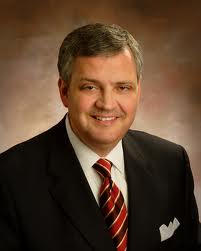
#9 Albert Mohler

#8 Mark Driscoll
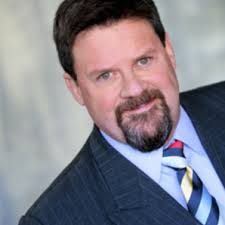
#7 Phil Johnson
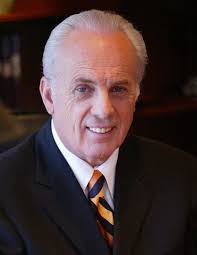
#6 John MacArthur Jr.

#5 Mark Dever

#4 Michael Horton

#3 Tullian Tchividjian

#2 Tim Keller

#1 John Piper
 “The New Calvinists are not worried; they don’t believe the American church has the intellectual wherewithal to grasp the fact that John Calvin was a Platonist philosopher. It is time for that theory to be vigorously tested. Even if that theory is believed, it can be attributed to Reformed orthodoxy predicated on the incompetence of the human race wondering about in the shadow world while rejecting the idea that the new birth makes a difference. The new birth is not the mere experience of a changed realm; it is the reality of a changed person, a person that is not only justified positionally, but changed into a just person living for God’s glory. Christians don’t merely “reflect” the glory of God, they are not merely “transformed into an image” of God’s glory, they are new creatures who glorify God with their own actions. The Spirit does not merely manifest Christ in a realm, he colabors with the new creature in the truest sense.”

 Paul's Passing Thoughts
8 comments