TANC 2015, Susan Dohse, Session 1 – Jonathan Edwards: An Introduction to the Man of Many Words
 I love history, and although I give my dear husband fits when I am preparing for our conferences, this studying and doing research does give me an element of enjoyment. This is also one of my preventive measures to staving off Alzheimer’s – engaging in mentally challenging activities. However, I am motivated by truth. That is the mission of TTANC, The Truth About New Calvinism.
For our new guests either here or in cyberspace, I will quickly introduce myself. My name is Susan Deborah Dohse. I was married to Wayne St. Denis for thirty-six years, and together we had three sons: Timothy, Benjamin, and Philip. Wayne passed away in December of 2009 of congestive heart failure and diabetes. The Lord blessed me with a new husband and so I lost my “sainthood” when I married Paul 4 years ago. I actually married him twice. We eloped on January 1st and, April 9th, had a public marriage ceremony to announce our union. I am in my 42nd year of teaching, and my present title is that of a Developmental Specialist. This means I get to play with babies whose ages range from birth to age three. I have taught every grade except Kindergarten and the first fifteen years of my teaching career was at Xenia Christian. Two children were added to my clan, Heather, and Paul Jr. Together, Paul and I have four grandchildren, Blayne, Benjamin’s son, whom you will meet on Saturday, and Hannah, Jacob, and Joanna, who live in Puerto Rico with their missionary parents Heather and David.
If I were to take a survey such as what might be taken for the game show Family Feud, and ask people to name one thing they know about Jonathan Edwards, here is what I believe the top answers might be:
1) Who?
2) He wrote that anti-war song, Sunshine.
3) Wasn’t he the man who fell into the hands of an angry God?
4) I know, he woke up during that Great Awakening.
5) He’s running for President, isn’t he?
The young, restless, and reformed call him their “home boy”, and pastors elevate him to equal importance of the Apostle Paul. There is a Jonathan Edwards Institute in Princeton, New Jersey, a Jonathan Edwards Classical Academy in Whites Creek, Tennessee, a Jonathan Edwards Conference held by John Piper, Jonathan Edwards Center at Yale University which houses all his known writings, a Jonathan Edwards College at Yale, and a Jonathan Edwards Gordon Conwell Seminary. The list can go on. Just Google it. This Puritan minister of the 1700’s is immortalized, idolized, and almost canonized. The Puritan Board Blog holds Edwards in high esteem, and why wouldn’t they? It’s the Puritan Board. They extol his life and elevate his teachings to be on par with Scripture. John Piper rarely has an original sermon because of his heavy reliance on the theology and epistemology and writings of Jonathan Edwards. “Alongside the Bible, Edwards became the compass of my theological studies,” writes Piper. Dr. Martin Lloyd Jones made this claim: “I am tempted perhaps foolishly, to compare the Puritans to the Alps, Luther and Calvin to the Himalayas, and Jonathan Edwards to Mt. Everest. He has always been to me a man most like the Apostle Paul.” Author Stephen Nichols speaks of a lecturer who stated, “Next to Scripture, Jonathan Edwards’s Religious Affections stands as the single most important book for any Christian to grapple with.”
He is called the Prince of Pastors, America’s greatest theo-philosopher, and America’s Augustine. Do I even try to say something the least bit negative about this golden boy of the Puritans?
So, the Why question. Why study history in general and Jonathan Edwards in particular? We live in the here and now, the present. We are supposed to be planning for the future, our retirements, Christmas, our next conference, lunch. We plan for and perhaps worry much over the future. With all that we have to do today, and with all that we have to look forward to in the future, why bother with discussing someone from the past? Consider all the demands that press on us daily and the anticipation of what is. Peter Stearns said, “Any subject of study needs justification.” Why is Jonathan Edwards worth our study, worth your attention? What is the justification for my sharing what I have learned about this man?
Let’s look at it from this perspective: How can we evaluate war if the nation is at peace –unless we use historical material? How can we understand the role that beliefs play in shaping church history, and family life if we don’t study the impact of such historical figures as John Calvin, Martin Luther, Augustine, and Jonathan Edwards? Let’s use this analogy: Jonathan Edwards is our laboratory and the data learned from him and what he taught serves as the evidence in figuring out the answers to other Wh questions: Why is Protestantism, i.e. Christianity, pursuing New-Calvinism? What factors contribute to this resurgence? What elements of Protestantism persist despite change? When we unfold his record, it could provide some light on how New Calvinism works, and the road it is taking us down.
Jonathan Edwards, destined from birth to be a Puritan minister. His parents, Timothy and Esther Edwards, hearty Calvinists, believed in predestination and the sovereign will of God, but were not disposed to helping God define the direction, shape the will, and mold the mind of their only son, Jonathan. He had no other calling but that of a Puritan minister. His mother, father, and older sisters made sure that he would follow in the path of their father, Timothy, and grandfather, Solomon Stoddard. He was the fifth child of eleven, and the only boy. He was extremely loved and doted on but not spoiled. His father was a micro-manager and had the highest of expectations for his only son. He learned Latin at the age of 6, and before entering the Collegiate College of Connecticut, later named Yale University, at the age of 13, he would know both Latin and Greek. His father, Timothy, a teacher himself of Latin and Greek would see to it that his son would know the languages necessary to enter college.
From an early age, religion was a preoccupation with Jonathan. He dated his interest in spiritual things to when he was 9 or 10, calling it “a time of remarkable awakening” when he had been for months concerned “about the things of religion and [his] soul’s salvation.” Moved to both private meditation and prayer, and religious exercises with other children, he often went to “secret places” in the woods, “a booth in a swamp, in a very secret and retired place, for prayer.” He later wrote, “I seem to be in my element when engaged in religious duties.”(Samuel Miller, Jonathan Edwards, and Perry Miller, Jonathan Edwards.)
He entered the Collegiate School of Connecticut at the age of 13, intellectually precocious, and an un-regenerate pre-teen who did not measure up to his father’s expectations because, although overly pious, Jonathan did not show a heartfelt love of God, which was the true sign of conversion.
He went off to school with ten other boys ages 13-15; typical age for boys to attend college during those days. The course work was rigorous, and life structured. Breakfast followed morning prayers, with classes through midday; an hour and half of free time after the noon meal and before afternoon classes, more prayers, Bible reading and explication. Supper came after early-evening recitations, with study hours from 9-11. Lights out at 11. Monday through Thursday first year students studied Greek and Hebrew grammar, sophomores began work in logic, and the upper classes moved on to natural philosophy, mathematics, and metaphysics. All students studied rhetoric, oratory, ethics, and theology. This puts the common core philosophy in a bad light, doesn’t it?
The final examination for receiving the Bachelor of Arts degree was: a student had to convince his rector of his expertise “in Reading the Hebrew into Greek, and into Latin and grammatically resolving said languages and in answering such questions in their systems of logic and in the principles of natural philosophy and metaphysicks.” Edwards did so well that at the commencement in 1720 he gave the valedictory oration, in Latin. He returned to work on his Master’s degree.
Scholasticism gave him satisfaction and recognition in the collegiate community, but not peace. Although well-read and informed in the reading and study of philosophy, particularly European high culture ( Locke, Descartes, Sir Isaac Newton, Henry More, Malebranche, the Cambridge Platonists, to name a few), he still anguished over the issue of conversion. In his Personal Narrative he reported his earliest religious experiences and wrote that just prior to going to Yale he believed that he had experienced spiritual transformation. But he lost his exuberance. He had at least four spiritual awakenings, he records.
When 16, he became bed-ridden with pleurisy and almost died. He wrote that it was a divine intervention, for God held him over the pit of hell and it was his sinful life that brought him to the verge of death. Believing, as all good Puritan Calvinists do, that experiences such as this is part of the sovereign will of God and part of the spiritual conversion process, he resolved to rearrange all things in his life to allow him to focus on Christ alone. He tried to renounce his former ways and obey the Lord’s Word. He “fell again” into the “old ways of sin” which led him to many great and violent struggles in his soul. He broke off all former wicked ways, all known outward sin, and applied himself to see salvation and to practice many religious duties. (Please note these words: see salvation and practice religious duty: they are important in the pursuit of salvation) Through self-searching he felt the need to change his attitude from “seeking salvation” to contemplation of Christ’s place and role in the world—develop a new awareness of Christ’s glory. Please note the first two steps one takes to conversion: recognizing how wicked you are by identifying all known sin, and contemplation of Christ’s glory. Now he needed to shift his attention to God. Only by turning to God would he be able to experience a true spiritual transformation. He writes that when he saw the once horrible doctrine of God’s sovereignty he was able to “see further.” His reasoning was that he “apprehended the justice and reasonableness regarding the doctrine of God’s sovereignty” and became “convinced and fully satisfied as to this sovereignty of God and his justice in thus eternally disposing of men according to his sovereign pleasure.” He found the breakthrough to being converted. Only through the full realization of the glory of the Divine Being did he develop new convictions about Christ and the work of redemption. He describes his mystical and existential conversion as “an inward, sweet sense” of the work of redemption, “a calm sweet abstraction of soul from all the concerns of the world.” His experience had been so overwhelming that he writes in his diary that “often he had a kind of vision, or fixed ideas, and imaginations of being alone in the mountains, or some solitary wilderness, far from all mankind, sweetly conversing with Christ, and wrapped and swallowed up in God.” (Diary, Works of Jonathan Edwards)
Now on the verge of complete conversion, on the edge of self-transformation according to his new and vivid experience of the sovereign majesty of God and Christ’s glorious work of salvation, he needed a stamp of authority to certify that these spiritual experiences were indeed evidence of conversion. He traveled from New York in 1723 to tell his father his spiritual odyssey. Without the approval of his father, the long and agonizing journey of the past two years might prove invalid. “Not long after I first began to experience these things I gave an account to my father of some things that had passed in my mind. I was pretty affected by the discourse we had together.” With his father’s final affirmation and approval, his son’s process of conversion was complete. In his Personal Narrative he tells his readers that after the discourse with his father, he went for a short walk, when “[i]t came into my mind so sweet a sense of the glorious majesty and grace of God…The appearance of everything altered. There seemed to be as it were, a calm, sweet cast or appearance of divine Glory in almost everything. God’s excellency, his wisdom, his purity, his love, seemed to appear in everything.” Although he writes that he does not know the exact moment when conversion happened, he knows that one day he had a “delightful conviction” accompanied by a “sort of inward, sweet delight in God and divine things” that he had never experienced before. He dated this remarkable change in attitude to the time between his graduation from Yale and his pastorate in New York.
It is important to keep the steps of his conversion in the back of your mind because we will revisit these again.
Throughout his life Jonathan Edwards spent a considerable amount of time and energy in fashioning the conduct and character of his person. At the beginning of his literary activity he kept to being the careful, organized writer, following the rules he wrote in his Cover-Leaf Memoranda where he would engage the reader, and gently lead them into some new dimension of belief. By the 1730’s he abandoned his rule book and became aggressive and assertive with the intent to expound serious Christian doctrine rather than just chronicle events.
The timeline of events from his conversion experience to his death revolve around Edwards establishing his ministerial authority. Called to be an assistant pastor to his grandfather, Solomon Stoddard, was a major role for Edwards. He was entering a territory with increasing social instability and potentially explosive situations. Corn, cattle, and land were central to the region’s interests and social divisions within the town had become significantly exacerbated. The Stoddard family controlled the military, the judiciary, and the church, and this control was a constant thorn in his flesh. Edwards did not long have the benefit of his grandfather’s counsel or authoritative position. On February 11, 1729, after 60 years in the same town and ministry, the great man finally died, leaving his 26 year old grandson to continue his work. Elijah’s mantle had fallen on his shoulders, but he was far from earning the respect it marked, for he would always live in the shadow of the Pope of the Connecticut Valley, his grandfather. From 1729 to 1743 he was on the rise as the sole pastor of the prestigious Northampton congregation that experienced awakenings in 1734-35 and 1740-42. Some historians calls these times the Little Awakening, and the Great Awakening.
His strategy during these years consisted of three elements: cultivate a patronage of influential people in Northampton, cultivate a patronage of influential people beyond Northampton, and continue to grow his self-confidence in the rightness of his personal beliefs as foundational to true religion. He accomplished this not through his preaching solely, but through his prolific writing.
The congregation of Northampton had to get used to a minister that was “stiff and unsociable”, a man of few words and a man reserved with strangers. He was never comfortable visiting people’s homes and making small talk. He wrote, “I prefer the study of books than to the company of people.” When they had spiritual concerns, he preferred to counsel them in his study, not visit them in their homes. Unlike his grandfather, who preached without notes and with much emotion, his pulpit manner reflected his constitution and habits. His voice was not particularly loud, but that did not diminish the fact that he commanded his audience with distinctness, clearness, and precision. He rarely moved his hands or looked out on his audience unless it was to stare at the bell rope in the back of the church, for he wrote out his sermons and read from his texts.
His life was marked by rigid structure –rising early, thirteen hours of study in which he wrote treatises, and prepared his sermons. Edwards wrote in his diary in 1728, “I think Christ has recommended rising early in the morning, by his rising from the grave very early.” After the evening meal, he often devoted one hour engaged with his children in conversation and singing. He also wrote “I judge that it is best when I am in a good frame of mind for divine contemplation, or engaged in reading the Scriptures, or any study of divine subjects, that, ordinarily, I will not be interrupted by going to dinner, but will forego my dinner, rather than be broke off.” After family worship, he would return to his study for 2-3 more hours before retiring to bed. Much praise must be given to his wife Sarah, for she was glue that held the household together. She was responsible for running the household, discipline and instruction of their eleven children, and caring for the steady stream of visitors and apprentices, often overseeing their home and 50 acres while nursing one child and pregnant with another. When it came to the management of a household, it has been said that Jonathan Edwards had no common sense, often unaware of how many sheep they had, or the condition of their fields. It was Sarah that helped to make the man, Jonathan Edwards.
From 1744-50, he became embroiled in controversies and conflicts in which his downward spiral in the eyes of the town led to his dismissal in 1750. Edwards had inherited a church socially fractured and in spiritual decline. His effectiveness as spiritual leader diminished with each passing year. He was dismissed from his ministerial position and on July 1st 1750, he severed his formal connection with the church of Northamption. To pour salt on his wounds, the church retained him for another year, hiring him by the week to preach to a congregation that was having difficulty in obtaining a new minister, in no part because of the town’s reputation for contentiousness. In the summer of 1751, he moved 60 miles west of Northampton where he was to be the minister and schoolmaster at an Indian mission school in Stockbridge, Massachusetts.
Finally convinced that his talent was writing, in a few short years he completed 4 theological treatises on topics of transatlantic interest. The strategies he developed after graduation from Yale were now being played out in the wilderness of Massachusetts.
The theme of his writing was the most important and urgent: the doctrine of God’s sovereignty and excellence. He now had the self-confidence and the growing conviction that he had the duty and right to communicate this message. He had internalized the message to the point where it was shaping him, the message became the man. The message of God’s sovereignty with its human counterpart of the need for total dependency on God dominated him to where he was convinced that he had a role as proclaimer of that message. Now his role became one of quasi-apostle. He journeyed from the desire to be heard, to one who felt he had the right to be heard, to this quasi-apostle, one who must be heard.
Now more than 290 years and 4,000 words of scholarship later, we see that the person of Jonathan Edwards was shaped not by his practice, but by his writing. Is it no wonder that the young, restless, and reformed are urged to “take up and read Edwards”? He fits well in their TULIP cult; since the TULIP cult works from the principles taught in the highly fallible writings and sermons of men, men such as John Calvin, and their home-boy, Jonathan Edwards.
 Live Video via Google Hangouts
2015 TANC Conference Speaker:
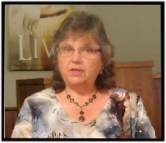 Susan Dohse M.Ed.

Jonathan Edwards: The Man, the Myth, the Message
Session 1: Friday, August 28, 1:00 PM
Session 2: Friday, August 28, 4:45 PM
Session 3: Saturday, August 29, 2:15 PM
Elyse Fitzpatrick: The New Red Herring for John MacArthur
 Contemporary evangelicalism is so fraught with heresy and confusion one becomes endeared to those who at least have an accurate understanding of their false gospel. It’s so annoying to me that I am no longer interested in converting people who believe in Luther/Calvin progressive justification, but rather long to see them accurately understand what they profess. I dream of a TANC school of Calvinism where Calvinists are taught what Calvin really believed. For graduation they would receive a T shirt that reads, “Now Jonathan Edwards is really my homeboy.”
That’s why I miss Tullian Tchividjian. That is a man that understands Reformation soteriology. It was too much fun watching him drive John MacArthur et al completely nuts with his un-nuanced articulation of Reformed doctrine. But Tullian screwed up; so disappointing.
So who is the new replacement for proving that MacArthur et al stand for something different? Tullian comrade Elyse Fitzpatrick. The likes of Elyse give fodder for the accusation of antinomianism against the authentic Reformation gospel of progressive justification which is in fact antinomianism. Fitzpatrick, like her bro Tullian, lacks nuance and enables people to connect the dots; that’s why she is a threat and must be neutralized.
So, MacArthur’s camp is blogging about Elyse and her involvement in the “Hypergrace movement.” The series is titled “Abusing Grace.” Look, the fact is: they do not believe anything one whit different than Elyse Fitzpatrick. This is all a bunch of smoke and mirrors. Who wants specific citations from the mouth of Mac propagating the exact same gospel contemplationism of progressive justification? His best bro is John Piper who states in no uncertain terms that Christians continue to be saved by returning to the same gospel that saved them. Mac minion Phil Johnson defines saving faith as returning to the cross for a fresh set of downs on the way to the goal posts of final justification. They all believe the same thing.
So, in throwing people off track with their new red herring, they of course falsely accuse Fitzpatrick which gives her opportunity to defend herself without getting to the crux of the issue: she teaches an unfettered Reformed gospel and they don’t. Her defense on Facebook follows:
Well, okay, I’m going to say it again:
Do I care about holiness? Yes.
Do I care about our children being holy? Yes. (Ask ’em.)
It is simply my belief that true holiness grows only in the context of love for God and love for God only grows in the context of being reminded of God’s prior love for us in Christ.
Yes, I talk about grace and the gospel a lot. But it’s because I care about holiness, not because I think sin should abound.
Of course, abounding sin is not the issue; the issue is that Luther, in his foundational doctrinal statement of the Reformation, the Heidelberg Disputation, proffered the following perspective on active sin: it is our only duty to seek more salvation while obedience manifested by God is completely out of our control and really none of our business. MacArthur has said the same thing on several occasions in this way: it is his job to teach Scripture, but it is up to the Holy Spirit to apply it. He has even suggested that Christians sometimes realize they obeyed after the fact because it was the Holy Spirit who applied the truth and not them. The general idea can be understood via this quote from Reformed guru and Christian counselor Bill Baldwin:
Give me a man who preaches the law with its terror and Christ with his sweetness and forgets to preach the law as a pattern of the fruit of sanctification and what will result? In two months his parishioners will be breaking down his door begging to be told what behavior their renewed, bursting with joy, hearts may best produce. And when he tells them, they will be surprised (and he will not) to discover that by and large they have produced exactly that. And where they haven’t, take them back to Christ again that they may contemplate him in all his glorious perfection so that they may better understand what sort of God and man he was and is.
Likewise, MacArthur often propagates the transformation of believers by gazing at the glory of God in the face of Christ which is also John Piper’s “beholding as a way of becoming.”
Be not deceived; it’s all the same stuff. It’s all progressive justification by returning to the same gospel that saved us for more salvation because Christians supposedly need ongoing salvation.
paul
The Protestant Road to Salvation; Gaining Salvation with More and More Salvation by Using the Bible to be Brought Down to Hell
 The Heidelberg Disputation Series: Theses 15-18.
Listen to audio or download audio file.
Welcome truth lovers to Blog Talk radio.com/False Reformation, this is your host Paul Dohse. Tonight, part 10 of “The Magnum Opus of the Reformation: Martin Luther’s Heidelberg Disputation, Thesis 15 ff. The Protestant Road to Salvation; Gaining Salvation with More Salvation by Using the Bible to be Brought Down to Hell
Greetings from the Potters House and TANC ministries where we are always eager to serve all of your heterodox needs. Our teaching catalog can be found at tancpublishing.com.
If you would like to add to our lesson or ask a question, call (347) 855-8317. Remember to turn your PC volume down to prevent feedback. If you choose to use Skype to listen to the show, my advice is to just dial direct from your Skype account without using any of the Blogtalk links. 347-855-8317.
Per the usual, we will check in with Susan towards the end of the show and listen to her perspective.
Remember, you may remain anonymous. When I say, “This is your host; you are on the air, what’s your comment or question”—just start talking.
If you would like to comment on our subject tonight, you can also email me at paul@ttanc.com. That’s paul@Tom, Tony, Alice, Nancy, cat.com. I have my email monitor right here and can add your thoughts to the lesson without need for you to call in. You can post a question as well.
Tonight, we continue in our sentence by sentence evaluation of the HD (Heidelberg Disputation) starting with thesis 15. Yes, tonight, we really get into the meat of the Protestant gospel, and it ain’t pretty.
Due to the fact that I can’t decide where to stick this with a fork first tonight, let’s begin by reading the 15th thesis:
Thesis 15: Nor could free will remain in a state of innocence, much less do good, in an active capacity, but only in its passive capacity (subiectiva potentia).
The Master of the Sentences (Peter Lombard), quoting Augustine, states, »By these testimonies it is obviously demonstrated that man received a righteous nature and a good will when he was created, and also the help by means of which he could prevail. Otherwise it would appear as though he had not fallen because of his own fault.« He speaks of the active capacity (potentia activa), which is obviously contrary to Augustine’s opinion in his book ›Concerning Reprimand and Grace‹ (De Correptione et Gratia), where the latter puts it in this way: »He received the ability to act, if he so willed, but he did not have the will by means of which he could act.« By »ability to act« he understands the original capacity (potentia subiectiva), and by »will by means of which he could,« the active capacity (potentia activa).
The second part (of the thesis), however, is sufficiently clear from the same reference to the Master.
We discussed the two primary elements of Martin Luther’s bondage of the will in part 7. They are active will and passive will. Man has no active will, his will is passive. It’s like water; it just sits there until it is acted upon by something from the outside. In Luther’s bondage of the will construct, man is dead as a passive being. We normally think of death as a termination of life, but according to Luther, death is a realm where works can be performed, but they are dead works.
As often pontificated by the Reformed, their favorite illustration in regard to this is the resurrection of Lazarus in John 11. Supposedly, this is illustrative of sanctification (the Christian life). From there, the Reformed put metaphysical feet on it in various and sundry philosophical ways, but the major premise is the same.
A caution when studying Reformed ideology/philosophy: separate the major premises from the various applications or you will drive yourself nuts. The major premises such as the total inability of mankind are consistent, but the so-called life applications are not. Let me give an example.
Some of the Reformed believe that man is not active in any regard as far as the will. Everything that happens is because God acted upon man. Others believe man has a free will to do dead works in the material realm, but all manifestations of good works are the result of God acting upon man’s passive will. So, one view sees all human events as a result of God’s active will while others see the distinction in only good or evil acts. Man is passive in regard to good works, but has an active will in regard to all things evil.
Hence, it’s fine to go about your business and live life as it comes just so you believe that everything you do is evil. That qualifies you to be forgiven on Sunday. In the other application, you have no active will at all, but ALL things are preordained by God for His glory. Your goal is only to SEE and EXPERIENCE what God is doing. In the final analysis, these varying applications are not going to cause much of a rift in Reformed circles; the tie that binds is the total inability of man.
But here is another tie that binds: the idea that God created evil for His own glory. Most Protestants think that Protestants believe that Adam and Eve were sinless/holy/pure before the fall and they are just dead wrong in that idea, no pun intended. Authentic Protestant soteriology holds to the idea that Adam and Eve were created with passive wills as clearly stated by Luther in the thesis at hand. Either they had a propensity to do evil and God acted to prevent it until the appointed time, or God actively incited their fall as well.
It can be demonstrated clearly that the creation of evil by God is a Reformed mainstay, but the various philosophical applications make it possible for the Reformed to play all kinds of metaphysical shell games in order to keep people confused and controlled.
As stated before, the Reformation was first and foremost about philosophy and NOT theology. Clearly, the Reformation was about the integration of Dualism with the Bible. One aspect of Dualism insists that nothing can exist without a counterpart to define it. Without darkness, there can be no light, etc. When we get to thesis 28, we will see that Luther’s counterpart to love is evil. Since God is love, the only logical conclusion, other than the fact that Jonathan Edwards and many others have stated it directly, is that God Himself cannot exist without evil because He is the defining counterpart. Some suggest that God existed, but for all practical purposes was nonexistent until He created evil. This is nothing new. This is a resurgence of the exact same Platonist/Neo-Platonist/Gnostic doctrines that plagued the first century church. Take note of what James was pushing back against in that day:
James 1:13 – Let no one say when he is tempted, “I am being tempted by God,” for God cannot be tempted with evil, and he himself tempts no one. 14 But each person is tempted when he is lured and enticed by his own desire. 15 Then desire when it has conceived gives birth to sin, and sin when it is fully grown brings forth death.
16 Do not be deceived, my beloved brothers. 17 Every good gift and every perfect gift is from above, coming down from the Father of lights with whom there is no variation or shadow due to change. 18 Of his own will he brought us forth by the word of truth, that we should be a kind of firstfruits of his creatures.
Of course, the Reformed deny that they teach such things; specifically, that God created evil for His own glory, and dance around the fact with their shell-game communication skills. An example is the following excerpt from an article written by John MacArthur:
Evil originates not from God but from the fallen creature. I agree with John Calvin, who wrote,
. . . the Lord had declared that “everything that he had made . . . was exceedingly good” [Gen. 1:31]. Whence, then comes this wickedness to man, that he should fall away from his God? Lest we should think it comes from creation, God had put His stamp of approval on what had come forth from himself. By his own evil intention, then, man corrupted the pure nature he had received from the Lord; and by his fall drew all his posterity with him into destruction. Accordingly, we should contemplate the evident cause of condemnation in the corrupt nature of humanity-which is closer to us-rather than seek a hidden and utterly incomprehensible cause in God’s predestination. [Institutes, 3:23:8]
~ Is God Responsible for Evil? Grace to You catalogue #A189.
Ok, so it originates from the creature and not God as if that has nothing to do with how God created man. The only alternative is the idea that God created man in His holy image, and with a free will, but don’t hold your breath and wait for them to ever agree to that.
Note Calvin’s language very carefully. It wasn’t one, then another individual deceived by the serpent; it was a propensity inherent in the kind. Also, in the same section of 3.23.8, Calvin attributes the fall to God’s predestination for His glory. It is unclear if Calvin would have agreed with Luther’s bondage of the will via man’s passive will, but Calvin clearly believed that man was created with a level of integrity that could not obtain full fellowship with god even if man had not fallen:
Even If man had remained in his integrity, still his condition was too base for him to attain to God. How much less could he have raised himself so far, after having been plunged by his ruin into death and hell, after staining himself with so many defilements nay, even stinking in his corruption and all overwhelmed with misery?
~The Calvin Institutes 2.12.1. Henry Beveridge translation varies slightly.
Shockingly, the Henry Beveridge translation has it that man’s condition was too base to attain to God “without a Mediator” note capital “M.” Clearly, Calvin is saying that man needed a mediator before the fall.
Thesis 16: The person who believes that he can obtain grace by doing what is in him adds sin to sin so that he becomes doubly guilty.
On the basis of what has been said, the following is clear: While a person is doing what is in him, he sins and seeks himself in everything. But if he should suppose that through sin he would become worthy of or prepared for grace, he would add haughty arrogance to his sin and not believe that sin is sin and evil is evil, which is an exceedingly great sin. As Jer. 2:13 says, »For my people have committed two evils: they have forsaken me, the fountain of living waters, and hewed out cisterns for themselves, broken cisterns, that can hold no water,« that is, through sin they are far from me and yet they presume to do good by their own ability.
Now you ask: What then shall we do? Shall we go our way with indifference because we can do nothing but sin? I would reply: By no means. But, having heard this, fall down and pray for grace and place your hope in Christ in whom is our salvation, life, and resurrection. For this reason we are so instructed-for this reason the law makes us aware of sin so that, having recognized our sin, we may seek and receive grace. Thus God »gives grace to the humble« (1 Pet. 5:5), and »whoever humbles himself will be exalted« (Matt. 23:12). The law humbles, grace exalts. The law effects fear and wrath, grace effects hope and mercy. Through the law comes knowledge of sin (Rom. 3:20), through knowledge of sin, however, comes humility, and through humility grace is acquired. Thus an action which is alien to God’s nature (opus alienum dei) results in a deed belonging to his very nature (opus proprium): he makes a person a sinner so that he may make him righteous.
This thesis is a good summary of the Reformation gospel. Man remains unchanged accept for the ability to see how evil he is and his continued need for the same gospel that saved him. Any notion that there is anything in man that could choose God is double sin and hewing out cisterns for himself that cannot hold water.
Also assumed in the rhetoric is efficacious good works to maintain the law as a standard for justification.
Luther then states what “saved” sinning lost people are to do since they can do nothing but sin. One is to focus on their sin as a way to see a continued need for salvation resulting in more grace…for salvation and continued justification. Instead of being indifferent to sin, embrace it as a means of seeing your need for continued “grace,” herein a more nuanced word than outright “justification” or “salvation.” Again, this nuancing of words incessant with the Reformed began right here in the HD. Following is a contemporary example:
In the following video trailer from the 2011 Resolved Conference, Al Mohler states that the only purpose of the law in the life of a believer is to show us our ongoing need for salvation. Of course, he doesn’t word it that way. He states that believers have an ongoing need for Christ (which no Christian would refute), but note carefully: he is speaking in context of our initial salvation. So, instead of saying plainly that Christians need to be continually saved, or continually justified, he replaces that wording with “Christ.” However, again, the context is clearly salvation. He is saying that we need Christ in the same way that we needed Him for salvation.
Mohler is also saying that the law has the same relationship/purpose to unbelievers as it does believers: to show us our need for Christ. So, obviously, this is in contrast to any ability on the part of the believer to keep it. All the law can do is show NEED. Need for what? Well, what’s the context? Mohler also presents an either/or choice in regard to the law: it either shows us our need for Christ (again, what need specifically?), or we are using it to “rescue ourselves from sin.” Hmmm, what does it mean to “rescue ourselves from sin”? I believe Mohler deliberately uses the word “rescue” instead of “save” in order to add nuance to his point. “Rescue” is less direct, and could refer to a believer trying to overcome sin on his own. This is the same reason he replaces “salvation” with “Christ” in his prior point. It’s deliberate deception. Excluded is any mentioning that the law can be used by the believer to please God and glorify Him in all we do by “observing all that I have commanded.”
~Paul’s Passing Thoughts.com: Why Al Mohler is a Heretic; April 10, 2012
Thesis 17: Nor does speaking in this manner give cause for despair, but for arousing the desire to humble oneself and seek the grace of Christ.
This is clear from what has been said, for, according to the gospel, the kingdom of heaven is given to children and the humble (Mark 10:14,16), and Christ loves them. They cannot be humble who do not recognize that they are damnable whose sin smells to high heaven. Sin is recognized only through the law. It is apparent that not despair, but rather hope, is preached when we are told that we are sinners. Such preaching concerning sin is a preparation for grace, or it is rather the recognition of sin and faith in such preaching. Yearning for grace wells up when recognition of sin has arisen. A sick person seeks the physician when he recognizes the seriousness of his illness. Therefore one does not give cause for despair or death by telling a sick person about the danger of his illness, but, in effect, one urges him to seek a medical cure. To say that we are nothing and constantly sin when we do the best we can does not mean that we cause people to despair (unless we are fools); rather, we make them concerned about the grace of our Lord Jesus Christ.
Ok, so not much commentary needed here—this is pretty plain. As believers we are still sick, and hey, telling someone that they need a doctor continually is not bad news, but good news. All of the Christian life is seeking to be concerned about “grace.” Again, that means salvation. As we have discussed many times before, “grace” is a biblical word that has broad meaning including, for the most part, “help.” Though Luther calls any assertion that this would instill despair in people “foolish,” historical facts beg to differ.
Thesis 18: It is certain that man must utterly despair of his own ability before he is prepared to receive the grace of Christ.
The law wills that man despair of his own ability, for it »leads him into hell« and »makes him a poor man« and shows him that he is a sinner in all his works, as the Apostle does in Rom. 2 and 3:9, where he says, »I have already charged that all men are under the power of sin.« However, he who acts simply in accordance with his ability and believes that he is thereby doing something good does not seem worthless to himself, nor does he despair of his own strength. Indeed, he is so presumptuous that he strives for grace in reliance on his own strength.
Here we have it again. The sole use of the Bible is to show us our worthlessness so as to be brought down to hell in order to prepare ourselves to receive more salvation/justification. As Dr. Michael Horton has said, the sole Purpose of the Bible is to “drive us to despair of self-righteousness.” This is, of course, the mortification part of the Reformed doctrine of mortification and vivification.
With that, let’s go to the phones.

 Paul's Passing Thoughts
1 comment