Destroying Eve-il is a Reformed Family Tradition: Today Danvers, Tomorrow the Gallows
 Originally published August 1, 2012
Great pizza party last night with an author who is writing a sci-fi novel. As I sat and listened to him share his shocking plot designed to invoke terror in his future readers, my recent research for “Reformation Myth” made the chilling plot seem mundane in comparison to sexy witches being hung, burned, and impaled with images of Mary fitted with large spikes.
On the one hand, the Reformers were supposedly brilliant for recognizing Plato’s theory that pure truth and beauty is immutable, while on the other hand, their brutality was merely the “mentality of the age.” It is also understandable why Reformed folks are so big on, “all truth is God’s truth” because the Catholic church had a lot of ideas that the Reformers thought were pretty cool; specifically, that because of Eve, women in general are predisposed to evil, or Eveil.
Between sips of mocha that could barely be executed because of my fixated attachment to the narrative, the little angel on my right shoulder kept saying, “Excuse me, this is history, and it really happened.”
Indeed it did happen, and the war declared on witches by the Catholic Church and the Reformers resulted in casualties that surpass many, many wars waged throughout history. And, to say the least, the due process of law that determined who was a witch was, well, shall we say, a little lean. Since it was thought that 90% of all witches were women, if you were a woman, and dragged into court, your gender was a bad start to the process. In at least one case, a particularly pious woman didn’t even take her arrest seriously and was sarcastic towards her accusers—who later executed her. I guess there is only one thing worse than a witch—a sarcastic woman. Then, there was this also:
The climate of fear created by churchmen of the Reformation led to countless deaths of accused witches quite independently of inquisitional courts or procedure. For example, in England where there were no inquisitional courts and where witch-hunting offered little or no financial reward, many women were killed for witchcraft by mobs. Instead of following any judicial procedure, these mobs used methods to ascertain guilt of witchcraft such as “swimming a witch,” where a woman would be bound and thrown into water to see if she floated. The water, as the medium of baptism, would either reject her and prove her guilty of witchcraft, or the woman would sink and be proven innocent, albeit also dead from drowning (Helen Ellerbe: The Dark Side of Christian History,Chapter Eight: 1450 – 1750 C.E.).
It all started with the Catholics first, and the Reformers later joined the campaign that supplemented the inquisition:
Pope John XXII formalized the persecution of witchcraft in 1320 when he authorized the Inquisition to prosecute sorcery. .” Thereafter papal bulls and declarations grew increasingly vehement in their condemnation of witchcraft and of all those who “made a pact with hell.” In 1484 Pope Innocent VIII issued the bull Summis desiderantes authorizing two inquisitors, Kramer and Sprenger, to systematize the persecution of witches. Two years later their manual, Malleus Maleficarum, was published with 14 editions following between 1487-1520 and at least 16 editions between 1574-1669. A papal bull in 1488 called upon the nations of Europe to rescue the Church of Christ which was “imperiled by the arts of Satan.” The papacy and the Inquisition had successfully transformed the witch from a phenomenon whose existence the Church had previously rigorously denied into a phenomenon that was deemed very real, very frightening, the antithesis of Christianity, and absolutely deserving of persecution.
It was now heresy not to believe in the existence of witches. As the authors of the Malleus Maleficarum noted, “A belief that there are such things as witches is so essential a part of Catholic faith that obstinately to maintain the opposite opinion savors of heresy.” Passages in the Bible such as “Thou shalt not suffer a witch to live” were cited to justify the persecution of witches (Ibid.).
The following gives us an idea as to the extent that this was going on:
Contemporary accounts hint at the extent of the holocaust. Barbara Walker writes that “the chronicler of Treves reported that in the year 1586, the entire female population of two villages was wiped out by the inquisitors, except for only two women left alive.” Around 1600 a man wrote:
Germany is almost entirely occupied with building fires for the witches… Switzerland has been compelled to wipe out many of her villages on their account. Travelers in Lorraine may see thousands and thousands of the stakes to which witches are bound (Ibid.).
The general mentality of the Eveil motif was part and parcel with the war on witches:
The witch hunts were an eruption of orthodox Christianity’s vilification of women, “the weaker vessel,” in St. Peter’s words. The second century St. Clement of Alexandria wrote: “Every woman should be filled with shame by the thought that she is a woman.” The Church father Tertullian explained why women deserve their status as despised and inferior human beings:
“And do you not know that you are an Eve? The sentence of God on this sex of yours lives in this age: the guilt must of necessity live too. You are the devil’s gateway: you are the unsealer of that tree: you are the first deserter of the divine law: you are she who persuaded him whom the devil was not valiant enough to attack. You destroyed so easily God’s image, man. On account of your desert that is, death even the Son of God had to die.”
Others expressed the view more bluntly. The sixth century Christian philosopher, Boethius, wrote in The Consolation of Philosophy, “Woman is a temple built upon a sewer.” Bishops at the sixth century Council of Macon voted as to whether or not women had souls. In the tenth century Odo of Cluny declared, “To embrace a woman is to embrace a sack of manure…” The thirteenth century St. Thomas Aquinas suggested that God had made a mistake in creating woman: “nothing [deficient] or defective should have been produced in the first establishment of things; so woman ought not to have been produced then.” And Lutherans at Wittenberg debated whether women were really human beings at all. Orthodox Christians held women responsible for all sin. As the Bible’s Apocrypha states, “Of woman came the beginning of sin/ And thanks to her, we all must die”(Ibid.).
And the Reformers were completely onboard with the Eveil rage of that Day:
St. Augustine of Hippo (354 to 430 CE). He wrote to a friend:
“What is the difference whether it is in a wife or a mother, it is still Eve the temptress that we must beware of in any woman……I fail to see what use woman can be to man, if one excludes the function of bearing children.”
Martin Luther (1483 to 1546):
“If they [women] become tired or even die, that does not matter. Let them die in childbirth, that’s why they are there.”
St. Thomas Aquinas (1225 to 1274 CE):
“As regards the individual nature, woman is defective and misbegotten, for the active force in the male seed tends to the production of a perfect likeness in the masculine sex; while the production of woman comes from a defect in the active force or from some material indisposition, or even from some external influence.”
But the Reformers did way more than stand on the sidelines and cheer. When doing a pdf document search on Witch Hunts In Europe And America, An Encyclopedia by William Burns, “Calvin” got 32 hits including the following:
There are about five hundred recorded witch trials in the 150 years after Calvin’s arrival in Geneva. Given the high rate of survival of Genevan records, this probably represents the majority of cases that occurred. The witch-hunt in Geneva peaked relatively early, in the 1560s and early 1570s. The records show that, outside the witch-hunt of 1571, Geneva had one of the lowest rates of execution in Europe, about 20%. Geneva magistrates seem to have used banishment as an alternative to execution in cases where the guilt or innocence of the subject was in doubt, rather than following the practice of other areas which simply tortured until a confession was obtained. The relatively mild torture practiced by the Genevans kept individual witch cases from developing into large hunts, and in some cases the magistrates were uninterested in following up accusations even when an accused witch named others…
The comparatively small kingdom of Scotland, whose legal system blended English and Continental elements, had from the mid-sixteenth century on a zealous Calvinist clergy intent on creating a godly society. It executed the most witches of any British region. The other British area of high witch-hunting activity was the legally anomalous Channel islands….
William Perkins was Elizabethan England’s leading Calvinist theologian, and his posthumously published A Discourse on the Damned Art of Witchcraft (1608) had an unrivalled influence on subsequent Puritan demonologists in old and New England. Perkins’s approach was intellectually austere. He shunned reference to previous demonologists or actual cases of witchcraft, and based his argument almost entirely on the Bible, particularly Exodus 22.18, “Thou shalt not suffer a witch to live.” Perkins saw the essential nature of witchcraft as the making of the satanic pact, or “covenant,” which inverted the covenant relation between God and his elect that was basic to Puritan Calvinist theology. So closely does Perkins relate the witch’s contact with the Devil to the good Christian’s contact with God that he claims that to deny the possibility of physical contact with devils would be to deny the possibility of covenant with God. Perkins describes the making of the covenant as a simple agreement, without the necessity for the witch to sign in blood or kiss or have sex with the Devil. Other central aspects to the witch stereotype as the sabbat or the Devil’s mark he also ignored. Even maleficia played a minor role. Perkins’s principal target was not the maleficent witch, but the “good witch,” whom he described over and over as even more worthy of death than the evil witch. Perkins believed that all power to perform “magic” could only come from Satan.
William Perkins was the elder statesman of the very same Calvinist Puritans that boarded the Mayflower and landed on Plymouth Rock. John Robinson, their pastor and follower of Perkins, gave an impassioned speech to them before they boarded the ship. The Pilgrims, who were really political refugees, set up a Geneva style Calvinistic theocracy known as the American Colonies and was the spawning grounds for colonial Calvinism.
Go figure, not long after, in Salem Town and Salem Village, the infamous Salem witch trials occurred. The Puritan Cotton Mather was heavily involved and attended the execution of Salem Town’s pastor, George Burroughs, who was accused of aiding and abetting a covenant of witches. An actual account of the sad proceedings follow:
George Burroughs was executed on Witches Hill, Salem, on the 19th of August, the only minister who suffered this extreme fate.
Though the jury found no witches’ marks on his body he was convicted of witchcraft and conspiracy with the Devil. While standing on a ladder before the crowd, waiting to be hanged, he successfully recited the Lord’s Prayer, something that was generally considered by the Court of Oyer and Terminer to be impossible for a witch to do. After he was hung, Cotton Mather, a minister from Boston, reminded the crowd from atop his horse that Burroughs had been convicted in a court of law, and spoke convincingly enough that four more were executed after Burroughs. Below is the original account as first compiled and published in 1700 by Robert Calef in More Wonders of The Invisible World pages 103-104, and later reprinted or relied upon by others including Charles Wentworth Upham and George Lincoln Burr,
Mr. Burroughs was carried in a Cart with others, through the streets of Salem, to Execution. When he was upon the Ladder, he made a speech for the clearing of his Innocency, with such Solemn and Serious Expressions as were to the Admiration of all present; his Prayer (which he concluded by repeating the Lord’s Prayer) was so well worded, and uttered with such composedness as such fervency of spirit, as was very Affecting, and drew Tears from many, so that if seemed to some that the spectators would hinder the execution. The accusers said the black Man [Devil] stood and dictated to him. As soon as he was turned off [hung], Mr. Cotton Mather, being mounted upon a Horse, addressed himself to the People, partly to declare that he [Mr. Burroughs] was no ordained Minister, partly to possess the People of his guilt, saying that the devil often had been transformed into the Angel of Light. And this did somewhat appease the People, and the Executions went on; when he [Mr. Burroughs] was cut down, he was dragged by a Halter to a Hole, or Grave, between the Rocks, about two feet deep; his Shirt and Breeches being pulled off, and an old pair of Trousers of one Executed put on his lower parts: he was so put in, together with Willard and Carrier, that one of his Hands, and his Chin, and a Foot of one of them, was left uncovered.
—Robert Calef
Now, in our day, and unbelievably, the proud children of this Calvinist legacy pronounce themselves the experts on “biblical manhood and womanhood.” Specifically, an organization was formed in 1987 called “The Council on Biblical Manhood and Womanhood.” It is funded, organized, maintained, and directed by the who’s who of the American Neo-Calvinist movement including, Ligon Duncan, Wayne Grudem, John Piper, and Al Mohler. They formed a statement/declaration on this subject that was so well attended by their forefathers called the “Danvers Statement.” It is called the Danvers Statement because their declaration was finalized in—get this— Danvers, Massachusetts.
So, what’s relevant about that? Well, Danvers is the modern day location of Salem Town, the location of the Salem witch trials. In fact, these guys made it a point to have the meetings there that finalized the document. Ok, I mean, really, if you are a bunch neo-Nazis who want to start a forum on Judaism, would you make it a point to finalize your declaration at Auschwitz?
Furthermore, the Reformers didn’t get up one morning and decide to start burning witches—it all began with their Eveil doctrine. And the proponents of this movement not only swear by the theological genius of Calvin, but what they teach about the fall and Eve’s participation is word for word. Also, in regard to what is actually going on as far as treatment of women, all that is missing is the gallows. Whether it be women locked in basements as punishment, being spanked by their husbands, deprived of education, or their children being held hostage through manipulation of relatives by church elders—it is at least Witch Hunt Light.
Have I read the Danvers Statement? No, why would I? Christ said that false teachers are known by their fruit. The root of the fruit is the doctrine. Good trees don’t bear bad fruit, and Reformed leaders are little more than Adolf Hitler and Joseph Stalin in priestly garb.
paul
Calvinism and Urine Technology
Originally published February 1, 2013
Calvinists often intimidate us with oceans of ink left behind by the brilliant, spiritual, educated children spawned by John Calvin: the Puritans. Calvinists like John Piper display their spiritual swagger by quoting the Puritans and making everyone aware that they read them daily. Of course, this plays on the utter ignorance of present-day Christians. Their authority is no longer the really thick pamphlet dropped down from heaven called the Bible—its orthodoxy. Orthodoxy is an analysis of God’s mass publication to people indwelt by His illumining Spirit by the church’s “Divines” of whom many were Puritans. They repackaged God’s word for consumption for the unenlightened masses.
So, when these brainiacs took the urine of accused witches and made cakes from it, and then fed the cakes to dogs in order to watch their reaction for a verdict, we need to understand that what the Divines do at times is the “foolishness of the cross.” We wouldn’t understand. This is activity that is on another spiritual plane; so, recite Luther’s Small Catechism and keep your mouth shut. The Small Catechism is one of Voddie Baucham’s recommendations for use in family devotions. He is really big on husbands being the “family shepherd” and leading the family Bible studies with….orthodox creeds, not anything that would come from their own brains.
Much could be discussed in regard to the lovely traditions that the Puritans brought with them when they were driven out of Europe as political refugees. But let’s talk about urine. Actually, urine tasting was the state of the art research born of European theocracies during Medieval times. How the urine of the subject tasted was used to determine what ailed them. Several examples of medical charts are displayed below for your educational enjoyment. Click to enlarge them, but if you are a Calvinist, don’t try this at home—it’s not orthodoxy!
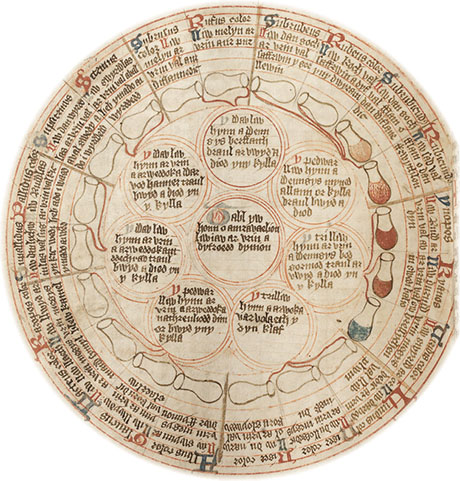
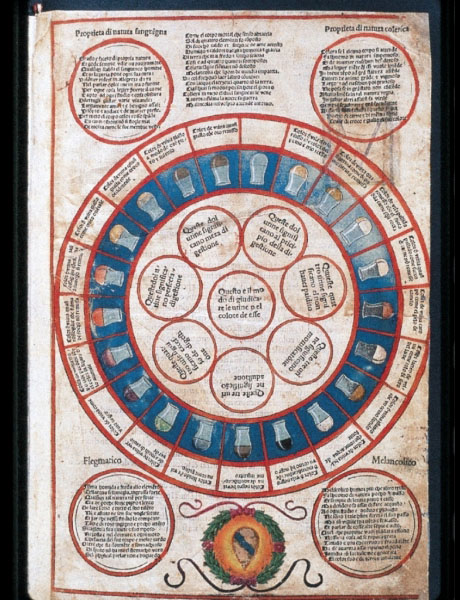
“But Paul, didn’t the Puritans have a lot of awesome things to say about God? Isn’t there much to be learned from them?” No, not in the long run because of their flawed logic. Notice that they aren’t around anymore. Why not? Because Puritanism cannot function without theocracy. Their logic led to the persecution of the Quakers via hanging etc., and when society had enough, an end was forced in regard to their theocracy. No theocracy—no Puritanism. And frankly, the same goes for authentic Calvinism. Calvinism exists today because their logic had to be adjusted for survival. Here at TANC, we call them “sanctified Calvinists.” Yes, they have done the church some good because they don’t share the same logic.
I really wonder if this latest resurgence of authentic Calvinism will put an end to it because of the Information Age that we are in. Nobody calls themself a “Puritan” in our day. Will the day come when few will call themselves a Calvinist? Authentic Calvinism doesn’t work, and people will only use a clock that doesn’t work for so long; the fact that it is useful twice a day does not end up being enough. Once again, the same old superstitions of authentic Calvinism are showing themselves in the contemporary church. The basis is the idea of spiritual caste: the idea that preordained enlightened mediators should rule over the unenlightened masses. Theocracy comes part and parcel with that logic.
“But Paul, Neo-Calvinism is thriving right now in America and America doesn’t allow theocracies.” Oh really? Many New Calvinist “ministries” in our day are nothing less than Little Geneva. They have their own in-house police stations, and control parishioners by almost every means of the past save the death penalty alone. This ministry is compiling a list of various means that these ministries are using to control people through first-hand testimony. Other than the intimidation of armed in-house security forces, they are using “biblical counseling” to compile information on people that can be used to control them. That angle can be seen in living color via the public transcript of CJ Mahaney telling the cofounder of SGM that confidential counseling records would be made public if he left SGM for doctrinal reasons. Let there be no doubt: this is standard protocol in New Calvinist churches. And if they don’t have the dirt on you, they will fabricate it. That’s just fact.
Getting back to superstition—that is also the inevitable result of caste logic. Many blogs document the weirdness in this movement that gets crazier each month. And dismissal of comparisons due to medieval ignorance doesn’t cut it. Sure, urine isn’t used in counseling today (at least not yet), but instead we have rapists counseling their own victims in the church office!
It’s the logic. And in the Information Age, what happens in Salem doesn’t stay in Salem.
Know Your Cuts of Calvinism
Originally posted July 2, 2013
1. Total Depravity: Pertains to the saints also.
2. Justification by Faith Alone: Pertains to sanctification also.
3. Mortification and Vivification: Perpetual death and rebirth for living by faith alone in sanctification to maintain justification. The reliving of our baptism “again and again.”
4. Double Imputation: Christ’s passive obedience to the cross for justification, and His active obedience as a substitution for our obedience in sanctification.
5. Deep Repentance (aka Intelligent Repentance): Seeks the death of mortification in re-experiencing our new birth.
6. New Obedience (aka New Fruit): The experience of Christ’s active obedience in sanctification (vivification).
7. The New Birth: Perpetual mortification and vivification.
8. The Objective Gospel: All reality is interpreted through the redemptive works of Christ.
9. Christ for Us: Christ died for our justification, and lived a perfect life for our sanctification.
10. The Imperative Command is Grounded in the Indicative Event: Biblical commands show forth what Christ has accomplished for us and what we are unable to do in sanctification. Works are experienced only as they flow from the indicative event of the gospel.
11. Neo-Nomianism (New Law, aka New Legalism): The belief that we can please God by obeying the law in sanctification.
12. Progressive Sanctification: The progression of justification to glorification.
13. Progressive Imputation: Whatever is seen in the gospel narrative and meditated upon is imputed to our sanctification, whether mortification or vivification.
14. The Golden Chain of Salvation: See cut 12.
15. Good Repentance: Repenting of good works.
16. In-Lawed in Christ: Christ fulfilled the law perfectly and imputed it to our sanctification.
17. Redemptive Historical Hermeneutics (the Christocentric Hermeneutic, aka the Apostle’s Hermeneutic): The Bible as historical narrative for the sole purpose of showing forth Christ’s redemptive works.
18. Faith: A neutral entity within us with no intrinsic worth that is able to reflect the object of its focus outside of us. The object of focus can be experienced within, but remains outside of us.
19. The Heart: The residence of evil desires and faith. It can be reoriented (the “reorientation of the heart” or “reorientation of desires”) to reflect Christ via mortification and vivification.
20. Flesh: The world realm where evil is manifested and experienced.
21. Spirit: The Spirit realm where the imputed works of Christ are manifested and experienced (not applied through our actions).
22. Christian Hedonism: Seeks to experience the joy of vivification.
23. Obedience of Faith: New Obedience.
24. Christ in Us: “By faith,” and faith only has substance and reality to the degree of the object it is placed in; i.e., Christ outside of us.
25. Vital Union: Makes experiencing the gospel possible. Makes mortification and vivification possible.
26. Eclipsing the Son (aka the Emphasis Hermeneutic): Focusing on anything other than Christ. Anything that is not seen through a Christocentric prism creates shadows that we live in. The obstacles that create the shadows may be truth, but they aren’t the “best truth.” “They may be good things, but not the best thing.”
27. Sabbath Rest: Sanctification. We are to “rest and feed” on Christ for our Christian life. The primary day this is done is Sunday. Through preaching and the sacraments we “kill” (mortification, or the contemplation of our evil and misery) resulting in vivification throughout the rest of the week.
28. The Subjective Power of the Gospel: The manifestation of the gospel that flows from gospel contemplationism. We never know for certain whether it is a result of our efforts or the Spirit’s work (although the Spirit’s work is always experienced by joy); hence, the power of the objective gospel is subjective (Heidelberg Disputation: Thesis 24).
29. Mortal Sin: Good works by the Christian not attended by fear that they may be of one’s own effort (HD 7).
30. Venial Sin: Good works by the Christian attended with fear (HD 7).
31. Power of the Keys (aka Protestant Absolution): Reformed elders have the authority to bind or loose sin on earth (Calvin Institutes 3.4.12).
32. Redemptive Church Discipline: In all cases to convert one to cuts 1-31. This redeems them to the only one, true faith. This can be a long process, and said person is not free to leave a given church until the elders bind or loose.
33. Preach the Gospel to Yourself: See cuts 1-32.
A Doctrinal Evaluation of the Anti-Lordship Salvation Movement: Part 1
Originally published August 13, 2014
Introduction and Historical Background Leading up to the Anti-Lordship Salvation Movement
Not long after I became a Christian in 1983, the Lordship Salvation (hereafter LS) controversy arose. This was a movement against “easy believism” (hereafter EB). The climate was ripe for the controversy because churches were full of professing Christians who demonstrated little if any life change. Members in good standing could be living together out of wedlock, wife abusing drunks, and shysters to name a few categories among many. Sin was not confronted in the church.
Of course, no cycle of Protestant civil war is complete without dueling book publications. Without naming all of them, the major theme was that of faith and works. John MacArthur Jr. threw gasoline on the fire with The Gospel According to Jesus published in 1988. This resulted in MacArthur being the primary target among the so-called EB crowd.
During that time as a new believer, I was heavily focused on the issue, but was like many others: I rejected outright sinful lifestyles among professing Christians while living a life of biblical generalities. In other words, like most, I was ignorant in regard to the finer points of Christian living. I resisted blatant sin, and in fact was freed from some serious temptations of the prior life, but had little wisdom in regard to successful application.
We must now pause to consider what was going in the 80’s. Christianity was characterized by two groups: the grace crowd that contended against any assessment of one’s standing with God based on behavior (EB), and the LS crowd. But, the LS group lived by biblical generalities. Hence, in general, both groups farmed out serious life problems to the secular experts. This also led to Christian Psychologist careerism.
This led to yet another controversy among American Christians during the same time period, the sufficiency of Scripture debate. Is the Bible sufficient for life’s deepest problems? Again, MacArthur was at the forefront of the controversy with his publication of Our Sufficiency in Christ published in 1991. Between 1990-1995, the anti-Christian Psychology movement raged (ACS). The primary lightening rod during that time was a book published by Dave Hunt: The Seduction of Christianity (1985).
In circa 1965, a young Presbyterian minister named Jay E. Adams was moved by the reality of a church living by biblical generalities. The idea that the church could not help people with serious problems like schizophrenia bothered him. He was greatly influenced by the renowned secular psychologist O. Hobart Mower who fustigated institutional psychiatry as bogus. An unbeliever, Mower was critical of Christianity for not taking more of a role in helping people with serious mental problems.
Mower believed that mental illness is primarily caused by the violation of conscience and unhealthy thinking. His premise has helped more people by far than any other psychological discipline and Adams witnessed this first hand. Mower’s influence provoked Adams to look into the Scriptures more deeply for God’s counsel regarding the deeper problems of life. This resulted in the publication of Competent to Counsel in 1970, and launched what is known today as the biblical counseling movement (BCM). Please note that this movement was picking up significant steam in the latter 80’s and early 90’s.
In 1970, the same year that the BCM was born, an extraordinary Reformed think tank was established by the name of The Australian Forum Project (AFP). Its theological journal, Present Truth, had a readership that exceeded all other theological journals in the English speaking world by the latter 70’s. Though the project died out in the early 80’s, it spawned a huge grassroots movement known as the “quiet revolution” of the “gospel resurgence.” The movement believed that it had recovered the true Reformation gospel that had been lost in Western culture over time, and frankly, they were absolutely correct about that.
The movement was covert, but spawned notable personalities such as John Piper over time. Piper exploded onto to the scene in 1986 with his book The Pleasures of God which promoted his Christian Hedonism theology. Unbeknown to most, this did not make Piper unique, the book is based on the same Martin Luther metaphysics that the AFP had rediscovered; he got it from them. At this point, the official contemporary name for the rediscovered Reformation gospel, the centrality of the objective gospel outside of us (Cogous), was taking a severe beating in Reformed circles. This is because contemporary Calvinists didn’t understand what Luther and Calvin really believed about the gospel.
John Piper looked to emerge from the movement as a legend because he had no direct ties to the AFP, but during the same time frame of his emergence, Cogous was also repackaged by a professor of theology at Westminster Theological Seminary. His name was John “Jack” Miller. Using the same doctrine, the authentic gospel of the Reformation, Miller developed the Sonship discipleship program. This also took a severe beating in Presbyterian circles. In fact, Jay Adams wrote a book against the movement in 1999. This was a debate between Calvinists in regard to what real Calvinism is. At any rate, Sonship changed its nomenclature to “Gospel Transformation” and went underground (2000). This started the gospel-everything movement. Sonship was saturated with the word “gospel” as an adjective for just about every word in the English language (“gospel centered this, gospel-driven that,” etc.). If anyone refuted what was being taught, they were speaking against the gospel; this was very effective.
If not for this change in strategy, John Piper would have been the only survivor of Cogous. Instead, with the help of two disciples of John Miller, David Powlison and Tim Keller, the Gospel Transformation movement gave birth to World Harvest Missions and the Acts 29 Network. It also injected life into the Emergent Church movement. Meanwhile, most thought the Sonship movement had been eliminated, but this was not the case at all. In 2006, a group of pastors that included this author tried to get a handle on a doctrine that was wreaking havoc on churches in the U.S. and spreading like wildfire. The doctrine had no name, so we dubbed it, “Gospel Sanctification.” In 2008, the same movement was dubbed, “New Calvinism” by society at large. In 2009, spiritual abuse blogs exploded in church culture as a direct cause of New Calvinism. We know now that the present-day New Calvinism movement was birthed by the AFP.
The Protestant Legacy of Weak Sanctification
The anti-Lordship Salvation movement came out of the controversy era of the 80’s. The following is the theses, parts 2 and 3 will articulate the theses. The theses could very well be dubbed, The Denomination Myth. All of the camps involved in these Protestant debates share the same gospel, but differ on the application. The idea that the debate involves different gospels is a misnomer.
The Protestant Reformation gospel was predicated on the idea that the Christian life is used by God to finish our salvation. The official Protestant gospel is known as justification by faith. This is one of the most misunderstood terms in human history. Justification refers to God imputing His righteousness to those whom He saves. Many call this a forensic declaration by God. At this time, I am more comfortable saying that it is the imputation of God’s righteousness to the saved person as the idea of it being forensic; it’s something I have not investigated on my own albeit it’s a popular way of stating it. This is salvation…a righteous standing before God.
Sanctification, a setting apart for God’s holy purposes, is the Christian life. The Reformers saw sanctification as the progression of justification to a final justification. In Reformed circles, this is known as the “golden chain of salvation.” So, the Christian is saved, is being saved, and will be finally saved. Christians often say, “Sanctification is the growing part of salvation.” But really it isn’t, salvation doesn’t grow, this is a Protestant idea. The Christian life grows in wisdom and stature, but our salvation doesn’t grow, the two are totally separate. One is a finished work, and the other is a progression of personal maturity.
The Reformers were steeped in the ancient philosophy of the day that propagated the idea that the common man cannot properly understand reality, and this clearly reflected on their theology. The idea that grace is infused into man and enables him to properly understand reality would have been anathema according to their spiritual caste system of Platonist origins. This resulted in their progressive justification gospel. Justification by faith is a justification process by faith alone.
Every splinter group that came out of the Reformation founded their gospel on this premise. John Calvin believed that salvation was entering into a rest from works. He believed that sanctification is the Old Testament Sabbath rest (The Calvin Institutes 2.8.29). Hence, the Christian life is a rest from works. The Christian life must be lived the same way we were saved: by faith alone. Part 2 will explain why we are called to work in sanctification, and why it is not working for justification.
Another fact of the Reformation gospel is “righteousness” is defined as a perfect keeping of the law. To remove the law’s perfect standard, and its demands for perfection from justification is the very definition of antinomianism according to the Reformers. A perfect law-keeping must be maintained for each believer if they are to remain justified. Thirdly, this requires what is known as double imputation. Christ not only died for our sins so that our sins could be imputed to Him, He lived a life of perfect obedience to the law so that His obedience could be imputed to our sanctification. So, if we live our Christian life according to faith alone, justification will be finished the same way it started; hence, justification by faith. For purposes of this series, these will be the three pillars of the Reformed gospel that we will consider:
1. An unfinished justification.
2. Sabbath rest sanctification.
3. Double imputation.
As a result of this construct, Protestant sanctification has always been passive…and confused. Why? Humans are created to work, but work in sanctification is deemed to be working for justification because sanctification is the “growing part” of justification. Reformed academics like to say, “Justification and sanctification are never separate, but distinct.” Right, they are the same with the distinction being that one is the growing of the other. A baby who has grown into an adult is not separate from what he/she once was, but distinct from being a baby. Reformed academics constantly warn Christians to not live in a way that “makes the fruit of sanctification the root of justification.” John Piper warns us that the fruits of sanctification are the fruits of justification—all works in sanctification must flow from justification. Justification is a tree; justification is the roots, and sanctification is the fruits of justification. We are warned that working in sanctification can make “the fruit the root.” In essence, we are replacing the fruits of justification with our own fruit. This is sometimes referred to as “fruit stapling.”
How was the Reformation gospel lost?
To go along with its progressive justification, the Reformers also developed an interpretation method. The sole purpose of the Bible was to show us our constant need to have the perfect works of Jesus imputed to our lives by faith alone. The purpose of Scripture reading was to gain a deeper and deeper knowledge of our original need of salvation, i.e. “You need the gospel today as much as you needed it the day you were saved.” Indeed, so that the perfect obedience of Christ will continue to be applied to the law. This also applies to new sins we commit in the Christian life as well. Since we “sin in time,” we must also continue to receive forgiveness of new sins that we commit as Christians. So, the double imputation must be perpetually applied to the Christian life by faith alone. John Piper often speaks of how Christians continue to be saved by the gospel. This is in fact the Reformation gospel.
But over time, humanity’s natural bent to interpret the Scriptures grammatically instead of redemptively resulted in looking at justification and sanctification as being more separate, and spiritual growth being more connected to obedience. This created a hybrid Protestantism even among Calvinists. Nevertheless, the best results were the aforementioned living by biblical generalities. Yes, we “should” obey, but it’s optional. A popular idea in past years was a bi-level discipleship which was also optional.
This brings us to the crux of the issue.
Since the vast majority of Protestants see justification as a golden chain of salvation, two primary camps emerged:
A. Christ obeys the law for us.
B. Salvation cannot be based on a commitment—obedience must be optional.
Model A asserts that since we cannot keep the law perfectly, we must invoke the double imputation of Christ by faith alone in order to be saved and stay saved. Model B asserts that since the same gospel that saved us also sanctifies us, any commitment included in the gospel presentation must then be executed in sanctification to keep the process of justification moving forward. Therefore, obedience in sanctification must be completely optional. A consideration of works is just fruit stapling. If the Holy Spirit decides to do a work through someone, that’s His business and none of ours, “who are we to judge?”
This is simply two different executions of the same gospel. Model A does demand obedience because it assumes that Christians have faith, and that will result in manifestations of Christ’s obedience being imputed to our lives. Because this is mixed with our sinfulness, it is “subjective.” The actual term is “justification experienced subjectively”; objective justification, subjective justification, final justification (redefined justification, sanctification, and glorification). However, model B then interprets that as commitment that must be executed in the progressive part of salvation.
This is where the EB versus LS debate comes into play. This is a debate regarding execution of the same gospel while making the applications differing gospels. Out of this misunderstanding which came to a head in the 80’s, comes the anti-Lordship Salvation movement (ALS). Conversations with proponents of ALS reveal all of the same tenets of Cogous. First, there is the same idea of a final judgment in which sins committed by Christians will be covered by Jesus’ righteousness; “When God looks at us, all he will see is Jesus.” Secondly, there is the same idea of one law. Thirdly, there is the idea that our sins are covered and not ended.
They do differ on the “two natures.” Model A holds to the idea that Christians have the same totally depraved nature that they had when they were saved. Model B thinks the new birth supplies an additional Christ-like nature that fights with the old nature. Model A, aka Calvinists, actually think this is Romanism/Arminianism. Indeed, authentic Protestantism rejects the idea that any work of the Spirit is done IN the believer. Model B has several different takes on this including the idea that Christians are still dead, but the life of Jesus inside of them enables them to obey.
In part 2, we will examine why this construct is a false gospel, and why both parties are guilty. In part 3, we will examine the new birth and the idea that Christians have two natures.
paul
Death to Mommy Perfection?
Originally published May 10, 2012
Yet another book from the enlightened Christian class for us totally depraved zombie sheep. What’s the difference between a pope interpreting the Bible for us verses a steady diet of books from the enlightened class? None: the way of the noble Berean is fading fast. The newest is Amy Spiegel’s Letting Go of Perfection. Snippets from the Christianity Today review will give you the gist:
Why author Amy Spiegel wants us to let go of perfection, whatever that is, in favor of Providence.
As Christian women, have we set the bar too high for ourselves? Are we striving to achieve our own version of the American dream, some sort of Focus on the Family all-star clan where the kids all love each other, while also reading above grade level and excelling in at least two extracurricular activities?
This is an easy post. Would you hire a contractor to build your house who wrote a book entitled Letting Go of Perfection? Imagine finding out a few minutes before being wheeled into surgery that your surgeon wrote a book entitled Letting Go of Perfection. Yikes! As a former contractor who framed houses, we knew the framing was not going to be absolutely perfect, but was that our goal? Of course it was, and much to the delight of the client.
It can all be summed up by the beloved apostle regarding the enlightened spiritual class of our day: “Claiming to be wise, they became fools.” Ya, do that: teach the ones that are raising the future leaders, surgeons, and builders of our day that perfection shouldn’t be our goal. Brilliant. Ya, hurry and buy that book as quickly as you can.
These same brainiacs interpret things that Jesus said in the Sermon on the Mount this way:
Jesus told us to be perfect like God so that we would go and try to be perfect, and then discover that it’s not possible—leading to us crying out, “I can’t do it! I can’t do it! Someone must do it for me!” [ie., Jesus].
No, Jesus warned us to not “relax” the standard of the law; in fact, the least of any commandment contained therein. And whoever does so will be least in the kingdom of heaven. We are not justified by keeping the law, but the new birth does not produce a relaxed attitude towards its standards of love, equity, and justice. That is why Jesus said that our righteousness must surpass that of the Pharisees. They actually revised the law of God with their own traditions in an attempt to make it easier to keep. That’s what you have to do when you think sanctification maintains justification (like John Piper et al). The Pharisees revised it with tradition, the New Calvinists do away with it altogether by teaching that Jesus keeps it for us.
Popes and books from the enlightened ones (like antinomian Elyse Fitzpatrick), Pharisees and New Calvinists—all the same difference.
paul

 Paul's Passing Thoughts
leave a comment