Religious Tyranny: A Case Study; Chapter Eight, The Protestant Gospel of Authority
 If most Protestants knew what the Protestant gospel is they wouldn’t be Protestants. Whether Baptists, Methodist, Presbyterian or some other stripe of Protestantism, few Protestants know what a Protestant is. This was demonstrated by this author and his wife at a Neo-Reformation conference in Louisville, Kentucky. Attendees were presented with seven yes or no questions about Protestant soteriology. In every case, and in regard to all seven questions, documented Protestant orthodoxy, even its primary tenets, were rejected as being true.
Once saved always saved is not a tenet of Protestant orthodoxy. A change of nature or state of being in regard to salvation is not Protestant orthodoxy. In addition, almost everything rejected by Protestants who think they know what a Protestant is—is in fact, Protestant orthodoxy. Examples include salvation by church membership, pastoral absolution, and baptismal regeneration. Again, while most Protestants reject these tenets intellectually, their functionality reflects true Protestant orthodoxy. This is because the Reformers were primarily concerned with function anyway; the fundamental Protestant worldview holds that the commoner cannot understand spiritual truth or reality to begin with.
Consequently, we constantly hear Protestants, and Baptists in particular, boasting about the simplicity of their faith! The incessant mantra, “I know nothing but Christ and him crucified” is worn as a badge of honor. Also, theological ignorance is deemed synonymous with “humbleness.” This is by design.
The testimony of a friend who converted from Protestantism to Catholicism, and a conversation with some of his Catholic compatriots says it all:
I absolutely trust the authority of the Church that has endured 2,000+ years, despite all the attacks on it, and I trust it way more than a denomination that branched off of Catholicism because they didn’t like what the Church taught. I’m not insulted by the fact that my knowledge pales in comparison to 2,000 years of theologians, church doctors, and scholars. There is nothing in Catholic Church teaching that contradicts Scripture.
No argument at all from me as you agree with my thesis in broad daylight. You don’t trust your “own knowledge” as set against ancient orthodoxy. This despite the indwelling of the Godhead bodily. Which, apparently, only enables you to agree with the Catholic Church. Bingo.
Paul, the Catholic Church was started by Jesus Christ and the apostles, popes, and church doctors carried on Jesus Christ’s mission. YOU believe in the authority of the Catholic Church—otherwise what you call scripture is nothing!
“YOU believe in the authority of the Catholic Church—otherwise what you call scripture is nothing!” Well said Irene—we agree on the premise. Your authority is the Pope and not reason. When God said, “Come, let us reason together” He assumed the Pope would be present. Look, life is about choices—it’s between you and God.
Yes, Jesus is the ONE sole mediator, but that doesn’t mean there can’t be other (lower, subordinate) mediators who, through grace, were sent forth to also mediate (intercede, teach, represent).
Look at what you just wrote: Jesus is the “ONE sole” mediator, but there are others as well [“one” doesn’t mean “one”?]. And others somehow equal authority, and then their authority is passed on to the popes because a bunch of popes say so. Really? Look Debbie, I am not your judge. Everyone one will give an account for their own choosing.
If everyone would just be obedient to one authority there would be unity and not all of these denominations and confusion.
But, to cite even more Protestant confusion in context, the Reformation fathers NEVER left the Catholic Church. Martin Luther never left the Catholic Church, and John Calvin never left the Catholic Church. And, on what authority did they disagree with the Church? The Church had drifted away from Augustinian principles. Therefore, both, I repeat, both churches, Catholic and Protestant, claim Augustine as their Doctor of Grace and doctrine. This is by no means ambiguous church history; it is blatant fact.
Perhaps no book documents this more thoroughly than Dave Hunt’s “What Love is This?” But Hunt, like everyone else, failed to draw the proper logical conclusions. How so? While assuming that Protestant denominations all share a common salvation by faith alone accompanied by secondary disagreements, the focus is the predestination controversy. Hunt’s motive was to discredit predestination by showing John Calvin’s connections to Augustine and the Catholic Church. But the problem is; Protestantism at large shares the same connections. Calvinism is not a misbehaving passenger on the church bus of salvation; it is the bus’s charter.
Hunt sought to discredit Calvinism by showing his connections to a works salvation as opposed to the Protestant salvation by faith alone which is just not true at all. Both religions propagate the same gospel of authority fathered by Saint Augustine. This is why both have displayed the exact same religious tyranny throughout church history. Splinter groups who advocated individual interpretation of the Scriptures were persecuted in unspeakable ways by both Churches at the same time. This is historical fact: teaching against Protestant orthodoxy was no less punishable by death than refuting Catholicism.
And plainly for any Protestant that cares to partake in a cursory observation, both religions advocate progressive salvation through sacraments that can only be obtained in the institutional church. Both are clearly works salvation via obedience to an authority other than Christ. When one obeys any “truth” that contradicts the plain sense of Scripture and personal conscience, they are participating in a false gospel. A gospel that advocates any mediation or authority other than Christ is a false gospel.
Think for a moment. Even if the Bible advocates “subordinate mediators/authorities,” at what church counsel did Christ himself appear and confirm the right mediators before men? We only have the claims of men themselves to consider if we believe this.
The gospel of authority necessarily requires institutions. It also requires supply and demand. An institution must sell something in order to stay in business. The church sells salvation, and people will pay very large amounts of money to obtain it. In contrast, if your salvation is a finished work, that does not bode well for RMR, that is, reoccurring monthly revenue.
There is a better way. That way is a real and living family, not “When you’re here, you’re family.” Nobody buys that. Christ’s body is not “just like family,” it is family.
Chapter Nine: The True Gospel: “You Must Be Born Again”
Religious Tyranny: A Case Study; Chapter Six, Elders Behaving Badly

Front Cover
Sometime between 1994 and 1998 while Russ Kennedy was a pastor in Illinois, the associate pastor of the Chapel, Rick Wilson, was called to a pastorate in nearby Beavercreek, Ohio. Though he didn’t have Street’s pulpit skills, he made up for it via personal likability.
Therefore, when Kennedy became pastor of the Chapel, an ongoing exodus began from the Chapel to Wilson’s church because several people at the Chapel didn’t like Kennedy. This was the first wave of exiters who were aware of Kennedy’s heavy-handed leadership style which was antithetical to the likable and persuasive Rick Wilson. Why was there a second wave? Because something was going on vastly different from Street’s ministry and Kennedy’s transition team would not come clean about what was going on.
For example, the preaching was totally different. Street, like his mentor John MacArthur Jr., applied a verse by verse exegetical method to the Bible as opposed to what Kennedy was doing, viz, covering large bodies of text in one sermon, at least one whole chapter or more. This was referred to as “fly-over preaching” by many Chapel parishioners who were becoming increasingly disgruntled in regard to that issue.
In one instance, Kennedy covered the book of Romans in sixteen messages and no one knew what to make of it while Kennedy’s transition team was overtly aloof in regard to what was going on. This led to more people leaving. It was obvious that Kennedy wasn’t being transparent about the changes taking place, and his posture during the time he was being considered as Street’s replacement did not suggest in any way, shape, or form that big changes would be brought about. It was fairly obvious that he played coy until he was installed as pastor.
This was/is standard protocol for the movement. Remember, this movement is a modern-day crusade. Curiously, however, the movement, for the most part, doesn’t invest in separate startup ministries, but engages in covert takeovers. More than likely, this comes from their mentality that run-of-the-mill evangelicalism that lost sight of the true Reformation gospel is an undeserving usurper unrightfully using God’s resources in the name of Christ. Hence, this movement deems it necessary to seize ill-gotten resources for the true gospel. In fact, this suggested analysis is a very safe bet. If its Dominion theology seeks to take over “every corner of God’s creation,” and it does, how much more the institution that God has supposedly appointed to be His authority on earth?
This tsunami-like movement is a return to original Reformation orthodoxy in regard to soteriology, interpretation of reality itself, politics, eschatology, ecclesiology, and methodology in regard to interpreting the Scriptures. It is a plenary reconstruction of church identity that spanned the past 200 years. And why is the movement enjoying total success? Because the original tenets of the Reformation gospel have always been running in the background like Windows 7 on your PC. The institutional church has always been primed for a return to the original article.
And what is that original article? First, salvation is a process, and not a onetime finished work in the believer. The new birth is redefined and denied according to its biblical definition.
Secondly, “present sin” still needs to be atoned for by the same gospel that saved us. In other words, we must continually return to the same gospel that saved us in order to keep ourselves saved. “We must preach the gospel to ourselves every day.”
Thirdly, this efficacious forgiveness for present sin can only be obtained by faithfulness to, and attendance in the institutional church. If one is not a member in good standing at a local church, an individual appeal to God for forgiveness is utterly futile and invalid.
Fourthly, God has ordained church elders to oversee His salvation on earth and the taking over of the world for His glory. In this regard, they have been given all authority by God.
These are the fundamentals of the original Protestant gospel that also underpin every denomination that has ever flowed from Protestantism including Methodists, Baptists, Presbyterians, etc., etc. Protestantism in general, even though it integrated Enlightenment ideas into Reformation dogma, has always functioned according to these ideas while denying them intellectually. While denying that one is saved by church membership, what do evangelicals act like? While denying that pastors have all authority over their souls, what do parishioners act like? While denying that the church is needed in order to obtain heaven, why are churches protected and given a pass on every ill behavior known to man? This is why the Neo-Protestant resurgence is successful; the churches are already primed for the original article. As the saying goes; “The apple doesn’t fall far from the tree.” The Neo-Reformation is merely bringing a consistency to the original tenants, function, and intellectual testimony.
Consequently, like in all other church cases, Kennedy couldn’t have openly announced his agenda on day one—the Chapel would have been emptied. Nor could he have been honest in his doctrinal statement and philosophy of ministry while being considered for replacing Street—he would have never been installed as pastor. Like in all other instances, the protocol is to obtain the leadership position through deception, nuance, and doublespeak. This is because Kennedy knows what all proponents of the modern rebirth of the Reformation know; for the most part with little exception, a Protestant, whether Baptist or otherwise, doesn’t know what a Protestant is. Kennedy, like all of the other new crusaders, believes that the means justify the end when the goal is saving the church for the glory of God.
But don’t miss the major point: their assertion is absolutely correct despite the means. This movement has merely exposed the Protestant Reformation for what it really was. For some reason regardless of historical instance like Nazism, Westerners believe we are immune to widespread cultural deception.
We may now examine how religious business is conducted at the Chapel, but it is the same behavior exhibited by the original Reformers minus the force of state. John Calvin’s Geneva was a theocratic police state; yet, it is undeniable that New Calvinists publically opine in regard to the lost glory days of Calvin’s Geneva as if the average parishioner is unable to read history for themselves. Actually, they are able, but choose to believe everything that comes from the mouths of Protestant elitists as gospel.
In contrast, not owning your individual understanding about everything is ill advised because in the end only one person and one person alone will be culpable before God…you. The elders of the Neo-Reformation want to have all authority in your life, but you alone will answer to God—they claim all of the authority with no responsibility for the outcome. A common truism in Germany during WWII was that Hitler’s authority needed to be believed by faith as a matter of the heart and not reason. In the end, Hitler committed suicide and left the German people holding the bag. Accordingly, the postwar suffering inflicted upon the German people is all but unspeakable. Yet, this call to dichotomize reason from faith is a common theme in the Neo-Reformation movement.
Again, while most Protestants would deny this intellectually, it is not only the way they function in their fondness for paradox, but the very first doctrinal statement of the Protestant Reformation was Martin Luther’s 97 Theses against the use of reason in theology. Most Protestants will now say that they have never heard of the 97 Theses, but only the 95 Theses. This drives home the point entirely. It may also be noted that Kennedy authored a book titled “Perplexity” which posits the idea that Christians cannot know anything definitively, but offers help in how to bring our perplexities to God while rejoicing in not knowing anything. The front cover of the book is even adorned with a depiction of Plato’s cave. Catch the drift? The great unwashed evangelicals cannot know anything and must trust God’s anointed philosopher kings to “save his people from ignorance.” Of course, the primary ignorance is the idea that people can know things. Evangelicals are constantly bemoaning biblical illiteracy in the church, but such illiteracy is by design according to Reformed presuppositions regarding mankind. Again, Protestants don’t know what a Protestant is…they even think they aren’t Catholics; yet, Martin Luther stated the following in the conclusion to his 97 Theses:
In these statements we wanted to say and believe we have said nothing that is not in agreement with the Catholic church and the teachers of the church.
One element of behavior that is going to be common in the movement is the use of disfellowship or so-called “church discipline.” It is well documented that church discipline no longer addresses parishioners behaving badly, but parishioners questioning the authority of the movement’s leaders while decadent behavior among the congregants is ignored. In one particular case at the Chapel, a parishioner was brought under discipline for questioning doctrine while other parishioners who were practicing open and public sin were ignored. It has truly come to pass in the movement that the only sin is questioning the authority of the church. In regard to real sin “we are all just sinners saved by grace” and need ongoing forgiveness for “present sin” anyway. However, threatening the credibility of the movement could destroy or otherwise diminish the only means on earth to obtain heaven; the institutional church. The integrity of the old raunchy bus must be defended because it is the only bus going to heaven.
This authoritarian logic produces a gargantuan record of religious tyranny and spiritual abuse, and such a record is by no means absent from Clearcreek Chapel or any other church that is part of the Neo-Reformation movement. Please note: the outrageous and bizarre behavior of the Clearcreek elders is well documented and also irrelevant to the rest of the evangelical community.
Why is this? That is our topic in the next chapter.
Chapter Seven: Those Who Protect Them, and Why
Religious Tyranny: A Case Study; Chapter Five, The Transition Team

Front Cover
During the return of Russ Kennedy to the Chapel in 1998, an influx of men loyal to the new Reformation crusade started showing up at the Chapel. It is unclear how Kennedy knew these men, but their arrival and the timing of it was by no means a coincidence. They were radio personality Chad Bresson, Greg Cook, Dale Evans, Dan Turner, and others less significant. The stage was set for a classic New Calvinist hostile takeover that was being replicated worldwide at breakneck speed. These events shared identical fundamentals that drove the movement and still does till this day:
The core “leadership team” understands the truth of the new Reformation, but also readily recognizes that the great unwashed evangelicals are not ready for this new, hard truth, and must be progressively indoctrinated. They must be fed according to what they can bear at any given time.
Hence, the transitions (takeovers) must be covert.
The transition team possesses the authority of the original Reformation; ie., God has granted full authority over the souls of men to Reformed elders. This is stated Protestant orthodoxy and evident to those who partake in a cursory observation of Protestant literature. The original Reformation borrowed this authority from Catholic dogma through a shared identification with St. Augustine who ironically is the doctrinal foundation of Protestantism and Catholicism both—and nobody even blinks. Augustine insisted that salvation can only be obtained in the institutional church and faithfulness to it accordingly. Augustine also insisted that men be compelled by force to submit themselves to the clergy.
Hence, who are the confused parishioners to argue with God’s anointed? This mentality leads to a very heavy-handed leadership style that describes Russ Kennedy to a “T.” And, is a hallmark characteristic of the movement in general. The movement’s excessive use of church discipline was even written about in major secular publications such as the Wall Street Journal and Time Magazine. Evangelicals are perplexed en mass regarding this phantom force-like movement that has transformed the churches. Unbelievably, while this movement strives to return to the tenets of the original Protestant Reformation that was marked by tyranny, the recognition of an ideological connection to the same behavior does not compute in the minds of average parishioners.
The revival-like experience produced by the biblical counseling movement in the 90’s is summarily dismissed as “creating better Pharisees” and ridiculed as, “behaviorism” and “moralism.” Not only is the Adams biblical counseling revolution dismissed as a pseudo-revival, but is utterly disdained by these crusaders drunk with visions of grandeur.
Because original Protestantism no longer has state authority to enforce its orthodoxy, it must use creative means to control people. Most evangelicals do not understand that the Protestant gospel was formulated around a church-state and for the express purpose of a church-state. And therefore, principles of persecution for dissenters are part of Reformation doctrinal statements such as the Westminster Confession. Persecution is in the contract.
Consequently, when authority and control are innately part of a gospel, but there are no means of forcible control (because of Americanism’s separation of church and state), the only possible outcome is cultish behavior.
These elements identify the movement that has all but taken over the Protestant church and uniquely exemplified by Clearcreek Chapel. It is authority as gospel. It is a plethora of other mediators apart from Christ. But for the purpose of this study, file this very important word in the back of your mind for now: A-U-T-H-O-R-I-T-Y.
In addition, as this movement covertly infected the churches worldwide like gangrene, the 1980’s saw the emergence of reconciliatory organizations like Peacemaker Ministries. These organizations seek to protect the resurgence movement and keep its host churches from being sued. These organizations were a response to the pushback from the movement’s rampant spiritual abuse. These organizations are necessary because justice can never be found within the church, but why?
All of the aforementioned contemporary events fit together. What do these transitions look like at ground level? What happened at the Chapel that continues to take place presently? Why does it happen? Why is this behavior protected by other churches and what should we do about it?
Chapter Six: Elders Behaving Badly
Chapter Seven: Those Who Protect Them, and Why
Chapter Eight: Will the Real Protestant Gospel Please Stand Up?
Chapter Nine: The True Gospel: “You Must Be Born Again”
Chapter Ten: The Way Home
Conclusion
Religious Tyranny: A Case Study; Chapter Four, The Arrival of “Ravenous Wolves”

Front Cover
Throughout the 1990’s Clearcreek Chapel was riding high atop the biblical counseling movement. Tenets of the movement framed Clearcreek ministry overall and Dr. John Street’s pulpit ministry as well. For many it seemed that the Chapel was a place where church was finally relevant. However, with this said, something needs to be qualified.
The power of God and the changed lives experienced at the Chapel during that time were due to a brushing against a small element of God’s truth; specially, what we might call intelligent life-application of God’s word. Simply stated; an emphasis on rightly applied obedience. Until this time, the church had a confused and complicated relationship with obedience; in the church, obedience and trepidation always walked hand in hand. This resulted in a church that lived by biblical generalities in regard to obedience and sought outside experts for help with the deeper problems of life. Church was alright for dealing with everyday problems, but the deeper problems of life were labeled as medical problems requiring outside experts. This, in reality, marginalized any difference between secular life and church life.
As we will see in more detail further along, this is due to authentic Protestantism’s singular perspective on obedience, sin, and law. Instead of a literal new birth changing the relationship of these three to the believer, original Protestantism denies a biblical definition of the new birth and the relationship of these three remain unchanged in regard to the believer. Therefore, Adam’s model was merely an improvement on an already confused model of Christian living that was a hybrid of authentic Protestantism and Americanism. Yet, because Adams’ counseling model was closer to the truth, it yielded a revival of sorts. It also made the model vulnerable to accusations of “legalism.”
Nevertheless, aggressive sanctified living was working well at the Chapel and life was good. Street founded the Chapel in 1985, and his ministry peaked along with the biblical counseling movement during the 90’s. But there was a glitch of sorts sometime between 1992 and 1994. The glitch has a name: Pastor Russel Kennedy.
Kennedy was born in 1956 and was raised by missionary parents in the Congo. He would later follow in his father’s footsteps and become a pastor. According to Kennedy, he pastored a church in Germany from 1985 to 1991 before returning stateside in 1991. He began attending the Chapel a short time later and was given opportunity to teach Sunday school. Initially, his teaching was a big hit among the Chapel congregants until he began teaching on predestination. Street’s ministry style avoided controversial subjects that have a history of being unsettled. While Street didn’t avoid controversy per se demonstrated by the fact that he openly opposed the use of Psychology by Christians, he did avoid subjects that rarely end with definitive conclusions that people agree on such as election and end-times prophecy.
Clearcreek was a startup church from the General Association of Regular Baptists which is not lacking in the Reformed tradition, but congregants at the Chapel claimed that it wasn’t so much the topic of predestination that caused a stir, but Kennedy’s rude approach that supposedly belittled anyone who disagreed with him on the finer points of election doctrine. At any rate, long story short; Kennedy caused a controversy that threated to split the church. Coincidentally perhaps, he was offered a pastorate in Illinois during that time which he accepted. But, the Clearcreek sendoff wasn’t a pleasant one. John Street and the associate pastor at the time, Rick Wilson sternly rebuked him and assured him the offer in Illinois was very good timing.
Kennedy lasted in that position about three years. After his move to Illinois, he became a follower of Dr. John Piper and consequently a rabid adherent to the Neo-Protestant resurgence. John Piper is one of the more notable leaders in the movement sometimes referred as “New Calvinism.” Some refer to Piper as the “elder statesman of New Calvinism.” It is unclear as to whether someone at the church in Illinois converted him or he was converted through an outside source.
We will pause here to reiterate a major characteristic of the movement: the movement was a true return to the original Protestant gospel that had been lost after being integrated with Enlightenment ideas of individualism; what has been formerly referred to in this study as “Americanism.” When these ideas were integrated into Protestantism after the American Revolution, Protestantism became a confused hybrid of individualist and collectivist ideas manifested in a contradiction between function and intellect.
For example, a typical Protestant would proclaim once saved always saved while yet proclaiming himself a “sinner saved by grace.” A “sinner,” according to the Bible, is an unregenerate person. So, if one is still a sinner grace is an ongoing need. “I am [present tense] just a sinner [unregenerate] saved by grace” [a sinner who obviously needs continual grace, viz, salvation]. This implies an ongoing need for salvation which is stated Reformation orthodoxy. Once saved always saved implies that salvation is a finished work in the believer and is closer to biblical truth about the new birth. The new birth fared well with enlightenment ideas because it suggested a strong enablement of the individual. As promised, this will be articulated later in the study, but the main point for now follows: the real Reformation gospel, in fact, had been lost, and reintroduced to the Christian community at large by the Australian Forum. A detailed account of how the Australian Forum came about can be found in the book, “The Truth About New Calvinism” (TANC Publishing 2011).
All of that is said to say this: the New Calvinist resurgence is nothing less than a crusade. Its proponents rightfully claim that they are returning the church to its true roots. This reality invokes a specific character exemplified in most adherents of the movement. It is a modern-day crusade that takes no prisoners. Hence, when Kennedy was sent packing back to Springboro, Ohio for plagiarizing a John Piper sermon from the pulpit in Illinois, he came back to the Chapel in 1998 and began exhibiting aggressive behavior after he manipulated his way back into leadership positions at the Chapel.
Plying what respect was left for him at the Chapel previously and endearing himself to the rest as a new and improved Russ Kennedy, he created a divisive atmosphere amidst the leadership culture at the Chapel. Primarily, he created animosity towards pastor Street among the core leaders. This culminated into an accusation that Street was misappropriating church funds for his own personal use. This not only greatly offended Street, but it was during a time when he was being aggressively recruited by Pastor John MacArthur’s church in California. Street accepted a position at MacArthur’s Master’s Seminary and fulfilled his dream of ministering with his longtime mentor.
Once the vacancy for senior pastor was created upon Street’s announcement that he would be accepting a position in California, he was appalled to learn that Kennedy was being considered for his replacement. This is where the disrespect for Street that had been sewn behind the scenes became evident; the leadership ignored Street’s literal pleadings, some public, to reject Kennedy as a possible candidate. Kennedy was subsequently installed as the Chapel’s senior pastor in 1999. Shortly thereafter, Kennedy began to implement his plan for making the Chapel a major headquarters for saving the church from the false gospel of evangelicalism that had strayed from the true Reformation gospel. In essence, the Chapel would quickly become the face of religious tyranny.
Beware of false prophets, who come to you in sheep’s clothing but inwardly are ravenous wolves – Matthew 7:15
I know that after my departure fierce wolves will come in among you, not sparing the flock – Acts 20:29
Chapter six will describe the ravaging of the Chapel’s flock that took place after Kennedy’s appointment as pastor, but first, chapter five will describe his transition team. At some point, we must examine why Protestant parishioners remain faithful to such overt tyranny.
Chapter Five: The Transition Team
Chapter Six: Elders Behaving Badly
John MacArthur’s Protestant False Gospel Made Easy: Christians Are Unholy
In an article titled, “Whatever Happened to the fear of the Lord?” (http://www.gty.org/Blog/B160810 August 10, 2016), Pastor John MacArthur, without question the most notable evangelical of our day, states that “Christians” are unholy. Of course, the difficulty is in the utter simplicity of the issue.
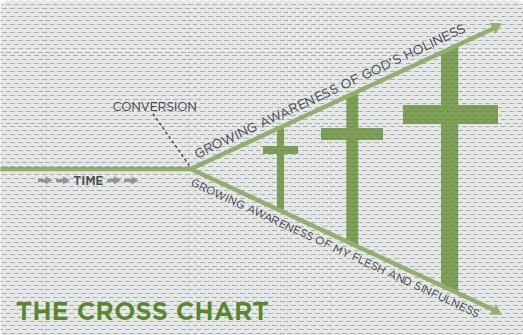
Protestants believe that conversion is only a declaration by God as opposed to a holy state of being. Their definition of the new birth follows: one is gifted with the ability to see our sinfulness as set against God’s holiness. In contrast, the Bible emphasizes an effort to be more like God because we are also holy. True Christians sin because they are weak, not because they are still unholy and only changed positionally. Salvation is a state of being, not a mere legal declaration.
Protestants like MacArthur get tripped up on the law. They believe perfect law-keeping brings about eternal life / righteousness / justification / holiness. Supposedly, Jesus came to pay the penalty for our sins, and to live a perfect law-keeping life that can be imputed to us by faith. But the law cannot give life regardless of who keeps it. All sin is imputed to the law so Jesus could end it, and all of the sin imputed to it.
The true Christian is justified by new birth, not the law. Our focus is to fulfill the law by loving God and others with all of our heart, soul, and mind. Our focus is to use our temples to offer holy sacrifices to God through obedience to His word. All of the sin offerings were ended on the cross; our focus is the love offerings. In contrast MacArthur states:
When we see God as holy, our instant and only reaction is to see ourselves as unholy. Between God’s holiness and humanity’s unholiness is a gulf. And until a person understands the holiness of God, that person can never know the depth of his or her own sin. We ought to be shaken to our roots when we see ourselves against the backdrop of God’s holiness. If we are not deeply pained about our sin, we do not understand God’s holiness at all.
Without such a vision of God’s holiness, true worship is not possible. Real worship is not giddy. It does not rush into God’s presence unprepared and insensitive to His majesty. It is not shallow, superficial, or flippant. Worship is life lived in the presence of an infinitely righteous and omnipresent God by one utterly aware of His holiness and consequently overwhelmed with his own unholiness.
Note that MacArthur only sees one distinction between the “born again” and humanity in general: an ability to see the depths of our sin. And, the sole focus of “worship” is also our own sinfulness. This puts MacArthur squarely in the same camp as those who published the “Cross Chart” that illustrates progressive justification.
So-called saints primarily focus on one thing: a deeper and deeper realization of our own sin. Obviously, any notion that we have any goodness at all would diminish the cross by raising the downward trajectory of the bottom line.
The apostle Peter and Jude both wrote that we are holy. Who is John MacArthur? Jude also wrote that the Lord will return to execute judgement on the unholy…those that the Protestants identify with.
It’s not complicated; if you are unholy you are unsaved.
paul

 Paul's Passing Thoughts
leave a comment