The Brilliant Dr. Ed Welch and Gospel-Driven Failure
 As the resurgence of the Authentic Calvinism pandemic spreads across this country, the absurdity becomes easier to write about every day. In the name of faith, the way Christians are being led into turning off their minds is astounding. But it is a rheostat modus operandi, so those who are being gradually assimilated into this philosophy don’t see it happening. Unfortunately, the lost world and Christian producers are perplexed by all of this.
CCEF is the counseling education wing of Westminster Seminary. Dr. David Powlison, Paul David Tripp, and Dr. Ed Welch, among others, have effectively spread this philosophy throughout the rest of the biblical counseling world. An indifferent attitude toward humanity in general is the result. Different world philosophies will perceive humanity differently. But more and more, Christianity is in league with nihilism which is a kissing cousin to authentic Reformed theology.
It has its roots in Gnosticism which has always been an elitist philosophy among the upper class. Philip J. Lee classifies Gnosticism as an upper socioeconomic phenomenon in his book, Against the Protestant Gnostics. It is no accident that New Calvinism is primarily an upper class phenomenon. Those who have to live in the real world to survive are perplexed by the logic; i.e., those who have to maintain a real job (or three jobs) in a horrible economy to survive. They have to trust Christian academia to deliver up the deeper things of God’s truth that they don’t have time to study, and pay good hard-earned money for it. Perhaps in all of church history, this sacred trust has never been violated in a greater way than in our day. Lee also classifies it as driven by hopelessness with the solution being an escape from realty. At the crux of Reformed theology is the idea that all reality is perceived from understanding how worthless we are as the way to understand God’s holiness. This enables us to abandon the pain and reality of the present world. Happiness is replaced by resurrection experiences that bring joy in understanding our utter worthlessness because we are completely free from the consequences. Hence, as one New Calvinist stated it:
What, then, is the subjective power of this message? Firstly, we find that there is real, objective freedom, the kind that, yes, can be experienced subjectively. We are freed from having to worry about the legitimacy of experiences; our claims of self-improvement are no longer seen as a basis of our witness or faith. In other words, we are freed from ourselves, from the tumultuous ebb and flow of our inner lives and the outward circumstances; anyone in Christ will be saved despite those things. We can observe our own turmoil without identifying with it.
This is really the primarily appeal of Reformed theology: sanctified escapism through worm theology. Dr. Welch recently posted Being a Loser and the Freedom to Fail on CCEF’s blog. It begins this way:
After accepting a CEO position at a non-profit, in which he could make or break the organization’s future, he said, “I believe that one of the great comforts of the gospel is the freedom to fail.” I heard this echoed recently by a friend when he made a somewhat risky vocational decision. Though he struggles with the opinions of others, he was able to say: “the worst I can do is fail.” He smiled as he said it, and I rejoiced in his spiritual maturity, which clearly surpasses my own.
There are so many benefits available in the death and resurrection of Jesus. The freedom to fail is a fine one, given how most of us feel like a failure.
The metaphysical stupidity of this is revealed in the following rhetorical question: Who would like to have a gospel-centered heart surgeon scheduled to perform your quadruple bypass? As you’re being wheeled into the operating room, he looks at you with a smile on his face as says: “I believe that one of the great comforts of the gospel is the freedom to fail.”
This philosophy is wreaking havoc on the church en masse, and then Christians are going to these guys to fix the problem! It’s like going to Dr. Kevorkian for the following presentation problem: “I’m suicidal.” The brilliant Dr. Welch continues:
Then listen to Scripture. You’ll find a number of divine responses. Here are just two.
The brother in humble circumstances ought to take pride in his high position. But the one who is rich should take pride in his low position, because he will pass away like a wild flower. (James 1:9-10)
Consider how you, as a brother in humble circumstances, have been singled out from the beginning of time to belong to God and, as you throw your lot in with Jesus, you have all of Christ’s inheritance. Your stature, indeed, is quite high.
I appreciate those words, and sometimes they are helpful, but I find more comfort— and some humor—in these:
For consider your calling, brothers: not many of you were wise according to worldly standards, not many were powerful, not many were of noble birth. But God chose what is foolish in the world to shame the wise; God chose what is weak in the world to shame the strong; God chose what is low and despised in the world, even things that are not, to bring to nothing things that are, so that no human being might boast in the presence of God. (1 Cor.1:26-29)
In context, the apostle Paul is actually speaking to the problem of false teachers like Ed Welch that intimidate Christians of the lower uneducated socioeconomic class with vain philosophy. Paul’s point is that God uses those of the lower class to refute puffed-up intellectuals with His wisdom. Welch uses these same verses to make the case that we should glory in our ineptness. Not so. The opposite is true.
I am presently in a deep study concerning God’s wilderness Tabernacle. He had specific plans concerning the Tabernacles construction, but also left much of the project to the creativity of the Israelites. He also demanded a skillful performance. All that was instructed was to be performed, “skillfully.” And our sanctification is no different. We are to make the best of the talents we have been given. Christ had no comforting words for those who do not approach our duties in sanctification with all zeal. The Tabernacle wasn’t built by spiritual slackers. Drawing from Welch’s last paragraph, these are NOT the words that I will be speaking to Susan as they are wheeling her in for surgery next month:
(Speaking softly, while stroking her hair softly): now Susan, I have chosen a gospel-centered surgeon for you. He has freedom in Christ, so he is not judged by the world’s standards—he has the freedom to fail. And you know sweety, we all fail every day. He also told me that like most of us, he feels like a failure. So my dear, let’s give this man the freedom to be human—after all, it’s not about what we do, but what Jesus has done. There are more important things in life than boasting about a successful surgery.
Though we may find humor in what is ridiculous, these are the chief surgeons of the biblical counseling movement in our day. And that’s not funny—it’s terrifying.
paul
Calvinism and Urine Technology
Calvinists often intimidate us with oceans of ink left behind by the brilliant, spiritual, educated children spawned by John Calvin: the Puritans. Calvinists like John Piper display their spiritual swagger by quoting the Puritans and making everyone aware that they read them daily. Of course, this plays on the utter ignorance of present-day Christians. Their authority is no longer the really thick pamphlet dropped down from heaven called the Bible—its orthodoxy. Orthodoxy is an analysis of God’s mass publication to people indwelt by His illumining Spirit by the church’s “Divines” of whom many were Puritans. They repackaged God’s word for consumption for the unenlightened masses.
So, when these brainiacs took the urine of accused witches and made cakes from it, and then fed the cakes to dogs in order to watch their reaction for a verdict, we need to understand that what the Divines do at times is the “foolishness of the cross.” We wouldn’t understand. This is activity that is on another spiritual plane; so, recite Luther’s Small Catechism and keep your mouth shut. The Small Catechism is one of Voddie Baucham’s recommendations for use in family devotions. He is really big on husbands being the “family shepherd” and leading the family Bible studies with….orthodox creeds, not anything that would come from their own brains.
Much could be discussed in regard to the lovely traditions that the Puritans brought with them when they were driven out of Europe as political refugees. But let’s talk about urine. Actually, urine tasting was the state of the art research born of European theocracies during Medieval times. How the urine of the subject tasted was used to determine what ailed them. Several examples of medical charts are displayed below for your educational enjoyment. Click to enlarge them, but if you are a Calvinist, don’t try this at home—it’s not orthodoxy!
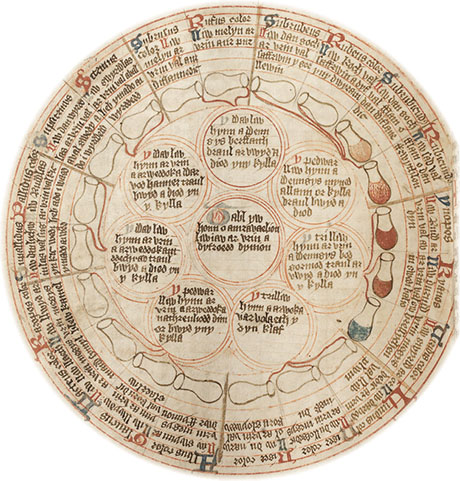
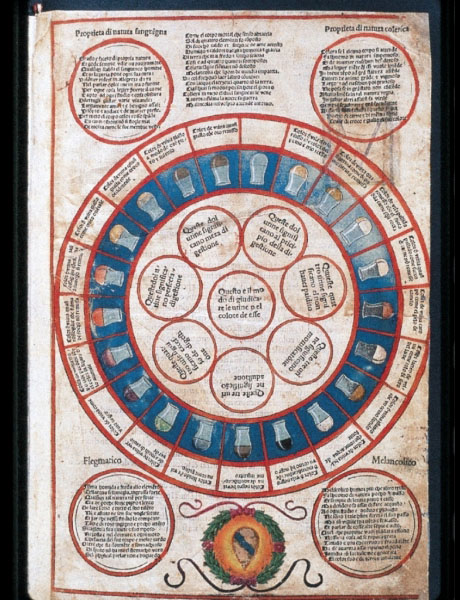
“But Paul, didn’t the Puritans have a lot of awesome things to say about God? Isn’t there much to be learned from them?” No, not in the long run because of their flawed logic. Notice that they aren’t around anymore. Why not? Because Puritanism cannot function without theocracy. Their logic led to the persecution of the Quakers via hanging etc., and when society had enough, an end was forced in regard to their theocracy. No theocracy—no Puritanism. And frankly, the same goes for authentic Calvinism. Calvinism exists today because their logic had to be adjusted for survival. Here at TANC, we call them, “sanctified Calvinists.” Yes, they have done the church some good because they don’t share the same logic.
I really wonder if this latest resurgence of authentic Calvinism will put an end to it because of the Information Age that we are in. Nobody calls themself a “Puritan” in our day. Will the day come when few will call themselves a Calvinist? Authentic Calvinism doesn’t work, and people will only use a clock that doesn’t work for so long; the fact that it is useful twice a day does not end up being enough. Once again, the same old superstitions of authentic Calvinism are showing themselves in the contemporary church. The basis is the idea of spiritual caste: the idea that preordained enlightened mediators should rule over the unenlightened masses. Theocracy comes part and parcel with that logic.
“But Paul, Neo-Calvinism is thriving right now in America and America doesn’t allow theocracies.” Oh really? Many New Calvinist “ministries” in our day are nothing less than Little Geneva. They have their own in-house police stations, and control parishioners by almost every means of the past save the death penalty alone. This ministry is compiling a list of various means that these ministries are using to control people through first-hand testimony. Other than the intimidation of armed in-house security forces, they are using “biblical counseling” to compile information on people that can be used to control them. That angle can be seen in living color via the public transcript of CJ Mahaney telling the cofounder of SGM that confidential counseling records would be made public if he left SGM for doctrinal reasons. Let there be no doubt: this is standard protocol in New Calvinist churches. And if they don’t have the dirt on you, they will fabricate it. That’s just fact.
Getting back to superstition—that is also the inevitable result of caste logic. Many blogs document the weirdness in this movement that gets crazier each month. And dismissal of comparisons due to medieval ignorance doesn’t cut it. Sure, urine isn’t used in counseling today (at least not yet), but instead we have rapists counseling their own victims in the church office!
It’s the logic. And in the Information Age, what happens in Salem doesn’t stay in Salem.
paul
Moses Indicts Luther and Calvin on the Reformation’s False Gospel
Fundamentally, there is no difference between Catholicism and Protestantism. Both see salvation as linear. In other words, sanctification finishes justification. The Reformers were hell-bent on seeing salvation as linear—probably because of the Romanism that gave birth to them.
Therefore, the Reformers accused Rome of “infusing grace” into the believer which made them, in the linear gospel construct, a participant in building the road from justification to final justification named Sanctification. Rome’s “infusion of grace” (the new birth) “enabled” believers to participate in the finalization of our just state. Gee whiz, that’s not “justification by faith alone.”
So, the Reformers had to come up with something different: Jesus does all the paving of the road named Sanctification as long as we live our Christian life the same way we were saved; by faith alone. Hence, this required an “alien” righteousness that is in heaven, NOT IN US. A Reformed think tank devised the following illustration to demonstrate this idea:

The true gospel sees justification as a finished work and completely separate from sanctification. We are free to aggressively pursue fruit in sanctification because our justification is a settled issue. The infusion of grace within us does not contribute to the finished work of justification, only the progressive work of sanctification. Sanctification is progressive because it involves us—justification is by God alone and not confined to time, mortality, or any kind of weakness. That’s why it was completed before the foundation of the Earth and guarantees glorification. This is a parallel gospel. Our progress in the Christian life and the completed work of justification are separate.
The Reformers believed in an “objective gospel completely outside of us.” Anything inside of us always leads to subjectivism. Supposedly. This wasn’t even true in the Old Testament. This is what Moses preached to the Israelites:
Deuteronomy 30:11- “For this commandment that I command you today is not too hard for you, neither is it far off. 12 It is not in heaven, that you should say, ‘Who will ascend to heaven for us and bring it to us, that we may hear it and do it?’ 13 Neither is it beyond the sea, that you should say, ‘Who will go over the sea for us and bring it to us, that we may hear it and do it?’ 14 But the word is very near you. It is in your mouth and in your heart, so that you can do it.
Not only did Luther say that keeping the commands is too hard for us to do as believers, he stated that it was impossible. So did Calvin. “It is not in heaven, that you should say, ‘Who will ascend to heaven for us and bring it to us, that we may hear it and do it?’” In fact, that’s exactly what Luther did say: God’s righteousness is an alien righteousness that is in heaven.
And the crux—Moses taught an infused grace: “It is in your mouth and in your heart, so that you can do it.”
Choose ye this day who you will follow, Moses or the Reformed crowd. Moses or Luther? Moses or Calvin? An easy choice for me.
paul
Calvinists: An Evil Augustinian Legacy and Proud of It
Calvinist John Piper, and many other Calvinists as well, often quote St. Augustine and openly call him the father of Reformation doctrine. Augustine was a Catholic til the end, Luther’s doctrinal mentor, and was quoted by Calvin more than 400 times in his Institutes of the Christian Religion. It is not only common knowledge that Augustine was a neo-Platonist, we find the following in many church history books:
“Augustine, the Roman Catholic philosopher & apologist, declared prostitution as a necessary evil and soon thereafter the church had 100,000 prostitutes employed.”
Augustine was the Catholic “Doctor of Grace” and the undisputed father of the Reformation gospel. One of the many evils propagated with Church authority was safe-haven from civil prosecution when indulgences were paid to the church. In many cases, the indulgences could be paid in advance of committing a crime. The following describes the fees/pardon for each crime:
“The Catholic church under Pope John the 22nd,(1244-1334) established [the] practice of selling indulgences. Pope Leo X (1475-1521) published the list of indulgences.
Robbing a church —– $2.25
Burning a house ——- $2.75
Killing a layman ——- $1.75
Forgery and lying…….$2.00
Eating meat in Lent….$2.75
Ravishing a virgin…….$2.00
Striking a priest ……….$2.75
Robbery ………………….$3.00
Priest keeping a mistress…$2.25
Murder of parents or wife….$2.50
Absolution of all crimes…..$12.00”
Really, we should have a very easy ministry. We should only need, “By their fruits you will know them,” and “A little leaven leavens the whole lump,” and Wikipedia.
1. Judge them by what they say and do.
2. It doesn’t take much of what they teach to destroy a whole church.
3. Read Wikipedia, and then see number one and two.
As easy as one, two, three.
But oh well, it is what it is, so we carry on.
paul
Emerging From New Calvinism: We Must Persevere to Complete Our Salvation
 I am presently reviewing an equitable, well written, well-argued position on the idea that our justification is connected with the “[foot] race” of the Christian life. The authors start by presenting four positions, but have not yet used them to clearly state their own position which well be articulated further along in the book. Is the reward of the race salvation? Or rewards for our work in the Christian life? The race involves perseverance and assurance. Does not the Bible speak of obtaining salvation by persevering to the end? Does it not speak of salvation as being the reward? This is a hefty issue. I highly recommend the book as an honest debate on the subject; the fact that I will probably end-up rejecting it in the end notwithstanding. Nevertheless, the book contributes valuable clarification to the issue.
The authors of this book correctly state that we all come to the Bible with presuppositions, and I am reading their book with a particular biblical presupposition in the background: nothing we do in sanctification can be connected in any way to justification. Salvation comes with justification, but salvation’s power is credited to our account in full when we are saved and receive the Spirit. Our race cannot be for an OBTAINING of final salvation which is intrinsically connected to our justification—only the EXPERIENCE of it. Through the Reformed already—no yet construct, an obtaining of final justification is the reward.
That’s a problem—even if Jesus obeys for us in the race via faith alone. One of the verses used to posit this idea is 2Timothy 2:5;
An athlete is not crowned unless he competes according to the rules.
The “crown” is seen as salvation. Justification (our righteous [righteousness] standing) cannot be separated from final salvation. BUT, justification cannot be united to our Christian life in any way as a road for obtaining a final salvation. Why? Because Paul plainly states in this verse that “rules” are involved. Final salvation cannot be obtained through “rules” because the justification that comes with it is “apart from the law” (Romans 3:21, 28, 4:15, 7:1,8). Also, righteousness came before the law (Galatians 3:17,18) and justification is obtained by promise only. A final salvation cannot be obtained via rules because justification is declared apart from any standard. There are simply no rules to guide the race. There are no rules to disqualify anyone.
Secondly, proponents of this view often fail to cite the very next verse that follows 2Timothy 2:5;
It is the hard-working farmer who ought to have the first share of the crops.
Rewards CANNOT be attached to justification in any way, shape, or form (Romans 4:2). So, what about all of the verses in Scripture that seem to say that we will be rewarded with salvation if we persevere to the end? I am presently looking into that issue deeply, and to some extent with the help of the aforementioned book. But closer examination of some of those verses has yielded some interesting findings. Let’s take a look at Revelation 2:11;
He who has an ear, let him hear what the Spirit says to the churches. The one who conquers will not be hurt by the second death.
Clearly, the “second death” refers to the Great White Throne Judgment where those who were not part of the first resurrection will be judged by the law. This will be an eternally tragic epoch. This verse, in the English translation, has a flavor of finality, or past tense. According to my Interlinear that is based on the Received text, the verse is better rendered this way: The one who is presently persevering shouldn’t fear the second death. The obedience they see in their life should give them confidence, or assurance. This better fits with a recognized theme throughout Scripture.
Furthermore, there are many incentives given in Scripture to be diligent in sanctification; why would this be if the prize is salvation? It would seem that lesser incentives would be irrelevant when compared to an actual consummation of salvation that would involve us.
paul

 Paul's Passing Thoughts
3 comments