How to Lead a Calvinist to the Lord

Originally published June 28, 2013
“What imperils the Calvinist soul is a fundamental anti-biblical view of the law. They must be shown the new way of the Spirit.”
Know Calvin’s Gospel
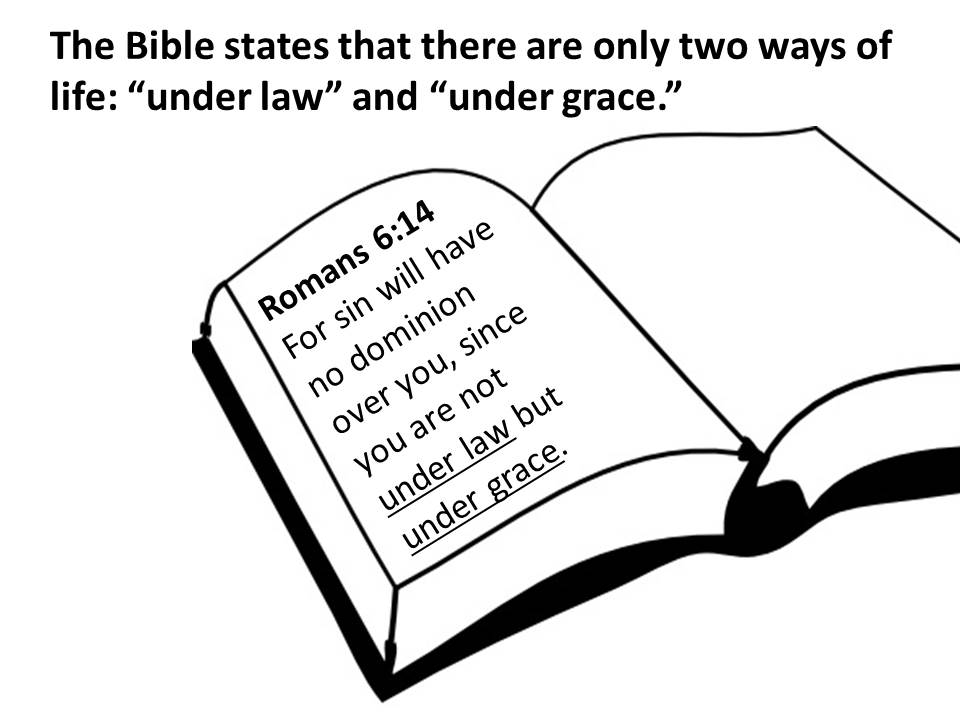
Calvinism is a false gospel that imperils the soul. The apostle Paul made it clear in Romans that there are only two people groups in the world: those under law, and those under grace (ROM 6:14). The lost and the saved. Calvinists declare themselves to be under law. They try to get around this by saying you can be under law and under grace both, but such is not the case. They say it is ok to be under law and covered by grace if we live by faith alone in sanctification; or, living by the same grace that saved us. The whole, “We must preach the gospel to ourselves every day” is indicative of where they stand on law and grace. According to their other gospel, we need the same grace that saved us every day for one reason and one reason only: we are supposedly still under law. Certainly, all people live under the grace of God whether saved or unsaved—we are addressing the grace that saved us initially.
Calvinists use the book of Galatians in an effort to make the opposite point; supposedly, the Galatians were putting themselves under law by attempting to please God in sanctification by keeping the law. Hence, in the Calvinist mind, attempting to keep the law in sanctification is the same thing as trying to keep the law for our justification—they are still under it accordingly….for justification….IN sanctification. In other words, a demand for perfect obedience to the law in sanctification is still the standard to maintain justification. This was Paul’s actual beef with the Galatians: that the law was still a standard for maintaining their justification. The Galatians were adding law to grace in order to maintain grace. So, instead of the law informing their sanctification, they were putting themselves back under the law to maintain justification. That’s why Paul wrote the following to them:
Galatians 4:21 – Tell me, you who desire to be under the law, do you not listen to the law?
Paul continues from there to drive home the point that justification is a settled issue and obligation to the law is separated from it. We are obligated to listen to the law for sanctification, but there is no longer any law obligation to our justification. To say that justification has to be maintained by perfect law-keeping is to be under the law. The Galatians were being taught that rituals such as circumcision completely satisfied the law. But again, being under law is the point here. That is why Paul stated the following:
Galatians 5:2 – Look: I, Paul, say to you that if you accept circumcision, Christ will be of no advantage to you. 3 I testify again to every man who accepts circumcision that he is obligated to keep the whole law. 4 You are severed from Christ, you who would be justified by the law; you have fallen away from grace.
The Galatians were being taught that circumcision satisfied all of the requirements of the law for justification. This led to an antinomianism in sanctification because in these systems there is no distinction between hearing and doing the law in sanctification and the laws relationship to justification. For the unbeliever, the law is the standard for justification because unbelievers are under the law. Christians are under grace and not under the law, so the law has no relevance to their justification. Paul was simply telling the Galatians that if they are under the law, they are obligated to keep all of it for justification. Circumcision or any other ritual does not satisfy the law.
Paul states that we are not under law because the old us that was under the law is dead (ROM 7:1-11), and therefore, the law cannot judge the sins of our mortality (Rom 3:19, 7:8,9). But on the other hand, we are enslaved to the law in sanctification (Rom 8:7,8). Even though we cannot keep it perfectly due to our present mortality, we are enslaved to it and nonetheless strive to keep it in our sanctification. The law was never fulfilled to maintain our justification because there is no law in justification. The law is fulfilled through us in sanctification (ROM 8:3,4). Christ’s death separated the law from justification in the same way that a spouse is no longer under a marriage covenant when the other spouse dies (ROM 7:1-3).
This excludes the necessity for perfect law-keeping in sanctification. Christ accomplished this through His death, not keeping the law for us in sanctification. Calvinists call this, “Christ 100% for us.” Christ’s perfect law-keeping is a given by virtue of who He is and not because perfect law-keeping was part of the Abrahamic covenant of promise which occurred 430 years before the law (GAL 3:17,18).
Which Brings Us to Calvin’s Galatian Error
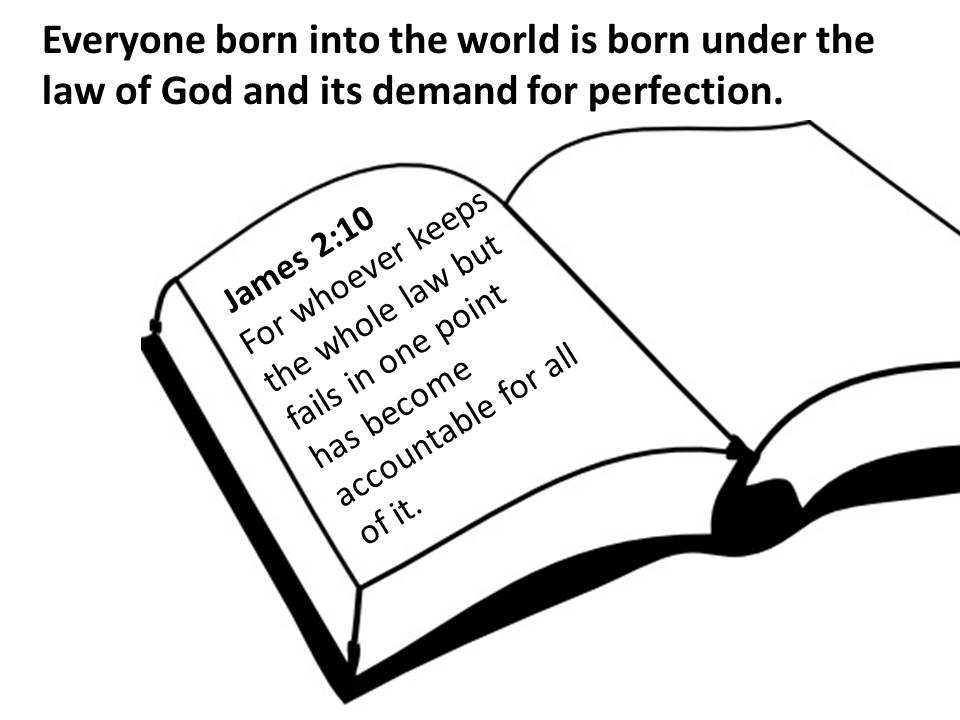
No works salvation system ever promotes a perfect, intelligent obedience to the law. It posits activity on our part that imputes something that counts for a perfect keeping of the law to maintain our salvation. This always leads to antinomianism because a ritual replaces actual law-keeping. Those under grace strive to please God by law-keeping because they are enslaved to the law, but on the other hand, perfection is not the standard because they are hindered by mortality (ROM 8:3,4) and the law can’t judge them because they are no longer under it (ROM 3;19). They are enslaved to it for sanctification, but not under it for justification. Those under grace are enslaved to the law but will not be judged by it; those under law are enslaved to sin and will be judged by the law. The Bible has an awesome way of stating this: those under the law violate it at all points by one sin; those under grace fulfill the law by loving their neighbors and God. The enslavement hindered by the weakness of the flesh fulfills the law in sanctification.
Calvin’s error/false gospel merely replaced the ritual of circumcision with daily re-salvation for the atonement of sin and the perpetual imputation of Christ’s perfect law-keeping for sanctification in order to maintain our justification (Calvin Institutes: 3.14.9-11). “We must preach the gospel to ourselves every day” is a ritual that imputes Christ’s perfect obedience to our sanctification in order to maintain our justification. This was also the fatal error of the Pharisees who replaced the law of God with their traditions and thus, “you have made void the law of God” (MATT 15:6 [most translations : “set aside” and “commandments”). The law is void for justification (the dead letter and covenant of death), but not sanctification.
Therefore, Calvinism keeps the “believer” under the law for justification leading to antinomianism in sanctification because Christ is 100% for us and keeps the law for us in sanctification in order to maintain our just standing. This is well exemplified via the following tweet by a well-known Calvinist:

This was the same result at Galatia as well:
Galatians 5:7 – You were running well. Who hindered you from obeying the truth?
This rejects the believer’s hindered enslavement to the law in sanctification and only leaves one other alternative: under the law. For all practical purposes: lost. Therefore, the Calvinist must be informed that he/she is still under the law and trusting in a false gospel. What imperils the Calvinist soul is a fundamental anti-biblical view of the law. They must be shown the new way of the Spirit.
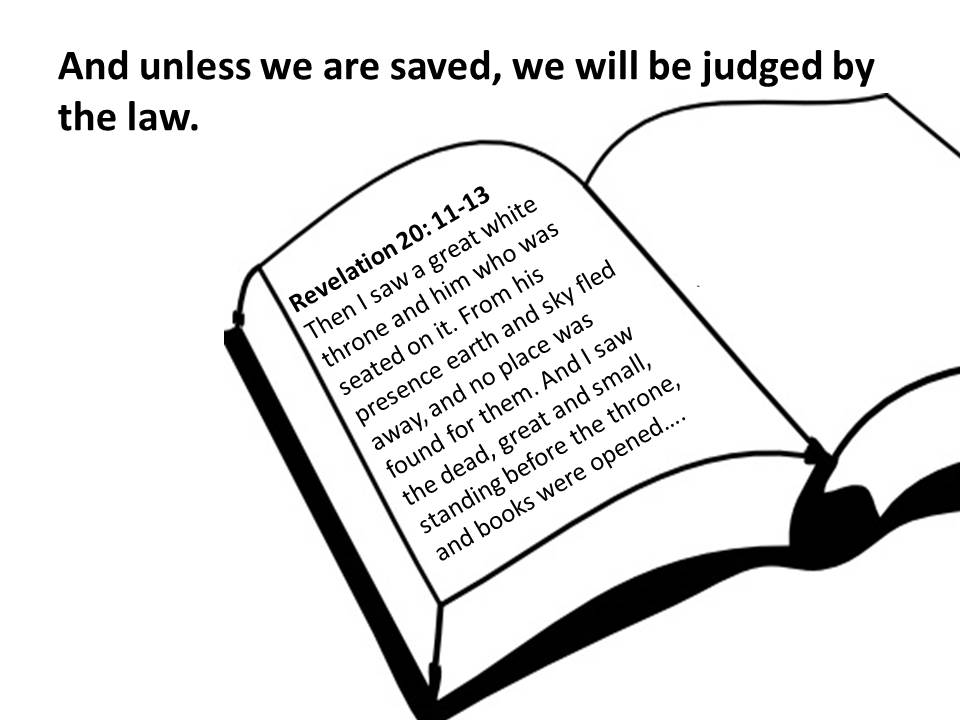
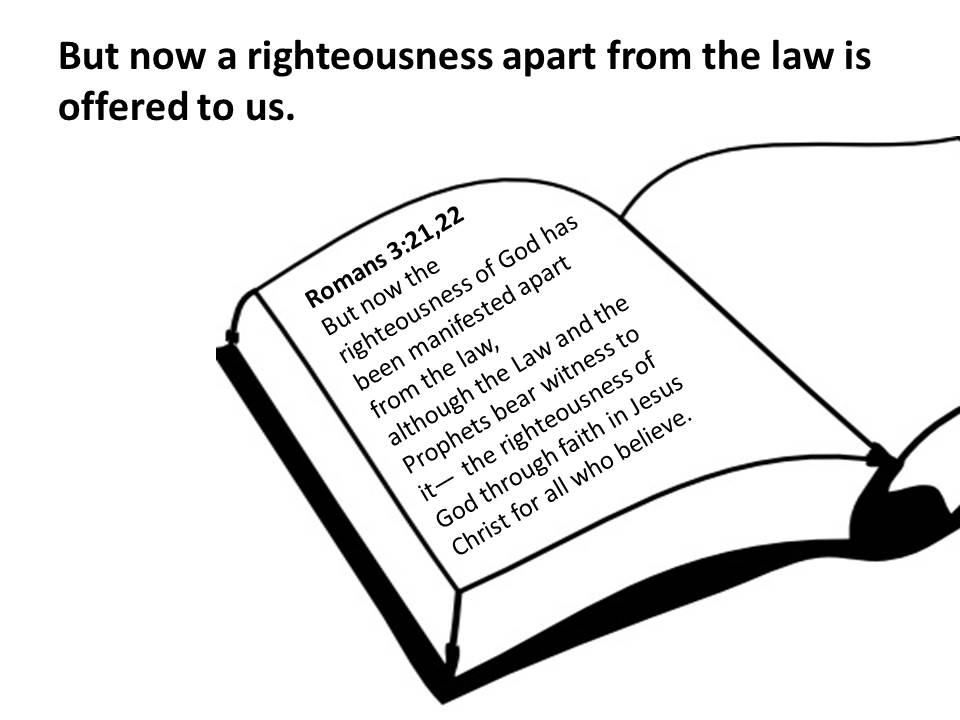
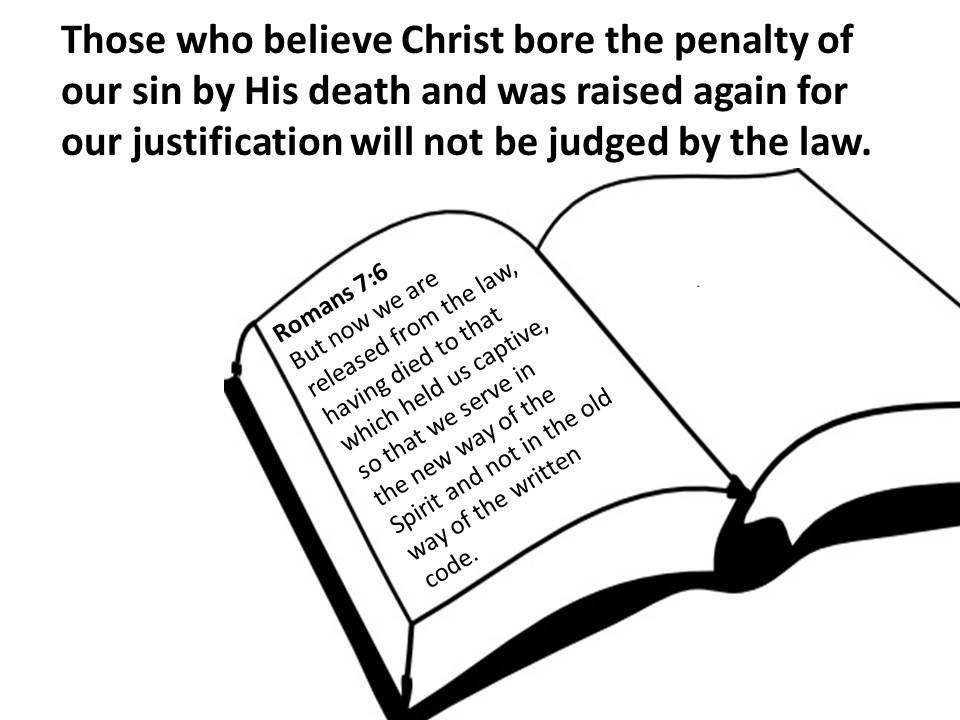
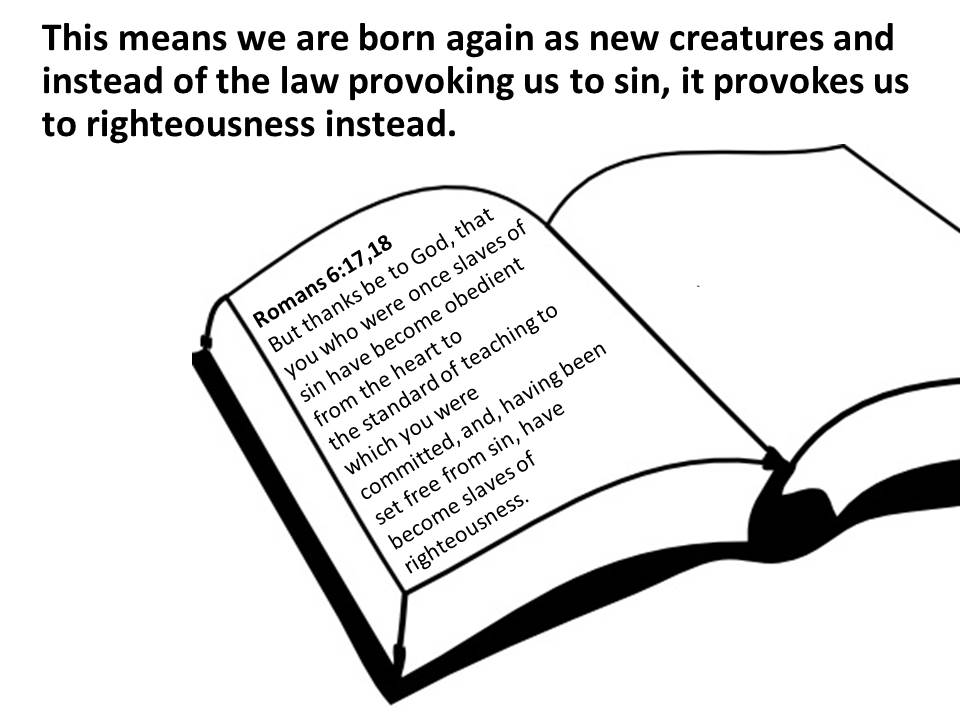
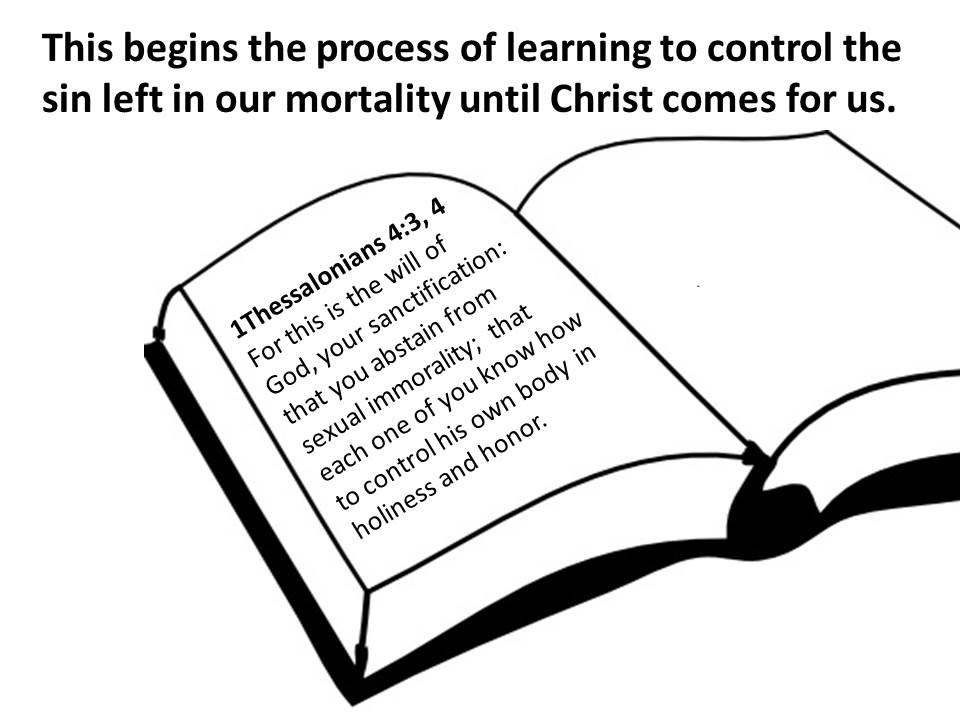
Let me recommend that you then teach them through the following booklet (Click on images to enlarge if necessary):



Today’s Christian Husband and Father: Killing His Family with Awesome Preaching
Originally posted December 6, 2012
Bob is on his way to Jerry’s house for dinner. Bob is the chairman of their church’s elder board. Jerry is being considered for eldership and Bob will be dining at his house for a pre-interview en lieu of further discussion. Pizza is the cuisine. And apparently, not just on this night—Bob notes that every trashcan in the house is stuffed with pizza boxes. Dishes full of M & Ms also adorn many of the table tops. Bob is taken to the kitchen by Jerry to meet his wife, and Bob perceives no less than twenty-five bags of potato chips staked about in various places. One corner of the kitchen is occupied with a tall stack of Coca-Cola 12packs. Big on taste—small in nutrition.
Precious few will disagree that Bob’s family is headed for serious health problems if they do not change their ways. Yet, Bob is a picture of how the vast majority of Christian husbands oversee the spiritual diets of their families. However, the “Bob” motif falls woefully short of making the point; at least Bob knows what his family is eating for better or worse. Christian husbands of our day don’t even know the difference between Redemptive Historical hermeneutics and Grammatical Historical hermeneutics. In fact, when the subject comes up, a rolling of the eyes follows.
That’s because the preaching/teaching is awesome where they go to church. Uncompromising, and God glorifying. As one pastor exhorted me when inquiring about what hermeneutic he used in his preaching: “Come and see if it tastes good, and if you still want to, we will talk about theology.” But I never doubt it will taste good. Who doesn’t love pizza for dinner, potato chips as a side, Coke to drink, and M&Ms for desert?
Fact is, nearly 90% of preaching/teaching in today’s American church is fundamentally based on Luther’s Heidelberg Disputation. This document is the very heart of the Reformation and the engine that drives the present-day New Calvinist movement. Its premise was based on the idea that all spiritual reality, wisdom, and truth comes from the combination of two perspectives, and only these two: the holiness of God, and the wretchedness of all men whether they are Christians or not. Luther called this perspective the “theology of the cross.” It has come to be known as Gospel-Centered preaching/teaching. It is also the foundation of the Calvin Institutes. Everything in the Calvin Institutes, in some way, points to the glory of God “as set against our sinfulness.”
This has become job one: as described in the Heidelberg Disputation; this way of teaching is the “cross story,” and all other spiritual wisdom is the “glory story.” Hence, the contemporary clarion call of the Reformation derived from Luther’s Disputation is, the centrality of the objective gospel outside of us. Anything at all that has anything to do with us is “subjective,” and part of the “glory story.” Unless it concerns our wretchedness. Therefore, the Disputation ridiculed a negative attitude towards suffering as well for this serves to further reveal our woeful state in life which magnifies the redemptive work of Christ and our utter worthlessness. The whole motif can be visualized by the following Reformed chart:

Yes, you can preach wonderful sermons on those two dimensions. They are both abundantly true. Charles Spurgeon is known as the “prince of preachers.” All of his sermons are based on the “cross story.” All, I repeat “all” of John Piper’s sermons and the (seems like) 600 books he has written are based on nothing but, I repeat, nothing but the “cross story.” Amen, pass the potato chips. In circa 1994, John MacArthur abandoned the “glory story” aspects of his preaching and now focuses on the “cross story.” Amen, pass the M&Ms. And those babies slide down nice with a big swig of Coca-Cola.
“But Paul, what’s so sweet about focusing on our own wickedness?” My dear friend, haven’t you seen any Staples commercials? It’s easy. You totally stink. Nothing is expected of you: “Hey honey! Good news! We don’t change! Our marriage isn’t about a bunch of do’s and don’ts! Our failures make us wiser!” That was easy. In fact, teachers like Michael Horton and John Piper continually espouse the idea that expectations are just, “more bad news.” And regarding leaders? “Alright, time to prepare my message for tomorrow, and all I have to do is look for two things, and two things only in the text: how great God is, and how bad we are.” That was easy. In fact, we find the following on a well-known Reformed blog regarding instruction on how to prepare a Bible lesson:
At this time, resist the temptation to utilize subsequent passages to validate the meaning or to move out from the immediate context. Remembering that all exegesis must finally be a Christocentric exegesis.
Look for Christ even if He isn’t there directly. It is better to see Christ in a text even if He isn’t, than to miss Him where He is.
But as the apostle asked rhetorically, “What saith the Scriptures?” Is there another story other than the “cross story”? Anybody interested in the House on a Rock story?
Matthew 7:24 -“Everyone then who hears these words of mine and does them will be like a wise man who built his house on the rock. 25 And the rain fell, and the floods came, and the winds blew and beat on that house, but it did not fall, because it had been founded on the rock. 26 And everyone who hears these words of mine and does not do them will be like a foolish man who built his house on the sand. 27 And the rain fell, and the floods came, and the winds blew and beat against that house, and it fell, and great was the fall of it.”
Learn and do. That’s how we have a life built on a rock. It is the very definition of a disciple:
Matthew 19 – Go therefore and make disciples of all nations, baptizing them in the name of the Father and of the Son and of the Holy Spirit, 20 teaching them to observe all that I have commanded you. And behold, I am with you always, to the end of the age.”
So, here is my suggestion. When you go to church this Sunday, and other days following that involve sitting under the teachings of your leaders, take a legal pad with you. Draw a line at a downward angle on the bottom labeled, “our sin.” Draw a line at the top with an upward angle, and label it “Christ.” Then draw a line in the middle and label it, “What? Why? And How?” Or, “Not only what Jesus did, but what did He SAY?” Or simply, “Life built on a rock.” If there isn’t a three-dimensional balance—get out of there. You either love your family or you don’t. You will be judged by Christ accordingly.
I was approached by my wife Susan this morning. My son by marriage had approached her asking questions about demonology. Apparently, he had questions concerning some things he had heard about the subject (demonology) in the secular realm. I was astonished; though both of them have been in church for a combined total of 72 years, they didn’t even know the basics regarding this subject. My wife wanted to know the answers to his questions—other than the usual answers: “Jesus” and “gospel.”
And if we don’t know, the world will gladly inform our children accordingly. Knowledge equals authority.
Men, wake up.
paul
14 Basic Fundamentals of the True Gospel and 12 Anti-Gospel Presuppositions
I. Justification
Used synonymously with “righteousness.” It is the declaration and imputation of righteousness to the believer. This is the very righteousness of God. This is also the salvation of the soul. God NEVER declares anyone righteous unless He makes them righteous. This is not a position only, the person is actually made righteous.
II. The New Birth
Normally, sanctification would be discussed next, but it is important to understand how we are truly righteous—yet we still fall short of God’s standards in this life. The new birth takes place in time when we believe, and is a spiritual reality that lacks the experiential evidence that we would expect, yet the Bible is explicit about what takes place. Our old spiritual self dies a literal death “with Christ,” and we are born again with an incorruptible seed. This is pictured in water baptism. We are new creatures. We do NOT have two natures, we only have one nature.
III. Flesh
Is the human body. It is not inherently evil, what God created that was good originally became weak in the fall, like creation, but is not inherently evil. This is why we are actually righteous, but fall short of God’s glory: “The spirit is willing, but the flesh is weak.”
IV. Sin
Sin was found in Lucifer, an angel created by God. It is described in the Bible as a master. Sin masters those who are not saved, but is hindered by the conscience God created in every being. God also wrote His character traits on the hearts of all people because we are born in His image. Unbelievers are not completely mastered by sin because they are born in God’s image. Unfortunately, unbelievers often confuse the image of God with their own righteousness.
When a believer sins, it is a violation of the Bible, but is considered to be sin against God and His family directly or indirectly by bringing shame on God’s name. For the unbeliever, violation of the law leads to eternal condemnation while sin for the believer can lead to chastisement and loss of reward.
V. Sanctification
It means to be set apart for God’s purposes. The gospel is really a call to kingdom living. Escape from eternal judgment is a positive by-product. See Andy Young’s TANC 2014 sessions on sanctification.
VI. Kingdom
The earth is presently ruled by Satan. It is the kingdom of darkness. God’s kingdom is NOT on earth nor is the earth being gradually transformed from one kingdom realm to another via the collective Christocentric psyche of the church. We are ambassadors of God’s heavenly kingdom. Christ will return, destroy Satan’s kingdom, and set up His own. Christians are to make as many disciples as possible until that day. The church has no task in bringing forth God’s kingdom on earth. We display the will of the kingdom, and call people to it, but have NO task in bringing it to earth.
VII. Hell
Hell was not created for man, but for Satan and the demons who were never offered salvation. A loving God sends no one to hell, people merely choose what kingdom they want to belong to. The gospel is a call to escape the earthly kingdom and its slavery to sin, and be transformed into God’s kingdom of light.
VIII. The Bible
“Law,” “scripture,” “holy writ,” “the law and the prophets,” “the word,” “the law,” etc., are all interchangeable terms for the closed canon of scripture. The Bible is God’s law and wisdom for life and godliness. It is also a full-orbed metaphysical treatise. It defines reality.
IX. The Law of Sin and Death
It’s the Bible’s relationship to unbelievers. It describes how the unbeliever will be judged in the last day for every violation of conscience.
X. The Law of the Spirit of Life
It describes the believer’s relationship to the Bible. The transformed heart of the believer now desires to obey God, is no longer enslaved to sin, and cannot be condemned by the law. The Bible is a manual for our kingdom citizenship.
XI. Judgment
There are two: one of condemnation for those who chose the kingdom of darkness, known as the great white throne judgment, and a separate one for eternal rewards known as the bema judgment.
XII. Redemption
This is the other salvation. It is the redemption of the body at resurrection. This salvation is often confused with justification, or the salvation of the soul.
XIII. Justice
Justice is of paramount importance to God and He is angered when it is not practiced by people whether lost or saved. Fairness matters to God.
XIV. Rest
The Christian life is NOT a rest. John Calvin believed sanctification is the New Testament version of the Old Testament Sabbath rest. Because Protestantism only sees ONE application of the law, to judge/condemn, Christians must supposedly rest while Jesus fulfils the law for us.
Unwittingly, this defines Christians as “under law.” Who keeps the law is irrelevant, it can’t give life, and it can’t justify. Protestants must wrongly assert this because they reject the two applications of the law and make it strictly for condemnation only. In contrast, Christians can use the law lawfully because it can no longer condemn them. In Protestantism, the condemnation of the law is not removed for the Christian.
12 Anti-Gospel Presuppositions of Protestantism
1. God declares people righteous without making them righteous. “Sinner” is not past tense.
2. Perfection is defined as perfect law-keeping in this life.
3. The new birth is defined as a realm or ability to see/experience something that is not our own essence as believers.
4. “Flesh” is inherently evil, not merely weak.
5. “Earth” is not merely weak, but inherently evil.
6. “Sin” is the essence of the material world, and not a “master” separate from it.
7. Sanctification (the Christian life) is a rest. John Calvin believed New Testament sanctification is the Old Testament Sabbath rest. It is the belief that the Christian life is a rest from works because all works are still under law.
8. God’s kingdom is presently on earth.
9. Hell was also created for man.
10. A single relationship to the law for both believers and unbelievers.
11. One judgment.
12. Salvation of the soul and body happen at the same time.
Jesus and Paul: The Dynamics of True Salvation: John 8:34-36
Words mean things. Christians should be careful that they know what words mean in the biblical sense. Protestants misunderstand the biblical definitions of many key words; really, almost all of them. This is because orthodoxy has redefined all of them. The more we see the proper definitions of key biblical words, the more we see a beautiful continuity in the truth that gives us life, and life more abundantly.
John 8:34-36 is part of what Jesus said in a debate with the religious leaders of that day, and is not only the crux of salvation, but Pauline soteriology to a “T.” Let’s look at it:
John 8:34 – Jesus answered them, “Truly, truly, I say to you, everyone who practices sin is a slave to sin. 35 The slave does not remain in the house forever; the son remains forever. 36 So if the Son sets you free, you will be free indeed (ESV).
Verse 34 is a theme that Jesus focuses on in the surrounding text. Nothing that we do can make us righteous, but what we do shows who we are. Why? Because we are new creatures; we are born from above. Jesus emphasizes fruits, but the apostle Paul articulates the doctrine in his letters. What Jesus states here, and what Paul states in his epistles, is exactly the same.
The key words we must understand are: sin; son; Son; slave, and free. The word “practice” in the ESV is a good translation because it denotes the idea of a life pattern. Perfection is not in mind here. The Principle is described by Paul in Romans:
Romans 6:20 – For when you were slaves of sin, you were free in regard to righteousness. 21 But what fruit were you getting at that time from the things of which you are now ashamed? For the end of those things is death. 22 But now that you have been set free from sin and have become slaves of God, the fruit you get leads to sanctification and its end, eternal life. 23 For the wages of sin is death, but the free gift of God is eternal life in Christ Jesus our Lord.
The new birth is a reversal of slavery and freedom leading to a different life direction. Though an unbeliever is free to righteousness, ultimately, he/she is indifferent to the freedom of God’s truth. Certainly, an unbeliever can do righteous works because the works of God’s law are written upon the heart (Rom 2:14).
I will also agree with the ESV differentiating between “son” in verse 35 and “Son” in verse 36 via capitalization. The son in verse 35 is not the same Son in verse 36. Verse 35 speaks of the sonship of a son to the master of the house. The slave (bond servant) is not part of the family and has an uncertain length of occupancy while the son of the master will always be the master’s son.
“Slave” has three meanings here: slave to a master; slave to a law, and a slave to death. Let’s look at the first one: it is a slave to a particular master; sin. Throughout the whole Bible, sin is defined as a master.
Romans 6:17 – But thanks be to God, that you who were once slaves of sin have become obedient from the heart to the standard of teaching to which you were committed,
Genesis 4:5 – So Cain was very angry, and his face fell. 6 The Lord said to Cain, “Why are you angry, and why has your face fallen? 7 If you do well, will you not be accepted? And if you do not do well, sin is crouching at the door. Its desire is for you, but you must rule over it.”
Sin is an entity that desires to rule over humanity, and primarily utilizes desire to do so.
James 1:14 – But each person is tempted when he is lured and enticed by his own desire. 15 Then desire when it has conceived gives birth to sin, and sin when it is fully grown brings forth death.
Romans 6:12 – Let not sin therefore reign in your mortal body, to make you obey its passions. 13 Do not present your members to sin as instruments for unrighteousness, but present yourselves to God as those who have been brought from death to life, and your members to God as instruments for righteousness. 14 For sin will have no dominion over you, since you are not under law but under grace.
The contrary master is righteousness, and this is to whom the son is enslaved. The Son has set the household slave free to be enslaved to righteousness as the son of the master.
Romans 6:18 – and, having been set free from sin, have become slaves of righteousness.
This is also slavery to a law. Sin has its own law (Scripture). This is a law appointed to the Sin slave master by God. Only this law can define sin. No sin has been committed that is not imputed to this law and recorded as a violation against it. Sin designs its desires to refute the law. Sin uses the law of God to provoke people to sin through contrary desires.
Romans 7:5 – For while we were living in the flesh, our sinful passions, aroused by the law, were at work in our members to bear fruit for death.
Romans 7:8 – But sin, seizing an opportunity through the commandment, produced in me all kinds of covetousness.
The Son came to die on the cross to make slaves into sons. He did this by ending the law and its condemnation. Sin can no longer condemn us.
1Corinthians 15:56 – The sting of death is sin, and the power of sin is the law. 57 But thanks be to God, who gives us the victory through our Lord Jesus Christ. 58 Therefore, my beloved brothers, be steadfast, immovable, always abounding in the work of the Lord, knowing that in the Lord your labor is not in vain.
The Son came to end the law, that is, the law of sin and death (Rom 8:2), so that sin can no longer condemn us through the law.
Romans 10:4 – For Christ is the end of the law for righteousness to everyone who believes.
Romans 5:13 – for sin indeed was in the world before the law was given, but sin is not counted where there is no law.
Romans 7:8 – …For apart from the law, sin lies dead.
Therefore, those who sin are under the law (“everyone who practices sin is a slave to sin”), but Christ came to end the law, so a son cannot sin against the law. He is now under grace and NOT under law:
Romans 6:14 – For sin will have no dominion over you, since you are not under law but under grace.
God lent His law to sin as a covenant that would imprison all sins committed therein. It’s like a will written to all unbelievers. All sins are imputed to it until faith comes, and the inheritance is eternal life.
Galatians 3:21 – Is the law then contrary to the promises of God? Certainly not! For if a law had been given that could give life, then righteousness would indeed be by the law. 22 But the Scripture imprisoned everything under sin, so that the promise by faith in Jesus Christ might be given to those who believe. 23 Now before faith came, we were held captive under the law, imprisoned until the coming faith would be revealed. 24 So then, the law was our guardian until Christ came, in order that we might be justified by faith. 25 But now that faith has come, we are no longer under a guardian, 26 for in Christ Jesus you are all sons of God, through faith.
Hebrews 9:15 – Therefore he is the mediator of a new covenant, so that those who are called may receive the promised eternal inheritance, since a death has occurred that redeems them from the transgressions committed under the first covenant. 16 For where a will is involved, the death of the one who made it must be established. 17 For a will takes effect only at death, since it is not in force as long as the one who made it is alive. 18 Therefore not even the first covenant was inaugurated without blood.
This is where a slave becomes a son, in order to be set free from the master who has owned him since birth (Rom 7:14). Like Christ, a death must occur to free the son from the old covenant that imprisons sin, death, and condemnation.
Romans 7:1 – Or do you not know, brothers—for I am speaking to those who know the law—that the law is binding on a person only as long as he lives? 2 For a married woman is bound by law to her husband while he lives, but if her husband dies she is released from the law of marriage. 3 Accordingly, she will be called an adulteress if she lives with another man while her husband is alive. But if her husband dies, she is free from that law, and if she marries another man she is not an adulteress.
Romans 7:4 – Likewise, my brothers, you also have died to the law through the body of Christ, so that you may belong to another, to him who has been raised from the dead, in order that we may bear fruit for God. 5 For while we were living in the flesh, our sinful passions, aroused by the law, were at work in our members to bear fruit for death. 6 But now we are released from the law, having died to that which held us captive, so that we serve in the new way of the Spirit and not in the old way of the written code.
The son is now free without fear of condemnation to obey the law of the Spirit of life (Rom 8:2). Christ fulfilled the Old Covenant law of sin and death by paying the wages of sin—death, and was raised from the dead in order to conquer death as well. There is no law to condemn us, and no wage of sin to be paid. We have been bought with this price from the Sin master, and now belong to Master Righteousness.
1Corintians 6:20 – for you were bought with a price. So glorify God in your body.
Being sons, purchased by the Son, and under grace, we are now free to fulfill the law of the Spirit of life by obeying Christ the righteous one:
Romans 8:1 – There is therefore now no condemnation for those who are in Christ Jesus. 2 For the law of the Spirit of life has set you free in Christ Jesus from the law of sin and death. 3 For God has done what the law, weakened by the flesh, could not do. By sending his own Son in the likeness of sinful flesh and for sin, he condemned sin in the flesh, 4 in order that the righteous requirement of the law might be fulfilled in us, who walk not according to the flesh but according to the Spirit. 5 For those who live according to the flesh set their minds on the things of the flesh, but those who live according to the Spirit set their minds on the things of the Spirit. 6 For to set the mind on the flesh is death, but to set the mind on the Spirit is life and peace. 7 For the mind that is set on the flesh is hostile to God, for it does not submit to God’s law; indeed, it cannot. 8 Those who are in the flesh cannot please God.

 Paul's Passing Thoughts
leave a comment