Horton’s Systematic Theology Adds To The Sonship/Gospel Sanctification Massive Subculter
[NOTE: This was written before I discovered that New Calvinism is in fact the same gospel that the Reformers taught. The resurgence movement began as COG in 1970, became Sonship circa 1986, Gospel Transformation in 2000, dubbed Gospel Sanctification by detractors in 2007, and finally New Calvinism in 2008. This was also written before I understood that orthodoxy is a part of spiritual caste in general].
“Gospel Sanctification, as Sonship is now called, will begin to totally rewrite orthodox Christianity” [Note also that I no longer equate “orthodoxy ” with truth per se].
[Further revision: much has been learned since this post, but the general idea is very accurate: the Neo-Calvinist movement is seeking to develop a subculture within American culture that will eventually, if all goes as planned, devour American culture as we know it. This is part and parcel with Calvinism’s dominion theology. This post submits a sketchy framework of useful categories under the general idea. For instance, one college that focuses strictly on the Neo-Calvinist vision is a far cry from the fact that this movement owns (in an intellectual capacity) most of the seminaries in America. Other categories could also be added.
The Fix is now in. The false doctrine of the centrality of the objective gospel (COG) which found new life in Sonship Theology about thirty years ago—now has its own theology, hermeneutic, practical application, defined experience, ecumenical (inclusiveness) movement, history, college, counseling organization, missionary organization, Bible—and now, its own systematic theology. Gospel Sanctification (GS), as Sonship is now called, will begin to totally rewrite orthodox Christianity. It won’t be long; those who we minister to will have to be deprogrammed before we can help them, starting with convincing them that the Bible is to be taken as literal instruction from God as our authority for ministry and life. Not understanding GS beforehand will make any attempt to help people with the word of God—dead on arrival. GS
Theology
The movement started with a very powerful concept in the minds of its perpetrators. Supposedly, we grow spiritually by revisiting the gospel that saved us every day. Proponents were convinced (and still are) that this thesis stands alone as truth; therefore, all other propositions must bow to it.
The GS Hermeneutic
A literal interpretation of Scripture will continually contradict GS. So, the proponents have changed how we read/ interpret the Bible accordingly. The GS hermeneutic is an interpretive prism that will always yield results that make GS plausible. Unlike the rest of the elements (which are very contemporary), the hermeneutic (known as Biblical Theology or Redemptive-Historical hermeneutics) was borrowed from times past. It originated in Germany under the liberal teaching and writings of Johann Philipp Gabler (1753-1826), who emphasized the historical nature of the Bible over against a “dogmatic” interpretation thereof. Nearly a century later, Geerhardus Vos (1862-1949) was instrumental in taking the discipline of biblical theology in a, supposedly, more conservative direction. Graeme Goldsworthy tweaked the doctrine to facilitate COG, and today, Goldsworthy’s “Trilogy” is the pillar of interpretation within the movement.
Practical Application
The GS narrow approach to sanctification must be embellished and applicable to life in some way in order to be sold. This is Heart Theology, and was developed through David Powlison’s Dynamics of Biblical Change at Westminster Seminary. In 1996, two former students of Powlison articulated Heart Theology in a book entitled, “How People Change.”
Defined Experience
John Piper seeks to articulate how Sonship is experienced via Christian Hedonism. Because GS makes our works and the work of the Spirit an either/or issue, someone needed to develop a thesis that explained how the difference can be ascertained. John Piper answered the call with the development of Christian Hedonism.
Ecumenical Bent
GS now encompasses any group that agrees with its primary view of plenary monergism and the synthesis of justification and sanctification. All other disciplines are seen as secondary and irrelevant to fellowship and joint ventures. The Gospel Coalition (holding national conferences on odd years, 2011, etc.), and T4G (Together For The Gospel, holding national conferences on even years) work together to promote GS/S while promoting inclusiveness among denominations and religions.
History
GS proponents claim a historical precedent dating back to Creation, and also claim to be the second part of the first Reformation. Of course, this is laughable. Sonship, the Antioch school, TGC, T4G, NCT, CH, and HT have no historical precedent prior to 1970. Many of the notable proponents of GS are associated in some way with the father of Sonship Theology, Dr. John “Jack” Miller. Tim Keller and David Powlison were followers of Miller. Paul Tripp and Timothy Lane are followers of David Powlison. Jerry Bridges attributes his view of the gospel to Miller as well.
College
The Antioch School of leadership training has GS as its foundation and basis for training. It is located in Ames, Iowa.
Counseling Organization
The upstart Biblical Counseling Coalition, which seeks to network other counseling organizations as well, is intimately associated with T4G and The Gospel Coalition. The who’s who of Gospel Sanctification sit on its governing board including David Powlison and Paul David Tripp.
Missionary Organization
It’s primary missionary organization was founded by the father of Gospel Sanctification / Sonship—Dr. John “Jack” Miller. Banner of Truth states the following in The Movement Called Sonship: “Miller encouraged New Life Presbyterian Church into originating the ‘World Harvest Mission’, a non-denominational missionary organization. Sonship became its main teaching vehicle.”
Bible
The English Standard Version (ESV) was first published by Crossway in 2001. Its vice president of editorial is Justin Taylor who also authors The Gospel Coalition Blog, the multimedia propaganda machine for GS doctrine. One of the translators was Wayne Grudem, also well known as a major proponent of GS doctrine. The ESV’s GS connection has made it the most purchased English Bible in the past ten years. The latest promotion of the ESV by Crossway, “Trusted: Trusted Legacy [a whopping ten years]; trusted By Leaders; Trusted For Life,” features an endorsement by the who’s who of GS doctrine.
The Complete Fix
With Michael Horton’s recent publication of “The Christian Faith: A Systematic Theology for Pilgrims On the Way” (2011), the total fix is in place. The GS machine will now begin to move forward—rewriting and re-forming orthodox Christianity. I confidently predict that Horton’s book will be widely used in seminaries nationwide. Seminary students will be pumped into the local churches with a skewered view of truth—but using all of the same terminology that was formally orthodox.
What Can Be Done?
This doctrine thrives on the fact that Christians are theologically dumbed-down. If most Christians do not know the difference between justification and sanctification (and they don’t), they are helpless against this false doctrine. If most Christians don’t realize the importance of understanding hermeneutics (and they don’t), they are even more helpless. Local churches need to start in-doctrine–ating their people.
paul
On The 114th Day of 2011 My True Love Gave to Me The Gospel Again
 I guess this is confession time for me. It’s no big secret among those who know me well that I believe there is a death by gospel going on in the contemporary church. We get the gospel in almost every song we hear on CD / radio during the week. We get the gospel in almost every sermon heard on the radio / PC during the week. Then on Sunday—more gospel. Then the holidays come—more gospel with pomp and circumstance. For instance, it’s not enough that the song, “The Twelve Days Of Christmas”
( http://en.wikipedia.org/wiki/Twelve_Days_of_Christmas ) is symbolic of twelve different truths found in the Bible
( http://www.carols.org.uk/the_twelve_days_of_christmas.htm ); hundreds have written their own “true” version making all twelve verses about the gospel
( http://lyricsplayground.com/alpha/songs/xmas/therealtwelvedaysofchristmas.shtml ).
Yes, every verse of a song, like the Bible, must be about the gospel. I look forward to the inevitable, “The 365 days of the Gospel” that will certainly be written by someone, and we are all sure that the church will be the better for it. And since Christ is no longer the King of kings and Lord of lords, the “my true love” part refers to Christ who is now, according to spiritual brainiacs like Francis Chan, our boyfriend and “lover.” Undoubtedly, the 114th day of 2011, Easter Sunday, will be no different. Furthermore, as I have sarcastically predicted before, and I will say again, the days of serving the Lord’s Table and re-baptizing every Sunday in Evangelical churches will eventually become reality as well.
Total gospel overload. Meanwhile, Christians suffer in the torture chamber some call “home.” Someone shared a situation with me last week concerning a sister (let’s call her “Maggie”) who is a member of a “thriving” church that emphasizes the gospel. They are what many call, “gospel centered.” Errrrrr, amen brother. Her husband, who is well respected in said church, has a pornography addiction. But praise ____: they hear the gospel every Sunday!
So, what’s my grip? Well, certainly NOT with the gospel (it means “good news”), but rather what most Christians have come to believe the gospel is: the death, burial, and resurrection of Christ ONLY. There is more to the gospel than that—the gospel is also good news about how we masterfully apply the word of God to our lives. Maggie needs some good news. Will she get it at church? I doubt it. The apostle Paul said Christians are called to peace, and Maggie isn’t finding much, even after here husband has heard 365 different versions of the gospel minus “anything we would do.” After all, “it’s not about anything we do, but what Christ has done.” Is that workin’ for Maggie? I doubt it.
Let me not write a book, but simply state my case. When Christ began his ministry, he went about proclaiming “the gospel” (Matt 4:23). What was that gospel? Our question is answered shortly thereafter in Matt 5:1-7:29; that section of Scripture is commonly known as the Sermon on the Mount. His death, burial, and resurrection is nowhere to be found in that sermon. The sermon is about our role in having life, and having it more abundantly. Certainly, without the works of Christ, there is no good news of the kingdom. But once we are in, Maggie should get more good news—Christ has some news concerning what he wants her to do about the circumstance she finds herself in. He will tell her: how to think about the problem; what attitude to have about the problem; how to pray about the problem; how other Christians should help her; what God himself promises to do about the problem; and lastly, what God expects her to do about the problem. And as a result of this information, Maggie not only finds a future hope, but a present hope. Christ came that we may not only have life more abundantly at the resurrection, but NOW also. Besides, the Maggie’s of the world make poor evangelist. Homes that can’t withstand the storms of life make poor shelter for a lamp (Matt 5:14 and Matt 7:24-27).
The gospel is cross centered indeed—but it is also problem centered. Um, in case anybody hasn’t noticed, the gospel addresses a problem: SIN. But then it addresses all of the other problems caused by sin—there’s a need for that, just in case no one has noticed. And also, just in case anybody missed it, Epahraditus didn’t almost die because Christ was doing everything for him.
paul
Horton’s Systematic Theology Completes The Fix
Revised:
The Fix is now in. What started out as Sonship Theology about thirty years ago—now has its own theology, hermeneutic, practical application, defined experience, ecumenical (inclusiveness) movement, history, college, counseling organization—and now, its own systematic theology. Gospel Sanctification, as Sonship is now called, will begin to totally rewrite orthodox Christianity. It won’t be long; those who we minister to will have to be deprogrammed before we can help them, starting with convincing them that the Bible is to be taken as literal instruction from God as our authority for ministry. Not understanding GS beforehand will make any attempt to help people with the word of God—dead on arrival.
GS Theology
The movement started with a very powerful concept in the minds of its perpetrators. Supposedly, we grow spiritually by revisiting the gospel that saved us every day. Proponents were convinced (and still are) that this thesis stands alone as truth; therefore, all other propositions must bow to it. Though Covenant Theology will work with GS, New Covenant Theology was developed to bolster the Sonship thesis. NCT was developed where Sonship was also born: Westminster Seminary.
The GS Hermeneutic
A literal interpretation of Scripture will continually contradict GS. So, the proponents have changed how we read / interpret the Bible accordingly. The GS hermeneutic is an interpretive prism that will always yield results that make GS plausible. Unlike the rest of the elements (which are very contemporary), the hermeneutic (known as Biblical Theology or Redemptive-Historical hermeneutics) was borrowed from times past. It originated in Germany under the liberal teaching and writings of Johann Philipp Gabler (1753-1826), who emphasized the historical nature of the Bible over against a “dogmatic” interpretation thereof. Nearly a century later, Geerhardus Vos (1862-1949) was instrumental in taking the discipline of biblical theology in a, supposedly, more conservative direction.
Practical Application
The GS narrow approach to sanctification must be embellished and applicable to life in some way in order to be sold. This is Heart Theology, and was developed through David Powlison’s Dynamics of Biblical Change at Westminster Seminary. In 1996, two former students of Powlison articulated Heart Theology in a book entitled, “How People Change.”
Defined Experience
John Piper seeks to articulate how Sonship is experienced via Christian Hedonism. Because GS makes our works and the work of the Spirit an either / or issue, someone needed to develop a thesis that explained how the difference can be ascertained. John Piper answered the call with the development of Christian Hedonism.
Ecumenical Bent
GS now encompasses any group that agrees with its primary view of plenary monergism and the synthesis of justification and sanctification. All other disciplines are seen as secondary and irrelevant to fellowship and joint ventures. The Gospel Coalition (holding national conferences on odd years, 2011, etc.), and T4G (Together For The Gospel, holding national conferences on even years) work together to promote GS/S while promoting inclusiveness among denominations and religions.
College
The Antioch School of leadership training has GS as its foundation and basis for training. It is located in Ames, Iowa.
History
GS proponents claim a historical precedent dating back to Creation. Of course, this is laughable. Sonship, the Antioch school, TGC, T4G, NCT, CH, and HT have no historical precedent prior to 1970. Most of the notable proponents of GS are associated in some way with those who created Sonship Theology: Edmund Clowney, and primarily, Dr. John “Jack” Miller. Tim Keller and David Powlison were followers of Miller. Paul Tripp and Timothy Lane are followers of David Powlison. Jerry Bridges attributes his view of the gospel to Miller as well.
Counseling Organization
The upstart Biblical Counseling Coalition, which seeks to network other counseling organizations as well, is intimately associated with T4G and The Gospel Coalition. The who’s who of Gospel Sanctification sit on its governing board including David Powlison and Paul David Tripp.
The Complete Fix
With Michael Horton’s recent publication of “The Christian Faith: A Systematic Theology for Pilgrims On the Way” (2011), the total fix is in place. The GS machine will now begin to move forward—rewriting and re-forming orthodox Christianity. I confidently predict that Horton’s book will be widely used in seminaries nationwide. Seminary students will be pumped into the local churches with a skewered view of truth—but using all of the same terminology that was formally orthodox.
What Can Be Done?
This doctrine thrives on the fact that Christians are theologically dumbed-down. If most Christians do not know the difference between justification and sanctification (and they don’t), they are helpless against this false doctrine. If most Christians don’t realize the importance of understanding hermeneutics (and they don’t), they are even more helpless. Local churches need to start in-doctrine-ating their people.
paul
A Big Fat Lie: “Tripp Has Taken Powlison’s DBC Too Far”
No one is better than David Powlison for throwing people under the bus. He will throw you under it, and in some cases, continue to run you over: first forward, then backing up and running you over again. Strangely, he will then publicize (either in print or publicly) his reasons for running you over while flavoring the reasons with compliments—if you’re elderly, apparently, the younger suffer full traction without compliments.
Larry Crabb has suffered Powlison’s wrath since the early 90’s for not being nuanced enough. Supposedly, Crabb and he never agreed on anything, and of course, Powlison was dismayed by Crabb’s book, “Inside Out” which claimed that Evangelicals denied an “inside life,” and all truth is God’s truth. Crabb also said in IO that the church needed Freud’s wisdom to figure it all out. Powlison has no patience for that kind of honesty: you’re supposed to accuse them of denying that the heart has to change first and refer to truth as stuff in the Bible that the church forgets about. When rediscovered—you never, never, admit that God showed it to guys like Freud; instead, you cite really, really old Catholic bishops.
Apparently, Powlison now finds himself in the same dilemma with Paul Tripp who articulated his “Dynamics of Biblical Change” in a book authored by Tripp and Timothy Lane entitled, “How People Change.” Tripp plainly states in the book, among other things, that Christians remain spiritually dead, and passive endeavors such as changing our thinking to that of Christ is a denial of the gospel. Hence, I heard the rumor again last weekend: “Paul Tripp has taken DBC farther than Powlison intended.” Anybody smell diesel fuel?
However, the rumor must be working because Tripp and Powlison will be sitting on the new board of the Biblical Counseling Coalition together where they can once again giggle (because undoubtedly, the rest of the board thinks they’re orthodox), pass notes to each other, and sip lattés while cursing Moses under their breath. Only problem is—it’s a lie. I went ahead and copied documents for comparison purposes: things Tripp and Powlison wrote together at CCEF that can be compared to “How People Change.” It’s all the same stuff—stuff that the church has forgotten, but now interpreted in its “socio-historical context.” The information is almost identical, and was easily gathered in cursory fashion. It should be self explanatory, but I can produce more information if necessary.
Written by Tripp and Powlison in 2003:
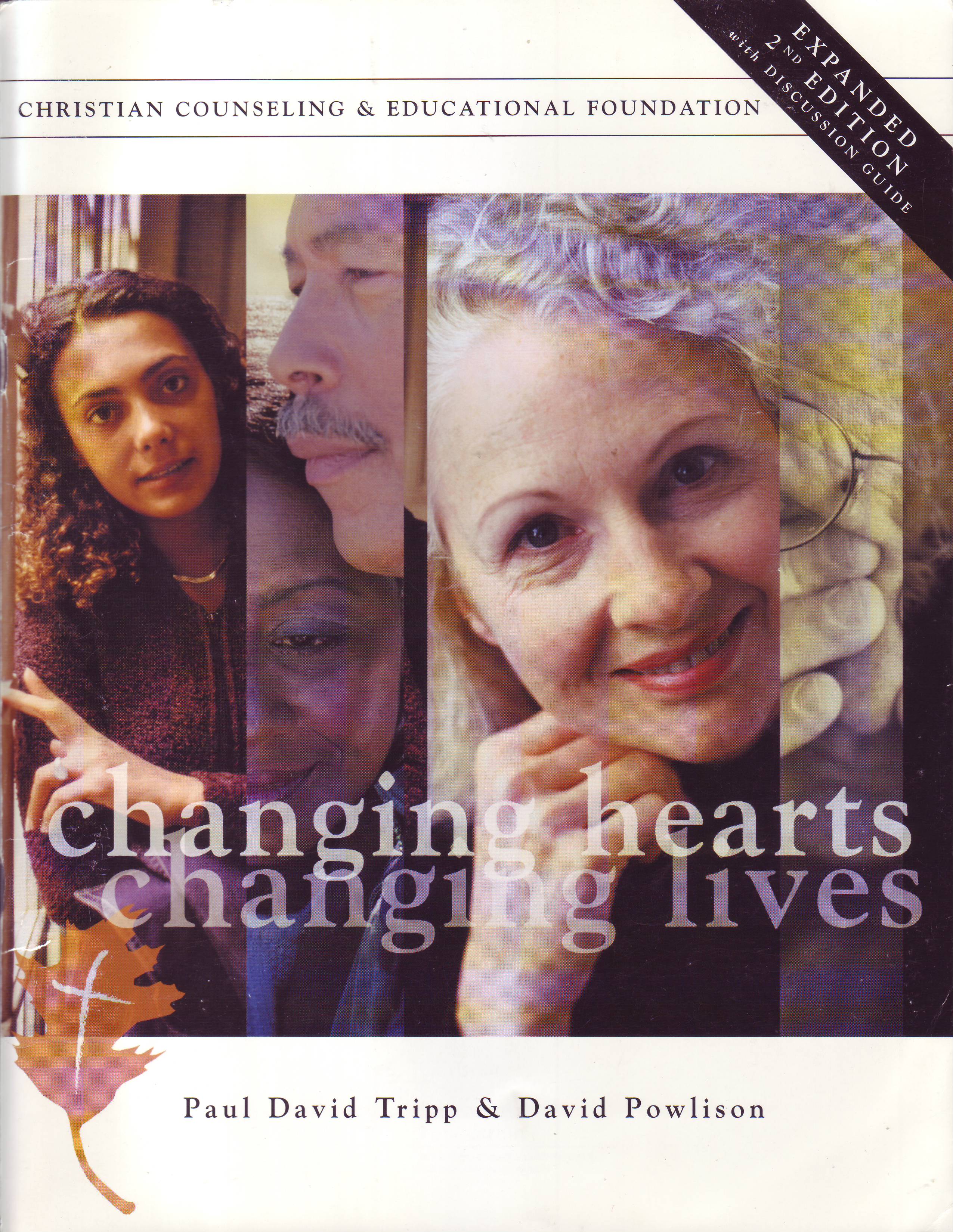
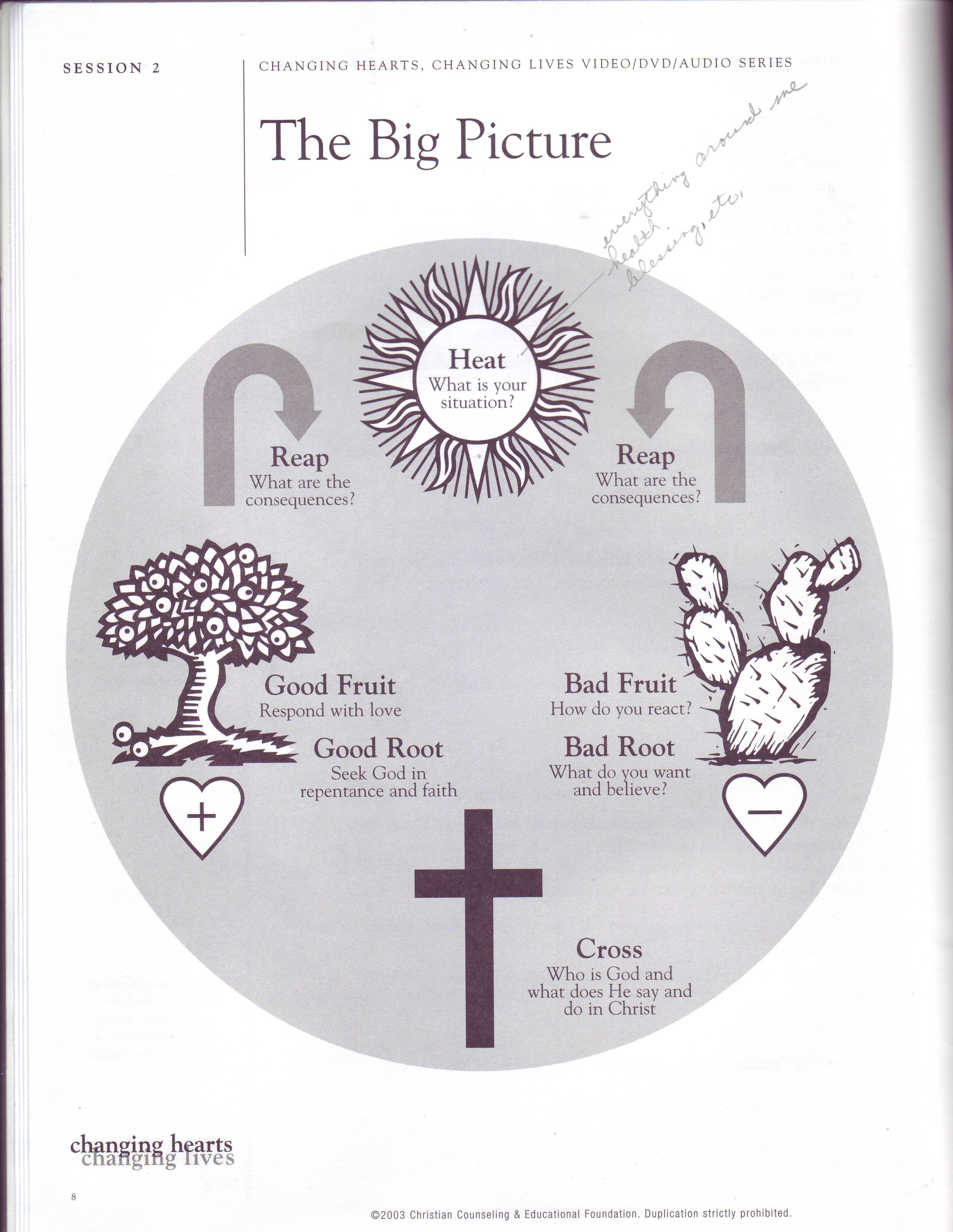
“How people Change,” Paul Tripp, 2006:


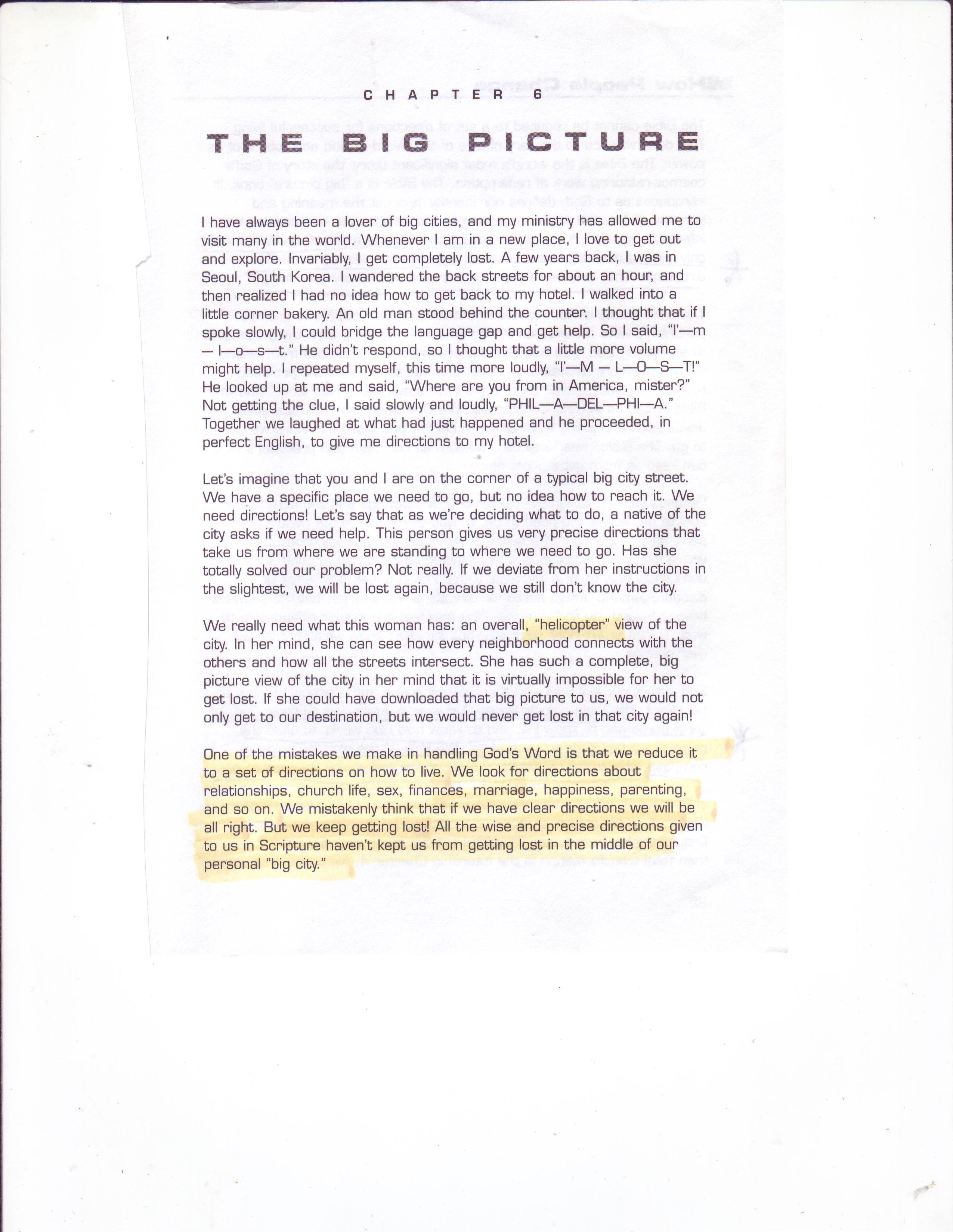
CCEF’s pilot / test program prior to the release of Tripp’s “How People Change”:


Tripp’s “How People Change” 2006:

Written by Powlison in CCEF’s Journal of Biblical Counseling:

Tripp’s “How People Change” 2006:

TGC Part 19: Michael Horton Drama, “Decrying Peter at the White Horse Inn”
Read 2Peter, chapter one, and compare that with what Horton and the others at the White Horse Inn are saying about assurance. Regardless of how unspiritual it sounds to us in this antinomian, hyper-grace day we live in, Peter, via the Holy Spirit, clearly says that we make our calling and election “sure” by adding a number of spiritual disciplines and virtues to our lives. And by the way: “the gospel” is not one of them. And by the way: Peter is telling us to live by a LIST. Get over it; grace is not an excuse for spiritual laziness. Also note Horton’s statement that blatantly contradicts Hebrews 10:24, 25 regarding purposes for community worship.

 Paul's Passing Thoughts

12 comments