New Calvinism’s Replacement of the New Birth with Pagan Philosophy
 We can rest assured that our Father doesn’t want us to be confused. He gave us a brain and is honored when we use it, but know this: He doesn’t want us to use it to vet every theory running amuck in the world regarding the meaning of life. His word to us is clear: we have His Spirit; we are not to be deceived; test every spirit; and we have all that is needed to be fully equipped for every good work. But according to New Calvinist David Powlison, the church forgets stuff. Therefore, it needs a research and development purpose to rediscover lost truth and apply it. Buyers beware; you only need to follow the money.
As stated in The Truth About new Calvinism, it all boils down to the enemy’s agenda: 1) keep people out of the kingdom 2) deceive kingdom citizens into living spiritually anemic lives 3) which leads to a lack of testimony and thereby facilitates purpose number one. If the kingdom of darkness couldn’t keep you out, it can at least use you to keep others out. And we only need to examine that in context of what worked so well: “Did God really say….” The apostle Paul warned us many times in regard to being led away from the truth by vain philosophies.
New Calvinism is a reductionist theology. Reductionism is two-fold. First, in an attempt to make much of God’s grace and little of man’s efforts, the role of man is reduced as much as possible in theological systems. Secondly, this entails diminishing the primary instrument for man’s participation in God’s work—the law. Therefore, something needs to be done about the new birth because it implies the ability to participate in upholding God’s law in sanctification. New Calvinists have several different ways of denying the new birth; this post is about what they replace it with.
The primary tenet of New Calvinism is the centrality of the objective gospel outside of us as developed by the Australian Forum, a think tank for the Progressive Adventist Movement. One reader commented in regard to part 5 of the New Calvinism for Dummies video series:
One of the things that popped into my mind when you were talking about “objective” and it occurring outside ourselves. It also seems like the NC is inviting the person to stepoutside themselves to be an observer of themselves. Like they are being invited to emotionally remove themselves from who they are, becoming the unemotional observer, which would also lead to some coldheartedness. With the emotions corralled, as such, it just sort of reminds me of Spock on Star Trek.
That’s a good assessment, and speaks to the fact that New Calvinists are very coldhearted and indifferent, also lacking in having a sense of justice about them. That’s one of the bad results of partaking in anti-word philosophies:
….and many false prophets will appear and deceive many people. Because of the increase of anomia, the love of most will grow cold (Matthew 24:11,12).
Their hearts are callous and unfeeling, but I delight in your law (Psalm 119:70).
The centrality of the objective gospel outside of us (COGOUS) is the mainframe that holds all of the various movements within New Calvinism together and gives it a hyper-ecumenical flare. The various groups within New Calvinism all have their own way of making this doctrine work with real life, but the overall goal of the doctrine is the same: gospel contemplationism leading to a passive manifestation of a realm. This is merely a device of the only primary goal of the kingdom of darkness from the beginning of redemptive history; specifically, “Has God really said.” It is meant to divert God’s people from Christ’s simple counsel:
Everyone then who hears these words of mine and does them will be like a wise man who built his house on the rock (Matthew 7:24).
If every verse in the Bible is about what Christ has done and not what he SAYS; ie, “these words of mine,” biblical wisdom for kingdom living is circumvented. Secondly, if our only “do[ing]es” is a passive yielding to a realm, the kind of intentional application of God’s word necessary for a life built on a rock is also circumvented. This will lead to the circumvention of Christ’s goal stated in Matthew chapter five:
14 You are the light of the world. A city set on a hill cannot be hidden. 15 Nor do people light a lamp and put it under a basket, but on a stand, and it gives light to all in the house. 16 In the same way, let your light shine before others, so that they may see your good works and give glory to your Father who is in heaven.
Therefore, the simple biblical approach of learn/hear>>>obey>>>God glorified, must be replaced with a more passive formula. Opponents of the biblical model would say they only want to exclude man’s efforts so God will get all of the glory, resulting in contemplation/meditation>>>_________>>>God’s works manifested, not ours. The blank is filled in by various and sundry techniques which New Calvinists point to. This often confuses the real issue. But getting back to the main point, the new birth must be refuted because it makes the contra formula possible. And because the latter formula is reductionist and narrow, it must be embellished. Hence, Christian Hedonism, Heart Theology, unbiblical forms of prayer, Neuro-Linguistic-Programming, reorientation of desires, etc, etc. This is vital in selling the product because we were created for work (you know, feet, hands, stuff like that), and passive theologies therefore contradict the conscience. So the blank between meditation and work must be filled in with some plausible stuff that sounds good. Please note: I am stating all of this in context of sanctification. COGOUS>>>life application>>>manifestation of works verses new birth>>>learn and apply>>>obedience.
Furthermore, the application must not only supply a feasible life application, but must also appeal to human desire. This brings us back to the astute comment by the aforementioned reader. This whole idea of COGOUS giving one the ability to step outside of themselves and be an observer of their own life. Some would call this Nature/Freedom philosophy; this is the freedom from the laws of nature, and in the case of New Calvinism, God’s written law as well. There is no better way to demonstrate this than by a quote from one of the most popular New Calvinist articles ever written:
What, then, is the subjective power of this message? Firstly, we find that there is real, objective freedom, the kind that, yes, can be experienced subjectively. We are freed from having to worry about the legitimacy of experiences; our claims of self-improvement are no longer seen as a basis of our witness or faith. In other words, we are freed from ourselves, from the tumultuous ebb and flow of our inner lives and the outward circumstances; anyone in Christ will be saved despite those things. We can observe our own turmoil without identifying with it. We might even find that we have compassion for others who function similarly. These fluctuations, violent as they might be, do not ultimately define us. If anything, they tell us about our need for a savior.
Secondly, this freedom gives us permission to confront and confess our pain. We can look our self-defeating and regressive tendencies in the eye for once. We no longer have to pretend to be anything other than what the Gospel tells us we are: hopeless sinners in need of mercy. Honesty and repentance go hand in hand – freedom puts us on our knees, where we belong. A subjective Gospel turns repentance into a frightening affair, evidence that God is far away from us. An objective Gospel provides the assurance that actually produces repentance, forging the pathway to the place where we find forgiveness and redemption. We can finally grasp hold of the truth that it is always better to be sorry than to be safe. The pastoral implications for marriage alone are staggering.
(David Zahl and Jacob Smith: Mockingbird blog, “The Subjective Power Of An Objective Gospel”).
I think this quotation says it all. It is a freedom from obedience to the law (because we are totally depraved sinners that can’t keep it anyway), freedom from consequences, and supplies a mentality that we can use to detach ourselves from the burdens of life. It is Nature Freedom philosophy to the max and could be accompanied by the song, “Don’t Worry Be Happy” by Bobby McFerrin:
Here is a little song I wrote
You might want to sing it note for note
Don’t worry be happy
In every life we have some trouble
When you worry you make it double
Don’t worry, be happy……
Ain’t got no place to lay your head
Somebody came and took your bed
Don’t worry, be happy
The land lord say your rent is late
He may have to litigate
Don’t worry, be happy
Look at me I am happy
Don’t worry, be happy
Here I give you my phone number
When you worry call me
I make you happy
Don’t worry, be happy
Ain’t got no cash, ain’t got no style
Ain’t got not girl to make you smile
But don’t worry be happy
Cause when you worry
Your face will frown
And that will bring everybody down
So don’t worry, be happy (now)…..
There is this little song I wrote
I hope you learn it note for note
Like good little children
Don’t worry, be happy
Listen to what I say
In your life expect some trouble
But when you worry
You make it double
Don’t worry, be happy……
Don’t worry don’t do it, be happy
Put a smile on your face
Don’t bring everybody down like this
Don’t worry, it will soon past
Whatever it is
Don’t worry, be happy
….because everything that matters is outside of you—the cross. Just sit back and let life make the cross bigger; stop trying to be the gospel instead of living the gospel by faith alone. That’s one of the many allurements of New Calvinism, but primarily, it’s a theological framework that allows us to fill in the practical application line in any way we would like to. And we like that.
paul

Why New Calvinists Annoy Me
PPT nor TCANC are platforms to discuss the truth with New Calvinists. They have had their chance. I discussed my thesis with them for four years and their arguments were found wanting (when they weren’t personal attacks, which were rare). But this comment by a self-proclaimed Newbie is indicative of why they annoy me so much:
“Paul, I am what you would call a new Calvinist. I happen to be 52 years old. Your critique above simply isn’t true on several points. For example, you wrote that we “believe justification and sanctification are the same thing.” That’s not even close to being a true statement.”
“….not even close”? Um, excuse me, but isn’t their slogan, “The same gospel that saved us also sanctifies us,” and: “We must preach the gospel to ourselves every day”?
So annoying. First, per the usual, note his profound two-point argument:
- That’s all wrong.
- Not even close to being right.
Second, I’m “not even close,” but yet, note the word “SAME” in their own mantra continually espoused day and night.
It’s just annoying.
paul
Why New Calvinism Must be Destroyed: Part 1; The Larroux Mega-Lie
 “The carnage left behind by this doctrine has been bulldozed into landfills long enough.”
“The Southwood parishioners only plead to be taught how to do that, but instead are scolded for clinging to the hope that we are not helpless in the sanctification process—that we can seize upon the promises of God by following him.”
A series by Paul and Susan Dohse
This will begin a new series on Southwood Presbyterian Church. I have perused the website that parishioners have constructed and received some messages as well. The picture is so graphic that I am compelled to go ahead and get this series started. It is a picture of why New Calvinism must be destroyed. I use that word, “destroyed” because that is the word that the apostle Paul used:
2 Corinthians 10:5
We destroy arguments and every lofty opinion raised against the knowledge of God, and take every thought captive to obey Christ,
More information is coming out and there is much to write about, and Lord willing, I will because this situation is New Calvinism in action. The carnage left behind by this doctrine has been bulldozed into landfills long enough. The series will examine the fact that Larroux, like most New Calvinist pastors, is a classic antinomian. It will also discuss why the movement is spreading unabated, and what must be done to stop it. Happenings at Southwood are the why. Susan and I will also examine what the Presbytery could have done to stop the situation and enquire as to why they didn’t.
One thing becomes evident from the letters posted on Southwood info .com and examination of the sermon archives; like all New Calvinist pastors, Larroux incessantly presents the motif that all of human history continues to be awash in mankind’s attempts to please God by working hard. So called, “legalism,” a word that does not appear anywhere in the Scriptures. First, the Pharisees of the New Testament were antinomians; Christ said Himself that they were “lawless” on the inside and the outside, not just the outside. And legalism was hardly the problem in the Old Testament, and Satan certainly didn’t come to Eve as a legalist. Furthermore, the problem at Corinth was hardly “legalism” as well.
Moreover, the Whitney Houston funeral is indicative of the real problem: freebie grace on steroids. For more than a year, Larroux has insulted the intelligence of Southwood parishioners by proclaiming the mega-lie that the whole world lies in the lap of legalism and that he is the great one that has come to set them free. The truth of the matter is that the whole world already lies in the lap of what he teaches at Southwood weekly. The cries heard in the Southwood letters only plead for one of the apostle Paul’s definitions of sanctification:
1 Thessalonians 4:4
that each one of you know how to control his own body in holiness and honor,
The Southwood parishioners only plead to be taught how to do that, but instead are scolded for clinging to the hope that we are not helpless in the sanctification process—that we can seize upon the promises of God by following him. But no, instead, they hear that Christian walk Christianity denies the cross. In essence, Larroux wants Southwood to become postmodern and stop believing that words mean things.
And no doubt, one of the goals of this series is to find out who the Presbyterian cowards are who have turned their back on these dear people. These people don’t even know me, but yet, I receive messages that are concerned for my own spiritual wellbeing in the midst of discernment ministry. These godly, loving people deserve better. When the information has been compiled, maybe a “PPT’s Top Ten Presbyterian Cowards” is in order.
paul
2012 PPT’s Top Ten Heretics of Our Day

10. Ligon Duncan
Heresy: Sonship Theology
Denomination: Presbyterian
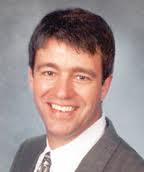
9. Paul Washer
Heresy: Gospel Sanctification
Denomination: Southern Baptist
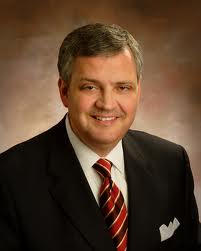
8. Al Mohler
Heresy: Gospel Sanctification
Denomination: Southern Baptist
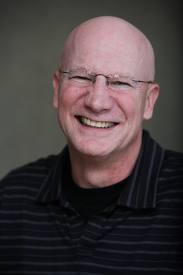
7. CJ Mahaney
Heresy: Gospel Sanctification
Denomination: Reformed Charismatic

6. David Powlison
Heresy: Sonship Theology
Denomination: Presbyterian
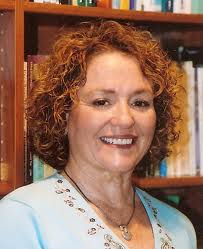
5. Elyse Fitzpatrick
Heresy: Antinomianism, Gospel Sanctification
Denomination: Reformed Evangelical
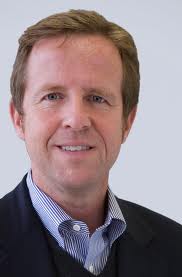
4. Michael Horton
Heresy: Progressive Adventism, Antinomianism, Gospel Contemplationism
Denomination: United Reformed
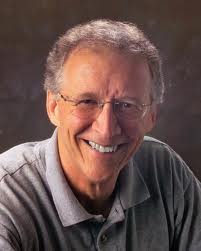
3. John Piper
Heresy: Progressive Adventism, Antinomianism, Gospel Contemplationism
Denomination: Reformed Baptist
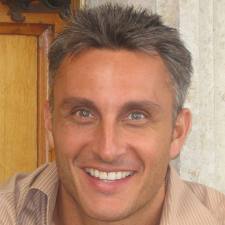
2. Tullian Tchividjian
Heresy: Hyper-Antinomianism, Gospel Sanctification, Gospel Contemplationism
Denomination: Presbyterian

1. Tim Keller
Heresy: Contemplative Spirituality, Spiritual Mysticism, Gospel Contemplationism, Sonship Theology
Denomination: Presbyterian

 Paul's Passing Thoughts
5 comments