The Bob Jones DisG.R.A.C.E. Report: Hope for Change if God Cooperates
Editor’s Note: It has been 15 months since the original release of the Bob Jones University G.R.A.C.E. report, and BJU abuse survivors are STILL incredulous that nothing has changed!
bjugrace.com/2015/03/23/an-open-letter-to-bob-jones-university-from-the-survivors-of-the-abuse-response-task-force
Originally Published December 11, 2014
 G.R.A.C.E. stands for “godly response to abuse in the Christian environment.” GRACE is a mediatory organization funded by the institutional church that investigates sexual abuse within Christian environments such as churches, missionary societies, and universities.
Their investigative report process in all cases so far has been slower than mud sliding to the top of Mount Everest. In the case of Bob Jones University, the report will finally be released tomorrow as the Christian community awaits with bated breath. Gag.
I am not going to spend much time on this post because I prefer to let the dead bury their own dead in regard to all of this institutional church drama. GRACE, and their approach, is predicated on Protestant Gnosticism and will not help anyone or do anything towards solving this problem. Boz Tchividjian, the director of GRACE, believes a false gospel and is a blind man leading the blind.
Let me keep this post simple and short because I have written other articles that delve deeply into what the mystical Boz believes, and I will do so by focusing on the closing words of Steve Pettit who read a statement today in regard to the GRACE report. Pettit is the President of BJU. At the end of what he stated must happen as a result of the GRACE report which apparently informed BJU of what was going on in their own university, he said that what must happen will happen by, watch it, here it comes…”the grace of God.”
Right. You see, there is only one thing worse than rape: people bringing about change in their own efforts. The “godly response” must be grounded in what Jesus did, not anything we do. And note that this change comes about by the “grace” of God. Let me rephrase that to clear things up for you: “This will happen by the justification of God,” or “This will happen by the salvation of God,” or “This will happen by the gospel of God.”
They all believe the same thing: we are sanctified by the same gospel that saved us. And you know, this is really “hard work” because of our tendency to do things ourselves, or in our own efforts like you know, Penn State. Sure, they slam-dunked the problem, but God didn’t get any glory. We can’t have that! And as Pettit also stated, the “process” (there is still a process?) is going to take a really, really long time. Hopeful yet?
Apparently, God deliberately takes a long time to deal with these situations so that we will know it has nothing to do with anything we do, but what Jesus has done. That’s the “godly response.”
Now back to the Boz. Why is the mere reporting of all of this such a big deal? Pharisees like us are inclined to say, “A report, so what?” Well, how were you saved? “By faith and repentance.” There you go. The report is designed to elicit deep repentance which results in the manifestation of change brought about by God’s grace, not anything we do. That brings me to the final words of Boz in regard to his statement on the report:
As this historical process comes to an end [no kidding], we continue to pray that the words of this report will fuel hope and healing in the lives of many as well as bring about transformational changes in the life of Bob Jones University. To that end, we look forward to having a front row seat at watching God work.
Right. We only need the GRACE reports to show us how wicked we are, and how much we need God’s grace, then we sit back and watch “God work.” And you know, when it comes to rape God is in no big hurry to stop it lest we believe we did something in the process. If it takes a really, really long time, it must surely be of God.
And these guys are getting paid for this stuff with your hard earned tithe money. You may want to give that some thought.
paul
The Interpretation of Reality and the Calvinist Swamis

Swami Albert Mohler at 2011 FBC Conference: pastors are “God-appointed agents to save God’s people from ignorance.”
The fact of the matter follows when you boil it down to the least common denominator: the Protestant Reformation was a quarrel about how one should interpret reality. In other words, sola scriptura is pure propaganda. Especially in our present day, preaching for the most part uses Scripture to promote a certain view of reality. The specific studies on this are the historical-redemptive hermeneutic and what is known as Biblical Theology. These terms are egregiously misleading. Instead of the Bible being used to develop a theology with a historical-grammatical view of reality assumed, the Bible is used as a mere tool for aiding one in interpreting reality as a story, or metaphysical narrative written by a god or plethora of gods.
The concept finds its roots in good old fashioned mythology. One should not think of mythology as rank superstition; to the contrary, mythological narratives are stories written by “gifted” spiritual leaders who understand spiritual truth that the populous at large are not able to understand. The gifted leaders package these truths in bedtime stories that the totally depraved masses can understand for purposes of life application. In Protestant context, we know it as orthodoxy and “subordinate truth.” One example would be the Westminster Confession which was penned by the “Westminster Divines.”1 Ponder that one for awhile if you think words mean things.
The foundation and historical progression is not hard to follow.2 It began in the garden when the serpent attempted to present himself as a mediator between people and God. The case presented to Eve follows: there are things about God that you can’t understand, but because I am a superior being, I can guide you in them to make you more like God. At issue from the very beginning was additional mediators between mankind and God. The serpent suggested that the direct relationship between God and mankind was lacking. This is the lie that forms the foundation of all false religions. Instead of mankind at large having initial and ongoing direct access to God at all times, false teachers make the case that they are the gateway to God or some kind of utopia.
Almost immediately after the garden, the religion of spiritual caste was off and running. More than likely, Hinduism was the first formal religion of spiritual hierarchy. True salvation is a body with one head—Christ. Because we are literally born of God into His literal family, we love God and are new creatures who think like Him, and have the same mind of His Son, Christ. Unity comes from having the same mind in Christ, and coming to agreement on such.3 If there is only one mind, and there is disagreement, obviously everybody must agree that someone is right and someone is wrong. However, Scripture instructs us to leave room for the members to be convinced in their own minds and according to the development of a biblical conscience.4 Of course, this would exclude the gospel of first order that cannot be compromised.5
In spiritual caste, an elite class understands reality while the masses are unable. This is usually divided between the material and the invisible as two different realities. Fundamentally, the material is evil and the invisible is good. One may suspect that the incarnation of Christ was a direct pushback to that idea. And of course, if the elite know what’s best for the great unwashed, for the best possible well-being of humanity in general, they must rule over those enslaved to interpreting reality through their five senses. This is where authority comes in; supposedly, for the sake of mankind. So, let’s review the primary tenets of most religions:
- Two realities divided by truth versus illusion.
- Mediators between truth and illusion.
- The mediators should have authority for the sake of humanity.
Usually, the invisible realm is represented by virtue or some sort of deity. Mediators are the elitists in the caste system. They can be visiting deities, or those specially gifted in the material realm. And because they are part of the material realm, they are subject to it, but not to the degree that the ungifted are so…do what they say, not what they do. It’s primarily a gift of perception; because they can see things that the common man cannot see. They create understandable teachings that will best serve man in the material realm.
In most of these caste religions, predeterminism is the centerpiece. This is because in the vast majority of these caste religions, reality is a story orchestrated by the truth realm, or invisible realm. And all stories have an author. If reality is a story, the story must have an author. And if reality has an author, of course everything is predetermined by the author—this is unavoidable. So if redemption is a story as academics of the Reformed tradition constantly state as if in a manner of speaking, of course every detail of reality is predetermined because reality is a story, and all stories have an author. In addition, it may be noted that determinism and fatalism are the historical norm in general, and Protestantism is just another player in the same old song and dance.
The progression of caste started in the garden, found its first formality in Hinduism, was passed on to Plato when he studied in India, became Gnosticism, and later dictated the basic principles of the Protestant Reformation. Augustine’s City of God is a remodeled version of Plato’s Republic and Martin Luther, as well as John Calvin, were rabid followers of Augustine. Luther was a friar in the Augustinian Order, and Calvin quotes Augustine more than 400 times in the Calvin Institutes of the Christian Religion. In some translations of the Institutes, that’s an average of every 2.5 pages.
In the final analysis therefore, the Reformers, especially Martin Luther, made the gospel a metaphysical story that interprets all of reality. When you go to see a movie at your local theater, you are a character in the movie watching a movie. The movie you are in was prewritten by God like all movies are prewritten by an author. Therefore, in some sense, saving faith is seeing yourself in God’s plot which is totally out of your control and would exclude all freewill. If you have any freewill at all, you are trying to write your own reality; you are writing your own story; you are trying to be your own god. In fact, this is the very primary theses of the founding doctrinal statement of the Protestant Reformation: Martin Luther’s Heidelberg Disputation to the Augustinian Order. In that founding document presented to the Order six months after the 95 Theses, Luther presented reality in two parts: the cross story and the story of man. According to Luther a theologian is either a theologian of the cross, or a theologian of glory (the glory of man rather than God).
Presently in the Protestant evangelical church, the idea of Christianity being a story dominates church media. Consider the following citation by the contemporary father of historical-redemptive hermeneutics and Biblical Theology:
If the story is true, Jesus Christ is the interpretative key to every fact in the universe and, of course, the Bible is one such fact. He is thus the hermeneutic principle that applies first to the Bible as the ground for understanding, and also to the whole of reality.6
Similar quotations among evangelicals in our day are myriad. The Bible is merely a prototype of redemptive reality that describes generalities, or prisms of redemptive reality in which we see our own lives. Our own lives are part of the story, and we are to interpret our lives through the redemptive reality described in the Bible. The Bible describes the redemptive reality of the past (other lives as interpretive prisms/examples) and the future (how the story will end), and we are experiencing the present redemptive reality IF we have “entered into the plot”7 or entered the “Divine drama.”8 This is little less than the Hindu Lila.
The basic recurring theme in Hindu mythology is the creation of the world by the self-sacrifice of God—”sacrifice” in the original sense of “making sacred”—whereby God becomes the world which, in the end, becomes again God. This creative activity of the Divine is called lila, the play of God, and the world is seen as the stage of the divine play. Like most of Hindu mythology, the myth of lila has a strong magical flavour. Brahman is the great magician who transforms himself into the world and then performs this feat with his “magic creative power”, which is the original meaning of maya in the Rig Veda. The word maya—one of the most important terms in Indian philosophy—has changed its meaning over the centuries. From the might, or power, of the divine actor and magician, it came to signify the psychological state of anybody under the spell of the magic play. As long as we confuse the myriad forms of the divine lila with reality, without perceiving the unity of Brahman underlying all these forms, we are under the spell of maya. (…) In the Hindu view of nature, then, all forms are relative, fluid and ever-changing maya, conjured up by the great magician of the divine play. The world of maya changes continuously, because the divine lila is a rhythmic, dynamic play. The dynamic force of the play is karma, an important concept of Indian thought. Karma means “action”. It is the active principle of the play, the total universe in action, where everything is dynamically connected with everything else. In the words of the Gita Karma is the force of creation, wherefrom all things have their life.9
And of course, if reality is a story with an author, hard determinism is the order of the day; stories do not write themselves, nor do the characters in the story have freewill to write the story. Consequently, the notion that Calvinists derive their theology from the Bible rather than metaphysics is a misnomer, and in many cases outright deceptive. The Reformed tradition is really the same worn out deterministic mythology that has always dominated world philosophy and wreaked havoc on historical experience from the very beginning. And invariably, converts to Protestantism in the Reformed tradition will mutate from freewill, to soft determinism, and finally hard determinism. Or from “Pelagianism,” to “Semi-Pelagianism,” to “orthodoxy.”
Karma is the infant stage of Hinduism where saints believe they are responsible for their own actions, but as growth moves forward, the mature saint…
“[…] becomes convinced that God has been doing everything by using his body, mind, energy and the senses. He feels that he is only an instrument in the hands of God, and whatever God has been doing to him is for his ultimate spiritual good. At this high level of spirituality the doctrine of predestination becomes the only valid doctrine to him. To him the doctrine of karma ceases to be a valid doctrine.
Therefore, these two doctrines, even though apparently contradictory to each other, are valid for people at different stages of spiritual growth.”10
In regard to practical application, the parallels become even more vivid. The trichotomy of soul and society in Hinduism and Platonism are identical, and the same principles are mirrored in Gnosticism and Calvinism as well. The soul of each person is threefold, and predetermined by God or some other force/deity. In each person, there is the spiritual, intellectual, and instinctive. However, each person will be dominated by one of these characteristics, and society benefits to the degree that each person lives according to the predetermined dominant aspect of their souls. This is the basis for caste systems, and usually coincides with lineage. In other words, you are expected to stay within the social strata determined by birth for the good of society at large. This is jumping ahead a little, but this idea had deep roots in Puritan beliefs who were theological descendants of Calvin. To not remain in the social strata you were born into was thought to be a violation of the 5th commandment according to the Puritans—it was dishonoring your parents.11
The theory also coincides with the two realities of material and invisible, the material being evil and the invisible being truth. The spiritual are the mediators who are able to see beyond the material while the intellectuals are wise enough to know that the mediators should be trusted. They have a special love for the truth, so they love the mediators as well. Those who have souls dominated by instinct are enslaved to the material world and their five senses. To insert another connection somewhat prematurely, the Puritan Jonathan Edwards believed that salvation required a sixth sense in order to see the kingdom of God. In other words, the five senses that evaluate the material world were all but useless for salvation.12 This sixth sense, according to Edwards, is experienced by “delightful conviction” and “inward, sweet delight in God and divine things.” Well known pastor and Puritan wannabe John Piper borrowed these ideas from Edwards to form his Christian Hedonism movement.
In regard to Plato and the aforementioned metaphysical trichotomy, this is the philosopher king, warrior, and producer classes. This coincides with the Hindu Bhramin, Kshatryia/Vaishya, and Sudra/Untouchables. And, John Calvin had his own construct communicated via his election doctrine with more of a Gnostic flavor. Unbeknownst to most people who actually call themselves “Calvinists,” John Calvin propagated three classes of elect: the elect of the elect (those who persevere, the “P” in TULIP), the temporary elect (the called who do not persevere), and the non-elect. This coincides with Gnosticism as follows:
Calvinism derived its 3 classes ultimately from the 3 classes in Valentinian Gnosticism (see Ireneaus’ five books Against Heresies):
1. Pneumatics (spirituals) – The elect of the elect.
2. Psuchics (soulys) – The average elect.
3. Hylics (carnals) – The non-elect.
Meaning, the Hylics have no chance. As for the Psuchics, they are (as you put it) “entered into the race” but not given “the gift of perseverance.” And the Pneumatics, of course, are elect to the uttermost, meaning nothing they do can damn them.
In Gnosticism, this is natural selection, or election by nature according to Clement of Alexandria in Stromata: 2. 3. More specific definitions follow:
In the gnostic view, hylics, also called Somatics (from Gk σώμα (sōma) “body”), were the lowest order of the three types of human. The other two were the psychics and the pneumatics (from Gk πνεύμα (pneuma) “spirit, breath”). So humanity comprised matter-bound beings, matter-dwelling spirits and the matter-free or immaterial, souls.
Somatics were deemed completely bound to matter. Matter, the material world, was seen as “evil” in the gnostic world view. The material world was created by a demiurge, in some instances a blind, mad God, in others an army of rebellious angels as a trap for the spiritual Ennoia. The duty of (spiritual) man was to escape the material world by the aid of the hidden knowledge (gnosis). *
The pneumatics (“spiritual”, from Greek πνεῦμα, “spirit”) were, in Gnosticism, the highest order of humans, the other two orders being psychics and hylics. A pneumatic saw itself as escaping the doom of the material world via the transcendent knowledge of Sophia’s Divine Spark within the soul.†
They conceive, then, of three kinds of men, spiritual, material, and animal . . . The material goes, as a matter of course, into corruption. The animal, if it make choice of the better part, finds repose in the intermediate place; but if the worse, it too shall pass into destruction. But they assert that the spiritual principles which have been sown by Achamoth, being disciplined and nourished here from that time until now in righteous souls (because when given forth by her they were yet but weak), at last attaining to perfection, shall be given as brides to the angels of the Saviour, while their animal souls of necessity rest for ever with the Demiurge in the intermediate place. And again subdividing the animal souls themselves, they say that some are by nature good, and others by nature evil. The good are those who become capable of receiving the [spiritual] seed [and becoming pneumatic]; the evil by nature are those who are never able to receive that seed [and become hylic].—Irenaeus, Adv. Haer. I. 7, 513
Calvin held to these same three types of categories except the determinism is by God rather than nature. For Calvin, it is the non-elect, the elect, and those of the elect that are gifted with perseverance:
In fine, we are sufficiently taught by experience itself, that calling and faith are of little value without perseverance, which, however, is not the gift of all (CI 3.24.6)
The expression of our Savior, “Many are called, but few are chosen,” (Mt. 22:14), is also very improperly interpreted (see Book 3, chap. 2, sec. 11, 12). There will be no ambiguity in it, if we attend to what our former remarks ought to have made clear—viz. that there are two species of calling: for there is an universal call, by which God, through the external preaching of the word, invites all men alike, even those for whom he designs the call to be a savor of death, and the ground of a severer condemnation. Besides this there is a special call which, for the most part, God bestows on believers only, when by the internal illumination of the Spirit he causes the word preached to take deep root in their hearts. Sometimes, however, he communicates it also to those whom he enlightens only for a time, and whom afterwards, in just punishment for their ingratitude, he abandons and smites with greater blindness (CI 3.24.8).14
Calvinism is nothing new; it’s the same worn out ancient mythological song and dance foisted on the Bible. Many preaching in Protestant temples in our day think that it all comes from the Bible because Protestant academics told them such. We call that “orthodoxy.” It is mythology’s noble lie of metaphysical bedtime stories for serfs. Sunday church is hosted by two kinds of pastors: those who think orthodoxy actually came from the Bible and therefore think they are teaching the Bible, and those who know what’s really going on. The former is sad enough, but those who sit under the latter are paying good money to be perceived as useful idiots.
_______________________________________________________________________
1 https://en.wikipedia.org/wiki/Westminster_Assembly
2 Historical progression will be documented in detail: TTANC volume 3
3 Phil 2:2, 2:5-8, 1Cor 1:10, 2:15
4 Romans 14
5 1Cor 15:1-4
6 Graeme Goldsworthy: Gospel-Centered Hermeneutics; p.48
7 Paul David Tripp: How People Change
9 https://en.wikipedia.org/wiki/Lila_(Hinduism) Frijof Capra, The Tao of Physics (1975)
10 Swami Bhaskarananda: Chapters 9-11 The Essentials of Hinduism; Predestination
11 https://paulspassingthoughts.com/2012/10/04/reformed-caste-system-the-puritans-saw-violation-of-caste-as-equal-to-violation-of-the-5th-commandment/
12 https://paulspassingthoughts.com/2015-tanc-conference-on-gospel-discernment-and-spiritual-tyranny/susan-dohse-sessions-1-3-jonathan-edwards-the-man-the-myth-the-message/
13 https://paulspassingthoughts.com/2014/01/30/predestination-and-the-gnostic-connection/
14 https://paulspassingthoughts.com/2014/01/30/predestination-and-the-gnostic-connection/
The Protestant Twisting of 1John: A Clarification, Part 5 – Law, Gospel, and Love
 Originally posted April 27, 2015
Listen to show audio or download audio file.
Welcome to Blogtalk Radio False Reformation this is your host Paul M. Dohse Sr. Tonight, part 5 of “The Protestant Twisting of 1John: A Clarification.” If you would like to add to our lesson or ask a question, call (347) 855-8317. Remember to turn your PC volume down to prevent feedback. Per the usual, we will check in with Susan towards the end of the show and listen to her perspective.
If you would like to comment on our subject tonight, you can also email me at paul@ttanc.com. That’s Tom, Tony, Alice, Nancy, cat, paul@ttanc.com. I have my email monitor right here and can add your thoughts to the lesson without need for you to call in.
This is our final segment on 1John, and next week we will be doing a book review on “How People Change” by Paul David Tripp. I will be doing an overview of each of the 16 chapters in the book according to the theses of each chapter, and then will explain how the different points of each chapter fit together to form a particular doctrine. All in all, the book represents a pretty impressive application of Reformed mysticism.
Then, the following week, starting on May 8th, I think the time has come to do an in-depth evaluation of the Heidelberg Disputation. Martin Luther’s 95 Theses launched the Reformation, but all Reformed doctrines flow from the Heidelberg Disputation. Though very subtle, our present church culture is saturated with a collectivist doctrine of death, and I want to show exactly where this culture of death came from. We will be evaluating the Heidelberg Disputation theses by theses. How many Baptists know anything about the Heidelberg Disputation? Few, if any, yet the foundation of evangelicalism flows from this document.
Last week, I got away from our Gnostic theme and showed a correlation between John’s theology and that of the apostle Paul. The focus was the new birth, which Gnosticism denies. The historical backdrop is John’s pushback against Gnosticism which denies that people change. The Gnostics of that day believed that the material realm is evil and the spiritual realm is pure.
The goal is well-being that comes from getting beyond the five senses in order to gain knowledge. The particular vein of Gnosticism that John was contending against believed that sin only occurs in the body, and man’s spirit has never sinned per se. As a result, God’s people were being taught that what they did in the body was insignificant, and man didn’t need to deal with sin. Gaining spiritual knowledge for their own well-being was the key to having a happy life.
They denied that Christ really came as a man and was God’s Son. They taught that there were two Christ’s; one born of men and a Christ that was a spiritual avatar of sorts.
At any rate, the doctrine denied Christ’s deity, that He came to die for sin, and that mankind needed forgiveness for sin. Consequently, it also denied the new birth. In the same way Protestantism obviously denies that people change, redefine the new birth as an ability to perceive realm manifestation, and have their own unique distortion of the Trinity. When it gets right down to it, authentic Protestantism posits the Father and the Spirit as shadows of Christ.
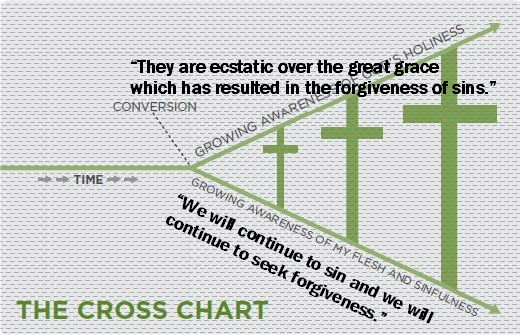
Therefore, in chapter 3, John focuses on the new birth and why it changes us. But the dominate theme of the book, especially chapters 4 and 5, concentrates on love. Why is that? Because love in action should be the primary focus of Christians. Instead, what is the primary focus of Protestantism? Right; sin, sin, sin, sin, sin. Yes, our focus must be keeping our sins covered by the perfect righteousness of Jesus. Every song you sing, every sermon you hear is about how glorious Jesus is as set against our wretched vile selves. It boils down to praising our ability to see how rotten we are in the name of Jesus. (more…)
The Protestant Twisting of 1John: A Clarification, Part 2
Originally published March 31, 2015
Listen to show or download audio here.
Listen or download full show uninterrupted.
Welcome to Blogtalk Radio False Reformation this is your host Paul M. Dohse Sr. Tonight, part 2 of “The Protestant Twisting of 1John: A Clarification.”
How is 1John used to argue for a progressive salvation, and what is John really saying in his epistle? That’s what we are discussing tonight. If you would like to add to our lesson or ask a question, call (347) 855-8317. Per the usual, we will check in with Susan towards the end of the show and listen to her perspective.
If you would like to comment on our subject tonight, you can also email me at paul@ttanc.com. That’s Tom, Tony, Alice, Nancy, cat, paul@ttanc.com. I have my email monitor right here and can add your thoughts to the lesson.
Ok, so this whole idea is very Protestant, that we must keep going back to the same gospel that saved us in order to keep ourselves saved. But, it’s all good because we are going back to the “gospel” and the “gospel” is by faith alone so going back to the gospel is a faith alone work which isn’t really a work. So, it’s ok to do something to keep ourselves saved as long as it’s a faith alone work.
As we discussed last week, here is where the home fellowship movement stands apart from the institutional church: salvation is a finished work; salvation is NOT a progression from point A to point B. The new birth is a onetime instantaneous quickening of the believer. The believer then in fact does move on to something completely different—kingdom living, or discipleship. Central to Protestantism is the idea that moving on from the gospel to doctrinal maturity is an abomination. The who’s who of Protestantism can be cited many times in stating this in no uncertain terms.
The home fellowship movement is not a mere preference over the institutional church—it is an anti-progressive justification movement. It is a return to the true gospel of Christ. All of the institutional church either embraces progressive justification or is willing to fellowship with it and is therefore altogether guilty.
Last week, we also introduced the fact that 1John must be interpreted according to its historical context. The number one nemesis of the 1st century assemblies was Gnosticism and 1John is a treatise against it. We covered John’s introduction which was a direct pushback against the Gnostic idea that the spiritual Christ did not die on the cross. We believe that John was specifically addressing the Gnostic teachings of Cerinthus. He taught that there was more than one Christ; one born naturally of human parents that will be resurrected with all other men in the last days, and the spiritual Christ who dwells in heaven. Elsewhere, John wrote:
1John 4:1 – “Beloved, do not believe every spirit, but test the spirits to see whether they are from God, for many false prophets have gone out into the world. 2 By this you know the Spirit of God: every spirit that confesses that Jesus Christ has come in the flesh is from God, 3 and every spirit that does not confess Jesus is not from God. This is the spirit of the antichrist, which you heard was coming and now is in the world already.”
The very definition of antichrist teachings is the denial that the true Christ (Messiah) was part of the material world, or actually came in the flesh. Gnostic systems of thought are very complex, but the cardinal principle is that material is evil and the spiritual or invisible is good.
The important distinction is that biblically, the material creation is not inherently evil, but weak. This is an important distinction because Christ coming as man makes it possible for men to be literally recreated and part of God’s literal family. The teaching that “denies Jesus is the Christ” (Messiah: 1Jn 2:22) circumvents the new birth. Throughout this epistle, John refers to the recipients as “little offsprings”(teknion; little children). I want to dig into this a little deeper; the new birth and its relationship to apostolic succession, but first, let me address the crux issue here.
John was also addressing an aspect of Gnosticism that believed the following: sin only resides in the material, and the spiritual part of man is sinless and has never sinned. In essence, it doesn’t matter what we do in the body because the spiritual part of man is sinless and has never sinned, and that is the only part of man that is eternal anyway. Many scholars concur that this was a common form of Gnosticism. Of course, this disavows any need for Christ to die on the cross and makes the knowledge of this supposed lie salvation itself. Salvation by being made into something new is out—coming to grips with the gnosis regarding man’s inner spark of divinity is in. This backdrop now explains exactly what John was getting at in 1John 1:7-10 and 2:1,2.
1John 1:7 – “But if we walk in the light, as he is in the light, we have fellowship with one another, and the blood of Jesus his Son cleanses us from all sin. 8 If we say we have no sin, we deceive ourselves, and the truth is not in us. 9 If we confess our sins, he is faithful and just to forgive us our sins and to cleanse us from all unrighteousness. 10 If we say we have not sinned, we make him a liar, and his word is not in us.”
1John 2:1 – “My little children, I am writing these things to you so that you may not sin. But if anyone does sin, we have an advocate with the Father, Jesus Christ the righteous. 2 He is the propitiation for our sins, and not for ours only but also for the sins of the whole world.”
“We” in these verses should be viewed as speaking to mankind in general while including both saved and unsaved individuals. Recognizing that Christ came to deal with man’s sin problem is efficacious to the gospel.
John is NOT stating the Protestant gospel of “deep repentance” which teaches that we keep ourselves saved (or washed) via a “lifestyle of repentance.” That would be a perpetual return to the same gospel that saved us for relief from “present sin.” That flies in the face of biblical justification. This makes “if” in these verses a conditional conjunction. That would mean that our sins continue to be forgiven, or washed, or cleansed “if” we “walk in the light” and continue to repent. That’s clearly works salvation, and clearly a reapplication of Christ’s sacrifice to present sin. As actually taught in Protestant circles, the sacrifice only happened once, but the remembrance of it continues to cleanse present and future sins.
This is the whole deal behind, “We must preach the gospel to ourselves every day” and the vital union doctrine. Living a “lifestyle of repentance” or deep repentance “keeps us in the love of Jesus.” This is salvation by Jesus + deep repentance to keep ourselves saved. The Reformed say, “No, it’s not works because repentance is a faith alone work,” but not even a so-called faith alone work can keep you born again—you can’t unborn yourself by not doing something. Look, here is the money point on all of this: the needed present and future forgiveness can only be found in the Protestant institutional church via baptism/formal membership. And we will be addressing that a little further along.
One of the many problems with this is, in regard to believers, follows: in order for present sin to exist, there has to be a law, and the blood of Christ ended the law—it’s a onetime cleansing. To have some need to reapply the blood of Christ to present sin implies that there is still sin, and there is not because where there is no law—there is no sin, and Christ died on the cross to end the law. This fact is found in Romans 3:19,20, 4:15, 5:13, 7:8, 10:4.
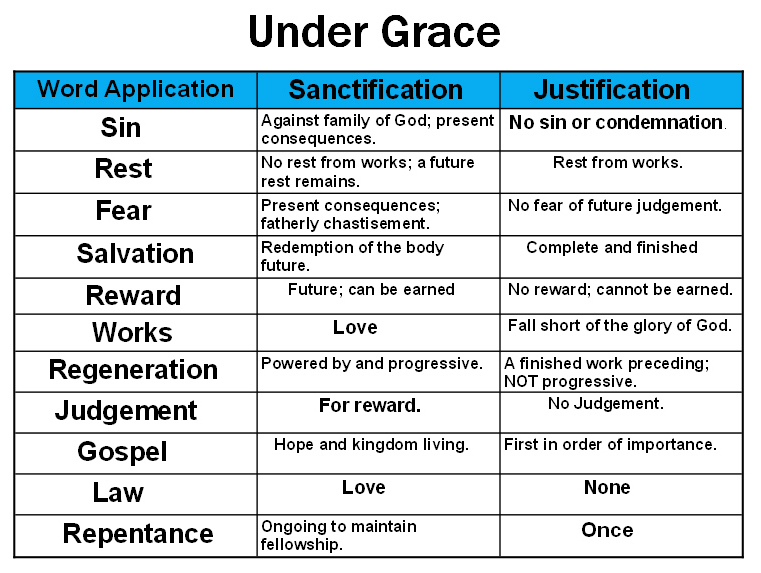
Some insist that John’s context here is fellowship, and since fellowship is the context, John is writing about repentance that is necessary to keep us in proper family relationship with God, and not a repentance that keeps us in the family of God; ie., John is talking about sanctification and not justification. Frankly, that’s the view that I used to hold to as well.
But John is talking about the onetime cleansing that justifies. Note that throughout these verses that it is a forgiveness that cleanses from “all sin” and “all unrighteousness.” That has to be justification. What John is saying is that no matter who you are in humanity, you have need to be forgiven of sin by believing that Jesus is the Christ and died for you. Note the subjects of these verses: “He is the propitiation for our sins, and not for ours only but also for the sins of the whole world.”
However, John is also saying that this fact doesn’t give us a license to sin any more than the Gnostics, “I am writing these things to you so that you may not sin.” But watch this: “But if anyone does sin, we [everyone] have an advocate with the Father.” Ok John, an advocate for what purpose? Answer: “He is the propitiation for our sins, and not for ours only but also for the sins of the whole world.” Who are the subjects? It’s obvious who the subjects are.
If this isn’t speaking to a onetime cleansing of sin, the world doesn’t need the new birth any more than Christians—they only need to ask forgiveness so the blood of Christ will be applied to the particular sin. Not only that, the new birth is also disavowed through the denial of a new creaturehood displayed by people who have passed from death to life. And John is speaking directly towards this issue as well. You see, who the “we” are and what the “if” is—is critical to interpreting these verses properly. The “we” are the “anyone.” The “if” is a cause and effect conjunction and not a conditional conjunction.
And let me tell you something, Protestant theologians rarely have any qualms about saying that God’s promises are conditional. I mean, what’s the paramount example? Replacement theology/supersessionism, right? This whole idea that Israel’s election was conditional on them holding up their end of the covenant. I just don’t know what can be more obvious, and this is their exact take on justification as well.
This is the crux. John is saying that if we walk in the light, it’s because we have been born again, not that we keep ourselves born again if we do our part by walking in the light. Walking in the light is not our part of the so-called vital union, we walk in the light because that’s what new creatures do; cows like hay and ducks like water—it’s a cause and effect conjunction not a conditional conjunction.
Now, here is where we really struggle with these verses: in verse 7, the English word in the plural strongly suggests a present continuous action. Verse 9 really isn’t that much of a problem as it’s merely saying that anyone that confesses their sin is cleansed of all unrighteousness. Note the following verse 10 that can be rendered this way: “If we say we have not [never] sinned.” The English “ed’ on the end of sin indicates past tense like, “I sinned.” That’s past tense. If John is speaking to the present continuance, why would he have not written, “if we say that we do not sin.” Right? Verse 9 simply fits into the Gnostic motif that John was arguing against.
Neither is 1John 2:1, 2 a problem. John is simply stating that anyone who recognizes their sin and wants to do something about it has an advocate in Christ who cleanses all sin. And by the way, the rest of John’s letter backs up my Pauline argument to the hilt. Just, all over the place in the rest of the letter, for example,
1John 3:3 – “And everyone who thus hopes in him purifies himself as he is pure. 4 Everyone who makes a practice of sinning also practices lawlessness; sin is lawlessness. 5 You know that he appeared in order to take away sins, and in him there is no sin.”
He came to “take away sin,” not to cover it with His own righteousness and to continue to forgive it. Christ came to end sin altogether. Are we “in Christ”? Well, in Him there is NO sin. So if we are in Him, why would we need forgiveness for present or future sin in regard to justification? In 1John 2:12-14, forgiveness of sin and overcoming the evil one is spoken of in the past tense.
The only matter at hand is the word “cleanses” in verse 7. Let me point something out to you. Most of the English translations that we have come out of the Protestant Reformation. Therefore, and there are myriads of examples of this, the translations are tainted with progressive justification presuppositions. And unfortunately, this includes the Greek word-study helps. Here is something I read in one:
Every encounter with a command to obey, is our opportunity to jettison self-reliance and to yield to the enabling power of the Holy Spirit. Supernatural commands from the supernatural God can only be carried out with reliance on His supernatural power! The Spirit is called the Helper, but don’t let His Name mislead you. To say that we need His help is to imply we have some ability of our own to obey and are in need of a little “push” so to speak.
See the problem? You can know the Greek backwards and forwards, but what good does it do if “help” doesn’t mean “help”? Look, what good have all of the Protestant Greek scholars done for us? I came to realize the problem of progressive justification by my own independent study in Romans. The basic concept easily understood regardless of the language, “where there is no law there is no sin.” That statement astounded me, but was the key to unraveling the whole mystery. Once you understand that fundamental, the rest of the Bible, when taken in context, fits together perfectly in every way. How much did any knowledge of Greek aid me in this understanding? Nada. Goose egg. Zilch. Loco zippo.
Greek can be confirming, and helpful, but the Bible is written in definitive structures that mean the same thing in all languages and that is no accident. You can translate the fact that Christ died on the cross to end the law, and where there is no law there is no sin, any way you want to—it’s going to mean the same thing in any language. Then you start seeing where the concept fits together with everything else in the Bible which enables you to nail down what the anomalies are. And a lot of the anomalies are bias towards a certain worldview.
Notice in the example I gave there is no room given for an authentic colaboring between us and the Holy Spirit. It is either all us or all of the Holy Spirit. My friends, that is the Protestant redemptive-historical worldview to a T and it is fundamentally Gnostic in its premise. Hence, when you use Greek word-study helps, you are often dealing with the same bias. This is why I eventually threw away my Kenneth Wuest expanded New Testament translation. I started seeing clear bias in how he processed the Greek verbs and I was totally done with him at that point.
I spent the better part of yesterday researching 1John 1:7 and the word “cleanses” therein. We know from biblical context that this verse cannot be saying that the one sacrifice of Christ continues to rewash us IF we continue to walk in the light; ie., Protestantism. And let me give you the thumbnail: if you remain faithful to the institutional church and its sacraments/ordinances, that keeps you saved. Even if the Greek usage indicates a present continual action there is no way to distinguish that from the simple reality of being washed once and remaining clean thereafter. In other words, there is no way to definitively distinguish between two intents: a required reapplication to reinstate a status or an unchanged status that continues in the same state without any further action.
Though “cleanses” appears to be some kind of continuing action in the ESV version of 1John 1:7 as well as many other versions, we know that this same cleansing of regeneration is clearly stated as a onetime final act in many, many other Bible passages. For example,
1 Corinthians 6:11- “And that is what some of you were. But you were washed, you were sanctified, you were justified in the name of the Lord Jesus Christ and by the Spirit of our God.”
Ok, you have “were” in there four times with sinful lifestyles being in the past tense, and sanctified, justified, and “washed” being in the present tense. It is one event that happens one time and transforms us into an immutable state. Period. This is irrefutable. And by the way, if you do a New Testament word search on the exact form of the Greek word “cleanses” (other translations “cleanseth”) in 1John 1:7, it is almost always used as a onetime ceremonial cleansing.
Matthew 8:2 – “And behold, a leper came to him and knelt before him, saying, ” Lord, if you will, you can make me clean.” 3 And Jesus stretched out his hand and touched him, saying, “I will; be clean.” And immediately his leprosy was cleansed.” [Here in Mathew 8:2, the same exact form of the Greek word is used for past, present, and future tense. “Ed” is added to the English word “cleansed” to indicate past tense].
Note how Young’s Literal Translation has 1John 1:7.
“and if in the light we may walk, as He is in the light — we have fellowship one with another, and the blood of Jesus Christ His Son doth cleanse us from every sin;”
Now, not only does this simply state the fact that the blood of Christ cleanses us from every sin with a much less conditional translation, it’s interesting that the YLT picks up on something that Andy related to me yesterday in regard to the word “may”:
What is interesting is that all of the examples that John uses where he says “if” are all 3rd class conditions. All the key verbs are in the subjunctive mood.
Here is an excerpt regarding 3rd class conditions…
“The third class condition often presents the condition as uncertain of fulfillment, but still likely. There are, however, many exceptions to this…The third class condition encompasses a broad range of potentialities in Koine Greek. It depicts what is likely to occur in the future, what could possibly occur, or even what is only hypothetical and will not occur” (Wallace, p. 696).
So John is really posing a series of future hypothetical situations. Any place where it says “if” you should read it as “if ever in the future…” or “if at any time in the future…”
It would appear that this seems to be an exercise in reason using hypothetical examples to refute the gnostics that were among them in those assemblies. Notice that the present tense verbs are present tense because they are in the conclusion (apodosis) to the proposed hypothetical conditional premise (protasis). But the verbs in the premise (protasis) are in the subjunctive mood.
Also, you cannot read verse 7 without verse 6. Verse 7 is an antithetical conclusion of verse 6. In other words, you can’t properly interpret vs 7 without vs 6. In fact, notice how 7 contrasts 6, AND vs 9 contrasts vs 8 also! They are parallel arguments, and then vs 10 kind of sums it up.
This bolsters my contention that John is addressing people in general regarding the ramifications of their beliefs about sin in contrast to Gnosticism. That’s the crux here: the backdrop is the Gnosticism John is addressing. If you say that you have no sin, for whatever reason, you are making God out to be a liar. But if you confess your sin, God will cleanse you from all unrightousness. And, that will have an effect on your life because you have been cleansed. John does not hone-in on the new birth right here, but does so in chapter 3 bigtime. Really, chapter 3 clarifies exactly what is being stated in the first two chapters.
In addition, John is saying that even though those who confess their sin are cleansed of all sin, that is not a different kind of license to sin without ramifications. Hence, “…I am writing these things to you so that you may not sin.” But if you do recognize that you have sin, we have an advocate with the Father that is a propitiation for all sin, those who confess that they have sin, and those who may in the future confess that they have sin—this is what is going on in this passage. And by the way, this is another refutation of limited atonement as well.
Let me give another example that might help clarify all of this. One Reformed fellow (a disciple of Paul David Tripp) arguing against me in regard to all of this stated the following:
In John 4, we are to drink once, but that one drink becomes a reserve that refreshes continually. The substance that refreshes is the same (Christ’s salvation, in an ongoing manner)…For Calvin, the cleaning is ongoing, because there WILL be new sins, and 1 John tells us there are new sins. WERE IT NOT FOR the ongoing cleaning and forgiveness, we would exit the family of God, but the faithful know of a certainty that this cleansing is ongoing and present.
See the problem with not interpreting this passage in its historical context? John isn’t talking about “new sins,” he is talking about SIN period. Where is there anything stated in this passage in regard to “new sins”? What relevance does “new sins” have with the unsaved world that is one of the subjects of this passage? The unsaved have “new sins”?
Also, Christians do not have “new sins” because Christ ended the law and where there is no law there is no sin. This is exactly why the Protestant gospel keeps people under law—the whole concept of “new sin.”
In addition, notice what he states about John 4 that is a common Reformed position:
“In John 4, we are to drink once, but that one drink becomes a reserve that refreshes continually.”
This statement is a common smoking gun that damns Protestantism. In that passage, Jesus said that those who drink of the water will never… (what?) again? Right, they will NEVER “thirst” again. Christians may need refreshment against the weakness of the flesh, but we never need our justification to be refreshed—that’s just a blatant false gospel.
Moreover, note, “WERE IT NOT FOR the ongoing cleaning and forgiveness, we would exit the family of God, but the faithful know of a certainty that this cleansing is ongoing and present.” This is where the “if(s)” of 1John totally shoot Protestantism in its gospel foot. If you take this approach, the if(s) of 1John 1:7-2:2 are conditional upon confessing “new sins.” This clearly makes the cleansing of sin that makes us part of God’s family conditional. It makes the new birth conditional. “If” we don’t confess, we can be unborn.
Doesn’t it make much more sense if John is saying that we (people in general) have to recognize that men have sin in order to receive a cleansing from it? Sure it does. John is pushing back against a philosophy that taught the following: man is spirit and therefore without sin; only the material world has sin. Therefore, it doesn’t matter what people do in the body, it’s all just part of the material world that is passing away. This also rejects the new birth and its righteous lifestyle that walks in the light as Christ is in the light and there is no darkness in Him. Those who walk in the light are born of the light and they are of the light because they recognized the need to confess their sin in order to be cleansed. Hence…
John 3:2 – “Beloved, we are God’s children now, and what we will be has not yet appeared; but we know that when he appears we shall be like him, because we shall see him as he is. 3 And everyone who thus hopes in him purifies himself as he is pure.”
Next week, we are going to look at how the rest of the book of 1John fits into this Pauline soteriological schema perfectly. Why does John follow our passage at hand with a discussion of love and then the new birth? How do we get from the gospel anomaly of “new sins” to “love,” and what does that have to do with the new birth? How does all of this make walking in the light synonymous with the new birth?
See you next, and now let’s go to the phones.
The Protestant Twisting of 1John: A Clarification, Part 1
 Originally published March 22, 2015
Listen to audio or download audio file.
Welcome to Blogtalk Radio False Reformation this is your host Paul M. Dohse Sr. Tonight, we are going to attack and unravel interpretive abuses of 1John, particularly 1John 1:9 and 2:1. There is only one other text twisted for ill use more than these two verses, and that would be Galatians 2:20 and 3:1-3. Later, In part 2, I will toss in an exegesis of those verses as a bonus.
There may be a lot of different religions and even more denominations, but for all practical purposes they all have one thing in common: this whole idea that salvation is a process with a beginning and an end. This makes salvation a process that includes our present life.
So, the argumentation between religions and denominations involves the correct way of getting from point A to point B. But there is no point A and point B. When you believe God unto salvation, you get the complete package and the salvation part of your life is finished. It is an instantaneous quickening of the Spirit that transports you from one kingdom to another, from one master to another, from being under law to being under grace, from the old person to the new person, and from darkness to light. You don’t become a servant of righteousness on the installment plan, and you don’t become a kingdom citizen on an installment plan.
How is 1John used to argue for a progressive salvation, and what is John really saying in his epistle? That’s what we are discussing tonight. If you would like to add to our lesson or ask a question, call (347) 855-8317. We will check in with Susan towards the end of the show and listen to her perspective. If you would like to comment on our subject tonight, you can also email me at paul@ttanc.com. That’s Tom, Tony, Alice, Nancy, cat, paul@ttanc.com. I have my email monitor right here and can add your thoughts to the show.
Way back at the beginning of this ministry, I had this nailed down. If salvation is a process, and eternal life as opposed to eternal punishment is at stake, the Christian life is really a minefield. The focus isn’t being the best kingdom citizen; the focus is making sure you don’t mess up your salvation. The focus is salvation, not discipleship. The focus is fear of judgement, not love.
I realize many Christians hold to OSAS, once saved always saved, but the problem is how they are led by pastors trained in seminaries deeply grounded in Protestant tradition. That tradition looks to the institutional church as the primary way of getting God’s people from point A to point B in regard to their salvation. Whether OSAS or not, they are led to do the same things week in and week out. Be here at this time or that time; stand up; sing; sit down; listen to announcements; stand up; sing; sit down; listen to the special music presentation; put your tithe in the plate; listen to the sermon (always about the gospel just in case there are lost people present, wink, wink); stand up; sing “Just As I Am” until someone walks the isle so you can stop singing “Just As I Am”; pray; be dismissed; be cordial to people and tell them how much you love them; go home, and come back next week and do it again.
Why? Because all of that ritualism “imparts grace” and enables us to “grow in grace.” It enables us to “grow up in our salvation.” After all, discipleship is the “growing part of our salvation.” We have all said it, but salvation doesn’t grow. While believing in OSAS, most parishioners are led by pastors who believe in progressive salvation/justification which was clearly the foundational premise of Protestantism with the progression being overseen by the Protestant institutional church.
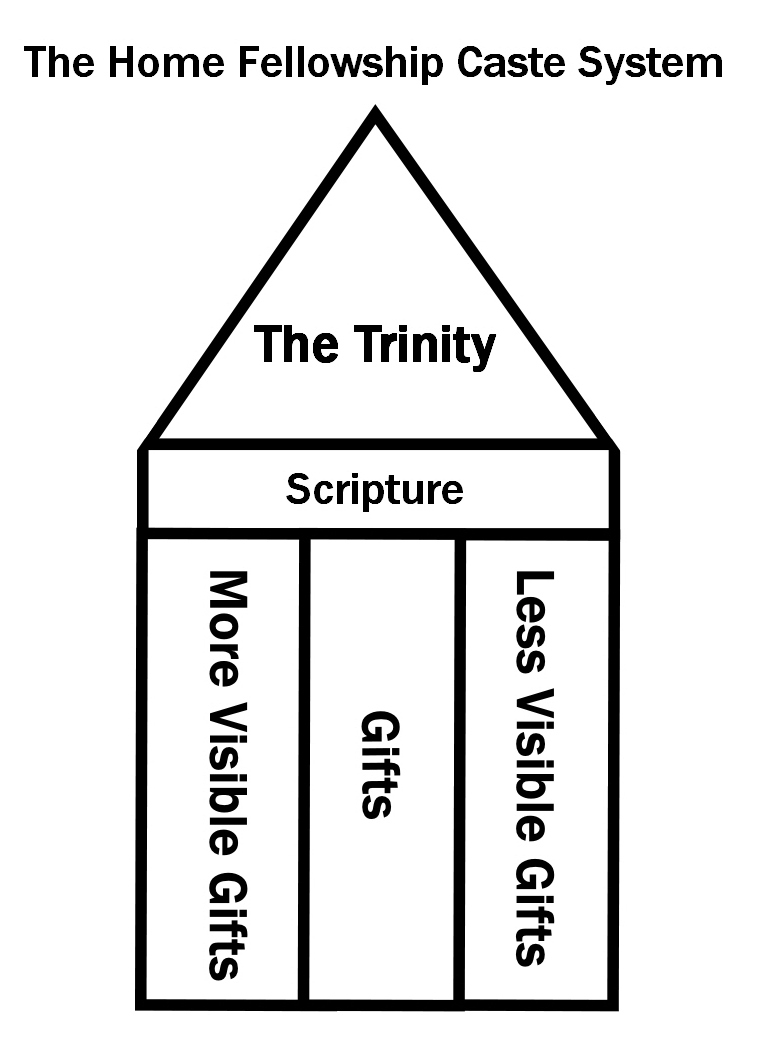
Moreover, let’s face it; while believing in OSAS, there is only one reason people put up with all of the nonsense and drama of the institutional church—OSAS means that if someone leaves the institutional church, they were never saved to begin with. Right? In other words, they function according to the idea that they are led by. It’s OSAS as long as you are “faithful” to the institution. Then each church has its own little “faithfulness” caste system. Those who show up for all of the services are the “core members” that run the church. Those “less faithful” that only come on Sunday mornings are a lower class of member in the caste system.
You have the pastors, staff and deacons, then the “faithful” that attend all of the services and tithe at least 10%, the “casual” attenders that tithe, and then the bottom of the caste strata, even lower than the serfs, the putrid “nonmembers.”
Whether Calvin or Luther, the two icons of Protestantism, these beliefs follow after the doctrine they established for the Protestant institutional church. Access to the institutional church was through water baptism, and the critical need according to the Reformers for formal church membership follows: as Christians, forgiveness for present and future sins can only be found in the institutional church, and those sins condemn us. Forgiveness for all sins does not occur at salvation, but only for past sins. Water baptism initiates us into church membership where forgiveness for present and future sins can be obtained through the sacraments; ie., “gospel preaching,” the Lord’s Table, and anything else deemed as acts of faithfulness to the institutional church not to exclude tithing by any means. Calvin states this explicitly in his institutes, 4.15.1.
All in all, you can say that in Protestantism, the status of sin does not change for the believer—it still condemns requiring perpetual resalvation for every sin committed.
Therefore, 1John 1:9 and 2:1 is interpreted in this light: “If we confess our sins, he is faithful and just to forgive us our sins and to cleanse us from all unrighteousness” (1:9). “My little children, I am writing these things to you so that you may not sin. But if anyone does sin, we have an advocate with the Father, Jesus Christ the righteous” (2:1).
These verses seem to bolster the authentic Protestant position on justification. Confession of sin in our Christian lives keeps us saved. And if we confess our sins, Jesus is up in heaven as our advocate with the Father continuing His work as a propitiation for our sins.
The problem is that this interpretation stands in stark contrast to what other Scriptures state about justification. Biblically, sin has a different classification after salvation—it can’t condemn; it can bring chastisement and present consequences, but it can’t condemn—its ability to condemn has been taken away. Hence, there is no need to have some institution that prevents future condemnation.
Nevertheless, it is easy to understand why the institutional church not only gets a pass on outrageous behavior, but the money keeps pouring in. What will people pay for their salvation and décor that glorifies the institution that saves them? Apparently, no price or compromise is too large. One can also appreciate the fear of so-called excommunication because the institutional church is the only place where one can receive continued forgiveness for present and future sins.
Before I move on, I will solidify my present point. Romans 8:1 states that there is presently NO condemnation for those who are in Christ. In Contrast, Calvin stated that “even saints cannot perform one work which, if judged on its own merits, is not deserving of condemnation” (CI 3.14.9, last sentence). Obviously, the focus is going to be avoiding condemnation, not our freedom to pursue aggressive love in discipleship.
So what are these verses in 1John really saying? Let’s begin to unpack that using the historical grammatical approach to interpretation as opposed to the traditional Protestant means of interpretation, the historical redemptive method. Since Protestantism sees salvation as a process, “redemptive” means that the Bible must be approached with a redemptive prism; ie., the Bible is about salvation. Clearly, this is eisegesis; going to the Bible with a presupposition.
In regard to the history part, this is the belief that history is an unfolding drama about salvation. Hence, all of reality is interpreted through salvation. All of history and the Bible continually reveals the one two-fold redemptive truth/reality: the sinfulness of man and the holiness of God. Salvation begins when we see or understand this reality, and the experience of that reality increases until final salvation.
In contrast, the historical grammatical method uses historical facts to bring more meaning to the text, and all truth is determined by what can be concluded by the grammar—this is known as exegesis. All meaning and truth comes out of the text without anything being read into the text except conclusions from other texts.
In fact, Protestant tradition holds to the idea that a historical grammatical approach to the Scriptures invariably leads to works salvation. Protestant tradition insists that the Scriptures must be interpreted through the prism of total depravity. In this year’s TANC conference, this is what I am going to be hitting on. Christians, save a few, have no idea that Protestant pastors that are leading them view reality in a totally different way than most parishioners. And this is why church looks like it does. And there is no salvaging it—it’s a completely broken system.
So, if you interpret said verses in 1John redemptively, it fits right into their narrative, right? You have to continue to repent for new sins in your Christian life in order to not be condemned and to keep your salvation. A good old fashioned Baptist lady who I am sure would hold OSAS stated this to my wife Susan in the grocery store a couple weeks ago. When Susan asked her why Christians need to go forward during alter calls, she answered, “they have sin that needs to be forgiven.” Well, why can’t they get that forgiveness by praying at home? You ought to see the reaction Susan and I get when we suggest her mother was saved even though not a member of a church.
Protestantism and all of its offshoots including the Baptists is nothing more or less than functioning Calvinism. Election isn’t the point, progressive salvation is the point. Protestants think salvation grows—salvation doesn’t grow—you are either forgiven once and for all time or you aren’t. Look, if you are going to stay in the institutional church, it makes absolutely no difference where you go. Please, stop driving 15 miles to the Baptist church when there is a Catholic Church right across the street—it’s a shameful waste of gas. It’s all progressive justification.
In contrast, we have to see 1John in its exegetical historical context. It must be interpreted according to what was going on during the time that prompted this letter. And what was that?
John was pushing back against the number-one nemesis of the assemblies during that time: Gnosticism. Now, there were many, many different veins of Gnosticism during that time, but like denominationalism, there are basics that are fundamentally the same. Denominationalism quibbles about how to get from point A to point B, but it is all progressive salvation.
When you understand the basics of Gnosticism, it is easy to see that John’s first epistle is a point by point rebuttal of Gnosticism, and NOT the proffering of progressive justification. Protestants can bicker with Catholics all they want to about how to get from point A to point B, but again, it’s all progressive justification. If it’s a religious institution, it’s selling final salvation, PERIOD.
If we follow John’s arguments in this epistle, it also apes the fundamental basics of Gnosticism, and that’s what we are going to do:
1John 1:1 – That which was from the beginning, which we have heard, which we have seen with our eyes, which we have looked upon, and our hands have handled, of the Word of life; 2 (For the life was manifested, and we have seen it, and bear witness, and shew unto you that eternal life, which was with the Father, and was manifested unto us;) 3 That which we have seen and heard declare we unto you, that ye also may have fellowship with us: and truly our fellowship is with the Father, and with his Son Jesus Christ. 4 And these things write we unto you, that your joy may be full. [KJV].
The Gnostics taught that it really wasn’t the spiritual Christ that died on the cross. Gnosticism holds to the idea that material is evil and only the invisible spiritual world is good. Gnosticism rejected the idea that the spiritual realm, or godhood can be one with the material. You must understand: the biblical concept of Godman is a direct affront to the foundation of all false religions, or the knowledge of good and evil. It is the idea that true knowledge cannot be one with the material. Knowledge is good, material is evil and is only a shadow of true knowledge. Knowledge of the material is enslaved and dependent on the five senses.
Now, stop right there. Let me simplify this for you. All false religion flows from the religion of the knowledge of good and evil presented to Eve in the garden. This is also the first sentence of the Calvin Institutes and all of the Calvin Institutes flow from the foundation of 1.1.1., first sentence, viz, ALL wisdom is the knowledge of man and the knowledge of God; man is inherently evil and God is inherently good.
Also, the first sentence of the Calvin Institutes is the primary theses of Luther’s Heidelberg Disputation which is the Magnum Opus of the Reformation. All fundamentals found in contemporary evangelicalism can be found in the Heidelberg Disputation and flow from it. Calvin’s Institutes further articulated the former. In contemporary evangelicalism, we hear constantly that true biblical knowledge is “the knowledge of our own sinfulness as set against God’s holiness.” This is also the pronounced fundamental foundation of the contemporary biblical counseling movement as constantly stated publically in no uncertain terms.
Why am I interjecting this? Because even though much of our knowledge concerning first century Gnosticism comes from the writings of the early church fathers and while they railed against Gnosticism, they themselves were also Gnostics. However, in the process of railing against Gnosticism, they confirm unequivocally that John’s letter addressed the Gnosticism of their day; it just wasn’t the Gnosticism that they preferred.
And by the way, according to some church fathers, John was addressing a Gnostic named Cerinthus who was a contemporary of John and a personal nemesis.
Cerinthus was a gnostic and to some, an early Christian, who was prominent as a heresiarch in the view of the early Church Fathers. Contrary to proto-orthodox Christianity, Cerinthus’s school followed the Jewish law, used the Gospel according to the Hebrews, denied that the Supreme God had made the physical world, and denied the divinity of Jesus. In Cerinthus’ interpretation, the Christ came to Jesus at baptism, guided him in his ministry, but left him at the crucifixion.
He taught that Jesus would establish a thousand-year reign of sensuous pleasure after the Second Coming but before the General Resurrection, a view that was declared heretical by the Council of Nicaea. Cerinthus used a version of the gospel of Matthew as scripture.
Cerinthus taught at a time when Christianity’s relation to Judaism and to Greek philosophy had not yet been clearly defined. In his association with the Jewish law and his modest assessment of Jesus, he was similar to the Ebionites and to other Jewish Christians. In defining the world’s creator as the demiurge, he emulated Platonic philosophy and anticipated the Gnostics.
Early Christian tradition describes Cerinthus as a contemporary to and opponent of John the Evangelist, who may have written the First Epistle of John and the Second Epistle of John to warn the less mature in faith and doctrine about the changes he was making to the original gospel. All that is known about Cerinthus comes from the writing of his theological opponents (Wikipedia).
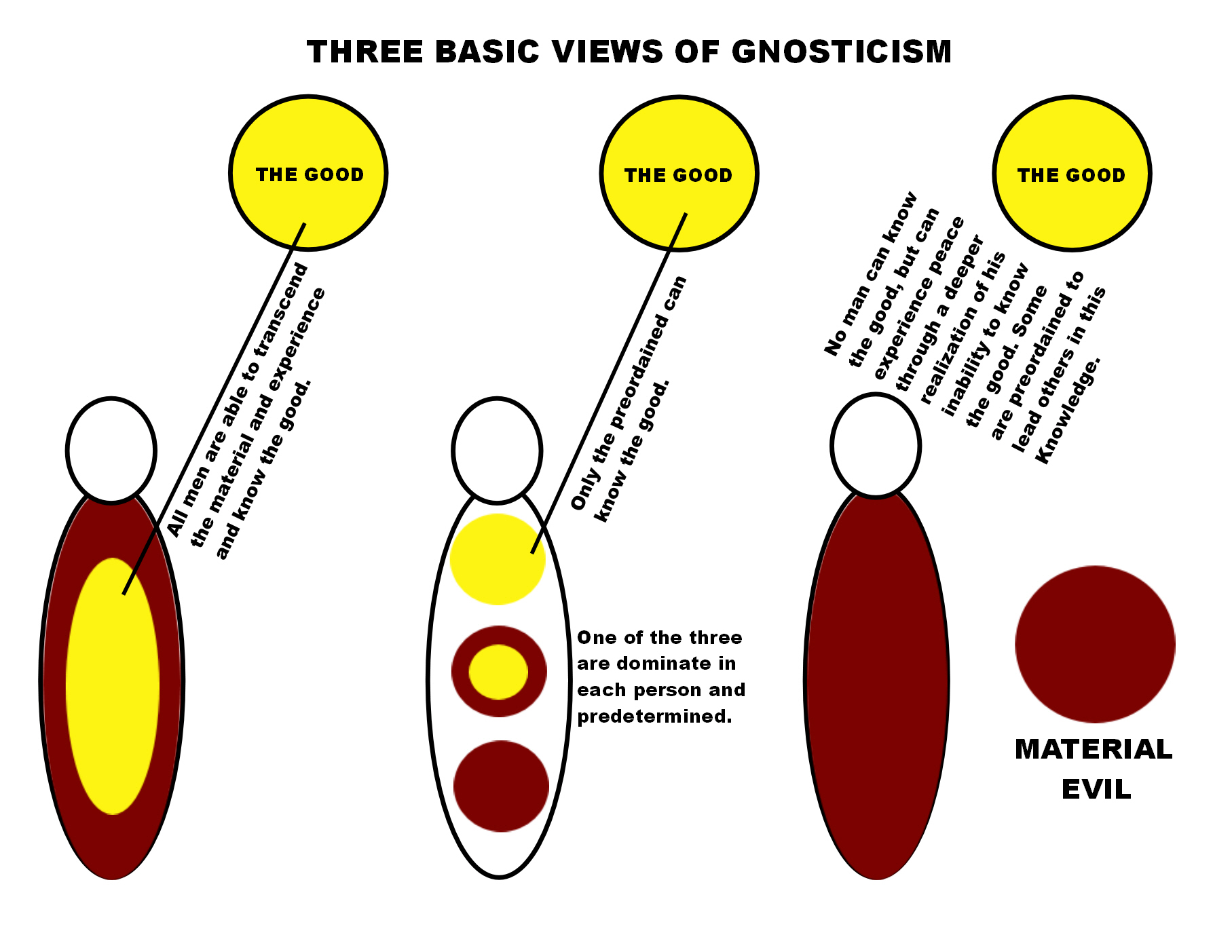
At any rate, the teachings of Cerinthus follow the basic fundamentals of 1st century Gnosticism of which there were two schools of thought unchanged from the cradle of society: intuitive knowledge within versus knowledge outside of man. While both schools held to the strict dichotomy of material being evil and the invisible good, and true knowledge being beyond the five senses, they disagreed on where that knowledge is found and whether or not it is intuitive among all men, or a select few preordained by nature or some supreme being.
Cerinthus followed the philosophical school of Idealism which holds to the belief that the one cosmic mind has an intuitive connection within every individual. Finding that knowledge is often a complex mind-numbing epistemology, but curiously, Luther and Calvin had their own angle that built on the Neo-Platonic teachings of St. Augustine.
This Gnostic bent actually allowed for Christ to be human, or at least some form of humanity. Apparently, God became exasperated with man’s penchant for trying to gain knowledge through the material world, and said in essence, “Ok, since you like to think you can know something and try to gain knowledge through the things that are seen, I am going to send my Son to die on the physical cross, and now all knowledge will only be gained through suffering—there mankind, take that!” This is the essence of the Heidelberg Disputation which is a philosophical treatise, not a theological one by any stretch of the imagination. Luther states plainly in the document that ALL knowledge is hidden in the suffering of the cross. Anyone who thinks they can understand Protestantism without a good grasp of world philosophy is sadly misguided. It is one of the historical necessities of historical grammatical hermeneutics.
Hence, in the Gnostic Protestant construct, Christ and His gospel is the only true objective knowledge and is outside of man. Man is not to seek any knowledge within himself, but all knowledge must be sought outside of him in contemplation of the gospel. All of reality is interpreted by the suffering of the cross. The cross is the epistemology from the material to the invisible, or from the evil to the good.
In contrast, other schools believe the epistemology is intuitive within all men because all men have a spiritual being separate from their material being, and the spiritual part of man is nonmaterial and therefore SINLESS. The material body of man is evil because it is material, but his invisible being is good and has a connection to the cosmic spiritual world that must be cultivated by transcending the material. This was key to the drug culture of the 60’s as LSD trips enabled the individual to transcend the five senses and see into the invisible spiritual world. Supposedly.
Other schools of thought believed that even though all men have a material and spiritual aspect, the spiritual anthropology has classifications in regard to who is able to see true knowledge and who isn’t as determined by the cosmos or cosmic mind; ie., determinism. And consequently, if utopia is to ever be achieved, those with the ability to see knowledge must rule over those who have the inability to transcend the material and are enslaved to it. How do you reason with people hopelessly enslaved to the material? They either understand that they can’t know reality and get with the program, or you kill them.
According to the Reformers, utopia is achieved by understanding that all reality is interpreted through the cross of redemption. This concept was established by Luther’s Heidelberg Disputation and is known as being a “theologian of the cross.” Theologians of the cross are able to know the “cross story,” or interpret reality through the cross, and all others are enslaved to the “glory story” or the story of man. This is the dichotomy of the knowledge of good and evil, or material versus spiritual.
Furthermore, the Reformers believed that the new birth entailed the gift of outward seeing only. All goodness remains outside of man. This is the pious distinction they claim over their fellow Gnostics. Unlike Cerinthus, who would be the modern equivalence of existentialism, no good can be in man, because that does not limit knowledge to suffering and the cross. Even though the early church fathers believed that material is evil and only the invisible is good like all ancient Gnostics, they labeled those heretics who believed that the invisible spirit within man was a connection to the good. That was heresy in their minds. And if you really understand what John Piper et al believe in our day, NOTHING HAS CHANGED.
The true Christians of that day had a different metaphysical take: the material realm is NOT evil, it’s weak. Something that is weak can still be good. The born again Christian struggles with sin because he/she is weak, not because the material realm is inherently evil. Christ really did come adorned in humanity in every since of the meaning because the material is not evil. This understanding of being fits together with the true gospel.
But what Cerinthus et al was teaching speaks directly to what John wrote in his first epistle, and we have addressed some of it in John’s introduction. John, in essence, said the following: Christ was 100% humanity and 100% God. We saw Him, we heard Him, we touched Him, we saw Him die on the cross, there isn’t two Christs, there is only one.
What Cerinthus et al taught explains everything John wrote in this epistle and why he wrote it. It not only explains why John wrote what he wrote in 1:9 and 2:1, it sheds light on why John wrote what he wrote in the rest of the book as well.
And that is what we will look at next week. We will do a point by point fly over of 1John while interpreting it according to this historical context of Gnosticism. John will address the definition of sin in contrast, the definition of knowledge and truth in contrast, the definition of the true gospel in context, the definition of love and hate in contrast, and the definition of the new birth in contrast.
See you next week.




 Paul's Passing Thoughts
leave a comment