The Magnum Opus of the Reformation: Martin Luther’s Heidelberg Disputation; Part 3
 Listen to the audio or download the audio file in separate window.
Welcome truth lovers to Blog Talk radio .com/False Reformation, this is your host Paul M. Dohse Sr. Tonight, part 3 of “The Magnum Opus of the Reformation: Martin Luther’s Heidelberg Disputation.”
Greetings from the Potters House and TANC ministries where we are always eager to serve all of your heterodox needs. Our teaching catalog can be found at tancpublishing.com.
If you would like to add to our lesson or ask a question, call (347) 855-8317. Remember to turn your PC volume down to prevent feedback.
Per the usual, we will check in with Susan towards the end of the show and listen to her perspective.
Remember, you may remain anonymous. When I say, “This is your host; you are on the air, what’s your comment or question”—just start talking.
If you would like to comment on our subject tonight, you can also email me at paul@ttanc.com. That’s Tom, Tony, Alice, Nancy, cat, paul@ttanc.com. I have my email monitor right here and can add your thoughts to the lesson without need for you to call in. You can post a question as well.
Let’s start out with an interpretation prism that just struck me this week. Have you ever thought about this? Think about it: all of Reformed doctrine developed during the Reformation presumed a church state. That means the doctrine itself was tailored for an outcome that required oversight by the state. So, if Luther came back from the dead and visited the church today he would be delighted in regard to the doctrine being taught, but would be absolutely aghast that the church is functioning without the state enforcement of orthodoxy. When Luther is showed the carnage of today’s church in this scenario, he says in the modern vernacular, “Duh, there’s no enforcement of orthodoxy. The patients are running the Psych ward!”
In other words, the doctrine presupposes bad behavior necessarily restrained by the enforcement of orthodoxy, and by the way, that’s exactly how Calvin ran Geneva. So, what we have today is a Protestant doctrine designed for a theocracy functioning in a representative republic. Just a thought, now let’s move on to thesis 7.
Thesis 7: The works of the righteous would be mortal sins if they would not be feared as mortal sins by the righteous themselves out of pious fear of God.
This is clear from Thesis 4. To trust in works, which one ought to do in fear, is equivalent to giving oneself the honor and taking it from God, to whom fear is due in connection with every work. But this is completely wrong, namely to please oneself, to enjoy oneself in one’s works, and to adore oneself as an idol. He who is self-confident and without fear of God, however, acts entirely in this manner. For if he had fear he would not be self-confident, and for this reason he would not be pleased with himself, but he would be pleased with God.
In the second place, it is clear from the words of the Psalmist (Ps. 143:2), »Enter not into judgment with thy servant«, and Ps. 32:5, »I said: I will confess my transgressions to the Lord.« etc. But that these are not venial sins is clear because these passages state that confession and repentance are not necessary for venial sins. If, therefore, they are mortal sins and »all the saints intercede for them«, as it is stated in the same place, then the works of the saints are mortal sins. But the works of the saints are good works, wherefore they are meritorious for them only through the fear of their humble confession.
In the third place, it is clear from the Lord’s Prayer, »Forgive us our trespasses« (Matt. 6:12). This is a prayer of the saints, therefore those trespasses are good works for which they pray. But that these are mortal sins is clear from the following verse, »If you do not forgive men their trespasses, neither will your father forgive your trespasses« (Matt. 6:15). Note that these trespasses are such that, if unforgiven, they would condemn them, unless they pray this prayer sincerely and forgive others.
In the fourth place, it is clear from Rev. 21:27, »Nothing unclean shall enter into it« (the kingdom of heaven). But everything that hinders entrance into the kingdom of heaven is mortal sin (or it would be necessary to interpret the concept of »mortal sin« in another way). Venial sin, however, hinders because it makes the soul unclean and has no place in the kingdom of heaven. Consequently, etc.
Ok, this thesis is about as clear as mud. But in context, this is how I interpret it, and by the way, most Reformed scholars agree: everything a believer does is evil whether it appears good or bad by human standards. Let me get to the crux here: if any person saved or unsaved thinks they can do a good work that God would look upon and say, “That’s a good deed, it won’t save him/her, but the deed in and of itself is a good deed” that’s mortal sin; ie., condemning sin.
Hence, a Christian is in a state of perpetual sin of the mortal type. Believing such, and attending every good work with fear is venial or forgivable sin. Saving faith is the belief that Christians are under condemnation. This is what the Reformed mean by the Christian life being lived out “subjectively.”
Good and bad things happen and we don’t really know what’s really good or bad or who is doing it or what kind of good or bad works they are.
Let me explain: first, as we saw in the other theses, what appears good to man is really evil, and what appears evil is really good. Man can’t even judge good from evil. For example, man sees suffering as bad, but all wisdom is hidden in suffering. Secondly, we have no way of knowing whether God is doing the work or we are doing the work. Remember Luther’s old and rusty hatchet illustration from last week? So, you just kind of live out your life subjectively, and whatever happens is ok just so you realize that anything initiated by you is evil, and what appears to be good might be a manifestation of Christ’s righteousness or one of your evil works by virtue of the fact that you did the work. Either way, you have no way of knowing as you are “living out justification subjectively” or what is known as “subjective justification.” The key is to live your life in fear that you might come to believe that you can do anything that has merit with God.
Do we have examples of this in our day? Sure we do. How often have you heard a professing Christian say, “I didn’t do it! I didn’t do it! It was the Holy Spirit who did it!” Often, you can even see the fear in them that someone will believe they did the work. This also relates to other people. I once had a congregant (a financially poor single mother) tell me that a person who gave them a car didn’t really give them the car (and I am talking a new car by the way), but rather it was the Holy Spirit who gave her the car. You see, if you concede that someone else can do a good work, that is also saying you can do a good work, and that’s mortal sin. Here is another one: “Jesus did it THROUGH me.” What’s that? That’s Luther’s old rusty hatchet, right? Like a hatchet, you are completely passive and God just picks you up and starts whacking away on stuff.
Where do people get this in our day? Right here—you are looking at it. The Heidelberg Disputation 1518 practically applied in 2015.
We are going to look at thesis 7 in a little more detail, but first, let’s get another big picture; let’s address this idea of perpetual condemning sin and the traditional Reformed remedy. We are going to call on our good friend John Calvin to help us with this. Obviously, if Christians swim in the waters of condemnation, there needs to be a remedy, so let’s go to a trusty Reformed commentary:
…by new sins we continually separate ourselves, as far as we can, from the grace of God… Thus it is, that all the saints have need of the daily forgiveness of sins; for this alone keeps us in the family of God (John Calvin: Commentaries on the Catholic Epistles; The Calvin Translation Society 1855. Editor: John Owen, p. 165 ¶4).
So, daily we ask forgiveness for mortal sin (that which removes us from grace), and this “ALONE” keeps us in the family of God. But wait, did you know there is only one place where you can get that ongoing forgiveness? Let’s again consult John Calvin to find out where that place might be:
Nor by remission of sins does the Lord only once for all elect and admit us into the Church, but by the same means he preserves and defends us in it. For what would it avail us to receive a pardon of which we were afterwards to have no use? That the mercy of the Lord would be vain and delusive if only granted once, all the godly can bear witness; for there is none who is not conscious, during his whole life, of many infirmities which stand in need of divine mercy. And truly it is not without cause that the Lord promises this gift specially to his own household, nor in vain that he orders the same message of reconciliation to be daily delivered to them (The Calvin Institutes: 4.1.21).
To impart this blessing to us, the keys have been given to the Church (Mt. 16:19; 18:18). For when Christ gave the command to the apostles, and conferred the power of forgiving sins, he not merely intended that they should loose the sins of those who should be converted from impiety to the faith of Christ; but, moreover, that they should perpetually perform this office among believers (The Calvin Institutes: 4.1.22).
Secondly, This benefit is so peculiar to the Church, that we cannot enjoy it unless we continue in the communion of the Church. Thirdly, It is dispensed to us by the ministers and pastors of the Church, either in the preaching of the Gospel or the administration of the Sacraments, and herein is especially manifested the power of the keys, which the Lord has bestowed on the company of the faithful. Accordingly, let each of us consider it to be his duty to seek forgiveness of sins only where the Lord has placed it. Of the public reconciliation which relates to discipline, we shall speak at the proper place (Ibid).
This is what the crux of the Reformed gospel is: a perpetual justification for perpetual condemnation. Do we have present-day examples of this? Sure we do; specifically, the interpretation of 1John 1:9 by many in Presbyterian and Baptist circles.
If we confess our sins, he is faithful and just to forgive us our sins and to cleanse us from all unrighteousness.
The idea that this verse proffers a continued repentance for “present sin” is fairly common in Protestant circles of all stripes. Of course, this boils down to keeping yourself saved via repentance. How is that not works salvation? But at any rate, it begins with this idea that Christians dwell in constant mortal sin that needs continued forgiveness.
Here is another example from real life: Susan was at the grocery store and ran into an old friend who is a member of a mainstream evangelical Baptist church. Somehow, the subject got onto alter calls, and Susan wondered aloud why churches have alter calls. Here was the lady’s answer: “Well, I guess people have sin in their lives that needs confession.” Why do people need to go to church to get that forgiveness? Again, we may be far away from 1518, but that doesn’t mean the fruit falls far from the tree my friends.
Let’s now look at some of the finer points of thesis 7.
To trust in works, which one ought to do in fear, is equivalent to giving oneself the honor and taking it from God, to whom fear is due in connection with every work. But this is completely wrong, namely to please oneself, to enjoy oneself in one’s works, and to adore oneself as an idol. He who is self-confident and without fear of God, however, acts entirely in this manner. For if he had fear he would not be self-confident, and for this reason he would not be pleased with himself, but he would be pleased with God.
We begin the finer points with misplaced fear. Biblically, there is to be no fear of condemnation; in fact, love and fear of condemnation are mutually exclusive:
1John 4:18 – There is no fear in love, but perfect love casts out fear. For fear has to do with punishment, and whoever fears has not been perfected in love.
Christians do not fear eternal condemnation because there is “NOW no condemnation” for those who believe (Romans 8:1). In contrast, Luther, as well as Calvin, cited fear of condemnation as the primary motivator of the Christian life. Luther has stated it here in thesis 7, but Calvin was a little more to the point:
Certain learned men, who lived long before the present days and were desirous to speak simply and sincerely according to the rule of Scripture, held that repentance consists of two parts, mortification and quickening. By mortification they mean, grief of soul and terror, produced by a conviction of sin and a sense of the divine judgment. For when a man is brought to a true knowledge of sin, he begins truly to hate and abominate sin… By quickening they mean, the comfort which is produced by faith, as when a man prostrated by a consciousness of sin, and smitten with the fear of God, afterwards beholding his goodness, and the mercy, grace, and salvation obtained through Christ, looks up, begins to breathe, takes courage, and passes, as it were, from death unto life. I admit that these terms, when rightly interpreted, aptly enough express the power of repentance; only I cannot assent to their using the term quickening, for the joy which the soul feels after being calmed from perturbation and fear. It more properly means, that desire of pious and holy living which springs from the new birth; as if it were said, that the man dies to himself that he may begin to live unto God (CI 3.3.3).
This quotation by Calvin also revisits the doctrine of mortification and vivification that we discussed in prior lessons. But the main point for citing this text from the Calvin Institutes is to show that THE primary motivator of sanctification according to the Reformers was, and still is condemnation and fear of future eternal judgement.
Just please let that sink in for a while. You can’t chalk this up to a secondary disagreement with the heroes of the Protestant faith, this is the heart and soul of their soteriology. Granted, biblically, Christians are to fear present consequences in this life, and that is one of the motivators for Christian living. This is Moses’ “blessings and cursings’’ that apply to believers and unbelievers alike. However, for unbelievers, while a moral life does lead to blessings in this life, it only results in lesser condemnation in the end. For the Christian, it’s more and more life unto life. Christ came that we may have life, and have it more abundantly. But, also, “judgement begins in the household of God” right? Remember Ananias and Sapphira? That event made the assemblies “fear” which actually spurred growth in the assemblies. But this is not a fear of condemnation. That kind of fear stifles love.
So let that sink in as well. Love cannot thrive in the midst of condemnation and the fear thereof. Why is the institutional church so messed up? Are you beginning to see why? Susan and I were talking about something for our grandchild to do this summer and the idea of VBS came up. I shot the idea down; for better or worse, I have studied all of this long enough to know I do not want my grandson anywhere near an institutional church that considers itself Protestant. What’s the alternative? Well, not a lie because it’s the only game in town. Christians need to get busy building true Christian communities.
But this is completely wrong, namely to please oneself, to enjoy oneself in one’s works, and to adore oneself as an idol. He who is self-confident and without fear of God, however, acts entirely in this manner. For if he had fear he would not be self-confident, and for this reason he would not be pleased with himself, but he would be pleased with God.
We could discuss the fact that the Bible plainly states that it is perfectly ok to take satisfaction in a job well done, but the bigger and finer point is the either/or interpretive prism that is a hard fast rule in Protestant teaching. We sometimes call this the either/or hermeneutic. This concept saturates Protestantism. You can’t please yourself and God, you either totally please yourself or totally please God. You can’t be confident enough to do a job well and take satisfaction in it without being arrogant; you either have NO self-confidence, or you are making yourself God—it’s either/or with no in-between. There is no balance.
Of course, this is the Platonist aspect of Reformed theology and is the natural result of the dualism philosophy that Platonism is based on. Furthermore, I strongly suspect that it all flows from the knowledge of good and evil doctrine first presented to Eve. I think that is a whole wide open frontier of research that hasn’t been explored yet.
So, tonight we only covered thesis 7 and will continue with thesis 8 next week.
The False Protestant Gospel of “How Much?”
 “At any moment, any lost person can choose to have their sins ended. It is not a question of whether or not they are elected, it is a question of whether or not they are under the law—and they are.”
The Protestant gospel effectively denies the biblical interpretation of the new birth. Because of its Platonist metaphysical presuppositions, it denies the treasure of God’s seed dwelling in weak vessels. Hence, the new birth is redefined and confined to the ability to perceive realm manifestations apart from any ability to do a good work of any kind. As stated by some, “Sanctification is done TO you, not BY you.”
In the biblical good news schema, Christ does ONE act of obedience as His part in God’s reconciliation plan. There is no question of “how much?” because His death was all that was required.
Now enter the heinous “Reformation” gospel of confusion. A cursory observation of Reformation history reveals that the dust-up between Rome and the “Reformers” was over metaphysics first. The very first and foundational doctrinal statement of the Reformation contained 12 theses of philosophical metaphysics. Luther was miffed that Rome was moving away from its Augustinian/Platonist roots and coming under the spell of Thomism. This shift began in the 13th century via St. Thomas Aquinas and eventually incited the Reformation. The assertion that the Reformation was driven by sola scriptura is absurd.
Martin Luther introduced his metaphysical answer to Thomism and foisted his theses that supported it onto Scripture. The centerpiece eventually came to be known as double imputation. To Luther’s credit, he created a timeless soteriology based on metaphysics that continues to turn the world upside down. John Calvin articulated Luther’s foundation in the Institutes of the Christian Religion. Both were dedicated to returning the church to its Augustinian roots.
What is double imputation? Basically, it’s the idea that Christ’s role in the gospel of first importance (as set apart from God’s full counsel which is also good news) was twofold as opposed to ONE single act. This was necessary as a “biblical” doctrine that keeps the material being of man separate from Plato’s trinity: the good, true, and beautiful, ie., the invisible. The true gospel turned dualism philosophy completely on its head by infusing good into weakness and defining the true definitions of God’s creation and the state of being.
The idea that God infused His righteousness into the being of mankind is repugnant to the Reformed mindset. How repugnant? The colonial Puritans executed Quakers for even asserting an errant view of the idea.
Therefore, distorting Christ’s role in God’s elected plan of reconciliation was necessary. Christ’s redefined soteriological role removes all goodness from mankind proper and “Christians” in particular. Christ not only came to die for the sins of particular persons preselected by God, but He also came to live a perfect life in obedience to the law so that His obedience could be imputed to the “elect.”
Now the questions are begged: “How much suffering was necessary to pay the penalty for sins committed by the preselected, and how much obedience was necessary for righteousness to be imputed to the preselected as well. When a false doctrine is predicated on errant presuppositions, not only do these kinds of questions arise, but the attempted answers give rise to more questions.
And displays of nonsense. An example is the weird and embarrassing ad lib “Scream of the Damned” propagated by John Piper and CJ Mahaney at a conference hosted by John MacArthur Jr.’s Grace Community Church.* The sheer weirdness of it all even raised eyebrows within Reformed circles by the likes of Steve Camp. The premise was an adolescent-like attempt to explain how much? in regard to Christ’s death. Imagining the response from my older than dirt and probably dead father in the faith, Pastor Richard Peacock, put me on the floor rolling around while laughing uncontrollably. Only the thought of thousands of attending pastors supported by the hard work and sweat of the laity watching without a blink shocked me into the horror of reality and put an end to my shameless response.
When are people going to stop and say to themselves, “Wait a minute here; what drives this stuff? This kind of stuff just doesn’t happen for any or no reason.”
Likewise, in regard to how much?, how long did Christ have to live and how much of the law did He have to obey for the elect? Theories abound because the question itself flows from the false presuppositions of Platonism foisted on the Scriptures resulting in the doctrine of double imputation.
Christ did ONE thing to secure reconciliation for mankind: He died. How much? Answer: enough for ALL mankind. How? Answer: by ending the law. How is that possible? Answer: because all sin is against the law and imputed to the law, and Christ died to end it. Sin is not covered by Christ’s law–keeping; no, sin is not covered, it is ENDED. At any moment, any lost person can choose to have their sins ended. It is not a question of whether or not they are elected, it is a question of whether or not they are under the law—and they are.
What else did Christ do to secure our reconciliation? Answer: nothing. But wasn’t He resurrected? Answer: yes, but He didn’t do that, that was the Holy Spirit’s role in God’s plan of reconciliation. The fact that Christ would be resurrected was a promise made TO Christ and Abraham BY God. That surprises many Christians who don’t read their own Bibles for themselves, viz, most.
In other words, this is the gospel: Christ DIED to END sin. The Spirit resurrected Christ as the first fruits of those who would also be resurrected to new life and justification which is NOT merely a legal declaration, but a metaphysical fact. It does of course have a legal aspect, but it is adoption court where the Holy Spirt bears witness with us that we are the children of God. Christ was “resurrected” for our justification” by the Holy Spirit. “Forensic Justification” does have a legal aspect, but not only in the halls of criminal court, but just as much in the court of adoption with the Holy Spirit appearing as a witness.
Obedience to the law by Christ does not justify us, the new birth justifies us because we are in fact righteous. The resurrection justifies us, not law-keeping by anyone including Christ.
True resurrection with Christ is “under grace,” but that by no means states that we are no longer under a law. It means that we are no longer under a law that condemns us. This is what strips sin of its power. This is what strips death of its sting. We must remember that the law is the Spirit’s law. He will use it to convict the world of sin and warn of the judgment to come, or he will use it to sanctify God’s children. The law is a savor of death to those who do not believe, and a savor of life as we walk in it as God’s children.
The time has come to stop dwelling in the Protestant metaphysical narrative of death, and to follow Christ in our duty to write a narrative of life.
How much? That will depend on OUR obedience as children of God. The Spirit gave us life and opportunity to use His law to love God and others. “Do’s and don’ts” are not the issue, LOVE is the issue. We do not stay at the foot of the cross while Christ loves for us; we will be rewarded for the narrative of life that we write by using the gifts granted to us when Christ sat down beside the Father and rested from justifying all who will believe in Him.
We zealously write our narrative of life without fear of condemnation because of Christ’s love for us. And our love will never be enough because of the freedom we feel. The freedom purchased by His blood that freed us from the condemnation of the law and the Master empowered by it, and the freedom to love by obeying the law of the Spirit—the perfect law of liberty. When God looks at us, He sees more than Christ, he sees one that Christ is not ashamed to call a brother—He sees one of His children. Christ doesn’t cover us, He presents us.
He is not ashamed of us. His death was enough for our life.
paul
* “Apparently, they got the concept from RC Sproul, who used to be rock solid, but now it would appear that senility has opened his mind to the nonsensical theological acrobatics of our day. Likewise, the same consideration might apply to John MacArthur who spoke at the conference and also sponsored it; he is getting up in years as well. I offer this as a possible excuse for both of them though the vision of my heart longs to see them as the gray-haired stalwarts of the faith that I thought they were. Here is what Sproul said:
‘Once the sin of man was imputed to Him, He became the virtual incarnation of evil. The load He carried was repugnant to the Father. God is too holy to even look at iniquity. God the Father turned His back upon the Son, cursing Him to the pit of hell while on the cross. Here was the Son’s ‘descent into hell.’ Here the fury of God raged against Him. His scream was the scream of the damned. For us’ (Tabletalk magazine, My God, My God, Why Hast Thou Forsaken Me? April 1990, p. 6).
Steve Camp, on his blog, wrote a tame but thoroughly convincing argument against such a notion. But the fact that Camp thought such a significant expenditure of effort was needed is indicative of our day; surely, only ten years ago, such a thesis would have invoked a horrendous outcry among God’s people” (The New Calvinist License To Kill: And Did God Really Condemn Christ To Hell?, Paul’s Passing Thoughts blog, Paul Dohse, Sr., September 2, 2011).
When Church is Spiritual Gangrene: Sanctification by Justification
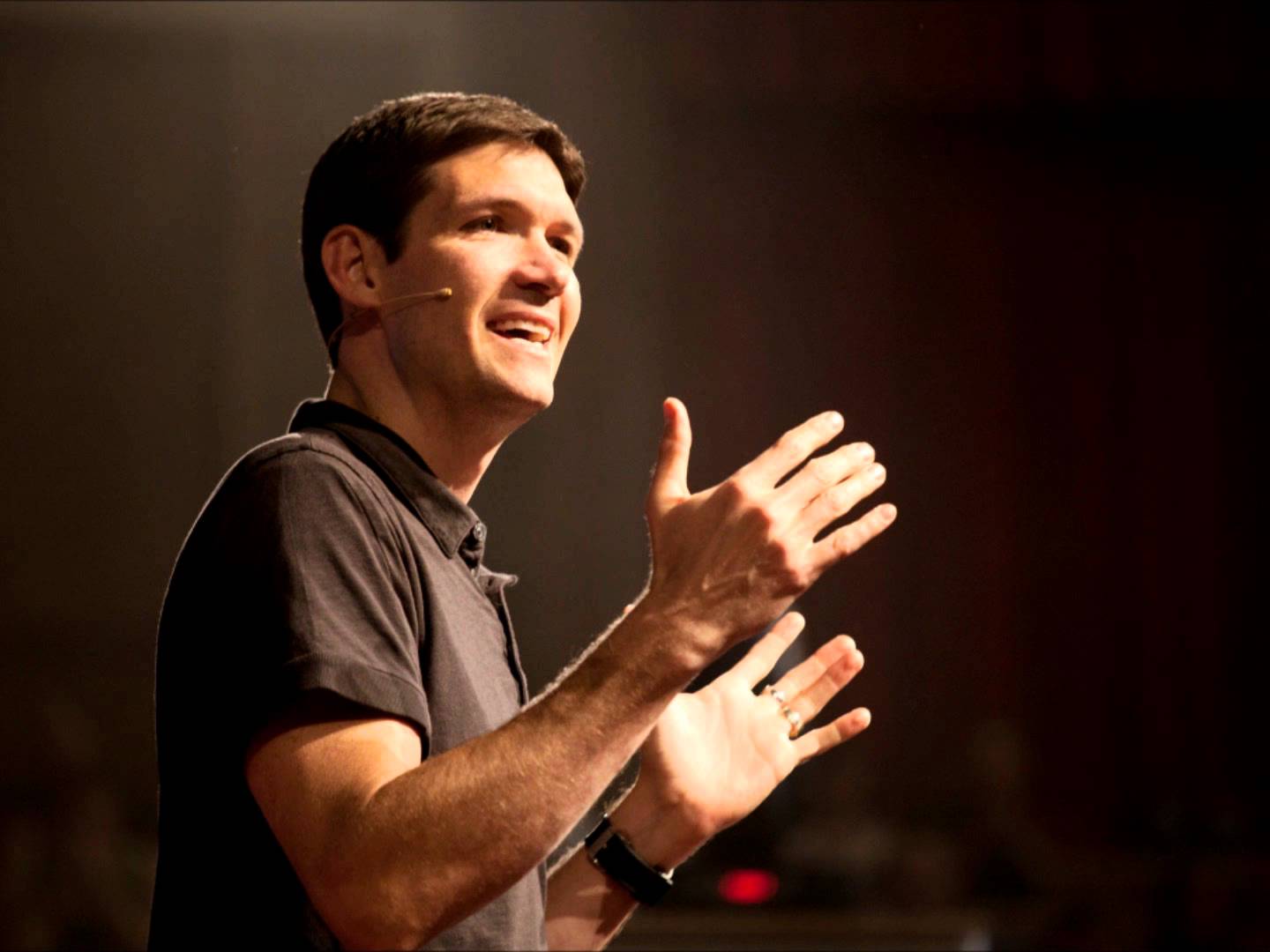 We have recently received our weekly dose of Neo-Calvinist drama. This time, it was Matt Chandler’s turn to give discernment bloggers the gift that just keeps on giving. This recent incident involving Chandler’s Village Church has gone super-viral. Secular news networks are even reporting on the episode resulting in a public outcry.
These incidents are not isolated and will continue to be exposed in both Protestant and Catholic circles because they are the result of a false gospel. As Jesus said, a tree is known by its fruit.
Jordan Root
Apparently, the constant drama taking place in the evangelical church is not nature’s way of telling us something is wrong. However, the most recent drama concerning former missionary Jordan Root supplies a pretty decent insight into the core problem of progressive justification.
Christ’s called out assembly is a body that depends on individual members. The apostle Paul used a body analogy because it is the perfect analogy of Christ’s called out assembly. Strong individual members make a strong body. Consequently, every member’s role must be identified and nourished. To the degree that members (body parts, not the Salvation Club membership) do not function properly, the body is crippled and falls short of fulfilling Christ’s mandate.
Christ is the only head. The common goal is the one mind in Christ. The advent of Christ’s called out assembly was a monumental event. The monumental event was the baptism of the Holy Spirit. The Spirit is a major participant in the plan of salvation. Beware of any doctrine that emphasizes one of the three Trinity persons over the other in the plan of salvation. Salvation is Trinitarian.
 There was a new birth before the death, burial, and resurrection of Christ, but until that time, salvation was atonement by the law. In other words, according to Moses, obedience to the law could bring both life and death, but at that time the law was a covering for sin. All sin was imputed to the law and the law held that sin captive along with the believer. The believer was blessed by obedience to the law, and their sins that were a violation of the law were held in escrow until the coming of Christ. Of course, the terms of this particular escrow is an eradication instead of a payment.
On the other hand, the sins of unbelievers were not imputed to the law, but rather the law condemned them for every offence. In both cases, life and death according to the law was experienced, but with different ENDS. Whether believer or unbeliever, degrees of life and death occurred, but salvation determined a life end while being unsaved determined a death end with degree of violation determining the wages of eternal death.
When it was the Spirit’s time for His major event, He resurrected Christ from the grave and gave gifts to Christ’s assembly while baptizing Jews and Gentiles into one body. Christ died to end the law by paying the penalty for ALL sins imputed to it. With the ending of the law, all sins committed against it were ended as well except for those who were not covered by it. For unbelievers, the law was not ended and therefore they remain condemned by it.
Hence, the law is no longer an atonement for believers, but only serves as a means to love God and others. Before the baptism of the Holy Spirit, it served as atonement and a means of love, now it can only serve as a means of loving God and others. However, for unbelievers in this day, the law has a sort of grace to it; in that sin is still imputed to it. If and when they believe in Christ, every sin they committed against the law (all sin is a violation of the law) is ended with the law and now there is no law that can condemn them in the future. Therefore, the Old Testament atonement is still a “ministry of death” that is “passing away” (From an eschatology point of view, this is why believers were in the abode of the dead until Christ died on the cross. During the three days after His crucifixion, he preached to the “captives” and set others free leading them to heaven in a victory procession).
Nevertheless, through ignorance, the believer can experience as much present death, or even more death than unbelievers who will come to realize a death ending. There is a specific dynamic that figures in. The Bible splits this up into “under law” and “under grace.” Under law is the biblical definition of an unregenerate person and possesses a certain metaphysical dynamic, or state of being. Those under law are free to do good but enslaved to sin. This is primarily because they are under the law’s condemnation or judgement. In conjunction with SIN, the law empowers sin. When the law is ended, sin is stripped of its power because there is no condemnation. Sin finds its power in condemnation.
And death finds its sting in sin. The primary root of all fear is fear of judgment, and mankind, having the “works of the law” written on their hearts and administered by the conscience, knows intuitively that future death means future judgement. But “perfect love casts out fear.” What’s that? That’s “under grace” which is now no longer under the condemnation of the law; the law only serves to inform the believer in regard to loving God and others. There is NOW NO condemnation for those in Christ.
Yet, there is still a death/life dynamic going on that is experienced by the believer and unbeliever alike. The end is different, but not necessarily the life experience. Those under grace are enslaved to righteousness, but unfortunately free to sin. They are enslaved to righteousness because of the baptism of the Spirit. Don’t get too hung-up on the “slave” nomenclature. Under law enslaves the unbeliever to the laws condemnation. That is inescapable. They are crippled and enslaved to constant condemnation and the fear of death. This is where it is vital to realize that the baptism of the Spirit is a literal death of the person who is under law and enslaved to it. They are enslaved to its inevitable endgame of death measured by the degree of life choices regarding law—primarily the law of their conscience, but ultimately the full brunt of God’s specific law of which they are indifferent.
Once a person is saved, they are ”free” from the condemnation of the law also known as the “law of sin and death,” and “free to serve another.”
Romans 7:4 – Likewise, my brothers, you also have died to the law through the body of Christ, so that you may belong to another, to him who has been raised from the dead, in order that we may bear fruit for God. 5 For while we were living in the flesh, our sinful passions, aroused by the law, were at work in our members to bear fruit for death. 6 But now we are released from the law, having died to that which held us captive, so that we serve in the new way of the Spirit and not in the old way of the written code.
Note the slave terminology. Through the death of Christ, he purchased all of mankind by ending the law. His death purchased all people from the Sin slave master. Think about that in regard to those under law. Their freedom has been purchased already. If Christ died to end the law, and He did (Romans 10:4), and all unsaved people are under the law, and they are (Romans 8:2, 6:14), those who believe in Christ are now dead to the law and any possible condemnation in the future.
Christ didn’t die for anyone in particular, He died to end the law that all of mankind is under at one time or another. That necessarily demands a conclusion that Christ died for all people unless some are born into the world who are not under law, and that is obviously not the case.
To believe in Christ is to follow Him in the Spirit’s baptism. It is not merely a mental ascent to the facts of the gospel of first importance, it is a decision to follow Christ in that baptism. You recognize that Christ has purchased you from the Sin master, and know that you will not escape if you reject so great a salvation. The judgement is greater in this era because atonement spoke on earth through Moses and none who rejected it escaped, but now the call comes from heaven.
In Romans 7:4, we see both sides of the Spirit’s baptism:
A. Death;
you also have died to the law through the body of Christ, so that you may belong to another.
B. Resurrection;
But now we are released from the law, having died to that which held us captive, so that we serve in the new way of the Spirit.
This is summarized this way:
Romans 6:3 – Do you not know that all of us who have been baptized into Christ Jesus were baptized into his death? 4 We were buried therefore with him by baptism into death, in order that, just as Christ was raised from the dead by the glory of the Father, we too might walk in newness of life.
5 For if we have been united with him in a death like his, we shall certainly be united with him in a resurrection like his. 6 We know that our old self was crucified with him in order that the body of sin might be brought to nothing, so that we would no longer be enslaved to sin. 7 For one who has died has been set free from sin. 8 Now if we have died with Christ, we believe that we will also live with him. 9 We know that Christ, being raised from the dead, will never die again; death no longer has dominion over him. 10 For the death he died he died to sin, once for all, but the life he lives he lives to God. 11 So you also must consider yourselves dead to sin and alive to God in Christ Jesus.
12 Let not sin therefore reign in your mortal body, to make you obey its passions. 13 Do not present your members to sin as instruments for unrighteousness, but present yourselves to God as those who have been brought from death to life, and your members to God as instruments for righteousness. 14 For sin will have no dominion over you, since you are not under law but under grace.
We are released from the law (death) in order to be freed to “serve” another (resurrection). The guide for that service is the Spirit’s law. That’s a really good thing to call the Bible: the Spirit’s law; He uses it to convict the world of sin and the judgment to come in regard to those under law, and uses it to sanctify those under grace (John 17:17).
This is all by faith because if we do not live by this dynamic, if we do not take it literally, the metaphysical dynamic of life/death starts to bear unfortunate fruit – the death type. We will practice and apply what we believe to be true. How literally we take this dynamic does not modify the natural effect of the dynamic. If a tree really fell in the forest, that really happened whether we believe it or not. And the life/death dynamic happens whether we believe it or not.
Even though the endgame for every believer is life, they can live a life of death through ignorance. Through ignorance, they can actually be enslaved to the sin they were freed from. How does this happen? The Bible is very clear about how this happens.
It begins with ignorance about desire.
Though the old us/we literally died with Christ, and we are no longer under the law and free to serve Christ rather than serving the law of sin overseen by our old master, our mortal bodies that are not yet redeemed still possess the desires of the old man. The “mind” is redeemed, and we therefore share the same desires of the Spirit, but sin can still harass us through sinful desires. It is important to note that “the flesh” is NOT inherently evil, but rather “weak.” “Sins of the flesh” and “desires of the flesh” refer to when the flesh, or our bodies are succumbing to desires that come from sin via our choices regarding obedience. The body can also be used for holy purposes as well as sinful purposes.
At any rate, one who has died with Christ and has been resurrected to new creaturehood with Christ is able to say “no” to desires that come from sin that still resides in our mortal bodies. One reason among others that we are able to say “no” is due to the fact that sin’s power has been stripped away because it can no longer condemn us (1Corinthians 15:56). Our motives in love are by default pure in regard to justification because we are righteous and justified apart from the law. The law cannot condemn us, so the only venture left is to use the law for loving God and others. Any attempt by a believer to earn justification is completely illogical because that would be an attempt to finish an already finished work (Galatians 3:3 | note the YLT version).
Succumbing to sinful desires as a Christian is a matter of family sin, and not sin that relates to justification in any way. So in regard to justification we are blameless via the new birth that ended the law, but we may be chastised by God in regard to not loving our Father and others as we are called to. Note in the Lord’s Prayer that we ask forgiveness from our Father which is an altogether different matter than seeking salvation from sin that condemns us.
The Bible also teaches us that the intensity of sinful desires is increased if we give “provision” to those desires. In other words, by obeying sinful desires, we increase the intensity of sin’s appeal through the passions and emotions. Furthermore, since we become slaves of the master we obey, Christians can become enslaved “once again” to the demands and desires of the old master. Of course, this is due to extreme ignorance. Nevertheless, obeying sinful desires nourishes the desires, intensifies them, and over time a Christians can be habituated in regard to those desires.
This problem finds its roots in religions that promote progressive justification. Because salvation is supposedly a process that begins at point A and progresses to point B (rather than a onetime, and once-for-all-time transformation that guarantees salvation), the “Christian” life, also known as sanctification, is part of the salvation/justification “progression” from point A to point B. Consequently, the very definition of sanctification, ie., knowing how to “control our own bodies” (1Thessalonians 4:3,4) is egregiously circumvented.
And the idea of being sanctified by justification plays well for existing guilt. True believers feel bad that Christ had to die for our sin, and our lack of ability to grasp the full gravity of Christ’s sacrifice feeds that guilt as well. Far removed from the actual historical event, our lack of identification with Christ’s suffering makes us feel unthankful and indifferent. As a result, we are open to ways that enable us to better identify with Christ’s actual suffering as a way to obtain an acceptable appreciation of our salvation. This idea plays to our natural and logical inclinations.
But there are several problems with this approach. First, the Bible doesn’t call us to continually revisit the same gospel that saved us in order to obtain more and more gratitude for our salvation. This can easily become a way of earning our salvation via acceptable gratitude. Secondly, the guy who would be able to plunge the depths of why Christ had to die for him IS dead. Thirdly, the new creature cannot endeavor to better understand the condemnation that Christ died to end precisely because there is no condemnation. The subject is looking for something that cannot exist apart from the law, and therefore, if he/she finds any, it’s a figment of their misguided imagination.
Unless of course, they are deceived and are actually experiencing real condemnation because belief in a progressive justification gospel did not bring about the baptism of the Spirit. Remaining under law, they are finding ample condemnation that is “making the cross bigger and people smaller.”
In most cases, and due to overall ignorance regarding sanctification because all of the traditional rage is to make sanctification part of the justification process, the new Christian is immediately confused that they are experiencing sinful desires. After 2000 years since the advent of the Spirit’s baptism, EVERY new believer should be able to say:
According to the Bible, I just experienced a sinful desire. God has promised me that I am able to say “no” to that desire, and if I disobey that desire, I am sucking the life out of it more and more and learning to hate it more and more. I am a slave to whatever I obey, and sanctification is putting off the old habits of the old person and putting on the new habits of the new creature. Obedience results in habituation to either godliness or ungodliness.
This dynamic is not operative in those under law because they are not born again and are indifferent to God’s word. Psalm 119 is the heart of a born again individual. Those under law may live a moral life that is part and parcel with being created in the image of God, but every violation of the law is a wage for death. Not being subject to certain desires of the baser sort does not exclude them from being under law—they will just suffer a more tolerable end.
There is something VERY important to understand about the desires that come from sin: they are myriad, of various and sundry stripes, and at times horrifying. They can, and do include a desire to murder people, all kinds of covetousness, and a plethora of unnatural sexual desires.
Nothing is sadder than a Christian who experiences a baser type of sinful desire and doesn’t understand what’s going on. Immediately, in most cases, they will doubt that they were really saved. That will lead to fear of condemnation which is not love. Likewise, a person may profess Christ to escape such a desire, and rightfully so, only to find out that the desire is not gone. Not understanding that the desire is stripped of its power, the individual will be thrown into turmoil because the desire still presents itself. At this point, believing that the sinful desire is still a part of their redeemed being, which it is not, is very unhelpful to the cause of godliness to say the least.
How much better is it that a person follows Christ in death and resurrection, but understands that the desire may present itself after salvation? That should be the case. The individual should be prepared to understand the desire and what to do about it. Believing that sin no longer has “dominion” over the saint is part of believing the truth of the new birth and salvation itself. Others who seek Christ will have lesser struggles and different issues that caused them to seek Christ. Some may be moral persons who put many Christians to shame, but want the hope of eternal life. Even though they are upright persons as far as persons go, they are aware that they still fall short of God’s glory. Such persons will have a lesser struggle in sanctification.
But in all cases, various and sundry desires can be reduced to a whisper through depriving the desire of nutrients (provisions), and practicing selfless love. It’s hard to sin while you are loving God and others.
A sanctification dynamic that is not helpful is the idea of a Christian having “two natures.” No, a Christian only has ONE nature, the new one. The two natures construct gives under law and under grace equal billing, and places them in the ring to duke it out. No, Christian living is not a series of battles lost or won between two natures with equal dominion over the believer. Only one nature has dominion, and love is a choice. James explains the dynamic clearly:
James 1:13 – Let no one say when he is tempted, “I am being tempted by God,” for God cannot be tempted with evil, and he himself tempts no one. 14 But each person is tempted when he is lured and enticed by his own desire. 15 Then desire when it has conceived gives birth to sin, and sin when it is fully grown brings forth death.
All sin, even the family sin of saints that does not condemn brings forth some sort of death albeit very subtle in a lot of cases. For the believer, it is the present consequences of sin. ALL sin brings about some sort of death. Again, the death that is often brought about is very subtle. One consequence of sin that is apparent may actually be the culmination of several other sins. A person may look 15 years older than they should, and that can be the result of years of bad thinking, or the culmination of trillions of bad thoughts. This can even be more scientific; researchers have determined, on average, how much each cigarette smoked shortens one’s life. When a person smokes a cigarette, they don’t drop dead on the spot, but the one cigarette has brought forth death. Furthermore, this same analogy can be used to illustrate how obeying the desire to smoke one cigarette leads to being enslaved to the habit of smoking.
Back to Jordan Root
Let’s suppose that as a young man in seminary, Jordan was afflicted with the very unfortunate desire to have sexual relations with children. Horrible. Like most professing Christians in a progressive justification church culture, he would not have had the tools to deal with this affliction. Many in his shoes are afraid to approach individuals privately about the struggle because they are obviously very ashamed and confused that they have this desire. After all, it doesn’t seem to go well with a Christian profession to say the least. Many go to sermon after sermon after sermon in hopes that the issue will be addressed. In the Protestant church—that would be a pipe dream because sanctification is not the focus, returning to the same gospel that saved us in order to keep our justification moving forward is the focus.
That necessarily brings us to the preaching that Root eventually began to sit under: Neo-Calvinism. For Root to make direct efforts to rid himself of the desire through literal biblical instruction would have been “focusing on his own doing instead of what Jesus HAS done.” And you see, the whole problem with desires is that we “desire something more than Jesus.”
This doctrine would have been, and is presently a death sentence for Root. Typical is the creation of such problems by the nonexistent sanctification of Neo-Calvinism followed by their claim to be the cure for what they helped to create.
Gangrene
This is also exactly why the apostle Paul called false doctrine “gangrene” (2Timothy 2:17). My wife Susan contracted gangrene after a motorcycle accident. The doctor discovered it during a routine follow-up examination after the accident. The condition was completely painless and Susan was totally unaware that gangrene was silently and slowly eating away her leg. Fortunately, the condition was discovered before her leg needed to be amputated in order to prevent its spread to the rest of her body resulting in certain death.
There is not a more apt description of sin’s slow death and the false doctrines that promote it.
Progressive justification is driven by a return to the same gospel that saved us because apparently, as Christians, we still need salvation. And if we still need to be saved as Christians, as plainly stated by Dr. John Piper and many others including Matt Chandler, we abide in death still. In fact, the Neo-Calvinist doctrine of mortification and vivification calls for a meditation on our sin while only EXPERINCING resurrection—not walking in it. By a deeper and deeper realization of how sinful we are, we experience the joy of “future glory.” Sin is our function, while resurrection is not our function—only an EXPERIENCE. Even the experience is a progression towards the ultimate experience of “final justification.” Neo-Calvinist Paul Washer stated it this way:
At conversion, a person begins to see God and himself as never before. This greater revelation of God’s holiness and righteousness leads to a greater revelation of self, which, in return, results in a repentance or brokenness over sin. Nevertheless, the believer is not left in despair, for he is also afforded a greater revelation of the grace of God in the face of Christ, which leads to joy unspeakable. This cycle simply repeats itself throughout the Christian life. As the years pass, the Christian sees more of God and more of self, resulting in a greater and deeper brokenness. Yet, all the while, the Christian’s joy grows in equal measure because he is privy to greater and greater revelations of the love, grace, and mercy of God in the person and work of Christ. Not only this, but a greater interchange occurs in that the Christian learns to rest less and less in his own performance and more and more in the perfect work of Christ. Thus, his joy is not only increased, but it also becomes more consistent and stable. He has left off putting confidence in the flesh, which is idolatry, and is resting in the virtue and merits of Christ, which is true Christian piety” (Paul Washer: The Gospel Call and True Conversion; Part 1, Chapter 1, heading – The Essential Characteristics Of Genuine Repentance, subheading – Continuing and Deepening Work of Repentance).
Obviously, in this progressive justification process, “Christians” live for the sole purpose of experiencing joy only through primarily focusing on sin. Note that this joy is accompanied by a progressive “resting.” Clearly, this reduces Christianity to an experience only. Moreover, is this not, for all practical purposes, a rejoicing in evil that the apostle Paul warned about in 1Corintians 13? Is this, in essence, the antithesis of love? I believe it is. Justification is a rest; sanctification is a labor of love more and more as we see the day approaching. If we don’t actually do the work, we are not doing the love.
Progressive justification is a doctrine of death, and there are many Jordan Roots rotting away in the clutches of gangrene. Like Root, they at some point start losing limbs, but return to the source rather than new birth. Their end will be certain death.
paul
The Horrible Protestant Doctrine of Mortification and Vivification
 Like any other super cult, Protestantism has hijacked and redefined every biblical definition of words and concepts from front cover to back cover. Any denomination that believes the clergy has authority is by definition a cult. The clergy has no horizontal authority, but only appeals to the free conscience of man in regard to the one vertical authority. The clergy has no authority by proxy. Any religious organization that believes the Bible defines an authority that they have by proxy is by definition a cult. Those who appeal to the free conscience of men in regard to the Bible are NOT a cult.
When the grammar is completely co-opted, the group being deceived is divided into two groups: those who know what you mean by the words, and those who think they know what you mean by the words with a slow indoctrination from the latter to the former. That’s how the deception has worked from the very beginning. If you are not a definer of words—you will be misled. In the garden, Eve thought she knew what the serpent meant by the word “death” and so it goes.
A good example is this article posted by the new cult hero among Neo-Calvinists, Rosaria Champagne Butterfield. On its face, few evangelicals are going to have any objection to anything written in the article because few evangelicals really know what’s behind the Reformed doctrine she underscores in the article: mortification and vivification. Remember, Reformed academics think they understand things the average parishioner can’t grasp, so Butterfield, like all Reformed philosopher queens, is going to let you assume definitions for the time being—it’s part of the indoctrination process.
So, what is the Reformed doctrine of mortification and vivification? Let’s reference two Reformed heavyweights in order to ascertain the formal definition.
“Progressive sanctification has two parts: mortification and vivification, ‘both of which happen to us by participation in Christ,’ as Calvin notes….Subjectively experiencing this definitive reality signified and sealed to us in our baptism requires a daily dying and rising. That is what the Reformers meant by sanctification as a living out of our baptism….and this conversion yields lifelong mortification and vivification ‘again and again.’ Yet it is critical to remind ourselves that in this daily human act of turning, we are always turning not only from sin but toward Christ rather than toward our own experience or piety” (Michael Horton: The Christian Faith; mortification and vivification, pp. 661-663 [Calvin Inst. 3.3.2-9]).
And…
“At conversion, a person begins to see God and himself as never before. This greater revelation of God’s holiness and righteousness leads to a greater revelation of self, which, in return, results in a repentance or brokenness over sin. [mortification] Nevertheless, the believer is not left in despair, for he is also afforded a greater revelation of the grace of God in the face of Christ, which leads to joy unspeakable.[vivification] This cycle simply repeats itself throughout the Christian life. As the years pass, the Christian sees more of God and more of self, resulting in a greater and deeper brokenness. Yet, all the while, the Christian’s joy grows in equal measure because he is privy to greater and greater revelations of the love, grace, and mercy of God in the person and work of Christ. Not only this, but a greater interchange occurs in that the Christian learns to rest less and less in his own performance and more and more in the perfect work of Christ. Thus, his joy is not only increased, but it also becomes more consistent and stable. He has left off putting confidence in the flesh, which is idolatry, and is resting in the virtue and merits of Christ, which is true Christian piety” (Paul Washer: The Gospel Call and True Conversion; Part 1, Chapter 1, heading – The Essential Characteristics Of Genuine Repentance, subheading – Continuing and Deepening Work of Repentance).
Where to begin? This is a horrible doctrine that turns true biblical soteriology completely on its head. Obviously, the least common denominator of this doctrine is a perpetual re-justification through “participation in Christ.” And how do we participate in Christ? By returning to the same gospel that saved us in a deeper and deeper way in order to keep ourselves saved.
In order for this doctrine to work, we must remain unchanged. Participation in Christ requires a deeper and deeper understanding of our present unchanged being coupled with a deeper and deeper understanding of present sin which supposedly causes deeper and deeper gratitude for the redemptive work of Christ resulting in joy. Our primary work is peeling away the layers of sin and seeing the sin under the sin (mortification) resulting in a deeper joy EXPERIENCE.
So basically, this redefines the new birth as a joy experience only and not a definitive recreation, makes the new birth a perpetual re-enactment rather than a one-time event, and makes the Christian life experience-oriented.
That’s all pretty major, but we are just getting started and an exhaustive articulation of this error would literally take several volumes of work, which we will not attempt in this post.
Mortification and vivification also correlates with the Reformed idea that present sin separates Christians from grace, or justification, and mortification, also known as “deep repentance,” rewashes the Christian and keeps them saved. The original water baptism that makes them official members of the church supplies an overall covering for sin, but if one practices mortification they will experience more of their salvation in a deeper way (vivification). But at any rate, mortification can ONLY be practiced and is only effective for re-salvation and vivification if one is a formal member of the Reformed church. This aspect of Reformed thought makes it the super cult that it is.
“Moreover, the message of free reconciliation with God is not promulgated for one or two days, but is declared to be perpetual in the Church (2 Cor. 5:18, 19). Hence believers have not even to the end of life any other righteousness than that which is there described. Christ ever remains a Mediator to reconcile the Father to us, and there is a perpetual efficacy in his death—viz. ablution, satisfaction, expiation; in short, perfect obedience, by which all our iniquities are covered” (The Calvin Institutes: 3.14.11).
“Where we land on these issues is perhaps the most significant factor in how we approach our own faith and practice and communicate it to the world. If not only the unregenerate but the regenerate are always dependent at every moment on the free grace of God disclosed in the gospel, then nothing can raise those who are spiritually dead or continually give life to Christ’s flock but the Spirit working through the gospel. When this happens (not just once, but every time we encounter the gospel afresh), the Spirit progressively transforms us into Christ’s image. Start with Christ (that is, the gospel) and you get sanctification in the bargain; begin with Christ and move on to something else, and you lose both” (Michael Horton: Christless Christianity; p. 62).
“Nor by remission of sins does the Lord only once for all elect and admit us into the Church, but by the same means he preserves and defends us in it. For what would it avail us to receive a pardon of which we were afterwards to have no use? That the mercy of the Lord would be vain and delusive if only granted once, all the godly can bear witness; for there is none who is not conscious, during his whole life, of many infirmities which stand in need of divine mercy. And truly it is not without cause that the Lord promises this gift specially to his own household, nor in vain that he orders the same message of reconciliation to be daily delivered to them” (The Calvin Institutes: 4.1.21).
“To impart this blessing to us, the keys have been given to the Church (Mt. 16:19; 18:18). For when Christ gave the command to the apostles, and conferred the power of forgiving sins, he not merely intended that they should loose the sins of those who should be converted from impiety to the faith of Christ; but, moreover, that they should perpetually perform this office among believers” (The Calvin Institutes: 4.1.22).
“Secondly, This benefit is so peculiar to the Church, that we cannot enjoy it unless we continue in the communion of the Church. Thirdly, It is dispensed to us by the ministers and pastors of the Church, either in the preaching of the Gospel or the administration of the Sacraments, and herein is especially manifested the power of the keys, which the Lord has bestowed on the company of the faithful. Accordingly, let each of us consider it to be his duty to seek forgiveness of sins only where the Lord has placed it. Of the public reconciliation which relates to discipline, we shall speak at the proper place” (Ibid).
“…by new sins we continually separate ourselves, as far as we can, from the grace of God… Thus it is, that all the saints have need of the daily forgiveness of sins; for this alone keeps us in the family of God” (John Calvin: Commentaries on the Catholic Epistles; The Calvin Translation Society 1855. Editor: John Owen, p. 165 ¶4).
The Reformed redefinition of law and gospel could also be discussed here if there was room, but let’s move on to the focus of this particular post.
It radically redefines what faith is. Instead of faith being a result of new creaturehood and working through love (Galatians 5:6), faith is narrowed to the work of repentance only to keep ourselves saved rather than endeavoring to take part in many-faceted forms of love.
Add to this the simple fact that it circumvents love in sanctification for the sake of keeping ourselves justified.
The doctrine excludes using our members for holy purposes. According to Washer, “He has left off putting confidence in the flesh, which is idolatry, and is resting in the virtue and merits of Christ, which is true Christian piety.” This circumvents the clear biblical mandate to use our members for holy purposes (Romans 6:13, 19, Romans 12:1).
It violates one of the primary virtues of love: not delighting in evil (1Corithians 13: 6). In mortification and vivification, focusing on sin leads to joy.
It violates the principle of one baptism (Ephesians 4:5) and replaces it with many baptism experiences.
It redefines the interpretation of reality through the gospel. “Subjectively experiencing this definitive reality.” Reality is only experienced through “this definitive reality”; i.e., the gospel.
It circumvents one of the primary causes of peace: what we dwell on (Philippians 4:8). Obviously, mortification and vivification is a call to dwell on sin, and if it’s not immediately evident, look for it via the “sin beneath the sin” (deep repentance).
In summary, this dastardly, vile doctrine claims that present sin removes us from grace, denies the new birth, empowers the institutional church to forgive sins on earth, reinterprets reality itself, makes the Christian life experience oriented, redefines biblical faith, circumvents Christian love towards God and others, violates the principle of one baptism, circumvents peace, and delights in evil.
paul

 Paul's Passing Thoughts
leave a comment