Reformed Theology’s Rightful Place
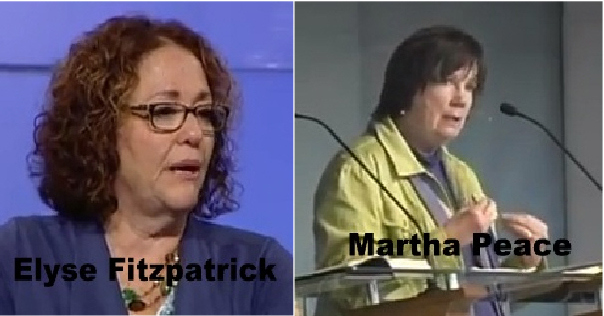
 It is my prayer that Reformed theology will one day be recognized in its rightful place among the cults. That Luther and Calvin will be spoken of in the same breath as Joseph Smith and Jim Jones. A day when Elyse Fitzpatrick and Martha Peace will be categorized with Mary Baker Eddy and Ellen White. This is the rightful place for the false gospel of progressive justification.
Heresy in Heels: The Queens of Progressive Justification
 “As one respected Reformed pastor noted: it is the same Catholic salvation that those of Reformed thought claim to refute.”
He is supposedly the Master who does all the work for us lest He be robbed of any glory. Somehow, if we actually do any of the work as born again slaves, that doesn’t honor the Master, but yet, he insists on being known as a master. It seems like God would want to be known by something else other than, “Lord.”
Using language that referred to the slave culture of that day, the apostle Paul said we were “bought with a price.” We were purchased as slaves with the blood of Christ, but the gospel that is all the rage of our day denies this very purchase and the lordship of Christ; it’s replaced with a supposed purchase of parasites.
As the heretic Paul David Tripp states it: we “rest and feed” on Christ. Got that? We are the slaves, He is the Lord, but we “rest and feed.” Really? And how valid is any profession of faith that doesn’t understand this relationship? How valid is a profession that accepts Christ as Savior only and denies the purchase?
Contemporary Reformed leaders of our day are now cashing in on this false gospel two-fold. The judgement they are heaping upon themselves for present-day cash is not enough—they are getting their wives in on the action. The organization True Woman .com is only one of many massive organizations saturating Christian culture with New Calvinism’s fusion of justification and sanctification.
The organization is led by several wives of the who’s who of neo-Calvinism—following their husbands in heresy. And I am not the only one saying so. Even those of the “Reformed tradition” label the neo-Calvinist active obedience of Christ (Christ obeys for us) as, “heresy,” “works salvation” by not working in sanctification, “easy believism,” and antinomianism.
When justification and sanctification are fused together, justification is not a finished work. The doctrine makes two justifications: one finished and one progressive. They deceptively refer to this as “progressive sanctification.” Hence, “progressive sanctification” is really finishing justification. That’s a huge problem because we are in the sanctification process and what we do can therefore effect our “just standing with God.” It requires a maintaining of antinomianism to keep our just standing before God; ie., sanctification by faith alone. But living by faith alone in sanctification becomes a way to maintain our just standing before God—for all practical purposes, works salvation by antinomianism.
It’s not an oxymoron; when justification and sanctification are fused together, everything we do in sanctification points back to, or effects our justification because at least one aspect of it is not finished. As one respected Reformed pastor noted: it is the same Catholic salvation that those of Reformed thought claim to refute.
Furthermore, the primary catalyst for the doctrine’s present success was its Sonship theology package hatched at Westminster Seminary by Dr. John “Jack” Miller. A self-proclaimed understudy of Miller’s, David Powlison, then made the doctrine the foundation of Westminster’s biblical counseling curriculum via CCEF. In a book written by Dr. Jay E. Adams, he clearly states that the doctrine promotes a view that sanctification is powered by justification. Clearly, even in the Reformed community, there is a dispute in regard to the very reason we are supposed to be here: the gospel.
But does the Reformed tradition trump gospel truth? The answer is a resounding, “yes,” especially in the biblical counseling community. The two primary queens of that movement are Elyse Fitzpatrick and Martha Peace. Fitzpatrick has openly denied that there is any such thing as an antinomian because man is helplessly legalistic. Like all good neo-Calvinists, the poo-pooing of specific biblical truth is done without a blinking of the eye. In this case, the biblical word “anomia” is completely dismissed. And apparently, Satan came to Eve in the garden as a legalist.
Peace is a hardcore New Calvinist proponent of the active obedience of Christ and sanctification by faith alone. But yet, these two women are the toast of the biblical counseling community—even by those who refute the neo-Calvinist take on double imputation (the active and passive obedience of Christ imputed to our sanctification).
Why? Because it’s really not about the gospel. That’s why. And as far as counseling, people can’t be helped with a false gospel. No way.
paul
Death to Mommy Perfection?
 Yet another book from the enlightened Christian class for us totally depraved zombie sheep. What’s the difference between a pope interpreting the Bible for us verses a steady diet of books from the enlightened class? None: the way of the noble Berean is fading fast. The newest is Amy Spiegel’s Letting Go of Perfection. Snippets from the Christianity Today review will give you the gist:
Why author Amy Spiegel wants us to let go of perfection, whatever that is, in favor of Providence.
As Christian women, have we set the bar too high for ourselves? Are we striving to achieve our own version of the American dream, some sort of Focus on the Family all-star clan where the kids all love each other, while also reading above grade level and excelling in at least two extracurricular activities?
This is an easy post. Would you hire a contractor to build your house who wrote a book entitled Letting Go of Perfection? Imagine finding out a few minutes before being wheeled into surgery that your surgeon wrote a book entitled Letting Go of Perfection. Yikes! As a former contractor who framed houses we knew the framing was not going to be absolutely perfect, but was that our goal? Of course it was, and much to the delight of the client.
It can all be summed up by the beloved apostle regarding the enlightened spiritual class of our day: “Claiming to be wise, they became fools.” Ya, do that: teach the ones that are raising the future leaders, surgeons, and builders of our day that perfection shouldn’t be our goal. Brilliant. Ya, hurry and buy that book as quickly as you can.
These same brainiacs interpret things that Jesus said in the Sermon on the Mount this way:
Jesus told us to be perfect like God so that we would go and try to be perfect, and then discover that it’s not possible—leading to us crying out, “I can’t do it! I can’t do it! Someone must do it for me!” [ie., Jesus].
No, Jesus warned us to not “relax” the standard of the law; in fact, the least of any commandment contained therein. And whoever does so will be least in the kingdom of heaven. We are not justified by keeping the law, but the new birth does not produce a relaxed attitude towards its standards of love, equity, and justice. That is why Jesus said that our righteousness must surpass that of the Pharisees. They actually revised the law of God with their own traditions in an attempt to make it easier to keep. That’s what you have to do when you think sanctification maintains justification (like John Piper et al). The Pharisees revised it with tradition, the New Calvinists do away with it altogether by teaching that Jesus keeps it for us.
Popes and books from the enlightened ones (like antinomian Elyse Fitzpatrick), Pharisees and New Calvinists—all the same difference.
paul
An Open Letter to the President of the National Association of Nouthetic Counselors
“This is the apostle Paul’s disparaged 3-verse system to fix a lack of peace. It is the wonderful hope that obedience to God’s word seizes upon His promises. And that’s why many NANC counselors strip their victims of hope.”
“The cited letter reflects the same things often taught by many board members of NANC and BCC. Because this doctrine combines justification and sanctification, it makes sanctification like a minefield because what we do in sanctification can affect the justification that supposedly powers it. This does not lay a healthy foundation for counseling”
Dr. Street,
The National Association of Nouthetic Counselors website states the following about your organization:
NANC exists to help pastors and those who would be ministers of the Word of God by providing help and encouragement. NANC is first and foremost a certifying organization. The certifying process is rigorous but attainable by even the busiest pastor. The process consists of the completion of an approved training course, the completion of a theological and a practical counseling test, several references, and a minimum of 50 hours of supervised counseling experience.
Furthermore, your organization refers hundreds of “counselors” certified by your organization. The purpose of this letter is to publically confront you in regard to the fact that NANC has board members, Fellows, and hoards of certified counselors who openly promote a blatant false gospel. I will first establish this fact, in case you are not aware of it, and then beseech you to tell me why this acceptable.
Much data could be provided as I have been sent several articles written by NANC Fellows that contain outrageous teachings; and apparently, NANC thinks nothing of sending troubled people to antinomian mystics. But I only need to quote one of your present board members, David Powlison. Powlison performed a lecture at John Piper’s church while Piper was on a sabbatical to eradicate “several species of heart idols” that he saw in his heart. Apparently, they were of the 8-month type because he was able to return to ministry at the pre-appointed time. Powlison stated the following at Piper’s church:
This might be quite a controversy, but I think it’s worth putting in. Adams had a tendency to make the cross be for conversion. And the Holy Spirit was for sanctification. And actually even came out and attacked my mentor, Jack Miller, my pastor that I’ve been speaking of through the day, for saying that Christians should preach the gospel to themselves. I think Jay was wrong on that.
Jack Miller was the father of Sonship Theology, a false gospel that is presently wreaking havoc on Presbyterian churches. It has also been known as Gospel Sanctification and is the primary catalyst for the present-day New Calvinist movement which has turned orthodoxy completely upside down. The doctrine is best explained by a theological journal that was its source:
Unless sanctification is rooted in justification and constantly returns to justification, it cannot escape the poisonous miasma of subjectivism, moralism or Pharisaism…. Since the life of holiness is fueled and fired by justification by faith, sanctification must constantly return to justification. Otherwise, the Christian cannot possibly escape arriving at a new self-righteousness. We cannot reach a point in sanctification where our fellowship with God does not rest completely on forgiveness of sins…. Christian existence is gospel existence. Sanctification is justification in action.
Miller adopted the theology and coined the phrase, “We must preach the gospel to ourselves every day.” “The same gospel that saved us also sanctifies us” is the New Calvinist mantra of our day. I receive many links to articles written by NANC Fellows who clearly hold to this doctrine. In fact, How People Change, written by Timothy Lane and Paul David Tripp (and based on Powlison’s Dynamics of Biblical Change) is a Sonship/Gospel Sanctification treatise. Tripp and Lane are also on the board of the upstart Biblical Counseling Coalition. That board is the who’s who of Sonship/GS/ NC, including hyper-antinomian Elyse Fitzpatrick.
On a church level, here is the fruit of this doctrine:
To the Ruling Elders of Southwood:
On September 4, 2011, our daughter and her family from Atlanta were here and we attended the Sunday worship at Southwood. After the service, our 13 year old granddaughter, who is well grounded in scripture, stated that she was very confused by the message. She had come away hearing that every good thing she does is wrong. Why would she believe that? We have gone back and listened again to that message, entitled “Duh,” and here is what we found:
The message is from Galatians 3:1-6. Paul is chastening the church for falling prey to the persuasion of the Judaizers, exhorting them again that God’s love for them was not by any of their own works but through the miraculous work of Christ and the Holy Spirit. Jean seems to take the written word beyond its intent. He subtly changes ‘God’s love’ to ‘God’s favor.’ He changes legalism to performance. He takes Jewish law and extends it to almost any action one does. Here are some paraphrased quotes from the sermon. “To keep God’s favor, the Galatians were believing they needed Christ and a dash of obedience which looks like those things called Christian disciplines. Christian walk Christianity is from the Devil. Faithfulness is feeling condemned for work you haven’t finished (as contrasted with faith: resting completely in Christ). Faith is a litmus test for teachers and leaders; the difference between faith in Christ alone and faithfulness is like the difference between truth and falsehood, between Heaven and Hell. Faith alone is all we will teach.” (Here Jean says this is what Paul is teaching but he gives no supporting scriptures to support his interpretation.) “Discern as false any book, sermon, or Bible study where you hear a dash of self justifying obedience. Self justifying obedience is from Satan.
Jean’s statements, combined with the tone and inflections in his delivery, imply that he is scornful of Christian disciplines, preachers, Christian writers, the Christian walk, obedience, faithfulness, good works, and an individual’s efforts. This message can lead to the conclusion that everything we do is evil and, by extension, that God and the Holy Spirit can do nothing through us. The message lacks balance and leaves sanctification out of the equation. A new believer under this teaching would be moribund after accepting Christ, hidebound in fear that he can do nothing right. While it is true none of us have all pure motives, it is also true that God commands us to go forward and that the Holy Spirit will be with us. God says we are His instruments for spreading the Truth. We cannot do this if we are strapped by guilt; we can do this if we seek partnership with the Holy Spirit.
From here Jean goes back to Paul saying “…since you were 100% depraved when you were brought into the Kingdom by the Holy spirit and by no works of your own, why are you trying to be perfected by your own human efforts? You are being deceived by the Devil.” I believe Jean is paralleling Paul in this. Jean then goes on to “We are like alcoholics ; we use Bible study, prayers, small groups, etc. as a crutch and the church rewards our ‘addiction’ with its approval. How would you know if you were addicted? Stop everything. If you feel anxiety, then you are afraid of leaving your ‘fix.’” So we ask: what does God have us do? Jean’s answer is “rest totally in Jesus.” So in turn we ask, what does Scripture say about resting totally in Jesus? But we hear no clear answer from the pulpit.
The cited letter reflects the same things often taught by many board members of NANC and BCC. Because this doctrine combines justification and sanctification, it makes sanctification like a minefield because what we do in sanctification can affect the justification that supposedly powers it. This does not lay a healthy foundation for counseling, and as Timothy F. Kauffman recently stated in the Trinity Review, when justification and sanctification are combined, anything we do in sanctification is works salvation—even doing nothing. It’s eerily reminiscent of Christ’s parable concerning the slothful servant. When such a parable is considered and compared to statements by Elyse Fitzpatrick and her spiritual big brother Tullian Tchividjian, it should make the hair stand up on a deceased person.
Moreover, the unfortunate results of counseling that comes from this doctrine can be seen in the following statement by a pastor who oversees a NANC counseling center:
We read this quote from Paul Tripp in last week’s Biblical Theology Study Center. Amazingly, part of the quote was used again the following evening during testimony time from someone not in our class…someone who resonated with the quote in the midst of personal crisis. For those who are involved in biblical counseling, it can be really easy (and tempting) for the Bible to become little more than a 12-verse system designed to fix a life. Tripp reminds us that the Bible isn’t a how-to manual, but a place where we find hope in a Person.
Compare that statement with what the apostle Paul said:
Do not be anxious about anything, but in every situation, by prayer and petition, with thanksgiving, present your requests to God. And the peace of God, which transcends all understanding, will guard your hearts and your minds in Christ Jesus.
Finally, brothers and sisters, whatever is true, whatever is noble, whatever is right, whatever is pure, whatever is lovely, whatever is admirable—if anything is excellent or praiseworthy—think about such things. Whatever you have learned or received or heard from me, or seen in me—put it into practice. And the God of peace will be with you.
This is the apostle Paul’s disparaged 3-verse system to fix a lack of peace. It is the wonderful hope that obedience to God’s word seizes upon His promises. And that’s why many NANC counselors strip their victims of hope. That, and confusing children who love the Lord.
So tell me Dr. Street, why is this acceptable? Why not come out from among them? Besides, the evidence that this doctrine was concocted by a Seventh-Day Adventist who is now an atheist is overwhelming. The truth will come out, and will eventually be accepted as truth. Why stick around and look stupid? Or, you could fix the problem. I beseech you Dr. Street, stop sending troubled people to false teachers. This is something that none of us want on our resume.
Paul Dohse

 Paul's Passing Thoughts
6 comments