Horton’s Systematic Theology Completes The Fix
 Revised:
The Fix is now in. What started out as Sonship Theology about thirty years ago—now has its own theology, hermeneutic, practical application, defined experience, ecumenical (inclusiveness) movement, history, college, counseling organization—and now, its own systematic theology. Gospel Sanctification, as Sonship is now called, will begin to totally rewrite orthodox Christianity. It won’t be long; those who we minister to will have to be deprogrammed before we can help them, starting with convincing them that the Bible is to be taken as literal instruction from God as our authority for ministry. Not understanding GS beforehand will make any attempt to help people with the word of God—dead on arrival.
GS Theology
The movement started with a very powerful concept in the minds of its perpetrators. Supposedly, we grow spiritually by revisiting the gospel that saved us every day. Proponents were convinced (and still are) that this thesis stands alone as truth; therefore, all other propositions must bow to it. Though Covenant Theology will work with GS, New Covenant Theology was developed to bolster the Sonship thesis. NCT was developed where Sonship was also born: Westminster Seminary.
The GS Hermeneutic
A literal interpretation of Scripture will continually contradict GS. So, the proponents have changed how we read / interpret the Bible accordingly. The GS hermeneutic is an interpretive prism that will always yield results that make GS plausible. Unlike the rest of the elements (which are very contemporary), the hermeneutic (known as Biblical Theology or Redemptive-Historical hermeneutics) was borrowed from times past. It originated in Germany under the liberal teaching and writings of Johann Philipp Gabler (1753-1826), who emphasized the historical nature of the Bible over against a “dogmatic” interpretation thereof. Nearly a century later, Geerhardus Vos (1862-1949) was instrumental in taking the discipline of biblical theology in a, supposedly, more conservative direction.
Practical Application
The GS narrow approach to sanctification must be embellished and applicable to life in some way in order to be sold. This is Heart Theology, and was developed through David Powlison’s Dynamics of Biblical Change at Westminster Seminary. In 1996, two former students of Powlison articulated Heart Theology in a book entitled, “How People Change.”
Defined Experience
John Piper seeks to articulate how Sonship is experienced via Christian Hedonism. Because GS makes our works and the work of the Spirit an either / or issue, someone needed to develop a thesis that explained how the difference can be ascertained. John Piper answered the call with the development of Christian Hedonism.
Ecumenical Bent
GS now encompasses any group that agrees with its primary view of plenary monergism and the synthesis of justification and sanctification. All other disciplines are seen as secondary and irrelevant to fellowship and joint ventures. The Gospel Coalition (holding national conferences on odd years, 2011, etc.), and T4G (Together For The Gospel, holding national conferences on even years) work together to promote GS/S while promoting inclusiveness among denominations and religions.
College
The Antioch School of leadership training has GS as its foundation and basis for training. It is located in Ames, Iowa.
History
GS proponents claim a historical precedent dating back to Creation. Of course, this is laughable. Sonship, the Antioch school, TGC, T4G, NCT, CH, and HT have no historical precedent prior to 1970. Most of the notable proponents of GS are associated in some way with those who created Sonship Theology: Edmund Clowney, and primarily, Dr. John “Jack” Miller. Tim Keller and David Powlison were followers of Miller. Paul Tripp and Timothy Lane are followers of David Powlison. Jerry Bridges attributes his view of the gospel to Miller as well.
Counseling Organization
The upstart Biblical Counseling Coalition, which seeks to network other counseling organizations as well, is intimately associated with T4G and The Gospel Coalition. The who’s who of Gospel Sanctification sit on its governing board including David Powlison and Paul David Tripp.
The Complete Fix
With Michael Horton’s recent publication of “The Christian Faith: A Systematic Theology for Pilgrims On the Way” (2011), the total fix is in place. The GS machine will now begin to move forward—rewriting and re-forming orthodox Christianity. I confidently predict that Horton’s book will be widely used in seminaries nationwide. Seminary students will be pumped into the local churches with a skewered view of truth—but using all of the same terminology that was formally orthodox.
What Can Be Done?
This doctrine thrives on the fact that Christians are theologically dumbed-down. If most Christians do not know the difference between justification and sanctification (and they don’t), they are helpless against this false doctrine. If most Christians don’t realize the importance of understanding hermeneutics (and they don’t), they are even more helpless. Local churches need to start in-doctrine-ating their people.
paul
A Big Fat Lie: “Tripp Has Taken Powlison’s DBC Too Far”
No one is better than David Powlison for throwing people under the bus. He will throw you under it, and in some cases, continue to run you over: first forward, then backing up and running you over again. Strangely, he will then publicize (either in print or publicly) his reasons for running you over while flavoring the reasons with compliments—if you’re elderly, apparently, the younger suffer full traction without compliments.
Larry Crabb has suffered Powlison’s wrath since the early 90’s for not being nuanced enough. Supposedly, Crabb and he never agreed on anything, and of course, Powlison was dismayed by Crabb’s book, “Inside Out” which claimed that Evangelicals denied an “inside life,” and all truth is God’s truth. Crabb also said in IO that the church needed Freud’s wisdom to figure it all out. Powlison has no patience for that kind of honesty: you’re supposed to accuse them of denying that the heart has to change first and refer to truth as stuff in the Bible that the church forgets about. When rediscovered—you never, never, admit that God showed it to guys like Freud; instead, you cite really, really old Catholic bishops.
Apparently, Powlison now finds himself in the same dilemma with Paul Tripp who articulated his “Dynamics of Biblical Change” in a book authored by Tripp and Timothy Lane entitled, “How People Change.” Tripp plainly states in the book, among other things, that Christians remain spiritually dead, and passive endeavors such as changing our thinking to that of Christ is a denial of the gospel. Hence, I heard the rumor again last weekend: “Paul Tripp has taken DBC farther than Powlison intended.” Anybody smell diesel fuel?
However, the rumor must be working because Tripp and Powlison will be sitting on the new board of the Biblical Counseling Coalition together where they can once again giggle (because undoubtedly, the rest of the board thinks they’re orthodox), pass notes to each other, and sip lattés while cursing Moses under their breath. Only problem is—it’s a lie. I went ahead and copied documents for comparison purposes: things Tripp and Powlison wrote together at CCEF that can be compared to “How People Change.” It’s all the same stuff—stuff that the church has forgotten, but now interpreted in its “socio-historical context.” The information is almost identical, and was easily gathered in cursory fashion. It should be self explanatory, but I can produce more information if necessary.
Written by Tripp and Powlison in 2003:
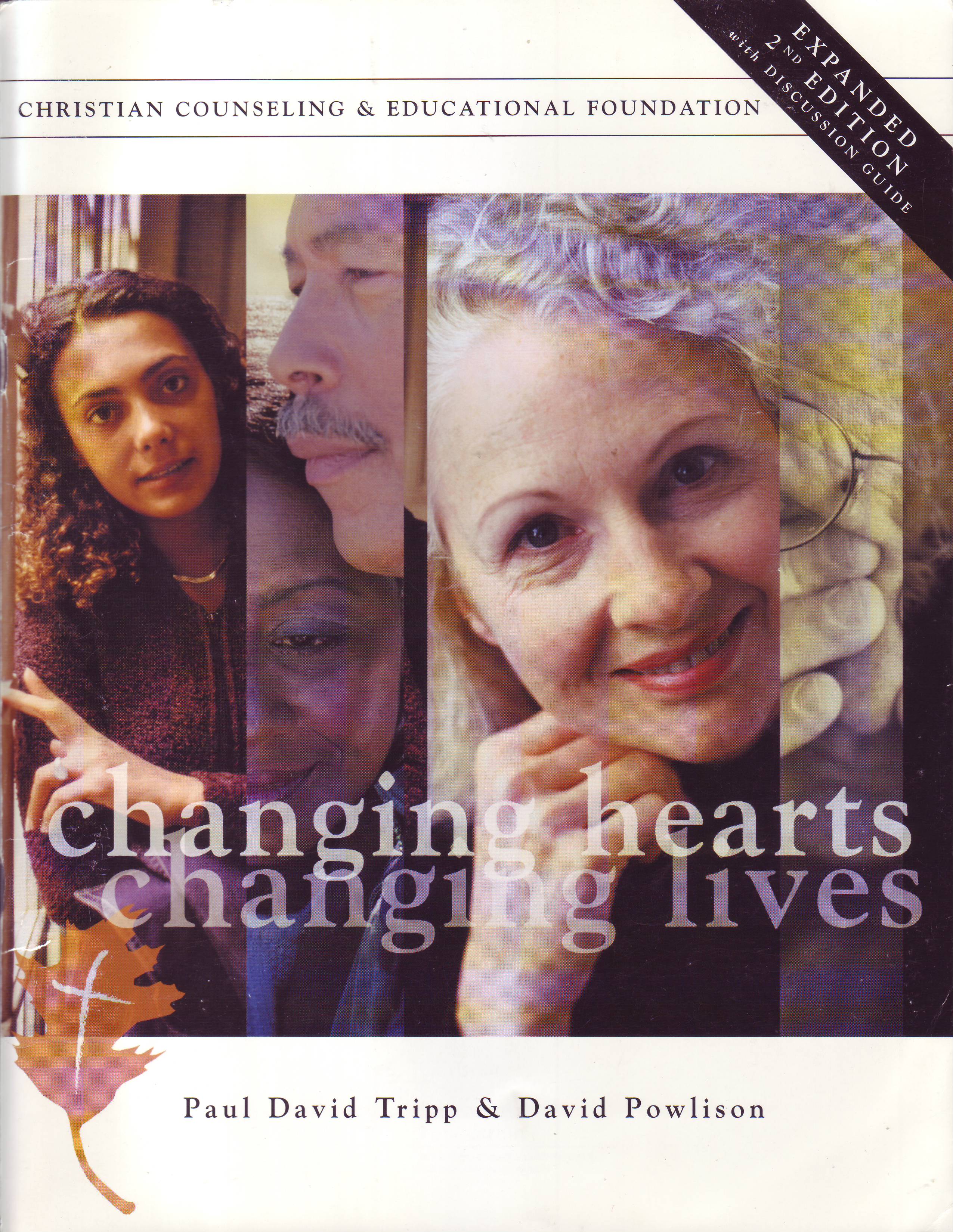
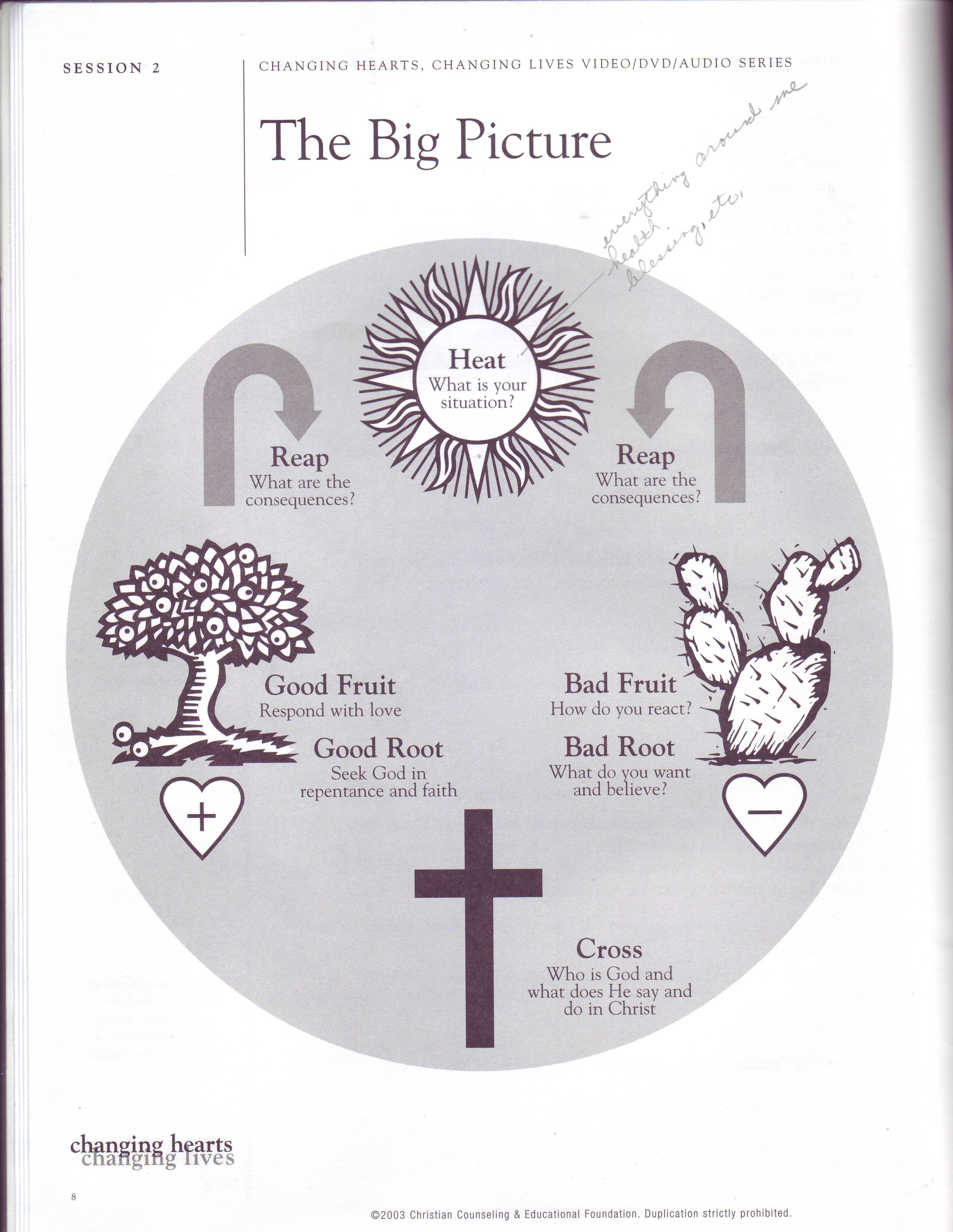
“How people Change,” Paul Tripp, 2006:


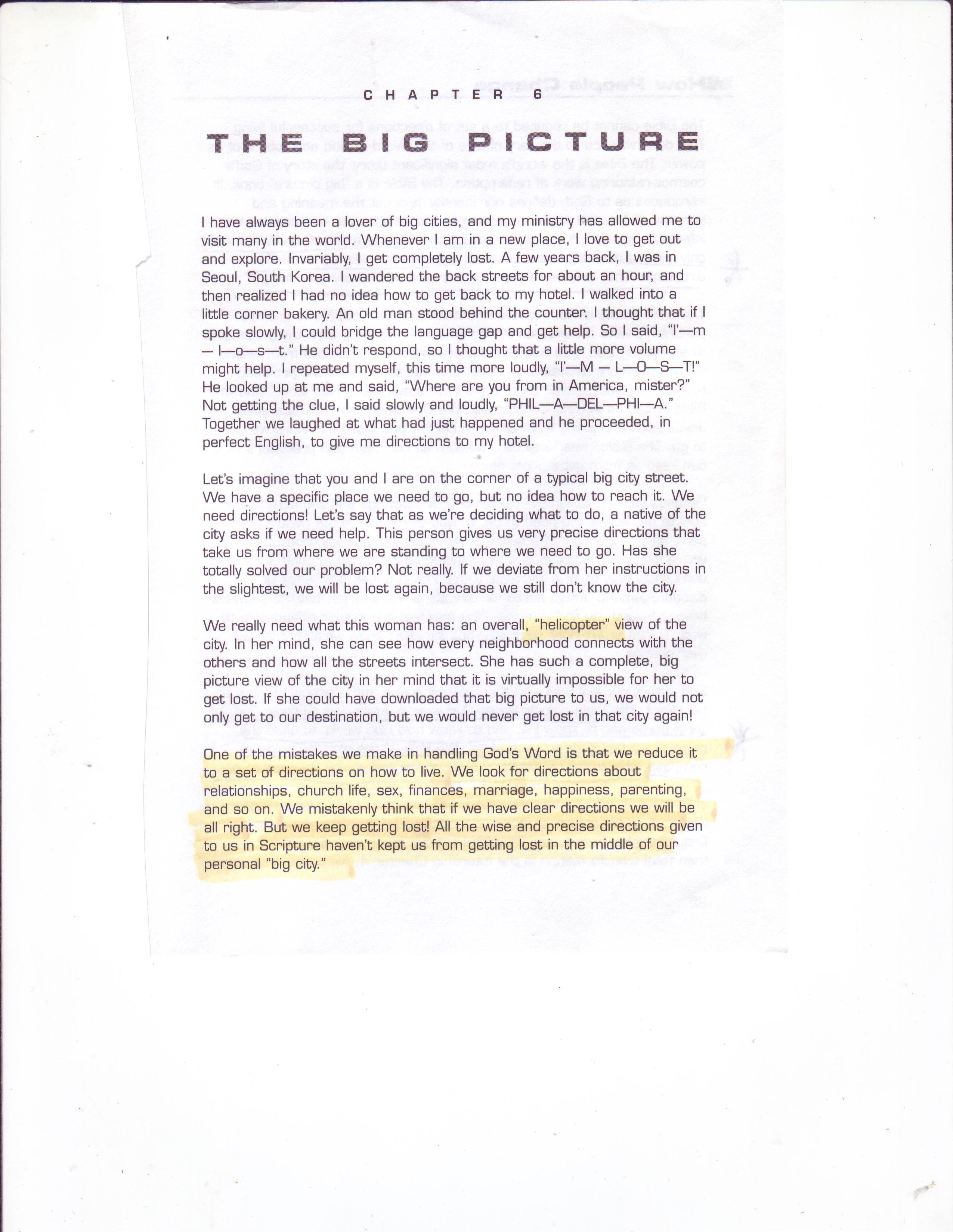
CCEF’s pilot / test program prior to the release of Tripp’s “How People Change”:


Tripp’s “How People Change” 2006:

Written by Powlison in CCEF’s Journal of Biblical Counseling:

Tripp’s “How People Change” 2006:

TGC Part 20: Directory May Give Clue Regarding What GS/S Churches “Look Like”
This will be the last part in this series concerning The Gospel Coalition. While looking into the possibility of posting a directory of Gospel Sanctification / Sonship churches—it quickly became evident that such a task would be too time consuming. Unfortunate, because many give testimony to the fact that the average lay person will spend two years figuring out that their leadership has adopted the GS/S doctrine. In all cases reported so far, the eldership of GS/S churches refused to come clean to the very end.
Therefore, the best course of action is to refer Christians to the TGC Network Church Directory: http://thegospelcoalition.org/network/church-directory/
On the list is a church in Springboro, Ohio named Clearcreek Chapel (hereafter: CCC). CCC, often referred to as “Clearcreek Cult,” and “Cloudy-Creek Chapel” by former members, is one of the most respected churches among the who’s who of GS/S. The church was founded by Dr. John Street, a prominent board member of the upstart Biblical Counseling Coalition which is intimately connected with TGC and T4G. DA Carson, Jerry Bridges, and Robert Jones have done conferences there (CCC), and Paul David Tripp speaks there often. CCC was one of the pilot churches that tested David Powlison’s “Dynamics of Biblical Change” before it was published as “How People Change” authored by Tripp and Timothy Lane. CCC is also a NANC training center.
Therefore, CCC, as one of the first independent Reformed churches to ascribe to the GS/S doctrine, could represent what churches who follow GS/S doctrine may look like in future years. For expediency, I will use an unpublished (until now) document that expresses concerns regarding CCC—and it also makes a good questionnaire for other churches that hold to this doctrine. The document was derived from actual events and testimonies from former members.
An Open Challenge To Clearcreek Chapel In Springboro, Ohio:
I. A primary hallmark of a cult is covert doctrine and church policy that is gradually assimilated into the thinking of its members incrementally. The organization “CultWatch” states the following: “…if people knew their true practices and beliefs beforehand then they would not join. A cult needs to hide the ‘truth’ from you until they think you are ready to accept it.” Therefore, we challenge the Chapel elders to fully reveal what they believe about the following doctrine and policies to all present members, new members, and visitors:
A. Sanctification: Please inform them that you believe that sanctification is purely monergistic in the same way as it is in justification, and that participation by believers in the sanctification process is a false gospel.
B. The Word of God: Please inform them that you believe that every verse in the Bible is about justification only, and that the Holy Spirit is only active in sanctification when the Scriptures are used to that end only. Affirm or deny that Christians need salvation every day.
C. Church Discipline: Please inform them that you believe that any member can be placed into your church discipline process at any time, and for any reason, and without prior notice. Please inform them that a verbal repentance from the subject does not end the process, but that true repentance must be determined by elders over time. Please inform them that they are not free to leave the Chapel until they are released from this discipline process by the elders, and that any attempt to do otherwise will result in excommunication. Please inform them that all subjects who enter into formal, or informal counseling, are considered to be in the discipline process, and are not free to leave Clearcreek Chapel until they are released from counseling. Please inform them that you believe that you have the authority to place any individual into your church discipline process regardless of membership status, including those who have never been a member of Clearcreek Chapel in the past.
D. Divorce: Please inform all present members, new members, and visitors that you believe that your members are free to divorce any spouse that is unbelieving, or declared to be unbelieving by you because of a wide range of perceived failures as a spouse. Also, many of these perceived failures can be considered abandonment even if the spouse has not physically left or filed for divorce. Furthermore, in regard to an unbelieving husband, you believe that he has no authority in the home, but that his authority resides with you instead.
E. Elder Authority: Affirm or deny that God will honor any decision you make as long as it is according to the single law of love governed by your own conscience (as supposedly formed by reading the “gospel narrative” only), and to the exclusion of objective, biblical imperatives, and the authority thereof.
F. Church Membership: Affirm or deny that members need permission to leave the Chapel for another congregation. Affirm or deny that members can be brought under church discipline if the elders affirm that they are leaving for “unbiblical” reasons.
II. Cults propagate a strong exclusivism mentality among their members. Clearcreek Chapel members are characterized by a predominant attitude that the Chapel is the only truly relevant ministry within hundreds of miles. This mentality is clearly propagated by the elders of Clearcreek Chapel and would be necessary by default because of your belief that synergistic sanctification is a false gospel, which is far from what most churches consider orthodox.
III. Cults inflict fear through character assassination and inimidation. Character assassination in regard to those who have left the Chapel is rampant, and the elders stand by and give approval by participating or refusing to stop this activity, regardless of the pleadings from those who have left. This is a well documented fact. CultWatch says the following in regard to this third element: “Character Assassination is a sure sign of a cult,” Also, “Cult leadership is feared. To disagree with leadership is the same as disagreeing with God.” Fear of leadership at the Chapel is very prevalent and easy to ascertain.
IV. Information control is a sure sign of a cult. The Chapel elders have specifically told parishioners that observing a particular website critical of the Chapel is “sin.” Because any sin is cause for church discipline at the Chapel; in essence, you are clearly threatening church discipline for anyone who observes the site. A member was instructed by the Chapel elders, in writing, not to study doctrine or attempt to ascertain an understanding concerning your hermeneutics. One elder told the same member not to be concerned with the Chapel’s doctrine for “at least two years.” The following is another quote from CultWatch: “If you are instructed by a group not to read information critical of the group, then that is a sign of a cult.” Also, “legitimate groups have nothing to fear from their members reading critical information about them.” We therefore challenge the Chapel elders to encourage the congregation to read material critical of Chapel doctrine and elder behavior, and also assure them that there will be no retribution for doing so.
V. Love Bombing and relationship control are also signs of a cult. Love bombing is a Clearcreek staple. When an elder was caught having an inappropriate, divisive conversation with a Chapel spouse, he offered “love” as a defense in plain contradiction to biblical instruction. The motivation of supposed love is license to do what is right in your own eyes at the Chapel, regardless of Scriptural guidelines. This also speaks to your antinomian doctrine. The Chapel elders seek to drive a wedge between spouses when one spouse challenges your doctrine. This is well documented, and is a staple mode of operation used by Jehovah Witnesses. A constant, and unbalanced emphasis on love also replaces concern for sound doctrine in dramatic fashion at the Chapel, and is a distinctive mark of a cult. Also, on numerous occasions, members who have left the Chapel have been instructed not to associate with present members, and have been threatened with church discipline accordingly. Chapel members have also been instructed not to ever speak to specific members, and others who have left the Chapel. Weekly flock meetings are used to disparage individuals who have left the Chapel and to set the table against possible conversations that may take place at a later date. CultWatch says the following: “Beware of a group that tells you who you can and cannot see.”
VI. Cults will usually have reporting structures. Elders are placed in strategic relationships with people who are perceived as individuals who may question doctrine. Elders will often invite parishioners or visitors to weekly breakfast meetings for the purpose of keeping tabs on what they perceive at the Chapel. A members wife was recruited to feed the elders private information concerning who her husband was associating with and other private information. The elders also recruited a member to be an “encourager” to him during a time when they were concerned that he would confide in others. CultWatch says the following: “Is information you expect to be kept confidential reported to the leadership? If so, then it’s a cult.”
VII. Cults practice high pressure coercion. To say that members who leave the Chapel to join other churches are made to feel uncomfortable, and threatened, would be an understatement. For members to leave the Chapel without some kind of tension is often a balancing act. In fact, at least one member was held there under threat of excommunication for unbiblical reasons, and against his own wishes, for almost four months.
VIII. Cults practice time control. The idea is to keep subjects preoccupied with constant events to prevent contemplation in regard to doctrine, personal involvement, or involvement with those outside of the organization.
IX. Cult leadership is not accountable to outside organizations or the congregation. We challenge the Chapel elders to repeal changes they have made to Chapel polity in order to implement plenary elder rule.
X. Cults seek to control their subjects through coercion and fear in regard to finances. We challenge the Chapel elders to repent of teaching the congregation that God curses all of those who do not tithe ten percent of all financial increase to the Chapel.
“The ‘Gospel’ Coalition” Series, Part 15: How Does GS / Sonship Work?
Once you bring people to the point where they can wrap their brain around GS, inevitably, this question follows with an incredulous expression on their faces: “How does this supposedly work in real life?” I have developed a visible chart following this post that will hopefully aid in understanding
Remember, GS / Sonship is sanctification by salvation / justification, so, like salvation, you can only implement belief and repentance to effect sanctification. Therefore, under “Gospel Narrative,” you have the “Belief” and “Repentance” circles. If sanctification is by salvation, then the Bible only addresses justification. Hence, at the top of the chart we have the “Gospel Narrative” circle. The Bible, or gospel narrative, helps us with all of the other circles. In fact, in their view, the Bible could actually be organized according to these circles. Paul Tripp has a similar chart in “How People Change.” It’s just a different way to explain the same thing, except I go beyond his primary “change” thesis and implement some of the theology as well. In chapter 6, Tripp explains this GS “big picture” hermeneutic. He specifically states in chapter six that the whole Bible can be organized according to his chart, and more than once cautions his readers that the information is not “a set of directions, but an aerial view of daily life….” Many GS counselors now use such visual tools to avoid instructing counselees with “do’s and dont’s” and “lists.” The goal is to show the counselee where they are in the gospel narrative, and thereby illuminating the gospel to a brighter level in the mind of the counselee. Tripp claims that his model (a redemptive-historical model) is derived from the book of Jeremiah; but of course, that’s ridiculous.
We will examine the belief leg first and then move to the repentance leg in explaining how these two effect change. Supposedly. Reading the gospel narrative with, as John Piper says, “an eye toward the cross,” we begin to “treasure” (see Treasure circle) Christ and the gospel more and more which contributes to the endgame (the New Obedience circle). Note the Law Positive circle: all of the commands in the Bible are to be seen as what Christ fulfilled for us—a bunch of laws that we could never keep anyway; so instead of seeing them as laws to be obeyed, or instruction, we are to see them as a way to cultivate thankfulness for the works of Christ, “not anything we do.” Therefore, one of the pillars of faith concerning the gospel narrative is its documentation of all of the laws that Christ obeyed for us.
Repentance is the major component of GS. Almost everything is geared towards removing idols from the heart (anything we love more than Christ). As we remove idols from our heart through confession, the void is filled by Christ which results in New Obedience (HPC p.28). Therefore, all of life is geared toward a warfare with idols of the heart. All circumstances are seen as an opportunity to reveal heart idols through our responses (see Response to Circumstances circle). In “How people Change,” it’s the “Heat” circle on Tripp’s chart. Idols of the heart produce evil desires, i.e., anything we love more than Christ; so, an examination of the desires can reveal what the idol is that is causing the sin. This is done through asking ourselves questions that help determine what we loved / wanted / desired more than Christ (see Interpretive Questions circle). David Powlison and Paul Tripp refer to these as “X-ray questions” (HPC p. 163).
“Law Negative” has to do with using Scripture as law, and not gospel / Spirit. The Bible is used for the purpose of (as Michael Horton states it speaking of biblical imperatives): “….drive[ing] us to despair of self righteousness.” GS counselors will often do this, especially during redemptive church discipline. Supposedly, it reveals the folly of trying to obey the law / Scriptural imperatives. Paul Tripp calls such an effort on the part of the believer, “Christless activism.” So it also serves in revealing idols of self righteousness as well. The goal of Law Negative is to bring the counselee to the point where, as Bill Baldwin conveys it—the counselee says, “’I cannot keep it! Someone must do it for me!’”
Once idols are identified and the desires that they produce (by the way, Scripture says sinful desires come from the flesh, not the heart), they can be repented of and replaced with a contrary desire produced by the gospel narrative. This whole process is called “deep repentance,” and replacing the sinful desire with a desire spawned by the gospel narrative is called the “reorientation of desires / heart.” By contemplating the gospel and partaking in deep repentance, we are strengthened to make two primary facilitators of change possible: new desires, and in some veins of GS, “yielding.” Many in the GS movement, like John Piper, believe that we are completely driven by desire. So, by changing the desires—you change the behavior. Of course, this is eerily similar to Freudian Depth Psychology. Others believe that the flesh and the Spirit are figurative realms, and at any moment we yield to one or the other. They also make a distinction between the Spirit and the law—the law brings death like the flesh realm, and the Spirit brings life. Of course, this is eerily similar to Gnosticism.
This all results in the filling of Christ, which results in “New Obedience,” which is always earmarked by experiencing obedience as a “mere natural flow” accompanied by joy.
paul

“The ‘Gospel’ Coalition” Series, Part 13: Dr. John Street Joins the Noun Coalition
Just yesterday, when I was introduced to the new gospel upstart organization in our everything gospel church culture, I was verbless. Somebody sent me a link to the upstart’s Facebook page (the “Biblical Counseling Coalition”) which posted this statement: “Sanctification is the art of getting used to our full salvation: justification, regeneration, redemption, reconciliation.”
Rush Limbaugh often says “Words mean things,” but [do] they really? After all, I did some investigation and this new coalition is overseen by the spiritual brain-trust of our day. So, when the apostle Paul described sanctification as “abstain[ing]” (1Thess 4:3), “running” by obedience (Gal 5:7), also through obedience: “work[ing] out….with fear and trembling” (Phil 2:12), beating our bodies into subjection, discipline, running a race, and for a prize (1Cor 9:24-27); surely, we peasants of this contemporary dark age must be misunderstanding him because that’s a lot of verb-iage. Since Michael Horton says the purpose of corporate worship is for reviving our valley of dead bones by contemplating the gospel, should we forget all that stuff in Hebrews about encouraging each other unto good works? Should we rather relax and say, “Hey bro, how are you coming along in the art of getting use to you salvation?”
Inquiring minds, what’s left of them, want to know. Because one of the board members of this coalition is David Powlison, we could have a clue. In an interview with Nine Marks, Powlison said that the church forgets stuff, but when it is rediscovered by CCEF’s Research and Development Dept., it has to be reevaluated in a contemporary historical context. Hmmmm. Powlison also believes that a thorough search must be made of all past and present philosophies, literature, history, etc., just in case God has shown other people stuff that he hasn’t shown the church, or has shown the church in the past, but was forgotten, because the church forgets stuff. At this years TGC (The Gospel Coalition) 2011 conference, Powlison will be conducting a seminar on “Recent Advancements in Biblical Counseling.” So, for all of you that draw propositional truth from interpreting the verb, noun, subject, preposition, etc. structure of sentences in the Bible, you may not want to miss that seminar if you really want to able to take the word and help people.
Yet another clue may come from another board member of the BCC, Paul David Tripp. He believes that biblical verbs must be seen in their “gospel context.” In other words, all verbs in the Bible pertain to Jesus. In “How People Change,” Tripp says that the art of getting use to our sanctification is “resting and feeding” on Christ. In the same book, Tripp also writes, like Michael Horton in “Christless Christianity” (or, “Verbal Christianity”), that Christians are dead, and as Tripp states it in HPC: “When you are dead, you can’t do anything.” Tripp also mentions in the same book that Christ is not a cognitive concept that we apply to life, but he is a “person.” Got that? No cognitive concepts, just the personal pronoun.
But another board member that caught my eye on the list was Dr. John D. Street who has actually counseled me in the past. I have been reluctant to write in regard to him previously because I am privy to the fact that he used to employ lots of verbs in counseling that applied to the counselee, and I didn’t want to get him into trouble. In fact, I was a perfect candidate for this new form of counseling when I came to him many years ago. I remember coming to one of our appointments and proudly proclaiming: “I have read my Bible and prayed for—four hours!” Now how do you like that for contemplative spirituality?! His answer? “I’m not going to tell you not to do that, but the power is in the doing.” Ouch! I can just imagine the look of horrific angst on Powlison’s face.
Back then, I think Street might have got this idea from the old way of interpreting the Bible. “But the one who looks into the perfect law, the law of liberty, and perseveres, being no hearer who forgets but a doer who acts, he will be blessed in his doing.” “But” is a coordinating conjunction which indicates contrast in this sentance; so being interpreted, don’t do the previous verses—hearing only, and not doing. But that exact contrast that James warns us of is the mantra of the new biblical counseling movement. I was recently sent a webinar conducted by a NANC Fellow who was clearly propagating a hearing only model of change that left the results up to being “amazed by the gospel.” Apparently, James didn’t get the memo. He presents hearing and doing as two components that work together to bring about—at the very least, blessings. The blessings occur where? Well, if we answer that question by finding the preposition, the blessings are “in” the “doing.” Also note that James does not present the gospel as the primary motivator, but rather blessings.
There is no misunderstanding about how this false approach to counseling fleshes itself out in real life. I was a longtime member and former elder at Clearcreek Chapel, the church John Street founded in Springboro, Ohio. The church is presently endorsed by both CCEF and NANC, and is a NANC training center. Two members on the upstart BCC board, Robert Jones and Paul Tripp, speak there often. My information regarding this doctrine includes hundreds of hours of discussion with the Clearcreek elders, who again, are highly respected in GS / Sonship circles. The pastor of the church, Russ Kennedy, has said, “Any separation of justification and sanctification is an abomination.” Obviously, this can only leave sanctification by justification as the dynamic for change. This can also be seen in the statement regarding sanctification as something we “get used to” as opposed to what the apostle Paul taught. Though the movement is hideously covert, if one pays attention, their noun-iage exposes them from time to time.
The former Clearcreek elder who was in charge of counseling at Clearcreek once announced from the pulpit (at Clearcreek) that he learned to read his Bible in “a whole new way” from Chad Bresson, Clearcreek elder and author of “Vossed World,” a blog that promotes the belief that the Spirit only illuminates the word of God in a gospel context. Bresson also believes the postmodern concept that because truth is in a person, it cannot be propositional or cognitive / objective, which is why the Bible is strictly a narrative and not for instruction. Presumably, this is why Dan Turner, another elder / counselor at Clearcreek, sometimes (if not all the time) draws diagrams of people’s lives and shows them where they are at in the diagram / picture / gospel narrative as a way of avoiding an instructive paradigm. I once heard Turner explain how a marriage was miraculously transformed before his eyes after showing them the glory of the gospel from the Scriptures. Turner also told me that I was like the Pharisees because I believed that Scripture should often be used to determine objective truth. No surprise then that the elders at Clearcreek were never heard (while I was there) saying, “How do we do that?” But were rather heard saying—often, “What does that look like.” In fact, we were taught that the “how” word was indicative of a heart problem, and the use of that word in a question to an elder resulted in a repeating of the word (how) back to the inquisitor in question form to correct the parishioner.
Will the BBC be able to help people with a counseling model based solely on nouns? I doubt it. Will John Street get kicked-off the BCC board for taking James literally? Or has he repented of such Phariseeism? Perhaps he now says: “I’m not going to tell you not to obey, but the power is in the contemplation.” I hope he hasn’t, but if not, what does that look like? “[Run] John, [run]!”
paul

 Paul's Passing Thoughts

leave a comment