Why Christians Can’t See the Total Absurdity of Total Depravity
 “One can clearly see here where Powlison wants to take the plain sense of Scripture and apply the Socratic dialectic; ie, start asking questions about the obvious because truth couldn’t be that easy, and if it is, any Spirit indwelled Christian can do truth at home which is a huge problem for the philosopher kings. Empirical Objectivism puts the power of understanding in the hands of the common people. It is enemy number one for the Platonic New Calvinists.”
1. Background: No New Arrogance Under the Sun
This whole philosopher king idea is really getting traction in my mind and begs for a discussion on Calvin’s total depravity. As I read more and more Socrates and Plato, I keep looking at the cover of the book to make sure it wasn’t really written by some New Calvinist: “Er, did I pick up the wrong book from the stack?” Socrates didn’t like to be questioned with challenging questions. Most of his dialogue was through questions because he believed that was how truth was rediscovered in the mind—through interpretive questions. Socrates didn’t mind inquisitive questions, they were efficacious to the process, but challenging questions in regard to his positions offended him. He had a specific response when he was challenged accordingly: he would sarcastically reverse the roles of teacher and student, and ask questions as the student while making the student the teacher. Sometimes he was very subtle about it to the point that the student was not aware it was going on; apparently, to amuse the gods.
2. Background: No New Interpretation Methods Under The Sun
Before we get to our subject of total depravity, I might mention that this exact same interpretive dialogue schema to determine truth is used by such New Calvinists like Paul David Tripp to discover what our heart idols are. He got the idea from mystic heretic David Powlison who dubs the method, “x-ray questions.” Much of “How People Change” is devoted to this Socratic method. It is also an important part of Neuro Linguistic Programming (used by motivational speaker Tony Robbins) which is a practical modeling application of Neuropsychology (Ed Welch of Powlison’s CCEF holds a Ph.D. in Neuropsychology). Socratism is also the bases of many schools of thought in psychotherapy—especially that of Carl Rogers. As an unbeliever, I was counseled by a Rogerian psychologist and the dialogue was very much like what it would have been with Socrates and one of his students 2500 years ago. This is known as the Socratic dialectic.
3. Background: No New Need For CONTROL Under The Sun
Socrates, and his understudy Plato, taught the governing/aristocratic philosophical class of Athens Greece which was only 10% of the population. Some historians estimate the slave class in that culture as being around 90% of the population. So, the last thing you want is 90% of the population thinking for themselves and coming up with their own ideas. Ideas have a lot of power, and people are inclined to act on them if they think their ideas are really good, or true. Unfortunately, this is the effect that the rulers of Athens were afraid Socrates would have on their society, so they executed him when he refused to go into exile. In case you are curious, executions during that time were boring—they merely brought a cup of Kool-Aid to your jail cell and you drank it.
Later, when Plato founded the first institution of learning in western culture, the Academy in Athens, he made it clear that the philosopher kings were the only ones who had knowledge, and that they should rule over the masses. This was much more acceptable than what Socrates claimed—that the ruling class didn’t know anything because they thought they did. Leveling the playing field to those who simply admit that truth is not definitive, while dissing the ruling class for not knowing anything, was just really a bad idea. There was no middle class to buffer the tipping of the scales.
3A: The Doctrine of Incompetence Necessary for Control
And like the true God, truth was a trinity: beautiful; good; true. However, to claim to know everything about truth would be the same as knowing everything about God. Both Plato and Socrates taught that truth was subjective at best and unknowable in the worst case:
I know not how I may seem to others, but to myself I am but a small child wandering upon the vast shores of knowledge, every now and then finding a small bright pebble to content myself with.
I’m trying to think, don’t confuse me with facts [thinking leads to truth apart from observable criteria].
How can you prove whether at this moment we are sleeping, and all our thoughts are a dream; or whether we are awake, and talking to one another in the waking state?
What truth that the philosopher kings can muster up is societies best shot. Overall, Plato believed that man was inept and should be ruled by philosopher kings who are a little better off because they at least know that truth can’t be known, and if we can ascertain truth at all—it’s not through what can be experienced through the five senses. That leaves the subjective intuition of the mind that is helped in the process (as much as it is one) through the Socratic dialectic. Later, Augustine took these concepts and integrated them with theology. One result of this integration was the idea that man is totally depraved. And that includes saved men as well. Now, by contrast, Plato and Socrates believed man, given a crystal ball, would always choose what’s best, and that his downfall was IGNORANCE (Plato: “Ignorance, the root and stem of every evil.”). Whether a man was good or evil was irrelevant to their school of thought. BUT, the crux of the issue was transferred: the inability/incompetence of man.
3B: Intuitive Subjectivism Verses Empirical Objectivism
Why do the saints of our day buy into such doctrines as total depravity when Scripture plainly teaches otherwise? Because a literal interpretation of Scripture is the same as trying to obtain truth through what can be observed—that’s why. To the Platonist, the idea that objective truth can be obtained at all, much less by evaluating the verbs, nouns, subjects, direct objects, etc. in a sentence, is absurd, and will incite sneers every time. And, this same idea can be found throughout New Calvinist teachings in this present day. In the book, How People Change, Paul David Tripp decries a literal interpretation of biblical imperatives that should rather be seen in their “gospel context.” Even in regard to following the biblical imperative to change our thinking (in the same book), Tripp objects by complaining that Jesus comes to us as a person, not a “cognitive concept” that we apply to our lives as a “formula.” Today’s Reformed philosopher kings have access to the higher knowledge of seeing the gospel and the personhood of Jesus in every verse.
Obviously, this can’t be done empirically if the subject of the verse is not the gospel; unless of course, you are gifted with the correct Reformed metaphysics. Coming to conclusions by Interpreting verbs, nouns etc. are merely Platonist shadows of the real form and not the true reality. New Calvinist Paul Washer has complained that evangelicals propagate a reductionist gospel when the truth is supposedly that the gospel is eternal and unknowable. It’s all the same basic philosophy dressed up in biblical terminology.
Incredibly, this very same contention can be seen in David Powlison’s complaints about Jay Adams in our very day. While lecturing at the church of Reformed heretic John Piper, Powlison stated the following:
I think there’s been a huge growth in the movement in the understanding of the human heart, which is really a way of saying of the vertical dimension. And I had an interesting conversation with Jay Adams, probably 20 years ago when I said, why don’t you deal with the inner man? Where’s the conscience? Where’s the desires? Where’s the fears? Where’s the hopes? Why don’t you talk about those organizing, motivating patterns?
And his answer was actually quite interesting. He said, “when I started biblical counseling, I read every book I could from psychologists, liberals, liberal mainline pastoral theologians. There weren’t any conservatives to speak of who talked about counseling. And they all seemed so speculative about the area of motivation. I didn’t want to speculate, and so I didn’t want to say what I wasn’t sure was so.
One thing I knew, obviously there’s things going on inside people. What’s going on inside and what comes out are clearly connected cause it’s a whole person, so I focused on what I could see.”
In other words, Adams was asserting that since behavior is connected to the heart and motivations anyway, why not focus on what can be objectively observed and apply empirical biblical solutions? The invisible interworking’s of the heart is subjective at best, and risky in regard to being used to help people. Adams wanted to be sure of what he was telling people in regard to solutions for their life problems. But if you believe that objective truth is unknowable anyway, and man’s best hope is the new experimental drug that may or may not help because truth is so far above our knowing (but Plato’s “bright pebble[s]” can be found now and then) then you must find truth beyond observing how the nouns and verbs of Scripture work together empirically to an objective conclusion with solutions following.
So, Powlison answers the Adams’ approach by asserting that the verbs of Scripture have a deeper meaning than what appears objectively. Pretty clever: don’t discount verbs, but add the idea that verbs are also intuitive for the purposes of deeper knowledge:
And that notion that the active verbs with respect to God can do multiple duty for us, they not only call us to faith and love and refuge and hope, but they can turn on their heads and they become questions, what am I hoping in, where am I taking refuge, what am I loving that is not God, that that’s actually a hugely significant component, both of self-knowledge and then of repentance as well.
Emphasis on the positive side of the heart is the whole relationship with God. And I do think that’s a way where, in the first generation, it looks pretty behavioral, and the whole vividness of relationship with God.
One can clearly see here where Powlison wants to take the plain sense of Scripture and apply the Socratic dialectic; ie, start asking questions about the obvious because truth couldn’t be that easy, and if it is, any Spirit indwelled Christian can do truth at home which is a huge problem for the philosopher kings. Empirical Objectivism puts the power of understanding in the hands of the common people. It is enemy number one for the Platonic New Calvinists.
The proof is in the pudding. I have written extensively on the long, long, long list of New Calvinist ideas that blatantly contradict the plain sense of Scripture. How can they get away with this? And why do they do it? Well, first, because what can be plainly observed are shadows of real truth which must be obtained by loftier methods beyond empirical observation. Secondly, the philosopher kings are the supposed experts on that. It harkens back to the famous Jack Hyles quote: “Now shut your Bibles and listen to me.” Rather than to immediately drag this man from the pulpit and toss him into the street, why did the 10,000 plus in attendance that morning obey him without a whimper or batting of the eye?
Because he was a philosopher king—that’s why.
Interpreting “Total Depravity” at Home
But if one does interpret the Bible literally, and if God does speak to us individually through his word, the folly of total depravity is plainly seen. In fact, if Christians do have the freedom to interpret the Bible for themselves, a child can even see the foolishness of this concept. First, we only need to observe 2 Peter 2:7,8;
and if he rescued Lot, a righteous man, who was distressed by the filthy lives of lawless men (for that righteous man, living among them day after day, was tormented in his righteous soul by the lawless deeds he saw and heard)—if this is so, then the Lord knows how to rescue godly men from trials and to hold the unrighteous for the day of judgment, while continuing their punishment.
Peter calls Lot (not exactly the brightest bulb in the Christian bunch ) “righteous.” Not, “totally depraved.” If God wants to put forth the idea that Christians are totally depraved, many passages like this would only cause confusion. “But Paul, that’s talking about positional righteousness, not the actual righteousness of the person.” Oh really? The passage states that it was Lot’s righteous “soul” that was “vexed.” And how do you vex something that is already totally vexed? Nevertheless, we can also add the Apostle Paul’s commentary on the Christian’s righteousness and ability:
I myself am convinced, my brothers, that you yourselves are full of goodness, complete in knowledge and competent to instruct one another (Romans 15:14).
In case there is any question that Paul is not talking about us specifically and not just an attribute that we have in Christ alone, he doubles the personal pronoun for emphasis: “you yourselves.” In a further attempt to show that Christians are totally depraved and no different than unbelievers, Calvinists make the law the standard for justification. A New Calvinist recently challenged my contention that Christians do not sin as a lifestyle, and therefore shouldn’t be referred to as “sinners.” He challenged my contention with their classic rhetorical question that supposedly ends the argument: “Did you sin today?” Hence, if we sinned once, we are guilty of breaking the whole law (James 2:20 [a justification verse not applicable to sanctification]) which supposedly =’s total depravity.
But the law is no longer a standard by which Christians are judged; so therefore, the repentance is even different—it is a washing of the feet rather than a washing of the whole body (see John, chapter 13). Because we have the seed of God within us and this treasure in earthen vessels, we do sin, but not habitually because we are born again and the power of habitual sin is broken. The law is a standard for our kingdom living, but not our just standing—the whole book of 1John is about this and Romans references the same tenets throughout. Because Reformed theology starts with Platonist assumptions about truth and man’s relationship to it—they must rewrite Scripture in totality to make it work which necessarily dismisses a literal interpretation of the grammatical sort.
And I contend that the unregenerate are not even totally depraved. Romans, chapter 2 makes it clear that all people born into the world have the law of God written on their hearts and a conscience that mediates between their actions/thinking and the natural law of God. This, in my mind, thoroughly explains why unsaved people do good things, and pass judgment on what is “natural/good” and “unnatural/evil.” In most cases, extreme behavior (especially unnatural) is attributed to the mind being “ill.” “But Paul, Isaiah said that all of the righteous works of man are as filthy rags to him.” Right, when they are for the purpose of earning favor with God for salvation, or in other cases, hypocritical. I once knew a serial adulterer who volunteered at the community soup kitchen that fed the poor. Does God see that good work as filthy? Of course. But does He look upon the work of a person, who without thinking (because of the law written upon his/her heart), throws themself in front of a car that is about to run over a mother and her baby in the same way? I doubt it. Will that act earn heaven? No. But is the act filthy in God’s eyes? Hardly.
Furthermore, throughout the Scriptures, we learn that there are different degrees of punishment in hell. For the Reformed mind, that’s gotta hurt. That means that the unregenerate, in the negative sense, are given some merit for not being as depraved as they could be. Therefore, the life of an unbeliever does contain merit—not for salvation, but for responding positively to God’s natural law. In fact, at times, the unsaved put Christians to shame in regard to this because as a man thinks in his heart—so is he, and many Christians have been taught that they are totally depraved. This is one of the very reasons that the world is often not endeared to Christianity: it’s a contradiction to the natural law within unbelievers.
Moreover, we see further contradictions in Christ’s account of Lazarus and the rich man in Luke, chapter 16. What did the condemned man have to gain by exhorting Abraham to warn his living brethren about his eternal demise lest they end up the same way? I’m sorry, but how can this not be seen as a selfless exhortation for the benefit of others? Total depravity? How?
But there is a warning in this for the Reformed as well. Abraham told the rich man that if they would not listen to the Scriptures, neither would they listen to one who had been raised from the dead. So, does that mean to merely “listen” to a gospel story? Or, other biblical truth as well? Does the Bible use a myriad of other truths about God to lead others to the gospel, or just the gospel story itself? And who are the approved narrators? Is the true gospel a gospel story about a call to believe and contemplate the gospel only? Is that a true gospel? The Reformed philosopher kings of our day assure us that they know the answers to these questions, and to just trust them as God’s anointed.
No thanks, Christ told me to “consider carefully what you hear.” And sorry, I think “you” means, “me” as in, Paul Dohse. Plato said, “Those who tell the stories rule society.” And in our day, those who make the whole Bible a gospel story are ruling the church. Well, not in my house.
As for me and my house, we will heed our Lord’s advice and consider carefully what we hear. No matter who is telling the story, and we will pay closer attention in alarm to those looking for deeper meaning in simple verbs.
paul
TRUTH is still important to some: PPT’s Top Ten Truth Warriors
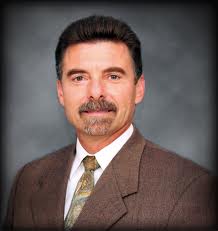
10.5 Richard Barcellos
Contribution: “In Defense of the Decalogue.” Confronts New Covenant Theology.
Denomination: Reformed Baptist
 Ministry association with Tom Ascol.

10. Sam Waldron
Contribution: Contends against New Covenant Theology.
Denomination: Reformed Baptist
 Ministry association with Tom Ascol.

9. Mike Fabarez
Contribution: Aggressive Sanctification blog. Church has strong view of exegesis/(8) distinctives.
Denomination: Non-Denominational
 Has at least one New Calvinist elder on staff, but in his defense, I don’t think he is aware of it.
8. Chad VanDixhoorn
Contribution: Wrote a notable treatise against Sonship Theology when most were asleep at the switch.
Denomination: Presbyterian

7. Timothy F. Kauffman
Contribution: Trinity Review; Jan-Mar 2012 Sanctification, Half Full: The Myopic Hermeneutic of the “Grace” Movement (Maybe the best article ever written on the subject).
Denomination: Presbyterian

6. Jason Hood
Contribution: Writings against sanctification by justification/Gospel Sanctification
Denomination: United Methodist

5. Terry Johnson
Contribution: Strongly opposes Sonship Theology. Seems to care more about the truth than keeping friends.
Denomination: Presbyterian

4. Dr. Peter Masters
Contribution: Has been very outspoken against New Calvinism specifically and names the names.
Denomination: Calvinistic Baptist

3. Cynthia Kunsman
Contribution: Spiritual abuse/cult specialist. Researches theological movements. Under Much Grace blog
Denomination: Non-Denominational Evangelical Reformed

2. Donn Arms
Contribution: Director of the Institute for Nouthetic Studies. Gatekeeper of the truly orthodox “first generation of biblical counseling.”
Denomination: Calvinistic Baptist

1. Dr. Jay E. Adams
Contributions: “Biblical Sonship: An Evaluation of the Sonship Discipleship Course.” Opponent of Gospel Sanctification and author of the INS Gospel Sanctification archives. Author of over 100 books on the subject of sanctification.
Denomination: Presbyterian
An Open Letter to the President of the National Association of Nouthetic Counselors
“This is the apostle Paul’s disparaged 3-verse system to fix a lack of peace. It is the wonderful hope that obedience to God’s word seizes upon His promises. And that’s why many NANC counselors strip their victims of hope.”
“The cited letter reflects the same things often taught by many board members of NANC and BCC. Because this doctrine combines justification and sanctification, it makes sanctification like a minefield because what we do in sanctification can affect the justification that supposedly powers it. This does not lay a healthy foundation for counseling”
Dr. Street,
The National Association of Nouthetic Counselors website states the following about your organization:
NANC exists to help pastors and those who would be ministers of the Word of God by providing help and encouragement. NANC is first and foremost a certifying organization. The certifying process is rigorous but attainable by even the busiest pastor. The process consists of the completion of an approved training course, the completion of a theological and a practical counseling test, several references, and a minimum of 50 hours of supervised counseling experience.
Furthermore, your organization refers hundreds of “counselors” certified by your organization. The purpose of this letter is to publically confront you in regard to the fact that NANC has board members, Fellows, and hoards of certified counselors who openly promote a blatant false gospel. I will first establish this fact, in case you are not aware of it, and then beseech you to tell me why this acceptable.
Much data could be provided as I have been sent several articles written by NANC Fellows that contain outrageous teachings; and apparently, NANC thinks nothing of sending troubled people to antinomian mystics. But I only need to quote one of your present board members, David Powlison. Powlison performed a lecture at John Piper’s church while Piper was on a sabbatical to eradicate “several species of heart idols” that he saw in his heart. Apparently, they were of the 8-month type because he was able to return to ministry at the pre-appointed time. Powlison stated the following at Piper’s church:
This might be quite a controversy, but I think it’s worth putting in. Adams had a tendency to make the cross be for conversion. And the Holy Spirit was for sanctification. And actually even came out and attacked my mentor, Jack Miller, my pastor that I’ve been speaking of through the day, for saying that Christians should preach the gospel to themselves. I think Jay was wrong on that.
Jack Miller was the father of Sonship Theology, a false gospel that is presently wreaking havoc on Presbyterian churches. It has also been known as Gospel Sanctification and is the primary catalyst for the present-day New Calvinist movement which has turned orthodoxy completely upside down. The doctrine is best explained by a theological journal that was its source:
Unless sanctification is rooted in justification and constantly returns to justification, it cannot escape the poisonous miasma of subjectivism, moralism or Pharisaism…. Since the life of holiness is fueled and fired by justification by faith, sanctification must constantly return to justification. Otherwise, the Christian cannot possibly escape arriving at a new self-righteousness. We cannot reach a point in sanctification where our fellowship with God does not rest completely on forgiveness of sins…. Christian existence is gospel existence. Sanctification is justification in action.
Miller adopted the theology and coined the phrase, “We must preach the gospel to ourselves every day.” “The same gospel that saved us also sanctifies us” is the New Calvinist mantra of our day. I receive many links to articles written by NANC Fellows who clearly hold to this doctrine. In fact, How People Change, written by Timothy Lane and Paul David Tripp (and based on Powlison’s Dynamics of Biblical Change) is a Sonship/Gospel Sanctification treatise. Tripp and Lane are also on the board of the upstart Biblical Counseling Coalition. That board is the who’s who of Sonship/GS/ NC, including hyper-antinomian Elyse Fitzpatrick.
On a church level, here is the fruit of this doctrine:
To the Ruling Elders of Southwood:
On September 4, 2011, our daughter and her family from Atlanta were here and we attended the Sunday worship at Southwood. After the service, our 13 year old granddaughter, who is well grounded in scripture, stated that she was very confused by the message. She had come away hearing that every good thing she does is wrong. Why would she believe that? We have gone back and listened again to that message, entitled “Duh,” and here is what we found:
The message is from Galatians 3:1-6. Paul is chastening the church for falling prey to the persuasion of the Judaizers, exhorting them again that God’s love for them was not by any of their own works but through the miraculous work of Christ and the Holy Spirit. Jean seems to take the written word beyond its intent. He subtly changes ‘God’s love’ to ‘God’s favor.’ He changes legalism to performance. He takes Jewish law and extends it to almost any action one does. Here are some paraphrased quotes from the sermon. “To keep God’s favor, the Galatians were believing they needed Christ and a dash of obedience which looks like those things called Christian disciplines. Christian walk Christianity is from the Devil. Faithfulness is feeling condemned for work you haven’t finished (as contrasted with faith: resting completely in Christ). Faith is a litmus test for teachers and leaders; the difference between faith in Christ alone and faithfulness is like the difference between truth and falsehood, between Heaven and Hell. Faith alone is all we will teach.” (Here Jean says this is what Paul is teaching but he gives no supporting scriptures to support his interpretation.) “Discern as false any book, sermon, or Bible study where you hear a dash of self justifying obedience. Self justifying obedience is from Satan.
Jean’s statements, combined with the tone and inflections in his delivery, imply that he is scornful of Christian disciplines, preachers, Christian writers, the Christian walk, obedience, faithfulness, good works, and an individual’s efforts. This message can lead to the conclusion that everything we do is evil and, by extension, that God and the Holy Spirit can do nothing through us. The message lacks balance and leaves sanctification out of the equation. A new believer under this teaching would be moribund after accepting Christ, hidebound in fear that he can do nothing right. While it is true none of us have all pure motives, it is also true that God commands us to go forward and that the Holy Spirit will be with us. God says we are His instruments for spreading the Truth. We cannot do this if we are strapped by guilt; we can do this if we seek partnership with the Holy Spirit.
From here Jean goes back to Paul saying “…since you were 100% depraved when you were brought into the Kingdom by the Holy spirit and by no works of your own, why are you trying to be perfected by your own human efforts? You are being deceived by the Devil.” I believe Jean is paralleling Paul in this. Jean then goes on to “We are like alcoholics ; we use Bible study, prayers, small groups, etc. as a crutch and the church rewards our ‘addiction’ with its approval. How would you know if you were addicted? Stop everything. If you feel anxiety, then you are afraid of leaving your ‘fix.’” So we ask: what does God have us do? Jean’s answer is “rest totally in Jesus.” So in turn we ask, what does Scripture say about resting totally in Jesus? But we hear no clear answer from the pulpit.
The cited letter reflects the same things often taught by many board members of NANC and BCC. Because this doctrine combines justification and sanctification, it makes sanctification like a minefield because what we do in sanctification can affect the justification that supposedly powers it. This does not lay a healthy foundation for counseling, and as Timothy F. Kauffman recently stated in the Trinity Review, when justification and sanctification are combined, anything we do in sanctification is works salvation—even doing nothing. It’s eerily reminiscent of Christ’s parable concerning the slothful servant. When such a parable is considered and compared to statements by Elyse Fitzpatrick and her spiritual big brother Tullian Tchividjian, it should make the hair stand up on a deceased person.
Moreover, the unfortunate results of counseling that comes from this doctrine can be seen in the following statement by a pastor who oversees a NANC counseling center:
We read this quote from Paul Tripp in last week’s Biblical Theology Study Center. Amazingly, part of the quote was used again the following evening during testimony time from someone not in our class…someone who resonated with the quote in the midst of personal crisis. For those who are involved in biblical counseling, it can be really easy (and tempting) for the Bible to become little more than a 12-verse system designed to fix a life. Tripp reminds us that the Bible isn’t a how-to manual, but a place where we find hope in a Person.
Compare that statement with what the apostle Paul said:
Do not be anxious about anything, but in every situation, by prayer and petition, with thanksgiving, present your requests to God. And the peace of God, which transcends all understanding, will guard your hearts and your minds in Christ Jesus.
Finally, brothers and sisters, whatever is true, whatever is noble, whatever is right, whatever is pure, whatever is lovely, whatever is admirable—if anything is excellent or praiseworthy—think about such things. Whatever you have learned or received or heard from me, or seen in me—put it into practice. And the God of peace will be with you.
This is the apostle Paul’s disparaged 3-verse system to fix a lack of peace. It is the wonderful hope that obedience to God’s word seizes upon His promises. And that’s why many NANC counselors strip their victims of hope. That, and confusing children who love the Lord.
So tell me Dr. Street, why is this acceptable? Why not come out from among them? Besides, the evidence that this doctrine was concocted by a Seventh-Day Adventist who is now an atheist is overwhelming. The truth will come out, and will eventually be accepted as truth. Why stick around and look stupid? Or, you could fix the problem. I beseech you Dr. Street, stop sending troubled people to false teachers. This is something that none of us want on our resume.
Paul Dohse
Extending Grace?
 I am having great difficulty with answering some of the questions in my First Place 4 Health Bible Study. The questions have to do with extending grace to others in order to influence their belief in God, and offering grace to others because grace in an undeserved gift from God. I went to my favorite online dictionary to broaden my perspective on the word grace. There were definitions from Christian theology to Greek goddesses, luck to a blessing said at a meal- 21 different definitions for the word grace when used as a noun.
I went to the concordance of my trusty New Scofield Reference Bible and looked up the many verses from both Old and New Testaments that contained the word grace and gained more insight about the word.
How to answer the two questions from my Bible Study requires me to answer two other questions first:
1) Whose grace am I extending, God’s or my own in order to influence others in their belief in God? (The study question was: How might your extending grace to others influence their belief in God/)
2) Whose grace do I offer to others, God’s or my own? (The study question was: If grace is an undeserved gift from God (not a reward that is earned), then how should that affect our attitude about offering grace to others?)
Grace is an undeserved gift from God. My salvation is because of His grace. For by grace are you saved through faith, and that not of yourselves it is the gift of God. Eph. 2:8,9 I cannot offer salvation to others, only God through His grace can save; therefore, I must conclude that I extend a human act of grace to others in hope to influence their belief in God. ( Right?) Which definition of grace do I extend? Kindness and compassion, love, mercy, favor, disposition to serve another, a privilege conferred? It certainly must depend upon the situation and person. (Right?) I can only offer human expressions of grace to those around me and I must offer those expressions with humility and as acts of service.
There are numerous times we offer too much grace to our believing friends and that in turn creates an unhealthy spiritual environment for all parties. We can keep extending grace to sinning friends so that it becomes a shield or an excuse for their continuing in wrong behavior or sin. There is a place for biblical confrontation and great care and discernment must be used to determine when to extend grace or when to apply consequences.
Let me cite this recent example:
I returned to the First Place 4 Health Bible Study and Support Group after having been absent for over a year.( Paul and I were ministering on Wednesday evenings at another church.) The core group of women was still present, as well as several new enrollees. While listening to several of the core members I realized one was still discussing the same issue: how to keep from going to Tim Horton’s for mocha lattes. For the three years she had been with us in the group, she was still struggling with mocha lattes. (She had not lost any weight over the course of the three years.) To my horror, the ladies laughed it off and then began talking about deep fried Snickers, and other unhealthy snacks they preferred. The answer from the leader,” Well Dee, we’ll just have to pray for you this week.”
Where is grace in that? Dee should have been confronted about how she was taking the First Place Commitments and making them a mockery. She should have been given a plan for having success in making better choices that involved her husband and children to help hold her accountable. How was extending more grace to Dee influencing the new members to put off the unhealthy habits that created the fat rolls and put on healthy habits instead? It created instead a loophole for those new members. “When I consistently make wrong choices, there will be more grace extended to me”, is what they will begin to believe. In AA circles this is called “enabling the addict.”
Our First Place group should attend some AA meetings. If an alcoholic were to confess that they struggled with going through the drive through to purchase wine coolers, the AA leader and the other members would spend a large amount of time confronting that member and coming up with a plan for more accountability. How do I know that? I used to attend 2-3 AA meetings a week with Wayne ( my first husband, now deceased), and witnessed several times how weak members were confronted about their choices. No grace. They were rebuked, instructed in the rules of AA, and offered help to be victorious one day at a time. Why should we women who make First Place Commitments to eat healthy and follow the “live-it plan” be treated any differently? Come on, First Place Friends—stop using grace as an excuse for bad behavior!
susan
Let’s Not Forget That Sonship / Gospel Sanctification / New Calvinism Is Not a Theological Discussion, But a Life Discussion
I was recently sent a link for an article written for the Reformation 21 blog by William B. Evans. The article was a very apt articulation of Sonship theology in regard to showing its error. In the first paragraph, he cites one of the contemporary fathers of intestinal fortitude, Jason Hood, who has challenged New Calvinism by coining the phrase, “sanctification by justification.” Evans mentioned him in conjunction with Hood challenging Tullian Tchividjian’s assertion that being called an antinomian validates one’s gospel ministry. Welcome to our day. A day in which having a goal of being called an antinomian doesn’t necessarily mean you’re an antinomian. Apparently, when the apostles predicted there would be “many” false teachers in the last days, they never saw New Calvinism coming and the ushering in of “many” Tchividjian like “reformers” instead.
Tchividjian, supposedly an example of one of the worst Sonship offenders, seemed to be the subject of Evans’ post (Again, Evans did a great job of exposing the doctrine’s serious error and the post should be read by all: http://goo.gl/9AgD7 ). After summarizing Hood’s contention, he moved on to the back and forth between Tchividjian and New Calvinist Kevin DeYoung. Apparently, DeYoung thinks the movement may come across as thinking that “effort” is a four-letter word. Actually, “obey” is the word that DeYoung thinks has four letters, and he never mentioned any specific applications for “effort.” Nevertheless, Evans rightly points out that DeYoung presented good arguments for an overly passive approach to sanctification. But in the third and final exchange between the two New Calvinists, and unlike Hood in his follow-up exchanges, DeYoung clearly vacillated and patched things up with Tchividjian.
Which now brings me to my point. Evans cites DeYoung as saying the following: “In this context DeYoung the pastor speaks of those in the church ‘who are confused, wondering why sanctification isn’t automatically flowing from their heartfelt commitment to gospel-drenched justification.’” In other words, DeYoung knows the ramifications, but will not separate himself from the New Calvinist movement. Evans also wrote the following: “In other words, the questions raised in these blog exchanges are important; the contrast in views is rather stark, and the time is ripe for further discussion.” I like his use of the word “stark,” but further “discussion”?
This issue needs way more than discussion! Tchividjian is representative of the New Calvinist perspective, and with it the belief that views similar to the ones Hood espoused are a false gospel, leading to the loss of justification—being interpreted: your not saved. Want proof? Well, Evans mentioned that the issue needs to be further engaged because of the involvement of theological heavy-weights like Michael Horton, so I will quote him to make my point:
“If not only the unregenerate but the regenerate are always dependent at every moment on the free grace of God disclosed in the gospel, then nothing can raise those who are spiritually dead or continually give life to Christ’s flock but the Spirit working through the gospel. When this happens (not just once, but every time we encounter the gospel afresh), the Spirit progressively transforms us into Christ’s image. Start with Christ (that is, the gospel) and you get sanctification in the bargain; begin with Christ and move on to something else, and you lose both” (p. 62 Christless Christianity [emphasis mine]).
This dastardly belief among New Calvinist often leads to marriages in counseling situations being judged as mixed because one spouse will not accept Sonship theology. Do you think the “stark” contrast in these two theologies could cause problems in a marriage? And once in counseling, how much more damage will be done when one spouse is declared an unbeliever? The theology causes marriage problems, then the counseling formed by the theology makes the problem worse! Furthermore, change by putting off unbiblical wisdom and putting on biblical wisdom via obedience will not be the emphasis of this counseling, but rather a “beholding as a way of becoming.” It’s a recipe for disaster! How many spiritually maimed Christians are there who are told that the primary remedy is preaching the gospel to themselves everyday? Discussion? What the….are you kidding me?
Everybody admits this doctrine is causing confusion among Christians—even some New Calvinist themselves. That fact is talked about like it’s just no big deal. Well, tell Christ it’s no big deal, but don’t take me with you—just thinking about it makes me shudder. In addition, bad theology always profoundly effects the lives of Christians. Therefore, theological discussions of this magnitude should always have teeth, and if Tullian Tchividjian, or Michael Horton, or Al Mohler, or John Piper, or Mark Devers, or Tim Keller, or David Powlison, or Jerry Bridges, or DA Carson, or John MacArthur, or anyone else won’t repent, let them be treated like publicans and tax collectors. We are either in the ministry for people or to keep the peace with those obsessed with visions of grandeur. Discussion? Yes. But if necessary, separation also.
paul

 Paul's Passing Thoughts
21 comments