The Heart / Flesh Debate
Heart Versus Flesh
There are hundreds of passages that use the term “heart” to describe the seat of human emotion, intelligence, morality, volition and religious life in general. However, most often, “heart” is used in Scripture as an idiom for the mind.
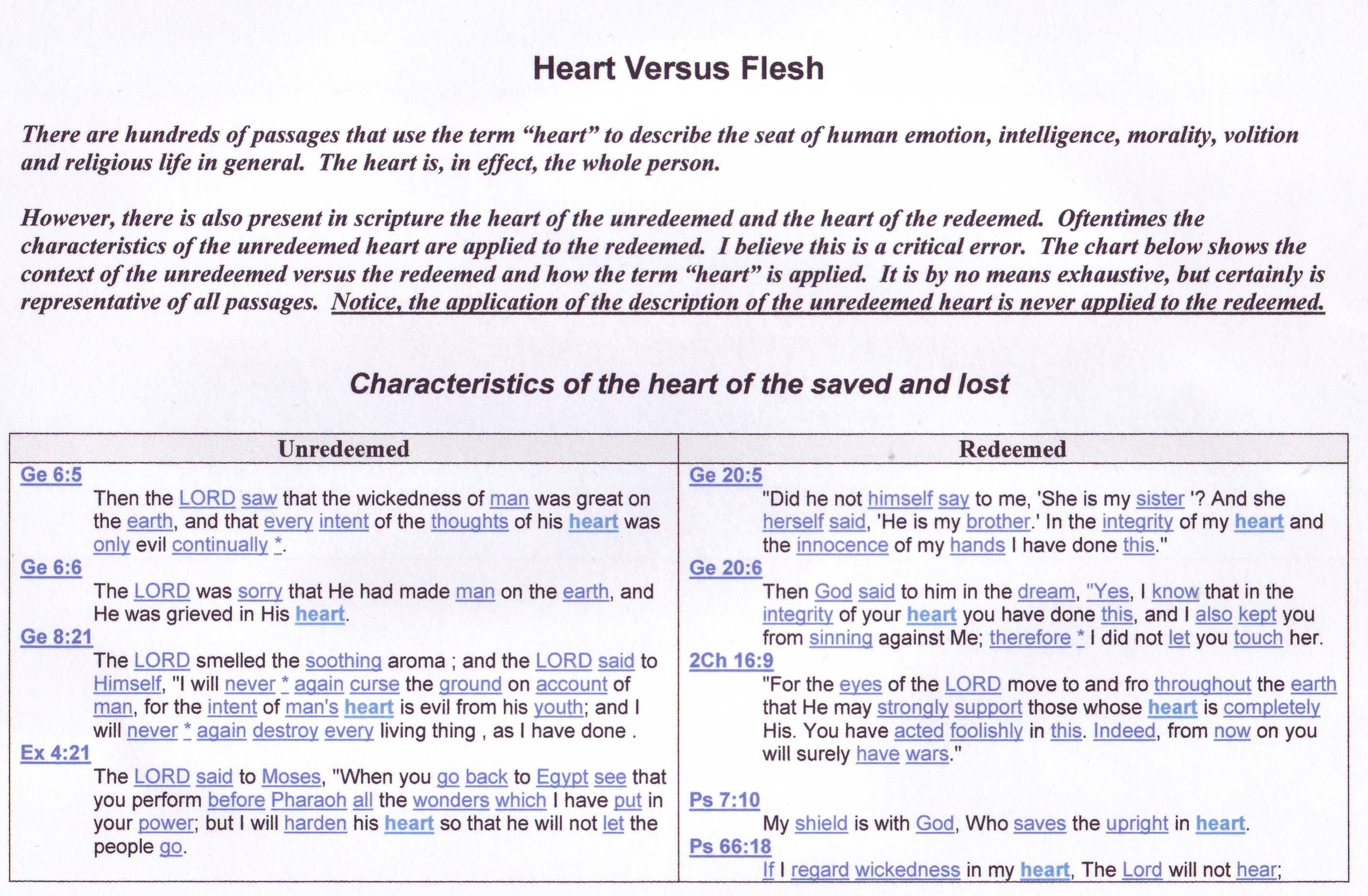
There is also present in scripture the heart of the unredeemed and the heart of the redeemed. Oftentimes the characteristics of the unredeemed heart are applied to the redeemed. I believe this is a critical error. The chart below shows the context of the unredeemed versus the redeemed and how the term “heart” is applied. It is by no means exhaustive, but certainly is representative of all passages. Notice, the application of the description of the unredeemed heart is never applied to the redeemed.
Characteristics of the heart of the saved and lost
|
Unredeemed |
Redeemed |
| Ge 6:5Then the LORD saw that the wickedness of man was great on the earth, and that every intent of the thoughts of his heart was only evil continually *.
Ge 6:6The LORD was sorry that He had made man on the earth, and He was grieved in His heart.Ge 8:21 The LORD smelled the soothing aroma ; and the LORD said to Himself, “I will never * again curse the ground on account of man, for the intent of man’s heart is evil from his youth; and I will never * again destroy every living thing , as I have done . Ex 4:21 The LORD said to Moses, “When you go back to Egypt see that you perform before Pharaoh all the wonders which I have put in your power; but I will harden his heart so that he will not let the people go. De 5:29 ‘Oh * that they had such a heart in them, that they would fear Me and keep all My commandments always *, that it may be well with them and with their sons forever ! De 8:14 then your heart will become proud and you will forget the LORD your God who brought you out from the land of Egypt, out of the house of slavery. 1Sa 7:3 Then Samuel spoke to all the house of Israel, saying, “If you return to the LORD with all your heart, remove the foreign gods and the Ashtaroth from among you and direct your hearts to the LORD and serve Him alone; and He will deliver you from the hand of the Philistines.” 2Ch 12:14 He did evil because he did not set his heart to seek the LORD. 2Ch 25:2 He did right in the sight of the LORD, yet not with a whole heart. 2Ch 26:16 But when he became strong, his heart was so proud that he acted corruptly, and he was unfaithful to the LORD his God, for he entered the temple of the LORD to burn incense on the altar of incense. Ps 73:1 Surely God is good to Israel, To those who are pure in heart ! Ps 78:8 And not be like their fathers, A stubborn and rebellious generation, A generation that did not prepare its heart And whose spirit was not faithful to God. Jer 5:23 ‘But this people has a stubborn and rebellious heart; They have turned aside and departed. Jer 17:9 “The heart is more deceitful than all else And is desperately sick; Who can understand it? Eze 14:4 “Therefore speak to them and tell them, ‘Thus says the Lord GOD, “Any man of the house of Israel who sets up his idols in his heart, puts right before his face the stumbling block of his iniquity, and then comes to the prophet, I the LORD will be brought to give him an answer in the matter in view of the multitude of his idols, Eze 20:16 because they rejected My ordinances, and as for My statutes, they did not walk in them; they even profaned My sabbaths, for their heart continually went after their idols. Mr 7:21 “For from within, out of the heart of men, proceed the evil thoughts, fornications, thefts, murders, adulteries, Lu 6:45 “The good man out of the good treasure of his heart brings forth what is good; and the evil man out of the evil treasure brings forth what is evil; for his mouth speaks from that which fills his heart. Ac 8:21 “You have no part or portion in this matter, for your heart is not right before God. Ro 1:21 For even though they knew God, they did not honor Him as God or give thanks, but they became futile in their speculations, and their foolish heart was darkened. Ro 2:5 But because of your stubbornness and unrepentant heart you are storing up wrath for yourself in the day of wrath and revelation of the righteous judgment of God, Eph 4:18 being darkened in their understanding, excluded from the life of God because of the ignorance that is in them, because of the hardness of their heart;
|
Ge 20:5“Did he not himself say to me, ‘She is my sister ‘? And she herself said, ‘He is my brother.’ In the integrity of my heart and the innocence of my hands I have done this.”Ge 20:6Then God said to him in the dream, “Yes, I know that in the integrity of your heart you have done this, and I also kept you from sinning against Me; therefore * I did not let you touch her.
2Ch 16:9 “For the eyes of the LORD move to and fro throughout the earth that He may strongly support those whose heart is completely His. You have acted foolishly in this. Indeed, from now on you will surely have wars.” Ps 7:10 My shield is with God, Who saves the upright in heart. Ps 66:18 If I regard wickedness in my heart, The Lord will not hear; Ps 73:1 Surely God is good to Israel, To those who are pure in heart ! Ps 86:12 I will give thanks to You, O Lord my God, with all my heart, And will glorify Your name forever. Jer 24:7 ‘I will give them a heart to know Me, for I am the LORD; and they will be My people , and I will be their God, for they will return to Me with their whole heart. Jer 31:33 “But this is the covenant which I will make with the house of Israel after those days,” declares the LORD, “I will put My law within them and on their heart I will write it; and I will be their God, and they shall be My people . Jer 32:39 and I will give them one heart and one way, that they may fear Me always *, for their own good and for the good of their children after them. Eze 11:19 “And I will give them one heart, and put a new spirit within them. And I will take the heart of stone out of their flesh and give them a heart of flesh, Eze 36:26 “Moreover, I will give you a new heart and put a new spirit within you; and I will remove the heart of stone from your flesh and give you a heart of flesh. Mt 5:8 “Blessed are the pure in heart, for they shall see God. Mt 12:34 “You brood of vipers, how can you, being evil, speak what is good ? For the mouth speaks out of that which fills the heart. Mt 15:18 “But the things that proceed out of the mouth come from the heart, and those defile the man. Lu 6:45 “The good man out of the good treasure of his heart brings forth what is good; and the evil man out of the evil treasure brings forth what is evil; for his mouth speaks from that which fills his heart. Ro 2:29 But he is a Jew who is one inwardly; and circumcision is that which is of the heart, by the Spirit, not by the letter; and his praise is not from men, but from God. Ro 6:17 But thanks be to God that though you were slaves of sin, you became obedient from the heart to that form of teaching to which you were committed, Heb 10:22 let us draw near with a sincere heart in full assurance of faith, having our hearts sprinkled clean from an evil conscience and our bodies washed with pure water. 1Pe 1:22 Since you have in obedience to the truth purified your souls for a sincere love of the brethren, fervently love one another from the heart, 1Jo 3:21 Beloved, if our heart does not condemn us, we have confidence before God; Addendum: Romans 6:17 – But thanks be to God, that you who were once slaves of sin have become obedient from the heart to the standard of teaching to which you were committed, Romans 7:25 – Thanks be to God through Jesus Christ our Lord! So then, I myself serve the law of God with my mind, but with my flesh I serve the law of sin. Hebrews 10:22 – let us draw near to God with a sincere heart and with the full assurance that faith brings, having our hearts sprinkled to cleanse us from a guilty conscience and having our bodies washed with pure water. |
As you look at the references above, you’ll easily see that the Bible never applies the ugly characteristics of an unregenerate heart to a redeemed person. Why then, should we? God has renewed the heart of a believer and it is unbiblical to accuse the Body of Christ of having hearts that are unregenerated.
Where then, is the battle? The Bible teaches that the battle against sin is in the flesh, NOT the heart. Notice, please:
Mt 26:41
“Keep watching and praying that you may not enter into temptation; the spirit is willing, but the flesh is weak.”
Jesus is speaking to a redeemed person. He shows them that the danger is in the flesh, not the heart (perhaps synonymous with spirit in this passage).
Ro 7:5
For while we were in the flesh, the sinful passions, which were aroused by the Law, were at work in the members of our body to bear fruit for death.
Paul teaches here that our sinful passions are from the flesh.
Ro 7:18
For I know that nothing good dwells in me, that is, in my flesh; for the willing is present in me, but the doing of the good is not.
A critical passage! We know the Bible teaches that our flesh was not redeemed at salvation and, in fact, awaits the glorification described so clearly in 1 Corinthians 15. Therefore, we have a “redeemed heart” incarcerated in “unredeemed flesh.” This is exactly why we struggle. Notice:
Ro 7:14
For we know that the Law is spiritual, but I am of flesh, sold into bondage to sin.
Ro 7:25
Thanks be to God through Jesus Christ our Lord ! So then, on the one hand I myself with my mind am serving the law of God, but on the other, with my flesh the law of sin.
Ro 8:3
For what the Law could not do, weak as it was through the flesh, God did: sending His own Son in the likeness of sinful flesh and as an offering for sin, He condemned sin in the flesh,
Ro 8:4
so that the requirement of the Law might be fulfilled in us, who do not walk according to the flesh but according to the Spirit.
Ro 8:5
For those who are according to the flesh set their minds on the things of the flesh, but those who are according to the Spirit, the things of the Spirit.
Ro 8:6
For the mind set on the flesh is death, but the mind set on the Spirit is life and peace,
Ro 8:7
because the mind set on the flesh is hostile toward God; for it does not subject itself to the law of God, for it is not even able to do so,
Ro 8:8
and those who are in the flesh cannot * please God.
Ro 8:9
However, you are not in the flesh but in the Spirit, if indeed the Spirit of God dwells in you. But if anyone does not have the Spirit of Christ, he does not belong to Him.
Ro 8:12
So then, brethren, we are under obligation, not to the flesh, to live according to the flesh —
Ro 8:13
for if you are living according to the flesh, you must die; but if by the Spirit you are putting to death the deeds of the body, you will live.
The heart is not mentioned anywhere in this key teaching. Romans 6 through 8 contain the key teaching on our struggle against sin. And, it is clear; the struggle is centered on the flesh, not the heart.
Further evidence of this:
Ro 13:14
But put on the Lord Jesus Christ, and make no provision for the flesh in regard to its lusts.
1Co 3:1
And I, brethren, could not speak to you as to spiritual men, but as to men of flesh, as to infants in Christ.
How do we cleanse ourselves and appear holy before the Lord?
2Co 7:1
Therefore, having these promises, beloved, let us cleanse ourselves from all defilement of flesh and spirit, perfecting holiness in the fear of God.
Ga 5:13
For you were called to freedom, brethren; only do not turn your freedom into an opportunity for the flesh, but through love serve one another.
Ga 5:16
But I say, walk by the Spirit, and you will not carry out the desire of the flesh.
Ga 5:17
For the flesh sets its desire against the Spirit, and the Spirit against the flesh; for these are in opposition to one another, so that you may not do the things that you please.
Ga 5:19
Now the deeds of the flesh are evident, which are: immorality, impurity, sensuality,
Ga 5:24
Now those who belong to Christ Jesus have crucified the flesh with its passions and desires.
Ga 6:8
For the one who sows to his own flesh will from the flesh reap corruption, but the one who sows to the Spirit will from the Spirit reap eternal life.
~ Penned and researched by Brian Jonson, West Chester, Ohio


Wed. Night Bible Study Makes Jay Adams Look Less Radical

“That’s his words, not ours. Therefore, our group concluded that even with our limited knowledge of biblical counseling, we could, in fact, help this Christian—and more than the ‘experts’ that he cited in the article.”
An extraordinary article was published in Christianity Today and published online yesterday ( http://www.christianitytoday.com/ct/2011/april/schizophrenic.html ). It is the testimony of a Christian struggling with Schizophrenia. The article, printed out, is six pages. I took the article with me to our church’s Wed. night Bible study and used it for open discussion.
After passing out copies to each parishioner, I informed them that we would be reading through the article together and stopping for discussion when warranted. As facilitator, I opened with the following question: “Is God’s word sufficient for just the ‘normal’ problems of life, or is it useful for deeper problems?” I then began reading as the others followed along.
The author writing his testimony opened with the following statement:
“I used my cane to hit the handicapped door opener. My hands shook and shadows danced on the wall. In the back of my mind, I saw train tracks. My head lay on the rail. A whistle blew, and I closed my eyes. It blew again and again. My eyes were shut tight. I was anxious and scared. Do suicides go to heaven?”
The parishioners seemed to be catching-up a little bit on this unorthodox Bible study I sprang on them, so I offered another interpretive / discussion question:
“If you were waiting for your car to be serviced at the auto repair center, and the person sitting next to you saw you reading your Bible, and asked that question, would you have an answer?” One member said “yes” and offered a pretty good theologically sound answer, which prompted my next question: “That’s good, but I’m wondering, should we see this as a divine appointment? Should we ask him, ‘what is going on in your life that would prompt such a question?’ I’m wondering, is this how a lot of people get saved? Is this how churches grow? Isn’t the gospel, if you think about it, problem centered?” The group agreed and suggested that such opportunities should be used to gain involvement in people’s lives. After all, this guy needs hope, right? And what does the Bible say about that? “But in your hearts set apart Christ as Lord. Always be prepared to give an answer to everyone who asks you to give the reason for the hope that you have. But do this with gentleness and respect” (1Peter 3:15).
While waiting for his doctor, the author shared what he was thinking:
“I sat in a comfortable leather chair. I thought of the life I could have lived. The life I lost.”
Here was my next question to the group: “If this Christian expressed this thought to the apostle Paul, what do you think Paul would say to him?” A deacon in our church immediately suggested some thoughts on Philippians 3:8 where Paul said he considered his past life rubbish when compared to the gospel—so, “what’s so special about this guy’s past life?” Hmmm, interesting thought, no? The deacon’s wife then pointed to Philippians 3:13,14: “But one thing I do: Forgetting what is behind and straining toward what is ahead, I press on toward the goal to win the prize for which God has called me heavenward in Christ Jesus.” At this point the group was very engaged and insightful observations from the Scriptures started coming in rapid fire. The group agreed as a whole that this line of thinking was not a helpful focus for our not so hypothetical counselee. We continued to read:
“A small, balding man in penny loafers came to greet me. He wore a Harris Tweed jacket with no tie—a failed attempt to set his patients at ease.”
We did not park long here, but I suggested that our counselee doesn’t know what the intentions of this doctor was in how he dressed. But, let’s say that it was his intentions; how does the counselee know it didn’t work for others? And would that be necessarily wrong? Could this indicate more unbiblical thinking? Probably. I then brought back to mind the author’s opening statement and directed the group to Philippians 4:8,9:
“Finally, brothers, whatever is true, whatever is noble, whatever is right, whatever is pure, whatever is lovely, whatever is admirable—if anything is excellent or praiseworthy—think about such things. Whatever you have learned or received or heard from me, or seen in me—put it into practice. And the God of peace will be with you.”
In light of this passage, should the counselee be thinking (the word is actually more along the lines of “dwelling”) about his head being on a railroad track with a train approaching? In fact, was that “true”? Are those thoughts “lovely”? The group’s response: “Obviously not.” Then came my next question regarding what Paul said the results of right thinking and right doing would be (“And the God of peace will be with you.”):
“We would all agree that this Christian needs “peace,” but does this promise pertain to our counselee even though he’s schizophrenic?” Their answer: “Absolutely!” Hmmmm, interesting.
Then came a very light moment, and a lightbulb moment when we discussed the first question the therapist asked our counselee:
“Well, David, how do you feel?”
My facilitating question was: “In light of what we have discussed, shouldn’t the doctor’s question be ‘How are you thinking—rather than ‘How are you feeling?’ If one knows how this Christian is thinking—wouldn’t his feelings be a given?’”
The group wholeheartedly agreed via laughter. Their smiling faces also seemed to say, as they rechecked the manuscript: “Doctors get paid for this?”
We then continued to read:
“It took me a moment to collect my thoughts. “I still see shadows everywhere. They seem to watch me. Whenever I close my eyes I see myself without a head. Sometimes it feels like invisible knives are swirling around me. The medicine is making it hard for me to walk, and often I feel like I am falling when I am just standing still. The suicidal thoughts are getting better. Just ideas, no actual plans.”
This statement evoked some questions in our minds: Does wrong thinking lead to bad feelings, and do those bad feelings then start to produce further negative thinking, with further negative feelings? The counselee is now using “[it] seems” and “it feels” as if we can almost see the downward spiral right here in this manuscript. Also, can the drugs really do the counselee any good while he is thinking this way?
We continued to read:
“Dr. Stanley nodded and scribbled something on my chart.
‘I see. I think you are doing better than the last time we met. How are you spending your time?’
‘I sleep most of the time. When I’m awake I play my Xbox. Sometimes I read and listen to music.’
‘Do you get out of the house much?’
‘No.’
I directed the group back to Philippians 4:8,9. Is this “doing” (sleeping and Xbox “most” of the time) advisable for this counselee right now? Again, regardless of his condition, does the promise of these verses and James 1:25 still stand? We think it does.
I then directed them to page two and read the following from what the author wrote:
“A little knowledge can be a frightening thing. I soon realized, for instance, that psychiatrists often go to school for 24 years so they can prescribe drugs that, according to some research, are only marginally better than a placebo. Almost all antidepressants increase the recipient’s risk for suicide. Why did I trust these people? Why did I pay $160 an hour to see them?”
That’s his words, not ours. Therefore, our group concluded that even with our limited knowledge of biblical counseling, we could, in fact, help this Christian—and more than the “experts” that he cited in the article.
Others who were reading ahead brought up another important issue from the following excerpt:
“While some members of our conservative church were supportive, it was amazing how often our questions were met with skepticism and hostility: ‘Are you secretly gay?’ ‘Do you have some unconfessed sin?’ ‘Are you possessed by a demon?’ ‘How dare you question God!’ The range of suspicions was staggering.”
Regarding this excerpt—our group’s conclusion: 1. Counseling /discipleship must be done the right way. 2. This is indicative of Job’s three friends: “C’mon job, confess your sins—you will be healed and we can all go back home.” 3. Christians must resist laziness in regard to helping other Christians (i.e., quick fixes and pat answers). 4. Christians must be gentle, humble, willing to sacrifice self, and willing to invest in others.
In, or around 1972, Jay Adams published a book entitled “Competent to Counsel.” The book introduced a radical concept to contemporary Christianity; namely, that the average Christian has what he needs in the Holy Spirit and the Scriptures to help others with the deep problems of life. Today, Dr. Adams and Donn Arms offer training that equips Christians to do just that through the Institute of Nouthetic Studies ( www.nouthetic.org ). Our church’s men’s ministry is implementing this training into our curriculum. We trust that it will make us better husbands, better fathers, better ministers of the word, and better evangelist. In Adams’ introduction to the program, he suggests that Christians have more in their discipleship bag than what they think—after Wednesday night, we would have to agree. Also, Dr. Jay’s contention is not looking so radical after all.
What We Don’t Need
We don’t need counseling that taints the “pure milk of the word” ( 1Peter 2:2) with those who ask the wrong questions (“How do you feel” verses “What do you think”). Though feelings in the Christian life are very important, the primary purpose of medication is telling in regard to other counseling disciplines. Neither should God’s word be tainted with those who make feelings the primary discipline through which all other spiritual disciples flow (i.e., John Piper). Nor do we need to solicit ancient philosophers and look for God’s truth in everything that crawls upon the Earth (i.e., CCEF). Furthermore, we do not need to integrate mysticism with the pure milk (i.e., NANC). Moreover, those who cry “Christ-centered counseling, NOT problem centered counseling” miss the point: the gospel itself is problem-centered. The good news addresses two major problems: sin, and separation from God. We are ambassadors on an alien planet, and those in the kingdom of darkness look for relief from their pain, and the happiness Christ talked about in the Sermon on the Mount—but they often do not understand the source of that pain.
Lastly, this excerpt, “Doctor, it has been three years. Will I ever get better?….’you need to accept that you will always be this way’ (the statement by his doctor was never refuted by the Author),” gives us pause because Romans 8:37 says, “No, in all these things we are more than conquerors through him who loved us.” Certainly, Jay Adams is right; we have to believe that Christians have more hope in our bags than that!
paul
Horton’s Systematic Theology Adds To The Sonship/Gospel Sanctification Massive Subculter
[NOTE: This was written before I discovered that New Calvinism is in fact the same gospel that the Reformers taught. The resurgence movement began as COG in 1970, became Sonship circa 1986, Gospel Transformation in 2000, dubbed Gospel Sanctification by detractors in 2007, and finally New Calvinism in 2008. This was also written before I understood that orthodoxy is a part of spiritual caste in general].
“Gospel Sanctification, as Sonship is now called, will begin to totally rewrite orthodox Christianity” [Note also that I no longer equate “orthodoxy ” with truth per se].
[Further revision: much has been learned since this post, but the general idea is very accurate: the Neo-Calvinist movement is seeking to develop a subculture within American culture that will eventually, if all goes as planned, devour American culture as we know it. This is part and parcel with Calvinism’s dominion theology. This post submits a sketchy framework of useful categories under the general idea. For instance, one college that focuses strictly on the Neo-Calvinist vision is a far cry from the fact that this movement owns (in an intellectual capacity) most of the seminaries in America. Other categories could also be added.
The Fix is now in. The false doctrine of the centrality of the objective gospel (COG) which found new life in Sonship Theology about thirty years ago—now has its own theology, hermeneutic, practical application, defined experience, ecumenical (inclusiveness) movement, history, college, counseling organization, missionary organization, Bible—and now, its own systematic theology. Gospel Sanctification (GS), as Sonship is now called, will begin to totally rewrite orthodox Christianity. It won’t be long; those who we minister to will have to be deprogrammed before we can help them, starting with convincing them that the Bible is to be taken as literal instruction from God as our authority for ministry and life. Not understanding GS beforehand will make any attempt to help people with the word of God—dead on arrival. GS
Theology
The movement started with a very powerful concept in the minds of its perpetrators. Supposedly, we grow spiritually by revisiting the gospel that saved us every day. Proponents were convinced (and still are) that this thesis stands alone as truth; therefore, all other propositions must bow to it.
The GS Hermeneutic
A literal interpretation of Scripture will continually contradict GS. So, the proponents have changed how we read/ interpret the Bible accordingly. The GS hermeneutic is an interpretive prism that will always yield results that make GS plausible. Unlike the rest of the elements (which are very contemporary), the hermeneutic (known as Biblical Theology or Redemptive-Historical hermeneutics) was borrowed from times past. It originated in Germany under the liberal teaching and writings of Johann Philipp Gabler (1753-1826), who emphasized the historical nature of the Bible over against a “dogmatic” interpretation thereof. Nearly a century later, Geerhardus Vos (1862-1949) was instrumental in taking the discipline of biblical theology in a, supposedly, more conservative direction. Graeme Goldsworthy tweaked the doctrine to facilitate COG, and today, Goldsworthy’s “Trilogy” is the pillar of interpretation within the movement.
Practical Application
The GS narrow approach to sanctification must be embellished and applicable to life in some way in order to be sold. This is Heart Theology, and was developed through David Powlison’s Dynamics of Biblical Change at Westminster Seminary. In 1996, two former students of Powlison articulated Heart Theology in a book entitled, “How People Change.”
Defined Experience
John Piper seeks to articulate how Sonship is experienced via Christian Hedonism. Because GS makes our works and the work of the Spirit an either/or issue, someone needed to develop a thesis that explained how the difference can be ascertained. John Piper answered the call with the development of Christian Hedonism.
Ecumenical Bent
GS now encompasses any group that agrees with its primary view of plenary monergism and the synthesis of justification and sanctification. All other disciplines are seen as secondary and irrelevant to fellowship and joint ventures. The Gospel Coalition (holding national conferences on odd years, 2011, etc.), and T4G (Together For The Gospel, holding national conferences on even years) work together to promote GS/S while promoting inclusiveness among denominations and religions.
History
GS proponents claim a historical precedent dating back to Creation, and also claim to be the second part of the first Reformation. Of course, this is laughable. Sonship, the Antioch school, TGC, T4G, NCT, CH, and HT have no historical precedent prior to 1970. Many of the notable proponents of GS are associated in some way with the father of Sonship Theology, Dr. John “Jack” Miller. Tim Keller and David Powlison were followers of Miller. Paul Tripp and Timothy Lane are followers of David Powlison. Jerry Bridges attributes his view of the gospel to Miller as well.
College
The Antioch School of leadership training has GS as its foundation and basis for training. It is located in Ames, Iowa.
Counseling Organization
The upstart Biblical Counseling Coalition, which seeks to network other counseling organizations as well, is intimately associated with T4G and The Gospel Coalition. The who’s who of Gospel Sanctification sit on its governing board including David Powlison and Paul David Tripp.
Missionary Organization
It’s primary missionary organization was founded by the father of Gospel Sanctification / Sonship—Dr. John “Jack” Miller. Banner of Truth states the following in The Movement Called Sonship: “Miller encouraged New Life Presbyterian Church into originating the ‘World Harvest Mission’, a non-denominational missionary organization. Sonship became its main teaching vehicle.”
Bible
The English Standard Version (ESV) was first published by Crossway in 2001. Its vice president of editorial is Justin Taylor who also authors The Gospel Coalition Blog, the multimedia propaganda machine for GS doctrine. One of the translators was Wayne Grudem, also well known as a major proponent of GS doctrine. The ESV’s GS connection has made it the most purchased English Bible in the past ten years. The latest promotion of the ESV by Crossway, “Trusted: Trusted Legacy [a whopping ten years]; trusted By Leaders; Trusted For Life,” features an endorsement by the who’s who of GS doctrine.
The Complete Fix
With Michael Horton’s recent publication of “The Christian Faith: A Systematic Theology for Pilgrims On the Way” (2011), the total fix is in place. The GS machine will now begin to move forward—rewriting and re-forming orthodox Christianity. I confidently predict that Horton’s book will be widely used in seminaries nationwide. Seminary students will be pumped into the local churches with a skewered view of truth—but using all of the same terminology that was formally orthodox.
What Can Be Done?
This doctrine thrives on the fact that Christians are theologically dumbed-down. If most Christians do not know the difference between justification and sanctification (and they don’t), they are helpless against this false doctrine. If most Christians don’t realize the importance of understanding hermeneutics (and they don’t), they are even more helpless. Local churches need to start in-doctrine–ating their people.
paul
A Big Fat Lie: “Tripp Has Taken Powlison’s DBC Too Far”
 No one is better than David Powlison for throwing people under the bus. He will throw you under it, and in some cases, continue to run you over: first forward, then backing up and running you over again. Strangely, he will then publicize (either in print or publicly) his reasons for running you over while flavoring the reasons with compliments—if you’re elderly, apparently, the younger suffer full traction without compliments.
Larry Crabb has suffered Powlison’s wrath since the early 90’s for not being nuanced enough. Supposedly, Crabb and he never agreed on anything, and of course, Powlison was dismayed by Crabb’s book, “Inside Out” which claimed that Evangelicals denied an “inside life,” and all truth is God’s truth. Crabb also said in IO that the church needed Freud’s wisdom to figure it all out. Powlison has no patience for that kind of honesty: you’re supposed to accuse them of denying that the heart has to change first and refer to truth as stuff in the Bible that the church forgets about. When rediscovered—you never, never, admit that God showed it to guys like Freud; instead, you cite really, really old Catholic bishops.
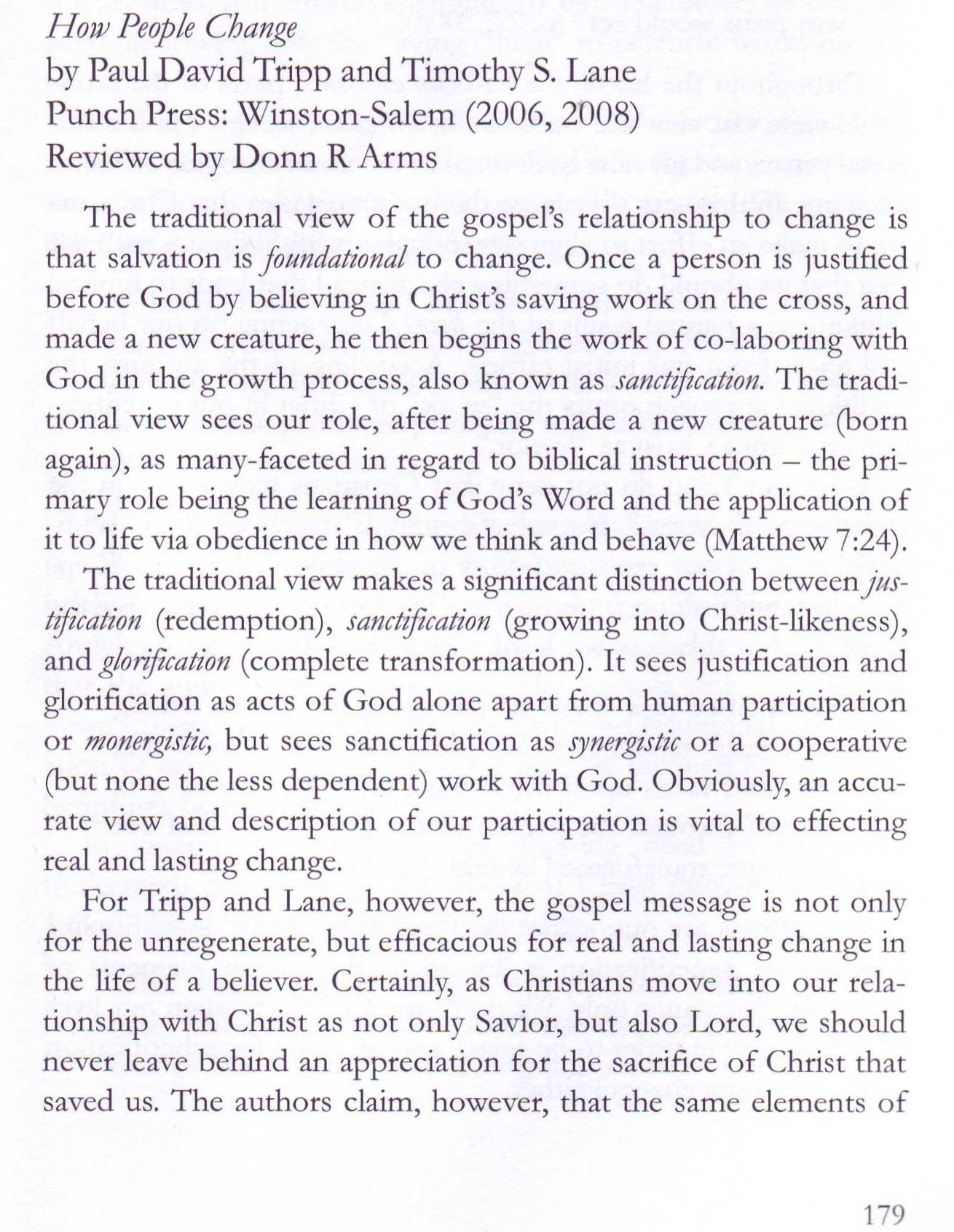
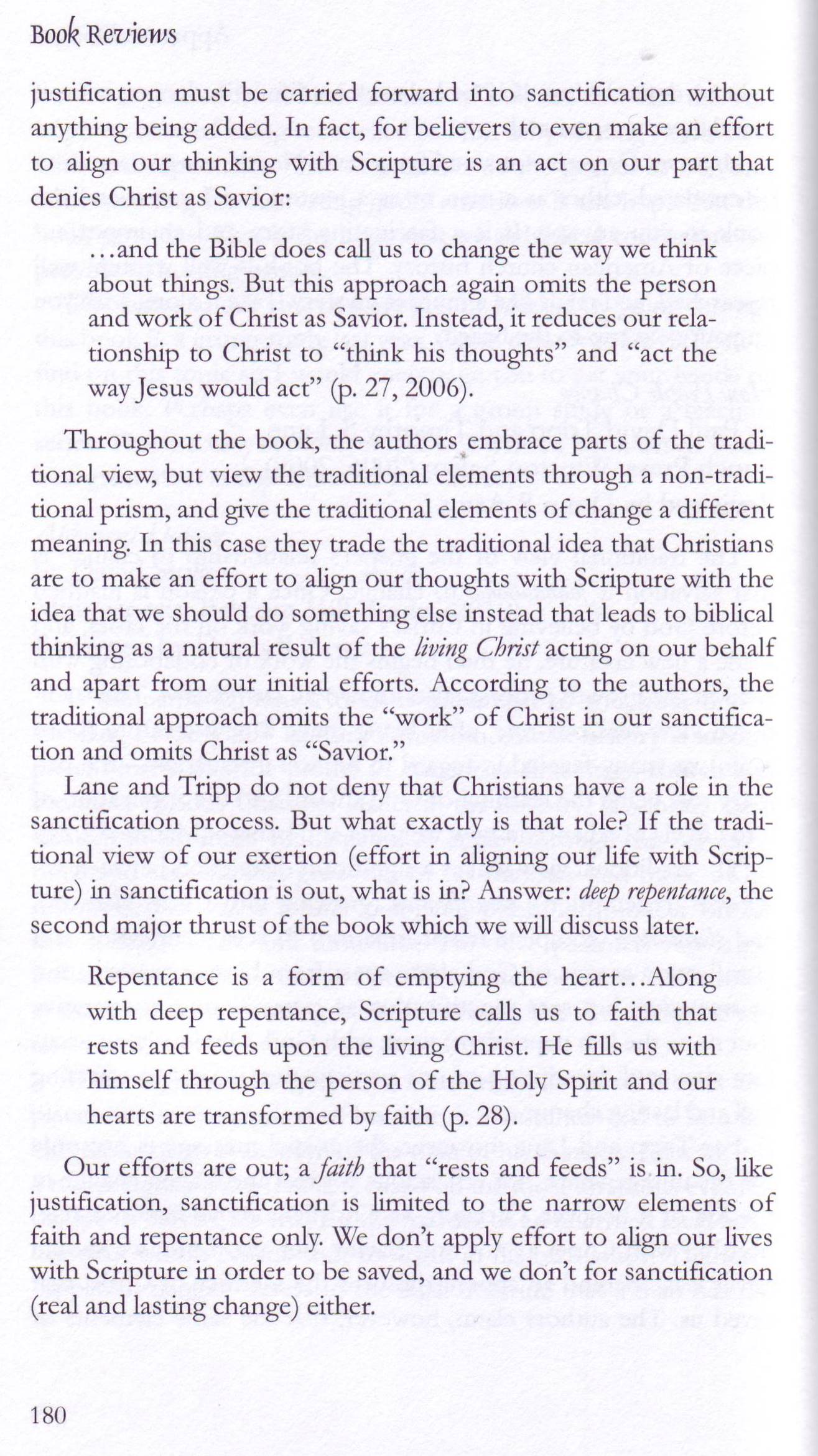
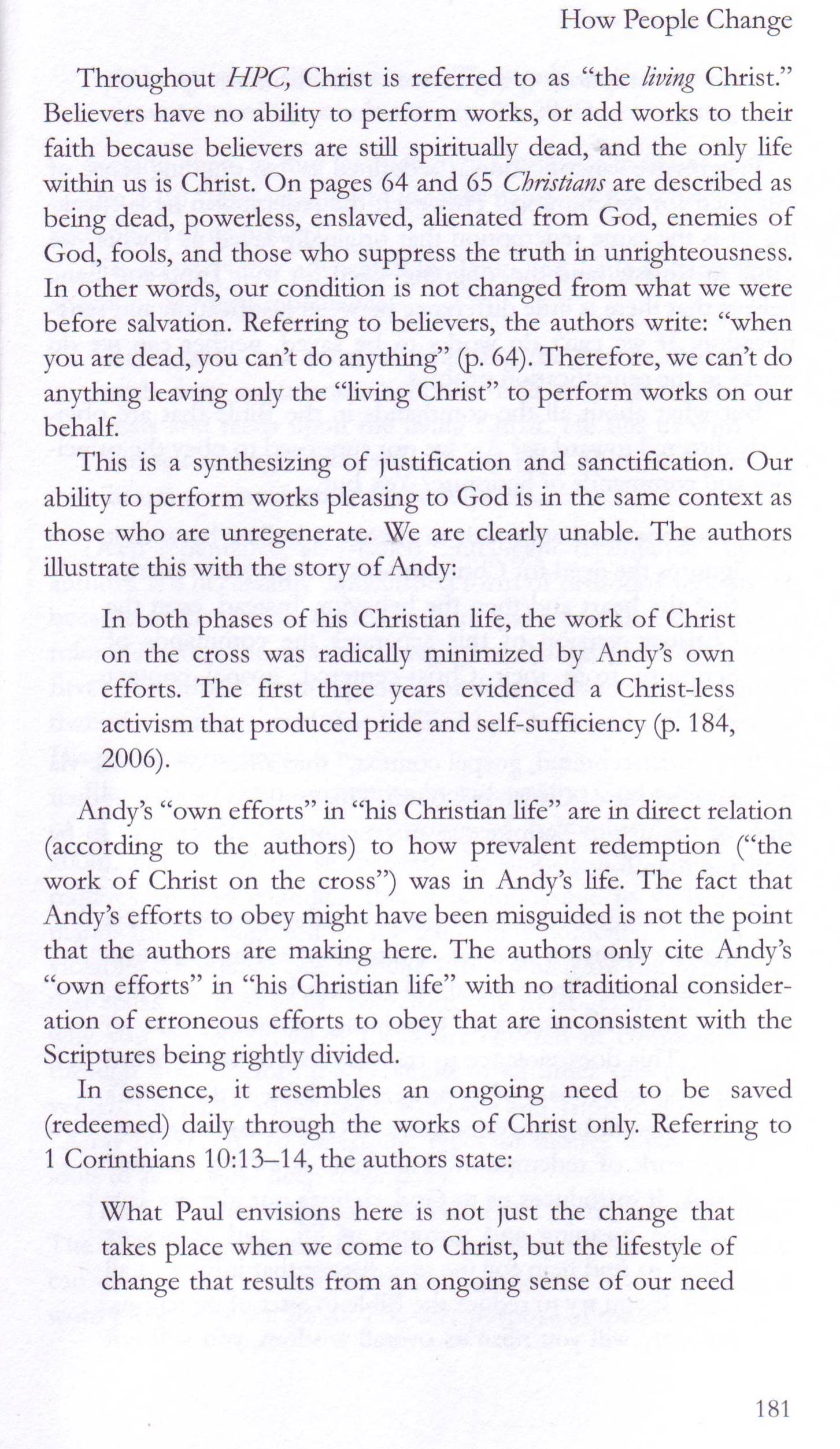
Apparently, Powlison now finds himself in the same dilemma with Paul Tripp who articulated his “Dynamics of Biblical Change” in a book authored by Tripp and Timothy Lane entitled, “How People Change.” Tripp plainly states in the book, among other things, that Christians remain spiritually dead, and passive endeavors such as changing our thinking to that of Christ is a denial of the gospel. Hence, I heard the rumor again last weekend: “Paul Tripp has taken DBC farther than Powlison intended.” Anybody smell diesel fuel?
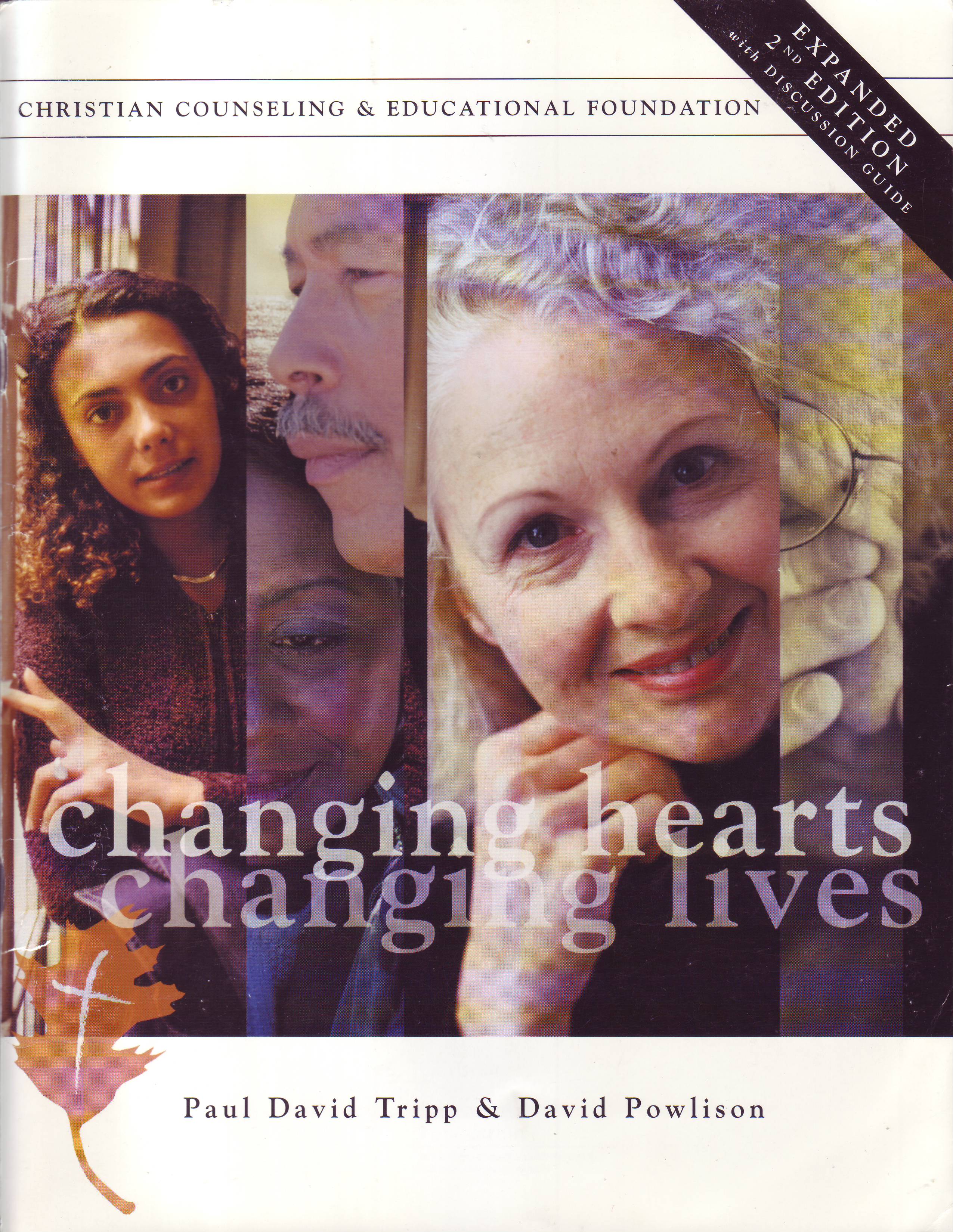
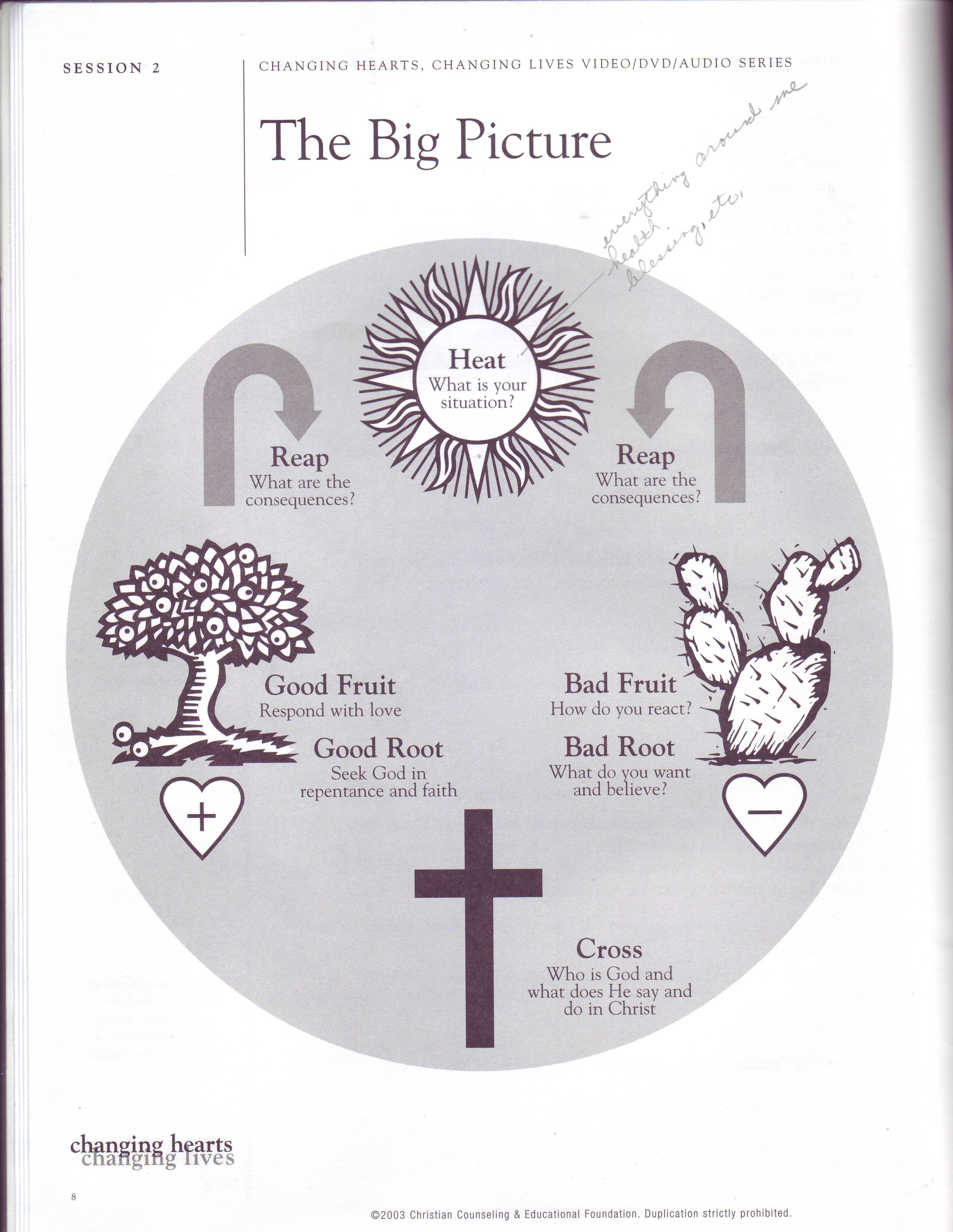
However, the rumor must be working because Tripp and Powlison will be sitting on the new board of the Biblical Counseling Coalition together where they can once again giggle (because undoubtedly, the rest of the board thinks they’re orthodox), pass notes to each other, and sip lattés while cursing Moses under their breath. Only problem is—it’s a lie. I went ahead and copied documents for comparison purposes: things Tripp and Powlison wrote together at CCEF that can be compared to “How People Change.” It’s all the same stuff—stuff that the church has forgotten, but now interpreted in its “socio-historical context.” The information is almost identical, and was easily gathered in cursory fashion. It should be self explanatory, but I can produce more information if necessary.
Written by Tripp and Powlison in 2003:
“How people Change,” Paul Tripp, 2006:


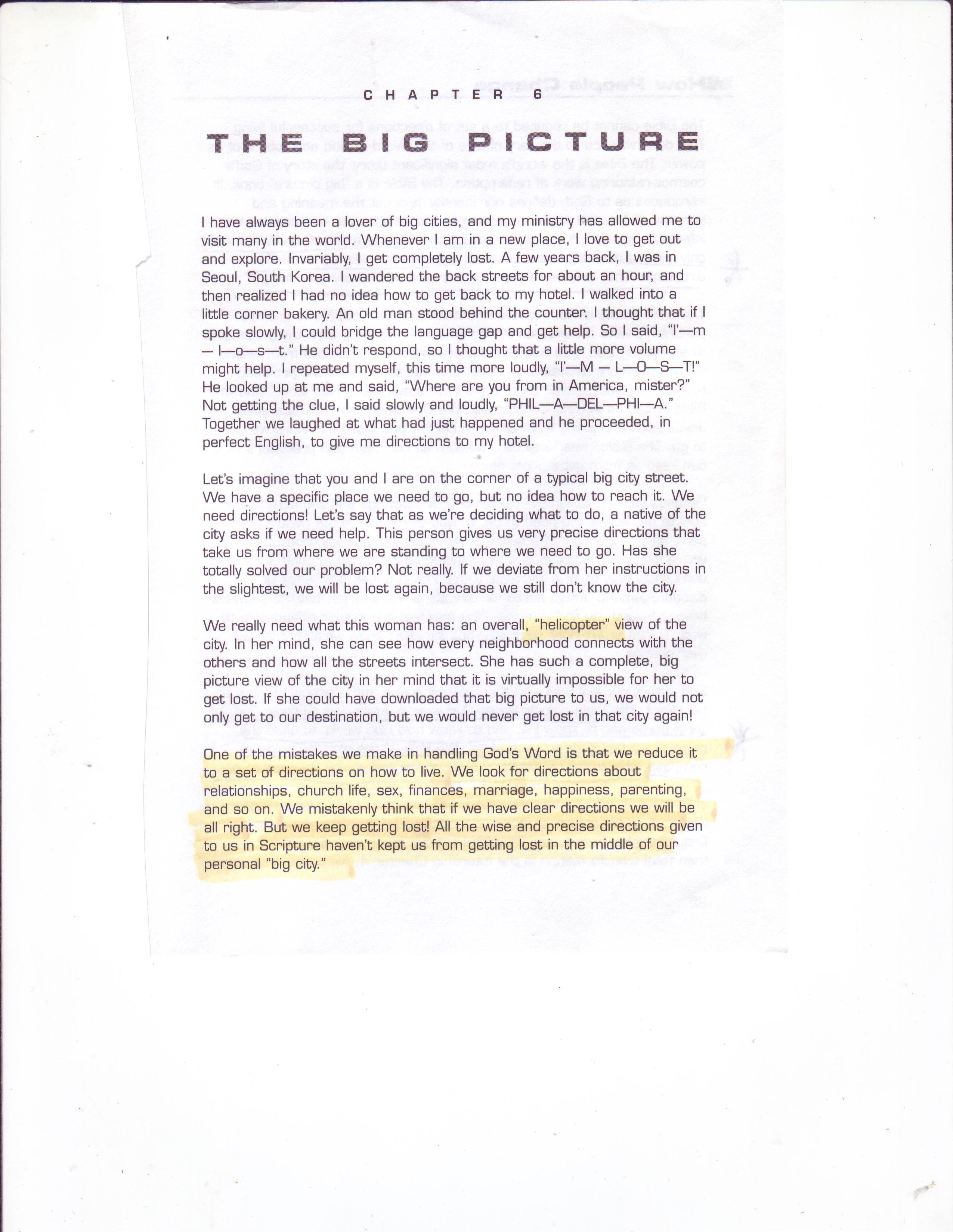
CCEF’s pilot / test program prior to the release of Tripp’s “How People Change”:


Tripp’s “How People Change” 2006:

Written by Powlison in CCEF’s Journal of Biblical Counseling:

Tripp’s “How People Change” 2006:


 Paul's Passing Thoughts

23 comments