Today’s Christian Husband and Father: Killing His Family with Awesome Preaching
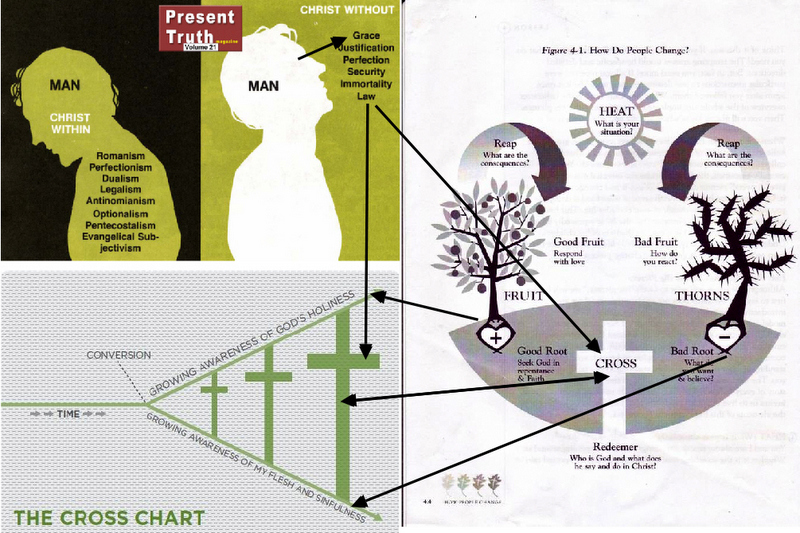
 Bob is on his way to Jerry’s house for dinner. Bob is the chairman of their church’s elder board. Jerry is being considered for eldership and Bob will be dining at his house for a pre-interview en lieu of further discussion. Pizza is the cuisine. And apparently, not just on this night—Bob notes that every trashcan in the house is stuffed with pizza boxes. Dishes full of M & Ms also adorn many of the table tops. Bob is taken to the kitchen by Jerry to meet his wife, and Bob perceives no less than twenty-five bags of potato chips staked about in various places. One corner of the kitchen is occupied with a tall stack of Coca-Cola 12packs. Big on taste—small in nutrition. Precious few will disagree that Bob’s family is headed for serious health problems if they do not change their ways. Yet, Bob is a picture of how the vast majority of Christian husbands oversee the spiritual diets of their families. However, the “Bob” motif falls woefully short of making the point; at least Bob knows what his family is eating for better or worse. Christian husbands of our day don’t even know the difference between Redemptive Historical hermeneutics and Grammatical Historical hermeneutics. In fact, when the subject comes up, a rolling of the eyes follows. That’s because the preaching/teaching is awesome where they go to church. Uncompromising, and God glorifying. As one pastor exhorted me when inquiring about what hermeneutic he used in his preaching: “Come and see if it tastes good, and if you still want to, we will talk about theology.” But I never doubt it will taste good. Who doesn’t love pizza for dinner, potato chips as a side, Coke to drink, and M&Ms for desert? Fact is, nearly 90% of preaching/teaching in today’s American church is fundamentally based on Luther’s Heidelberg Disputation. This document is the very heart of the Reformation and the engine that drives the present-day New Calvinist movement. Its premise was based on the idea that all spiritual reality, wisdom, and truth comes from the combination of two perspectives, and only these two: the holiness of God, and the wretchedness of all men whether they are Christians or not. Luther called this perspective the “theology of the cross.” It has come to be known as Gospel-Centered preaching/teaching. It is also the foundation of the Calvin Institutes. Everything in the Calvin Institutes, in some way, points to the glory of God “as set against our sinfulness.” This has become job one: as described in the Heidelberg Disputation; this way of teaching is the “cross story,” and all other spiritual wisdom is the “glory story.” Hence, the contemporary clarion call of the Reformation derived from Luther’s Disputation is, the centrality of the objective gospel outside of us. Anything at all that has anything to do with us is “subjective,” and part of the “glory story.” Unless it concerns our wretchedness. Therefore, the Disputation ridiculed a negative attitude towards suffering as well for this serves to further reveal our woeful state in life which magnifies the redemptive work of Christ and our utter worthlessness. The whole motif can be visualized by the following Reformed chart:
  Yes, you can preach wonderful sermons on those two dimensions. They are both abundantly true. Charles Spurgeon is known as the “prince of preachers.” All of his sermons are based on the “cross story.” All, I repeat “all” of John Piper’s sermons and the (seems like) 600 books he has written are based on nothing but, I repeat, nothing but the “cross story.” Amen, pass the potato chips. In circa 1994, John MacArthur abandoned the “glory story” aspects of his preaching and now focuses on the “cross story.” Amen, pass the M&Ms. And those babies slide down nice with a big swig of Coca-Cola. “But Paul, what’s so sweet about focusing on our own wickedness?” My dear friend, haven’t you seen any Staples commercials? It’s easy. You totally stink. Nothing is expected of you: “Hey honey! Good news! We don’t change! Our marriage isn’t about a bunch of do’s and don’ts! Our failures make us wiser!” That was easy. In fact, teachers like Michael Horton and John Piper continually espouse the idea that expectations are just, “more bad news.” And regarding leaders? “Alright, time to prepare my message for tomorrow, and all I have to do is look for two things, and two things only in the text: how great God is, and how bad we are.” That was easy. In fact, we find the following on a well-known Reformed blog regarding instruction on how to prepare a Bible lesson:
At this time, resist the temptation to utilize subsequent passages to validate the meaning or to move out from the immediate context. Remembering that all exegesis must finally be a Christocentric exegesis. Look for Christ even if He isn’t there directly. It is better to see Christ in a text even if He isn’t, than to miss Him where He is.
But as the apostle asked rhetorically, “What saith the Scriptures?” Is there another story other than the “cross story”? Anybody interested in the House on a Rock story?
Matthew 7:24 -“Everyone then who hears these words of mine and does them will be like a wise man who built his house on the rock. 25 And the rain fell, and the floods came, and the winds blew and beat on that house, but it did not fall, because it had been founded on the rock. 26 And everyone who hears these words of mine and does not do them will be like a foolish man who built his house on the sand. 27 And the rain fell, and the floods came, and the winds blew and beat against that house, and it fell, and great was the fall of it.”
Learn and do. That’s how we have a life built on a rock. It is the very definition of a disciple:
Matthew 19 – Go therefore and make disciples of all nations, baptizing them in the name of the Father and of the Son and of the Holy Spirit, 20 teaching them to observe all that I have commanded you. And behold, I am with you always, to the end of the age.”
So, here is my suggestion. When you go to church this Sunday, and other days following that involve sitting under the teachings of your leaders, take a legal pad with you. Draw a line at a downward angle on the bottom labeled, “our sin.” Draw a line at the top with an upward angle, and label it “Christ.” Then draw a line in the middle and label it, “What? Why? And How?” Or, “Not only what Jesus did, but what did He SAY?” Or simply, “Life built on a rock.” If there isn’t a three-dimensional balance—get out of there. You either love your family or you don’t. You will be judged by Christ accordingly. I was approached by my wife Susan this morning. My son by marriage had approached her asking questions about demonology. Apparently, he had questions concerning some things he had heard about the subject in the secular realm. I was astonished; though both of them have been in church for a combined total of 72 years, they didn’t even know the basics regarding this subject. My wife wanted to know the answers to his questions—other than the usual answers: “Jesus” and “gospel.” And if we don’t know, the world will gladly inform our children accordingly. Knowledge equals authority. Men, wake up. paul
CCEF’s Dr. Ed Welch: Sultan of the Totally Depraved

Dr. Welch
Dr. Ed Welch of the Christian Counseling & Educational Foundation (CCEF) makes his living via the wide and deep ocean of Christians who have emerged from a secular education system that stopped teaching people how to think long ago. In a recent article he wrote (What the Church Really Believes about Sanctification), absurdities occupy nearly every sentence, but people will buy it because he is, well, a doctor. It reminds me of the less than aesthetically truthful Gene Simmons stating, “Trust me, I’m a doctor” in the Dr. Pepper commercial. It’s meant to be a joke, but one wonders how many believe he is really a doctor just because he said so, and would indeed trust him to do brain surgery while dressed in his KISS attire—staring at the creepy face with calm demeanor.
In case you think I am being absurd, consider the first sentence of the aforementioned post:
Each generation of believers develops its own weird convictions about Scripture.
Here is my problem: words mean things. Welch’s words are indicative of his spiritual caste mentality that is uniquely Reformed: preordained philosopher kings are chosen to

Trust him, he’s a doctor.
herd the pathetic totally depraved zombie sheep to heaven while losing as few as possible. And like other CCEF elitists David Powlison and Paul David Tripp opine: “It’s very messy business.” Yes indeed. Welch doesn’t write, “Every generation of believers has those who develop weird convictions about Scripture.” Instead, his choice of words reveals his overall spiritual elitist attitude towards the common Christian, and their “cooperate weirdness.” What does “corporate” mean? This first sentence is followed by the typical Reformed argument for why creeds and confessions are needed:
Though confessions and creeds offer some stability, they also conceal our faulty beliefs under a thin cover of orthodoxy. And there they wait, erupting to the surface in times of trouble.
The arrogance takes your breath away. If not for Reformed confessions and creeds written by the….and this kills me, “Westminster Divines,” and bloodthirsty Puritans at the behest of civil government—there wouldn’t be any stability at all! Per the usual, like his associate David Powlison often does, Welch deceives with subtle words that pretend to make him one of us: “….our faulty beliefs,” but obviously, he is of the anointed few that sees the problem since interpreting the Bible for ourselves is a dangerous stunt that we shouldn’t try at home. Like their good friend Dr. Albert Mohler has stated:
The main means by which God saves his people from ignorance is the preaching and teaching of the word of God. That’s why a conference like this is so important. It’s not just because we think of the pastorate as a profession set along side other professions so that we can gather together for a little professional encouragement to go out a be a little better at what we do. No, we’re here because we believe that those who teach and preach the word of God are God-appointed agents to save God’s people from ignorance (2011 FBC Jax Pastor’s Conference).
CCEF’s own view of interpretation posits the idea that research and development teams made-up of experts from various fields can only draw out truth that can help the totally depraved zombie sheep cope while on the long road to heaven fraught with darkness and hardship. In an interview with 9Marks blog, Powlison stated:
CCEF is also unique even within the wider biblical counseling movement in two more ways. One is what I call “R&D”—a research and development purpose. We don’t believe that saying “biblical counseling” means that we have figured it all out. We are a work in progress. We have a core commitment to push, to develop, to build, to tackle a new problem…The church forgets things. The church rediscovers things. But when it rediscovers something, it’s different because it’s always in a different sociocultural-historical moment, and different forces are at work.
So, even if the average Joe Christian could find the forgotten truth which apparently isn’t in the Bible to begin with or else it wouldn’t be forgotten, you would have to be a sociologist to understand the significance of that truth in our day. Game over. All hail to the CCEF philosopher kings.
Welch further exploits the apparent stupidity of Christians by implementing the Reformed either/or hermeneutic:
One place we can find the corporate weirdness of our day is in the doctrine of sanctification. It seems that we [he really doesn’t mean “we,” again, this is disingenuous and manipulative] have arrived at a consensus about the normal process of sanctification and it’s not good. Here it is: We believe in the victorious life: healthy, wealthy, prosperous and sin-free. Lord have mercy on us.
Again, though Welch uses the word “us,” he and the brainiacs at CCEF are the only usians that can see the problem. They are the usian philosopher kings. And we EITHER see it their way, OR we believe in the “victorious life”; i.e., Christians will never suffer and will enjoy prosperity unless it’s a judgment from God:
No sane Christian believes we will be free of trouble, hardships and suffering, but most of us believe we should have less of it than our unbelieving neighbors. So suffering still surprises us, as if children of the King have immunity. The two common responses to suffering are: [with frustration] Why is God doing this to me?[with guilt and confusion] What have I done to deserve this? Do we think that Christ suffered so we are spared the hardships that would have fallen on us? True, Jesus bore our judgment but that doesn’t eliminate the suffering of living in a sin-filled world. Instead it gives us power to follow in his footsteps.
Here is what Welch, being evil, does with this statement: he takes four different biblical truths and uses them as three points to draw one conclusion:
Weakness. That is the normal Christian life. It looks like power but it feels like weakness. That is the real victorious life.
Hence, the biblical truth that we can obtain blessings in this life through obedience; the biblical truth that sin can in fact bring judgment; and the fact that God brings trials into our life to stretch our faith, are all presented as fallacies to make his Reformed money point: we are pathetic, helpless, weak, defeated, totally depraved morons that need to learn how to be victorious in weakness via the CCEF philosopher kings.
In the above statement, he also reveals their Gnostic paradigm for how this is accomplished: normal is weakness because we are weak, and a deeper and deeper knowledge of that weakness enables us to “feel” the power of the heavenly. In this earthly realm we “look like” weakness, but we experience the “power” of the spiritual realm. This CCEF Gnostic viewpoint was at the crux of the Welch/Jay Adams heart/flesh debate. Welch (like the rest of the bunch at CCEF) believes sin is a realm; Adams believes sin is also in our flesh where Christians can fight against it through obedience and practical biblical means. Welch, to the contrary, believes that gnosis concerning the works of Jesus (gospel contemplationism) manifests the spirit realm which we passively “feel” or experience:
We fix our hearts on Jesus and what he has done, and begin a journey that travels from loving sin to hating it, which can take quite a while and seem circuitous. It feels like weakness, but is sustained by the Holy Spirit. That is the real victorious life.
Yes, though we “hate” sin, there is really nothing we can do about it, that wouldn’t be “weakness.” The true victorious life is looking weak, but feeling the power of the heavenly. It’s “look” and “feel” which is anything but, learn from the Bible and do.
In the end game—it’s Reformed antinomianism. But what is amazing is how these guys can couch their Gnosticism in a way to make it look like solid biblical wisdom. Nevertheless, CCEF plays an important role in the present-day New Calvinist tsunami. It is a think tank for the development of the movement’s most valuable asset….
CONTROL.
paul
Heresy in Heels: The Queens of Progressive Justification
 “As one respected Reformed pastor noted: it is the same Catholic salvation that those of Reformed thought claim to refute.”
He is supposedly the Master who does all the work for us lest He be robbed of any glory. Somehow, if we actually do any of the work as born again slaves, that doesn’t honor the Master, but yet, he insists on being known as a master. It seems like God would want to be known by something else other than, “Lord.”
Using language that referred to the slave culture of that day, the apostle Paul said we were “bought with a price.” We were purchased as slaves with the blood of Christ, but the gospel that is all the rage of our day denies this very purchase and the lordship of Christ; it’s replaced with a supposed purchase of parasites.
As the heretic Paul David Tripp states it: we “rest and feed” on Christ. Got that? We are the slaves, He is the Lord, but we “rest and feed.” Really? And how valid is any profession of faith that doesn’t understand this relationship? How valid is a profession that accepts Christ as Savior only and denies the purchase?
Contemporary Reformed leaders of our day are now cashing in on this false gospel two-fold. The judgement they are heaping upon themselves for present-day cash is not enough—they are getting their wives in on the action. The organization True Woman .com is only one of many massive organizations saturating Christian culture with New Calvinism’s fusion of justification and sanctification.
The organization is led by several wives of the who’s who of neo-Calvinism—following their husbands in heresy. And I am not the only one saying so. Even those of the “Reformed tradition” label the neo-Calvinist active obedience of Christ (Christ obeys for us) as, “heresy,” “works salvation” by not working in sanctification, “easy believism,” and antinomianism.
When justification and sanctification are fused together, justification is not a finished work. The doctrine makes two justifications: one finished and one progressive. They deceptively refer to this as “progressive sanctification.” Hence, “progressive sanctification” is really finishing justification. That’s a huge problem because we are in the sanctification process and what we do can therefore effect our “just standing with God.” It requires a maintaining of antinomianism to keep our just standing before God; ie., sanctification by faith alone. But living by faith alone in sanctification becomes a way to maintain our just standing before God—for all practical purposes, works salvation by antinomianism.
It’s not an oxymoron; when justification and sanctification are fused together, everything we do in sanctification points back to, or effects our justification because at least one aspect of it is not finished. As one respected Reformed pastor noted: it is the same Catholic salvation that those of Reformed thought claim to refute.
Furthermore, the primary catalyst for the doctrine’s present success was its Sonship theology package hatched at Westminster Seminary by Dr. John “Jack” Miller. A self-proclaimed understudy of Miller’s, David Powlison, then made the doctrine the foundation of Westminster’s biblical counseling curriculum via CCEF. In a book written by Dr. Jay E. Adams, he clearly states that the doctrine promotes a view that sanctification is powered by justification. Clearly, even in the Reformed community, there is a dispute in regard to the very reason we are supposed to be here: the gospel.
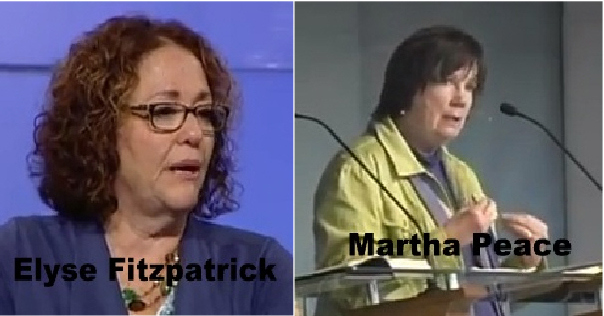
But does the Reformed tradition trump gospel truth? The answer is a resounding, “yes,” especially in the biblical counseling community. The two primary queens of that movement are Elyse Fitzpatrick and Martha Peace. Fitzpatrick has openly denied that there is any such thing as an antinomian because man is helplessly legalistic. Like all good neo-Calvinists, the poo-pooing of specific biblical truth is done without a blinking of the eye. In this case, the biblical word “anomia” is completely dismissed. And apparently, Satan came to Eve in the garden as a legalist.
Peace is a hardcore New Calvinist proponent of the active obedience of Christ and sanctification by faith alone. But yet, these two women are the toast of the biblical counseling community—even by those who refute the neo-Calvinist take on double imputation (the active and passive obedience of Christ imputed to our sanctification).
Why? Because it’s really not about the gospel. That’s why. And as far as counseling, people can’t be helped with a false gospel. No way.
paul
PsychoHeresy Unawareness: Dr. John Street Shot the Sheriff, but He Didn’t Shoot the Deputy
 No doubt, PAM reveals many problems with the biblical counseling movement that one may expect when it is based on a false gospel. But John Street’s real sin is his participation in a mass propagation of a false gospel.
Dr. John Street, founder of Clearcreek Chapel in Springboro, Ohio has finally made it big in the biblical counseling movement. This is evident from the fact that he has become a target of PAM (PsychoHeresy Awarness Ministries). PAM is directed by Martin and Deidre Bobgan who without a doubt are the most formidable critics of the “biblical” counseling movement.
John Street is an elder at John MacArthur’s Grace Community Church in California, and the Chair of the graduate program for biblical counseling at the seminary associated with MacArthur’s church. Also, last time I checked, Street is the president of the National Association of Nouthetic Counselors (NANC).
In the most recent PAM newsletters (http://www.psychoheresy-aware.org/street_tmc&s.html and http://www.psychoheresy-aware.org/street_tmc&s_2.html) Street is barbecued for practicing counseling methods that the Bobgans deem unbiblical. PAM primarily decries the biblical counseling movement’s “problem-centered counseling” verses “Christ-centered Ministry” (http://www.psychoheresy-aware.org/e-books/CCMpcc-ebk.pdf ).
I am not sure what PAM means by “Christ-centered ministry,” but it seems to be a passive approach regarding the disciple’s role in sanctification:
This is why we say that those who minister to one another need to get in the way and out of the way. They need to be available, but they need to let God work rather than push their own agenda.
The idea of pushing our own agenda could mean “let go and let God” instead of pushing an agenda that just so happens to be God’s agenda. The wording is unsettling. Elsewhere the Bobgans write the following:
Christ-centered ministry encourages spiritual growth and depends on the Lord to do the work in each individual through His Word and Spirit. Therefore, one can confidently assure believers that this ministry is more effective, long-lasting, and spiritually rewarding than problem-centered counseling for those who are willing to go this way.
Depend on the Lord to do the work? At the very least, the Bobgans need to clarify their position more thoroughly because by and large, gospel contemplationism is the primary thrust of NANC counseling. One wonders if PAM is accusing NANC of what they are guilty of: an overly passive approach to sanctification.
And, NANC, when they were (past tense) helping many people, encouraged an aggressive role in sanctification by the counselee. Christians are called to “study to show thyself approved,” and then aggressively apply that truth to their lives in order to have a life built on a rock (Matthew 7:24).
This was NANC’s approach in the past, and it did result in massive professions of faith, and real lasting change. I know; I was there; I am a firsthand witness. This was before David Powlison via CCEF and company infiltrated NANC with the gangrene of progressive justification. Unbelievably, in broad daylight, Powlison admitted (during a lecture at John Piper’s church while Piper was on sabbatical searching for different “species of idols” in his heart) that NANC’s “first generation” counseling was in contention with “second generation counseling” over the very definition of the gospel!
And this is my point: PAM is focused on the supposed evil of “problem-centered” counseling (is the gospel itself not problem-centered? The gospel did not come to solve a problem?) while the real issue is that NANC and CCEF both propagate a blatant false gospel. The counseling is based on the fusion of justification and sanctification with gospel contemplationism as its practical application.
CCEF’s counseling is based on Sonship theology. Dr. Jay E. Adams nailed that doctrine specifically as the fusion of justification and sanctification in his book, “Biblical Sonship” published in 1999. Adams, in the book, decried Sonship’s position that regeneration is powered by the finished work of justification. CCEF then effectively infiltrated NANC and took it over with the same doctrine. I use over 200 pages to document all of this in “The Truth About New Calvinism” (thetruthaboutnewcalvinism.com).
Hence, we must assume that NANC counseling yields many ill results, and I will say this: PAM points them out though they are missing the much larger issue. Case in point:
The truth is that counselors and especially counselors with an agenda (their particular approach) too often take credit for successes and attribute failures to the counselees. The trumping truth is that success is primarily in the hands of the counselees….
And worse yet, The counselee’s “failure” ends up in church discipline!
Also:
Problem-centered counseling is typically a one-to-one relationship. Sometimes couples and families are involved, but the relationship is generally artificial and restrictive. The counseling relationship itself usually does not extend outside the counseling room. The relationship lasts as long as counseling is being provided and normally does not extend to other involvement, even in most biblical counseling centers. Problem-centered counselors commonly do not involve themselves with counselees outside the counseling room. That is why both psychological and biblical counselors sometimes use intake forms requesting a great deal of personal information. Because this relationship is generally isolated, the counselor and counselee can be selective as to what they want to reveal about themselves. In fact, as we mentioned earlier, research shows that counselees often lie to their counselors and protect themselves by concealing important information.
The great advantage of Christ-centered ministry is that it is not limited to an artificial one-to-one relationship where one has the problem and the other supposedly has the solution. In the Body of Christ all are growing together. there are many opportunities to know one another and to interact in genuine relationships. When a believer is experiencing problems, more than one person may be involved in ministering to that individual. One may be teaching. One may be reminding. Another may simply be extending support and fellowship. Another may be helping in practical ways. Another may be exhorting. Another may be admonishing. And, in a few cases, some may be exercising the responsibility of disciplining a fellow believer for the sake of restoration. But, all can be praying and encouraging the individual in the direction of the Lord. And, through all this, all are growing together and the relationships may deepen with one another as well as with the Lord.
No doubt, PAM reveals many problems with the biblical counseling movement that one may expect when it is based on a false gospel. But John Street’s real sin is his participation in a mass propagation of a false gospel. It reminds me of Eric Clapton’s ode to one who objects to being accused of shooting a deputy when he really shot the sheriff.
paul

 Paul's Passing Thoughts
57 comments