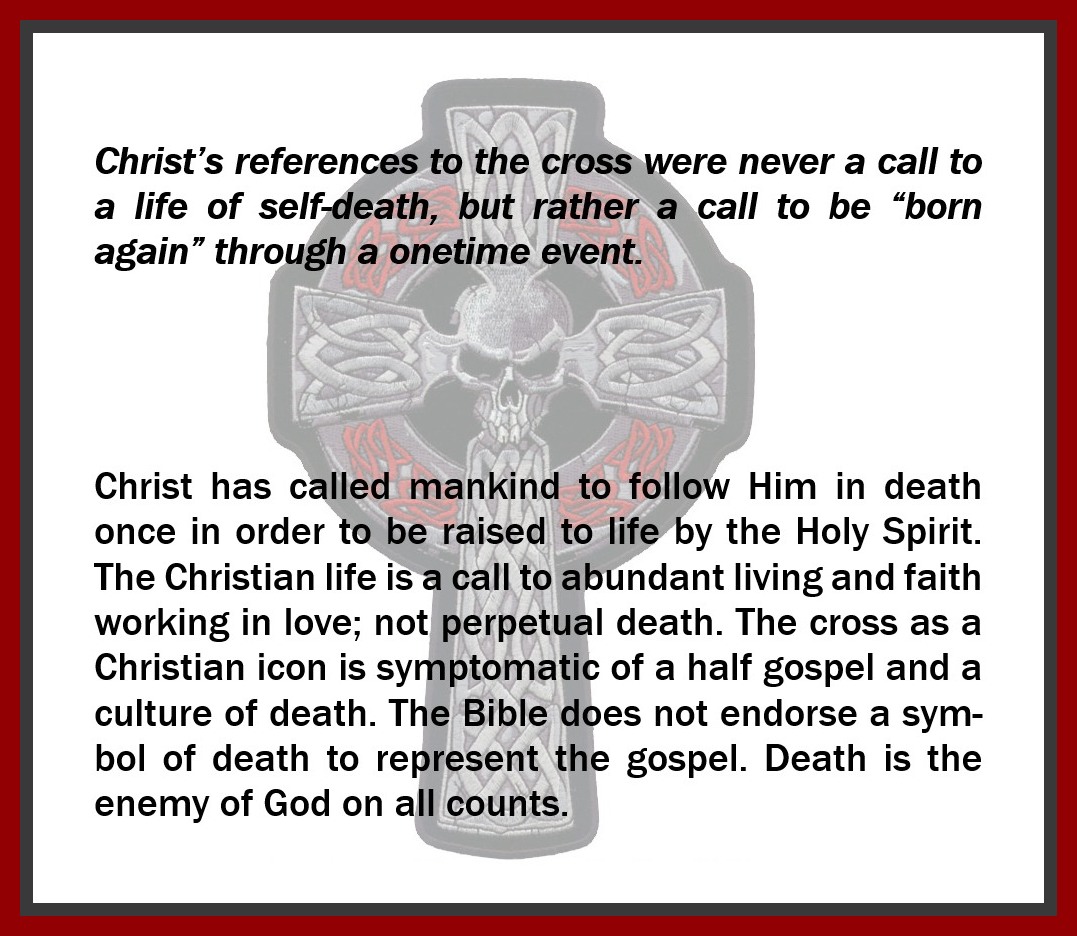
Why Al Mohler is a Heretic
 Originally published April 10, 2012
Listen friends, the gospel of progressive justification is a false gospel; it’s just that simple. I don’t care how educated Al is, how many followers he has, or anything else save the gospel he preaches. In the following video trailer from the 2011 Resolved Conference, Al Mohler states that the only purpose of the law in the life of a believer is to show us our ongoing need for salvation. Of course, he doesn’t word it that way. He states that believers have an ongoing need for Christ (which no Christian would refute), but note carefully: he is speaking in context of our initial salvation. So, instead of saying plainly that Christians need to be continually saved, or continually justified, he replaces that wording with “Christ.” However, again, the context is clearly salvation. He is saying that we need Christ in the same way that we needed Him for salvation.
Mohler is also saying that the law has the same relationship/purpose to unbelievers as it does believers: to show us our need for Christ. So, obviously, this is in contrast to any ability on the part of the believer to keep it. All the law can do is show NEED. Need for what? Well, what’s the context? Mohler also presents an either/or choice in regard to the law: it either shows us our need for Christ (again, what need specifically?), or we are using it to “rescue ourselves from sin.” Hmmm, what does it mean to “rescue ourselves from sin”? I believe Mohler deliberately uses the word “rescue” instead of “save” in order to add nuance to his point. “Rescue” is less direct, and could refer to a believer trying to overcome sin on his own. This is the same reason he replaces “salvation” with “Christ” in his prior point. It’s deliberate deception. Excluded is any mention that the law can be used by the believer to please God and glorify Him in all we do by “observing all that I have commanded.”
Mohler’s trailer starts at 1:35.
The Protestant Twisting of 1John: A Clarification, Part 2
 Originally published March 31, 2015
Listen to show or download audio here.
Listen or download full show uninterrupted.
Welcome to Blogtalk Radio False Reformation this is your host Paul M. Dohse Sr. Tonight, part 2 of “The Protestant Twisting of 1John: A Clarification.”
How is 1John used to argue for a progressive salvation, and what is John really saying in his epistle? That’s what we are discussing tonight. If you would like to add to our lesson or ask a question, call (347) 855-8317. Per the usual, we will check in with Susan towards the end of the show and listen to her perspective.
If you would like to comment on our subject tonight, you can also email me at paul@ttanc.com. That’s Tom, Tony, Alice, Nancy, cat, paul@ttanc.com. I have my email monitor right here and can add your thoughts to the lesson.
Ok, so this whole idea is very Protestant, that we must keep going back to the same gospel that saved us in order to keep ourselves saved. But, it’s all good because we are going back to the “gospel” and the “gospel” is by faith alone so going back to the gospel is a faith alone work which isn’t really a work. So, it’s ok to do something to keep ourselves saved as long as it’s a faith alone work.
As we discussed last week, here is where the home fellowship movement stands apart from the institutional church: salvation is a finished work; salvation is NOT a progression from point A to point B. The new birth is a onetime instantaneous quickening of the believer. The believer then in fact does move on to something completely different—kingdom living, or discipleship. Central to Protestantism is the idea that moving on from the gospel to doctrinal maturity is an abomination. The who’s who of Protestantism can be cited many times in stating this in no uncertain terms.
The home fellowship movement is not a mere preference over the institutional church—it is an anti-progressive justification movement. It is a return to the true gospel of Christ. All of the institutional church either embraces progressive justification or is willing to fellowship with it and is therefore altogether guilty.
Last week, we also introduced the fact that 1John must be interpreted according to its historical context. The number one nemesis of the 1st century assemblies was Gnosticism and 1John is a treatise against it. We covered John’s introduction which was a direct pushback against the Gnostic idea that the spiritual Christ did not die on the cross. We believe that John was specifically addressing the Gnostic teachings of Cerinthus. He taught that there was more than one Christ; one born naturally of human parents that will be resurrected with all other men in the last days, and the spiritual Christ who dwells in heaven. Elsewhere, John wrote:
1John 4:1 – “Beloved, do not believe every spirit, but test the spirits to see whether they are from God, for many false prophets have gone out into the world. 2 By this you know the Spirit of God: every spirit that confesses that Jesus Christ has come in the flesh is from God, 3 and every spirit that does not confess Jesus is not from God. This is the spirit of the antichrist, which you heard was coming and now is in the world already.”
The very definition of antichrist teachings is the denial that the true Christ (Messiah) was part of the material world, or actually came in the flesh. Gnostic systems of thought are very complex, but the cardinal principle is that material is evil and the spiritual or invisible is good.
The important distinction is that biblically, the material creation is not inherently evil, but weak. This is an important distinction because Christ coming as man makes it possible for men to be literally recreated and part of God’s literal family. The teaching that “denies Jesus is the Christ” (Messiah: 1Jn 2:22) circumvents the new birth. Throughout this epistle, John refers to the recipients as “little offsprings”(teknion; little children). I want to dig into this a little deeper; the new birth and its relationship to apostolic succession, but first, let me address the crux issue here.
John was also addressing an aspect of Gnosticism that believed the following: sin only resides in the material, and the spiritual part of man is sinless and has never sinned. In essence, it doesn’t matter what we do in the body because the spiritual part of man is sinless and has never sinned, and that is the only part of man that is eternal anyway. Many scholars concur that this was a common form of Gnosticism. Of course, this disavows any need for Christ to die on the cross and makes the knowledge of this supposed lie salvation itself. Salvation by being made into something new is out—coming to grips with the gnosis regarding man’s inner spark of divinity is in. This backdrop now explains exactly what John was getting at in 1John 1:7-10 and 2:1,2.
1John 1:7 – “But if we walk in the light, as he is in the light, we have fellowship with one another, and the blood of Jesus his Son cleanses us from all sin. 8 If we say we have no sin, we deceive ourselves, and the truth is not in us. 9 If we confess our sins, he is faithful and just to forgive us our sins and to cleanse us from all unrighteousness. 10 If we say we have not sinned, we make him a liar, and his word is not in us.”
1John 2:1 – “My little children, I am writing these things to you so that you may not sin. But if anyone does sin, we have an advocate with the Father, Jesus Christ the righteous. 2 He is the propitiation for our sins, and not for ours only but also for the sins of the whole world.”
“We” in these verses should be viewed as speaking to mankind in general while including both saved and unsaved individuals. Recognizing that Christ came to deal with man’s sin problem is efficacious to the gospel.
John is NOT stating the Protestant gospel of “deep repentance” which teaches that we keep ourselves saved (or washed) via a “lifestyle of repentance.” That would be a perpetual return to the same gospel that saved us for relief from “present sin.” That flies in the face of biblical justification. This makes “if” in these verses a conditional conjunction. That would mean that our sins continue to be forgiven, or washed, or cleansed “if” we “walk in the light” and continue to repent. That’s clearly works salvation, and clearly a reapplication of Christ’s sacrifice to present sin. As actually taught in Protestant circles, the sacrifice only happened once, but the remembrance of it continues to cleanse present and future sins.
This is the whole deal behind, “We must preach the gospel to ourselves every day” and the vital union doctrine. Living a “lifestyle of repentance” or deep repentance “keeps us in the love of Jesus.” This is salvation by Jesus + deep repentance to keep ourselves saved. The Reformed say, “No, it’s not works because repentance is a faith alone work,” but not even a so-called faith alone work can keep you born again—you can’t unborn yourself by not doing something. Look, here is the money point on all of this: the needed present and future forgiveness can only be found in the Protestant institutional church via baptism/formal membership. And we will be addressing that a little further along.
One of the many problems with this is, in regard to believers, follows: in order for present sin to exist, there has to be a law, and the blood of Christ ended the law—it’s a onetime cleansing. To have some need to reapply the blood of Christ to present sin implies that there is still sin, and there is not because where there is no law—there is no sin, and Christ died on the cross to end the law. This fact is found in Romans 3:19,20, 4:15, 5:13, 7:8, 10:4.
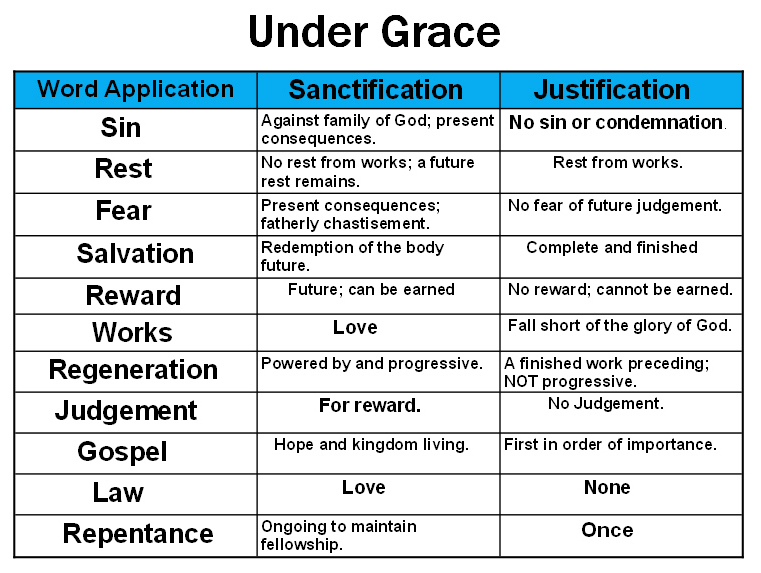
Some insist that John’s context here is fellowship, and since fellowship is the context, John is writing about repentance that is necessary to keep us in proper family relationship with God, and not a repentance that keeps us in the family of God; ie., John is talking about sanctification and not justification. Frankly, that’s the view that I used to hold to as well.
But John is talking about the onetime cleansing that justifies. Note that throughout these verses that it is a forgiveness that cleanses from “all sin” and “all unrighteousness.” That has to be justification. What John is saying is that no matter who you are in humanity, you have need to be forgiven of sin by believing that Jesus is the Christ and died for you. Note the subjects of these verses: “He is the propitiation for our sins, and not for ours only but also for the sins of the whole world.”
However, John is also saying that this fact doesn’t give us a license to sin any more than the Gnostics, “I am writing these things to you so that you may not sin.” But watch this: “But if anyone does sin, we [everyone] have an advocate with the Father.” Ok John, an advocate for what purpose? Answer: “He is the propitiation for our sins, and not for ours only but also for the sins of the whole world.” Who are the subjects? It’s obvious who the subjects are.
If this isn’t speaking to a onetime cleansing of sin, the world doesn’t need the new birth any more than Christians—they only need to ask forgiveness so the blood of Christ will be applied to the particular sin. Not only that, the new birth is also disavowed through the denial of a new creaturehood displayed by people who have passed from death to life. And John is speaking directly towards this issue as well. You see, who the “we” are and what the “if” is—is critical to interpreting these verses properly. The “we” are the “anyone.” The “if” is a cause and effect conjunction and not a conditional conjunction.
And let me tell you something, Protestant theologians rarely have any qualms about saying that God’s promises are conditional. I mean, what’s the paramount example? Replacement theology/supersessionism, right? This whole idea that Israel’s election was conditional on them holding up their end of the covenant. I just don’t know what can be more obvious, and this is their exact take on justification as well.
This is the crux. John is saying that if we walk in the light, it’s because we have been born again, not that we keep ourselves born again if we do our part by walking in the light. Walking in the light is not our part of the so-called vital union, we walk in the light because that’s what new creatures do; cows like hay and ducks like water—it’s a cause and effect conjunction not a conditional conjunction.
Now, here is where we really struggle with these verses: in verse 7, the English word in the plural strongly suggests a present continuous action. Verse 9 really isn’t that much of a problem as it’s merely saying that anyone that confesses their sin is cleansed of all unrighteousness. Note the following verse 10 that can be rendered this way: “If we say we have not [never] sinned.” The English “ed’ on the end of sin indicates past tense like, “I sinned.” That’s past tense. If John is speaking to the present continuance, why would he have not written, “if we say that we do not sin.” Right? Verse 9 simply fits into the Gnostic motif that John was arguing against.
Neither is 1John 2:1, 2 a problem. John is simply stating that anyone who recognizes their sin and wants to do something about it has an advocate in Christ who cleanses all sin. And by the way, the rest of John’s letter backs up my Pauline argument to the hilt. Just, all over the place in the rest of the letter, for example,
1John 3:3 – “And everyone who thus hopes in him purifies himself as he is pure. 4 Everyone who makes a practice of sinning also practices lawlessness; sin is lawlessness. 5 You know that he appeared in order to take away sins, and in him there is no sin.”
He came to “take away sin,” not to cover it with His own righteousness and to continue to forgive it. Christ came to end sin altogether. Are we “in Christ”? Well, in Him there is NO sin. So if we are in Him, why would we need forgiveness for present or future sin in regard to justification? In 1John 2:12-14, forgiveness of sin and overcoming the evil one is spoken of in the past tense.
The only matter at hand is the word “cleanses” in verse 7. Let me point something out to you. Most of the English translations that we have come out of the Protestant Reformation. Therefore, and there are myriads of examples of this, the translations are tainted with progressive justification presuppositions. And unfortunately, this includes the Greek word-study helps. Here is something I read in one:
Every encounter with a command to obey, is our opportunity to jettison self-reliance and to yield to the enabling power of the Holy Spirit. Supernatural commands from the supernatural God can only be carried out with reliance on His supernatural power! The Spirit is called the Helper, but don’t let His Name mislead you. To say that we need His help is to imply we have some ability of our own to obey and are in need of a little “push” so to speak.
See the problem? You can know the Greek backwards and forwards, but what good does it do if “help” doesn’t mean “help”? Look, what good have all of the Protestant Greek scholars done for us? I came to realize the problem of progressive justification by my own independent study in Romans. The basic concept easily understood regardless of the language, “where there is no law there is no sin.” That statement astounded me, but was the key to unraveling the whole mystery. Once you understand that fundamental, the rest of the Bible, when taken in context, fits together perfectly in every way. How much did any knowledge of Greek aid me in this understanding? Nada. Goose egg. Zilch. Loco zippo.
Greek can be confirming, and helpful, but the Bible is written in definitive structures that mean the same thing in all languages and that is no accident. You can translate the fact that Christ died on the cross to end the law, and where there is no law there is no sin, any way you want to—it’s going to mean the same thing in any language. Then you start seeing where the concept fits together with everything else in the Bible which enables you to nail down what the anomalies are. And a lot of the anomalies are bias towards a certain worldview.
Notice in the example I gave there is no room given for an authentic colaboring between us and the Holy Spirit. It is either all us or all of the Holy Spirit. My friends, that is the Protestant redemptive-historical worldview to a T and it is fundamentally Gnostic in its premise. Hence, when you use Greek word-study helps, you are often dealing with the same bias. This is why I eventually threw away my Kenneth Wuest expanded New Testament translation. I started seeing clear bias in how he processed the Greek verbs and I was totally done with him at that point.
I spent the better part of yesterday researching 1John 1:7 and the word “cleanses” therein. We know from biblical context that this verse cannot be saying that the one sacrifice of Christ continues to rewash us IF we continue to walk in the light; ie., Protestantism. And let me give you the thumbnail: if you remain faithful to the institutional church and its sacraments/ordinances, that keeps you saved. Even if the Greek usage indicates a present continual action there is no way to distinguish that from the simple reality of being washed once and remaining clean thereafter. In other words, there is no way to definitively distinguish between two intents: a required reapplication to reinstate a status or an unchanged status that continues in the same state without any further action.
Though “cleanses” appears to be some kind of continuing action in the ESV version of 1John 1:7 as well as many other versions, we know that this same cleansing of regeneration is clearly stated as a onetime final act in many, many other Bible passages. For example,
1 Corinthians 6:11- “And that is what some of you were. But you were washed, you were sanctified, you were justified in the name of the Lord Jesus Christ and by the Spirit of our God.”
Ok, you have “were” in there four times with sinful lifestyles being in the past tense, and sanctified, justified, and “washed” being in the present tense. It is one event that happens one time and transforms us into an immutable state. Period. This is irrefutable. And by the way, if you do a New Testament word search on the exact form of the Greek word “cleanses” (other translations “cleanseth”) in 1John 1:7, it is almost always used as a onetime ceremonial cleansing.
Matthew 8:2 – “And behold, a leper came to him and knelt before him, saying, ” Lord, if you will, you can make me clean.” 3 And Jesus stretched out his hand and touched him, saying, “I will; be clean.” And immediately his leprosy was cleansed.” [Here in Mathew 8:2, the same exact form of the Greek word is used for past, present, and future tense. “Ed” is added to the English word “cleansed” to indicate past tense].
Note how Young’s Literal Translation has 1John 1:7.
“and if in the light we may walk, as He is in the light — we have fellowship one with another, and the blood of Jesus Christ His Son doth cleanse us from every sin;”
Now, not only does this simply state the fact that the blood of Christ cleanses us from every sin with a much less conditional translation, it’s interesting that the YLT picks up on something that Andy related to me yesterday in regard to the word “may”:
What is interesting is that all of the examples that John uses where he says “if” are all 3rd class conditions. All the key verbs are in the subjunctive mood.
Here is an excerpt regarding 3rd class conditions…
“The third class condition often presents the condition as uncertain of fulfillment, but still likely. There are, however, many exceptions to this…The third class condition encompasses a broad range of potentialities in Koine Greek. It depicts what is likely to occur in the future, what could possibly occur, or even what is only hypothetical and will not occur” (Wallace, p. 696).
So John is really posing a series of future hypothetical situations. Any place where it says “if” you should read it as “if ever in the future…” or “if at any time in the future…”
It would appear that this seems to be an exercise in reason using hypothetical examples to refute the gnostics that were among them in those assemblies. Notice that the present tense verbs are present tense because they are in the conclusion (apodosis) to the proposed hypothetical conditional premise (protasis). But the verbs in the premise (protasis) are in the subjunctive mood.
Also, you cannot read verse 7 without verse 6. Verse 7 is an antithetical conclusion of verse 6. In other words, you can’t properly interpret vs 7 without vs 6. In fact, notice how 7 contrasts 6, AND vs 9 contrasts vs 8 also! They are parallel arguments, and then vs 10 kind of sums it up.
This bolsters my contention that John is addressing people in general regarding the ramifications of their beliefs about sin in contrast to Gnosticism. That’s the crux here: the backdrop is the Gnosticism John is addressing. If you say that you have no sin, for whatever reason, you are making God out to be a liar. But if you confess your sin, God will cleanse you from all unrightousness. And, that will have an effect on your life because you have been cleansed. John does not hone-in on the new birth right here, but does so in chapter 3 bigtime. Really, chapter 3 clarifies exactly what is being stated in the first two chapters.
In addition, John is saying that even though those who confess their sin are cleansed of all sin, that is not a different kind of license to sin without ramifications. Hence, “…I am writing these things to you so that you may not sin.” But if you do recognize that you have sin, we have an advocate with the Father that is a propitiation for all sin, those who confess that they have sin, and those who may in the future confess that they have sin—this is what is going on in this passage. And by the way, this is another refutation of limited atonement as well.
Let me give another example that might help clarify all of this. One Reformed fellow (a disciple of Paul David Tripp) arguing against me in regard to all of this stated the following:
In John 4, we are to drink once, but that one drink becomes a reserve that refreshes continually. The substance that refreshes is the same (Christ’s salvation, in an ongoing manner)…For Calvin, the cleaning is ongoing, because there WILL be new sins, and 1 John tells us there are new sins. WERE IT NOT FOR the ongoing cleaning and forgiveness, we would exit the family of God, but the faithful know of a certainty that this cleansing is ongoing and present.
See the problem with not interpreting this passage in its historical context? John isn’t talking about “new sins,” he is talking about SIN period. Where is there anything stated in this passage in regard to “new sins”? What relevance does “new sins” have with the unsaved world that is one of the subjects of this passage? The unsaved have “new sins”?
Also, Christians do not have “new sins” because Christ ended the law and where there is no law there is no sin. This is exactly why the Protestant gospel keeps people under law—the whole concept of “new sin.”
In addition, notice what he states about John 4 that is a common Reformed position:
“In John 4, we are to drink once, but that one drink becomes a reserve that refreshes continually.”
This statement is a common smoking gun that damns Protestantism. In that passage, Jesus said that those who drink of the water will never… (what?) again? Right, they will NEVER “thirst” again. Christians may need refreshment against the weakness of the flesh, but we never need our justification to be refreshed—that’s just a blatant false gospel.
Moreover, note, “WERE IT NOT FOR the ongoing cleaning and forgiveness, we would exit the family of God, but the faithful know of a certainty that this cleansing is ongoing and present.” This is where the “if(s)” of 1John totally shoot Protestantism in its gospel foot. If you take this approach, the if(s) of 1John 1:7-2:2 are conditional upon confessing “new sins.” This clearly makes the cleansing of sin that makes us part of God’s family conditional. It makes the new birth conditional. “If” we don’t confess, we can be unborn.
Doesn’t it make much more sense if John is saying that we (people in general) have to recognize that men have sin in order to receive a cleansing from it? Sure it does. John is pushing back against a philosophy that taught the following: man is spirit and therefore without sin; only the material world has sin. Therefore, it doesn’t matter what people do in the body, it’s all just part of the material world that is passing away. This also rejects the new birth and its righteous lifestyle that walks in the light as Christ is in the light and there is no darkness in Him. Those who walk in the light are born of the light and they are of the light because they recognized the need to confess their sin in order to be cleansed. Hence…
John 3:2 – “Beloved, we are God’s children now, and what we will be has not yet appeared; but we know that when he appears we shall be like him, because we shall see him as he is. 3 And everyone who thus hopes in him purifies himself as he is pure.”
Next week, we are going to look at how the rest of the book of 1John fits into this Pauline soteriological schema perfectly. Why does John follow our passage at hand with a discussion of love and then the new birth? How do we get from the gospel anomaly of “new sins” to “love,” and what does that have to do with the new birth? How does all of this make walking in the light synonymous with the new birth?
See you next, and now let’s go to the phones.
The Protestant Twisting of 1John: A Clarification, Part 1
 Originally published March 22, 2015
Listen to audio or download audio file.
Welcome to Blogtalk Radio False Reformation this is your host Paul M. Dohse Sr. Tonight, we are going to attack and unravel interpretive abuses of 1John, particularly 1John 1:9 and 2:1. There is only one other text twisted for ill use more than these two verses, and that would be Galatians 2:20 and 3:1-3. Later, In part 2, I will toss in an exegesis of those verses as a bonus.
There may be a lot of different religions and even more denominations, but for all practical purposes they all have one thing in common: this whole idea that salvation is a process with a beginning and an end. This makes salvation a process that includes our present life.
So, the argumentation between religions and denominations involves the correct way of getting from point A to point B. But there is no point A and point B. When you believe God unto salvation, you get the complete package and the salvation part of your life is finished. It is an instantaneous quickening of the Spirit that transports you from one kingdom to another, from one master to another, from being under law to being under grace, from the old person to the new person, and from darkness to light. You don’t become a servant of righteousness on the installment plan, and you don’t become a kingdom citizen on an installment plan.
How is 1John used to argue for a progressive salvation, and what is John really saying in his epistle? That’s what we are discussing tonight. If you would like to add to our lesson or ask a question, call (347) 855-8317. We will check in with Susan towards the end of the show and listen to her perspective. If you would like to comment on our subject tonight, you can also email me at paul@ttanc.com. That’s Tom, Tony, Alice, Nancy, cat, paul@ttanc.com. I have my email monitor right here and can add your thoughts to the show.
Way back at the beginning of this ministry, I had this nailed down. If salvation is a process, and eternal life as opposed to eternal punishment is at stake, the Christian life is really a minefield. The focus isn’t being the best kingdom citizen; the focus is making sure you don’t mess up your salvation. The focus is salvation, not discipleship. The focus is fear of judgement, not love.
I realize many Christians hold to OSAS, once saved always saved, but the problem is how they are led by pastors trained in seminaries deeply grounded in Protestant tradition. That tradition looks to the institutional church as the primary way of getting God’s people from point A to point B in regard to their salvation. Whether OSAS or not, they are led to do the same things week in and week out. Be here at this time or that time; stand up; sing; sit down; listen to announcements; stand up; sing; sit down; listen to the special music presentation; put your tithe in the plate; listen to the sermon (always about the gospel just in case there are lost people present, wink, wink); stand up; sing “Just As I Am” until someone walks the isle so you can stop singing “Just As I Am”; pray; be dismissed; be cordial to people and tell them how much you love them; go home, and come back next week and do it again.
Why? Because all of that ritualism “imparts grace” and enables us to “grow in grace.” It enables us to “grow up in our salvation.” After all, discipleship is the “growing part of our salvation.” We have all said it, but salvation doesn’t grow. While believing in OSAS, most parishioners are led by pastors who believe in progressive salvation/justification which was clearly the foundational premise of Protestantism with the progression being overseen by the Protestant institutional church.
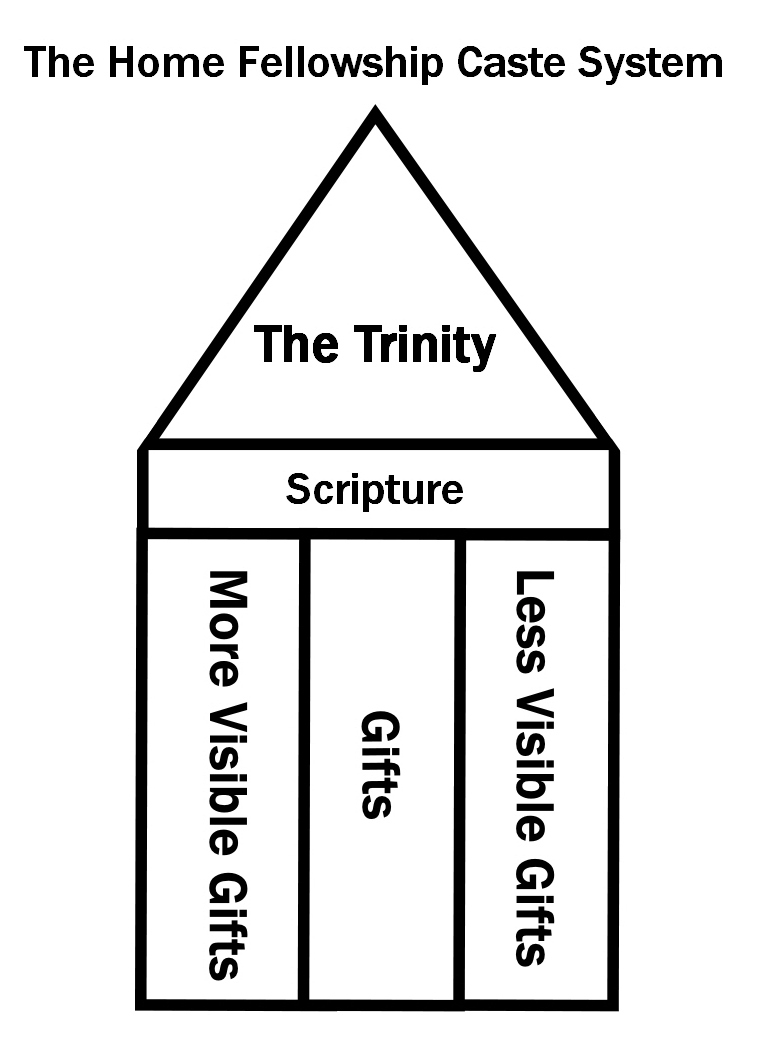
Moreover, let’s face it; while believing in OSAS, there is only one reason people put up with all of the nonsense and drama of the institutional church—OSAS means that if someone leaves the institutional church, they were never saved to begin with. Right? In other words, they function according to the idea that they are led by. It’s OSAS as long as you are “faithful” to the institution. Then each church has its own little “faithfulness” caste system. Those who show up for all of the services are the “core members” that run the church. Those “less faithful” that only come on Sunday mornings are a lower class of member in the caste system.
You have the pastors, staff and deacons, then the “faithful” that attend all of the services and tithe at least 10%, the “casual” attenders that tithe, and then the bottom of the caste strata, even lower than the serfs, the putrid “nonmembers.”
Whether Calvin or Luther, the two icons of Protestantism, these beliefs follow after the doctrine they established for the Protestant institutional church. Access to the institutional church was through water baptism, and the critical need according to the Reformers for formal church membership follows: as Christians, forgiveness for present and future sins can only be found in the institutional church, and those sins condemn us. Forgiveness for all sins does not occur at salvation, but only for past sins. Water baptism initiates us into church membership where forgiveness for present and future sins can be obtained through the sacraments; ie., “gospel preaching,” the Lord’s Table, and anything else deemed as acts of faithfulness to the institutional church not to exclude tithing by any means. Calvin states this explicitly in his institutes, 4.15.1.
All in all, you can say that in Protestantism, the status of sin does not change for the believer—it still condemns requiring perpetual resalvation for every sin committed.
Therefore, 1John 1:9 and 2:1 is interpreted in this light: “If we confess our sins, he is faithful and just to forgive us our sins and to cleanse us from all unrighteousness” (1:9). “My little children, I am writing these things to you so that you may not sin. But if anyone does sin, we have an advocate with the Father, Jesus Christ the righteous” (2:1).
These verses seem to bolster the authentic Protestant position on justification. Confession of sin in our Christian lives keeps us saved. And if we confess our sins, Jesus is up in heaven as our advocate with the Father continuing His work as a propitiation for our sins.
The problem is that this interpretation stands in stark contrast to what other Scriptures state about justification. Biblically, sin has a different classification after salvation—it can’t condemn; it can bring chastisement and present consequences, but it can’t condemn—its ability to condemn has been taken away. Hence, there is no need to have some institution that prevents future condemnation.
Nevertheless, it is easy to understand why the institutional church not only gets a pass on outrageous behavior, but the money keeps pouring in. What will people pay for their salvation and décor that glorifies the institution that saves them? Apparently, no price or compromise is too large. One can also appreciate the fear of so-called excommunication because the institutional church is the only place where one can receive continued forgiveness for present and future sins.
Before I move on, I will solidify my present point. Romans 8:1 states that there is presently NO condemnation for those who are in Christ. In Contrast, Calvin stated that “even saints cannot perform one work which, if judged on its own merits, is not deserving of condemnation” (CI 3.14.9, last sentence). Obviously, the focus is going to be avoiding condemnation, not our freedom to pursue aggressive love in discipleship.
So what are these verses in 1John really saying? Let’s begin to unpack that using the historical grammatical approach to interpretation as opposed to the traditional Protestant means of interpretation, the historical redemptive method. Since Protestantism sees salvation as a process, “redemptive” means that the Bible must be approached with a redemptive prism; ie., the Bible is about salvation. Clearly, this is eisegesis; going to the Bible with a presupposition.
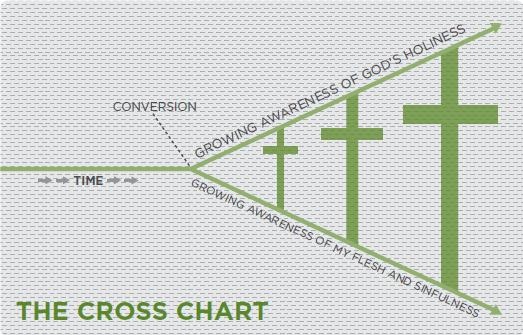
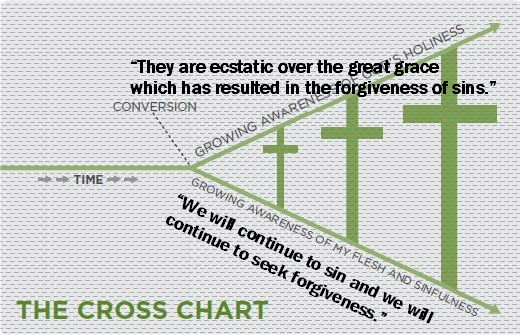
In regard to the history part, this is the belief that history is an unfolding drama about salvation. Hence, all of reality is interpreted through salvation. All of history and the Bible continually reveals the one two-fold redemptive truth/reality: the sinfulness of man and the holiness of God. Salvation begins when we see or understand this reality, and the experience of that reality increases until final salvation.
In contrast, the historical grammatical method uses historical facts to bring more meaning to the text, and all truth is determined by what can be concluded by the grammar—this is known as exegesis. All meaning and truth comes out of the text without anything being read into the text except conclusions from other texts.
In fact, Protestant tradition holds to the idea that a historical grammatical approach to the Scriptures invariably leads to works salvation. Protestant tradition insists that the Scriptures must be interpreted through the prism of total depravity. In this year’s TANC conference, this is what I am going to be hitting on. Christians, save a few, have no idea that Protestant pastors that are leading them view reality in a totally different way than most parishioners. And this is why church looks like it does. And there is no salvaging it—it’s a completely broken system.
So, if you interpret said verses in 1John redemptively, it fits right into their narrative, right? You have to continue to repent for new sins in your Christian life in order to not be condemned and to keep your salvation. A good old fashioned Baptist lady who I am sure would hold OSAS stated this to my wife Susan in the grocery store a couple weeks ago. When Susan asked her why Christians need to go forward during alter calls, she answered, “they have sin that needs to be forgiven.” Well, why can’t they get that forgiveness by praying at home? You ought to see the reaction Susan and I get when we suggest her mother was saved even though not a member of a church.
Protestantism and all of its offshoots including the Baptists is nothing more or less than functioning Calvinism. Election isn’t the point, progressive salvation is the point. Protestants think salvation grows—salvation doesn’t grow—you are either forgiven once and for all time or you aren’t. Look, if you are going to stay in the institutional church, it makes absolutely no difference where you go. Please, stop driving 15 miles to the Baptist church when there is a Catholic Church right across the street—it’s a shameful waste of gas. It’s all progressive justification.
In contrast, we have to see 1John in its exegetical historical context. It must be interpreted according to what was going on during the time that prompted this letter. And what was that?
John was pushing back against the number-one nemesis of the assemblies during that time: Gnosticism. Now, there were many, many different veins of Gnosticism during that time, but like denominationalism, there are basics that are fundamentally the same. Denominationalism quibbles about how to get from point A to point B, but it is all progressive salvation.
When you understand the basics of Gnosticism, it is easy to see that John’s first epistle is a point by point rebuttal of Gnosticism, and NOT the proffering of progressive justification. Protestants can bicker with Catholics all they want to about how to get from point A to point B, but again, it’s all progressive justification. If it’s a religious institution, it’s selling final salvation, PERIOD.
If we follow John’s arguments in this epistle, it also apes the fundamental basics of Gnosticism, and that’s what we are going to do:
1John 1:1 – That which was from the beginning, which we have heard, which we have seen with our eyes, which we have looked upon, and our hands have handled, of the Word of life; 2 (For the life was manifested, and we have seen it, and bear witness, and shew unto you that eternal life, which was with the Father, and was manifested unto us;) 3 That which we have seen and heard declare we unto you, that ye also may have fellowship with us: and truly our fellowship is with the Father, and with his Son Jesus Christ. 4 And these things write we unto you, that your joy may be full. [KJV].
The Gnostics taught that it really wasn’t the spiritual Christ that died on the cross. Gnosticism holds to the idea that material is evil and only the invisible spiritual world is good. Gnosticism rejected the idea that the spiritual realm, or godhood can be one with the material. You must understand: the biblical concept of Godman is a direct affront to the foundation of all false religions, or the knowledge of good and evil. It is the idea that true knowledge cannot be one with the material. Knowledge is good, material is evil and is only a shadow of true knowledge. Knowledge of the material is enslaved and dependent on the five senses.
Now, stop right there. Let me simplify this for you. All false religion flows from the religion of the knowledge of good and evil presented to Eve in the garden. This is also the first sentence of the Calvin Institutes and all of the Calvin Institutes flow from the foundation of 1.1.1., first sentence, viz, ALL wisdom is the knowledge of man and the knowledge of God; man is inherently evil and God is inherently good.
Also, the first sentence of the Calvin Institutes is the primary theses of Luther’s Heidelberg Disputation which is the Magnum Opus of the Reformation. All fundamentals found in contemporary evangelicalism can be found in the Heidelberg Disputation and flow from it. Calvin’s Institutes further articulated the former. In contemporary evangelicalism, we hear constantly that true biblical knowledge is “the knowledge of our own sinfulness as set against God’s holiness.” This is also the pronounced fundamental foundation of the contemporary biblical counseling movement as constantly stated publically in no uncertain terms.
Why am I interjecting this? Because even though much of our knowledge concerning first century Gnosticism comes from the writings of the early church fathers and while they railed against Gnosticism, they themselves were also Gnostics. However, in the process of railing against Gnosticism, they confirm unequivocally that John’s letter addressed the Gnosticism of their day; it just wasn’t the Gnosticism that they preferred.
And by the way, according to some church fathers, John was addressing a Gnostic named Cerinthus who was a contemporary of John and a personal nemesis.
Cerinthus was a gnostic and to some, an early Christian, who was prominent as a heresiarch in the view of the early Church Fathers. Contrary to proto-orthodox Christianity, Cerinthus’s school followed the Jewish law, used the Gospel according to the Hebrews, denied that the Supreme God had made the physical world, and denied the divinity of Jesus. In Cerinthus’ interpretation, the Christ came to Jesus at baptism, guided him in his ministry, but left him at the crucifixion.
He taught that Jesus would establish a thousand-year reign of sensuous pleasure after the Second Coming but before the General Resurrection, a view that was declared heretical by the Council of Nicaea. Cerinthus used a version of the gospel of Matthew as scripture.
Cerinthus taught at a time when Christianity’s relation to Judaism and to Greek philosophy had not yet been clearly defined. In his association with the Jewish law and his modest assessment of Jesus, he was similar to the Ebionites and to other Jewish Christians. In defining the world’s creator as the demiurge, he emulated Platonic philosophy and anticipated the Gnostics.
Early Christian tradition describes Cerinthus as a contemporary to and opponent of John the Evangelist, who may have written the First Epistle of John and the Second Epistle of John to warn the less mature in faith and doctrine about the changes he was making to the original gospel. All that is known about Cerinthus comes from the writing of his theological opponents (Wikipedia).
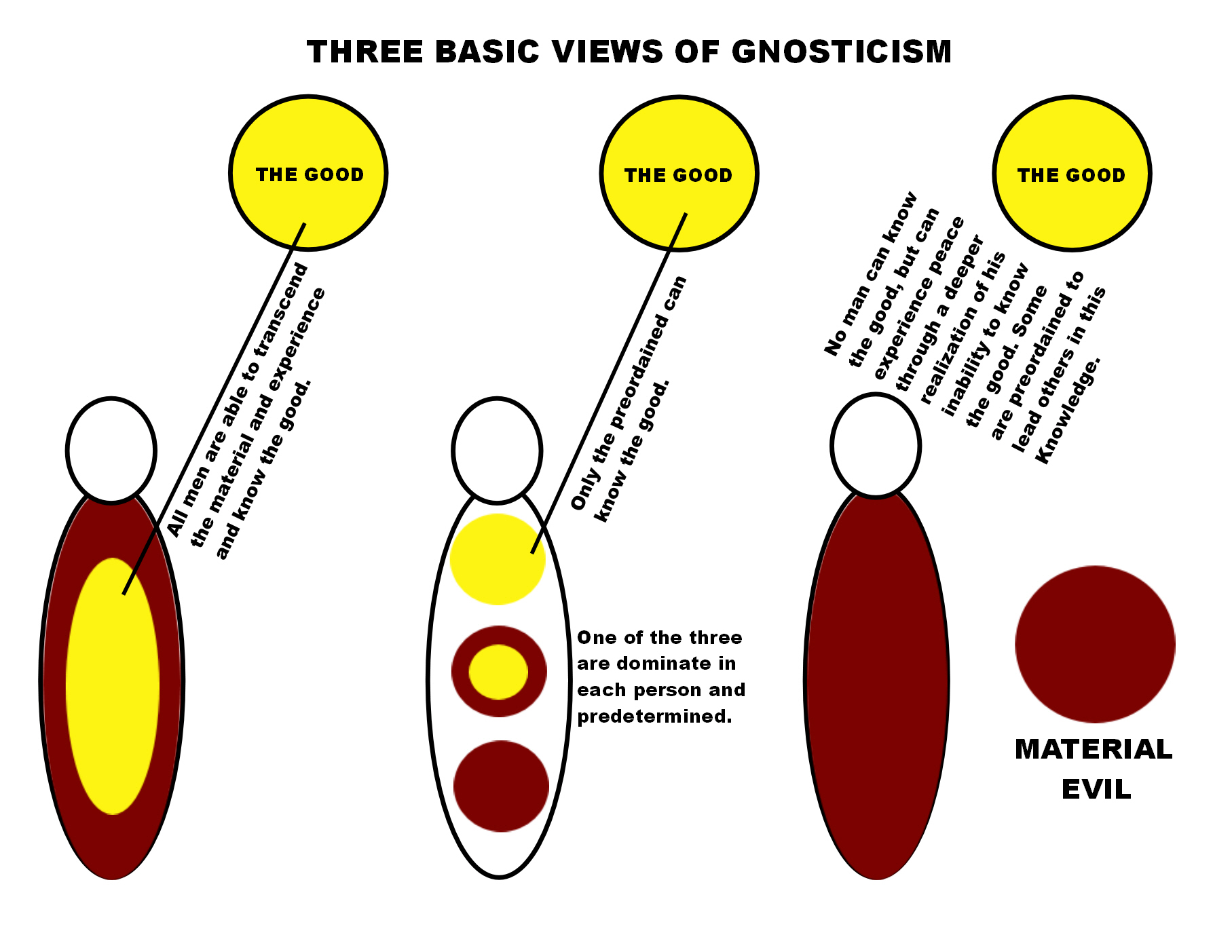
At any rate, the teachings of Cerinthus follow the basic fundamentals of 1st century Gnosticism of which there were two schools of thought unchanged from the cradle of society: intuitive knowledge within versus knowledge outside of man. While both schools held to the strict dichotomy of material being evil and the invisible good, and true knowledge being beyond the five senses, they disagreed on where that knowledge is found and whether or not it is intuitive among all men, or a select few preordained by nature or some supreme being.
Cerinthus followed the philosophical school of Idealism which holds to the belief that the one cosmic mind has an intuitive connection within every individual. Finding that knowledge is often a complex mind-numbing epistemology, but curiously, Luther and Calvin had their own angle that built on the Neo-Platonic teachings of St. Augustine.
This Gnostic bent actually allowed for Christ to be human, or at least some form of humanity. Apparently, God became exasperated with man’s penchant for trying to gain knowledge through the material world, and said in essence, “Ok, since you like to think you can know something and try to gain knowledge through the things that are seen, I am going to send my Son to die on the physical cross, and now all knowledge will only be gained through suffering—there mankind, take that!” This is the essence of the Heidelberg Disputation which is a philosophical treatise, not a theological one by any stretch of the imagination. Luther states plainly in the document that ALL knowledge is hidden in the suffering of the cross. Anyone who thinks they can understand Protestantism without a good grasp of world philosophy is sadly misguided. It is one of the historical necessities of historical grammatical hermeneutics.
Hence, in the Gnostic Protestant construct, Christ and His gospel is the only true objective knowledge and is outside of man. Man is not to seek any knowledge within himself, but all knowledge must be sought outside of him in contemplation of the gospel. All of reality is interpreted by the suffering of the cross. The cross is the epistemology from the material to the invisible, or from the evil to the good.
In contrast, other schools believe the epistemology is intuitive within all men because all men have a spiritual being separate from their material being, and the spiritual part of man is nonmaterial and therefore SINLESS. The material body of man is evil because it is material, but his invisible being is good and has a connection to the cosmic spiritual world that must be cultivated by transcending the material. This was key to the drug culture of the 60’s as LSD trips enabled the individual to transcend the five senses and see into the invisible spiritual world. Supposedly.
Other schools of thought believed that even though all men have a material and spiritual aspect, the spiritual anthropology has classifications in regard to who is able to see true knowledge and who isn’t as determined by the cosmos or cosmic mind; ie., determinism. And consequently, if utopia is to ever be achieved, those with the ability to see knowledge must rule over those who have the inability to transcend the material and are enslaved to it. How do you reason with people hopelessly enslaved to the material? They either understand that they can’t know reality and get with the program, or you kill them.
According to the Reformers, utopia is achieved by understanding that all reality is interpreted through the cross of redemption. This concept was established by Luther’s Heidelberg Disputation and is known as being a “theologian of the cross.” Theologians of the cross are able to know the “cross story,” or interpret reality through the cross, and all others are enslaved to the “glory story” or the story of man. This is the dichotomy of the knowledge of good and evil, or material versus spiritual.
Furthermore, the Reformers believed that the new birth entailed the gift of outward seeing only. All goodness remains outside of man. This is the pious distinction they claim over their fellow Gnostics. Unlike Cerinthus, who would be the modern equivalence of existentialism, no good can be in man, because that does not limit knowledge to suffering and the cross. Even though the early church fathers believed that material is evil and only the invisible is good like all ancient Gnostics, they labeled those heretics who believed that the invisible spirit within man was a connection to the good. That was heresy in their minds. And if you really understand what John Piper et al believe in our day, NOTHING HAS CHANGED.
The true Christians of that day had a different metaphysical take: the material realm is NOT evil, it’s weak. Something that is weak can still be good. The born again Christian struggles with sin because he/she is weak, not because the material realm is inherently evil. Christ really did come adorned in humanity in every since of the meaning because the material is not evil. This understanding of being fits together with the true gospel.
But what Cerinthus et al was teaching speaks directly to what John wrote in his first epistle, and we have addressed some of it in John’s introduction. John, in essence, said the following: Christ was 100% humanity and 100% God. We saw Him, we heard Him, we touched Him, we saw Him die on the cross, there isn’t two Christs, there is only one.
What Cerinthus et al taught explains everything John wrote in this epistle and why he wrote it. It not only explains why John wrote what he wrote in 1:9 and 2:1, it sheds light on why John wrote what he wrote in the rest of the book as well.
And that is what we will look at next week. We will do a point by point fly over of 1John while interpreting it according to this historical context of Gnosticism. John will address the definition of sin in contrast, the definition of knowledge and truth in contrast, the definition of the true gospel in context, the definition of love and hate in contrast, and the definition of the new birth in contrast.
See you next week.



TANC 2015, Andy Young – Session 3: The Believer’s Identity
This is session 3. We’ve been challenging presuppositions regarding a believer’s identity, especially this notion that believers are sinners. That’s what we hear most often in just about every Christian circle, in just about every church you go to around the world. The emphasis that we are sinners. That because we are sinners we still need a savior. And of course this particular emphasis flows right out of the reformation. This was taught by Calvin and Luther, this idea that believers don’t change, that they are still under law, that they are still in need of daily salvation. We have a term for that, it’s called progressive justification. And whether people want to admit it or not, anyone who echoes these kinds of sentiments – and this is just one indication of the kind of theological ignorance that exists among believers, they are actually espousing a progressive justification viewpoint with these kinds of statements.
So we’re trying to reverse the damage that has been done to the spiritual psyche of the believer as a result of years and years of having this mantra constantly pounded into our heads. You are a sinner, you are a sinner, you are not perfect, you are totally depraved, your righteousness is filthy rags. We need to stop telling ourselves these things, and we need to change the narrative and look at what the Bible actually has to say in this regard.
Session 1 was devoted to our identity with respect to the new birth. What that actually means to be born again, and why that is important. And then in session 2 we explored the contrast between the old and the new, and we saw how that the “New Man” is actually a reference to the one spiritual body that was made up of people from every nation and status in the world. How we are no longer identified as either Jew or Greek, etc…and we become part of this New Man, the Body of Christ.
So now in this last session on the believer’s identity, I want to take a look at a few more ways that the scriptures refer to believers. And these won’t spend as long as we did on the first two, so we should be able to run through these rather quickly, but that doesn’t make them any less important. Each one of these is a critical part of our identity as believers.
So the Bible says the believer is born again, he is a new creature, he is part of the New Man, the Body of Christ. What else is he?
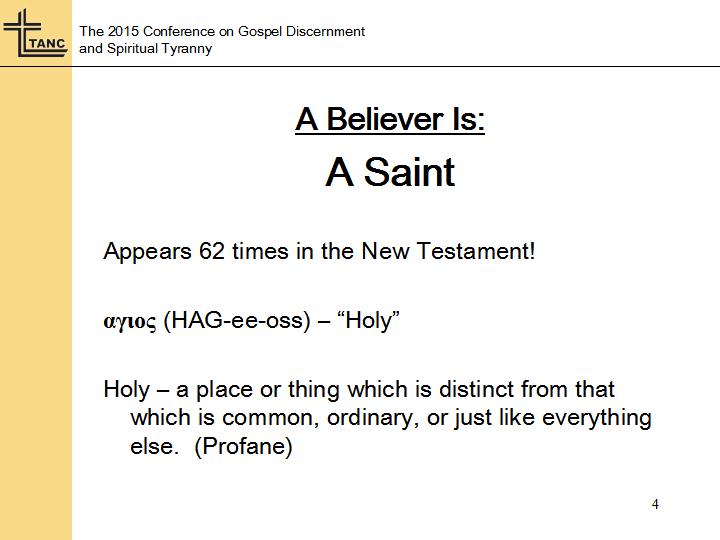
A saint
How is that for a title? Did you know you’re a saint? Now here is a word that couldn’t be any farther opposite from sinner! Do you know how many times believers are referred to as sinners? I could probably point to no more than maybe 5 at most. And even in those instances it is always in the past tense. Do you realize the frequency that believers are referred to as saints? 62 times in the NT, believers are referred to as saints. 62 times! I’m not going to show you all of them, but here are a few select. You’ll see that in just about every epistle the believers are addressed as saints in the salutation.
Romans 1:7 “To all that be in Rome, beloved of God, called to be saints: Grace to you and peace from God our Father, and the Lord Jesus Christ.”
1Corinthians 1:2 “Unto the assembly of God which is at Corinth, to them that are sanctified in Christ Jesus, called saints, with all that in every place call upon the name of Jesus Christ our Lord, both theirs and ours:”
Ephesians 1:1 “Paul, an apostle of Jesus Christ by the will of God, to the saints which are at Ephesus, and to the faithful in Christ Jesus:”
Romans 15:25-26 “But now I go unto Jerusalem to minister unto the saints. 26 For it hath pleased them of Macedonia and Achaia to make a certain contribution for the poor saints which are at Jerusalem.”
Ephesians 4:12 “For the perfecting of the saints, for the work of the ministry, for the edifying of the body of Christ:”
And we could go on and on and on. Believers are saints. Now, as if that wasn’t exciting enough, take a look at this word in the Greek. Do you know what the word saint is in the Greek?
αγιος (hag-ee-oss) – “Holy”
Look at that. Holy. In each of the 62 instances it is this word for holy. That means you could go through each instance, 62 times in the NT, and replace the word saint with holy, or holy ones. The Bible calls believers “holy ones”. You are holy. Did you know that? You are not a sinner, you are holy! You are a holy one.
Now if any of you watching online now or maybe later on when this is archived, if you tuned in last year for the conference you will remember I talked about Sanctification. And in my first session last year I walked us through scripture and we were able to derive a truly biblical, meaningful definition of this word holy? Does anyone remember what we came up with? If you don’t remember or if you didn’t tune in for that session, here is the definition we came up with for holy.
Holy – a place or thing which is distinct from that which is common, ordinary, or just like everything else. (profane)
And as we worked through our understanding of this word we discovered that the opposite of holiness was not sinfulness, but profane. And profane in the Biblical sense has to do with this idea of being common, or ordinary, or just like everything else. So, while it is true that believers are not sinners – we’ve already established that through the new birth – we have a special status. We are holy. We are distinct from that which is profane. We are not common, we are not just like everybody else. Some people like to use the term “set apart” as a means of understanding our sanctification, and that’s a good way to look at it because it encompasses this notion of being distinct. Setting something apart makes it distinct.
So this takes us back to the sanctification issue that I talked about last year. And I think it begs the question, if we are saints, if we are holy, if we are distinct, ought we to not act like it? And I don’t mean we go around casting judgment on others and act like we are better than everyone else. But if we are in fact holy, don’t you think our behavior should reflect that holiness? See, we don’t let our behavior define who we are, but rather I think it’s the other way around, who we are should manifest itself in our behavior. And you can think back to our last session on the New Man, were we had this contrast between behaviors that characterized the old man, like lying and arguing and licentiousness, and behaviors that characterize the New Man, loving each other, caring for each other, and so on. And you see the motivation for this is love. This has to do with love for the law and keeping the law. Not for justification, but because we love our Father and we love others, so we use the law in this way, we keep the law out of a motivation of love. And this is the reality of what it means to be a saint; to be a holy one.
So believer’s are saints. What else are we? How does the Bible refer to believers?
Oh I love this one.
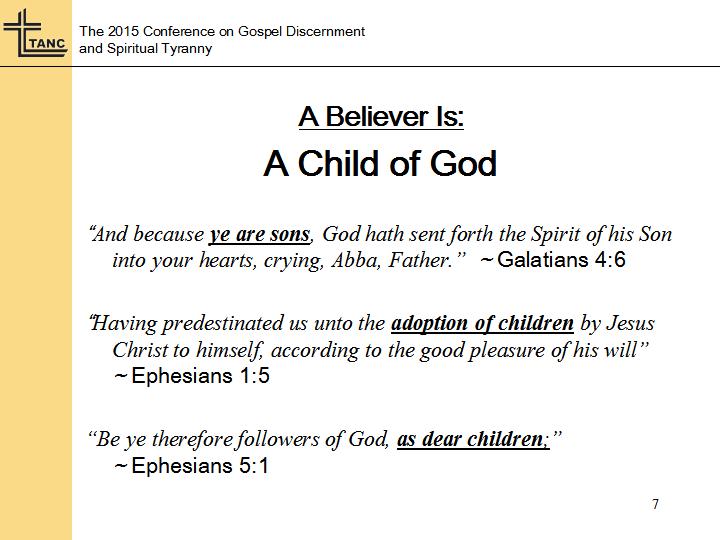
A child of God
I know I have a lot of references here, but can we just take the time to read through these. It’s such a good reminder, and it’s such a blessing!
Romans 8:14 “For as many as are led by the Spirit of God, they are the sons of God.”
Romans 8:16-17 “The Spirit itself beareth witness with our spirit, that we are the children of God: 17 And if children, then heirs; heirs of God, and joint-heirs with Christ; if so be that we suffer with him, that we may be also glorified together.”
Romans 9:26 “And it shall come to pass, that in the place where it was said unto them, Ye are not my people; there shall they be called the children of the living God.”
2 Corinthians 6:18 “And will be a Father unto you, and ye shall be my sons and daughters, saith the Lord Almighty.”
Galatians 3:26 “For ye are all the children of God by faith in Christ Jesus.”
Galatians 4:6 “And because ye are sons, God hath sent forth the Spirit of his Son into your hearts, crying, Abba, Father.” (daddy reference)
Ephesians 1:5 “Having predestinated us unto the adoption of children by Jesus Christ to himself, according to the good pleasure of his will”
Ephesians 5:1 “Be ye therefore followers of God, as dear children;”
1 Thessalonians 5:5 “Ye are all the children of light, and the children of the day: we are not of the night, nor of darkness.”
1 John 3:1-2 “Behold, what manner of love the Father hath bestowed upon us, that we should be called the sons of God… 2 Beloved, now are we the sons of God…”
And of course this goes right back to all the things we talked about in session 1. How is it that we are children of God? We are children by virtue of the new birth. Do you see how significant the new birth is?
Being born again, being born of the spirit is being born of God. Where God is your Father, and you are His child. If you deny the new birth, you deny your identity as a child of God and you forfeit all the rights that go with that as being sons.
Now there’s a lot more that can be said about the significance of being a child of God. You saw the reference about being an adopted child. Now an adopted child is what, one who was not born to the parents who have legal custody of him, right? So I don’t want us to misunderstand when Paul uses this terms referring to adopted children. The new birth is a reality. We are born of God in every sense of that word. The new birth is an actual birth. It is not something that we have already that God then accepts as His own and reforms it.
What Paul is referring to here to the Ephesians has to do with the relationship to Israel. There was always this distinction between promises made to Israel that will be fulfilled with Israel, and how Israel would always have a claim to the promises and covenants that God made to her children. And since the Gentiles were not part of Israel, what happens when a Gentile believes is that he is then made part of Israel, adopted in that sense, and so he then has access to those same promises by rights as an adopted child. He said this also in Galatians that those who come to faith in Christ are considered the children of Abraham, adopted into the promises made to Israel. And he elaborates on this even further in Romans. So I want you to understand that this notion of adoption is a reference to being included with Israel in the promises and does not contradict the reality of the new birth.
There is another significance to being a child of God. Let me ask you something. Those of you who have children, when your children disobey you, do they stop being your children? When your child fails somehow, does he stop being your child? Or when your child grows up and starts his own family, even though he is no longer under your roof, does he stop being your child? Does your child ever stop being your child? No, and so from this we begin to understand this doctrine of eternal security. You want to know why you can never lose your salvation? Because you are a child of God. God never disowns you. You can’t be unborn into His family.
Now of course we know of instances where our children may not want to be a part of our family. They may run off and not act like our child. But they are still our child. There is some aspect of this to be found in the parable of the prodigal son. Now I understand that the main purpose of that parable was to draw a contrast between the Pharisees and the other religious leaders and the remainder of Israel, and that Israel was like a lost son who had run away from his Father. Jesus said he came to save the lost children of Israel. And so there is this picture of God calling out to his lost children to come home to him. But if you notice something else in that story, the prodigal son never stopped being a son. The Father looked for him every day to come home. He was ready to bestow upon him the riches that were there for him. And so in that sense there are sometimes believers who wander away and don’t act like sons, but they never stop being sons.
And I kind of touched on another point there; this thing about being a child has other significance too that I will get to in a moment. But before we get to that, along with being a child of God is this next point.
A brother of Christ
This one might be a little controversial because it’s not something that you here brought up much if at all. But I think it is a reality that is taught in scripture. Scripture doesn’t say much about Christ being our brother, but there are a few passages that reference it. Let’s start with this.
Matthew 12:46-50
“While he yet talked to the people, behold, his mother and his brethren stood without, desiring to speak with him. 47 Then one said unto him, Behold, thy mother and thy brethren stand without, desiring to speak with thee. 48 But he answered and said unto him that told him, Who is my mother? and who are my brethren? 49 And he stretched forth his hand toward his disciples, and said, Behold my mother and my brethren! 50 For whosoever shall do the will of my Father which is in heaven, the same is my brother, and sister, and mother.”
Alright, so what exactly is Jesus saying here? Let’s first understand that when we read the word “disciples” in any of the synoptic gospels that it’s not just a reference to the 12 disciples. It is clear if you read the gospels that Jesus had a lot more disciples or learners that just Peter, Andrew, James, John, and the rest. Whenever the writer wants to make this distinction he usually refers to them as “the twelve”. But whenever we see the generic reference “disciples” that’s a reference to all of them. And this was a number that reached into the hundreds at times.
So among these disciples following Jesus, are any of them his mother? No. So it’s easy to assume that when Jesus makes this statement in verse 49 that it is not a literal reference to his physical earthly family. Not only that, but Jesus Himself states very plainly what he means by his statement. He explains it. Whosoever shall do the will of my Father which is in heaven, the same is my brother, and sister, and mother. We all have people in our lives that we regard as family who are not literally a part of our family. I have a very good relationship with my wife’s parents, and I regard them as my mother and father ever though they did not give birth to me. I even call them Mom and Dad. That’s the kind of relationship we have. That is how close we are. You may have a best friend who you think of more as a brother or sister than simply a friend. And of course this has to do with the nature of your relationship with them.
So the point Jesus is making in this statement has to do with how He views His relationship with those who do the will of the Father. He views them as family. Now by extension, we can take this one step further. When we consider the reality of the new birth, that those who do the will of the Father are those who are born again, then in reality, we are then literally part of God’s family, including the Son, Jesus. So as far as God’s family is concerned, we are all brothers and sisters, and that would include Jesus. We can be considered as brothers and sisters of Christ. And I believe in this passage here in Matthew, that is exactly what Jesus is talking about. But what else does scripture have to say about this family relationship we have with Jesus?
Romans 8:29
“For whom he did foreknow, he also did predestinate to be conformed to the image of his Son, that he might be the firstborn among many brethren.”
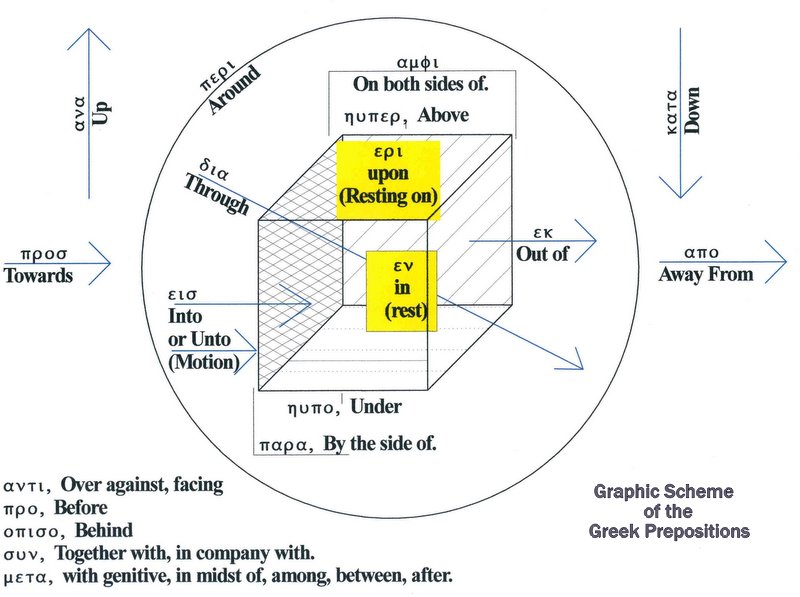
I’ve underlined the key phrase in that verse. If you study the grammatical structure of that verse, “firstborn among many brethren” is speaking of the Son. And the preposition “among” is inclusive. It indicates inclusiveness. If you are among something you are part of it. If you are among the crowd you are included in the crowd. What Paul says here is that there are many brethren, and Jesus is one of them, more than that, he’s the oldest. He is the firstborn. And if we think back to our study of the Body of Christ, the New Man, His right as firstborn makes Him the Head. How is it that Jesus is firstborn? He was the first resurrected following the ending of the law. And as such, each believer, by virtue of the new birth is resurrected just like Christ, we are born anew, as new creature that is not under law. A new creature that is also a child of God. And if we are a child of God, and Jesus is the Son of God, that makes Jesus our brother. Our oldest brother, our firstborn brother. We see this same idea expressed here as well.
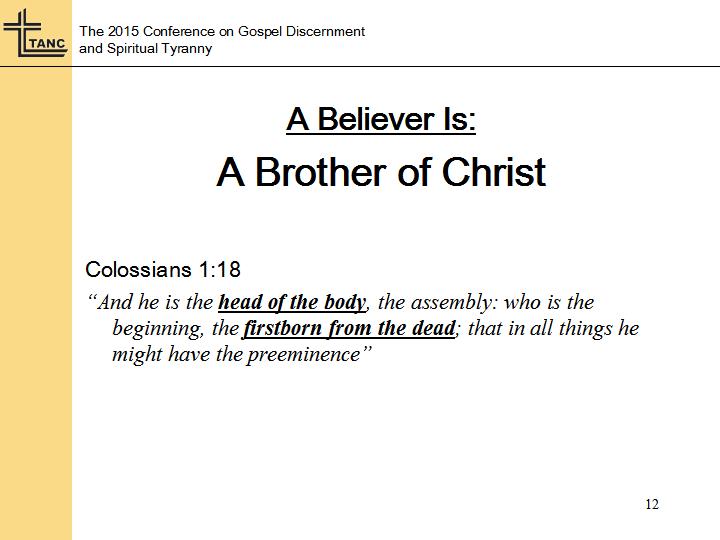
Colossians 1:18
“And he is the head of the body, the assembly: who is the beginning, the firstborn from the dead; that in all things he might have the preeminence”
Here again is that reference to Jesus being the firstborn, and His right as firstborn to be the Head of the Body. If any of you out there are an only child and have always wanted a brother or a sister, think about what a wonderful reality it is to know that you are now part of a family full of brothers and sisters, and the God of Heaven is your Father. And because of that, Jesus, the King of Kings, is your brother!
Now we’re talking about brothers and sisters and families, and I want to jump back to another point I alluded to earlier when we were talking about being a child of God. I mentioned how that being a child of God has another significance to it. As the Son of God, Jesus was entitled to certain privileges. As the firstborn, He is made Head of the Body. We have certain privileges as well, since we are also children of God because of the new birth.
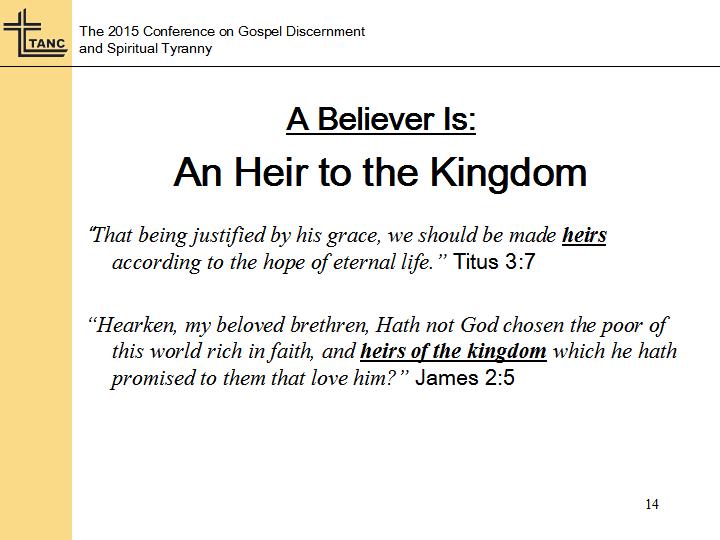
Because of the new birth, the believer is an heir to the Kingdom of God.
An heir to the Kingdom
And this is the last point I have about a believer’s identity. An heir to the Kingdom! Take a look at some of these passages
Romans 8:17
“And if children, then heirs; heirs of God, and joint-heirs with Christ; if so be that we suffer with him, that we may be also glorified together.” Here’s another reference that alludes to Jesus being our brother. We are joint heirs with Christ.
Galatians 3:29
“And if ye be Christ’s, then are ye Abraham’s seed, and heirs according to the promise.”
Being born again makes us part of Abraham’s children and eligible to participate in the promises and covenants made to Israel.
Titus 3:7
“That being justified by his grace, we should be made heirs according to the hope of eternal life.”
James 2:5
“Hearken, my beloved brethren, Hath not God chosen the poor of this world rich in faith, and heirs of the kingdom which he hath promised to them that love him?”
Of course when you talk about being an heir to something that means that there is an inheritance waiting for you.
Inheritance
Ephesians 1:14
“Which is the earnest of our inheritance until the redemption of the purchased possession, unto the praise of his glory.”
This is talking about the Holy Spirit. The Holy Spirit is an earnest payment. Like a down payment. A good faith payment that there will be a full payment coming at a later time. The Holy Spirit is a part of our inheritance given to us now as an indication of a promise of more that is to come later.
Ephesians 1:18
“The eyes of your understanding being enlightened; that ye may know what is the hope of his calling, and what the riches of the glory of his inheritance in the saints,”
Colossians 1:12
“Giving thanks unto the Father, which hath made us meet to be partakers of the inheritance of the saints in light:”
Colossians 3:24
“Knowing that of the Lord ye shall receive the reward of the inheritance: for ye serve the Lord Christ.”
1 Peter 1:3-4
“Blessed be the God and Father of our Lord Jesus Christ, which according to his abundant mercy hath begotten us again unto a lively hope by the resurrection of Jesus Christ from the dead, to an inheritance incorruptible, and undefiled, and that fadeth not away, reserved in heaven for you,”
And there are several things that are in view here with regard to inheritance, eternal life not the least of them. An incorruptible body, eternal fellowship with the Father. We don’t really know what we will be doing for eternity, but we know for certain that there is a Kingdom that awaits us. This is what Jesus came to earth to offer. You may have heard pastors say, what did Jesus preach? What was His message? And they’ll say He preached the gospel. We need to preach the gospel. Well what gospel? The word for gospel simply means a good message. Any good message is the gospel. The word for evangelist is literally “good messager” To evangelize means to “good message” someone. To deliver a good message. To deliver the gospel. But what gospel?
When you go back and read through the NT, if you study carefully, what you will notice consistently is that when a reference is made to the gospel, it is consistently referred to as the gospel of the Kingdom. When Jesus is introduced in the gospels, when His ministry first starts, it says he was preaching the gospel of the Kingdom. The apostles preached the gospel of the Kingdom. This is what we have to offer people when we tell them about Christ. He came to offer a Kingdom. And your ticket into the Kingdom is the new birth through faith in Christ. The new birth makes you a child of God. As His child you have an inheritance waiting for you. You have the right to everything that the Father owns. He bestows it upon you.
One day, this old heaven and earth are going to melt away with a fervent heat. And in their place will be a new heaven and a new earth. And the City of God, the New Jerusalem will descend from heaven and come down upon this new earth. And God will make His tabernacle with man. God will dwell with man forever and ever. This is the city that Abraham looked for. A city not made with hands, whose builder and maker is God. And we will dwell there with the Father. This is what we have to look forward to! This is our inheritance as believers.
I hope that at the end of this study you have a better understanding of just who we are. We are not sinners. We are not totally depraved, unrighteous, wretched people. We are new creatures. We are born again. We are part of the New Man with Christ as the Head. We are God’s children. Son’s and Daughters of the heavenly Father. We a part of God’s family with Jesus as our brother, joint heirs with Him in a heavenly inheritance that awaits us. This is the blessed hope that Paul spoke of. Not hope as in a wishful thinking. This is a hope that is a joyful anticipation of something that is assured. As believers, this is the way we need to be thinking. We need to be aware of just who we are. This is knowledge that empowers us and affects everything we do in life. We go into the world armed with this knowledge, think of how much more effective our witness and our testimony is to those we’re trying to reach with the gospel. Think of how much better our own lives will be. We focus on the good instead of evil. We don’t rejoice in iniquity.
And I could go on and on here, but I hope you get the point. And I think that might be a good way to wrap up this session, by opening things up to you out there, and let me ask you, how do you apply this to your life? What does this mean for you personally? How does this affect you? What ways does this make you think differently? I leave you with these questions, so please feel free to answer and share with us any thoughts you might have.
Podcast link: listen or download audio file.











 Paul's Passing Thoughts
1 comment