The Reformation Counter-Reality
 The Reformers claimed, sola scriptura (truth based on Scripture alone). But in every case of any claim made by the Reformers of old or new, what they mean by any given word must be clarified. How did the Reformers define Scripture?
Here we begin to examine the Reformation’s redefinition of almost every word imaginable while allowing the masses to assume the normative definitions during indoctrination. If the people assume “nine,” but you want to bring them to “five,” you only talk about the “two” and the “three.” The nine is out of sight and out of mind. But also, during the process of bringing them to five, you allow them to assume two really means “two” and three really means “three.” In Reformed reality, the two and three really mean something different than the normally excepted grammatical definitions of two and three. Otherwise, both together would not equal nine which really means five in their reality. The goal is to get the masses to agree that nine really means five.
That’s a crass simplification, yet, the general idea. It may also be stated from the onset that this is a classic cult indoctrination technique. The technique deliberately excludes facts detrimental to the thesis and redefines words to collaborate a contrary truth. Nevertheless, this is a staple mode of communication among Reformed academia. Words mean what the Reformed academics deem them to mean, and you are the last to know until you see the world their way and it no longer matters. Those who define the words control how reality is perceived, and perception determines behavior. People act according to their logic.
How do people normally interpret information? And how do people normally process the reality that they are experiencing? Most people find their way in the world through natural assumptions. Few of us are taught anything different. As we grow up and mature, we assume that the world we live in is really as we perceive it, and we accumulate conclusions about life accordingly. When we went to grade school and learned words, we assumed that “cat” really means “cat” according to what we perceive a cat to be. We learned sentences such as, “The cat walked across the street,” “See Johnny run!” etc. When we read a newspaper or magazine and see sentences, we assume reported events really took place whether we were there or not. If the writer is telling the truth, a cat really walked across the street. Perception or understanding of the event is increased with more words; the color of the cat, the breed of cat, the name of the street crossed by the cat, etc. Relevant knowledge is what we use to negotiate the world we live in. This also assumes cause and effect, ability to comprehend reality, and some degree of control over our environment. Some call this, “free will.”
If you are being taught by someone who rejects these normative assumptions in a church venue, it is safe to assume that you have little or no mutual agreement in regard to the words being communicated. The words “two” and “three” are being used, but you assume those words do not add up to nine. The someone is allowing you to assume that they interpret reality in the same way you do. And, this description is the commonplace occurrence in most present-day Protestant churches.
Without getting into the realm of metaphysical theory, the Reformed principle will be stated simply, and then it will be confirmed as the standard mode of operation widely practiced in our day. It will also be established that this mode of operation flows from the historic roots and traditions of the Protestant Reformation.
The Imperative Command is Grounded in the Indicative Event
The Reformed principle is sometimes expressed as, “The imperative command is grounded in the indicative event.” The question now following is… “What in the world does that mean!” It begins by understanding that the Reformed use words that mean things to teach that words don’t always mean things. Let’s parse the statement with words that mean things. “Imperative command” simply refers to commands found in the Bible.1 The “indicative event” refers to Christ’s life and death as a historical event.2 Few realize the gravity of the cute play on words with the definition of the word, “history” as “His-story.” This is, in fact, a thumbnail phrase that expresses a vast metaphysical/philosophical body of thought and theory. It suggests that ALL reality is interpreted through the life of Christ. It suggests, as the only objective presupposition, that all of history and reality are interpreted through the one historical event. It is history as reality, and the Christ event is the lynchpin of the story. History is a story, and the story is reality. This is NOT difficult to understand; the danger is letting the simplicity of it escape you because of presuppositions that assume complexity. What the Reformed have done is used thousands of different sub-concepts to teach this one, simple, primary concept.
The key to understanding this view of reality is a focus on perception. In the Reformed worldview, humans are only able to truly perform one function: they are able to perceive things, or see things. Everything else is mere experience. Again, just follow the meaning of the words used here and put them together for a logical conclusion, this is very simple to understand. Again, the danger is being confused by the simplicity of it due to presuppositions.
According to the Reformed worldview, reality is divided into two categories; active and passive. In other words, there is active reality and passive reality. Humans belong to the passive reality, or realm. The passive reality, or realm, includes things like water; until water is acted upon, it is dormant. Items in the passive realm only operate according to the actions of the active realm. In essence, we are dealing with two realms, and NOTHING happens in the passive realm unless it is acted upon by the active realm. Please note: according to this principle, those things in the passive realm that perceive that an action is being initiated in the passive realm are only experiencing the action, but are not performing it. Though the action is very much experienced as something initiated by the will of the being dwelling in the passive realm, it is an illusion—the action is only being experienced and not performed. Free will, and cause and effect within the passive realm are illusions. Cause and effect is split between the two realms: cause is only possible in the active realm, and all actions in the passive realm come from the active realm.
So, what is the purpose of this seemingly futile worldview? Answer: well-being. Simply, happiness. Isn’t that what we all want? To the degree that we properly perceive the reality of the passive realm, we have well-being; no circumstance can disturb our soul, all events are the will of the active realm which is always good and true regardless of how mankind perceives it. And this brings us to the Reformed/Protestant definition of saving faith: it is a true perception of reality apart from any free will, and the belief that nothing of the active realm exists within. It is like an eye that only perceives outwardly. The perception itself in no way enables anything within to act upon the passive realm, but only perceives and experiences what the active realm accomplishes in the passive realm. Faith alone is perception alone apart from any work. If water freezes, it didn’t decide to freeze itself, and did nothing to contribute to the freezing, it was acted upon by a change in temperature. Hence, as many Reformed teachers are fond of saying: “Sanctification is not done by you, it is done to you.”
Where the confusion exists in attempting to understand this worldview is demonstrated by a question such as this: “But when I am doing something, am I not really doing it?” Answer: no, the doing is also an experience. Let’s say that you are standing in the rain. You can feel the rain and experience the rain and everything that comes with standing in the rain and getting wet, but you have no control over the rain. You did not make yourself wet, you are passive; you are only now wet because you were acted upon by the active realm. However, let’s say that you decide to run from the pouring rain and into some sort of shelter. The assumption is that this act occurred because your own will decided to activate your body for purposes of using shelter. Not so, you are a purely passive being who must be acted upon. The active realm acted upon your thoughts and will. Even though you cannot experience the rain’s active motion, you can experience your own, but in either case, it no more you acting upon yourself than the rain is acting upon itself—in both cases the active realm is commanding the effects seen in the passive realm. A tree does not move itself; the active realm uses the wind to move the tree.
We are now one more simple step closer to understanding the imperative command is grounded in the indicative event. Let’s review the critical elements that make up our understanding: passive realm; active realm; history; story; faith; Bible. The active realm acts upon the passive realm to effect a story as expressed in history. Faith is the ability to see the story for what it is, and to understand that you are a passive character in the story. Of course, the story is predetermined by God, and your role is also predetermined. The Bible is a prototype of the story, or a general pattern of the story. It is a tool for helping your faith see your own life reflected in the gospel narrative. Some of the Bible narrative tells the story of other humans who dwelt in the passive realm as a way to understand your own existence in the passive realm, while other parts of the Bible tell the end of the story, what is referred to theologically as eschatology, or end-time prophecy. So, some of the Bible is history specific, and other parts are patterns of understanding exhibit reality and an understanding of it. It may be stated this way: reality is a motion picture exhibited and executed by the active realm and observed by us in the passive realm.
Now, let’s describe what the story is. It is the redemptive story of Christ, and its purpose is to glorify God. Hence, God decided to write this…what we may call a metaphysical narrative, and for the express purpose of His own glory and “self-love.” Also, EVERYTHING in the narrative glorifies God. And consequently, to the degree that we see ourselves as nothing more than characters penciled into the metaphysical narrative plot by God as either vessels of wrath or vessels for glory, we find peace and happiness. After all, reality is just a gospel narrative written by God. Why get uptight about things that we have no control over, or things that ultimately glorify God whether good or evil? And even if your prewritten destiny is eternal destruction, the Bible can help you get so lost in the splendor of God that you would, in fact, rejoice in the opportunity to suffer eternally if it glorifies God. The primary purpose of the Bible is to lift God up, and bring mankind “down to hell.” To the degree that “believers” use the Bible to do this aided by the Holy Spirit, well-being is experienced.
This brings us to a conclusion in understanding the imperative command is grounded in the indicative event. There are obviously many commands in the Bible. According to this way of understanding the Bible, ie., according to a redemptive interpretation, God presents many commands to men in order to demonstrate the futility of man obeying any command without fault and to the pleasure of God. According to this narrative prewritten by God in the active realm and displayed in the passive realm, Christ performed a passive obedience and an active obedience in what is known as the “Christ event” (His death and life). Christ died on the cross to pay the penalty for sin, and lived a perfect life in obedience to the law for those preselected by God to receive the salvation supplied by Christ according to the narrative.
According to the narrative: the law, or the commands read in the Bible, are designed to show all people how evil they are. This shows them their need for Christ, but that need doesn’t cease with salvation. Remember, faith is merely a perception, and faith grows as the perception grows. The perception of what? Answer: the depths of, or an ever-increasing understanding of how much we need salvation. Therefore, the imperative commands are not meant for us to obey because we are not able to, but are rather designed to give us an ever-deepening understanding of how much we needed salvation. Said another way, “the law reveals our evil as set against God’s holiness.” Or…they are based on the indicative Christ event.
The imperative commands are NOT grounded in an expectation of man’s ability to obey them, or for some purpose of man’s co-laboring with God, or some means of people loving God and neighbor, but rather they are grounded in the Christ event for the express purpose of God’s glory. Using the Bible/law in this way supposedly increases understanding of our own evil leading to a gratitude for God’s infinite mercy, and subsequent happiness and well-being. This is what the Reformers really meant by sola scriptura. It is perhaps one of the most egregious misrepresentations ever perpetrated on mankind.
It is not surprising then that this use of Scripture is known as the historical-redemptive hermeneutic. Of course, presenting it as an interpretive method, or hermeneutic, when it is really a way of interpreting reality itself, is yet another flagrant deception. Consequently, what would normally be a contrasting hermeneutic, namely, the historical-grammatical hermeneutic, must now be recruited as a contending alternative to the historical-redemptive method of interpreting realty. What is this saying? It is saying that words mean what we normally understand them to mean. It means that the word “command” assumes that the person giving the command did not already obey the command for the person to whom the command is directed. It also assumes that the one giving the command assumes that the subject receiving the command has the ability to obey it. This is in contrast to the imperative command is grounded in the indicative event.
As we will see as we progress, these Reformed ideas are very ancient. They are actually grounded in ancient mythology. The imperative command is grounded in the indicative event is a more contemporary term that was borrowed from like views of secular metaphysics. For example:
It is often said that one cannot derive an “ought” from an “is”; that is to say, the imperative and the indicative deal with two radically different realms that do not intersect. The realms of fact and duty are like oil and water; they do not mix.3
This is also known as Hume’s law4 and slightly differs from the Reformed imperative/indicative in that the Reformed concur that good can be known in the passive realm, but is not able to be practiced in the material realm by passive beings. Really, it’s the same difference.
In this chapter, the principle elements of the indictment have been presented. In the next chapter, the proof will be presented that authentic Protestantism is guilty of this worldview and its fraudulent presentation. Protestant ideological cross-breeding and confusion can be measured by ignorance regarding the original worldview that the Protestant Reformation was founded on; usually expressed in various and sundry denominations. However, remnants of its ancient principles can be seen in things like let go and let God theology that are eerily similar to…
Be perfectly resigned, perfectly unconcerned; then alone can you do any true work. No eyes can see the real forces; we can only see the results. Put out self, forget it; just let God work, it is His business (Swami Vivekananda (12 January 1863 – 4 July 1902) was a teacher of Vedanta philosophy, and one of the most famous and influential spiritual leaders of Hinduism).
No significant understanding of our present-day church experience can be ascertained without understanding the ideology that produced Protestant orthodoxy. Any suggestion that Reformed tradition and thought was birthed by an exegetical interpretation of the Bible is absurd.
Moreover, it is an ideology that hates life, and will invariably lead to a culture of death, and apparently, happily so. True believers must grasp this, and as a result see what is really behind the lofty sounding theological doctrines it espouses.
3 The Void Within: An Inner Quest for Wholeness, By Arnold C. Harms, Ph.D.
Followers of John Piper Continue to be Confused by Him; This Time it’s Gun Control
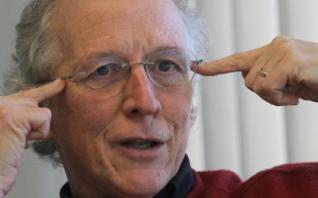 If you’re going to call yourself something, you ought to know what it is. Few Protestants know what a Protestant is, fewer Calvinists know what a Calvinist is, and most followers of John Piper are completely clueless in regard to what he really believes. Even the who’s who of evangelical academia bemoan things he often says with verbiage like, “Has anybody seen the real John Piper lately?” Uh, trust me, few that follow him have ever seen the real John Piper to begin with.
His latest attention getting controversy concerns an article he wrote on gun control. Apparently, according to a review of the article by Conservative Tribune, Piper believes Christians should disarm. However, the review also states that “Piper’s piece sent a shockwave through Christian and conservative circles and for good reason. While his heart may well be in the right place, Piper’s piece is full of confused conflations, unreasonable readings, and — heartless as this may sound — an ultimate lack of humanity.”
The review continued by citing specific things that Piper said in the article that are clearly a direct contradiction to the plain sense of Scripture. And that’s where I am going to park in regard to the main point of this post. Few followers of John Piper understand his position on state of being; in other words, how he interprets reality. By no means will the full scope of his philosophy be addressed here, but I will address his frequent poo-pooing of the plain sense of Scripture. There is a reason why this happens, and one would think this to be fairly evident.
Piper continually defies the plain sense of Scripture because he is an authentic Protestant. Do you want to find the real John Piper? Then find out what Protestantism was really about. The Protestant Reformation was totally about a whole new way of interpreting state of being and reality. I am going to keep this as simple as I can: it is the difference between “words mean things,” and interpreting all reality through a single prism. Protestantism was founded on interpreting ALL reality through the cross. This is sometimes known as the historical-redemptive hermeneutic which many believe to be a way of interpreting Scripture, and that is true, but first and foremost it is a way of interpreting reality.
The Reformers believed (and again, I am keeping this simple) that all of reality is a metaphysical story (meta narrative) about redemption written by God. So, all of reality is a story prewritten by God. He wrote the story for His own self-love and glory. In order to glorify Himself, he wrote evil into the script to better define His holiness. He created His anti-type, and then glorifies Himself by loving and saving some, and assigning others to eternal torment which also glorifies Him as well. Piper is mentored by the writings of Jonathan Edwards who believed the relatives of the damned would rejoice in regard to their fate because of the glory it would bring God.
Edwards also put feet on cross metaphysics through Idealism philosophy. This is the idea that all of reality is merely perceived in the mind, and all actions begin with an idea or thought. Even though the material world is experienced, it is dependent on mental perception. Hence, by God initiating and creating every first idea, he writes His metaphysical narrative about redemptive history for His own self-love and glory. Also, it is experienced as though we have control in matters of life, but in this interpretation of reality, it is God who creates the first idea of every action that takes place in our minds.
This is why Piper totally disregards biblical examples; that’s not the point. Anything done by the apostle Paul is not an example of what we should do, it’s merely the way God wrote the script. What happens in life, whether good or bad, gives God glory according to what He has predetermined. Hence, we should not be surprised that a “lack of humanity” is perceived in Piper’s writings.
But in the final analysis, it may all be a mute point when truth is based on authority. Perceived truth and personal culpability aren’t the issue, the truth authority of your choice is the issue. Past that, contradictions are totally irrelevant.
Those who care about contradictions shouldn’t be Protestants.
paul
Fulfilling the Law
Does Jesus continuously fulfill the righteous requirements of the law on our behalf?
NO! That is protestant orthodoxy.
So how is the law fulfilled?
“That the righteousness of the law might be fulfilled in US, who walk not after the flesh, but after the Spirit.” ~ Romans 8:4
How is the righteousness of the law fulfilled in believers?
“Owe no man any thing, but to love one another: for he that loveth another hath fulfilled the law.” ~ Romans 13:8
“For all the law is fulfilled in one word, even in this; Thou shalt love thy neighbour as thyself.” ~ Galatians 5:14
We fulfill the law when we show love to God and to others!
“Jesus said unto him, Thou shalt love the Lord thy God with all thy heart, and with all thy soul, and with all thy mind. This is the first and great commandment. And the second is like unto it, Thou shalt love thy neighbour as thyself. On these two commandments hang all the law and the prophets.” ~ Matthew 22:37-40
This is possible for believers because the law’s condemnation has been ended!
“There is therefore now no condemnation to them which are in Christ Jesus, who walk not after the flesh, but after the Spirit. For the law of the Spirit of life in Christ Jesus hath made me free from the law of sin and death.” ~ Romans 8:1-2
Know Your Cuts of Calvinism
Originally posted July 2, 2013
1. Total Depravity: Pertains to the saints also.
2. Justification by Faith Alone: Pertains to sanctification also.
3. Mortification and Vivification: Perpetual death and rebirth for living by faith alone in sanctification to maintain justification. The reliving of our baptism “again and again.”
4. Double Imputation: Christ’s passive obedience to the cross for justification, and His active obedience as a substitution for our obedience in sanctification.
5. Deep Repentance (aka Intelligent Repentance): Seeks the death of mortification in re-experiencing our new birth.
6. New Obedience (aka New Fruit): The experience of Christ’s active obedience in sanctification (vivification).
7. The New Birth: Perpetual mortification and vivification.
8. The Objective Gospel: All reality is interpreted through the redemptive works of Christ.
9. Christ for Us: Christ died for our justification, and lived a perfect life for our sanctification.
10. The Imperative Command is Grounded in the Indicative Event: Biblical commands show forth what Christ has accomplished for us and what we are unable to do in sanctification. Works are experienced only as they flow from the indicative event of the gospel.
11. Neo-Nomianism (New Law, aka New Legalism): The belief that we can please God by obeying the law in sanctification.
12. Progressive Sanctification: The progression of justification to glorification.
13. Progressive Imputation: Whatever is seen in the gospel narrative and meditated upon is imputed to our sanctification, whether mortification or vivification.
14. The Golden Chain of Salvation: See cut 12.
15. Good Repentance: Repenting of good works.
16. In-Lawed in Christ: Christ fulfilled the law perfectly and imputed it to our sanctification.
17. Redemptive Historical Hermeneutics (the Christocentric Hermeneutic, aka the Apostle’s Hermeneutic): The Bible as historical narrative for the sole purpose of showing forth Christ’s redemptive works.
18. Faith: A neutral entity within us with no intrinsic worth that is able to reflect the object of its focus outside of us. The object of focus can be experienced within, but remains outside of us.
19. The Heart: The residence of evil desires and faith. It can be reoriented (the “reorientation of the heart” or “reorientation of desires”) to reflect Christ via mortification and vivification.
20. Flesh: The world realm where evil is manifested and experienced.
21. Spirit: The Spirit realm where the imputed works of Christ are manifested and experienced (not applied through our actions).
22. Christian Hedonism: Seeks to experience the joy of vivification.
23. Obedience of Faith: New Obedience.
24. Christ in Us: “By faith,” and faith only has substance and reality to the degree of the object it is placed in; i.e., Christ outside of us.
25. Vital Union: Makes experiencing the gospel possible. Makes mortification and vivification possible.
26. Eclipsing the Son (aka the Emphasis Hermeneutic): Focusing on anything other than Christ. Anything that is not seen through a Christocentric prism creates shadows that we live in. The obstacles that create the shadows may be truth, but they aren’t the “best truth.” “They may be good things, but not the best thing.”
27. Sabbath Rest: Sanctification. We are to “rest and feed” on Christ for our Christian life. The primary day this is done is Sunday. Through preaching and the sacraments we “kill” (mortification, or the contemplation of our evil and misery) resulting in vivification throughout the rest of the week.
28. The Subjective Power of the Gospel: The manifestation of the gospel that flows from gospel contemplationism. We never know for certain whether it is a result of our efforts or the Spirit’s work (although the Spirit’s work is always experienced by joy); hence, the power of the objective gospel is subjective (Heidelberg Disputation: Thesis 24).
29. Mortal Sin: Good works by the Christian not attended by fear that they may be of one’s own effort (HD 7).
30. Venial Sin: Good works by the Christian attended with fear (HD 7).
31. Power of the Keys (aka Protestant Absolution): Reformed elders have the authority to bind or loose sin on earth (Calvin Institutes 3.4.12).
32. Redemptive Church Discipline: In all cases to convert one to cuts 1-31. This redeems them to the only one, true faith. This can be a long process, and said person is not free to leave a given church until the elders bind or loose.
33. Preach the Gospel to Yourself: See cuts 1-32.
Why Christians Cannot Trust the Biblical Counseling Movement: Its True History and Doctrine
Originally posted December 29, 2014
Introduction
The contemporary biblical counseling movement has brought counseling back to the church. Prior, the average evangelical congregation supplied comfort as much as they could while the experts were called on to treat whatever serious problem was at hand. Church was there to get people into heaven; the experts make people as comfortable as possible until they get there.
That has changed dramatically. In-house counseling addresses every imaginable life problem within the church. Biblical counseling organizations abound and their networks have inundated the institutional church. At the top of the biblical counseling empire is the Christian Counseling & Education Foundation (CCEF) and its offspring: Association of Certified Biblical Counselors, and the Biblical Counseling Coalition. Together, these organizations hold sway over at least 90% of all biblical counseling taking place in the evangelical church.
Who are they? How did they get here? What do they believe? And are they a help to God’s people, or a detriment? It is important to answer these questions because of the following fact: the present-day biblical counseling movement is the biggest scam ever perpetrated on God’s people, and the harm it will continue to inflict on souls is beyond measure.
The information in this booklet is far from complicated. The present-day biblical counseling movement has an easily defined history, doctrine, and track record regarding results. Are God’s people being helped, or hurt? And if the biblical counseling movement is a detriment to God’s people, what are the viable alternatives?
The biblical counseling movement is like clouds without water. That was Jude’s description of false teachers in his letter to the saints. Clouds offer hope that life-giving rain to a thirsty land is coming, but these clouds are merely a mist of empty promises and hopelessness. The goal of this booklet is to warn God’s people, and point to the only true hope of Jesus Christ and His truth.
Because only truth sanctifies (John 17:17),
Paul M. Dohse Sr.
The Beginning of the Biblical Counseling Movement
In circa 1960, a middle aged Presbyterian pastor named Jay E. Adams had a life transforming experience:
Like many other pastors, I learned little about counseling in seminary, so I began with virtually no knowledge of what to do. Soon I was in difficulty. Early in my first pastorate, following an evening service, a man lingered after everyone else had left. I chatted with him awkwardly, wondering what he wanted. He broke into tears, but could not speak. I simply did not know what to do. I was helpless. He went home that night without unburdening his heart or receiving any genuine help from his pastor. Less than one month later he died. I now suspect that his doctor had told him of his impending death and that he had come for counsel. But I failed him. That night I asked God to help me to become an effective counselor (Jay E. Adams: Competent To Counsel; Zondervan 1970, Introduction xi).
Therefore, it would be fair to say that whoever that gentleman was, he sparked the beginning of the most significant movement in recent church history. The experience must have profoundly impacted Adams because he was relentless in pursuing counseling knowledge in the years following. Then,
…suddenly, I was forced to face the whole problem in a much more definitive way. I was asked to teach practical theology at Westminster Theological Seminary. One of the courses I was assigned was Poimenics (the shepherding work of the pastor). As part of the course, I was expected to teach the basic theory of pastoral counseling. I had less than a year to think through the problem and prepare my lectures. Where would I begin? (Ibid).
How Did the Church Get There?
To say that Christians, some 2000 years after the birth of the church, had come to live by biblical generalities, and were farming serious problems out to religious and secular experts is far from painting the church of that time with a wide brush. It’s not oversimplification; it’s the simple fact of the matter. The testimony of a mainstream respected pastor like Jay Adams is sufficient.
But how did the church come to function that way? The answer is profoundly simple; the functionality of the church was a direct result from the gospel it adopted in the 16th century. The construct mentioned in the introduction of this booklet, church gets us to heaven, experts help us cope until we get there, was a direct effect caused by the Reformation gospel. So, what was that gospel?
The Reformation Gospel
The Reformation gospel was predicated on the idea that salvation was a process, or progression. In other words, the justification of a believer had a starting point, a progression, and then finality. This is sometimes referred to as beginning justification experienced subjectively followed by final justification.
So, instead of salvation, or justification being a finished work with the Christian life progressing in complete separation from justification, the Christian life is part of the progression of justification according to the Reformers. In fact, one of the primary Reformers and the father of the Presbyterian Church, John Calvin, titled one of the chapters in his Institutes of the Christian Religion, “The Beginning of Justification. In What Sense Progressive” (book 3, chapter 14).
In that chapter, Calvin explains the crux of the Reformation gospel: beginning justification only covers past sins, but because Christians continue to sin, they must revisit the same gospel that saved them in order to receive continued forgiveness for new sins committed in the Christian life (section 11). Further clarification on this position can be seen in other sections of the Calvin Institutes:
Nor by remission of sins does the Lord only once for all elect and admit us into the Church, but by the same means he preserves and defends us in it. For what would it avail us to receive a pardon of which we were afterwards to have no use? That the mercy of the Lord would be vain and delusive if only granted once, all the godly can bear witness; for there is none who is not conscious, during his whole life, of many infirmities which stand in need of divine mercy. And truly it is not without cause that the Lord promises this gift specially to his own household, nor in vain that he orders the same message of reconciliation to be daily delivered to them” (4.1.21).
On the flip side, Calvin went to great lengths in 3.14.9,10 to emphasize the idea that Christians cannot do any work that is pleasing to God because perfect law-keeping is the prerequisite for any ability to please God in any way. Therefore, Christians must continually seek repentance so that the righteousness of Christ will be perpetually imputed to our account in what we would refer to as sanctification, or the Christian life (3.14.11). Therefore, Calvin stated that the Christian life had to be a passive affair focused on perpetual repentance for new sins committed in the Christian life in order to remain justified. This meant a perpetual return to the same gospel that saved us. To Calvin, the Christian life was the Old Testament Sabbath rest if one would progress in justification:
And this emptying out of self must proceed so far that the Sabbath is violated even by good works, so long as we regard them as our own; for rightly does Augustine remark in the last chapter of the 22nd book, De Civitate Dei, ‘For even our good works themselves, since they are understood to be rather His than ours, are thus imputed to us for the attaining of that Sabbath, when we are still and see that He is God; for, if we attribute them to ourselves, they will be servile, whereas we are told as to the Sabbath, “Thou shalt not do any servile work in it.”
The Complete Commentaries on the First Book of Moses Called Genesis: Jean Calvin; translated by Charles William Bingham ,1844-1856. The Harmony of the Law: Commentaries on the Four Last Books of Moses | Its Repetition—Deuteronomy 5:12-15. ¶2.
Note that the Christian must attain the Sabbath (final justification) by the continued “emptying out of self” which results in the continued imputation of righteousness not our own. It is a perpetual “meditation” on the Sabbath to attain the Sabbath:
It may seem, therefore, that the seventh day the Lord delineated to his people the future perfection of his sabbath on the last day, that by continual meditation on the sabbath, they might throughout their whole lives aspire to this perfection (The Calvin Institutes 2.8.30).
Spiritual rest is the mortification of the flesh; so that the sons of God should no longer live to themselves, or indulge their own inclination. So far as the Sabbath was a figure of this rest, I say, it was but for a season; but insomuch as it was commanded to men from the beginning that they might employ themselves in the worship of God, it is right that it should continue to the end of the world.
The Complete Commentaries on the First Book of Moses Called Genesis: Jean Calvin; translated by John King, 1844-1856. Genesis 2:1-15, section 3.
Why then did Christians live by biblical generalities, and find themselves inept in regard to helping people? Because the Protestant gospel called for a retaining of salvation through rest and a singular meditation on the same repentance that originally saved us. Since that occurs during the Christian life, and justification is by faith alone, the Christian life must be lived by faith alone, or again, according to the Sabbath rest. Obviously, a diligent study of biblical wisdom and its application to life would not only be a very low priority, but is antithetical to the authentic Protestant gospel. This made weak sanctification in Christian living a longstanding tradition. Church became all about salvation and little else.
History
Dr. Jay E. Adams was not alone in misunderstanding the true gospel of the Reformation which led to the self-described dilemma he found himself in. Protestantism had become a soft version of the original article. Martin Luther’s alien righteousness was thought to pertain to justification only and not the Christian life as well. In other words, Luther didn’t believe Christians inherit any of God’s righteousness that becomes a part of them. Christians are only declared righteous positionally, but do not actually possess any righteousness in their being. John Calvin concurred throughout his institutes; e.g., 3.14.11.
Protestantism and its entire offspring heavily emphasized justification only because that is the very premise of its gospel though the causality became very blurred with time. According to the authentic article, sanctification is the manifestation of Christ’s life for the purpose of moving justification forward to final justification.
The “believers” role is to colabor with Christ by faith alone in order to keep things moving forward, and frankly, an endeavor to keep ourselves saved by faith alone. This requires a redefinition of what is a work in sanctification, and what is not a work in sanctification so that the obedience of Christ would continue to be imputed to us for the purpose of keeping us justified. In this way, according to the Reformers, we are “kept” by Christ because justification is not finished—it’s a process.
Hence, the Reformers classified what activities in the Christian life are of faith alone. The writings of Luther and Calvin primarily concern a formula for living the Christian life by faith alone. The crux of the formula was a perpetual return to the same gospel that saved us originally for the atonement of “present sin.” That sin is not only covered, but one also continues to be covered by the righteousness of Christ alone and NOT any righteousness inherited by us via the new birth. This is nothing new, and is what James sought to refute in his letter to the 12 tribes of Israel.
What is important to establish at this point is the fact that the Reformed community at large began to realize in 1970 that they had drifted away from the authentic Reformed gospel, and stated such emphatically. And ironically, the discovery was made by an Adventist theologian named Robert Brinsmead. This Adventist theologian turned said religion completely upside down with what was known as the Awakening Movement. Many took note, and Brinsmead was joined by two Anglicans, Geoffrey Paxton and Graeme Goldsworthy in the forming of a project named The Australian Forum. The purpose of the project was to awake Christianity to the fact that it had drifted away from the true Reformation gospel resulting in a separation of justification from sanctification, and the idea that Christians inherit a righteous state of being through the new birth.
And they were exactly correct which resulted in the Reformed community holding their noses and listening to what Brinsmead had to say. Brinsmead, Paxton, and Goldsworthy published a theological journal named Present Truth which had a massive impact on the evangelical world at large. The publication, for all practical purposes, was a contemporary rendering of the Calvin Institutes and was an astonishing articulation of authentic Reformed soteriology.
Remember, Jay Adams had been called to Westminster Theological Seminary sometime during the mid-sixties, and was buried in developing a counseling construct for the purposes of training pastors. Running parallel to his activities was the Awakening Movement which he probably paid little attention to. That is, until Westminster invited the Australian Forum to meet with the Westminster brain trust. Though it has not been established positively, the legendary Reformed theologian Edmund Clowney, who was president of Westminster at that time, was more than likely present at the meeting. Adams was not happy about the meeting because of Brinsmead, and sarcastically suggested that pork be served for lunch which in fact ended up being the case (The Truth About New Calvinism: TANC Publishing 2011; pp. 59-65).
After several years of hammering out a counseling construct for the institutional church, Adams published his counseling treatise titled, Competent To Counsel. This was a landmark publication and highly controversial. The theses of the book suggested that Christians, armed with the word of God, were competent to counsel each other and bring about changed lives. Said another way, Christianity is more than Redemption alone, but is also about changed lives for the glory of God. Adams even published another book that makes the same point: More Than Redemption. And yet another book, How To Help People Change. Adams is rightly known as the father of the biblical counseling movement, but he may better be described as the father of aggressive sanctification.
The Perfect Storm of Conflict: 1970
Ordinarily, this Christian living revolution would have dramatically changed Christianity until the second coming, but remember something else happened the same year that Adams unveiled his counseling treatise in 1970: the advent of the Australian Forum. Therefore, you had two antithetical movements growing side by side in the Protestant community, especially in the halls of Westminster: the resurgence of authentic Protestantism and the biblical counseling movement. One emphasized the fusion of justification and sanctification, and the other emphasized the separation of the two.
Early in Adams’ tenor at Westminster, a counseling wing of Westminster was established named, The Christian Counseling & Education Foundation, or CCEF. This was a biblical counseling think tank of sorts, and the academic counseling wing of Westminster as well. Its embodiment included proponents of both movements. Later, an accreditation organization was formed known as The Association of Nouthetic Counselors, or NANC. The purpose of the organization was to certify biblical counselors. This organization was also embodied with proponents of both movements.
Be advised that it is unlikely that many were conscious of the historical distinctions between the two movements. All in all, the differences were chalked up to disagreement in regard to application, but not anything that pointed to any questions regarding the Reformation gospel itself.
That would change when a contemporary of Jay Adams at Westminster, Professor John “Jack” Miller developed the Sonship Discipleship program. Clearly, the program was based on the authentic Reformed gospel recovery movement. As the movement grew, Adams, who was gaining significant notoriety as the father of the biblical counseling movement, was called on more and more to weigh-in on the movement.
This resulted in a contention between Miller and Adams which consummated into Adams writing a book published by Timeless Texts that contended against the program: Biblical Sonship; An Evaluation of the Sonship Discipleship Course. Adams published the book in 1999, the movement began circa 1986, or about 16 years after the resurgence began in 1970.
Take note: though the program was based on the Reformation principle of fusing justification and sanctification together, it was wreaking havoc on the Protestant church during this time, and that is why Adams jumped into the fray. The point being that Presbyterianism was functioning according to Calvinism Light, and when the original article began to emerge, many Presbyterians, including Adams claimed the Sonship program was not according to the Reformed tradition. Several of these like confrontations pepper church history—usually in the form of antinomian controversies.
It is important to pause here and establish the fact that these controversies arise because Calvinists often misunderstand what Calvin really believed, and this misunderstanding is most prevalent among Bible scholars and Christian academia at large. This is because seminaries rarely teach anything new, but are merely institutions that regurgitate the traditions of men.
This is established by the fact that at the beginning of the 1970 resurgence, the Reformed community themselves admitted that the original gospel of the Reformation had been lost. Also, the very nomenclature of their ministries admit it as well; i.e., “The Resurgence,” “Modern Reformation,” etc.
More to the point, Reformed scholar John H. Armstrong, who co-authored a book with John MacArthur Jr., stated the following in an article titled Death of a Friend on August 31, 2010:
One summer, in the late 1970s I believe, I attended a small gathering associated with the ministry of a popular magazine of the time called Present Truth. The magazine actually opened my eyes to the need for recovering gospel truths in an age that was fast losing its grasp on the grace of God. Two teachers were leading this small gathering and there could not have been more than 75 people in the room. One of those in the audience, and sharing insights only as a humble participant, was Dr. Don Bloesch. I was impressed that a man of such profound scholarship would take the time to share in a small event where he was not a featured speaker. Don believed something important was going on in that room and wanted to interact with it. So did I.
Why was Armstrong impressed with Bloesch’s willingness to participate in a small Australian Forum Bible study using their theological journal Present Truth? First, because Bloesch was a Reformed heavyweight, but back to the main point: this is one of a myriad of open admissions that the Reformed community at large misunderstood the authentic Reformation gospel. Nevertheless, Jay Adams misunderstood Calvin for the better, and in a big way.
Yet another example of this can be seen in Dr. John Macarthur Jr.’s keynote address at the 2007 Shepherd’s Conference: Why Every Self-Respecting Calvinist is a Premillennialist. One blogger aptly described the fallout this way:
John MacArthur’s first message at the Shepherds’ Conference set off shock waves throughout the reformed evangelical church by upholding Premillennialism as being the only consistent position for any person who holds to the doctrine of sovereign electing grace.
online source: faithbyhearing.wordpress.com/2007/03/15/macarthur-why-every-self-respecting-calvinist-should-be-a-premillenialist/
Amillennialism posits the idea that Israel lost its election (Supersessionism or Replacement Theology) because of rebellion, and this was MacArthur’s contention. If God sovereignly elected Israel, how could they lose their election? However, that idea is in fact perfectly consistent with John Calvin’s theology. He separated election into three categories of people, the non-elect, the called, and those who persevere until the end. The called, are in-fact temporarily illumined but then fall away at some point (The Calvin Inst. 3.24.7,8). Moreover, the massive Reformed pushback against this assertion by MacArthur was completely void in regard to this fact, viz, according to Calvinism, one can lose their election. Calvin stated such in no uncertain terms. In the final analysis, most Calvinists have no idea what Calvin believed.
Meanwhile, back to Westminster
Let’s now resume our place in contemporary history at Westminster Theological Seminary. We have two notable Calvinists teaching at the same seminary representing two different Calvinist gospel camps, and teachers from both camps are participating in CCEF and NANC. This is where Jay Adams began to come under serious attack within Reformed ranks, mostly from two mentorees of Dr. Miller, David Powlison and Paul David Tripp. These two men are key figures because they were working hard to develop a counseling version of the Reformed resurgence gospel to answer Adams’ counseling construct that heavily emphasized learn and do. In fact, one of the mantra’s among Adams counselors was, “the power is in the doing.”
At any rate, the counseling construct developed by Powlison and Tripp while at Westminster is known as Theology of the Heart, and was heavily predicated on Miller’s deep repentance model that aligned well with Luther and Calvin’s ideology and practical application of gospel contemplationism. Their pilot program was operational from circa 2003 to 2005, and culminated in an impressive treatise in 2006 titled How People Change authored by Tripp and another former student of Powlison’s at Westminster.
During the pilot program with the same name as the book, Powlison listed himself as a “contributor.” This was for the express purpose of plausible deniability because these men knew that the counseling construct they were promoting was counter intuitive to most evangelicals. The pilot program “tested” the material in hundreds of local churches between 2003 and 2005.
In the introduction to the book (Punch Press 2006), Tripp in essence states that if anyone has a problem with the book, they should blame him, but Powlison should get credit for anything they agree with (the earliest literature from the program named Powlison as the actual “developer” of the curriculum). This was/is a ploy to make the book disagreement proof and protect the face of Theology of the Heart, David Powlison. This good cop—bad cop ploy has been utilized several times to defer criticism of the book.
Consequently, the 2006 NANC conference was fraught with plenary session addresses and workshops that presented a host of contradictory views. Clearly, the civil war between the generally accepted relationship between justification and sanctification (the two are separate), and the gospel recovery movement was in full swing. During a biblical counseling seminar at John Piper’s church, Powlison stated outright that the difference between “first generation” biblical counseling and “second generation” biblical counseling was two different gospels. However, this was the elephant in the biblical counseling room that no one wanted to talk about:
This might be quite a controversy, but I think it’s worth putting in. Adams had a tendency to make the cross be for conversion. And the Holy Spirit was for sanctification. And actually even came out and attacked my mentor, Jack Miller, my pastor that I’ve been speaking of through the day, for saying that Christians should preach the gospel to themselves. I think Jay was wrong on that (David Powlison speaking at John Piper’s church May 8, 2010).
Ironically, Adams’ primarily criticism of secular psychology has always been the lack of continuity plus the various and sundry theories of change that number over 200 within the discipline, but even though the biblical counseling movement doesn’t have that many varying theories, they are split on the issue that makes the whole discussion worthwhile, the gospel of Jesus Christ.
This is the first reason the biblical counseling movement must be utterly rejected out of hand—because no one in the movement will draw a deep line in the sand in defense of the gospel. These difference are treated as matters of opinion concerning method instead of what it really is, a contention between two different gospels with heaven and hell in the balance.
The one thing both camps unwittingly agree on is that the biblical counseling industrial complex must be preserved at the expense of the gospel. In the final analysis, those who function in this way cannot help people change, and will most likely do more harm than good. The movement is pregnant with counselors who lack conviction and love for the truth. They are best avoided at all cost.
The issue concerning these two different gospels is far from complicated: if one must preach the gospel to themselves every day, that must mean they still need the same gospel that originally saved them, which means their salvation is not a finished work, which also means that they must play some role in finishing their salvation—this would seem evident. If Justification is not finished, works salvation is unavoidable on every wise, and a gospel contemplationism dubbed as a faith-alone work by no means changes this reality.
And incredibly, this is verbally conceded often. Consider what John Piper said in his three part series, How Does The Gospel Save Believers?
We are asking the question, How does the gospel save believers?, not: How does the gospel get people to be believers? When spoken in the power of the Holy Spirit, the gospel does have power to open people’s eyes and change their hearts and draw them to faith, and save them. That’s what is happening on Tuesday nights and Wednesday nights this summer. People are being drawn to Christ through the power and beauty of the gospel. But I am stressing what Paul says here in verses 16 and 17, namely, that “the gospel is the power of God for salvation to everyone who believes.” Believers need to be saved. The gospel is the instrument of God’s power to save us. And we need to know how the gospel saves us believers so that we make proper use of it (August 16, 1998, part 2).
This is the very essence of the Reformation gospel: the idea that salvation is a process in which the “believer” is gradually drawn to Christ for a final salvation. The only way that this process towards final salvation can continue is if we continually return to the same gospel that saved us. This is egregious heresy perpetrated in broad daylight.
Eventually, Jay Adams was driven out of any association with CCEF and NANC and started The Institute of Nouthetic Studies (INS) with Baptist pastor Donn Arms. INS experiences a significant contention with CCEF and NANC until this day, but unfortunately, the contention primarily focuses on sanctification issues, viz, heart theology, and not the truthfulness of the true gospel. The CCEF/NANC camp applied its latest slap in the face to Adams by changing the name of NANC to The Association Of Certified Biblical Counselors (ACBC).
INS has two individuals on their staff that also have close relations to CCEF and ACBC. Adams and Arms are to be commended for their confrontation regarding the application of Theology of the Heart to counseling people, but unfortunately, they have not yet made it a salvific gospel issue.
The Big Lie
Primarily, people go to counseling for one reason: because they see a need for change in their lives. The brain trust of the CCEF counseling empire and their aforementioned affiliates know that they do NOT believe that people change. The magnum opus of heart theology, How People Change, is a misrepresentation of its counseling construct and they know it. As we have seen, the authentic Reformation gospel rejects the idea that people can change in totality.
Therefore, the goal of biblical counseling is to teach people to see life differently. If they merely see life differently, wellbeing occurs regardless of what is happening in the material world. What happens in the material world is entirely God’s business and not yours. Right seeing is the goal, not right doing, the doing is God’s job—not yours.
In fact, according to the construct that has taken over the biblical counseling culture, any counseling that emphasizes doing is a false gospel. We, as John Piper often likes to say, must practice a “beholding as a way of becoming.” But remember, the “becoming” speaks to a progression of mere seeing while God himself manifests the doing in the material realm. This booklet will not explore all of the metaphysical constructs that may be applied, but one example comes from page 215 of How People Change:
When we think, desire, speak, or act in a right way, it isn’t time to pat ourselves on the back or cross it off our To Do List. Each time we do what is right, we are experiencing what Christ has supplied for us.
In other words, we are only experiencing the works of Christ and not actually doing the work ourselves. There are many philosophical applications for this approach including subjective Idealism. This is the idea that reality is defined by how it is perceived. In other words, there is really no material world per se; it only exists in the minds of individuals. Therefore, change a person’s thinking and you change their reality.
Another approach is realm manifestation. The invisible world manifests reality in the visible world by whatever means, but those who dwell in the material realm are only experiencing what the invisible realm is manifesting. For the most part, the Reformers, particularly Martin Luther and his spiritual mentor Saint Augustine seemed to believe something along these lines.
Luther stated in the Heidelberg disputation that the Christian life is lived subjectively; i.e., we really don’t know when we are doing a work or when God is doing the work. However, to believe that whatever we do is evil, and whatever good is done is only experienced by us, but not us doing it, is saving faith. To believe that we can actually do a good work, according to Luther, is mortal sin. To experience a good work as us doing it is only venial sin if we disavow our ability to do any good work and attribute the work to God only:
He, however, who has emptied himself (cf. Phil. 2:7) through suffering no longer does works but knows that God works and does all things in him. For this reason, whether God does works or not, it is all the same to him. He neither boasts if he does good works, nor is he disturbed if God does not do good works through him. He knows that it is sufficient if he suffers and is brought low by the cross in order to be annihilated all the more. It is this that Christ says in John 3:7, »You must be born anew.« To be born anew, one must consequently first die and then be raised up with the Son of Man. To die, I say, means to feel death at hand (Theses 24).
This is also how Luther defined the new birth. Since we, even as “Christians,” can only do evil, we only seek to live a perpetual “lifestyle of repentance” as Paul Tripp et al call it resulting in a resurrection experience. But remember, we are never sure when these experiences are actually from God, but joy may be an indication, though we are never certain. Remember, this connects us back to “justification experienced subjectively.”
Hence, we get ourselves to heaven with an ability to “stand in the judgment by faith alone” by revisiting our original salvation. THIS IS KEY, the new birth is not a onetime event which makes us a new creature, the new birth is redefined as a perpetual death and rebirth experience, or a perpetual repeating of our original salvation in order to keep ourselves saved by this living by faith alone formula. Simply stated, it is daily resalvation. We must be resaved or rejustified daily by “preaching the gospel to ourselves every day.”
There is actually a formal doctrine from the Reformed tradition that defines the new birth in this way, it is called mortification and vivification. It is a perpetual reliving of our original baptism in order to keep ourselves saved. It is returning to the same gospel that saved us daily in order to remain saved. We focus on our need for repentance (mortification, or death), and we then experience perpetual resurrection (vivification, or a joy experience) in ever-increasing levels.
Though identified with the Reformed tradition, the father of contemporary biblical counseling, Jay Adams, believes the new birth to be a onetime event and would reject a proper understanding of mortification and vivification. In the same year that he unveiled his biblical approach to a more aggressive sanctification, the Australian Forum began to awaken the Reformed community to the fact that they had lost their way. Roughly sixteen years later, the original article began to be integrated into the biblical counseling movement which put the movement at odds with the very man who started It.
Jay Adams believes that Christians can change because they are born again. They don’t merely experience a subjective justification; their changed behavior is proof of the new creature. Adams stated in no uncertain terms in the aforementioned treatise against Sonship Theology that justification is a declaration, and sanctification is NOT powered by it. In contrast, sanctification is powered by regeneration, or the new birth. The Christian can change through obedience to biblical wisdom and is helped in doing so by the Holy Spirit.
But this clearly puts Adams at odds with the true Reformation gospel, and his hesitancy to completely break ties with CCEF et al will only continue to muddy the waters while Adams is accused of propagating a “behavioral model.”
Yet, a behavioral approach to change is hollow because it ignores the need for Christ and his power to change first the heart and then the behavior. Instead, even the Christian version of the approach [Adams] separates the commands of Scripture from their Christ-centered, gospel context (How People Change 2006, p. 26).
This is egregiously disingenuous. On pages 64 and 65 of the same book, Tripp describes Christians the same way Luther would: “alienated enemies” who “suppress the truth in unrighteousness” and “dead,” and “When you are dead, you cannot do anything.” Tripp goes on to say on page 65 that denying we are unchanged is to deny Christ. The key to change is not getting better, but seeing ourselves for who we really are. This entails a peeling away of layers to see the “sin beneath the sin” as their mentor Dr. John Miller put it. So-called “heart change” is really just an ability to see or perceive, NOT an ever-increasing ability to do anything.
Conclusion
The biblical counseling movement as it now stands is not about change. Unfortunately, the movement’s willingness to knowingly state otherwise is indicative of its character. It is predicated on this lie and a false gospel. It cannot help people, and must be utterly rejected in totality.
Moreover, in our endeavor to find real change via the Scriptures, Christian academia must be held at arm’s length and viewed with suspicion in all respects. The very character of every Christian academic must be questioned, and their gospel assumed false. Why? Because after 2000 years and trillions of dollars, what do we have? Nothing more than those who proudly call themselves Calvinists while having no idea what Calvin really believed! We are not obligated to follow their zeal not according to knowledge resulting in our own demise.
Secondly, Christians need to educate themselves in regard to full-orbed reality. Unfortunately, a lack of knowledge in the area of world philosophy, a discipline we are often told we do not need, is essential in understanding the foundations and functioning of traditional Protestantism. Clearly, the Reformers forced the Bible into their own philosophical presuppositions. The Bible must be perceived grammatically, literally unless stated otherwise, and according to its historical backdrop.
Thirdly, Christians must discern who we are! Are we merely declared righteous because Jesus obeys for us, or are we actually recreated as righteous beings through the new birth? And what is our relationship to the law accordingly?
Fourthly, we need to take up Jesus Christ on His promise to lead us in all truth if we seek it. We ourselves need to seek this truth while ceasing to listen to a Christian academia that has failed miserably. They have done little more than create mass confusion, and have charged us trillions of dollars for the privilege of doing so.
We live in an information age, and it is time for a new movement by those who originally made up the church:
“Brothers and sisters, think of what you were when you were called. Not many of you were wise by human standards; not many were influential; not many were of noble birth.”
In the same way the Corinthian church was vexed by the bondage of academia as if God chose the haughty things of the world rather than the meek, we find ourselves in the same tyranny and bondage to aristocratic lords. Let us break free and break bread together as noble first century Bereans, and let us change for the glory of God, and help others to do the same.
We will close, perhaps ironically, with the verse of Scripture that Jay Adams chose as the thesis of his groundbreaking work, Competent To Counsel:
“As far as I am concerned about you, my brothers, I am convinced that you especially are abounding in the highest goodness, richly supplied with perfect knowledge and competent to counsel one another”
~ Romans 15:14 (Williams)

 Paul's Passing Thoughts
1 comment