Roger Olson, Bikers, Calvinists, and Arminians: Can’t We All Just Get Along?
 “EXACTLY like Calvinists, Olson decries the Christian message of ‘Do, do, do, do,’ while unwittingly propagating the false gospel of keeping ourselves saved by doing nothing. Making sure that we don’t do anything is in fact doing something while begging the question: why is it so important that we continue to do the same thing that originally saved us lest it be a false gospel?”
“Be not deceived: antinomianism is defined by an aversion to the law in sanctification. Antinomianism is defined by ‘one way love’… Be not deceived by the philosopher kings of the institutional church, or simply ‘church.’ When they decry ‘Do, do, do do,’ they are really decrying, ‘Love, love, love, love.’”
There is one reason and one reason only why New Calvinism has completely taken over the institutional church; fundamentally, Protestantism has always been predicated by weak sanctification because of its foundational beliefs in regard to justification. In other words, our functional sanctification is the true indicator of what we believe about justification. And in Protestantism, that has never changed. Therefore, the institutional church has always been primed for a return to the original article.
In the same way, all outlaw biker clubs should unite into one happy family; after all, they all believe in hedonism by unfettered lust alone. Why quibble about the best way to rob a liquor store or beat your “biker bitch”? Those are matters of hedonology. If I am not mistaken, a famous biker once said…
In essentials, unity; in non-essentials, liberty; in all things, charity.
However, bikers wouldn’t let some Protestant sins be named among them once; e.g., pedophilia. One biker club has even formed an effective child abuse advocacy program where they support victims through the legal process and accompany them when they testify in court. This is in stark contrast to Protestants, like their Catholic kin, who defend the pedophiles and blame the victims. Pedophiles have to be isolated in prison, but among Protestants they find that good old fashioned “grace.” While many Neo-Calvinists tacitly support ISIS, biker clubs in Europe have joined the Kurds in fighting ISIS on the ground in Iraq. So, a unification of outlaw biker clubs and Protestantism is unlikely—the bikers wouldn’t have them, but there is still hope for the unification of Protestant factions and even the Catholic Church that spawned them.
Roger Olson, the Mr. Rogers of Protestantism, bemoans the reality that he was forced into a situation where he must defend Arminianism. It is a gig he didn’t want. Good Protestants should be above the fray of public debate. After all, public brawls are biker-like. He argues that Calvinists and Arminians believe the same gospel, and he is absolutely correct about that. And what is that gospel? According to Olson’s spot-on assessment, progressive justification. Of course, he doesn’t use those particular synonyms because it undresses the Protestant emperor, but as we shall see, it is the same thing. Calvinists and Arminians believe the same false gospel that is foundational to Protestant “essentials.”
At one point in Olson’s call for Calminianism, he notes his respect for moderate Calvinists as opposed to the radical Young, Restless, and Reformed (YRR). But of course, he loves the Calvinist, but hates the Hyper Calvinism, not the moderate Calvinism. This is the constant mantra of Baptist leaders who say that a playing card can barely be slipped between moderate Calvinism and Arminianism, and again, they are absolutely right about that. Only one adjustment needs to be made: there is no difference between “moderate” Calvinism and “radical” Calvinism. That’s the same difference between moderate and radical Islam. To show that he knows what he is talking about, Olson cites examples of moderate Calvinists from his contemporary church history mojo. He cites Donald Bloesch and G. C. Berkouwer as examples of moderate Calvinists.
Only problem is, Bloesch, as I document in The Truth About New Calvinism, was one of the forefathers of the present-day New Calvinist movement. He was a champion of the “gospel recovery” movement that was spawned by the Australian Forum. As documented, he promoted the Australian Forum study groups in Presbyterian circles. One of the Forum’s most quoted Reformed teachers was G.C. Berkouwer, who stated unequivocally that Reformed soteriology is predicated on the belief that there is absolutely NO difference whatsoever in an unbeliever and a believer in their state before God. Bloesch was a strong advocate of the EXACT theology that drives YRR.
And what is that theology? What is that gospel? Olson tells us in his Calminian treatise:
Evangelical Calvinists and evangelical Arminians need to reach an accord, an agreement, to put down the long knives and cooperate with each other in opposing the real “default heresy” of American Christianity—moralism.
And what is this “moralism” that is the common foe of the Calminians?
The true, biblical, evangelical gospel is difficult to find in American churches or hear from their pulpits…Not far from my house is a church that purports to be evangelical. For weeks now the marquee has said simply “Decide to grow.” Decide to grow? What does that mean? Ah, much to my dismay I think I know what it means: “Being a good person, even a good Christian, is totally up to you. Use your will to decide to change and become the person that pleases God.” The missing all-important truth is that no one can do that by themselves, on their own, just using their will power.
This is Calvinism to a T including its Gnostic either/or emphasis interpretation of reality. Notice that Olson excludes any discussion of colaboring between us and the Spirit. It’s either ALL of our will, or ALL of the Spirit. We hear this coming forth from the Calvinist camp constantly along with the deliberate use of the words “us alone” as a red herring to throw you off the antinomian scent. When you read, “no one can do that by themselves,” which goes without saying, what isn’t discussed is the truthful discussion of colaboring: out of sight, out of mind.
Olson then goes on to present the same worn-out misuse of Scripture used by Calvinists constantly:
“Work out your own salvation with fear and trembling.” End of story, for most American Christians. Do, do, do. Work harder at being a disciple, a good citizen, a church person, a good neighbor, a successful person.
But Philippians 2:12 can no more be taken alone, without 2:13, than 2:13 can be taken alone without 2:12. “For God is at work in you, to will and to do for his good pleasure.” The Greek word translated “work” in 2:12 is not the same translated “work” in 2:13. So it’s not a sheer contradiction or even a paradox (as many have claimed). The message is: “Carry your salvation out to its best possible conclusion in being Christ-like and do it with care knowing all the time that you aren’t really doing it at all because God gives you everything you need to do it and is even the one doing it in you.”
From beginning to end, everything about being a Christian, in more than a merely nominal sense, is gift. All we have to do, all we can do, is receive the gifts—forgiveness, regeneration, justification, sanctification, glorification. At no point in the process does anyone have the right to claim some good accomplished or achieved as his or her own.
The American gospel, however, is that you must use your will power to change and grow. It’s totally up to you—so just “do it.” The vast majority of sermons focus on that message of moralism. “God would be more pleased with you, you would be more pleasing to God, if you exercised your will to change and grow and become a better person than you are.” That’s not the gospel. The gospel is that you can’t do it. As songwriter Jeremy Camp said in a song popularized by Amy Grant: “Being good is just a fable; I just can’t ‘cause I’m not able. Gonna leave it to the Lord”—the “Lord” being the Holy Spirit.
That’s Calvinism plain and simple that can be tagged with all the Reformed essential truisms: “Christ 100% for us” (in both sanctification and justification), “The vital union” (we keep ourselves “in the love of Christ” by faith alone), “Justification by faith alone” (in sanctification also), and the idea that the Christian life is a “rest” in which we “rest and feed on the saving works (plural) of Christ.”
EXACTLY like Calvinists, Olson decries the Christian message of “Do, do, do,” while unwittingly propagating the false gospel of keeping ourselves saved by doing nothing. Making sure that we don’t do anything is in fact doing something while begging the question: why is it so important that we continue to do the same thing that originally saved us lest it be a false gospel?
Because it demonstrates the fact that both Calvinists and Arminians believe that justification is not a finished work and that it must be maintained the same way it was initiated—by faith alone.
This is irrefutable and unavoidable: note once again the very words of Olson:
From beginning to end, everything about being a Christian, in more than a merely nominal sense, is gift. All we have to do, all we can do, is receive the gifts—forgiveness, regeneration, justification, sanctification, glorification.
Hence, all we can do is receive, and this includes love. Sanctification, like justification, can only be received. Pray tell, what is the difference between this and Tullian Tchividjian’s Liberation 2014 theme “One Way Love.”?
Christ stated clearly what the results of the latter-day religion of lawlessness (anomia) would be: “the love of many will wax cold.” Are we to assume that this love doesn’t include love for God? Just what would be our first clue in all of this? What does “one way” mean? What does it mean to “receive” only?
And lest Olson fall short of defining himself as a pure Calvinist, he dissed the first thinkers in human history to stop the constant flow of blood from determinism’s spiritual caste system of the church state:
This is the gospel, folks. But, by and large, we have lost it. For it we have substituted false gospels of morality, prosperity, “success in life,” niceness, effort, churchmanship, citizenship, the “American way.”
Sigh. Again, we see Olson’s kinship with Calvinism’s Gnostic dualism: if you believe in individualism, you are also guilty of everything in column A, including a prosperity gospel. If you believe you can do anything, that means you believe you must do it all, etc. It’s either material evil, or invisible good. It’s either Luther’s cross story, or the glory story. It’s either all about your glory, or Christ’s glory. It’s either about what you do, or what “Christ has done.”
It’s all the same antinomian false gospel. Sure, “the law is good,” but Jesus must keep it for us lest we do something. Be not deceived: antinomianism is defined by an aversion to the law in sanctification. Antinomianism is defined by “one way love.”
Olson put the icing on the cake by stating the following:
Now I’m sure some readers are wondering how this is not Calvinism. Well, it is! It’s also Arminianism!
Precisely. He goes on to say, in essence, that It’s Not About Election. That’s a title of a book. It’s about Protestantism’s false gospel of progressive justification which both Calvinists and Arminians hold to. Both deny the new birth and new creaturehood that is troubled by a profession of faith not accompanied by a changed life, or denoting a changed life as works salvation. Love is one way. Love is redefined as believing you are loveless. That’s what Calvinists and Arminians alike are saying when they say they love you: it is a statement that you are both loveless.
Also, Olson, like the Calvinists, makes sanctification the exact same gift that justification is.
 So what is the true gospel? The true gospel demands a radical gulf between justification and sanctification. How wide is that gulf? 430 years apart. As far as the east is from the west. It also denies that regeneration is powered by the finished work of justification. It also denies that sanctification is a rest. There remains a rest for God’s people, and it is not sanctification. No, the heretic Roger Olson has it wrong: justification is the free gift, sanctification is a responsibility. We have been assigned as “ambassadors.” That’s not a gift—it’s a job. The Hebrew writer stated that God would be “unjust” if he forgets our works and service of “love.” Unjust? How can that be? Because sanctification has to do with rewards, and that is totally different than justification. Rewards are earned, the free gift of justification cannot be earned. Roger Olson, like the Calvinists he pines away for, is a false teacher who will lead many to hell at worst, and will rob many Christians of their reward at best.
Why? Because not doing something to maintain your salvation is doing something. You may not do anything at Mass to get absolution, but you had to do something to get there in order to keep your salvation. Progressive justification is no different.
Justification is a finished work and there is no law to judge the Christian. The law that formally condemned us is now our instruction for loving God and others. In regard to justification, we are perfect because there is no law to judge us and we are literally born of God. We are the holy ones of God saved by grace, NOT “sinners saved by grace.” Where there is no law, there is no sin. We are born anew and long for salvation from mortality. There may be fear in working out that salvation, but there is NO fear in love. Our sanctified life of love drives the fear of judgment far from us. We are free to labor aggressively in love without fear of condemnation.
Be not deceived by the philosopher kings of the institutional church, or simply “church.” When they decry “Do, do, do, do,” they are really decrying, “Love, love, love, love.”
Come out from among the wicked false teachers and their false antinomian gospel of lovelessness.
paul
The Non-Doing Doesn’t Damn Protestants; It’s What They Believe About the New Birth

“Protestantism speaks of being saved from the condemnation of the law to a rest from obedience to the law of the Spirit of life. This is a rejection of the new birth and leaves the Christian enslaved to sin. This denies the good news of the incorruptible seed that Christians are born of. Protestantism makes the case that “the law” cannot produce righteousness, but this totally neglects the true biblical relationship between the believer and the law of the Spirit. A one-dimensional law necessarily rejects the new birth and circumvents the Christians ability to love God and others.”
In the parable of the talents, the slothful servant wasn’t sent to hell because he was lazy, what sent him to hell is the logic that caused the laziness. In other words, his laziness was a symptomatic cause of what he believed about God.
All liars will be thrown in the lake of fire, but it’s not the lying that paves the way—what they believe paves the way. How they act is merely a natural result of what they believe. Likewise, how Abraham lived is not what made him righteous, what he believed made him righteous—his life as set against the weakness of his mortality was the result.
BUT we cannot stop there because what we believe is not the direct thrust of what we do. Yes, it’s a symptom, but not the main thrust. What we believe leads to God recreating us or not recreating us through the new birth. The argument is better defined by behavior flowing from a particular type of human creature: born again of the Spirit or not born again of the Spirit. We must be careful to not say it’s belief alone while excluding the regeneration of the new birth.
It is also very important to know that regeneration is a colaboring with the Spirit that puts us in the love-loop. If we are not truly recreated into new creatures born of God who actually participate in righteous doing, we are not really participating in loving acts. Simple belief only watches the love being performed or manifested by the Spirit with no involvement by us. When Jesus says, “well done faithful servant,” he supposedly isn’t really talking about anything we did other than simply believing, which also ironically includes, “as much as you did it to one of these, you did it to me as well.”
Now let’s use this paragraph to dismiss some stupidity. The title of this post does not include people who consider themselves Protestants, but really have no idea what the Protestant gospel states. But would you go to a Kingdom Hall church because you have points of agreement with them? No, and why is that? Because you know the fundamentals of their gospel are false. So, if the official stated gospel of Protestantism is false, you need to get out of there. And that is the case. Secondly, Protestants like to interpret reality via either/or. This is because it is a Gnostic religion founded on all reality being interpreted by two categories only: material evil or invisible good. What you are discussing, whatever that may be, is one or the other. In contrast, OUR doing is not either evil or good, it can be one or the other, or both. In Protestantism, man’s doing must be totally good, or totally evil according to its Platonist/Gnostic foundations, and it is therefore the latter because man is part of the material world. The Reformers then went to the Bible and stuffed the Bible into that prism come hell or high water.
Protestantism is a false gospel because it redefines the new birth and denies the biblical definition of it. How is this done? We will use Romans 8:2 to explain.
For the law of the Spirit of life has set you free in Christ Jesus from the law of sin and death.
This is not complicated. Protestantism denies the new birth by making the law one-dimensional. The law can only do one thing: condemn. Therefore, you are not set free to “serve,” you are only set free from the condemnation of the law. YOU do not pass from death to life functionally, only positionally. By faith alone in Christ’s death and resurrection, the Spirit performs all of the acts of love described in the Bible in our stead. That becomes the Protestant definition of being free in Christ: Jesus performs all obedience in your stead through the Spirit. The Christian life of faith is a “rest.” As Joseph Prince has stated,
When we work, God rests, when we rest, God works.
And that my friends is good old fashioned authentic Protestant soteriology. That is almost word for word from John Calvin himself.
When the law can only condemn, we must stay clear of it because it demands perfection as a standard for righteousness. Its righteous demands must be fulfilled by the law-giver Himself. And again, there is no dynamic from which any person can please God because they are of the material realm in which only evil can come. Therefore, the new birth must be redefined as a position rather than something that results in a function performed by humanity. A command to love is really a command to see what you are unable to do while watching its manifestation by the Spirit…
When we work, God rests, when we rest, God works.
Rather than the new birth being defined as an actual new creature able to please God through loving obedience to the law, it is defined as a rest that merely perceives the works of the Spirit apart from us. We do not love functionally because belief does not bring about an actual new creature—only an ability to perceive works done by proxy. Christ said, “You MUST be born again”; therefore, a true gospel must properly define the new birth. Is it being set free to rest, or is it being set free to serve as literal new creatures reborn of God?
In the former, note that the law of the Spirit of life is something that the Spirit does and not us according to Protestantism. The law of the Spirit of life is a realm in which the Spirit performs obedient acts of love in our stead. This frees us from the condemnation of the law of sin and death and its demands for perfect obedience. Any attempt to obey the law directly is not of faith—the law must be obeyed for us as a result of complete rest “in Christ.” The law can only condemn.
In Protestantism, some teach that the law of the Spirit of life is a realm, and the law of sin and death is an actual written law while others teach that both are a realm; viz, Spirit realm versus sin realm, or material versus invisible. But either way, the Christian life is a rest.
In addition, according to them, remember that the Christian life must continue by faith alone, the same way we were saved. This necessarily connects the Christian life to our original salvation; in other words, salvation must be maintained the same way it began: by faith alone. If works must be eradicated in the Christian life save the work of faith only, it must be concluded that salvation is an ongoing work. If it wasn’t, we could safely leave the gospel that saved us and move on to something else. The who’s who of Protestantism warn continually that this would be a false gospel.
Start with Christ (that is, the gospel) and you get sanctification in the bargain; begin with Christ and move on to something else, and you lose both (Christless Christianity: published by Dr. Michael Horton in 2008, p.62).
It’s remaining in a rest to keep yourself saved by faith alone, the same way you were saved. Working in the Christian life is made synonymous with works salvation and law-keeping for the same.
Now, let’s look at this from the biblical point of view. In Romans 8:2, in both cases concerning the law of the Spirit and the law of sin, the word is “nomos.”
g3551. νόμος nomos; from a primary νέμω nemō (to parcel out, especially food or grazing to animals); law (through the idea of prescriptive usage), genitive case (regulation), specially, (of Moses (including the volume); also of the Gospel), or figuratively (a principle):— law.
The strict grammar calls for the meaning to be a prescriptive application of principles or regulations. There is a law of the Spirit, and a law of sin and death, and both refer to a prescriptive standard. It is such with a different dimension for the saved and another dimension for the unsaved—one law with two different perspectives and result. To the unbeliever, the law is the law of sin and death because sin within provokes the unbeliever to sin against the law. Therefore, it can only condemn the unbeliever; the power of sin is the law’s condemnation. Sin can provoke the unbeliever to compounded wages of judgment and wrath.
More than likely, “sin” is the seed of the serpent, and those born again of the Spirit have the seed of God within them.
Genesis 3:15 – I will put enmity between you and the woman, and between your offspring [seed] and her offspring [seed]; he shall bruise your head, and you shall bruise his heel.
1John 3:9 – No one born of God makes a practice of sinning, for God’s[b] seed abides in him, and he cannot keep on sinning because he has been born of God. 10 By this it is evident who are the children of God, and who are the children of the devil: whoever does not practice righteousness is not of God, nor is the one who does not love his brother.
1Peter 1:22 – Having purified your souls by your obedience to the truth for a sincere brotherly love, love one another earnestly from a pure heart, 23 since you have been born again, not of perishable seed but of imperishable, through the living and abiding word of God; 24 for
“All flesh is like grass and all its glory like the flower of grass. The grass withers, and the flower falls, 25 but the word of the Lord remains forever.” And this word is the good news that was preached to you.
… 1Peter 2:1 – So put away all malice and all deceit and hypocrisy and envy and all slander. 2 Like newborn infants, long for the pure spiritual milk, that by it you may grow up into salvation— 3 if indeed you have tasted that the Lord is good.
This exchange of seeds is vital. Notice that being born anew with an imperishable seed is actually “the good news preached to you.” Notice also that this gospel preached to us is PAST TENSE. And by the way, the “grow[ing] up unto salvation” is NOT salvation in the justification sense, but salvation in the redemption sense. Justification is a onetime finished act by God, the redemption of the body (glorification) is future. What is telling is that Peter doesn’t say that the gospel IS being preached to you (present continuance). Moreover, Peter states in his second epistle that we are to add several different actions to our faith, not continue in the same faith.
Let me also add this: it is an “imperishable seed.” Once you are born of it, it is irrevocable. The seed doesn’t qualify you to help God finish your justification (Catholicism), it is an eternal seed within you whether you are silly enough to attempt to finish a work that is already finished or not. Granted, if you believe justification has to be finished, you are probably not born of the seed. In addition, to say the seed of God is not in us (Protestantism) is equally egregious.
When the ground of justification moves from Christ outside of us to the work of Christ inside of us, the gospel (and the human soul) is imperiled. It is an upside down gospel.
~John Piper
The new birth and the seed of God within us makes it possible for us to obey God according to the law of His Spirit, which is the Bible—a written standard. Christ said we must love Him by keeping His commandments, and immediately after stating that, He added a very significant caveat: He would send a “helper/counselor” to aid us in doing so. The indwelling Holy Spirit HELPS us, he doesn’t love Himself in our stead. Neither does He grieve Himself by not obeying for us all of the time—that’s our job. To deny that is to deny the new birth and the gospel of the kingdom.
When we died with Christ, the old us that was born with a perishable seed also died. We were then born anew with the same Spirit that raised Christ from the grave. This set us free to SERVE…not rest.
Romans 7:1 – Or do you not know, brothers—for I am speaking to those who know the law—that the law is binding on a person only as long as he lives? 2 For a married woman is bound by law to her husband while he lives, but if her husband dies she is released from the law of marriage. 3 Accordingly, she will be called an adulteress if she lives with another man while her husband is alive. But if her husband dies, she is free from that law, and if she marries another man she is not an adulteress.
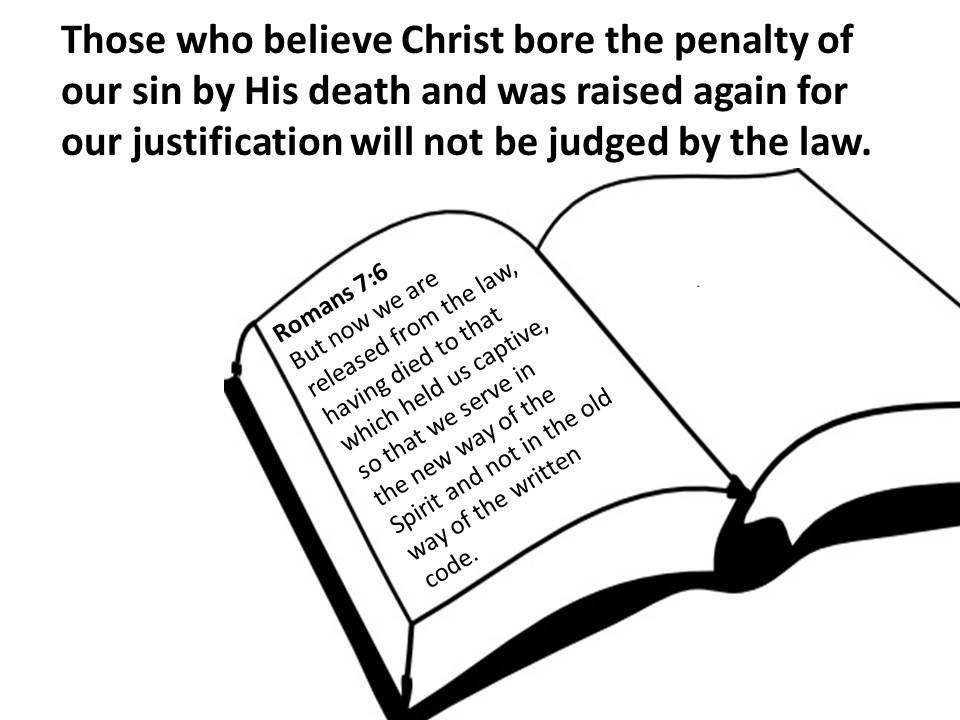
4 Likewise, my brothers, you also have died to the law through the body of Christ, so that you may belong to another, to him who has been raised from the dead, in order that we may bear fruit for God. 5 For while we were living in the flesh, our sinful passions, aroused by the law, were at work in our members to bear fruit for death. 6 But now we are released from the law, having died to that which held us captive, so that we serve in the new way of the Spirit and not in the old way of the written code.
Now, please note: “the old way of the written code.” What is that? That was servitude to the Old Covenant which was a will with the inheritance being eternal life. All sins committed against the law were imputed to that covenant.
Galatians 3:21 – Is the law then contrary to the promises of God? Certainly not! For if a law had been given that could give life, then righteousness would indeed be by the law. 22 But the Scripture imprisoned everything under sin, so that the promise by faith in Jesus Christ might be given to those who believe.
23 Now before faith came, we were held captive under the law, imprisoned until the coming faith would be revealed. 24 So then, the law was our guardian until Christ came, in order that we might be justified by faith. 25 But now that faith has come, we are no longer under a guardian, 26 for in Christ Jesus you are all sons of God, through faith. 27 For as many of you as were baptized into Christ have put on Christ. 28 There is neither Jew nor Greek, there is neither slave nor free, there is no male and female, for you are all one in Christ Jesus. 29 And if you are Christ’s, then you are Abraham’s offspring, heirs according to promise.
Hebrews 9:15 – Therefore he is the mediator of a new covenant, so that those who are called may receive the promised eternal inheritance, since a death has occurred that redeems them from the transgressions committed under the first covenant. 16 For where a will is involved, the death of the one who made it must be established. 17 For a will takes effect only at death, since it is not in force as long as the one who made it is alive. 18 Therefore not even the first covenant was inaugurated without blood. 19 For when every commandment of the law had been declared by Moses to all the people, he took the blood of calves and goats, with water and scarlet wool and hyssop, and sprinkled both the book itself and all the people, 20 saying, “This is the blood of the covenant that God commanded for you.” 21 And in the same way he sprinkled with the blood both the tent and all the vessels used in worship. 22 Indeed, under the law almost everything is purified with blood, and without the shedding of blood there is no forgiveness of sins.
The Old Covenant still has a function today. All those who do not know Christ are still provoked to sin against it, enslaved to its condemnation, and all of their sins are imprisoned in it. When they believe in Christ, that law, signified by the marriage covenant of the dead spouse in Romans 7, is ended along with all sins imputed to it and its condemnation. There is then no law to judge us, and where there is no law there is no sin. The Bible never says that the Old Covenant is presently ended for all purposes (Hebrews 8:13).
But now, the newly born spouse is free to “serve” Christ. The Spirit uses His law (word) to counsel us, encourage us, and instruct us in regard to life and godliness. To “serve” (in the new way of the Spirit) is the following word:
g1398. δουλεύω douleuō; from 1401; to be a slave to (literal or figurative, involuntary or voluntary):— be in bondage, (do) serve (- ice). AV (25)- serve 18, be in bondage 4, do service 3; to be a slave, serve, do service of a nation in subjection to other nations metaph. to obey, submit to in a good sense, to yield obedience in a bad sense, of those who become slaves to some base power, to yield to, give one’s self up to.
It is an exchange of seeds from death to life, and an exchange of slavery from sin to righteousness:
Romans 6:5 – For if we have been united with him in a death like his, we shall certainly be united with him in a resurrection like his. 6 We know that our old self[a] was crucified with him in order that the body of sin might be brought to nothing, so that we would no longer be enslaved to sin. 7 For one who has died has been set free[b] from sin. 8 Now if we have died with Christ, we believe that we will also live with him. 9 We know that Christ, being raised from the dead, will never die again; death no longer has dominion over him. 10 For the death he died he died to sin, once for all, but the life he lives he lives to God. 11 So you also must consider yourselves dead to sin and alive to God in Christ Jesus.
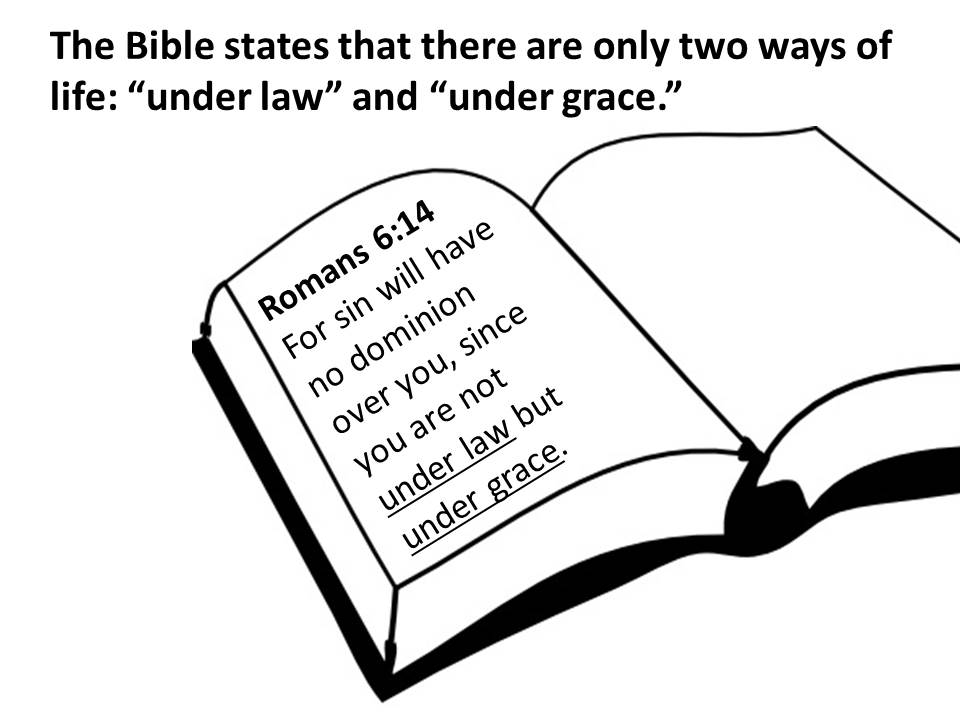
12 Let not sin therefore reign in your mortal body, to make you obey its passions. 13 Do not present your members to sin as instruments for unrighteousness, but present yourselves to God as those who have been brought from death to life, and your members to God as instruments for righteousness. 14 For sin will have no dominion over you, since you are not under law but under grace.
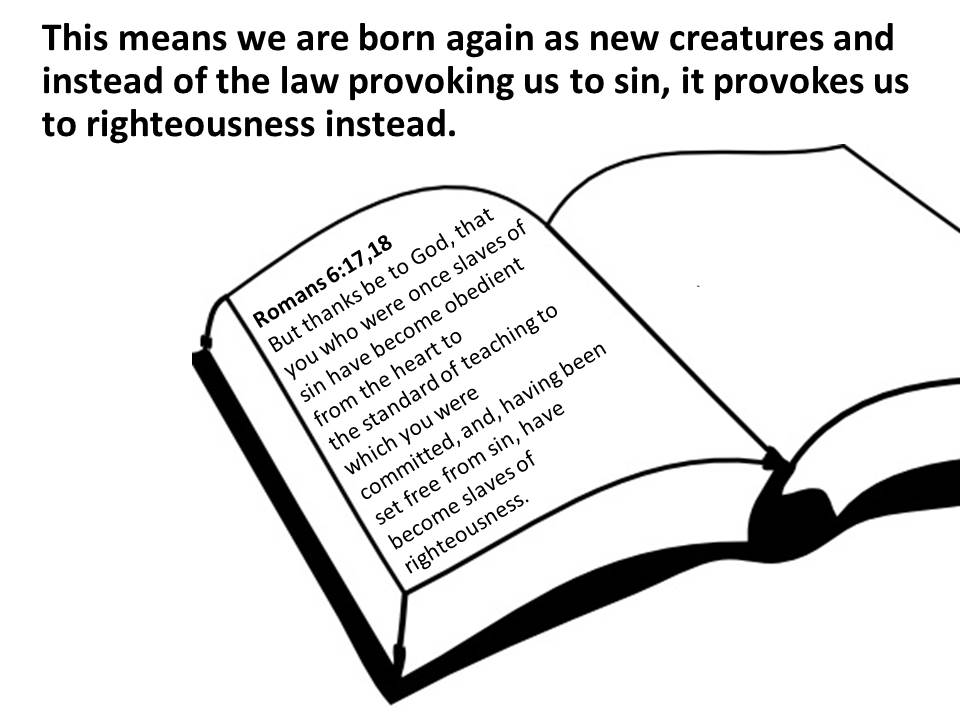
15 What then? Are we to sin because we are not under law but under grace? By no means! 16 Do you not know that if you present yourselves to anyone as obedient slaves,[c] you are slaves of the one whom you obey, either of sin, which leads to death, or of obedience, which leads to righteousness? 17 But thanks be to God, that you who were once slaves of sin have become obedient from the heart to the standard of teaching to which you were committed, 18 and, having been set free from sin, have become slaves of righteousness.
This brings us full circle back to Romans 8:2. We are set free from the law of sin and death “in Christ,” that is, His death on the cross to obey “the standard of teaching to which you were committed.” That would be the law of the Spirit.
To deny that the Christian is able to please God through their own obedience aided by the Holy Spirit is to deny the new birth. Christ said we must be born again. Protestantism speaks of being saved from the condemnation of the law to a rest from obedience to the law of the Spirit of life. This is a rejection of the new birth and leaves the Christian enslaved to sin. This denies the good news of the incorruptible seed that Christians are born of. Protestantism makes the case that “the law” cannot produce righteousness, but this totally neglects the true biblical relationship between the believer and the law of the Spirit. A one-dimensional law necessarily rejects the new birth and circumvents the Christians ability to love God and others.
Romans 8:3 – For God has done what the law, weakened by the flesh, could not do. By sending his own Son in the likeness of sinful flesh and for sin,[c] he condemned sin in the flesh, 4 in order that the righteous requirement of the law might be fulfilled in us, who walk not according to the flesh but according to the Spirit. 5 For those who live according to the flesh set their minds on the things of the flesh, but those who live according to the Spirit set their minds on the things of the Spirit. 6 For to set the mind on the flesh is death, but to set the mind on the Spirit is life and peace. 7 For the mind that is set on the flesh is hostile to God, for it does not submit to God’s law; indeed, it cannot. 8 Those who are in the flesh cannot please God.
Ministering to a Lawless Church and Society
“The Under Grace bus going to heaven does not have Under Law as a passenger.”
“A single dimension law is a false gospel. It produces works that are anti-law. It replaces love with the traditions of men in Jesus’ name.”
I could write a dozen posts about what has transpired in my life and those close to me in the past couple of weeks, but I think I can stay on-topic and write about the primary subject from which all of these events flow.
Have you ever noticed that Jesus didn’t participate in a large field of theological issues? If you examine Christ’s primary concerns, His positive message was the gospel of the kingdom, and His primary negative concerns were two and two only: the traditions of men and lawlessness.
The present-day church is completely indoctrinated and saturated with lawlessness which results from the traditions of men. The stage is set for the exact same play that was taking place when Jesus was ministering—only the props are different because of technology. The institutional church of that day is the exact same institutional church of today—only the names are different.
Yes, in fact, there is a heretic behind every bush. Yes, in fact, the sheep are without valid shepherds. Yes, in fact, the VAST majority of what comes out of the mouths of Christians is mindless dribble leading to death. We are confused, ignorant, failures in life building, without answers, but yet…
… “Christianity” has never been bigger. Christian movies abound in the secular market; Christian musicians abound in the secular top 40; and dynamic Christian teachers are hanging on trees everywhere in a seemingly utopic evangelical Garden of Eden. “Revival” is in the air. Holy hands are lifted up to GeeeeJussss everywhere. When you ask any Christian anything, they look at you with those glazed-over eyes and psychotic grin while saying, “GeeeJussss.”
And so it was when Jesus was ministering. The religious culture was awash in orthodoxy. What is more obvious than the fact that when Jesus showed up, He completely ignored the institutional leaders of that day and went to the common people? His Sermon on the Mount was a shocking indictment of the orthodoxy prevalent in that day: “You have heard it said…but I say….” The orthodoxy of our day is the same lawless orthodoxy of that day, and Christ deconstructed it point by point. The religious leaders of that day had redefined every word used to convey the thoughts of God.
And so it is today: Christians have a fundamental misunderstanding of every word used to convey spiritual truth. We are so mentally handicapped in our thinking that discussion over “What is the gospel?” is just another discussion. We are not completely undone in sackcloth and ashes that we are still asking that question 2000 years later, but we should be. Think about it: though an astute preserving of the law was a Jewish tradition, when Jesus showed up, the people understood little of it. Why? Orthodoxy, that’s why. Please think about what Jesus said to the who’s who of religious leaders in that day: “You do error concerning the Scriptures and the power thereof.” People observed in awe as the deliberately informally educated Jesus publically rebuked the spiritual brain trust of that day.
Hence, Pastor Jesus brought true revival, and true revival in our day will not happen to the glory of God until we stop listening to men and start listening to Jesus. One man, one Bible. It starts there…because the most innocent of those who lead in this day are simply regurgitating the raw sewage flowing from the broken cisterns of orthodoxy.
I suppose now I can keep my sanity by hating the orthodoxy, but loving the lawless sinner. After all, I am guilty myself of propagating its satanic filth as a former Reformed pastor. I myself helped to create the monsters I despise. I myself quoted the heroes of orthodoxy to make myself look smart as the hordes of hell applauded.
As you read all of this, you might think I have had a rough couple of weeks. You might think it has caused me to ponder. And it has. But I am a very busy man, and it behooves me to discuss the least common denominator here. In my stricken soul what are the words that I want to cry out to the world? What do I want to scream out in love to some and defiant rage towards others? Here it is…
Law is love.
Law is not far from us that we must have the arrogant ascend to heaven in a rocket ship built by their own visions of grandeur to bring it down to us. Law is very close to us, it is in our mouths, and we are able to do it. It is life to us, and its justice even holds all of our sin in escrow. The record is cancelled by the cross, and now, closeness is measured by distance: God’s love for us can only be measured by the distance from the east to the west. The departure of our sins are as infinite as the closeness of God’s love. There is no condemnation from the law of justice—only love. In the huge void that was once our guilt we cry out it in desperation: How can we love such a merciful God! Is there now nothing we can do with the burden removed? Please tell us! Is it wrong to try to please you with our whole being? And then the clamorous storm is calmed with these simple words,
“If you love me, keep my commandments.”
Christ is no longer a Lord of justice to us, He is a Lord that wants His subjects to fulfil His kingdom law of love without condemnation.
Sometime in the cradle of society, the redefining of law by religious minions was hell’s finest hour. They redefined law as having a single dimension, that of justice only. Orthodoxy has but one theme; death. Mankind is enslaved to the condemnation of the law’s perfect standard. The law, for the unbeliever, presently condemns while promising life.
“The very commandment that promised life proved to be death to me.”
Orthodoxy only tells the story of the law’s death, and conceals its herald of wisdom and life:
“ I set before you this day life and death, choose life!”
Law is justice and death to the unbelieving, but life, blessings, and love to those who rightly believe the gospel. Justice is death to the unbeliever, but to the believer—it is an act of love. One thing we mustn’t forget is that Arminianism is part of the Reformation’s orthodoxy. Therefore, it shares the same Calvinistic belief that “Christians” are still under the possible condemnation of the law. Love becomes tricky. But love isn’t tricky—it’s apart from any possible condemnation whatsoever. The loving Christian now experiences the life that the law promises. If you doubt that, read Psalm 119.
So, how do we minister to a lawless church and society? We start by incessantly defining law to God’s people. That’s where it starts. We must say, “You have heard it said, ‘the law can only condemn,’ but we say, ‘the law is the way of love and gives life.’” We must cry out to professing Christians to remove themselves from being under the law and its condemnation. We must also expose the traditions of men and their orthodoxy that sells a false road to heaven while under law. “Under grace” is not salvation while being under law, the two are mutually exclusive. The Under Grace bus going to heaven does not have Under Law as a passenger. The Under Law passenger trying to get on the Under Grace bus with an orthodoxy ticket is like the man who showed up at Christ’s feast without a wedding coat. Such will be rejected.
A single dimension law is a false gospel. It produces works that are anti-law. It replaces love with the traditions of men in Jesus’ name. The traditions of men, whether religious or secular is the only thing that can fill the void where there is no love. ANY thought that replaces an accurate assessment of God’s law is “anomia” a word often translated “lawlessness” in the Bible.
“BECAUSE of anomia, the love of many will wax cold.”
Though a single dimension law speaks of love and “many wonderful works in Jesus’ name,” they are works proffered by lawless orthodoxy defined by the traditions of men. And on one wise, no more slaughter of men has taken place by any other name than orthodoxy’s use of Jesus’ name, and the full measure of wrath slumbereth not accordingly. Be certain that you do not stand in such a camp actively or passively.
In orthodoxy, condemnation remains with the law. It is not enough to proclaim the law good, we must profess that without it we cannot love God and others. We must embrace it as the sum and substance of our own lives. When our precious Lord of love returns, we must offer Him the Holy sacrifices of our members offered up in love, not the body that cancelled the law of sin and death. Why would we offer back His own body and deny Him the sacrifices that we were purchased to perform? Try to dig His body up from the grave as an offering if you will, but it is not there, HE has risen! And if you have not died with Him and left the law of sin and death behind, and embraced the law of the Spirit of life that is your love…your works, or lack of them, will condemn you. Your love does not save you, and your lack of it does not condemn you, it merely shows that you believe that you are still under the condemnation of the law of sin and death—that’s a false gospel that is defined by a one dimensional view of the law.
“We know that we have passed out of death into life, because we love the brothers. Whoever does not love abides in death.”
“There is no fear in love, but perfect love casts out fear. For fear has to do with punishment, and whoever fears has not been perfected in love.”
Love is defined one way, and one way only: a grammatical plain sense interpretation of the law and its life application.
We are all guilty, and thereby suffer the torment by those we have helped to create. We have listened to men and offered a confused gospel that will not produce blessed lives. We are heinous cowards who do not really believe that such a man as Noah really existed. We offer fellowship offerings to the god of orthodox majority—his human credentials intimidate us, and thereby show that we spend little time with Jesus. Our cowardly offerings recognize their use of facts in the commission of treason for fear others will think ill of us.
This is where true ministry to a lawless church and society must begin, with one man and one Bible resulting in one love—the love Christ has called you to fulfil.
Will you be that man or not?
paul
Charles Haddon Spurgeon: The Prince of Preachers?

Originally published July 29, 2013
“The problem is the fusing of law and grace, not election. People on both sides of that argument can fuse law and grace together and often do….Notice that who does the work is not the issue. Work period is the issue.”
Protestantism is the foundation of the American church. Our heroes of the faith are those who protested Rome but never left Rome. Augustine, Luther, and Calvin merely believed they could do Rome better. Luther and Calvin in particular were fed-up with the popes and gave birth to a resurgence of Plato’s moral tyranny. The popes were in the tyranny business for money and the fulfillment of sinful desires; the Reformers were in the tyranny business for the glory of God. Their mentor, Augustine, boldly proclaimed that the Bible was useless without Plato’s insight and proclaimed Plato a pre-Christian Christian.
Plato’s philosophical principles and anthropomorphic presuppositions laid the foundation for every political and religious caste system in Western culture. Plato’s DNA is in every tyrant ever born in the West whether political or religious. His philosophy lives in both anemic form and viral, fleshing itself out in either philosophical capitulation or the zealot’s bloody axe. Only God knows the number buried in that landfill named, “The Traditions of Men.”
During the first advent, Christ spoke often of two concerns: the traditions of men and antinomianism. Anti-law of God is made possible to the degree that the authority of men usurp the authority of God’s word. Tradition is powerful and often relegates truth to a metaphysical anomaly. Such is the case with American religious heroes. Their stardom defies logic and truth. While Americans shake their heads in disbelief at documentary films that show Hitler pontificating to swooning masses, we celebrate the Pilgrim Puritans who hung Quakers and baptized women in waters of death. Tradition knows no limits in regard to hypocrisy and ignorance. Better to skim the Cliff Notes of tradition than to suffer a possible stroke by the exercise of thinking.
Calling Charles Haddon Spurgeon the “Prince of Preachers” is perhaps the grandiose example of illogical tradition. Spurgeon was a shameless Calvinistic hack. He once said,
There is no such thing as preaching Christ and Him crucified, unless we preach what nowadays is called Calvinism. It is a nickname to call it Calvinism; Calvinism is the gospel, and nothing else.
The most inconvenient thing ever for admirers of Spurgeon is the truth. He constantly disregarded the plain sense of Scripture, though eloquently. While comparing Augustine and Calvin to the apostle Paul in the same sermon (A Defense of Calvinism), any concern for Paul’s warning of being a proponent of a doctrine named after a man was totally disregarded by Surgeon in open defiance to the truth (1COR 3:1-9).
But the fundamental problem is the fact that Calvin taught a blatant false gospel. He believed that grace was not possible unless Christ fulfilled the law for us (CI 3.14.9-11). He believed that Christians are still “under law” which is the very definition of a lost person in the book of Romans and the premise for Calvin’s total depravity.
Hence, Christians remain under the law for justification and must live their Christian lives by faith alone in order to keep their salvation. If Christians live by faith alone in sanctification, the perfect obedience of Christ is perpetually imputed to us and we remain saved. Of course, this requires a complex doctrinal judgment in regard to what is works in sanctification and what is not a work in sanctification in order to live our Christian lives by faith alone resulting in the maintaining of our salvation. This is the very reason for the anemic sanctification that has plagued Protestantism for centuries. We either throw Law out the window completely, or live in fear regarding what is a work and what isn’t a work in our Christian lives lest we find ourselves in “works salvation.”
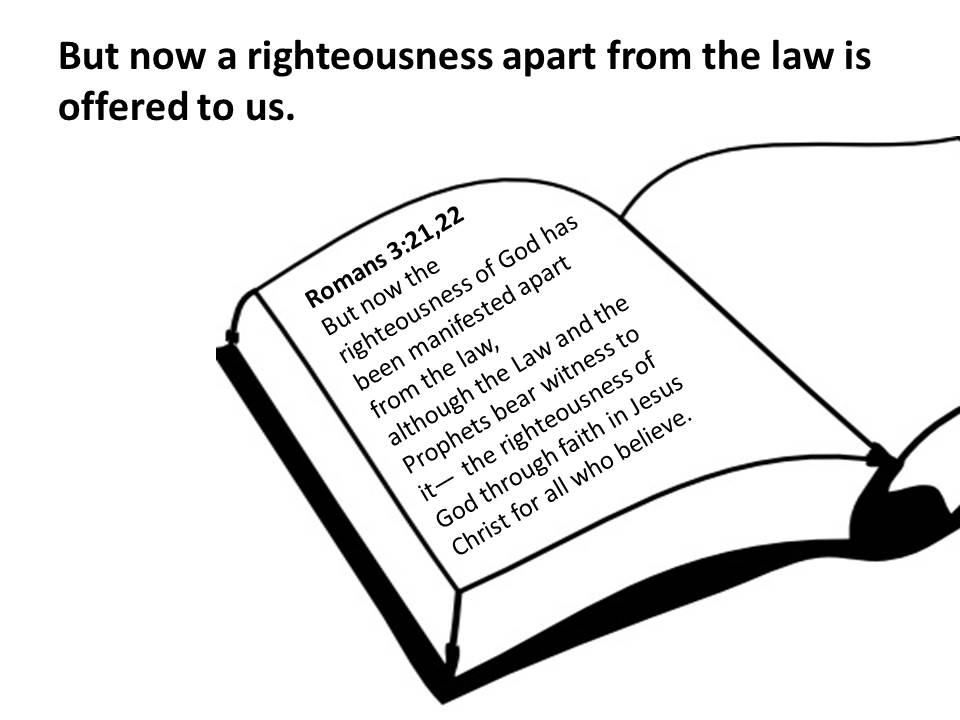
The problem is the fusing of law and grace. Not election. People on both sides of that argument can fuse law and grace together and often do. Unbelievers are “under law” while believers are “under grace.” We are justified APART from the law (ROM 3:21). Christ didn’t come to fulfill the law FOR OUR JUSTIFICATION; He came to die for our sins so that a righteousness APART from the law could be credited to our account. If Christ had to fulfill the law…. for our justification, law is still the BASIS for our justification and justification is then NOT OF GRACE. The basis of our justification is not law, we are rather UNDER GRACE. This is what the apostle Paul wrote:
Romans 11:6 – But if it is by grace, it is no longer on the basis of works; otherwise grace would no longer be grace.
Notice that who does the work is not the issue. Work period is the issue. The BASIS of grace is the issue here, and if the basis of grace is works it is no longer grace. If Christ had to keep the law for us to make grace possible, according to Paul, grace is no longer of grace. To the contrary, Paul states that Christ came so that he could fulfill the law through us in sanctification completely separate from justification:
Romans 8:1 – There is therefore now no condemnation for those who are in Christ Jesus. 2 For the law of the Spirit of life has set you free in Christ Jesus from the law of sin and death. 3 For God has done what the law, weakened by the flesh, could not do. By sending his own Son in the likeness of sinful flesh and for sin, he condemned sin in the flesh, 4 in order that the righteous requirement of the law might be fulfilled in us, who walk not according to the flesh but according to the Spirit. 5 For those who live according to the flesh set their minds on the things of the flesh, but those who live according to the Spirit set their minds on the things of the Spirit. 6 For to set the mind on the flesh is death, but to set the mind on the Spirit is life and peace. 7 For the mind that is set on the flesh is hostile to God, for it does not submit to God’s law; indeed, it cannot. 8 Those who are in the flesh cannot please God.
Notice that a perfect keeping of the law is not required for us in sanctification to please God for justification. Why? Because the two are separate and there is no law in justification for the believer. The two are separate. We are saved apart from the law for justification and the law informs our sanctification (ROM 3:21, GAL 4:21). Calvinism propagates a grace based on works. Its consummation is an antinomianism where Christ must keep the law for us because we are unable to please God through the perfect fulfillment of it in our Christian lives—perfection as a goal not withstanding in sanctification, but not for justification. According to Calvinism, we have no faith that is alive; we are still dead in our trespasses and sins. It is of the variety that separates us from the fulfillment of the law in sanctification as well. Only Calvin was genius enough to devise a doctrine that combined the best of works salvation and antinomianism.
Only truth sanctifies (John 17:17). The idea that Spurgeon ever helped anyone with his preaching is an illusion grounded in the traditions of men.
paul
How to Lead a Calvinist to the Lord
Originally published June 28, 2013
“What imperils the Calvinist soul is a fundamental anti-biblical view of the law. They must be shown the new way of the Spirit.”
Know Calvin’s Gospel
Calvinism is a false gospel that imperils the soul. The apostle Paul made it clear in Romans that there are only two people groups in the world: those under law, and those under grace (ROM 6:14). The lost and the saved. Calvinists declare themselves to be under law. They try to get around this by saying you can be under law and under grace both, but such is not the case. They say it is ok to be under law and covered by grace if we live by faith alone in sanctification; or, living by the same grace that saved us. The whole, “We must preach the gospel to ourselves every day” is indicative of where they stand on law and grace. According to their other gospel, we need the same grace that saved us every day for one reason and one reason only: we are supposedly still under law. Certainly, all people live under the grace of God whether saved or unsaved—we are addressing the grace that saved us initially.
Calvinists use the book of Galatians in an effort to make the opposite point; supposedly, the Galatians were putting themselves under law by attempting to please God in sanctification by keeping the law. Hence, in the Calvinist mind, attempting to keep the law in sanctification is the same thing as trying to keep the law for our justification—they are still under it accordingly….for justification….IN sanctification. In other words, a demand for perfect obedience to the law in sanctification is still the standard to maintain justification. This was Paul’s actual beef with the Galatians: that the law was still a standard for maintaining their justification. The Galatians were adding law to grace in order to maintain grace. So, instead of the law informing their sanctification, they were putting themselves back under the law to maintain justification. That’s why Paul wrote the following to them:
Galatians 4:21 – Tell me, you who desire to be under the law, do you not listen to the law?
Paul continues from there to drive home the point that justification is a settled issue and obligation to the law is separated from it. We are obligated to listen to the law for sanctification, but there is no longer any law obligation to our justification. To say that justification has to be maintained by perfect law-keeping is to be under the law. The Galatians were being taught that rituals such as circumcision completely satisfied the law. But again, being under law is the point here. That is why Paul stated the following:
Galatians 5:2 – Look: I, Paul, say to you that if you accept circumcision, Christ will be of no advantage to you. 3 I testify again to every man who accepts circumcision that he is obligated to keep the whole law. 4 You are severed from Christ, you who would be justified by the law; you have fallen away from grace.
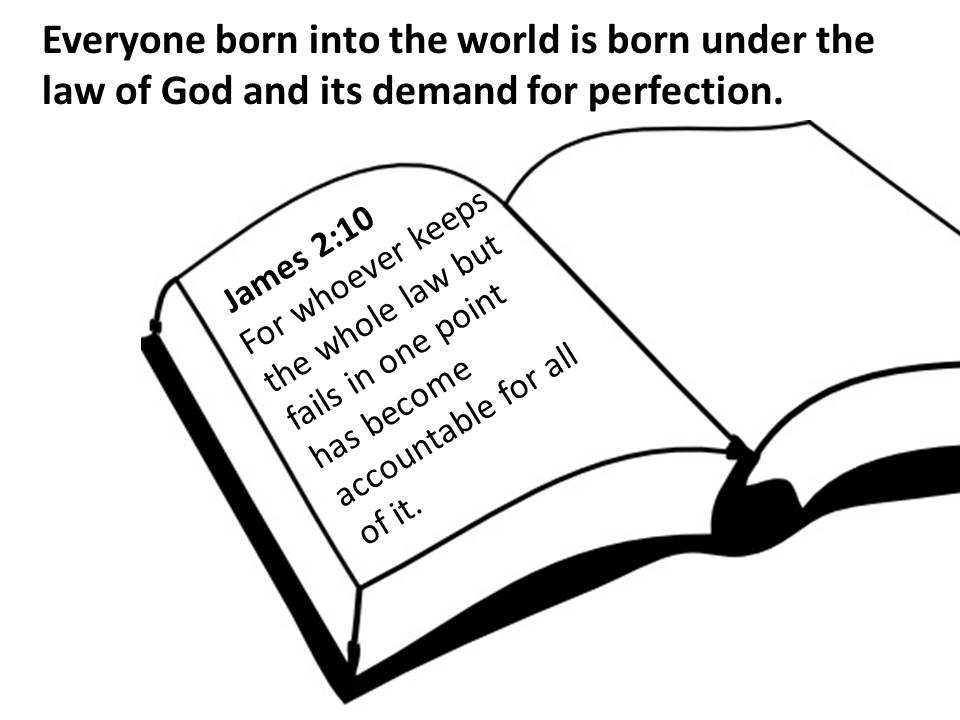
The Galatians were being taught that circumcision satisfied all of the requirements of the law for justification. This led to an antinomianism in sanctification because in these systems there is no distinction between hearing and doing the law in sanctification and the laws relationship to justification. For the unbeliever, the law is the standard for justification because unbelievers are under the law. Christians are under grace and not under the law, so the law has no relevance to their justification. Paul was simply telling the Galatians that if they are under the law, they are obligated to keep all of it for justification. Circumcision or any other ritual does not satisfy the law.
Paul states that we are not under law because the old us that was under the law is dead (ROM 7:1-11), and therefore, the law cannot judge the sins of our mortality (Rom 3:19, 7:8,9). But on the other hand, we are enslaved to the law in sanctification (Rom 8:7,8). Even though we cannot keep it perfectly due to our present mortality, we are enslaved to it and nonetheless strive to keep it in our sanctification. The law was never fulfilled to maintain our justification because there is no law in justification. The law is fulfilled through us in sanctification (ROM 8:3,4). Christ’s death separated the law from justification in the same way that a spouse is no longer under a marriage covenant when the other spouse dies (ROM 7:1-3).
This excludes the necessity for perfect law-keeping in sanctification. Christ accomplished this through His death, not keeping the law for us in sanctification. Calvinists call this, “Christ 100% for us.” Christ’s perfect law-keeping is a given by virtue of who He is and not because perfect law-keeping was part of the Abrahamic covenant of promise which occurred 430 years before the law (GAL 3:17,18).
Which Brings Us to Calvin’s Galatian Error
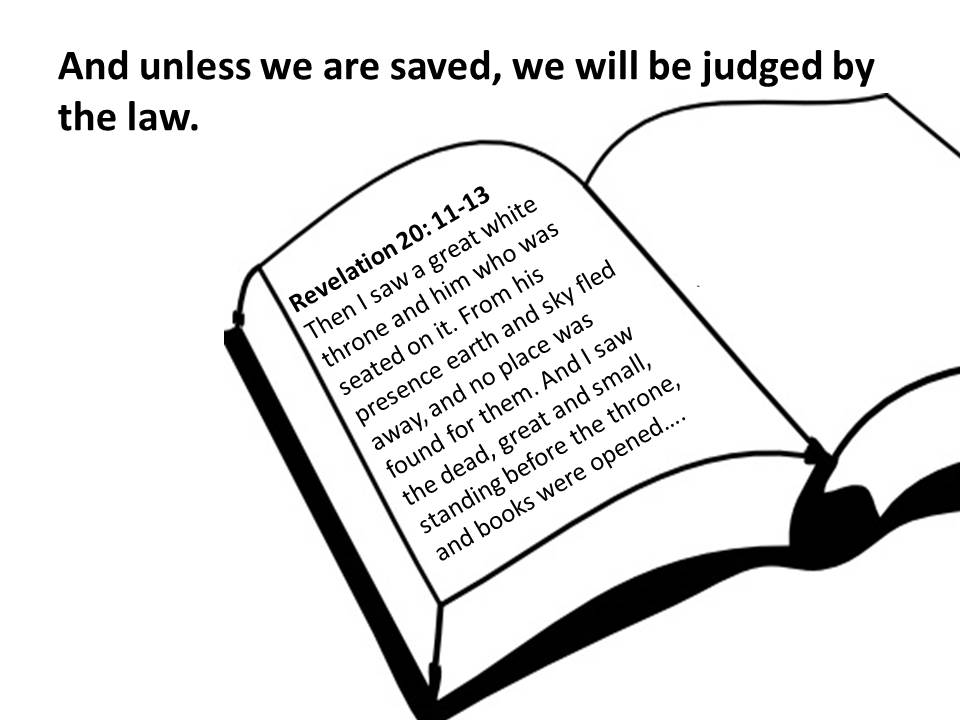
No works salvation system ever promotes a perfect, intelligent obedience to the law. It posits activity on our part that imputes something that counts for a perfect keeping of the law to maintain our salvation. This always leads to antinomianism because a ritual replaces actual law-keeping. Those under grace strive to please God by law-keeping because they are enslaved to the law, but on the other hand, perfection is not the standard because they are hindered by mortality (ROM 8:3,4) and the law can’t judge them because they are no longer under it (ROM 3;19). They are enslaved to it for sanctification, but not under it for justification. Those under grace are enslaved to the law but will not be judged by it; those under law are enslaved to sin and will be judged by the law. The Bible has an awesome way of stating this: those under the law violate it at all points by one sin; those under grace fulfill the law by loving their neighbors and God. The enslavement hindered by the weakness of the flesh fulfills the law in sanctification.
Calvin’s error/false gospel merely replaced the ritual of circumcision with daily re-salvation for the atonement of sin and the perpetual imputation of Christ’s perfect law-keeping for sanctification in order to maintain our justification (Calvin Institutes: 3.14.9-11). “We must preach the gospel to ourselves every day” is a ritual that imputes Christ’s perfect obedience to our sanctification in order to maintain our justification. This was also the fatal error of the Pharisees who replaced the law of God with their traditions and thus, “you have made void the law of God” (MATT 15:6 [most translations : “set aside” and “commandments”). The law is void for justification (the dead letter and covenant of death), but not sanctification.
Therefore, Calvinism keeps the “believer” under the law for justification leading to antinomianism in sanctification because Christ is 100% for us and keeps the law for us in sanctification in order to maintain our just standing. This is well exemplified via the following tweet by a well-known Calvinist:

This was the same result at Galatia as well:
Galatians 5:7 – You were running well. Who hindered you from obeying the truth?
This rejects the believer’s hindered enslavement to the law in sanctification and only leaves one other alternative: under the law. For all practical purposes: lost. Therefore, the Calvinist must be informed that he/she is still under the law and trusting in a false gospel. What imperils the Calvinist soul is a fundamental anti-biblical view of the law. They must be shown the new way of the Spirit.
Let me recommend that you then teach them through the following booklet (Click on images to enlarge if necessary):





 Paul's Passing Thoughts
1 comment