It’s Not About Truth and it Never Was.
Paul M. Dohse
TTANC L.L.C.
PO Box 583
Xenia, Ohio 45385
To Dr. Walter Price and the Board of Trustees of Southern Seminary:
Gentlemen,
It is no surprise that truth is of low value in our day; the apostle Paul informed Timothy that in the latter days people would not tolerate sound doctrine, and we are in those days. Hence, there are no expectations in regard to this letter, but nevertheless, it is a duty to proclaim the truth.
Southern Seminary now offers academic credits for attending seminars at conferences sponsored by various organizations connected with the present-day resurgence of authentic Calvinism. Though the traditions of men and antinomianism was of primary concern as stated by Christ during His earthly ministry, the evangelical academia of our day follows the crowds in wholesale acceptance of any doctrinal name brand that sells.
This blitzkrieg of resurgent conferences targets youth specifically. The resurgence seeks to turn a whole generation of youth to this doctrine. This represents the future of the American church. Evangelicals, and its academia in particular, seem indifferent to the gravity of future accountability attached to this reality.
Our organization researches the Calvin Institutes, and the trustees of Southern Seminary would do well in following our example rather than the opinions of men like Albert Mohler. Calvin’s gospel, as stated in the Institutes, is a call to keep ourselves saved through the practice of antinomianism, and has a distinctive Gnostic application. It is works salvation by Christ plus antinomianism, and reduces obedience to only experiencing the imputation of Christ’s perfect obedience to the Christian life. An example of this would be on page 215 in How People Change (2006), a book written by Paul David Tripp, a speaker at the recent Cross Conference endorsed by Southern Seminary. He states the following:
When we think, desire, speak, or act in a right way, it isn’t time to pat ourselves on the back or cross it off our To Do List. Each time we do what is right, we are experiencing what Christ has supplied for us. In Chapter 11, we introduced some of the fruit Christ produces. We will expand the discussion here.
Calvin, as well as Luther, believed that all reality is interpreted through the works of Christ in the gospel, or the “objective” gospel and the imputation of those works are experienced “subjectively” in order to remove our works from sanctification. Hence, “the subjective power of an objective gospel” and other such mantras often heard among evangelicals today. This necessitates, in a manner of speaking, interpreting every verse in the Bible as a justification verse; i.e., “Biblical Theology,” a buzz word at Southern. This way of interpreting the Bible was introduced by Christian mystic Geerhardus Vos circa 1938.
Calvin also redefined the new birth as an experience of perpetual rebirth in order to keep ourselves saved by the same gospel that originally saved us. So, the new birth is not a one-time event, it is a perpetual cycle of the same repentance and new birth experience that originally saved us—that’s why we must, “preach the gospel to ourselves every day.” This is the doctrine of mortification and vivification. It is part of Calvin’s systematic theology. This is factually indisputable. The Christian life focuses on our total depravity and repentance only, leading to the experience of vivification, or a joyful experience.
Therein, the human “heart” is redefined as something that is transformed only by its increased ability to experience vivification. This is why John Piper states that joy is essential to the Christian life; if vivification is not being experienced; perpetual rebirth is not taking place:
The pursuit of joy in God is not optional. It is not an ‘extra’ that a person might grow into after he comes to faith. Until your heart has hit upon this pursuit, your ‘faith’ cannot please God. It is not saving faith (Desiring God: p. 69).
Likewise, Southern Baptist Paul Washer states the following:
This cycle simply repeats itself throughout the Christian life. As the years pass, the Christian sees more of God and more of self, resulting in a greater and deeper brokenness. Yet, all the while, the Christian’s joy grows in equal measure because he is privy to greater and greater revelations of the love, grace, and mercy of God in the person and work of Christ. Not only this, but a greater interchange occurs in that the Christian learns to rest less and less in his own performance and more and more in the perfect work of Christ. Thus, his joy is not only increased, but it also becomes more consistent and stable (Paul Washer:The Gospel Call and True Conversion; Part 1, Chapter 1, heading – The Essential Characteristics Of Genuine Repentance, subheading – Continuing and Deepening Work of Repentance).
The new birth is redefined as a “cycle” rather than a one-time event like our physical birth. It is redefined as a perpetual rebirth experience as we focus on our saintly total depravity. We are only righteous positionally; regeneration is a mere experience of Christ’s perfect obedience to the law. This not only keeps Christians under law, but inadvertently calls for a rejoicing in our own supposed total depravity.
This is why authentic Calvinism dies a social death within Christianity every 100 years or so. God’s people eventually catch on to the fact that it is a false gospel. Lighter forms of it survive the rejection while maintaining the label. We are presently within the fifth resurgence since Calvin’s Geneva, and the trustees of Southern are mindless participants accordingly.
We had the wonderful privilege of meeting many, many young people at the recent Cross Conference where you promoted this false gospel. We realize that there will only be a remnant that loves the truth enough to reject this latest academic novelty. But this is a generation of young people capable of great things, and smart enough to know that they only need God Himself to accomplish His mission. We believe that American Christianity has become a mission field in and of itself; namely, YOUR resurgence movement, a movement that bears your name, and we are seeking to reach that remnant of God that loves His truth. This is our duty and calling. A gospel promoting a justification that is not finished cannot save.
Meanwhile, as stated by the apostle Paul, let those who teach another gospel be accursed whether they be angels or men of renown.
Because only truth saves and sanctifies,
Paul M. Dohse
John 17:17
Matthew 4:4

An Open Letter to the Board of Trustees of Southern Seminary

Paul M. Dohse
TTANC L.L.C.
PO Box 583
Xenia, Ohio 45385
To Dr. Walter Price and the Board of Trustees of Southern Seminary:
Gentlemen,
It is no surprise that truth is of low value in our day; the apostle Paul informed Timothy that in the latter days people would not tolerate sound doctrine, and we are in those days. Hence, there are no expectations in regard to this letter, but nevertheless, it is a duty to proclaim the truth.
Southern Seminary now offers academic credits for attending seminars at conferences sponsored by various organizations connected with the present-day resurgence of authentic Calvinism. Though the traditions of men and antinomianism was of primary concern as stated by Christ during His earthly ministry, the evangelical academia of our day follows the crowds in wholesale acceptance of any doctrinal name brand that sells.
This blitzkrieg of resurgent conferences targets youth specifically. The resurgence seeks to turn a whole generation of youth to this doctrine. This represents the future of the American church. Evangelicals, and its academia in particular, seem indifferent to the gravity of future accountability attached to this reality.
Our organization researches the Calvin Institutes, and the trustees of Southern Seminary would do well in following our example rather than the opinions of men like Albert Mohler. Calvin’s gospel, as stated in the Institutes, is a call to keep ourselves saved through the practice of antinomianism, and has a distinctive Gnostic application. It is works salvation by Christ plus antinomianism, and reduces obedience to only experiencing the imputation of Christ’s perfect obedience to the Christian life. An example of this would be on page 215 in How People Change (2006), a book written by Paul David Tripp, a speaker at the recent Cross Conference endorsed by Southern Seminary. He states the following:
When we think, desire, speak, or act in a right way, it isn’t time to pat ourselves on the back or cross it off our To Do List. Each time we do what is right, we are experiencing what Christ has supplied for us. In Chapter 11, we introduced some of the fruit Christ produces. We will expand the discussion here.
Calvin, as well as Luther, believed that all reality is interpreted through the works of Christ in the gospel, or the “objective” gospel and the imputation of those works are experienced “subjectively” in order to remove our works from sanctification. Hence, “the subjective power of an objective gospel” and other such mantras often heard among evangelicals today. This necessitates, in a manner of speaking, interpreting every verse in the Bible as a justification verse; i.e., “Biblical Theology,” a buzz word at Southern. This way of interpreting the Bible was introduced by Christian mystic Geerhardus Vos circa 1938.
Calvin also redefined the new birth as an experience of perpetual rebirth in order to keep ourselves saved by the same gospel that originally saved us. So, the new birth is not a one-time event, it is a perpetual cycle of the same repentance and new birth experience that originally saved us—that’s why we must, “preach the gospel to ourselves every day.” This is the doctrine of mortification and vivification. It is part of Calvin’s systematic theology. This is factually indisputable. The Christian life focuses on our total depravity and repentance only, leading to the experience of vivification, or a joyful experience.
Therein, the human “heart” is redefined as something that is transformed only by its increased ability to experience vivification. This is why John Piper states that joy is essential to the Christian life; if vivification is not being experienced; perpetual rebirth is not taking place:
The pursuit of joy in God is not optional. It is not an ‘extra’ that a person might grow into after he comes to faith. Until your heart has hit upon this pursuit, your ‘faith’ cannot please God. It is not saving faith (Desiring God: p. 69).
Likewise, Southern Baptist Paul Washer states the following:
This cycle simply repeats itself throughout the Christian life. As the years pass, the Christian sees more of God and more of self, resulting in a greater and deeper brokenness. Yet, all the while, the Christian’s joy grows in equal measure because he is privy to greater and greater revelations of the love, grace, and mercy of God in the person and work of Christ. Not only this, but a greater interchange occurs in that the Christian learns to rest less and less in his own performance and more and more in the perfect work of Christ. Thus, his joy is not only increased, but it also becomes more consistent and stable (Paul Washer: The Gospel Call and True Conversion; Part 1, Chapter 1, heading – The Essential Characteristics Of Genuine Repentance, subheading – Continuing and Deepening Work of Repentance).
The new birth is redefined as a “cycle” rather than a one-time event like our physical birth. It is redefined as a perpetual rebirth experience as we focus on our saintly total depravity. We are only righteous positionally; regeneration is a mere experience of Christ’s perfect obedience to the law. This not only keeps Christians under law, but inadvertently calls for a rejoicing in our own supposed total depravity.
This is why authentic Calvinism dies a social death within Christianity every 100 years or so. God’s people eventually catch on to the fact that it is a false gospel. Lighter forms of it survive the rejection while maintaining the label. We are presently within the fifth resurgence since Calvin’s Geneva, and the trustees of Southern are mindless participants accordingly.
We had the wonderful privilege of meeting many, many young people at the recent Cross Conference where you promoted this false gospel. We realize that there will only be a remnant that loves the truth enough to reject this latest academic novelty. But this is a generation of young people capable of great things, and smart enough to know that they only need God Himself to accomplish His mission. We believe that American Christianity has become a mission field in and of itself; namely, YOUR resurgence movement, a movement that bears your name, and we are seeking to reach that remnant of God that loves His truth. This is our duty and calling. A gospel promoting a justification that is not finished cannot save.
Meanwhile, as stated by the apostle Paul, let those who teach another gospel be accursed whether they be angels or men of renown.
Because only truth saves and sanctifies,
Paul M. Dohse
John 17:17
Matthew 4:4
Albert Mohler, Nelson Mandela, and the Crusade for a New Calvinist Host
 I have to think long and hard these days for something that annoys me more than Albert Mohler. His presidency at Southern Seminary is a boondoggle rivaled only by the election of Barak Obama, who is, by the way, advocated by Mohler. As the world was blessed with another week, Mohler failed not to mark his territory with an article about the passing of Nelson Mandela lest the world not know his opinion about it. Hence, the Louisville Kool-Aid drinkers who wait with bated breath for his unctions from on high are now apprised.
The article compared Nelson Mandela to George Washington. Ok, the buffoonery of that theses aside, why does Mohler meddle in this stuff? What makes the president of Southern Seminary a political player? For crying out loud, why does Mohler, Piper et al weigh in on every political tryst that comes down the pike? Why did a lot of these guys vote for Barak Obama? Answer: Calvinist history predicated by Calvinist need.
As you know, New Calvinism is the latest resurgence of authentic Reformed doctrine. Historically, authentic Calvinism dies a social death and experiences periodic resurgences in 100-year cycles. New Calvinism is the fifth resurgence since Calvin’s Geneva. Volume 2 of TTANC will document the history of these cycles and the reasons for them.
Protestantism is predicated on passive sanctification/Christian living. Therefore, in an attempt to stop the death spiral Protestantism finds itself in from time to time because it is a light form of its original lager recipe, it attempts to go back to the original recipe for a solution. The only solution in history since the Reformation that offered aggressive sanctification as a solution was the biblical counseling movement founded by Dr. Jay Adams. However, his movement was spawned in the same year that New Calvinism was born (1970), and a war ensued accordingly.
The true biblical counseling movement and its aggressive sanctification lost the war. I witnessed the movement and was involved in it firsthand when it really started

Target Publication 2015
making a radical difference in Christianity circa 1990. New Calvinism (then known as Sonship Theology), infiltrated the true biblical counseling movement through Westminster Seminary and effectively destroyed it by 2006. The high priest of this inquisition was Dr. David Powlison who was a mentoree of the father of Sonship Theology, Dr. John “Jack” Miller. I therefore assume that Powlison will one day receive his just reward for snuffing out one of the most significant revivals in church history.
There are six reasons authentic Calvinism dies:
1. Protestantism was founded on the ancient ideology of spiritual caste. As a result, the Reformation gospel integrated Neo-Platonism with the Bible and offered not just a different gospel, but an entirely different way to interpret reality. Luther, taking his cue from St. Augustine, made the cross the sum of epistemology in and of itself. Many didn’t understand this and still don’t.
In other words, the Reformers interpreted reality through a redemptive prism, while the natural tendency is to interpret reality grammatically. The former believes that creation is a narrative that points to nothing but redemption; the latter doesn’t reject the idea that redemption is referred to in some way, but also believes other things are going on, and the plain sense of words are the key to understanding reality. The redemptive view of reality relies heavily on allegory because it demands a redemptive outcome.
The Reformers actually believed, as many do today, that a grammatical interpretation of reality is synonymous with works salvation and the glory of man. This was Luther’s epistemology. New Calvinists such as Paul David Tripp and Rick Holland have said that a literal, exegetical approach to Scripture separates us from the saving works of Christ (Tripp), and makes bad theology (Holland). Salvation is therefore married to redemptive eisegesis.
Hence, as time progressed, redemptive Protestants grew fewer, and grammatical Protestants increased in number. Remember, at issue is the very interpretation of reality itself. This has resulted in the present-day reality of redemptive Calvinists and grammatical Calvinists; ie., “Old Calvinists” and “New Calvinists.” Both claim Calvin, the former unwittingly. Therefore, in the midst of these resurgences, you have Calvinists fighting Calvinists. Examples of this are ample in church history and will be detailed in TTANC2. Along with every resurgence is an antinomian controversy between Calvinists.
The first point here is that authentic Calvinism dies a social death because its contra intuitive interpretation of reality is a natural anomaly. As it dies, it is replaced with the weaker form that came from it, and a need for solutions once again arise, and the original once again presents itself as the solution: “See, we have gotten away from our roots. That’s the problem.”
2. The original calls for a perpetual revisiting of the same gospel that saved us. This simply becomes boring and people lose interest. Susan and I have recently visited New Calvinist churches that were on fire in the early 80s. They are now deader than dead. Imagine our teenage son pointing this out without any cue from Susan and me at all.
3. The doctrine does not produce spiritual growth which results in a plethora of negative issues that arise from spiritual immaturity. See Hebrews 5:11-6:8. Infants in adult bodies will eventually devour each other.
4. The spiritual tyranny that is ALWAYS part and parcel with this doctrine. Remember, it is basically a spiritual cast system that puts a high premium on control.
5. God’s people eventually figure out that it is a false doctrine.
6. Ultimately, it needs to survive by getting in bed with the government as a way to enforce its orthodoxy. If this doesn’t happen, reasons 1-5 result in its death. Everyone agrees that the Enlightenment era destroyed authentic Reformed orthodoxy because it severed church and state—first in America, and then Europe followed. When this happened, it resulted in the proliferation of cults because government force had to be replaced with various forms of manipulation and mind control.
And this is why New Calvinists such as Albert Mohler are so politically minded. Authentic Calvinism has always been a parasite that will ultimately die unless it finds a government host. Be sure of it: this is what happened to the colonial Puritans, they were kept out of the American political process when they attempted to use the American Constitution to enforce their orthodoxy. This resulted in the death of American Puritanism. Before the American Revolution, the Colonies were Puritan theocracies.
Mohler et al knows their movement will eventually die unless they can use the government to enforce it, and this is behind their liberal political leanings. It takes a collectivist government to enforce a collectivist religion. They know this; hence, “No Government is perfect.” This is why Mohler thinks that “one man’s terrorist is another man’s freedom fighter.” This is why Mohler thinks the differences between Washington and Mandela are “ironic” despite the fact that Mandela was a communist.
Frankly, I believe that this is why John Piper retired from the pastorate and made a video in Geneva that announced his future vision. New Calvinists will continue to become more and more involved in the political realm. There is an agenda to get in bed with the state in order to enforce their faith. If they don’t, history will repeat itself—they know this. They will go the way of the colonial Puritans.
This is just simply history. Calvinists will do what Calvinists have always done. Sure, grammatical Calvinists may deny this historic agenda because they don’t get it, but the authentic Calvinists do get it…
It’s about the collectivist parasite feeding from the host of individualism.
paul
PPT Top 10 Gnostics of the American Church
 The present day New Calvinism movement is a return to the exact same viral Gnosticism that plagued the New Testament church. New Calvinists proudly claim St. Augustine who was an avowed Neo-Platonist. Platonism later became various forms of Gnosticism. Martin Luther’s theology of the cross laid the foundation for the functioning Platonism that has plagued the church sense the 16th century. Luther, in his endeavor to define Augustinian philosophy for the Reformation, made the cross a Platonist hermeneutic that transcends the material world and the five senses. This was Luther’s definition of a true theologian. Said Luther:
That person does not deserve to be called a theologian who looks upon the »invisible« things of God as though they were clearly »perceptible in those things which have actually happened« (Rom. 1:20; cf. 1 Cor 1:21-25).
This is apparent in the example of those who were »theologians« and still were called »fools« by the Apostle in Rom. 1:22. Furthermore, the invisible things of God are virtue, godliness, wisdom, justice, goodness, and so forth. The recognition of all these things does not make one worthy or wise.
He deserves to be called a theologian, however, who comprehends the visible and manifest things of God seen through suffering and the cross.
The manifest and visible things of God are placed in opposition to the invisible, namely, his human nature, weakness, foolishness. The Apostle in 1 Cor. 1:25 calls them the weakness and folly of God. Because men misused the knowledge of God through works, God wished again to be recognized in suffering, and to condemn »wisdom concerning invisible things« by means of »wisdom concerning visible things«, so that those who did not honor God as manifested in his works should honor him as he is hidden in his suffering (absconditum in passionibus). As the Apostle says in 1 Cor. 1:21, »For since, in the wisdom of God, the world did not know God through wisdom, it pleased God through the folly of what we preach to save those who believe.« Now it is not sufficient for anyone, and it does him no good to recognize God in his glory and majesty, unless he recognizes him in the humility and shame of the cross. Thus God destroys the wisdom of the wise, as Isa. 45:15 says, »Truly, thou art a God who hidest thyself.«
So, also, in John 14:8, where Philip spoke according to the theology of glory: »Show us the Father.« Christ forthwith set aside his flighty thought about seeing God elsewhere and led him to himself, saying, »Philip, he who has seen me has seen the Father« (John 14:9). For this reason true theology and recognition of God are in the crucified Christ, as it is also stated in John 10 (John 14:6) »No one comes to the Father, but by me.« »I am the door« (John 10:9), and so forth.
~ The Heidelberg Disputation to the Augustinian Order of 1518: Thesis 19, and 20.
Hence, the visible is evil, and man is visible. Like Plato’s theory of the pure forms, the invisible is the true, good, and beautiful. The material is the world of shadows. Any wisdom connected to the material world is the “theology of glory.” Luther stated it in no uncertain terms:
The manifest and visible things of God are placed in opposition to the invisible…
John Calvin then articulated Luther’s theology of the cross by developing a full-orbed philosophical application in his Institutes of the Christian Religion. Calvin also affirmed the foundations of Augustinian Neo-Platonism by citing Augustine, on average, on every 2.25 pages of the Institutes.
Like certain Platonic disciplines that were immutable gateways to the immutable true ideas in the mutable shadow world, Luther merely made such the cross. Plato’s philosopher kings were able to transcend the five senses enslaved to the material world and extract the ideas of the true forms for the betterment of the Republic. Luther’s “true theologian” is the present-day philosopher king dressed in biblical garb. The top ten follow:

#10 Elyse Fitzpatrick

#9 Albert Mohler
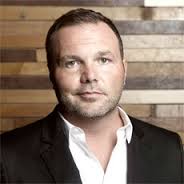
#8 Mark Driscoll
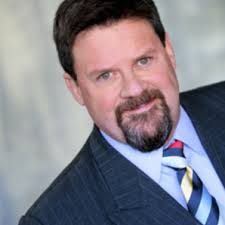
#7 Phil Johnson
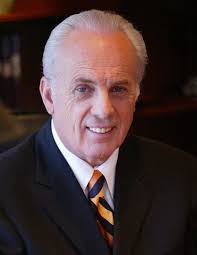
#6 John MacArthur Jr.

#5 Mark Dever

#4 Michael Horton

#3 Tullian Tchividjian

#2 Tim Keller

#1 John Piper
“The New Calvinists are not worried; they don’t believe the American church has the intellectual wherewithal to grasp the fact that John Calvin was a Platonist philosopher. It is time for that theory to be vigorously tested. Even if that theory is believed, it can be attributed to Reformed orthodoxy predicated on the incompetence of the human race wondering about in the shadow world while rejecting the idea that the new birth makes a difference. The new birth is not the mere experience of a changed realm; it is the reality of a changed person, a person that is not only justified positionally, but changed into a just person living for God’s glory. Christians don’t merely “reflect” the glory of God, they are not merely “transformed into an image” of God’s glory, they are new creatures who glorify God with their own actions. The Spirit does not merely manifest Christ in a realm, he colabors with the new creature in the truest sense.”

 Paul's Passing Thoughts
leave a comment