Am I an Arminian? Gee, I don’t Know
 The hate mail is in and “friends” lost over my latest post (http://wp.me/pmd7S-1sp) concerning Calvin stating that Christians cannot do any good in God’s eyes, and that their best behavior is worthy of condemnation before God. TULIP is based on the premise of the “T” (total depravity), and applies to Christians as well as the unregenerate; so, obviously there is no functional difference between the two. Long story short: the belief is that we don’t get any better or any worse, but merely manifest the flesh realm or the realm that “appropriates” the obedience of Christ. If WE obey, “in our own effort,” even in sanctification, that’s trusting in our own works and not the works of Christ.
Because I demonstrated this from the Institutes, I have been called an “Arminian.” This is what Calvin did: he made the issue of fusing justification and sanctification together—the election issue. But regardless, I am not going to be like my accusers who call themselves Calvinists and don’t even know what the guy believed. If they don’t mind, I would like to study Arminianism before I call myself one. I think that also sets a good example for them. It’s interesting to watch: “Calvinists” that used to support my ministry are now slowly becoming New Calvinists as they realize more and more that the newbies believe what Calvin believed. Respectable Calvinists have been neutered over time in regard to denying the practical application of the new birth and monergistic substitutionary sanctification. What’s that? Simply, it means that salvation and sanctification both are 100% of God and our works in sanctification were substituted with the works of Christ.
Another thing that I see that is addressed in the book I am reading right now, “Blight In The Vineyard” (by John Immel) is this whole authority = truth equation. In my own brawl with a New Calvinist church that ended up splitting my marriage of 24 years, I could never figure out why the pleadings from myself and other pastors in regard to Scripture fell on deaf ears. Well, now I know. Throughout the ordeal, they continually insinuated that interpretation wasn’t the issue, their authority was the issue. Consider the accusation someone leveled at me on Facebook regarding the article: “You aren’t willing to be under authority.” Elders hold the keys to the kingdom and whatever they bind on Earth will be bound in heaven. They are not ruled by “the dead letter of the law,” but rather the “higher law of love” dictated by the situation as they see it. So, the results are that truth is truth because Mark Dever says so, or John Piper etc. From there, you can add the dead guys like Spurgeon et al.
Hence, if I’m not a Calvinist, I’m an Arminian, because CJ Mahaney says so. And I doubt they know what one of those are either. Oh and by the way, as stated by some of them (and I’m not kidding), I’m going to hell because I’m not a Calvinist.
After all, because John Piper says so, and he’s a Calvinist.
paul
Is T.U.L.I.P True?
 “Here is the dirty little secret concerning this first point: many who partake in the TULIP debate do not realize that Calvin wasn’t only referring to the total depravity of unregenerate man, but also the total depravity of the saints.”
Funny how the acrostic TULIP has become a measuring rod of identification for most Christians today; are you a 1,2,3,4, or 5 point Calvinist? It’s almost like calling bandages “Band-Aids” which is a brand, not the actual product. But the brand is so pervasive that it becomes the definition of the product. And these days, if you are a really pure Christian, you are a 5-point Calvinist—anything less is like being partially pregnant.
So, what position is this post going to take? What Bible verses am I going to cite to make a case for a two, four, or five-point Calvinism? Well, I am going to make a case for a zero-point Calvinism. So, let me begin by answering the title’s question; is TULIP true? No. “But Paul, you don’t really mean to say that all of it is untrue, you mean to say some of it is untrue; like, one or two of the points, right? You’re just kidding us. At the end of this post, we are going to find out that you are at worst a four-pointer. Right?” No. “Zero” means z-e-r-o.
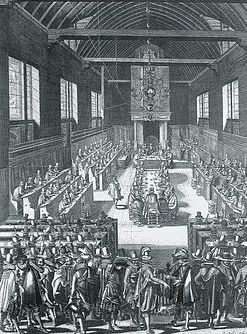
Let’s first begin by looking at where this TULIP acrostic came from. The five points of Calvinism really came from the five points of the followers of James Arminius. In 1610, one year after his death, his followers issued a formal protest to the Church of Holland regarding five points of faith that were major tenets guiding the official religion of Holland. “Church of Holland” is not like “First Baptist Church of Mayberry RFD.” The church and state were one and the same, with the church having more authority than the state. This excerpt from Wikipedia explains:
The third wave of the Reformation, Calvinism, arrived in the Netherlands in the 1560s, converting both parts of the elite and the common population, mostly in Flanders. The Spanish government, under Philip II started harsh persecution campaigns, supported by the Spanish inquisition. In reaction to this persecution, Calvinists rebelled. First there was the Beeldenstorm in 1566, which involved the destruction of religious depictions in Churches. Also in 1566 William the Silent, a convert to Calvinism, started the Eighty Years’ War to liberate the Calvinist Dutch from the Catholic Spaniards. The countries of Holland and Zeeland were conquered by Calvinists in 1572. A considerable number of people were Calvinist in Holland and Zeeland at that time already, while the other states remained almost entirely Catholic. The estates of Holland, led by Paulus Buys decided to support William the Silent, the Prince of Orange. All churches in the Calvinist territories became Calvinist and most of the population in these territories converted to or were forced to convert to Calvinism (Online source: http://en.wikipedia.org/wiki/History_of_religion_in_the_Netherlands).
Therefore, enter the Calvin Institutes, which was on par with Scriptural authority regarding the faith and order of Holland. In 1618, a national Synod was called to meet in Dort to consider the protest, supposedly, in the light of “Scripture.” But to the State of Holland, Scripture = ed Calvinism. This was a big, big, deal. The synod had 84 members, 18 secular commissioners, and 27 delegates from four different countries. It lasted seven months with sessions being held almost daily. Not only did the Synod of Dort rule against the protest, but issued five tenets that were contra to the five outlined in the Arminian protest. And not surprisingly, became known as the five points of Calvinism.
So, what was the Calvinistic intent behind these five points? These points are reflective of Calvin’s interpretation of Scripture, but what are those reflections? They bear his name, no? Holland during the Synod of Dort was a Calvinistic theocracy, no? Let’s first look at “T,” standing for Total Depravity. Here is the dirty little secret concerning this first point: many who partake in the TULIP debate do not realize that Calvin wasn’t only referring to the total depravity of unregenerate man, but also the total depravity of the saints. If the Calvin Institutes weigh in here, this is irrefutable. In 3.14.9, Calvin writes:
Although we see that the stains by which the works of the righteous are blemished, are by no means unapparent, still, granting that they are the minutest possible, will they give no offence to the eye of God, before which even the stars are not clean? We thus see, that even saints cannot perform one work which, if judged on its own merits, is not deserving of condemnation.
We must strongly insist on these two things: that no believer ever performed one work which tested by the strict judgment of God, could escape condemnation; and, moreover, that were granted to be possible (though it is not), yet the act being vitiated and polluted by the sins of which it is certain that the author of it is guilty, it is deprived of its merit. This is the cardinal point of the present discussion (3.14.11).
The next dirty little secret is that “T” is the premise for the remaining four points. One must remember that the five points of Calvinism apply to both justification and sanctification. The vast majority of those who engage the debate in our day miss that. Calvin believed that sanctification was justification in action; or in other words, justification was not a finished work, but perpetual:
Therefore, we must have this blessedness [the perpetual forgiveness of sins for justification; he quotes Ps 32:1 to make that point] not once only, but must hold it fast during our whole lives. Moreover, the message of free reconciliation with God is not promulgated for one or two days, but is declared to be perpetual in the church (2Cor 5:18,19). Hence believers have not even the end of life any other righteousness than that which is there described (Calvin Institutes 3.14.11).
This is why Calvin believed that the gospel should not only be preached to the unregenerate, but continually preached to the saved as well:
What Paul says of himself is applicable to all pastors; “For though I preach the gospel, I have nothing to glory of; for necessity is laid upon me; yea, woe is unto me if I preach not the Gospel” (1Cor 9:16). In short, what the apostles did to the whole world, every pastor should do to the flock over which he is appointed (Calvin Institutes 4.3.6).
This brings us to the “U” in TULIP, “Unconditional election.” And, unconditional/unmerited in sanctification as well. Like the “T,” the “U” must be rejected because of its premise which is: people are not regenerated prior to their confession of faith. Obviously, if man cannot do anything commendable to God after “conversion,” he certainly cannot do anything AT “conversion” that wouldn’t fall short of God’s condemnation. Hence, the “U” is actually a rejection of the new birth and regeneration. Man is completely out of the loop in both justification and sanctification (if nothing else, by necessity because anything we do in sanctification would affect justification—the two being the same). Therefore, Calvin’s election, whether unmerited or not, doesn’t include regeneration because that would lead a person to make a choice that would fall under God’s condemnation. Remember, the premise of the five points is total depravity in salvation and sanctification both; ie, nothing changes in man that imparts an ability to participate in either.
I am not that far in the Institutes as yet, but I assume that Calvin borrowed Augustine’s idea (that he got from Plato) that the new birth is not really a personal transformation, but a transport from the flesh realm into the spirit realm where manifestations of Christ’s active obedience are manifested, and not anything we do. In regard to a rough estimate, Calvin quotes Augustine on every 2.5 pages of the Institutes which are over a 1000 pages. Not only have New/Old Calvinists shared with me directly that Christians do not change, every now and then they actually write it in no uncertain terms:
1) Our flesh cannot get better. In Romans 7:18 Paul wrote, “For I know that NOTHING good dwells in me, that is, in my flesh…” Your flesh cannot be improved. Flesh is flesh, and spirit is spirit.
2) Our new nature, on the other hand cannot get better, because it has already been made new and perfect through regeneration. We have been given a “new heart” (new nature, or new spirit), and not a defective one, which would be absurd. This new spirit has been made “one spirit with Him” (1 Corinthians 6:17), such that when we “walk according to the Spirit” (i.e., the Holy Spirit), we also walk according to our own new spirit.
3) Those who deal with Sanctification by zeroing in on so-called “Progressive” Sanctification as the main point of Sanctification, are at best in Kindergarten (Online source: http://grace-for-life.blogspot.com/search?q=sanctification).
The author of the cited post then goes on to say that we “appropriate” what has already been done for us, but on the other hand, if we don’t change, what he is really talking about is a manifestation of Christ’s obedience, and not ours. This concept of Christ obeying for us can be seen in some of the aforementioned citations from Calvin.
That brings us to the “L,” limited atonement. The danger here is to debate this question and thereby give some credibility to the whole system which is based on total depravity of man in both justification and sanctification. But even a cursory approach to this tenet reveals some unfortunate fallout. If Christ only died for certain people, the offer of salvation to all men is not a legitimate offer. Not only that, there is a problem with calling on men to make a choice that could only be condemned by God. Like it or not, that is per Calvin himself. Calvin’s gospel preached to the masses would seem to be an invitation to offend God. But the only reason that it is offensive is that a salvation is being “neglected” (Hebrews 2:3). How do you “neglect” something that’s not a legitimate offer? In addition, Calvin seems to say that evangelism is the primary duty of the pastor/evangelist, and any kind of emphasis on the totally depraved evangelizing the totally depraved is absent from Calvin’s writings—which one would expect. Calvin states the following in chapter three of the Institutes:
We now understand what offices in the government of the church were temporary, and what offices were instituted to be of perpetual duration. But if we class evangelists with the apostles, we shall have two like offices in a manner corresponding to each other. For the same resemblance which our teachers have to the ancient prophets pastors have to the apostles. The prophetical office was more excellent in respect of the special gift of revelation which accompanied it, but the office of teachers was almost of the same nature, and had altogether the same end (section 4.3.5).
From these and similar passages which everywhere occur, we may infer that the two principle parts of the office of pastors are to preach the Gospel [remember, to both saints and sinners] and to administer the sacraments. But the method of teaching consists not merely in public addresses, it extends also to private admonitions (4.3.6).
Calvinists can harp till the cows come home that their doctrine is evangelistic friendly, but it just isn’t true. And even if it was, such a work would not be pleasing to God anyway because it is performed by the totally depraved who can do no meritorious work before God, but only that which brings condemnation. Again, like it or not, that is per the man Calvin himself.
The “L” is false because like the “U,” it circumvents regeneration, and valid participation of the saints in evangelism. And this is because of the “T.” Integration of elements containing accurate facts in TULIP does not give it the vitality that qualifies as God’s truth. God’s truth always accomplishes sanctification, and preaching the finished work of justification to the saints does not sanctify. We are not sanctified by justification. One might well remember that the Hebrew writer warned against doctrines that require a continual application of the onetime sacrifice of Christ (Hebrews 10:12-14).
So, again, “T” qualifies “U,” “L,” “I,” and “P.” U and L pertain to initial salvation, but also have negative consequences in regard to sanctification (remember, “T” applies to both sanctification and justification), and therefore must be rejected. “T,” makes a biblical approach to the new birth and regeneration impossible, and therefore is a false gospel. Christ said, “YOU MUST be born again.”I and P primarily deal with sanctification, and we will now look at those.
Again, “I” (irresistible grace) is thought to be pertaining only to salvation in the whole TULIP debate. Not. If grace is needed in sanctification as much as it is in salvation, and according to Calvin it most certainly is, then the totally depraved cannot resist whatever the Lord wills to do in his/her life. The totally depraved saints have no more free will in their sanctification than they did in their salvation. In fact, exercising their own will in sanctification is an attempt to finish justification by their own works. Calvin saw sanctification as having the same standard as justification because sanctification supposedly finishes justification. Therefore, the law has to be kept perfectly by somebody in order to maintain justification until judgment day. In Calvin’s theology, sanctification must be held to a justification standard. That is why Calvin taught the futility of Christians keeping the law. Law-keeping in sanctification is the same as law-keeping for justification. Hence, Calvin stated the following:
Even if it were possible for us [“us” meaning believers] to perform works absolutely pure, yet one sin is sufficient to efface and extinguish all remembrance of former righteousness, as the prophet says (Ezek 18:24). With this James agrees, “Whosoever shall keep the whole law, and yet offend in one point, is guilty of all” (Jas 2:10) [this was James’ standard for keeping the law for justification, not sanctification]. And since this mortal life is never entirely free from the taint of sin, whatever righteousness we could acquire would ever and anon be corrupted, overwhelmed, and destroyed, by subsequent sins, so that it could not stand the scrutiny of God, or be imputed to us [Christians] for righteousness [notice that Calvin saw imputation as progressive]. In short, whenever we treat of the righteousness of works, we must look not to the legal work but the command. Therefore, when righteousness is sought by the law [we have already obtained righteousness, we now seek to please the Lord], it is in vain to produce one or two single works; we must show an uninterrupted obedience [by offering God the works of Christ by faith only, not our own]. God does not (as many foolishly imagine) impute that forgiveness of sins, once and for all, as righteousness [righteousness in not imputed once]; so having obtains the pardon of our past life we may afterward seek righteousness in the law [this is a denial of imputation for the future in order to set us free from being judged by the law]. This were only to mock and delude us by the entertainment of false hopes. For since perfection is altogether unattainable by us, so long as we are clothed with flesh, and the law denounces death and judgment against all who have not yielded a perfect righteousness, there will always be ground to accuse and convict us unless the mercy of God interpose, and ever anon absolve us by the constant remission of sins [God’s declaration is not valid unless we live perfect lives]. Wherefore the statement which we set out is always true, if we are estimated by our own worthiness, in everything that we think or devise, with all our studies and endeavors we deserve death and destruction (Calvin Institutes 3.14.10).
So, even in sanctification, the saint is completely out of the loop, and all of his good works are elected by God and displayed as Christ’s manifested active obedience. “I” is not just for salvation, it is for sanctification as well:
There can be no doubt that Paul, when he treats of the Justification of man, confines himself to the one point—how man may ascertain that God is propitious to him? Here he does not remind us of a quality infused into us; on the contrary, making no mention of works, he tells us that righteousness must be sought without us; otherwise that certainty of faith, which he everywhere so strongly urges, could never stand; still less could there be ground for the contrast between the righteousness of faith and works which he draws in the tenth chapter to the Romans….
Let the children of God consider that Regeneration is necessary to them, but that, nevertheless, their full righteousness consists in Christ—let them understand that they have been ordained and created unto holiness of life and the study of good works, but that, nevertheless, they must recline on the merits of Christ with their whole soul—let them enjoy the righteousness of life which has been bestowed upon them, still, however, distrusting it so as not to bring before the tribunal of God any other trust than trust in the obedience of Christ (From Kenneth A. Strand, ed., Reform Essentials of Luther and Calvin: A Source Collection (Ann Arbor: Braun-Brumfield, 1971), pp.219-222).
Therefore, according to Calvin, all of our righteousness in sanctification must be a righteousness that is completely outside of us. In the same way that God elects some for salvation and passes over others in salvation, He also predetermines our good works in sanctification, and in both cases, this grace cannot be spurned by us.
Finally, we come to “P,” the perseverance of the saints. Though many evangelicals might assent to this fact, one must reject it and reword it as “once saved, always saved” because now the discussion becomes a statement that one is a “one-point Calvinist.” Because this fact comes from a body of information that does not sanctify, it must be rejected as a whole in regard to God’s truth. Rummaging through garbage dumps to collect isolated facts that can be compiled into a body of sanctifying truth is not the duty of a Christian according to wisdom.
And it would seem we are in a day like that during the Synod of Dort when a man was the standard of truth and not the Scriptures. After all, Charles Spurgeon, a Reformed hero, is often quoted in our day as having said:
It is a nickname to call it Calvinism; Calvinism is the gospel, and nothing else.
paul
Kevin DeYoung Sings to the Flock at the 2012 T4G Conference
“DeYoung finished the message by making many good statements about obedience in the Christian faith, but he was simply talking out of both sides of his mouth.”
Here we go. The lonely lovers of the truth are already singing the praises of Kevin DeYoung for “getting it right” at the T4G. Gag. Actually, I have more respect for Tullian Tchividjian because he causes me to work less. Messages like this one from I was born sitting on a fence post DeYoung have to be meticulously unraveled and explained. But here is the easy part via my I was born with good ole’ fashioned horse sense grandmother: “Birds of the feather flock together.” At the beginning of the message, DeYoung identified himself as a New Calvinist. It is what it is. His theses that New Calvinists just need a little tweaking in regard to the relationship of obedience to sanctification, doesn’t fly with me. He runs with a bunch that believes in perpetual justification, and mere tweaking doesn’t fix heresy.
DeYoung began his message with about fifteen minutes of humor which I found both annoying and out of place when one considers the gravity of this subject in our day. Finally, when he got into some substance, he reiterated the fact that New Calvinism is a “resurgence” (because everyone else is out to lunch spiritually). He also said that the “centrality of the gospel” is the primary concern of the movement. That is, central in sanctification. This is just the same old song and dance; preaching reconciliation to the already reconciled is just as important as the reconciled preaching reconciliation to the unreconciled. From there, and throughout the message, DeYoung flips back and forth between toeing the New Calvinist line and the importance of putting forth effort in sanctification. At some points, he is actually theologically correct in the sermon, stating that we must “work out what God has worked in,” but then flips back to the contradictory New Calvinist position throughout the message. It’s pathetic.
In his introduction to the main points of the message after almost 30 minutes of foolishness, he starts out strong by saying that sanctification requires both hard work by us and the grace of God. Amen, but then he listed the four points of the message: growth in godliness requires Spirit powered, gospel-driven, faith fueled effort. Even though he describes “effort” as one of the four points, it isn’t, the message is really a three point message about the three different things that drive effort in sanctification. This is a grammatical twisting. Effort does not stand alone as one of the points because the other three points are modifiers. And, effort in sanctification is not, “gospel-driven”; that’s blatantly false.
New Calvinists trade the word “justification” for “gospel” so that this error is not completely obvious; ie, “justification-driven” or perpetual justification. Our effort in sanctification is not driven by justification because justification is a finished work and a legal declaration. We are not sanctified by justification, nor is justification the power source for our sanctification—regeneration is. Though there is agreement with orthodoxy on the other two, it must be assumed that all three are needed to power sanctification, so his premise is dead on arrival. Moreover, the fact that DeYoung states that justification (gospel) is needed in sanctification speaks to his like belief with all New Calvinists that justification and sanctification are linked together, and that sanctification must derive an efficacious element of its power from the gospel of justification. Game over. He can now dress this up any way he wants to, but that dog won’t hunt.
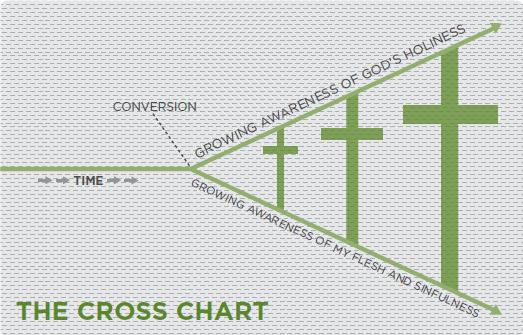
On his first point, “Spirit powered (effort),” even though no one would disagree that sanctification is Spirit powered, DeYoung uses this point to once again toe the New Calvinist/Gospel Sanctification line. He states that the Spirit’s role is to empower, show us “sinners” our sin, while mentioning that we as Christians run from our sin and want darkness (oh really?). He states this as a primary purpose of the Spirit’s work in sanctification: to illumine “sin/truth.” Deyoung primarily speaks of illuminating sin, but slips in “truth” along with it (“sin/truth”) to insinuate that sin is not the only thing he is talking about. But then he follows with the third role of the Spirit in sanctification which is to glorify Christ. Again, this is the same old New Calvinist line that restricts the use of Scripture for showing us two things only: our sin and Christ’s glory. He prefaces “sin” with “truth” to insinuate a general, or multiplicity of truth, but never specifies anything other than “sin.” This is deliberate deception. It’s the same old making the cross bigger as we see the depths of our sinfulness more and more, and the glory of Christ more and more. He then cites the staple New Calvinist Bible verse for this, 2Cor. 3:18 to make his point and refers to the “beholding as a way of becoming” truism.
In the second point (gospel-driven effort), he notes that “everyone agrees” that holiness flows from the gospel and good works flow from “good news.” Again, this, for all practical purposes is an admission that he believes in the fusion of justification and sanctification. And if justification is monergistic, well, you do the math. From here, DeYoung is simply trying to convince people that the horse is really a camel. He continued in the message to invoke the same old worn out all obedience flows from gratitude formula. You first contemplate the gospel and your sin which creates gratitude, then obedience flows from that. In real life, gratitude does not always walk with obedience, but often comes after. DeYoung at this point hints at orthodoxy by saying that there are “many other” motivations for obedience other than the cross, but of course, doesn’t mention them specifically or talk about them.
DeYoung finished the message by making many good statements about obedience in the Christian faith, but he was simply talking out of both sides of his mouth. He also prefaced those concluding statements with the same old “we can’t obey in our own strength” without any mention that it is not our strength only. If our strength is not involved in any way, who is doing the work? When we exercise, is it our own strength? And aren’t we supposed to do all things to the glory of God? So, if we are exercising to the glory of God, is the Holy Spirit lifting the weights for us? DeYoung criticized confusing cliché’s in this message while using the mega confusing New Calvinist cliché about “obeying God in our own strength.”
DeYoung lectured the audience about how Christians are confused by the way many are trying to make New Calvinism seem plausible in real Christian life. He acted as if his message was a clarifying voice among the background noise. What a joke. Everything about the message, especially the delivery, was a train wreck.
DeYoung is one of them. Birds of the feather flock together. He is trying to sell himself as a voice of reason among penguins. But he did make some troublesome, isolated statements about obedience. Though made out of one side of his mouth, I wonder, will he be invited back next year? I learned a lesson when I was in college: I tried to date three girls at the same time and ended up losing all of them. It will be interesting to see what the future holds for DeYoung. The penguin singing in the midst of the flock: “I just got to be me.”
paul

“I paid good money for my children to be brainwashed and for my marriage to be ruined”
~Michelle Freeman
Let’s take a test: Mormonism, cult or denomination? Cult. Correct. Methodist, cult or denomination? Denomination. Correct. Jehovah’s Witnesses, cult or denomination? Cult. Correct. Pentecostalism, cult or denomination? Denomination. Correct, but like the other denominations listed here, not always. Enter Calvary Temple of Sterling, Va. Clearly a cult by anybody’s standards. You can read the newspaper article here: http://www.journalgazette.net/apps/pbcs.dll/article?AID=/20081206/FEAT04/812060412
The reality of the matter is this, any denominational church can become a cult. The following is a dictionary definition of a cult: “A religion or religious sect generally considered to be extremist or false, with its followers often living in an unconventional manner under the guidance of an authoritarian, charismatic leader.” The article link above is a fascinating study in regard to recognizing cults who don’t identify themselves by commonly known names such…
View original post 1,343 more words
David Powlison’s Gnostic Counseling Paradigm
David Powlison is the major figure representing the counseling wing of Westminster Theological Seminary: the Christian Counseling and Educational Foundation (CCEF). Powlison was mentored by Dr. John Miller who was a professor at Westminster. Miller was the father of Sonship Theology which was his own twist on the rediscovery of the doctrine of perpetual justification (Gospel Sanctification) via the Australian Forum think tank formed in 1970.
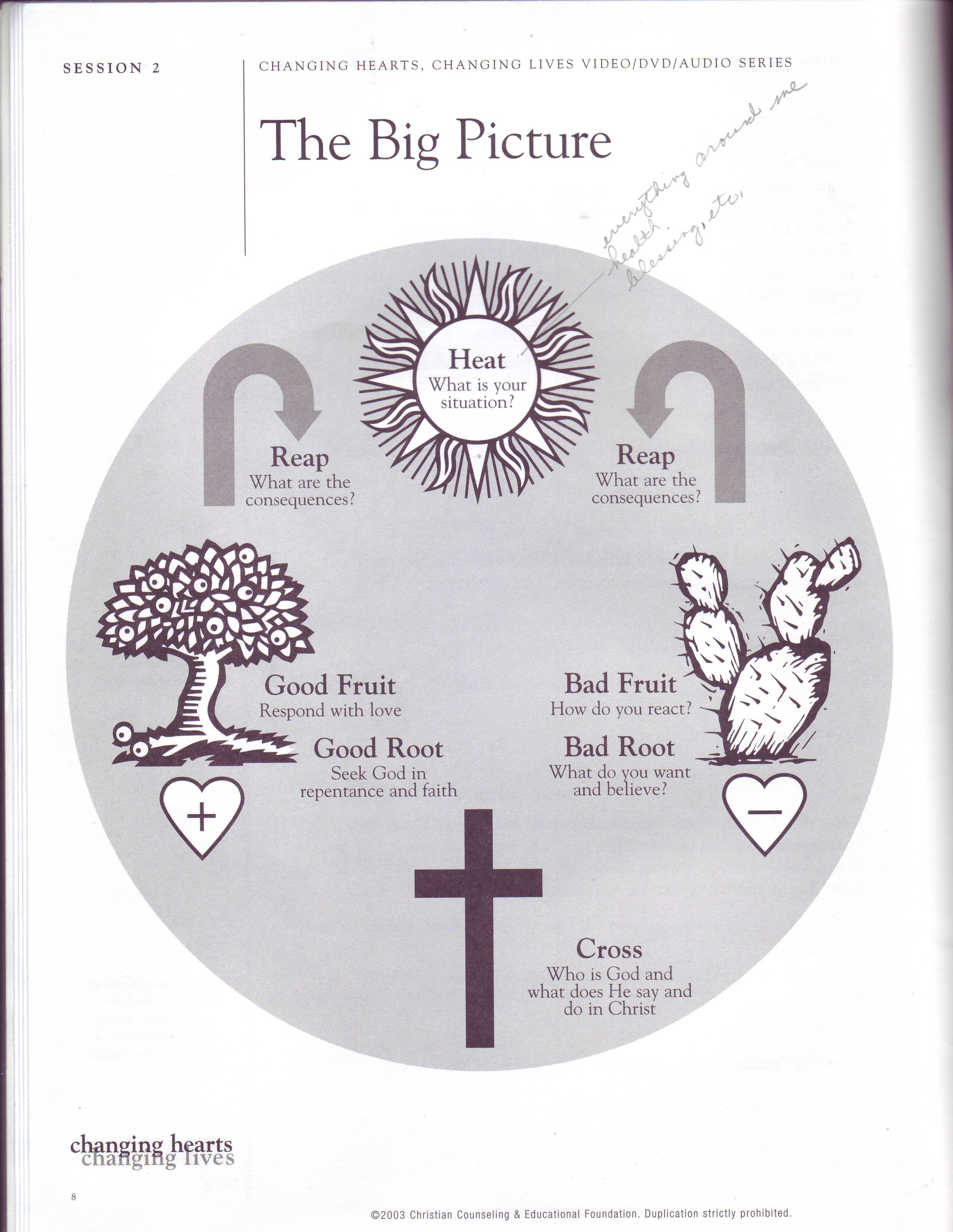
Powlison took the concept of progressive justification and used it to develop his Dynamics of Biblical Change project which is the foundation of counseling education at Westminster. Two former students of his, Paul David Tripp, and Timothy Lane, wrote a book entitled “How People Change”(HPC) which is a treatise on the “practical application” of Gospel Sanctification (the doctrine of the present-day New Calvinist movement). The title of the book is a lie; as we shall see, New Calvinists do not really believe that people change.
This is most evident when one reads pages 64 and 65 of HPC. Tripp and Lane describe Christians as “powerless,” “enslaved,” and “dead.” They further elaborate by writing, “When you are dead, you can’t do anything” (p. 64, HPC). How do dead Christians change? Obviously, they don’t. Hence, this is why the vast majority of present-day biblical counseling controlled by the CCEF machine is a farce: the counseling is not about change.
So what’s going on? Basically, it starts with Plato and what was later known as Gnosticism. Some refer to Gnosticism as “Platonism for Dummies,” but the basics are easier to explain through fundamental Platonism. Plato believed man was unable to know reality. The following excerpt is a good explanation of Platonism 101:
Plato, the most creative and influential of Socrates’ disciples, wrote dialogues, in which he frequently used the figure of Socrates to espouse his own (Plato’s) full-fledged philosophy. In “The Republic,” Plato sums up his views in an image of ignorant humanity, trapped in the depths and not even aware of its own limited perspective. The rare individual escapes the limitations of that cave and, through a long, tortuous intellectual journey, discovers a higher realm, a true reality, with a final, almost mystical awareness of Goodness as the origin of everything that exists. Such a person is then the best equipped to govern in society, having a knowledge of what is ultimately most worthwhile in life and not just a knowledge of techniques; but that person will frequently be misunderstood by those ordinary folks back in the cave who haven’t shared in the intellectual insight….the Allegory also attacks people who rely upon or are slaves to their senses (Analysis of The Allegory of the Cave by Plato Online source:123helpme.com/view.asp?id=135077).
Because the common man is enslaved to his own senses and can only comprehend what he can sense from the material world which is merely shadows of reality, Plato devised what we now call a cybernetic loop. This is a process that evaluates the outcomes of experience/circumstances/data for the purposes of making adjustments or reaching goals. Since the common man is not enlightened, the next best thing is to devise a system that gives him guidance from the criteria that he can experience with his senses. The enlightened ones, who should lead and govern the common man, develop these cybernetic loops to help guide mankind in their world of dark shadows. Plato believed in a world ruled by philosopher kings. Below are some illustrations of cybernetic loops:
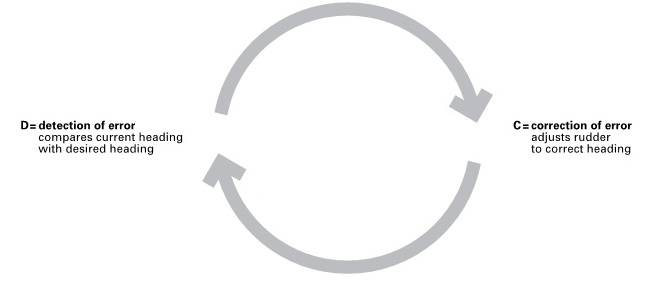
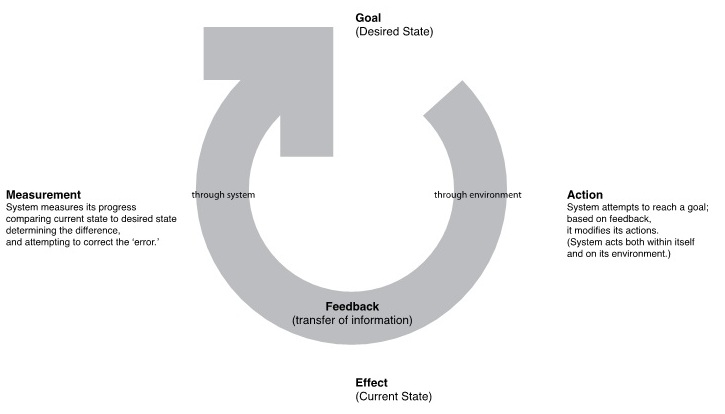
These loops can be complicated and may involve loops that evaluate other loops. Below is another illustration in regard to Plato’s philosophy:
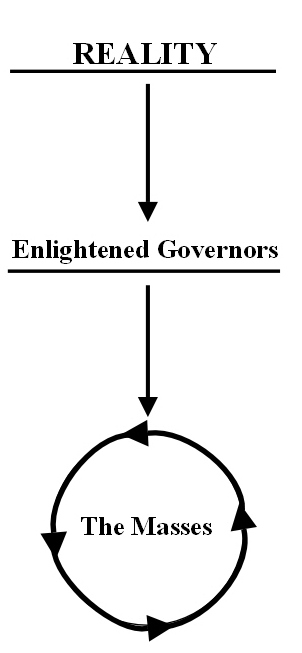
Plato had a vast influence on Augustine who is primarily responsible for the total depravity of the saints tenet found in Reformed theology. This prism had a profound influence in the forming of the gospel of perpetual atonement, or the idea that the effects of Christ’s death on the cross wasn’t a finished work, but was progressive for the purpose of maintaining a righteous standing for the saints. See illustration below:
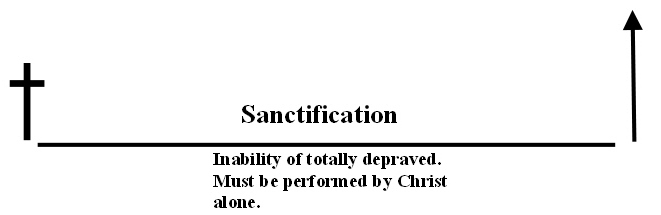
This is opposed to the gospel that rejects the total depravity of the saints and propagates an enablement through the new birth:

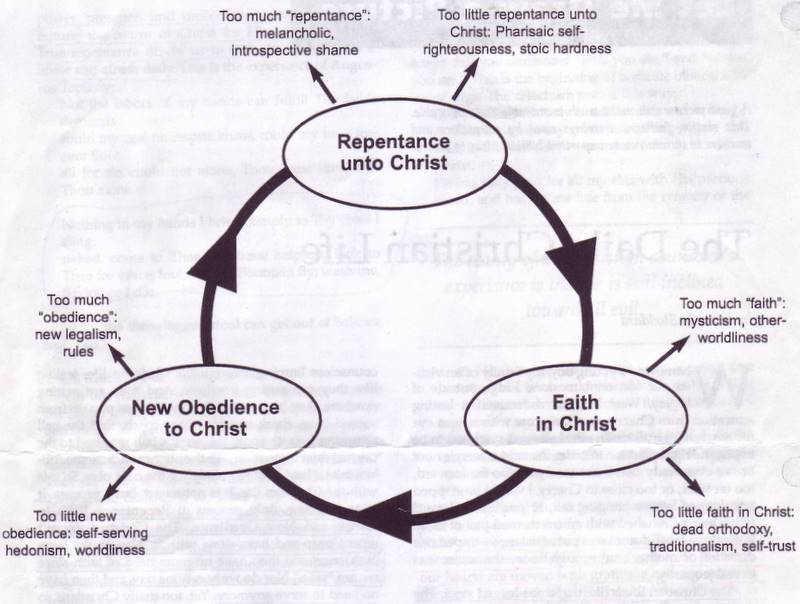
In the second model, the believer has the responsibility to learn and apply the word of God to their lives. But the first model, because it relies mostly on Platonist philosophy, also borrows the cybernetic loop for its “practical application.” Therefore, New Calvinists merge progressive justification into various cybernetic loops for “practical application.” Since the saints are supposedly unable to keep the law because they are still totally depraved, there has to be a way for the saints to continually partake in the same gospel that saved us. In order to come up with a way to do this, the New Calvinists went back to the basics: Plato. The first illustration of this is from CCEF’s The Journal of Biblical Counseling vol. 18, number 1, Fall 1999:
The following are illustrations from HPC and Powlison’s Dynamics of Biblical Change:

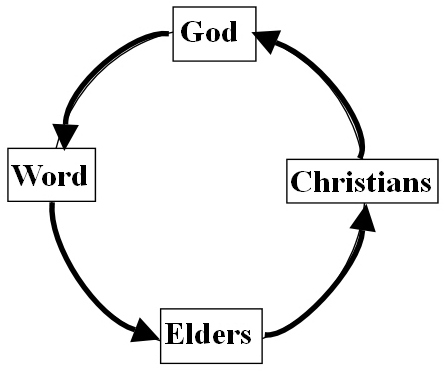
In the following excerpt from Dr. Devin Berry’s “How to Listen to a Sermon,” Berry uses a C-loop concept to explain the New Calvinist theory on how the saints receive the word of God. The illustration following the excerpt is mine:
Note this cycle: Paul, from the Word, delivers words. The Bereans, from Paul’s words, go to the Word. The Word cycles from God, through the preacher, to the people, back to the Word, and this, verse 12 tells us, produced belief in the God of the Word. An important thing to note is that this happened daily – suggesting a regular interaction between preaching, personal study, and the Word.
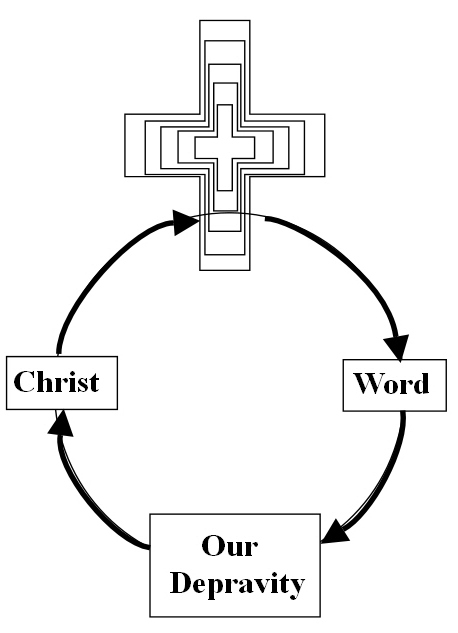
The goal of all of this is not change in the believer which is impossible anyway according to their theology because Christians are still totally depraved. The goal is to make the cross (or, the works of Christ) bigger by a deeper and deeper knowledge of how totally depraved we supposedly are. This is illustrated by the following chart produced by a New Calvinist organization:
 Below is a C-loop that can illustrate the above chart:



11 comments