C.J. Mahaney Speaks at Conference with Dr. Albert Mohler

* * *
It looks like a familiar name has been up to his usual antics.

CJ Mahaney, pastor of Sovereign Grace Church of Louisville, Kentucky, spoke along with Albert Mohler over the weekend at the Conviction to Lead conference at Cornerstone Church in Knoxville.
View original post 561 more words
The Institutional Church is NOT Compatible with Body Life
 This guy could have written chapter three of TTANC 2. I am having a transcript made of this and some things said will be cited in the conclusion. He is dead on in regard to the institutional church. However, his sanctification paradigm needs some adjustment. Christ doesn’t do it all in our sanctification. Right, I know, he makes that point, but in our day it needs to be emphasized.
Performance in sanctification DOES NOT lead to self-righteous “bullying.” Hello, our “performance” in sanctification, which has absolutely NOTHING to do with our justification, will be judged by Christ and there will be loss though we will still be saved “by fire.” Whatever that means, and I confess I am not sure at this point. The help of the Holy Spirit in sanctification is an incentive to do more, not an incentive to say we do nothing and Christ does it all. An inability to perform in sanctification, in and of ourselves, is the primary argument used by the spiritual tyrant for control.
You can’t dichotomize knowing and doing. On the one hand, you can’t argue that we shouldn’t believe we need spiritual control freaks to know, and then argue on the other hand that we can’t do. Or, perform. This splitting of activity in sanctification into two groups, doing and performance, and making one bad and the other good, smacks of the same ontological dualism used by the tyrants themselves to interpret reality any way they want to. If you don’t like the meaning of a word, make two synonyms antonyms; one of the material world, and the other of the spiritual. The speaker on this mp3 is way too nuanced on this point. It raises a red flag for me. Tyrants thrive on the inability of the individual, emphasizing such in sanctification can lead to one jumping out of the tyrant’s frying pan and into the fire.
NEVERTHELESS, what he states about the institutional church and the abuse of Hebrews 13:17 is a must listen. It reinforces my assertion: home fellowships and the New Testament model must replace what we have now.
Here is the link for listening and downloading: http://www.thegodjourney.com/audio/2013/131108h.mp3
Right click on the screen and choose the download option if you want the file.
paul
Why is Spiritual Abuse in the Church Rampant?
 Absolute truth is therefore impossible in the shadow world. We often hear people say that all lies have an element of truth and no truth is pure truth. This comes from the roots of Platonist Western thought. And frankly, Calvin harps on that notion throughout his Institutes, especially in 3.14.9-11. What we perceive in this world is a shadow of some pure form that is not accessible to the commoners. Even those who have access to the invisible cannot bring about a pure manifestation in this life—they simply strive through study and reason to bring the best wisdom to bear on this life. Nobody contends that the Philosopher kings run a perfect show, but it is our best life now—if we obey the philosopher kings and, “lean not on our own understanding” which is mostly worldly, shadowy wisdom. But the Bible NEVER speaks about truth in those terms. It’s true or not true, period. Later, we will conclude this chapter with a comparison between Platonist metaphysics and Biblical metaphysics. Suffice to say for now that a word spoken by God means what He intends it to mean. God doesn’t have communication issues.
A prime example of what we are discussing is a sermon delivered at Shawnee Baptist church in Xenia, Ohio on August 19th, 2012. During the visit, it became obvious to this author that the church was in the process of being taken over by those of the New Calvinist mindset. The sermon was delivered by a professor of New Testament theology from Cedarville University, a conservative Christian college. He was also a member at Shawnee during that time. The subject was decision making, and what kind of worldview yields proper decisions. Only two possible worldviews were presented, the vision of the good, and the vision of the worldly good. “Wisdom” was presented as coming forth from “knowledge” which is always based on “fear of the Lord.” “Wisdom” always has a “goal,” and each vision, when pursued, produces a certain outcome. The professor then defined the vision of the worldly good as,
…worldly wisdom is sensual or natural. Depending on your translation, the word will be a little bit different there. And I used the word “sensual” here to kind of underscore the idea that it’s tied to the senses. Normally, when we think of sensual, we think of sexual pleasure or something like that; that’s not what James means. All he’s saying is that it’s sort of tied to the senses or to pursuing certain ends. Most of the time it would be things like pursuing pleasure as a good and avoiding pain. Those seem kind of good. I like pleasure. I like to avoid pain. That seems to be kind of natural to us. Hence, it’s natural. Those kind of end up being the goals. You can put them up there.
The professor defined worldly wisdom as being defined via the senses, and therefore resulting in the pursuit of pleasure and the avoidance of pain. This Platonist approach is problematic because of its strict dichotomy between the material world and the invisible world with one being good and the other being evil. The professor then linked the five senses, and the concerns thereof, to individualism:
Because worldly wisdom is self-oriented, the source of worldly wisdom is autonomy and sovereignty. It’s the exact same thing. And so James says the source of worldly wisdom is always in the end going to be demonic in this regard.
Now this is abnormal. This is an abnormal condition for us. God did not create us to be sovereign, independent beings. He did not create us to declare our independence of him, and He always wanted us to be dependent on him. So this condition of autonomy is one that, if we acknowledge that we’re abnormal, then we have to acknowledge why we’re abnormal. And that would bring us back to God. Well, the world doesn’t wanna do that. So what will the world do? The world is gonna try and make this a normal, self-focused vision of what’s good and try to normalize it, try to make it sound like this is the only really true vision of how things should be.
So what happens? We have things like, oh I don’t know. Autonomy starts to become things like independence and self-sufficiency. Those sound sort of virtuous kind of ideas. Selfishness becomes ambition and goal-orientation.
The Cedarville University professor then linked collectivism to the vision of the good. Prior to that, he made a division of meaning between “fairness” and “justice,” and “moral” ideas and “ethical” ideas. He linked fairness and moralism to individualism, and linked justice and ethics to collectivism. In philosophy, this is known as dualism, or ontological dualism. Everything is interpreted within the context of a dual realty; e.g., Plato’s two worlds. This method of epistemology will often define a word in its material world context and its invisible world context. This is done by using synonyms and treating them as antonyms. The professor did this several times in the sermon we are presently discussing. In the final analysis, individualism was equated with the worldly, and collectivism was equated with the vision of the good. All “godly” decisions benefit “the group.” This is Platonism to a “T.”
The problem becomes the following; for example, words and concepts like “justice” are divided and do not pertain to the individual:
Now I want you to think about the vision of the good that is out there for a minute. What does our society, what does our world try to tell us? If you think about it, there are competing messages that we get. For example, fairness is more important than justice in our society. And fairness is, “I need to get mine. It needs to be me.” Justice related more toward what’s good for the community.
And in New Calvinist circles, what is “fairness”? Fairness is, “Everybody deserves hell.” Therefore, there is NO “justice” for an individual. Individual fairness and justice are mutually exclusive. Fairness is of the world, justice is good. This worldview is not just a little common in the universities across the world that are educating our future pastors, and this should answer the why? question regarding the church’s blind eye to spiritual abuse unequivocally. If justice for the individual will harm the group, all bets are off.
Moreover, the question of absolute truth now comes full circle. If heaven’s definition of justice is not our exact definition of justice because this world is a shadowy manifestation of Plato’s true forms, and there is a little bit of untruth in truth and truth in untruth, then pure justice is impossible anyway, and besides, “Everyone shares some guilt in this situation.” How many times have we heard that jingle? It’s not exactly a catalyst for justice on any wise. It should also answer the question of why victims are often blamed, again, unequivocally. Sir Karl Raimund Popper, generally regarded as one of the greatest philosophers of science in the 20th century, laid the blame for tyranny in Western culture at the feet of Plato’s collectivism. The church should not think there is an exception because Calvin dressed collectivism in Bible verses.
PPT Top 10 Gnostics of the American Church
 The present day New Calvinism movement is a return to the exact same viral Gnosticism that plagued the New Testament church. New Calvinists proudly claim St. Augustine who was an avowed Neo-Platonist. Platonism later became various forms of Gnosticism. Martin Luther’s theology of the cross laid the foundation for the functioning Platonism that has plagued the church sense the 16th century. Luther, in his endeavor to define Augustinian philosophy for the Reformation, made the cross a Platonist hermeneutic that transcends the material world and the five senses. This was Luther’s definition of a true theologian. Said Luther:
That person does not deserve to be called a theologian who looks upon the »invisible« things of God as though they were clearly »perceptible in those things which have actually happened« (Rom. 1:20; cf. 1 Cor 1:21-25).
This is apparent in the example of those who were »theologians« and still were called »fools« by the Apostle in Rom. 1:22. Furthermore, the invisible things of God are virtue, godliness, wisdom, justice, goodness, and so forth. The recognition of all these things does not make one worthy or wise.
He deserves to be called a theologian, however, who comprehends the visible and manifest things of God seen through suffering and the cross.
The manifest and visible things of God are placed in opposition to the invisible, namely, his human nature, weakness, foolishness. The Apostle in 1 Cor. 1:25 calls them the weakness and folly of God. Because men misused the knowledge of God through works, God wished again to be recognized in suffering, and to condemn »wisdom concerning invisible things« by means of »wisdom concerning visible things«, so that those who did not honor God as manifested in his works should honor him as he is hidden in his suffering (absconditum in passionibus). As the Apostle says in 1 Cor. 1:21, »For since, in the wisdom of God, the world did not know God through wisdom, it pleased God through the folly of what we preach to save those who believe.« Now it is not sufficient for anyone, and it does him no good to recognize God in his glory and majesty, unless he recognizes him in the humility and shame of the cross. Thus God destroys the wisdom of the wise, as Isa. 45:15 says, »Truly, thou art a God who hidest thyself.«
So, also, in John 14:8, where Philip spoke according to the theology of glory: »Show us the Father.« Christ forthwith set aside his flighty thought about seeing God elsewhere and led him to himself, saying, »Philip, he who has seen me has seen the Father« (John 14:9). For this reason true theology and recognition of God are in the crucified Christ, as it is also stated in John 10 (John 14:6) »No one comes to the Father, but by me.« »I am the door« (John 10:9), and so forth.
~ The Heidelberg Disputation to the Augustinian Order of 1518: Thesis 19, and 20.
Hence, the visible is evil, and man is visible. Like Plato’s theory of the pure forms, the invisible is the true, good, and beautiful. The material is the world of shadows. Any wisdom connected to the material world is the “theology of glory.” Luther stated it in no uncertain terms:
The manifest and visible things of God are placed in opposition to the invisible…
John Calvin then articulated Luther’s theology of the cross by developing a full-orbed philosophical application in his Institutes of the Christian Religion. Calvin also affirmed the foundations of Augustinian Neo-Platonism by citing Augustine, on average, on every 2.25 pages of the Institutes.
Like certain Platonic disciplines that were immutable gateways to the immutable true ideas in the mutable shadow world, Luther merely made such the cross. Plato’s philosopher kings were able to transcend the five senses enslaved to the material world and extract the ideas of the true forms for the betterment of the Republic. Luther’s “true theologian” is the present-day philosopher king dressed in biblical garb. The top ten follow:

#10 Elyse Fitzpatrick
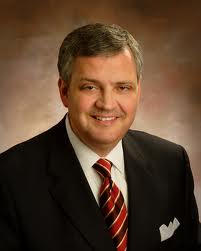
#9 Albert Mohler

#8 Mark Driscoll
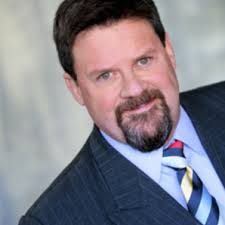
#7 Phil Johnson
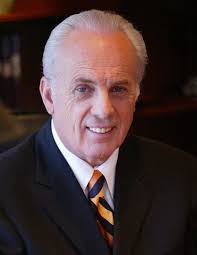
#6 John MacArthur Jr.

#5 Mark Dever

#4 Michael Horton

#3 Tullian Tchividjian

#2 Tim Keller

#1 John Piper
“The New Calvinists are not worried; they don’t believe the American church has the intellectual wherewithal to grasp the fact that John Calvin was a Platonist philosopher. It is time for that theory to be vigorously tested. Even if that theory is believed, it can be attributed to Reformed orthodoxy predicated on the incompetence of the human race wondering about in the shadow world while rejecting the idea that the new birth makes a difference. The new birth is not the mere experience of a changed realm; it is the reality of a changed person, a person that is not only justified positionally, but changed into a just person living for God’s glory. Christians don’t merely “reflect” the glory of God, they are not merely “transformed into an image” of God’s glory, they are new creatures who glorify God with their own actions. The Spirit does not merely manifest Christ in a realm, he colabors with the new creature in the truest sense.”

 Paul's Passing Thoughts
leave a comment