An Open Letter to John MacArthur Jr. Concerning Progressive Justification
Originally posted April 13, 2013
Mailed 4/13/2013 by certified letter:
Mr. MacArthur,
I am writing to you openly concerning the fact that you now preach Calvin’s false gospel of progressive justification. As an avid follower of your teachings over the years, and one greatly helped by them in the past, I now implore you to repent of preaching another gospel. I am provoked to write this letter after listening to your general session address at this year’s Shepherds’ Conference.
Sadly, for the most part, the message was a shameless pandering to the Calvinist audience with the same worn-out Neo-Calvinist protocol; e.g., us against evangelicalism, redefinition of the plain sense of Scripture to undermine the interpretive abilities of the laity, etc., etc. Per the usual in these settings, you also insinuated that this movement has a “fresh” take on evangelism and understanding the Scriptures in a “deeper” way.
On the one hand, you expounded on the importance of evangelism and the idea that it is the church’s primary purpose for being here, and then on the other hand propagated the idea via John 3:3 that God is going to do what He is going to do regardless of anything we do. And you also proffered the idea that it is wrong to call unbelievers to do anything in our gospel presentation other than believe, and that was only forthcoming at the very end and stated once.
Primarily presented was the idea that we proclaim the new birth and inform individuals that there is nothing they can do to obtain it. They are simply to “ask” and hope God had decided to save them before creation. In your third party presentation of the question, what can we tell them to do? you are clear: ask only and hope for the best. Shockingly, you also suggested that Reformed elders can “ask” for others as mediators (your personal experience shared about the young man suffering with aids).
Other than the fact that you have harshly criticized Rick Warren for not including repentance in his gospel messages and your hypocrisy is therefore staggering, this idea contradicts a mass of other biblical texts. One of many would be Paul’s description of his ministry that implored people to be reconciled to God. In other instances Paul simply called for repentance. The Calvinist you proudly proclaimed yourself to be in the same message has transformed your prior teachings into confusing messages that raise more questions than are answered.
But these are all symptoms of the basic problem: your false gospel. In one article written by you, the following was stated:
“If sanctification is included in justification, then justification is a process, not an event. That makes justification progressive, not complete” (emphasis added).
But yet the fourteenth chapter of Calvin’s Institutes is entitled: “The Beginning of Justification. In What Sense Progressive?” So, what’s our first clue? Indicative of your Calvinist theology that a child could even dismiss is the simple fact that Paul categorized the lost and the saved in Romans as “under the law” versus “under grace.” Calvin taught that Christians are still under the law. This is plain from his writings in ICR 3.14.9-11 in which he states that Christians cannot please God in sanctification because their works are judged by the law as a continued standard for justification. Calvin makes it clear that no “believer” has ever earned merit with God because their works are judged by the law (first sentence of 3.14.11). In 3.14.10, he even cites James 2:10, a verse that concerns those under the law, to make his case.
As I think you would know, Paul makes it clear in Romans that being under the law is synonymous with being enslaved to sin, unable to keep the law, and destined to a future judgment by law. Under grace is synonymous with having a mind enslaved to the law and free to do righteous acts, and declared righteous apart from the law. But in fact, Calvin’s total depravity also applies to the saints and deems them still enslaved to sin. You often cite Calvin’s concept of total depravity, but when are you going to start being honest and also mention you believe, as Calvin, that it applies to Christians as well?
Calvin stated in no uncertain terms in 3.14.11 that Christ’s “reconciliation with God” is “perpetual” and “not promulgated” in the beginning only. This is because the same forgiveness that saved us needs to be continually applied to our lives according to Calvin:
“For since perfection is altogether unattainable by us [which is not the point because we are under grace and not law], so long as we are clothed with flesh, and the Law denounces death and judgment against all who have not yielded a perfect righteousness, there will always be ground to accuse and convict us unless the mercy of God interpose, and ever and anon absolve us by the constant remission of sins” (3.14.10).
Hence, there is not one complete “washing,” but according to Calvin, a perpetual washing is needed (see JN 13 and 1COR 6:11).
This doctrine always dies a social death and needs to be resurrected again after carnage from the previous “Resurgence” is forgotten. The present movement was resurrected by Robert Brinsmead in 1970. Coming forth from its sectarian womb, it has divided countless families and churches. The seminary you are president of pumps out hundreds of sectarian Calvinists on a yearly basis. One of your graduates split a church two blocks from where we live.
This is your shameful legacy unless you repent.
Paul M. Dohse
Destroying Eve-il is a Reformed Family Tradition: Today Danvers, Tomorrow the Gallows
 Originally published August 1, 2012
Great pizza party last night with an author who is writing a sci-fi novel. As I sat and listened to him share his shocking plot designed to invoke terror in his future readers, my recent research for “Reformation Myth” made the chilling plot seem mundane in comparison to sexy witches being hung, burned, and impaled with images of Mary fitted with large spikes.
On the one hand, the Reformers were supposedly brilliant for recognizing Plato’s theory that pure truth and beauty is immutable, while on the other hand, their brutality was merely the “mentality of the age.” It is also understandable why Reformed folks are so big on, “all truth is God’s truth” because the Catholic church had a lot of ideas that the Reformers thought were pretty cool; specifically, that because of Eve, women in general are predisposed to evil, or Eveil.
Between sips of mocha that could barely be executed because of my fixated attachment to the narrative, the little angel on my right shoulder kept saying, “Excuse me, this is history, and it really happened.”
Indeed it did happen, and the war declared on witches by the Catholic Church and the Reformers resulted in casualties that surpass many, many wars waged throughout history. And, to say the least, the due process of law that determined who was a witch was, well, shall we say, a little lean. Since it was thought that 90% of all witches were women, if you were a woman, and dragged into court, your gender was a bad start to the process. In at least one case, a particularly pious woman didn’t even take her arrest seriously and was sarcastic towards her accusers—who later executed her. I guess there is only one thing worse than a witch—a sarcastic woman. Then, there was this also:
The climate of fear created by churchmen of the Reformation led to countless deaths of accused witches quite independently of inquisitional courts or procedure. For example, in England where there were no inquisitional courts and where witch-hunting offered little or no financial reward, many women were killed for witchcraft by mobs. Instead of following any judicial procedure, these mobs used methods to ascertain guilt of witchcraft such as “swimming a witch,” where a woman would be bound and thrown into water to see if she floated. The water, as the medium of baptism, would either reject her and prove her guilty of witchcraft, or the woman would sink and be proven innocent, albeit also dead from drowning (Helen Ellerbe: The Dark Side of Christian History,Chapter Eight: 1450 – 1750 C.E.).
It all started with the Catholics first, and the Reformers later joined the campaign that supplemented the inquisition:
Pope John XXII formalized the persecution of witchcraft in 1320 when he authorized the Inquisition to prosecute sorcery. .” Thereafter papal bulls and declarations grew increasingly vehement in their condemnation of witchcraft and of all those who “made a pact with hell.” In 1484 Pope Innocent VIII issued the bull Summis desiderantes authorizing two inquisitors, Kramer and Sprenger, to systematize the persecution of witches. Two years later their manual, Malleus Maleficarum, was published with 14 editions following between 1487-1520 and at least 16 editions between 1574-1669. A papal bull in 1488 called upon the nations of Europe to rescue the Church of Christ which was “imperiled by the arts of Satan.” The papacy and the Inquisition had successfully transformed the witch from a phenomenon whose existence the Church had previously rigorously denied into a phenomenon that was deemed very real, very frightening, the antithesis of Christianity, and absolutely deserving of persecution.
It was now heresy not to believe in the existence of witches. As the authors of the Malleus Maleficarum noted, “A belief that there are such things as witches is so essential a part of Catholic faith that obstinately to maintain the opposite opinion savors of heresy.” Passages in the Bible such as “Thou shalt not suffer a witch to live” were cited to justify the persecution of witches (Ibid.).
The following gives us an idea as to the extent that this was going on:
Contemporary accounts hint at the extent of the holocaust. Barbara Walker writes that “the chronicler of Treves reported that in the year 1586, the entire female population of two villages was wiped out by the inquisitors, except for only two women left alive.” Around 1600 a man wrote:
Germany is almost entirely occupied with building fires for the witches… Switzerland has been compelled to wipe out many of her villages on their account. Travelers in Lorraine may see thousands and thousands of the stakes to which witches are bound (Ibid.).
The general mentality of the Eveil motif was part and parcel with the war on witches:
The witch hunts were an eruption of orthodox Christianity’s vilification of women, “the weaker vessel,” in St. Peter’s words. The second century St. Clement of Alexandria wrote: “Every woman should be filled with shame by the thought that she is a woman.” The Church father Tertullian explained why women deserve their status as despised and inferior human beings:
“And do you not know that you are an Eve? The sentence of God on this sex of yours lives in this age: the guilt must of necessity live too. You are the devil’s gateway: you are the unsealer of that tree: you are the first deserter of the divine law: you are she who persuaded him whom the devil was not valiant enough to attack. You destroyed so easily God’s image, man. On account of your desert that is, death even the Son of God had to die.”
Others expressed the view more bluntly. The sixth century Christian philosopher, Boethius, wrote in The Consolation of Philosophy, “Woman is a temple built upon a sewer.” Bishops at the sixth century Council of Macon voted as to whether or not women had souls. In the tenth century Odo of Cluny declared, “To embrace a woman is to embrace a sack of manure…” The thirteenth century St. Thomas Aquinas suggested that God had made a mistake in creating woman: “nothing [deficient] or defective should have been produced in the first establishment of things; so woman ought not to have been produced then.” And Lutherans at Wittenberg debated whether women were really human beings at all. Orthodox Christians held women responsible for all sin. As the Bible’s Apocrypha states, “Of woman came the beginning of sin/ And thanks to her, we all must die”(Ibid.).
And the Reformers were completely onboard with the Eveil rage of that Day:
St. Augustine of Hippo (354 to 430 CE). He wrote to a friend:
“What is the difference whether it is in a wife or a mother, it is still Eve the temptress that we must beware of in any woman……I fail to see what use woman can be to man, if one excludes the function of bearing children.”
Martin Luther (1483 to 1546):
“If they [women] become tired or even die, that does not matter. Let them die in childbirth, that’s why they are there.”
St. Thomas Aquinas (1225 to 1274 CE):
“As regards the individual nature, woman is defective and misbegotten, for the active force in the male seed tends to the production of a perfect likeness in the masculine sex; while the production of woman comes from a defect in the active force or from some material indisposition, or even from some external influence.”
But the Reformers did way more than stand on the sidelines and cheer. When doing a pdf document search on Witch Hunts In Europe And America, An Encyclopedia by William Burns, “Calvin” got 32 hits including the following:
There are about five hundred recorded witch trials in the 150 years after Calvin’s arrival in Geneva. Given the high rate of survival of Genevan records, this probably represents the majority of cases that occurred. The witch-hunt in Geneva peaked relatively early, in the 1560s and early 1570s. The records show that, outside the witch-hunt of 1571, Geneva had one of the lowest rates of execution in Europe, about 20%. Geneva magistrates seem to have used banishment as an alternative to execution in cases where the guilt or innocence of the subject was in doubt, rather than following the practice of other areas which simply tortured until a confession was obtained. The relatively mild torture practiced by the Genevans kept individual witch cases from developing into large hunts, and in some cases the magistrates were uninterested in following up accusations even when an accused witch named others…
The comparatively small kingdom of Scotland, whose legal system blended English and Continental elements, had from the mid-sixteenth century on a zealous Calvinist clergy intent on creating a godly society. It executed the most witches of any British region. The other British area of high witch-hunting activity was the legally anomalous Channel islands….
William Perkins was Elizabethan England’s leading Calvinist theologian, and his posthumously published A Discourse on the Damned Art of Witchcraft (1608) had an unrivalled influence on subsequent Puritan demonologists in old and New England. Perkins’s approach was intellectually austere. He shunned reference to previous demonologists or actual cases of witchcraft, and based his argument almost entirely on the Bible, particularly Exodus 22.18, “Thou shalt not suffer a witch to live.” Perkins saw the essential nature of witchcraft as the making of the satanic pact, or “covenant,” which inverted the covenant relation between God and his elect that was basic to Puritan Calvinist theology. So closely does Perkins relate the witch’s contact with the Devil to the good Christian’s contact with God that he claims that to deny the possibility of physical contact with devils would be to deny the possibility of covenant with God. Perkins describes the making of the covenant as a simple agreement, without the necessity for the witch to sign in blood or kiss or have sex with the Devil. Other central aspects to the witch stereotype as the sabbat or the Devil’s mark he also ignored. Even maleficia played a minor role. Perkins’s principal target was not the maleficent witch, but the “good witch,” whom he described over and over as even more worthy of death than the evil witch. Perkins believed that all power to perform “magic” could only come from Satan.
William Perkins was the elder statesman of the very same Calvinist Puritans that boarded the Mayflower and landed on Plymouth Rock. John Robinson, their pastor and follower of Perkins, gave an impassioned speech to them before they boarded the ship. The Pilgrims, who were really political refugees, set up a Geneva style Calvinistic theocracy known as the American Colonies and was the spawning grounds for colonial Calvinism.
Go figure, not long after, in Salem Town and Salem Village, the infamous Salem witch trials occurred. The Puritan Cotton Mather was heavily involved and attended the execution of Salem Town’s pastor, George Burroughs, who was accused of aiding and abetting a covenant of witches. An actual account of the sad proceedings follow:
George Burroughs was executed on Witches Hill, Salem, on the 19th of August, the only minister who suffered this extreme fate.
Though the jury found no witches’ marks on his body he was convicted of witchcraft and conspiracy with the Devil. While standing on a ladder before the crowd, waiting to be hanged, he successfully recited the Lord’s Prayer, something that was generally considered by the Court of Oyer and Terminer to be impossible for a witch to do. After he was hung, Cotton Mather, a minister from Boston, reminded the crowd from atop his horse that Burroughs had been convicted in a court of law, and spoke convincingly enough that four more were executed after Burroughs. Below is the original account as first compiled and published in 1700 by Robert Calef in More Wonders of The Invisible World pages 103-104, and later reprinted or relied upon by others including Charles Wentworth Upham and George Lincoln Burr,
Mr. Burroughs was carried in a Cart with others, through the streets of Salem, to Execution. When he was upon the Ladder, he made a speech for the clearing of his Innocency, with such Solemn and Serious Expressions as were to the Admiration of all present; his Prayer (which he concluded by repeating the Lord’s Prayer) was so well worded, and uttered with such composedness as such fervency of spirit, as was very Affecting, and drew Tears from many, so that if seemed to some that the spectators would hinder the execution. The accusers said the black Man [Devil] stood and dictated to him. As soon as he was turned off [hung], Mr. Cotton Mather, being mounted upon a Horse, addressed himself to the People, partly to declare that he [Mr. Burroughs] was no ordained Minister, partly to possess the People of his guilt, saying that the devil often had been transformed into the Angel of Light. And this did somewhat appease the People, and the Executions went on; when he [Mr. Burroughs] was cut down, he was dragged by a Halter to a Hole, or Grave, between the Rocks, about two feet deep; his Shirt and Breeches being pulled off, and an old pair of Trousers of one Executed put on his lower parts: he was so put in, together with Willard and Carrier, that one of his Hands, and his Chin, and a Foot of one of them, was left uncovered.
—Robert Calef
Now, in our day, and unbelievably, the proud children of this Calvinist legacy pronounce themselves the experts on “biblical manhood and womanhood.” Specifically, an organization was formed in 1987 called “The Council on Biblical Manhood and Womanhood.” It is funded, organized, maintained, and directed by the who’s who of the American Neo-Calvinist movement including, Ligon Duncan, Wayne Grudem, John Piper, and Al Mohler. They formed a statement/declaration on this subject that was so well attended by their forefathers called the “Danvers Statement.” It is called the Danvers Statement because their declaration was finalized in—get this— Danvers, Massachusetts.
So, what’s relevant about that? Well, Danvers is the modern day location of Salem Town, the location of the Salem witch trials. In fact, these guys made it a point to have the meetings there that finalized the document. Ok, I mean, really, if you are a bunch neo-Nazis who want to start a forum on Judaism, would you make it a point to finalize your declaration at Auschwitz?
Furthermore, the Reformers didn’t get up one morning and decide to start burning witches—it all began with their Eveil doctrine. And the proponents of this movement not only swear by the theological genius of Calvin, but what they teach about the fall and Eve’s participation is word for word. Also, in regard to what is actually going on as far as treatment of women, all that is missing is the gallows. Whether it be women locked in basements as punishment, being spanked by their husbands, deprived of education, or their children being held hostage through manipulation of relatives by church elders—it is at least Witch Hunt Light.
Have I read the Danvers Statement? No, why would I? Christ said that false teachers are known by their fruit. The root of the fruit is the doctrine. Good trees don’t bear bad fruit, and Reformed leaders are little more than Adolf Hitler and Joseph Stalin in priestly garb.
paul
Inseparable: The Reformation’s Principles of Persecution and its Gospel
 Originally published August 31, 2013
You can’t separate the gospel of the Reformation from New Calvinism, and you can’t separate that gospel from its practice. Part and parcel with the Reformation gospel is the insistence that church and state be united for the purpose of purifying “the realm.” The church is over the spiritual and the sacraments, and the civil magistrate should enforce the edicts of the church. The civil authorities may have oversight of practical matters, but to not enforce the edicts of the church in spiritual matters is to override God’s “power of the keys.” Ultimately, the state is the servant of the church. Be sure of this: the present-day New Calvinist movement sees America as a rogue government unwilling to submit to the power of the keys. They will gravitate towards any party willing to get in bed with the church as opposed to a government that is contra principles of persecution. The Reformation was predicated on principles of persecution.
What we need to understand in situations like the SGM class action lawsuit is that Mahaney et al think they are being subjected to authority that God has not approved. They will improvise as much as possible in creating a persecuting sub-culture while working to bring America into the beginnings of a church/state government, and any kind of ugliness thereof would be better than what we have now. Also, the outright rejection of an idea that the New Calvinist tsunami is a segue to remarriage with Rome and the prophesied coming super church/state empire of the antichrist is a naïve out of hand dismissal.
The persecuting principles of the Reformers were its first cries coming forth from the womb; specifically, in Scotland where the Reformation first found formidable life. This series of posts are based on William Marshall’s The Principles of the Westminster Standards Persecuting (William Marshall, D.D., Coupar – Angus. Edinburgh: William Oliphant & Co. 1873).
The book’s inside cover quotes contemporaries of the Reformation to frame the thesis of the book:
Persecution is the deadly sin of the Reformed churches, that which cools every honest man’s zeal for their cause, in proportion as his reading becomes more extensive—Hallam.
In regard to this thesis, every holocaust has had its cowardly bystanders wearing the uniform of the prosecutors while raising a safe objection. The following statement by John Owen exemplifies such:
I know the usual pretenses for persecution. “Such a thing is blasphemy,” but search the Scriptures, look at the definitions of divines, and you will find heresy, in what head of religion soever be, and blasphemy very different. “To spread such errors will be destructive to souls.” So are many things which yet are not punishable with death. Let him who thinks so go kill Pagans and Mahometans. “Such a heresy is a canker,” but is a spiritual one, let it be prevented by spiritual means; cutting off men’s heads is no proper remedy for it. If state physicians think otherwise, I say no more, but I am not of that college—Owen.
So, I disagree, but if the state agrees with the church, well, then I have to bow to their authority, but I disagree. And such will be the commentary of some New Calvinists if they ever obtain force from the state which apparently makes the sin sanctified—the fact that there are some goodhearted souls within the movement. Good men should keep their peace while heads roll because to label the movement as tyranny would be a “generalization.” The ideology is not to blame, only the men who don’t see things exactly the way we see them. The persecuted should also understand this and shrug their shoulders in agreement while gladly placing the noose around their own neck voluntarily.
In regard to the Scottish Reformers, Marshall stated the following:
The Protestant Reformers in leaving Rome did not leave all Romanism behind them. In particular, they brought with them the prosecuting principles of Rome, and worked them freely and vigorously in support of the Reformed faith. They changed the Pope but not the popedom,
And….
Rightfully and nobly did the Protestant Reformers claim religious liberty for themselves; but they resolutely refused to concede it to others.
John Knox, the vaunted Scottish Reformer, though primarily concerned with Catholicism, made it clear that no aberration of Reformed doctrine should be tolerated by the state. According to Marshall:
Knox, the father of the Scottish Reformation, and the presiding genius of it, brought with him to his native country the Geneva theocracy; and it was copied as closely as the differences between the Swiss republic and the Scottish monarchy would permit….Such was the Church and State system of the Scottish Reformers in those days; and hence the melancholy selections from their history which I have now to offer.
The first Parliament, in which the Reformers became ascendant, was held in 1560. It adopted a Protestant Confession; a “summary of tenets constituting the essence of the Reformed religion;” one of the “tenets” being the theocratic one, “that to kings and rulers it belongs to reform and purify religion.”
Marshall continued to state that the same Confession prohibited the practice of Catholicism or any other aberration of the Reformed gospel, and such violations would entail confiscation of goods for the first offence, “suffering” and “banishment” for the second, and “death” for the third violation. Marshall then concludes:
Thus the very first legislation of the Scottish Reformers was deeply tainted with persecution.
Marshall continues:
The same year [1561] the First Book of Discipline was framed by a Committee of the Kirk, of which John Knox was a leading member….”Seeing that Christ Jesus is He whom God the Father hath commanded onely to be heard and followed of His sheepe, we judge it necessary that His gospell be truly and openly preached in every church and assembly of this realme; and that all doctrine repugnant to the same be utterly repressed, as damnable to men’s salvation….that the obstinate maintainers and teachers of such abominations ought not to escape the punishment of the civill magistrate….We dare not prescribe unto you what penalties shall be required of such, but this we fear not to affirm, that the one and the other deserve death.”
Apart from this committee, according to Marshall, Knox stated the following in a public sermon:
None provoking the people to idolatry ought to be exempted from the punishment of death.
I will conclude this first part with Marshall’s assessment of how the Scottish Reformers took control of the Scottish press:
Our early Reformers claimed like control over the press. “Immediately after the Reformation, the General Assembly took particular notice of the four printing presses then in Scotland, and they were careful that nothing should be published, at least by ministers, till it was communicated to the brethren, and revised by persons appointed by them.”
Marshall’s book is widely available and cites extensive sources. It should have its own place on every Christian’s bookshelf. In part two, we will look at Marshall’s assessment of persecuting principles found in the Westminster Confession.
paul

Free download: tancpublishing.com
Free-Writing Notes: “The Church’s War Against the Holy Spirit”
 “Church” is a word that should be associated with institution and NOT body. Much will be said in this book about the need for a body to be organized, but much will also be said about authority and attempts to invoke life from a so-called body via a spiritual caste system. Though many will find the title of this chapter shocking and absurd, the institutional church’s war against the Holy Spirit is well-defined. If Christ’s called out assembly is a body of Spirit indwelled members, and it is, that could pose significant problems for a top-down institutional authority, and it does.
We will begin where chapter three ended with the rise of the Catholic institutional church that waged all-out war on home fellowships through academic intimidation. Finally, after a nearly 300 year effort, the church at Rome married with the state in order to enforce its orthodoxy upon the masses. Constantine The Great (AD 272-AD 337), the first Roman emperor converted to “Christianity,” consummated the marriage and his rule began the epoch of force and faith in Western culture.
Constantine was the consummate double-minded man, and like the bishops of Rome, integrated paganism with Christianity. What Victor could only verbalize at the first church counsel in AD 193, Constantine made law in the first ecumenical church council (First Council of Nicaea AD 325); that is, the recognition of Passover versus Easter. The reason this is key follows:
“This marked a definite break of Christianity from the Judaic tradition. From then on the Roman Julian Calendar, a solar calendar, was given precedence over the lunar Hebrew Calendar among the Christian churches of the Roman Empire” (Wikipedia: Constantine The Great…citing, Life of Constantine Vol. III Ch. XVIII by Eusebius).
The adoption of “church” nomenclature, as we shall see, was also very deliberate in marking that departure, but for purposes of this book, we would be errant to focus primarily on anti-Semitism; a major problem was the Jewish focus on body versus institution. Like all nations – and of course the Jews were and are a nation – institutions are relevant and needed, but religiously, the Jews always functioned as a body with heavy focus on the individual. A person is normally concerned with their own body parts in equal measure. If Christians are members (as in body parts) of one body, and they are, there should be equal concern and care for each member. This is much different than institutional membership. What the world needs are more functioning body members versus church member-ship. The teachings of Jesus, as well as Jewish traditions, are saturated with a focus on the individual life. When we think of Jewish worship, our minds, unfortunately, gravitate towards the formality of temple worship, but the temple was only a focal point of a broader interpersonal sharing of the faith.
The best example of this is the tabernacle during the exodus. Obviously, the small dwelling was not a central meeting place for millions of Jews who were part of the exodus. Even then, there were elders who led small groups among the people in the learning of the word, prayer, and fellowship. Seventy of these elders were summoned to meet with God on Mt. Sinai with Moses (Exodus 24:1,9). As we know, the temple was not always available for the Jews, and was never the central place of fellowship around the learning of the word, or discipleship, but rather a place of ritual sacrifice. Historically, that was always the norm. Even when the temple existed, the Passover meal was experienced in private homes (Matthew 26:14,15). This is also indicative of the 1st century home fellowships that met together for discipleship and mutual edification. There was fellowship around a meal, a teaching and sharing from the word of God, and singing of hymns.
There are many reasons for anti-Semitism, but one of Judaism’s foremost threats is against spiritual caste systems that have always dominated world history. Judaism emphasizes the authority of God’s word, and the ability of the individual to understand it:
Deuteronomy 29:29 – “The secret things belong to the Lord our God, but the things that are revealed belong to us and to our children forever, that we may do all the words of this law.
Deuteronomy 30:11 – “For this commandment that I command you today is not too hard for you, neither is it far off. 12 It is not in heaven, that you should say, ‘Who will ascend to heaven for us and bring it to us, that we may hear it and do it?’ 13 Neither is it beyond the sea, that you should say, ‘Who will go over the sea for us and bring it to us, that we may hear it and do it?’ 14 But the word is very near you. It is in your mouth and in your heart, so that you can do it.
Herein is a major distinction between individualism and collectivism.[9] In collectivism, there is in fact an hierarchy that must “ascend to heaven for us and bring it to us, that we may hear it and do it… go over the sea for us and bring it to us, that we may hear it and do it.” The word, or truth, is not near to the individual, it must be brought to bear by others who are “specially gifted” to understand. Historians believe there were about 400 synagogues in Jerusalem alone during the ministry of Christ.[10] These were mostly small groups meeting in private homes. These groups were focused primarily on the reading and study of God’s word.
This is where we begin to examine four ways in which the institutional church of Rome began to wage war on the Holy Spirit. Primarily, the newly appointed religion of the Roman Empire under Constantine sought to remove the private interpretation of the Bible from the common people. Let us remember, the word is the “sword of the Spirit” (Eph 6:17) and what the Spirit uses to sanctify (John 17:17).
At that time, New Testament Scriptures were a far less problem than Old Testament Scriptures which were painstakingly preserved and canonized by the Jews. The Old Testament Hebrew had also been translated into Greek (the Septuagint) circa 250 BC. Greek and Latin were the most common languages during the Roman era, but Latin was the language of bureaucracy, law, and the military.
This is when two primary theologians of the Roman church emerge and seek to demonize the people of God making a strong distinction between the Jews and Christianity. Remember, one of the primary objectives of the Holy Spirit was to make Jew and Gentile ONE body in Jesus Christ (Eph 2:11-22). This is/was one of the primary objectives of the Holy Spirt. The church’s two foundational theologians in its 4th century infancy were St. Augustine of Hippo, and St. Jerome. Both were Saints and Doctors of the Roman Catholic Church. And…
“Church Fathers like St John Chrysostom, St Ambrose, St Jerome and St Augustine (second only to St Paul as a Christian authority for the Western world) had by the end of the fourth century AD crysallised a demonic image of the Jew who combined superhuman malevolence with total spiritual blindness…The monkish, ascetic St Jerome, embittered by the spectacle of successful missionizing in Antioch by the large Jewish population, denounced the synagogue in theses terms: ‘If you call it a brothel, a den of vice, the Devil’s refuge, Satan’s fortress, a place to deprave the soul…you are still saying less than it deserves’” (Robert S. Wistrich: Anti-Semitism|The Longest Hatred; Pantheon Books 1992, p. 17 ).
“This theology is for the first time institutionalized in the fourth century AD, when Christianity becomes the official religion of the Roman Empire” (Ibid p. 19).
To divide Jews from the body is an audacious throwing down of the gauntlet against the Holy Spirit. But Jerome and company were far from going to war with the Holy Spirit on that front alone. Jerome set out to translate the Bible in the bureaucratic language of the empire and make it inaccessible to the laity and common people via the Latin Vulgate. Eventually, Rome made it against the law to translate the Bible or even teach from it unless accredited by the Church upon pain of death. This was Rome’s mandate for about 1000 years:
Decree of the Council of Toulouse (1229 C.E.): “We prohibit also that the laity should be permitted to have the books of the Old or New Testament; but we most strictly forbid their having any translation of these books.”
Ruling of the Council of Tarragona of 1234 C.E.: “No one may possess the books of the Old and New Testaments in the Romance language, and if anyone possesses them he must turn them over to the local bishop within eight days after promulgation of this decree, so that they may be burned…”
Proclamations at the Ecumenical Council of Constance in 1415 C.E.: Oxford professor, and theologian John Wycliffe, was the first (1380 C.E.) to translate the New Testament into English to “…helpeth Christian men to study the Gospel in that tongue in which they know best Christ’s sentence.” For this “heresy” Wycliffe was posthumously condemned by Arundel, the archbishop of Canterbury. By the Council’s decree “Wycliffe’s bones were exhumed and publicly burned and the ashes were thrown into the Swift River.”
Fate of William Tyndale in 1536 C.E.: William Tyndale was burned at the stake for translating the Bible into English. According to Tyndale, the Church forbid owning or reading the Bible to control and restrict the teachings and to enhance their own power and importance.
~ Source: Huffington Post .com: Why Christians Were Denied Access to Their Bible for 1,000 Years; Bernard Starr, Ph.D. 5/20/2013.
The Church also took it upon themselves to establish the formal canon of the New Testament which was only in the form of letters written by the apostles and others. There were many copies of these letters circulated among the laity and commonly accepted as Scripture:
2 Peter 3:15 – And count the patience of our Lord as salvation, just as our beloved brother Paul also wrote to you according to the wisdom given him, 16 as he does in all his letters when he speaks in them of these matters. There are some things in them that are hard to understand, which the ignorant and unstable twist to their own destruction, as they do the other Scriptures.
Colossians 4:15 – Give my greetings to the brothers at Laodicea, and to Nympha and the church in her house. 16 And when this letter has been read among you, have it also read in the church of the Laodiceans; and see that you also read the letter from Laodicea. 17 And say to Archippus, “See that you fulfill the ministry that you have received in the Lord.”
1Corinthians 14:37 – If anyone thinks that he is a prophet, or spiritual, he should acknowledge that the things I am writing to you are a command of the Lord. 38 If anyone does not recognize this, he is not recognized.
Therefore, the idea that there was no agreed upon collective Scripture for New Testament era believers is unfounded, and the body of Christ hardly needed Gnostic academics to tell them what was inspired and not inspired. Nevertheless…
The Council of Nicaea called by the Emperor Constantine met in 325 C.E. to establish a unified Catholic Church. At that point no universally sanctioned Scriptures or Christian Bible existed. Various churches and officials adopted different texts and gospels. That’s why the Council of Hippo sanctioned 27 books for the New Testament in 393 C.E. Four years later the Council of Cartage confirmed the same 27 books as the authoritative Scriptures of the Church.
~ Source: Huffington Post .com: Why Christians Were Denied Access to Their Bible for 1,000 Years; Bernard Starr, Ph.D. 5/20/2013.
And…
In 382, Pope Damascus therefore commissioned Jerome (c. 347-420) to translate the Bible into Latin, a task which took him twenty years to complete. This Bible came to be known as the versio vulgata (common translation) and became standard for the Western Church.
~ Source: gbgm-umc.org: Three Early Biblical Translations.
Attempting to obstruct the Spirit’s work in baptizing the Jews and Gentiles into one body, and confiscating the sword of the Spirit from the laity was manifested in a third way. In translating the Bible into English from the Septuagint (LXX), and for the most part not the original Hebrew, the English translators substituted the word “assembly” for “church.” The Greek word for assembly is “ekklesia” as translated from the Hebrew word for assembly, kahal, or edah.
This is a very significant fact in the transition period that produced another version of the institutional Catholic Church, Protestantism. These are merely two sides of the same institutional church that waged the exact same war against the Holy Spirit and continues to do so in our day. As aforementioned, it was against the law to translate the Scriptures without the permission of the Catholic Church, but this happened anyway because of the “Lollard movement, a pre-Reformation movement that rejected many of the distinctive teachings of the Roman Catholic Church” (closed quotation from Wikipedia).
In the early Middle Ages, most Western Christian people encountered the Bible only in the form of oral versions of scriptures, verses and homilies in Latin (other sources were mystery plays, usually conducted in the vernacular, and popular iconography). Though relatively few people could read at this time, Wycliffe’s idea was to translate the Bible into the vernacular, saying “it helpeth Christian men to study the Gospel in that tongue in which they know best Christ’s sentence”.
~ Source: En Wikipedia .org: Wycliffe’s Bible.
Although unauthorized, the work was popular. Wycliffite Bible texts are the most common manuscript literature in Middle English. More than 250 manuscripts of the Wycliffite Bible survive.
The association between Wycliffe’s Bible and Lollardy caused the kingdom of England and the established Catholic Church in England to undertake a drastic campaign to suppress it.
~ Source: Ibid.
However, by no means did the Protestant Reformation abandon the core fundamentals of the institutional Church’s war against the Holy Spirit which was a devotion to the separation of Judaism from the body of Christ, and academic authority in regard to private interpretation of the Scriptures. Though the Protestants presented themselves as commendable for the distribution of Bible translations to the common people, they never believed the laity could interpret it for themselves, nor did they ever state such. To the contrary,
“The Protestant Reformers in leaving Rome did not leave all Romanism behind them. In particular, they brought with them the prosecuting principles of Rome, and worked them freely and vigorously in support of the Reformed faith. They changed the Pope but not the popedom… Persecution is the deadly sin of the Reformed churches, that which cools every honest man’s zeal for their cause, in proportion as his reading becomes more extensive—Hallam… Rightfully and nobly did the Protestant Reformers claim religious liberty for themselves; but they resolutely refused to concede it to others” (William Marshall’s The Principles of the Westminster Standards Persecuting (William Marshall, D.D., Coupar – Angus. Edinburgh: William Oliphant & Co. 1873).
The English translators did something in the English translation of the Bible that Rome did not even do in the Latin Vulgate. They translated “assembly” as “church” which had no validity whatsoever. The Greek word for assembly and the Greek word for church are two entirely different Greek words with completely different meanings. The Hebrew words for assembly and the Greek word for assembly allowed for a connection between the Judaism of the Old Testament and the Christianity of the New. The word “church” puts forth the idea of a completely different program and plan of some sort. In the like institutional core fundamentals, the Catholics kept the Bible from the laity, while the Protestants skinned the cat a different way by taking liberty with translation. Tyndale was much more virtuous on this wise, translating assembly as “congregation,” but unfortunately was executed by the Catholics for the effort.
We will make this point here, but will revisit this issue in a later chapter because the rendering of “assembly,” “synagogue,” and “church” in Protestant translations of the Bible present an egregious distorted dichotomy in regard to the Jewishness of God’s overall plan for the ages. It is best to delve into this while discussing the fact that the 1st century home fellowships were merely a continuation of the Jewish synagogue, and that word seems to suggest some sort of institution, or temple-like mini-institution.
To the contrary, some sort of substructure or mini temple version would have been a blasphemous notion to the Jews. Furthermore, for the most part historically, the Jews have had little choice to do anything other than worship in the privacy of their own homes. Moreover, synagogues were of the laity and far removed from any priestly authority whatsoever. The intended model for Christian fellowship and assembly has never changed since the exodus and before. It is a body and ground-level family unhindered by the musings of bureaucratic control. It is not a machine controlled by men, it is a body that lives and grows.
The Protestants never sought to separate from the Catholic Church and indeed they did not. It was a protest, not a revolution by any stretch of the imagination. Institutional accreditation was vital to the Protestants, and critical to their credibility. This means they NEVER left the Catholic Church. Protestants retained solidarity with the Doctors of the Catholic Church for this reason, particularly St. Augustine. The most prominent fathers of the Reformation, Luther and Calvin, were avowed Augustinians till the day they died. No citations will be noted here due to the immense common knowledge of it. Contemporary Reformers constantly strive to outdo each other in quoting Augustine at every opportunity, but God’s people are completely unmiffed by the exaltation of this serial anti-Semite Platonist. Why? Because what happens under the roof of an institutional church is mostly inconsequential; it is the depot that punches your ticket to heaven.
There are four primary ways that the institutional church wages war against the Holy Spirit, and this is a joint effort that includes Catholic and Protestant alike. We have examined three of them, but the fourth is what separates the Catholic from the Protestant. This war is not as absurd as it sounds, for the permanent indwelling of the Spirit suggests ability on the part of the individual. Both sides endorse the incompetence of the individual and need for enlightened mediators between the great unwashed masses and God; in other words, an efficacious caste system.
This fourth war strategy involves the indwelling of the Holy Spirit and the new birth. The Catholic Church acknowledges the indwelling of the Spirit and the new birth, but insists that this only enables the salvation candidate to cooperate in the finishing of the salvation process; primarily by faithfulness to the Mother Church. As we discussed in the first two chapters, Rome is not shy or ambiguous about this idea. Yes, Catholicism and Protestantism alike hold to an unfinished progressive justification. Again, this was addressed in some detail in chapters one and two.
Protestants deny the indwelling of the Holy Spirit and the new birth all together. Let’s think about this: if the Holy Spirit permanently indwells the believer, salvation MUST be FINISHED, there is simply no way around that. A permanent indwelling of the Spirit makes a progressive salvation dependent on the church completely unnecessary.
So, what are the specific differences in this fourth aberration of the Spirit’s work, and what are the specific differences in their progressive justification constructs? In addition, how does authentic Protestantism explain away the new birth, and how is the new birth redefined by them?
In the next chapter, these questions are answered in detail.
Endnotes:
9. Collectivism defines the worth of an individual by their ability to contribute to the common good. That adds up to the “collective good” which determines the overall wellbeing of a society.
10. Talmud: Bavli Ketubot 100a; there were 394 synagogues in Jerusalem. Yerushalmi (Ketubot 8:1); there were 460 synagogues in Jerusalem. Yerushalmi (Megillah 3:1); in Jerusalem, there were 480 synagogues.
Calvinism and Urine Technology
Originally published February 1, 2013
Calvinists often intimidate us with oceans of ink left behind by the brilliant, spiritual, educated children spawned by John Calvin: the Puritans. Calvinists like John Piper display their spiritual swagger by quoting the Puritans and making everyone aware that they read them daily. Of course, this plays on the utter ignorance of present-day Christians. Their authority is no longer the really thick pamphlet dropped down from heaven called the Bible—its orthodoxy. Orthodoxy is an analysis of God’s mass publication to people indwelt by His illumining Spirit by the church’s “Divines” of whom many were Puritans. They repackaged God’s word for consumption for the unenlightened masses.
So, when these brainiacs took the urine of accused witches and made cakes from it, and then fed the cakes to dogs in order to watch their reaction for a verdict, we need to understand that what the Divines do at times is the “foolishness of the cross.” We wouldn’t understand. This is activity that is on another spiritual plane; so, recite Luther’s Small Catechism and keep your mouth shut. The Small Catechism is one of Voddie Baucham’s recommendations for use in family devotions. He is really big on husbands being the “family shepherd” and leading the family Bible studies with….orthodox creeds, not anything that would come from their own brains.
Much could be discussed in regard to the lovely traditions that the Puritans brought with them when they were driven out of Europe as political refugees. But let’s talk about urine. Actually, urine tasting was the state of the art research born of European theocracies during Medieval times. How the urine of the subject tasted was used to determine what ailed them. Several examples of medical charts are displayed below for your educational enjoyment. Click to enlarge them, but if you are a Calvinist, don’t try this at home—it’s not orthodoxy!
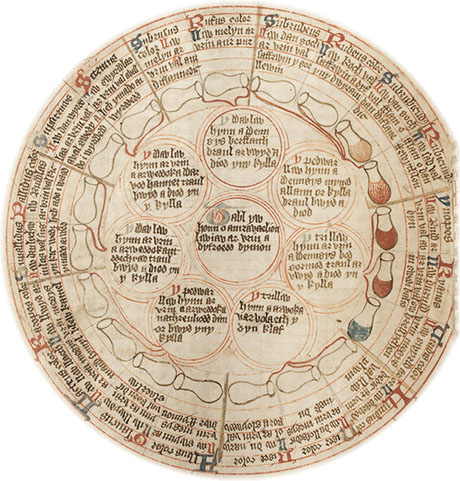
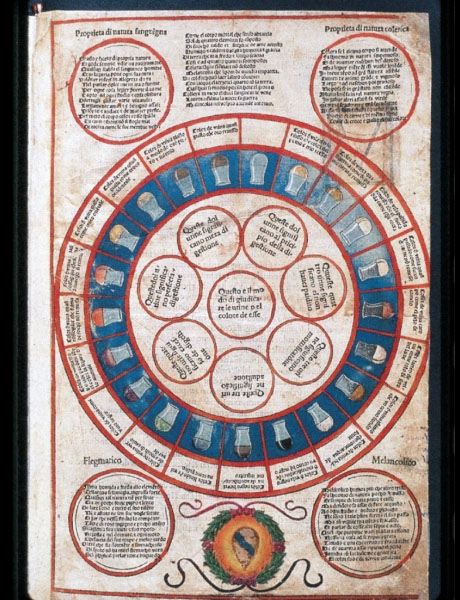
“But Paul, didn’t the Puritans have a lot of awesome things to say about God? Isn’t there much to be learned from them?” No, not in the long run because of their flawed logic. Notice that they aren’t around anymore. Why not? Because Puritanism cannot function without theocracy. Their logic led to the persecution of the Quakers via hanging etc., and when society had enough, an end was forced in regard to their theocracy. No theocracy—no Puritanism. And frankly, the same goes for authentic Calvinism. Calvinism exists today because their logic had to be adjusted for survival. Here at TANC, we call them “sanctified Calvinists.” Yes, they have done the church some good because they don’t share the same logic.
I really wonder if this latest resurgence of authentic Calvinism will put an end to it because of the Information Age that we are in. Nobody calls themself a “Puritan” in our day. Will the day come when few will call themselves a Calvinist? Authentic Calvinism doesn’t work, and people will only use a clock that doesn’t work for so long; the fact that it is useful twice a day does not end up being enough. Once again, the same old superstitions of authentic Calvinism are showing themselves in the contemporary church. The basis is the idea of spiritual caste: the idea that preordained enlightened mediators should rule over the unenlightened masses. Theocracy comes part and parcel with that logic.
“But Paul, Neo-Calvinism is thriving right now in America and America doesn’t allow theocracies.” Oh really? Many New Calvinist “ministries” in our day are nothing less than Little Geneva. They have their own in-house police stations, and control parishioners by almost every means of the past save the death penalty alone. This ministry is compiling a list of various means that these ministries are using to control people through first-hand testimony. Other than the intimidation of armed in-house security forces, they are using “biblical counseling” to compile information on people that can be used to control them. That angle can be seen in living color via the public transcript of CJ Mahaney telling the cofounder of SGM that confidential counseling records would be made public if he left SGM for doctrinal reasons. Let there be no doubt: this is standard protocol in New Calvinist churches. And if they don’t have the dirt on you, they will fabricate it. That’s just fact.
Getting back to superstition—that is also the inevitable result of caste logic. Many blogs document the weirdness in this movement that gets crazier each month. And dismissal of comparisons due to medieval ignorance doesn’t cut it. Sure, urine isn’t used in counseling today (at least not yet), but instead we have rapists counseling their own victims in the church office!
It’s the logic. And in the Information Age, what happens in Salem doesn’t stay in Salem.



leave a comment