The Darndest Thing Happened on the Way to My Facebook Page
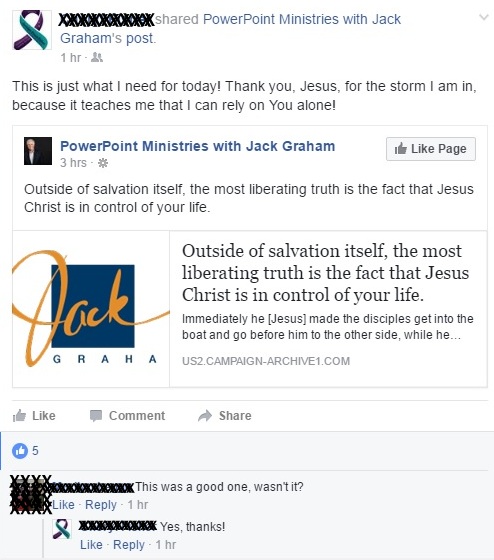
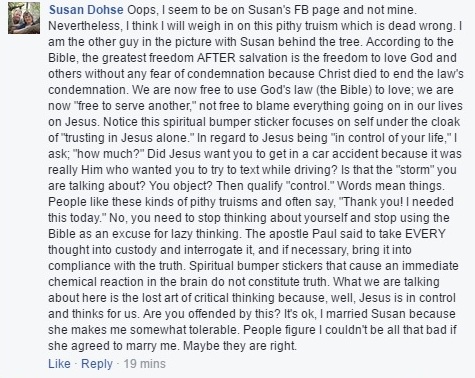
I have some errands to run today and was a little disappointed that I wasn’t able to post anything today. Before I left, I figured I would check my Facebook page, and discovered something very strange that I would not normally see on my newsfeed. That’s because I didn’t realize that my lovely Susan hadn’t logged out of her account.
I couldn’t resist but to comment on the said post, and thought, “Hey! this can be my post for the day as well.”
I hope you enjoy it.
The “Legalism” Myth and Why Antinomianism and Justification by the Law are the Same Thing
 Good evening everyone welcome to False Reformation Blogtalk radio. This is your host Paul Dohse. This is a special live presentation for tomorrow night’s episode because I will be out of town atten…
Source: The “Legalism” Myth and Why Antinomianism and Justification by the Law are the Same Thing
The “L” is the Death of Calvinism
 We have all heard of TULIP, but all you need to indict Calvinism in a litany of choices is the “L” in TULIP. You see, if God predetermined who is going to be saved by His choice alone, Jesus only died for the “elect,” but a sound non-Protestant understanding of justification refutes that in elementary fashion.
It’s true, Christ died for our sins, but also, all sin is imputed to the law. Where there is no law, there is no sin, so Jesus really went to the cross to end the law. The righteous demands of the law were nailed to the cross in totality and in one act.
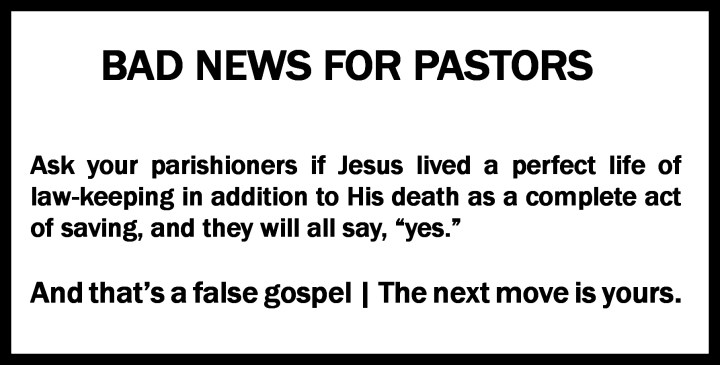
Protestantism then asks: “What then of being righteous? We must not only be forgiven, but we must also be righteous.” This is where the law is not ended for Protestants. Jesus’ life/perfect law-keeping then replaces the real purpose of the resurrection. The resurrection becomes a confirmation that He lived a perfect law-keeping life (“it proved that God was pleased with Him”) so that perfect law-keeping can be imputed to our Christian life.
We hear this everywhere in Christian circles all of the time and it represents an egregious misunderstanding of the true gospel.
And this is sooooo elementary: that’s “under law.” Ouch. Yes, the hallowed academia of Protestant tradition missed this elementary point entirely. And that’s just plain embarrassing.
This replaces a right definition of the new birth (Spirit baptism) with Christ’s life/death/confirmation instead of death WITH Christ/death to the law and its condemnation/resurrection WITH Christ to new life/freedom to obey the law out of love and not fear of condemnation.
But let me conclude with the primary point of the post. If ALL people are born under the law of sin and death (the Spirit’s first use of the law), and they are, and Jesus died to end the law, and He did, then Christ obviously died for everyone.
All sin is imputed to the law, and Christ came to end the law. This makes assurance of salvation definitive: there is no law to judge you. However, this is not to exclude law all together; those who have been resurrected with Christ are free to use the law according to the Spirit’s second use of the law to sanctify. To us, that is using it to love God and others with all of our heart, soul, and…yes…minds. Right, we don’t do that perfectly according to the old us that were under the law of condemnation, but that person is dead.
In regard to law’s ability to condemn me, I no longer live, not because Christ kept that law for me, but because the one who was under it died with Christ. I now live as a new creature free to serve Christ with the “law of liberty,” viz, I am free to use it for pursuing peace and love without condemnation.
But, remember, Christ died to end the law; that means He died for all of those under it. Nothing is more evident.
paul

 Paul's Passing Thoughts
1 comment