Religious Tyranny: A Case Study; Chapter Seven, Protecting the Church Bus. REVISED
 Institutions are all about authority. Even though institutions try to be family as a way to recommend themselves, it just won’t work. The Olive Garden’s “When you’re here you’re family” add cam…
Source: Religious Tyranny: A Case Study; Chapter Seven, Protecting the Church Bus. REVISED
Religious Tyranny: A Case Study; Chapter Seven, Protecting the Church Bus. REVISED
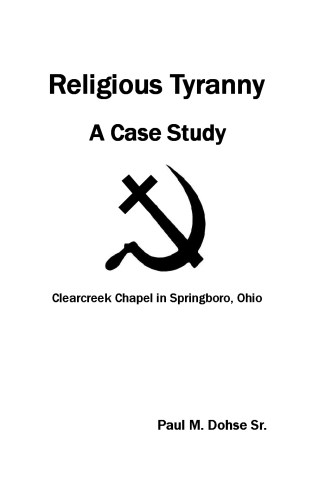
Front Cover
Institutions are all about authority. Even though institutions try to be family as a way to recommend themselves, it just won’t work. The Olive Garden’s “When you’re here you’re family” add campaign is about as close as it gets. We have all been in job interviews where those in charge of personnel claim, “We are just like family here.” It sounds good, but precious few buy it.
Institutions are where we go to get a service; families are where we go to get help unconditionally in most cases. The saying, “Blood is thicker than water” usually holds true. No venue supplies more forgiveness, comfort, and help than family. Institutions are about power; families are about love. The word “love” is commonly used in a manipulative way outside of family.
The church is an institution that supplies a service; specifically, salvation. Like all institutions, it conveys power and authority and in the case of church, a claim of God’s authority over the souls of men. And, it’s authority over truth. The church claims to rule for God by proxy.
Now factor in orthodoxy concerning the nature of man; total depravity. “We are all sinners saved by grace.” Let’s first answer the question presented by this chapter, and then put feet on the answer. The church is protected at all cost because it is the only bus going to heaven. Sure, it is a beat-up bus with lots of dents on the fenders, needs a new paint job, and has seats stained with all kinds of nastiness within, but it is the only bus chartered by God that is going to heaven. Ill behavior, illogical doctrine, and bizarre behavior isn’t the issue, we must remember that the church bus is also a medical bus; the only people on it are those who need a doctor, not those who don’t need a doctor. The only tender that will buy a boarding ticket for this bus is the recognition that you are wretched, wicked, totally depraved, and totally broken.
But here is the dirty little Protestant secret; the belief that you remain so keeps you on the bus. As a notable evangelical musician once said, “We [the church] are a train wreck.” Hence, protesting about sin in the church will more than likely get you a sarcastic, “Well, duh! Ya think?” Demanding accountability for sin which threatens the bus trip will get you church discipline and the loss of your place on the bus.
Moreover, families don’t take over every inch of every corner upon earth as the Lord’s army, institutions do. And why do churches focus on building projects more than building people? Infrastructure speaks of authority. Families build people, institutions build infrastructure that speaks of authority. In contrast, the Bible couldn’t be clearer: God’s family members are individual temples and the priests of those temples. In fact, a careful word study reveals that each believer is the Holy of Holies part of the temple.
But here is the point: the church must be protected at all cost because it is seen as the only valid representation of God on earth that executes His mission.
In the last chapter of this study we will look at this closer, but for purposes of this chapter, let it be stated that institutional churches will be defended and protected regardless of behavior because they are deemed as the only buses going to heaven, and sin is expected to be present anyway. After all, “There is no perfect church.” Yes, those who go to church looking for virtue are supposedly clueless.
Enter Clearcreek Chapel. For the most part, the Chapel is attended by well-educated people. Many of them are graduates of the nearby Cedarville University. Why have they stayed faithful to the Chapel in the face of this “radical departure” from the previous leadership? Why have they stayed faithful in the face of overt absurdity displayed by the Clearcreek elders? How can Chapel elder Dr. Devin Berry get away with teaching the following? The Clearcreek Chapel Book of Faith and Order is par with the Scriptures, and Jesus keeps its tenets for those who live by faith alone. The same congregants would have been running for the exits twenty years before; what happened? The answer is AUTHORITY.
You see, whether the elders are right or wrong is not the issue; the issue is…elders are God’s anointed. As visiting speaker Pastor Tim Pasma once said at the Chapel: God may deliberately partake in elder buffoonery to see if the congregation will obey them or not. And like the rebellion against Moses in the wilderness, God will curse those who do not obey the elders whether they are right or wrong. You can see that moving forward with a lengthy list of Chapel atrocities is a total waste of time; such atrocities are to be expected on the church bus for the aforementioned reasons.
So, the congregants are not going to stand against evil in the church, and other churches are not going to stand against evil in the church for the same reason: AUTHORITY. Many nice church people on the bus totally disagree with what’s going on, but they must keep their mouths shut and obey in order to stay on the bus. Supposedly, silence is not complicity. And besides, do we really expect people to give up their eternal salvation for taking up the cause of what is simply right? This study contends against such notion for the following reason: it’s a false choice because the formal church is not endowed with God’s authority; that is one of the paramount lies of the ages. One may change membership from a “bad” church to a “good” church but the system as a whole is still being supported along with its foundational premises.
This study contends against such notion for the following reason: it’s a false choice because the formal church is not endowed with God’s authority; that is one of the paramount lies of the ages. One may change membership from a “bad” church to a “good” church but the system as a whole is still being supported along with its foundational premises. “Good” churches merely keep the stage one cancer alive.
And lastly, discernment blogs will cry out against the injustices, but what are they really trying to do? They are merely trying to save the bus. It’s a good bus with a few rotten passengers. If we make the problems public, the church will correct itself and the church will be saved. Yes, we must purify God’s authoritative institution on earth in order to preserve the gospel.
Note the futility of this reasoning: you have to be rotten to get on the bus, but rotten people threaten the bus and hence discernment blogs to the rescue. Yes, we are all sinners saved by grace, but too much sinning threatens the bus—the medical bus cannot have people aboard that are too sick. Apparently, discernment blogs seek to save the church by obtaining the right balance of evil.
The Neo-Reformation movement (New Calvinism) peaked in 2009 and its subsequent tyranny spawned a plethora of internet discernment blogs. What real impact have these blogs had on the problem of Neo-Calvinist religious tyranny? Zero. The only justice yielded to date comes from secular law enforcement or civil jurisprudence. These haven’t received the memo on church authority.
Religious Tyranny: A Case Study; Chapter Six, Elders Behaving Badly

Front Cover
Sometime between 1994 and 1998 while Russ Kennedy was a pastor in Illinois, the associate pastor of the Chapel, Rick Wilson, was called to a pastorate in nearby Beavercreek, Ohio. Though he didn’t have Street’s pulpit skills, he made up for it via personal likability.
Therefore, when Kennedy became pastor of the Chapel, an ongoing exodus began from the Chapel to Wilson’s church because several people at the Chapel didn’t like Kennedy. This was the first wave of exiters who were aware of Kennedy’s heavy-handed leadership style which was antithetical to the likable and persuasive Rick Wilson. Why was there a second wave? Because something was going on vastly different from Street’s ministry and Kennedy’s transition team would not come clean about what was going on.
For example, the preaching was totally different. Street, like his mentor John MacArthur Jr., applied a verse by verse exegetical method to the Bible as opposed to what Kennedy was doing, viz, covering large bodies of text in one sermon, at least one whole chapter or more. This was referred to as “fly-over preaching” by many Chapel parishioners who were becoming increasingly disgruntled in regard to that issue.
In one instance, Kennedy covered the book of Romans in sixteen messages and no one knew what to make of it while Kennedy’s transition team was overtly aloof in regard to what was going on. This led to more people leaving. It was obvious that Kennedy wasn’t being transparent about the changes taking place, and his posture during the time he was being considered as Street’s replacement did not suggest in any way, shape, or form that big changes would be brought about. It was fairly obvious that he played coy until he was installed as pastor.
This was/is standard protocol for the movement. Remember, this movement is a modern-day crusade. Curiously, however, the movement, for the most part, doesn’t invest in separate startup ministries, but engages in covert takeovers. More than likely, this comes from their mentality that run-of-the-mill evangelicalism that lost sight of the true Reformation gospel is an undeserving usurper unrightfully using God’s resources in the name of Christ. Hence, this movement deems it necessary to seize ill-gotten resources for the true gospel. In fact, this suggested analysis is a very safe bet. If its Dominion theology seeks to take over “every corner of God’s creation,” and it does, how much more the institution that God has supposedly appointed to be His authority on earth?
This tsunami-like movement is a return to original Reformation orthodoxy in regard to soteriology, interpretation of reality itself, politics, eschatology, ecclesiology, and methodology in regard to interpreting the Scriptures. It is a plenary reconstruction of church identity that spanned the past 200 years. And why is the movement enjoying total success? Because the original tenets of the Reformation gospel have always been running in the background like Windows 7 on your PC. The institutional church has always been primed for a return to the original article.
And what is that original article? First, salvation is a process, and not a onetime finished work in the believer. The new birth is redefined and denied according to its biblical definition.
Secondly, “present sin” still needs to be atoned for by the same gospel that saved us. In other words, we must continually return to the same gospel that saved us in order to keep ourselves saved. “We must preach the gospel to ourselves every day.”
Thirdly, this efficacious forgiveness for present sin can only be obtained by faithfulness to, and attendance in the institutional church. If one is not a member in good standing at a local church, an individual appeal to God for forgiveness is utterly futile and invalid.
Fourthly, God has ordained church elders to oversee His salvation on earth and the taking over of the world for His glory. In this regard, they have been given all authority by God.
These are the fundamentals of the original Protestant gospel that also underpin every denomination that has ever flowed from Protestantism including Methodists, Baptists, Presbyterians, etc., etc. Protestantism in general, even though it integrated Enlightenment ideas into Reformation dogma, has always functioned according to these ideas while denying them intellectually. While denying that one is saved by church membership, what do evangelicals act like? While denying that pastors have all authority over their souls, what do parishioners act like? While denying that the church is needed in order to obtain heaven, why are churches protected and given a pass on every ill behavior known to man? This is why the Neo-Protestant resurgence is successful; the churches are already primed for the original article. As the saying goes; “The apple doesn’t fall far from the tree.” The Neo-Reformation is merely bringing a consistency to the original tenants, function, and intellectual testimony.
Consequently, like in all other church cases, Kennedy couldn’t have openly announced his agenda on day one—the Chapel would have been emptied. Nor could he have been honest in his doctrinal statement and philosophy of ministry while being considered for replacing Street—he would have never been installed as pastor. Like in all other instances, the protocol is to obtain the leadership position through deception, nuance, and doublespeak. This is because Kennedy knows what all proponents of the modern rebirth of the Reformation know; for the most part with little exception, a Protestant, whether Baptist or otherwise, doesn’t know what a Protestant is. Kennedy, like all of the other new crusaders, believes that the means justify the end when the goal is saving the church for the glory of God.
But don’t miss the major point: their assertion is absolutely correct despite the means. This movement has merely exposed the Protestant Reformation for what it really was. For some reason regardless of historical instance like Nazism, Westerners believe we are immune to widespread cultural deception.
We may now examine how religious business is conducted at the Chapel, but it is the same behavior exhibited by the original Reformers minus the force of state. John Calvin’s Geneva was a theocratic police state; yet, it is undeniable that New Calvinists publically opine in regard to the lost glory days of Calvin’s Geneva as if the average parishioner is unable to read history for themselves. Actually, they are able, but choose to believe everything that comes from the mouths of Protestant elitists as gospel.
In contrast, not owning your individual understanding about everything is ill advised because in the end only one person and one person alone will be culpable before God…you. The elders of the Neo-Reformation want to have all authority in your life, but you alone will answer to God—they claim all of the authority with no responsibility for the outcome. A common truism in Germany during WWII was that Hitler’s authority needed to be believed by faith as a matter of the heart and not reason. In the end, Hitler committed suicide and left the German people holding the bag. Accordingly, the postwar suffering inflicted upon the German people is all but unspeakable. Yet, this call to dichotomize reason from faith is a common theme in the Neo-Reformation movement.
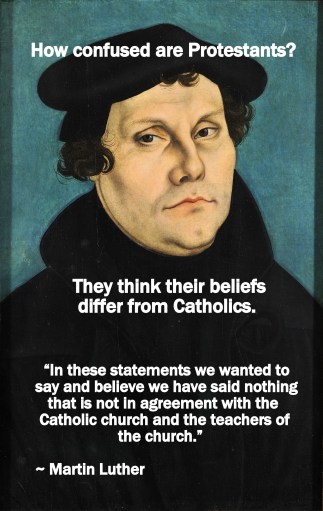
Again, while most Protestants would deny this intellectually, it is not only the way they function in their fondness for paradox, but the very first doctrinal statement of the Protestant Reformation was Martin Luther’s 97 Theses against the use of reason in theology. Most Protestants will now say that they have never heard of the 97 Theses, but only the 95 Theses. This drives home the point entirely. It may also be noted that Kennedy authored a book titled “Perplexity” which posits the idea that Christians cannot know anything definitively, but offers help in how to bring our perplexities to God while rejoicing in not knowing anything. The front cover of the book is even adorned with a depiction of Plato’s cave. Catch the drift? The great unwashed evangelicals cannot know anything and must trust God’s anointed philosopher kings to “save his people from ignorance.” Of course, the primary ignorance is the idea that people can know things. Evangelicals are constantly bemoaning biblical illiteracy in the church, but such illiteracy is by design according to Reformed presuppositions regarding mankind. Again, Protestants don’t know what a Protestant is…they even think they aren’t Catholics; yet, Martin Luther stated the following in the conclusion to his 97 Theses:
In these statements we wanted to say and believe we have said nothing that is not in agreement with the Catholic church and the teachers of the church.
One element of behavior that is going to be common in the movement is the use of disfellowship or so-called “church discipline.” It is well documented that church discipline no longer addresses parishioners behaving badly, but parishioners questioning the authority of the movement’s leaders while decadent behavior among the congregants is ignored. In one particular case at the Chapel, a parishioner was brought under discipline for questioning doctrine while other parishioners who were practicing open and public sin were ignored. It has truly come to pass in the movement that the only sin is questioning the authority of the church. In regard to real sin “we are all just sinners saved by grace” and need ongoing forgiveness for “present sin” anyway. However, threatening the credibility of the movement could destroy or otherwise diminish the only means on earth to obtain heaven; the institutional church. The integrity of the old raunchy bus must be defended because it is the only bus going to heaven.
This authoritarian logic produces a gargantuan record of religious tyranny and spiritual abuse, and such a record is by no means absent from Clearcreek Chapel or any other church that is part of the Neo-Reformation movement. Please note: the outrageous and bizarre behavior of the Clearcreek elders is well documented and also irrelevant to the rest of the evangelical community.
Why is this? That is our topic in the next chapter.
Chapter Seven: Those Who Protect Them, and Why
Marriage
If the authority guiding your marriage is the church elders, you are married to the elders and not your spouse; you have no real marriage.
— Paul M. Dohse (@PaulMDohse) November 21, 2016



leave a comment