Mediators
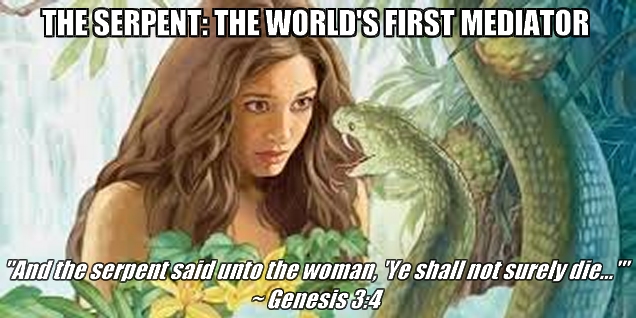
Mediators: Reinterpreting reality since the beginning of time!
Andy
God Is Our Refuge and Strength!
Despite the popularity of the traditional hymn “Rock of Ages”, the expression itself is not found anywhere in the Bible – unless you are using the ever-popular “reformed” Bible, the ESV, where it can be found in Isaiah 26:4. But that expression doesn’t quite capture the full meaning of the verse.
The Hebrew language is “ideomatic”, meaning that it does not necessarily have grammatical structure like noun, verb, adjective, subject, predicate, etc. Much like oriental “ideograms”, Hebrew words create a picture of an idea being expressed. The meme below probably best captures the idea expressed in Isaiah 26:4.

Andy
Believers No Longer in Protective Custody
Originally published May 31, 2016
The ancient Greek cultural practice of “pederasty” was the homosexual relationship between an adult male (the “erastes”) and an early-adolescent male. In the city of Athens particularly, pederasty entailed a formal bond between an adult man and an adolescent boy outside his immediate family, consisting of loving and often sexual relations. As an erotic and educational custom it was initially employed by the upper class as a means of teaching the young and conveying to them important cultural values, such as bravery and restraint.
Athenian society generally encouraged the “erastes” to pursue a boy to love, tolerating behavior such as sleeping on the stoop of the youth’s home and otherwise going to great lengths to make himself noticed. At the same time, the boy and his family were expected to put up resistance and not give in too easily, and boys who succumbed too readily were looked down upon. As a result, the quest for a “desirable boy” was fiercely competitive. (source: wikipedia – Athenian Pederasty)
Often, fathers who wished to protect their sons from such unwanted advances, as described above, would send a household slave to accompany the boy wherever he went, particularly on his way to school. These slaves were known as “pedegogos”. The word literally means a “boy leader”. The pedegogos acted as a “guardian” for the young boy, to protect him.
It is important to understand the cultural use of this word “pedegogos” in the first century, because this is the word that the apostle Paul uses in describing the relationship between Old Testament believers and the Law.
“But the scripture hath concluded all under sin, that the promise by faith of Jesus Christ might be given to them that believe. But before faith came, we were kept under the law, shut up unto the faith which should afterwards be revealed. Wherefore the law was our schoolmaster to bring us unto Christ, that we might be justified by faith. But after that faith is come, we are no longer under a schoolmaster.” ~ Galatians 3:22-25
The King James uses the word “schoolmaster”, but it is this Greek word παιδαγωγος “pedegogos”. It is better translated as “guardian”.
But before we examine that word some more, we need to take some time to clear up a reformed miss-conception about this passage. It has to do with this expression “concluded all under sin”. Traditionally this has been taught to mean that the logical conclusion of scripture’s teaching is that all are under sin. We simply need to look at the grammar to see that this is not what Paul is saying. “All under sin” is a group of people that are the focus of his argument. The word translated “concluded” is the Greek word συνκλειω (soonk-lee-oh). It is a compound word made up of the prefix “soon” meaning “together with” and the word “kleio” meaning “to shut up” or “to enclose”. It has the idea of taking something into custody for the purpose of protection.
What Paul is teaching in this passage is that in the Old Testament, the role of scripture (or Law) was to take all of those “under sin” into custody for the purpose of protecting them. (Please note, that “under sin” is not the same as “under law”.) This is important to understand, and this protection was the “atoning” aspect of the Law. Because Jesus, “the Promise”, had not yet come to end the law and its condemnation, Old Testament believers were actually protected by the law, because sin was imputed to the law and not to the believer. The law took them into protective custody.
Paul repeats this idea in the very next verse:
“…before faith came, we were kept under the law…”
The word “kept” is the Greek word φρουρεω (froo-reh-oh). It means to be a watcher in advance, or to mount a guard or a sentinel, like a guard in a watchtower. Again, the idea is one of offering protection. Notice carefully that the phrase is “kept under the law” and not kept “under law”. To be kept under the law means that it is the law that is performing the “keeping” or “protecting”. This in no way whatsoever means that believers are still “kept (remain) under law” as reformed doctrine would have us believe. It means that the Old Testament believers were protected by the law.
Why was this protection necessary? Because “the Promise” had not yet come. The law, while it did not impart righteousness, in this manner it served as a protection from condemnation. And the law’s ability to condemn would not be ended until Jesus’ crucifixion. Therefore, this protection, this “atonement” was available until that time would come. Paul makes this very point in verse 24.
“Wherefore the law was our schoolmaster to bring us unto Christ…”
Notice that he is NOT saying that the law leads us TO Christ. The reformed interpretation of this is that the purpose of the law is to lead us to Christ to show us how much we are in need of salvation, but that is not the case. In the context of the passage, the law WAS (past tense) a guardian (pedegogos) until the time when Christ came. “Pedegogos” is a very provocative word, knowing what we know about its meaning. Paul could have used any other word do express the idea of a guardian or protector. But he specifically chose to use “pedegogos” knowing full well that his audience would have understood the cultural implications behind it. He was obviously wanting to make a very powerful point on the matter!
But what has happened since Christ died? What happened once “the Promise” came? There is no longer any need of a guardian. Why? Because the law is ended. The law can no longer condemn. Believers are not under law, they are under grace. This is a joyous reality! But there is also a sense of foreboding as revealed by the writer of Hebrews.
“This is the covenant that I will make with them after those days, saith the Lord, I will put my laws into their hearts, and in their minds will I write them; And their sins and iniquities will I remember no more. Now where remission of these is, there is no more offering for sin…For if we sin wilfully after that we have received the knowledge of the truth, there remaineth no more sacrifice for sins, But a certain fearful looking for of judgment and fiery indignation, which shall devour the adversaries.” ~ Hebrews 10:16-18, 26-27
When Christ died to end the law, He also ended its atoning work. Not only are believers no longer in need of a guardian, but there IS no guardian, period. That results in fear. If one is still under law the natural response is fear which comes from the reality of condemnation. No more protection from condemnation is available. Also, the only ones who CAN sin are those still “under law”. Those under grace CANNOT sin because they have been born again, and the law is ended. (1 John 3:8-9) A guardian is not necessary because they cannot be condemned.
I think people intuitively know this. I daresay that the reason so many “christians” are in constant fear of losing their salvation (or just fear in general) is because their theology keeps them “under law”. It is the cognitive dissonance produced when they know in their hearts that the law cannot save them, and they know that it can no longer protect them. This is why a proper understanding of the role of the law is so vital to the true gospel. Any gospel that makes law the standard for righteousness is a false one.
Andy
Religious Tyranny: A Case Study—Conclusion; The Way Home
 This series is the first draft. We will now begin to format the book and add endnotes. We hope to have it in print by Christmas.
True Christian fellowship is the collective effort of individual members (as in “body members”) performing their roles in the one body of Christ manifested all over the world. Local fellowships should represent the one unified body model. In the same way a body works together and is interdependent on its various parts, true Christian fellowship provides need and mutual edification accordingly.
This body, according to the Bible, only has one head like any other body. This means unity is derived by agreement on what Christ desires. There is unity in the body to the degree that members agree on truth. The Bible is clear: this is determined by individual freewill understanding. Christian fellowships should be comprised of sincere lovers of the “mind of Christ” that the Bible says all Christians possess through the new birth.
Full stop. Because of the institutional church whether Protestant or Catholic, the immeasurable treasure of Bible truth is unmined in our culture; we are enslaved to the same institutional orthodoxy that began to be formulated after the passing of the twelve apostles, particularly Paul and Peter. The assemblies of Christ that turned the world completely upside down were strictly a family affair meeting in private homes. After the passing of the apostles, theologians, some who were even disciples of the apostles, quickly moved to institutionalize Christianity to fit the authoritative Roman culture of the time.
The argument for such? Supposedly, according to apostolic theologians otherwise known as the “church fathers,” Jesus called for an apostolic succession of authority to one bishop stationed in Rome. This led to an epic contention between elder led home fellowships and the church at Rome that lasted for 200 years. The Christ intended home fellowship model was all but wiped out by the 4th century. Instead, the apostolic secessionists set up shop in Rome, the epicenter of Roman world dominance, and began competing with the pagan-state as Rome’s new mistress.
In all of these affairs, the harlot of religion seeks intercourse with the state for enforcement of her orthodoxy. Through manipulation and political intrigue, the apostolic secessionists (bishops) finally defeated the pagans in the 4th century and the rest is literally “church history.” Be sure of this: home fellowship history is of little press and distinctly different from church history which makes martyrs of political refugees and those who committed treason against various and sundry governments. Hence, church is just another chip off the historical block of religions that can’t sleep until the blood of those who dare disagree with them is completely spilled upon the ground. Americanism tempered the bloodletting, but the book of Revelation speaks of a time in the future when the church-state will return with a vengeance.
Therefore, this book, to a large degree, is not really about the ill behavior of a church located in Springboro, Ohio. To a large degree, this book is for those who know something has always been missing in American Christianity. What’s wrong with church? Church is wrong with church. Indeed, this study claims to answer the audacious questions that nag all true believers in Christ: why can’t the church seem to get it together? Where is the true radical love? Why are there so many contradictions? Why are there so many unanswered questions? Where is the power of the Spirit? Why is church so boring? Why do unbelievers seem to have it together better than God’s very own children? Why is the church so indifferent to justice? How can we obtain true revival?
The big answer follows: while America obtained freedom for humanity in the secular realm, God’s children must once again obtain freedom for God’s family in the religious realm. They must come home. They must cease in fearing man’s self-aggrandized authority and cling to the one head of the body…our glorious redeemer…our glorious brother and king…the first fruits of all those who love God. It is time to stop paying homage to those who usurp His authority and claim a crown never given. It is time to shed our coats of shame stained with the filth of blasphemers who claim co-mediation with Christ. He is the only mediator, and all authority in heaven and earth has been given to the King of kings and no one else.
That is the big answer; the finer details of how home fellowships once operated is a vast untapped knowledge hidden away by the present Protestant Dark Age. But if we would just pause and think, it is always those closest to us that come through; it is always the freedom of individuals who can act in agreement collectively when all else fails.
Have you ever thought about how God has arranged humanity? Individuals always outnumber rulers. Governments, when it gets right down to it, must convince the masses to cooperate. And in more instances than not, the collective and agreed upon efforts of individuals have to fix problems created by institutions. The greatest movement in all of human history, the American Revolution, was the collective effort of likeminded individuals and hardly sought permission or assistance from the British government.
We must remember that the collective effort of individuals can utilize organization without authority. Biblical home fellowship labels like “elder” and “deacon” are organizational gifts given by the Spirit and not authoritative. But again, it is time for God’s family to begin reconstructing our lost family culture through biblical truth and progressive application. We will stumble in the process, but with the one mind of Christ we will eventually put everything together. Ironically, the institutional church will scoff at the idea that God’s children have lost their family culture, but this is the same claim often utilized by the institutional church and the best example is the present-day New Calvinist movement.
In fact, one of the hallmarks of Protestant tradition is Semper Reformanda: “always reforming” or “reformed and always reforming.” Let’s invoke some more honesty here; this is authority’s free ticket to be wrong without being questioned. This is where family has higher standards than any institution; such logic will not fly with momma. Families live where the rubber of real life meets the road and is without an endless cash flow to pay for mistakes and intellectual musings that tickle the soul.
Furthermore, in the family of God setting, you have individuals who can’t be separated from the love of God. You can’t be unborn from your family unless you are part of an institutional family because you are only family when you are there. Remember the Olive Garden commercial? The institutional church must necessarily deny the new birth; otherwise, how do they have the authority to unborn you?
It is time to come home. The Holy Spirit only uses truth to sanctify and nothing else. It must be right motives leading to the right understanding of truth and the right application of it. This alone is what will unleash the power of the Holy Spirit. This is collective edification through individual gifts given by the Spirt through the new birth. These are gifts that only operate in a true family setting.
This book is a call to freedom in Christ through devotion to Him alone, not through permission granted by lovers of power and authority. Having begun in the Sprit, do we now seek to be led by men? Are they the ones that Christ said would lead us in all truth? Let’s keep the honesty coming; how many parishioners really know what their body function is? When it comes to every parishioner being all they can be in Christ, how often are pastors hounding them about it once past the being there every time the doors are open and faithfully paying the temple tax? And what kind of a family is it when nobody is really sure who is a true family member? And why be overly concerned with your role as a body part? You don’t even know if you are really part of the body! This organizes everything according to your perseverance in supporting the institution; this is not love nor does this focus have time to be concerned with love—the concern is appeasing an institution to earn your way into heaven.
Finally, what does coming home look like? It looks like going home to any real family. You don’t seek permission from an institution to do so. However, as the home fellowship movement accelerates, this will be the exact protest heard from the institutional church: you don’t have their permission to go home. “By what authority do you do these things? ‘Well, by our big brother Jesus, that’s what, who are you?’” Why have we made these arrogant men drunk with authority-lust the subjects of our worship rather than Christ?
We have the model for what it looks like to gather together as God’s literal family. It will look much like the so-called “last supper” Christ had with His disciples. This tradition and format was continued en masse after Pentecost. It was merely a continuation of the Judaism custom. Formal penance towards God took place at the Jewish temple while the Jews met in private homes for teaching, encouragement, and fellowship. Not long after Pentecost the Temple was destroyed by the Roman general Titus in A.D. 70 as foretold by Christ. As Christ told the woman at the well, worship is in spirit and truth, not a place.
It is interesting to note that the New Calvinist movement, which as previously stated is a return to authentic Protestantism, began instituting mid-week gatherings in homes under the supervision of “ruling elders” during the 1990’s. Why did this happen? For two reasons: to circumvent a return to home fellowships (“Oh yes, our church already does that”), and as a method for maintaining control of parishioners. Typically, these gatherings will use some book written by an orthodoxed author, or will “review” the previous Sunday morning message. This enables the “ruling elders” to keep tabs on what parishioners are thinking among themselves in private. In a home setting, people let their guard down. In fact, these gatherings are said to foster “intimacy” among the members. Indeed.
But consider; this is nothing more than a supervised “family” setting. When you have normal family gatherings apart from church who is in charge? No one really, a true family typically works together to orchestrate gatherings. This is even the case with family weddings; it’s a cooperative effort dictated by individual skills. Whoever is the best cook, cooks, whoever is the best planner, plans, whoever is the strongest moves tables into place, etc., etc., etc.
So, the institutional church, in its endeavor to control, has already demonstrated that home fellowships work. What then is the purpose of meeting weekly in a massive purpose build? Only one: to carry out the ritual of progressive justification in a temple setting. This is nothing more than a massive expenditure of money to establish authority; in essence, congregants are paying for their own slavery with hard earned money and forfeiting their “full reward.”
It’s barely less than total insanity.
This is a call to merely embrace the same model while replacing authority with organization which will flush out individual gifts. Jesus is knocking on the door, merely open it, let Jesus in, kick out the ruling elders, and replace them with elders gifted by the Spirit and not a purchased seminary degree. What is more obvious than the following? Jesus made it a point to choose apostles who were not formally educated. Jesus Himself made it a point to not be formally educated. In regard to the formally educated that He did use, the apostle Paul was examined via private interpretation of Scripture by the Bereans. When they deemed his teachings true and applied them, THEN “many believed.” The Holy Spirit only uses truth, and it’s not true just because some man, even an apostle, says it’s true. Even the apostle Paul said to only follow him “as I follow Christ.” The one mind of Christ is the ONLY standard…period! The body will be more and more unified as each member is persuaded in their own mind. Hopefully, gifted elders “apt to teach” (not rule) will aide in that persuasion.
This is the way home. This is the only way we will see the Spirit yield what we have longed to see all of our lives. This is because….
…only truth sanctifies (John 17:17).
In His love now and forever,
Paul M. Dohse Sr.
ACCC Typical of Protestants Who Don’t Know What Protestantism Is, But New Calvinists Do Know What a Protestant Is; Part 2
 The American Council of Christian Churches (ACCC) confirmed a resolution on New Calvinism at its 75th Annual Convention October 18-20, 2016. The resolution was articulated by Pastor Dan Greenfield and posted here. Part one of this evaluation can be read here. What is our primary thesis? New Calvinism is a return to authentic Protestantism and is causing controversy among evangelicals because Protestants are more confused than any other religionists in the world. Greenfield’s post is low hanging fruit in regard to the issues at hand, so let’s get started. Greenfield begins his post this way:
“In September 2006, Collin Hansen reported for Christianity Today on a new religious movement of professed Christians who took a renewed interest in Reformed theology. At that time, Hansen called the movement ‘Young, Restless, Reformed’ (YRR), but later he termed it ‘New Calvinism’ and claimed that it was a ‘revival’ of biblical Christianity. By 2009, Time Magazine declared New Calvinism to be one of the ’10 Ideas Changing the World Right Now,’ and since then, the movement’s popularity has increased. All of this success seemed to validate Hansen’s claim of another spiritual awakening.”
It’s interesting to note that TANC Ministries was the first to document the true contemporary history of New Calvinism in “The Truth About New Calvinism” (TANC Publishing 2011). At first, we were the go-to source for information on the movement until further research revealed that New Calvinism is, in fact, a return to the real deal. Protestantism had indeed lost touch with its true gospel because of the integration of Americanism. Few want to hear that message and our research is now avoided like a plague accordingly.
The integration of Americanism created a contradiction between how Protestants function and their intellectual testimony. This is why New Calvinism has all but taken over the church completely in a short span of time: the church has always been functioning New Calvinism; the movement is merely recalibrating the church and syncing its function with the intellectual confession. This was somewhat explained in part 1.
But this is what evangelicals do to cover for the embarrassment of getting it wrong for over 200 years: they compartmentalize the Protestant religion into so-called “secondary issues.” You know, the whole, “In essentials unity, in non-essentials liberty, in all things charity” thing. Some nomenclatures are, “Reformed,” “evangelical,” “Calvinism,” 1-5 types of Calvinism, “Neo-Puritanism” which couldn’t be a bad thing because it has the word “Puritan” in it, etc., etc., etc.
Let’s get something straight: “Reformed” is, you know, the “Reformation” which produced “Protestantism” which was fathered by Luther and Calvin who fathered the Puritans who came to America and started a European church-state which incited the American Revolution resulting in Protestant Puritanism being integrated with Americanism which fathered the Baptists, Methodists, Congregationalists, Pentecostals, etc., etc., etc., but it is all the same stuff when it gets right down to it. Ok, so, the Baptists disagreed with Luther and Calvin’s position on baptismal regeneration; so what? They kept the same progressive justification. So, the Congregationalists disagreed with the Puritan/Calvinist form of church government; so what? They also kept the same progressive justification gospel.
What is really going on is total confusion because Protestants have little grasp of what Protestantism really teaches. Also, Protestant history taught in Christian schools and in homeschool curriculum is rank propaganda that would even make the Chicoms blush.
So here we go with the whole well-traveled Collin Hansen historical focal point. Am I saying that Collin Hansen has supplied historical cover for Protestantism? That’s exactly what I am saying. Supposedly, New Calvinism is a contemporary movement and its father is John Piper. And gee whiz, Piper has true Reformed theology all wrong. Not so. John Piper has Reformed theology exactly right. And trust me, I say this regardless of the fact that I don’t like him at all.
In contrast, the real father of the movement is a Seventh-day Adventist theologian named Robert Brinsmead. He started a Reformed think tank dubbed The Australian Forum which was launched in 1970 and came out of the Progressive Adventist movement (which was based on Luther’s soteriology). His rediscovery of Protestantism’s progressive justification and Luther’s “alien righteousness” turned Adventism completely upside down.
The fact is, the Forum was invited to the hallowed halls of Westminster Seminary in the latter 70’s to inform the who’s who of Reformed theology about what Protestantism really is. They listened, and the rest is contemporary church history. And be sure of this: the Reformed movers and shakers are aware of this scandalous cover-up in the name of Collin Hansen’s rewriting of contemporary church history.
And why are they covering it up? Because it totally blows up “historical precedent.” Historical precedent? More than 500 years after the fact the Protestant brain trust didn’t even know what Protestantism is; an Adventist had to re-educate them. Ouch. Right, the “Scandalous Gospel” indeed.
In his article, and typical of the ongoing propaganda, Greenfield bemoans New Calvinism’s penchant for integrating popular culture with Reformed tradition. He cites the go-to guy for this, Peter Masters who pastors the famous London Metropolitan Tabernacle formally pastored by the “Prince of Preachers,” Charles Spurgeon. Ironically, Masters doesn’t have a clue in regard to what Spurgeon really believed, but John Piper certainly does.
What’s wrong with syncing present culture with original “truth”? Nothing in my book. Greenfield cites two of the most prominent issues Protestants have with Protestants who really know what Protestantism is. Like Masters, Greenfield bemoans…
It is known for being culturally progressive and flaunts itself as such. In its worship, preaching, and evangelism, New Calvinism embraces popular culture, a man-made system of customs which is incapable of bearing the weight and gravity of the Gospel. TGC authors, in particular, blog about “redemptive” elements they supposedly have found within Hollywood films, and YRR evangelists in the vein of Tim Keller (TGC cofounder) integrate pop culture in their community outreaches, hoping to gain a better hearing from their unregenerate audiences. YRR leaders also endorse “worship music” composed by modern, pop-rock hymnists and “holy hip-hoppers” / “Reformed rappers.”
This exposes Greenfield’s (and Masters’) omni-typical misunderstanding of authentic Reformed historical-redemptive hermeneutics (HRH). Most Protestants like Greenfield and Masters believe this to be an interpretive method for Bible reading and is used alongside the historical-grammatical method (HGH) with the HRH being like, you know, stuff about the gospel. Not so. According to authentic Protestant orthodoxy, HRH was demanded in interpreting reality itself. Original Protestant orthodoxy demands that ALL of reality be interpreted through redemption in the form of a metaphysical narrative written by God. And, all HGH interpretations must come to a redemptive conclusion. Of course, this goes hand in hand with predestination. All of reality is a pre-written story or narrative written by God. This is the interpretation of reality seen as a narrative written by “the force,” “the universe,” “gods,” or in this case, God Himself.
So, why not use popular culture to reach the culture? After all, whatever culture is doing was written into the script by God and is a picture of redemption to begin with. If one truly understands what it is to be Reformed, this makes perfect sense.
Secondly, Greenfield and Masters bemoan the New Calvinist hobnobbing with Catholics. Good grief; this also displays an egregious misunderstanding of church history. Neither Luther nor Calvin ever left the Catholic Church. Note, “Reformation.” They sought to reform the Church, but never left it. Note, “Protestantism.” They protested what was going on in the Church, but they never left it. Note: and this is NOT even ambiguous church history; both Protestants and Catholics claim Saint Augustine as their Doctor of Grace. You can’t even make this stuff up; Protestant pastors will rebuke Catholicism as a false gospel and also cite Augustine regarding orthodoxy in the same sermon. A child can even see the blatant contradictions. Sometimes I think the only difference between church and asylums is social etiquette.
What was the real issue that sparked the Protestant Reformation? Augustine, the undisputed Doctor of Grace for the Catholic Church was an avowed Neo-Platonist. Again, this is not ambiguous church history. The institutional church was founded on Neo-Platonism and its orthodoxy is the integration of Scripture and Platonism. Luther and Calvin were rabid followers of Augustine. In the 13th century Catholicism began to embrace the teachings of Saint Thomas Aquinas who integrated Aristotle’s philosophy with Scripture (Thomism). By the 16th century the tension between the two schools of theology within the Catholic Church escalated into the Protestant Reformation. The whole Protestant folklore concerning the Five Solas ect. is egregiously disingenuous on every level.
In reality, authentic Protestantism only has a problem with half of the Catholic Church; the Thomism part, and far less with its Platonist/Augustinian roots. This is what’s behind New Calvinism’s acceptance of Catholicism.
Now, in addressing Greenfield’s objection to the cultural and Catholic issues we skipped an in-between paragraph concerning “Neo-Kuyperian postmillennialism, an eschatological position which claims that God has given His Church an institutional social mandate to redeem culture and promote social justice to help usher in the kingdom.”
We will address that in the next part.
paul



1 comment