More Questions About Plato; This Time From Bob
Revised and Edited.
Paul,
My Conclusion of Plato/Aristotle differences: Plato—”Know your place;” Aristotle—”Knowledge is power.” But Christianity (Catholicism more influenced by Aristotle) Protestantism is most influenced by Plato. Calvin learned this from St. Augustine, St. Augustine learned this from Plato and everyone was influenced by the original philosopher King Socrates. Got this right?
Bob,
Pretty close. The Reformation was sparked by the Catholic Church’s shift away from Platonism to Aristotle. The Reformation was NEVER about the Bible; that’s just propaganda that would even make the Chicoms blush.
Socrates believed that wisdom was intuitive which makes him closer to Aristotle in that regard. However, like Plato, he believed man can only obtain wisdom by going beyond the 5 senses. Reality is not knowable; that is, Plato’s trinity of the true, good, and beautiful, but wisdom for society’s best life now can be obtained by philosophical study that transcends the material world which is merely shadows of the true forms.
Aristotle believed that the material world is reality. Even though he shared Socrates’ view of an epistemological level playing field, he rejected Socrates’ metaphysics. Plato added caste epistemology to Socrates’ metaphysics. He had to in order to return to Athens because the idea that everyone possesses intuitive knowledge got Socrates executed. When 90% of the population are the slaves, it’s a bad idea to level the playing field.
The Catholic Church utilizes a hybrid integration of Aristotle and Plato. Pope Francis is of the Platonist persuasion while other popes are going to be more of the Aristotle persuasion. Before the Reformation, Catholics didn’t colabor with the Church to get into heaven (Platonist influence); post-Reformation they do (more of an Aristotle influence), but it’s still salvation by Church membership. To this very day, even though it is dressed up in theology, the tiff between the two churches is Plato versus Aristotle.
Meanwhile, most parishioners put their money in the plate every week thinking it’s really about the Bible. Nope.
Now, from a Catholic perspective, their allegiance to the Church is based solely on Platonist authority. If the pope says it…that settles it. Period. That’s Plato’s The Republic straight-up. The good Catholic parishioner or producer class just doesn’t question the pope. It matters little what the Church teaches because salvation is through allegiance to the Church no matter what it teaches. That being said, people are still perplexed in regard to the horrible things popes say and do.
However, what they say and do makes perfect sense if you know anything about Plato. For instance, Plato believed the purest love is between a man and a boy; so, all of the stuff going on with priests in that regard shouldn’t surprise us. That’s a primary example among many.
More Questions From Joe on Platonism
Paul,
I’ve noticed that there is an extremely pessimistic and negative attitude that a good chunk of devout Christians have…Is that the whole “there is nothing good in us or in the world” & “everything is going downhill” sort of thinking? Can you help me understand this topic better?
I don’t get it – shouldn’t Christians be the happiest, kindest people on earth – overflowing with joy?
Even with sin – there is soooo much good in the world. They can just take a hike in the woods one day. It’s an amazing world.
Joe,
Platonism. All material things are evil. Plato hated life. Remember, for some reason, God made a point to state the obvious over and over again: “and God saw that it was good.” Even in the New Testament we find: “For everything created by God is good, and nothing is to be rejected if it is received with thanksgiving,”
Creation, like the Christian, is good. Both are weak because of the deception in the garden, but weakness does not equal evil. That’s why we also read the following in the New Testament: “For we know that the whole creation has been groaning together in the pains of childbirth until now. And not only the creation, but we ourselves, who have the firstfruits of the Spirit, groan inwardly as we wait eagerly for adoption as sons, the redemption of our bodies. For in this hope we were saved.”
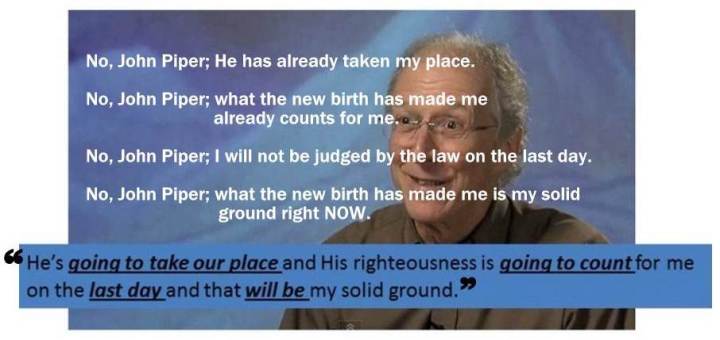
The Language of Calvinist Progressive Justification and No Assurance of Salvation
 In the following clip, notice that Calvinist Todd Friel includes Christ’s “perfect life” as being part of the atonement. Problem is, God was “pleased” with Christ when he was baptized by John and l…
Source: The Language of Calvinist Progressive Justification and No Assurance of Salvation



3 comments