This is the Gospel
An endless parade of Protestant celebrity pastors saturate the internet with their version of the gospel. Without exception, these presentations, whether a clip from a sermon or memes created and posted by man-worshipers are false representations of the gospel. The following is the gospel.
The gospel is, “You must be born again.” This is how Jesus replied to Nicodemus. Like religious leaders of that day, Protestants struggle with the idea of a literal rebirth. Jesus explained it as a spiritual rebirth.
Jesus came to make that rebirth possible. How did he do it? Jesus died and was resurrected so that we can follow Jesus in a one-time death and resurrection resulting in our justification as God’s literal children. He is the “firstborn of many brethren” (Romans 8:29) and the “first fruits of those who have fallen asleep” (1Corinthians 15:20). That’s the Gospel.
When we are born again, we have a spiritual death of the old man and a new birth making us a new creature.
Roman 6:6; What shall we say then? Are we to continue in sin that grace may abound? 2 By no means! How can we who died to sin still live in it? 3 Do you not know that all of us who have been baptized into Christ Jesus were baptized into his death? 4 We were buried therefore with him by baptism into death, in order that, just as Christ was raised from the dead by the glory of the Father, we too might walk in newness of life.
This is to be taken literally. Spiritually, we are born again by the Spirit through the death of the old us, and a literal rebirth into a new creature resulting in, “Therefore if any man be in Christ, he is a new creature: old things are passed away; behold, all things are become new.” At a later date, our natural bodies will be transformed.
On the cross, Christ endured the punishment for all sin, and sin is defined by the law. Per God’s plan, all sin is encapsulated within the law (Galatians 3:21-23). Hence, Christ didn’t die to create a way to ritualistically cover sin, but he died to end the law and subsequent sin: “…by canceling the record of debt that stood against us with its legal demands. This he set aside, nailing it to the cross.” “For Christ is the end of the law for righteousness to everyone who believes.”
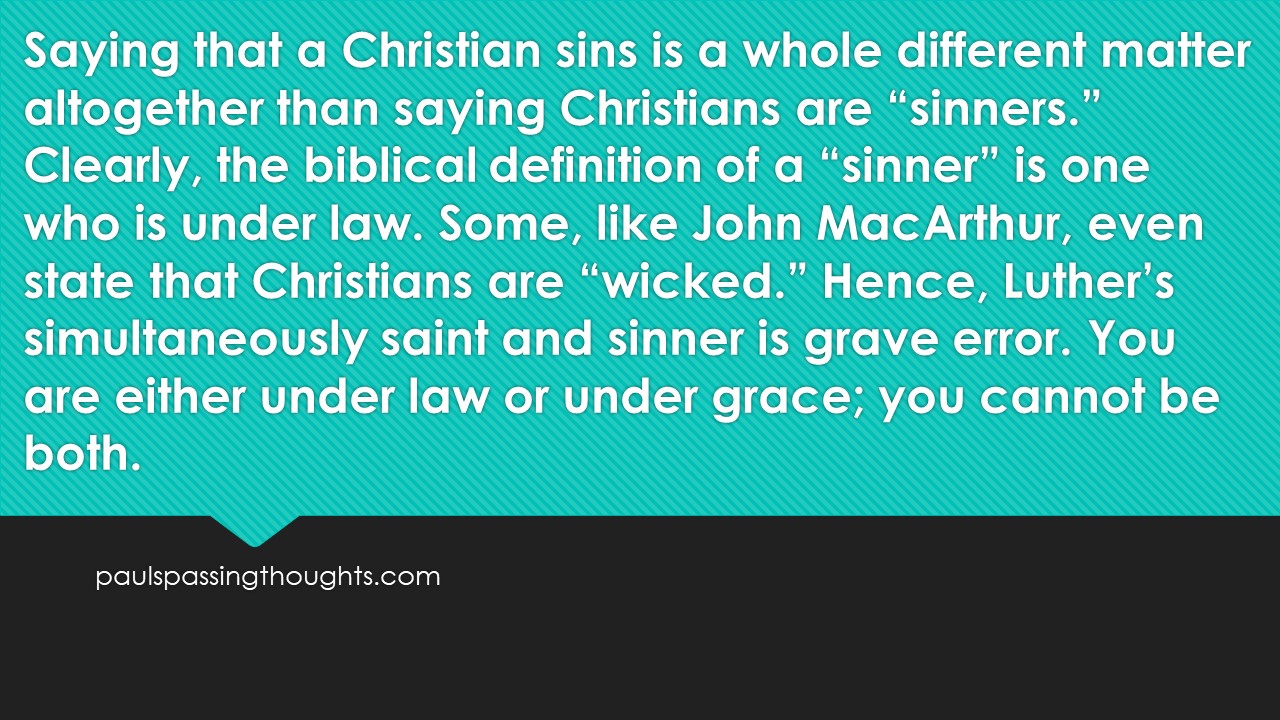
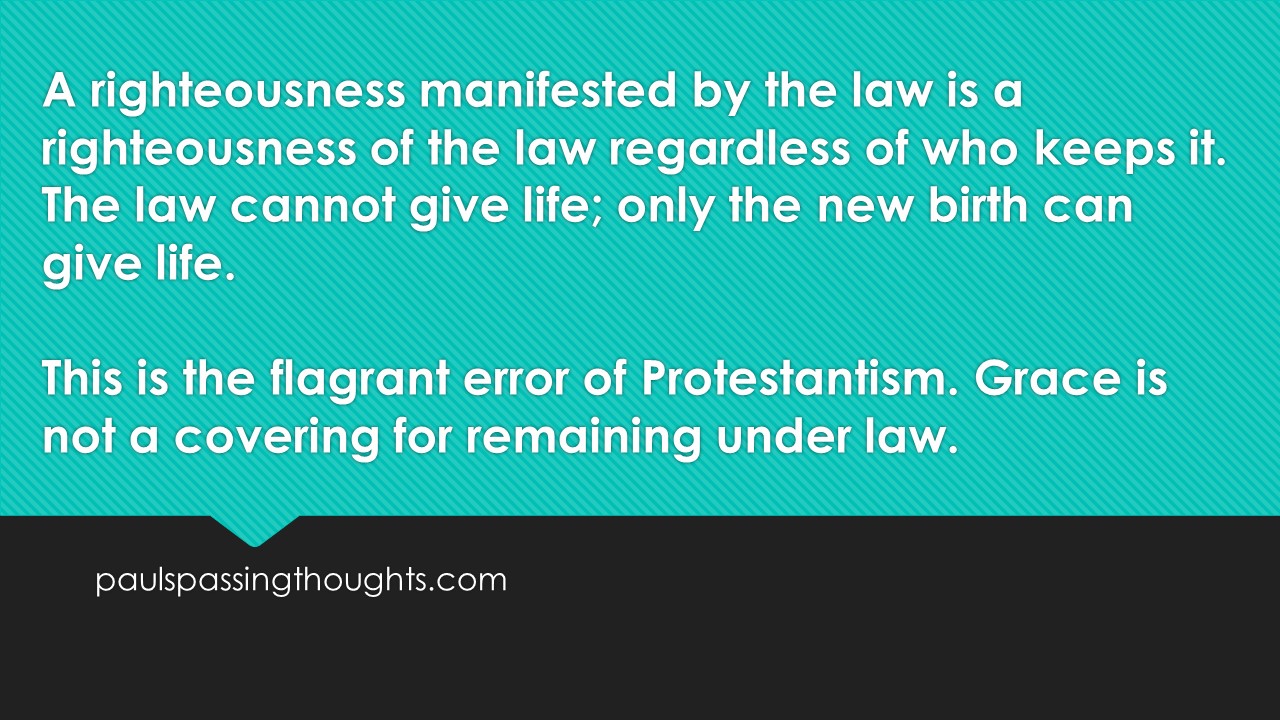
Grace is not a covering for remaining under law; “under grace” is the kingdom of light we have been translated into from the kingdom of darkness where the condemnation of the law exists. You cannot be under grace and under law both, you are one or the other. We are justified by the new birth, not the perfect keeping of the law by anyone. Christ was a manifestation of righteousness “apart from the law.”
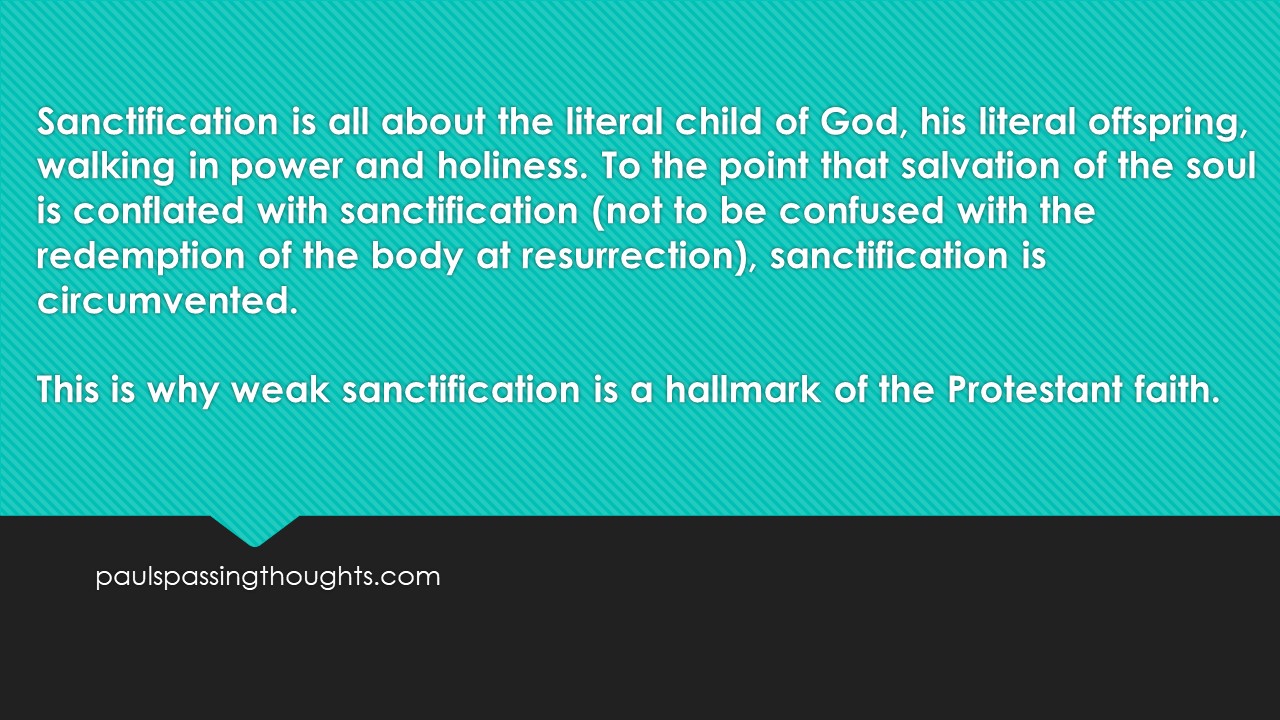
This salvation changes our relationship to the law. This is the Spirit’s two uses of the law. The first use is to convict the world of sin and the judgment to come. The second use is for sanctification, which teaches us to control our natural bodies and fulfill the law by loving God and others (also note Romans 8:2). Sanctification progressively separates us from the commonality of the world. One great source of assurance is the knowledge that there is no longer a law that can condemn us, and “where there is no law, there is no sin.”
Hence, please note, the law does not serve to convict the believer of sin; that is the law’s purpose for the unbeliever. The purpose of the law for the believer is sanctification. And, the Protestant idea that “the same gospel that saves us sanctifies us” turns the true gospel completely upside down, and clearly defines the so-called believer as being under law. Grace, as defined by Protestantism, is a double imputation (double substitution) by Christ keeping the law perfectly for us in justification and sanctification. How is that a justification “apart from the law”? Furthermore, Protestant scholars constantly define justification as a “legal declaration.” How is a legal declaration apart from the law? And, how is Jesus a justification manifested apart from the law if he won our salvation through perfect law-keeping?
Jesus obtained our salvation by establishing the new birth, not law-keeping. Besides, according to Paul in his letter to the Galatians, the law cannot give life.
So, can a believer sin? No, not in a condemning way. A believer can fail to love in a way that brings chastisement by our loving Father (Hebrews 12).
We are justified by the fact that God’s seed is in us because of the new birth (1John 3). This is justification by new birth, not the Protestant justification by faith alone gospel, which is far from being a salvation by faith alone apart from works. Protestantism utilizes so-called faith-alone works that obtain a reapplication of Christ’s work on the cross (ongoing double imputation for “present sin”). One example of this is the Protestant doctrine of “The Ordinary Means of Grace” [read “grace” as “salvation”].
When a person believes the justification by new birth gospel (“You must be born again”) and calls on the Lord for salvation, the Spirit of God baptizes them into the death of Christ and resurrects their spirit to new creaturehood as the literal offspring of God.
That’s the gospel.


2 comments