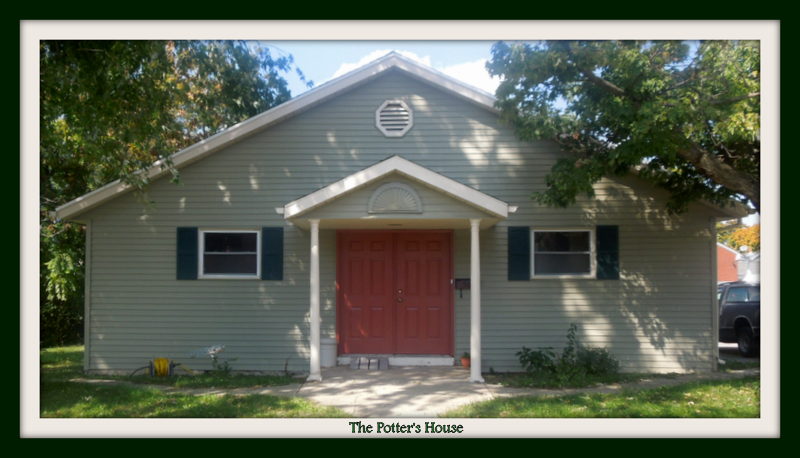
The Potter’s House: Sunday, September 29, 2012
 Introduction to the Book of Romans: “What’s in the Word, ‘Gospel?’” Romans 1:1
Please turn with me to the book of Romans, and the first chapter. This is probably not going to be your typical introduction to a series on a biblical book. Our days and the challenges thereof demand a close look and deep thought on what the apostle Paul’s intent was behind this letter to the Romans. Our particular focus to start this series will be Chapter 1, verse 1.
But first, what are we to expect in the forthcoming messages? Primarily, what is the book of Romans about and why did Paul write it? And what do we expect to learn from it? The answer comes by contrasting Romans 1: 8-15, and verse 16 following. We conclude from verse 8 that this was a strong group of believers whose testimony was known worldwide. Because of this, Paul was eager to visit them, but had been hindered.
Unlike the letter to the Corinthians, Paul wasn’t writing to the Romans to correct error. Unlike the Corinthian letters, we would not expect the content to reflect problems among believers in Rome. In fact, we see in verses 11 and 12 that Paul longed to see them so that they could mutually encourage each other. These Christians were strong Christians who even had the ability impart spiritual fruit to the apostle Paul.
But after Paul introduces himself in Chapter 1:1-7, and commends the believers at Rome in verses 8-15, something happens. Seemingly out of nowhere, and without purpose, he starts talking about other people. In verse 18 he writes, “The wrath of God is being revealed from heaven against all the godlessness and wickedness of people, who suppress the truth by their wickedness….” What could that have to do with the church at Rome? Remembering that the Roman church was primarily Gentile, we find that Paul starts writing about hypocritical Jews in verse 12 of Chapter 2. What in the world is going on?
The key is in 1:14,15. “I am obligated both to Greeks and non-Greeks, both to the wise and the foolish. That is why I am so eager to preach the gospel also to you who are in Rome.” What do we think primarily when we think about the word, “gospel”? Well, in one regard, we would rightfully think about the good news (that’s what the word “gospel” means: “good news”) that Christ died for our sins and made a way for us to be reconciled to God.
But wait a minute. The Romans were saved, and their faith was even spoken of throughout the whole world. Paul even thought he could benefit from their faith. Why would the apostle Paul want to go there and preach the gospel to them again? Well, from 1950 to 1970, American Christianity would answer that question this way: “Church is where people get saved. We have to get people to church so that we can get them under the gospel. Yes, discipleship is important, but the more time we spend in holy huddles the less we get people under the gospel.”
From 1970 to present, the answer is:
“We agree, but the key is that the same gospel that saved you also grows you. We grow in salvation by hearing the gospel afresh. We agree that investing a bunch of time in the discipleship of do’s and don’ts not only lessons the preaching of the gospel, but will not contribute to our spiritual growth as well.”
So, that is what these two groups would suggest in answering the question of Romans 1:15: why would Paul want to preach the gospel to believers at Rome? And my friends, these two groups probably represent at least 85% of American Christianity in our day. But the key to understanding what Paul meant in Romans 1:15 stems from a question that is being asked more and more in our day by Bible teachers and pastors. Is the “gospel” more than the five-word gospel, “Christ died for our sins” that is all the rage in our day? John Piper expands on it a little more; he suggests that the gospel can be stated in one sentence. And no doubt, that is probably true of the good news that Christ died for our sins. But is the “gospel” more than that?
Yes it is. You see, Paul didn’t long to go to Rome to reiterate the good news of the death, burial, and resurrection of Christ to already-saved Christians, he longed to go to them to preach the entire spectrum of the gospel. And since he didn’t know for certain that he would still get to come to them, he states the full spectrum of the gospel in this letter to them, starting in 1:16 and concluding in 15:21.
That’s what we have before us. That is the intent of this letter. That is what we should expect from this study: God’s full good news truth statement concerning what the world’s philosophers and psychologists have clamored about to know or disprove since ancient times. This is the good news of understanding what makes man tick, and how God truly relates to him. The deepest “why,” “how,” and “what” questions regarding life and godliness are answered in this letter; for example, why do Christians still sin?
Moreover, we see this truth concerning the word gospel in the ministry of Jesus. We read the following in Matthew 4:23, “Jesus went throughout Galilee, teaching in their synagogues, proclaiming the good news of the kingdom, and healing every disease and sickness among the people.” We find out exactly what Jesus was preaching in regard to the “good news of the kingdom” three verses latter in the Sermon on the Mount, and the sermon states nothing in regard to death, burial, and resurrection of Christ. The sermon is instruction for having a life built upon a rock by learning the commands of Christ and putting them into practice (Matthew 7: 24). That’s good news also. The full orbed gospel is the full counsel of God that answers the important questions of life and gives us the information we need for life and godliness. My own experience is the norm. By and large, making sure Christians have an in-depth understanding of the book of Romans is low on the priority list.
That’s the introduction. We now begin our study of the book of Romans in verse one. Verse one is all we will cover in this first message. “Paul, a servant of Christ Jesus, called to be an apostle and set apart for the gospel of God.” This first verse is ripe with critical salvation truth. Paul introduces himself as a saved person. The saved person that describes the apostle Paul can be no less for anybody naming the name of Jesus Christ.
First, he describes himself as a servant of Jesus Christ. In our present day, the information age, there are many study helps that enable us to define how Bible words are translated in the different versions. You don’t have to know Greek or Hebrew, and we are not in bondage to those who do. For instance, “E-Sword” is an online source that has a complete electronic Bible. By hovering over any given word with our mouse, we can see the Greek definition. We can also do searches of synonyms to see how the same word might be used in other places in the Bible. In this case, “servant,” according to E-Sword’s online dictionary, can also mean “slave” or “bond slave.” In fact, the New American Standard Bible translates it, “bond servant.” But if you go to Bible Gateway, which is a free online concordance, and do a New Testament search for “slave,” and then refer back to E-Sword for the Greek word that is used—you find that Paul refers to himself by the same word that is translated “slave” in many other places in the New Testament. Paul called himself a slave of Jesus Christ.
And if you are a Christian, that’s what you signed up for. If you didn’t sign up for slavery to Jesus Christ—you’re not a Christian—you agreed to a gospel presentation that was errant. You agreed to Christianity that is not a true Christianity. Period. In this case, you only signed up for salvation, not discipleship. Being saved is both.
In Christ’s mandate to the church, he calls us to “make disciples,” not saved people. Here is exactly what he said as documented in Matthew 28:18-20: “Then Jesus came to them and said, ‘All authority in heaven and on earth has been given to me. Therefore go and make disciples of all nations, baptizing them in the name of the Father and of the Son and of the Holy Spirit, and teaching them to obey everything I have commanded you. And surely I am with you always, to the very end of the age.’”
Your baptism was a public profession that you have come to believe in the death, burial, and resurrection of Christ for the forgiveness of sin. You are justified by God when you believe this. But that is only half of the gospel. You must also recognize that you are a disciple that observes everything Christ has commanded. This is the great heresy of our day. We have a culmination of two movements coming together that either teach that discipleship is optional, or that discipleship is the same thing as being declared righteous. This is the culmination of two movements that plainly state that sharing the gospel in a context that is more than the five words of, “Christ died for our sins” is a works salvation. It is the false gospel that James decried that is a calling to a discipleship that functions on belief in the five words only, and not the full gospel that also includes the full counsel of God. We are not saved by participating in discipleship, but our belief in the five words also comes with recognition that we are committing our life to Christ and His lordship. Christ is either Lord, or He isn’t!
In 1Corinthians 6:20 Paul states that we are “bought with a price.” What was that price? Is it not the blood of Christ? Therefore, to deny that we have been purchased (this is first century slave terminology) as slaves is to deny the very purchase. If we are not slaves to Christ’s lordship, then neither were we purchased.
So, how does this happen without making our role in discipleship a part of God’s saving work and our justification? And why do Christians who have committed to Christ’s lordship still sin? And how does the law function in all of this? The answering of these questions is of extreme importance, and that’s why Paul longed to come to Rome to preach it to the Christians there. Nevertheless, he begins to proclaim the depths of the gospel to them in 1:16. Paul wanted to teach it to them publically and from house to house as he had done in other regions, but until then, this letter would have to suffice. That is why this letter is profoundly critical for Christians to understand.
Secondly, Paul said he was called and set apart for the “gospel of God.” And if you are saved, it is no different for you. You are not called to be an apostle, but if you are saved, you are a servant; you are also called, and set apart. Turn to with me to 1 Corinthians 6:9-11. It reads as follows, “Or do you not know that wrongdoers will not inherit the kingdom of God? Do not be deceived: Neither the sexually immoral nor idolaters nor adulterers nor men who have sex with men nor thieves nor the greedy nor drunkards nor slanderers nor swindlers will inherit the kingdom of God. And that is what some of you were. But you were washed, you were sanctified, you were justified in the name of the Lord Jesus Christ and by the Spirit of our God.”
In the thirteenth chapter of John, Christ told Peter that he no longer needed a washing—that was done when Peter was saved. We are justified, and declared holy. If you use E-Sword, and hover over the word, “sanctified” in 1Corinthians 6:11, you find out that it means “holy.” To be sanctified is to be made holy. You say, “Well, I am not looking very holy right now, how can this be?” Questions like this is why the book of Romans is so vital—these are the very questions that this book answers lest Christians are confused, neutralized, and hesitant in the aggressive discipleship God has called us to.
Watch what Paul states in 1Thessalonians 4:3-8, “It is God’s will that you should be sanctified: that you should avoid sexual immorality; that each of you should learn to control your own body in a way that is holy and honorable, not in passionate lust like the pagans, who do not know God; and that in this matter no one should wrong or take advantage of a brother or sister. The Lord will punish all those who commit such sins, as we told you and warned you before. For God did not call us to be impure, but to live a holy life. Therefore, anyone who rejects this instruction does not reject a human being but God, the very God who gives you his Holy Spirit.”
This is why Paul longed to preach the whole gospel to the Christians at Rome. The gospel is not only about the gospel, it is about how to do the gospel. It is about how to control “YOUR OWN BODY” in a way that is holy and honorable. It is the whole counsel of God, the good news of Jesus Christ, and the good news of the kingdom. It is the good news of God’s entire truth, not just part of it. The fact that Christ died for our sins is good news; the fact that God set us apart is good news; the Holy Spirits role as our helper in sanctification is good news; the fact that we can have life, and have it more abundantly is good news.
But be sure of this: he who rejects the full counsel of God in learning how to control our own bodies is…. as Paul clearly states, not rejecting a man, but rejecting God. And that is what a great deal of Romans is about.
And as we move forward in this book, I hope you share my same anticipation in what we will learn together about God’s great gospel. We have a little more business to take care of in the next messages, but our endeavor into Paul’s gospel treatise begins in Romans 1:16.

Comment Post: The Difference Between Old Calvinism and New Calvinism
With addendum:
Lydia,
Authentic Calvinism eventually dies a social death. It looks like the following pattern: It dies, then there is a resurgence that lasts 30-50 years. The death usually lasts about 100 years before another “rediscovery.” Remnants of the resurgence live on with more biblically grounded soteriology, but retains the name, “Calvinism.” Moreover, this is why contemporary Calvinism (the remnant) has a soteriology that is inconsistent with their eschatology. Hence, many “Calvinists” of our day contend against “New Calvinism.”
The historical rediscoveries die out as a result of:
1. The novelty wears off and the “gospel” repetition becomes boring and lifeless.
2. The saints eventually discover that it is a false gospel.
3. It is always accompanied by escalating tyranny.
4. The lack of sound doctrine regarding sanctification begins to have ill results in the lives of many people.
New Calvinism is a resurgence of authentic Calvinism with a new twist: for the first time in church history, it was systematized and packaged for the present church culture via the Australian Forum (1970). This time, it may not go away and become part of the last day antinomian blitzkrieg that will precede Christ’s return. However, Susan and I have been visiting churches that were on the cutting edge of the most recent resurgence. They were the ones who embraced this Reformed model early on as the movement was picking up steam (early 80′s). And what we are seeing is almost surreal. The best way we can explain it is: the outward expression of praise and worship with no life. Almost like skeletons raising their hands in praise to Jesus. Lots of praise and worship, but in both cases, large crowds of people move past each other like ships in the night. While the message is love, love, love, joy, joy, joy; we were not greeted by anybody. Never in my life have I seen so many unfriendly people with smiling faces.
paul
Politics and Religion Have the Same Soul
 When I didn’t know any better as a Christian, I was indifferent to politics because it made no sense to me. My problem was the following: I was always focused on outcomes. It never made any sense to me that regardless of outcomes, people would vote the same ideologues into office time and time again. In my frustration I would think, “Politics are a waste of time because people are stupid. Regardless of outcomes, they vote these same people into office time and time again.” This made absolutely no sense to me.
Until recently, church never made any sense to me either. Consider this picture: vast institutions pregnant with ultra-educated people coming up with ideas that plainly contrast Scripture. Again, regardless of the poor outcomes, the SYSTEM remains intact. The system seems to offer a devil that we know, and have become comfortable with, as opposed to a devil that we don’t know.
If you think about it, what is the difference between contemporary Christianity and the slave caste system of the Civil War era? To stand up against injustice is really the same thing as challenging the system. Action is stalled because people hope that the system will change (good luck with that)—that’s easy, changing the system is hard. However, we will fight harder to not change the system, as opposed to changing the system because it’s what we know. Hence, the system takes precedent over God’s justice and is protected by political spin dressed in biblical garb.
But people aren’t stupid, they just prefer whatever the normal is for the day—especially if they aren’t the ones being tied between two horses running in opposite directions. Pathetic, but it is what it is. And both politics and religion are kept alive by the same heart in this regard; the epic question of, “Who owns man?” Ownership is the soul of politics and religion.
Since the day that the framers of the American Constitution posed this question and answered it with the resolve of “Give me liberty or give me death,” be sure of this: the question of who owns man is the soul of American politics and always will be. Whether the American public realizes it or not, those who vote for Obama think government owns man. People who vote for Romney (albeit not their preferred choice) believe that we own ourselves, and are responsible to no other than God for the sum and substance of our life.
That’s the crux, until the day that the former wins the day—then politics will not be necessary because everything is decided in regard to the arena of ideas—there won’t be any arena—the government decides what a good idea is, and what it isn’t.
And religion is no different. That’s because the American framers of the Constitution were home wreckers. They caused the divorce between the European marriage of church and state. In Europe prior to the Enlightenment era that gave birth to the framers; as it was in the government, so it was in the church. There was no arena of ideas save the think tanks that devised efficient machines to eliminate free thinkers with as much pain as possible. Never before in human history has more science been poured into the technology of death machines than in Medieval Europe. And as part of the totally depraved masses, suggesting ideas privately or otherwise was extremely hazardous to one’s health.
It was a very efficient marriage. The church came up with the ideas and controlled them, and the government enforced the churches’ ideas. But there was a problem. The problem can be seen in one Bible verse among God’s full philosophical statement to man regarding truth: “Come, let us reason together saith the Lord.”
Reason. Even God presents His truth in an arena for man’s hearing. In the book of Job, we even find God challenging Satan in that arena. Like no other creatures, we are the ones called to reason—it is how we are wired by God. The results of shutting down man’s ability to think are abundantly evident from European history. Man is created to think. A man who is not allowed to think is exactly like a fish out of water. Eventually, he will start flopping around.
The framers understood this. They knew that any attempt by government to control ideas would only result in a repeat of European history. They also knew that religion is the fundamental gene pool in that regard. But systems die hard. Regardless of the eight-hundred-year European raging fire that could not be extinguished with blood, European religious tyrants who came to setup shop in America could only propagate their system in the government protected American-made arena of ideas.
The divorced couple must play by American rules thus far. In the American political system, it’s communism/socialism. In the religious realm, it’s European Reformed theology. The fight between the Europeans and the yanks continues in the arena of ideas instead of the battlefield. But be also certain of this: every drop of blood spilled in human history has been over ideas. The American framers of the Constitution, for the first time in history, invented a caste system that could implement ethics through politics without blood. Preferable in my book. And I am allowed to say so.
The soul of politics and religion is therefore the same. Who owns man? What could be more obvious? Does government own man? Or does man own man? It could be rightfully argued that God owns man, but even he says, “Come, let us reason together” while the European Reformer Martin Luther called reason a “whore” who should have “dung rubbed in her face to make her ugly.” The separated spouse, government, thinks they know best as well. Thinking, ideas, and reason, in the hands of the masses are supposedly the same as handing an eight-year-old a loaded gun as a play toy. And in the American arena of ideas, many are convinced that this is true.
Now you know the heart of the election that is now upon us. Obama has clearly stated that it is common sense that man exists for the government, and doesn’t build anything: “I hear business owners say, ‘I built this or that.’ You didn’t build that.” And obviously, the idea that led to the building project had nothing to do with it as well. The contrast can be pointed out in a recent speech by Romney at the Dayton, Ohio International airport in which he said that FREEDOM of IDEAS are critical to the overall American economy and wellbeing. It is also reflected in his recent bemoaning that 47% of Americans are dependent on the government and will not vote for him. Right. Exactly. That’s the crux: who owns man? And is he created to reason and think? And is it ok with God when man’s ideas produce positive outcomes?
What is at stake in this election? You only need to look at the governments estranged spouse—the church. For the most part, European Reformed theology has won out in the arena of ideas. The caste system formed by the Westminster Confession and rabid Puritans has been embraced willingly by those convinced that the church owns them. Sure, there is rape. Sure, there is the denial of ideas. Sure, there is injustice. Sure, there are no other answers but “the gospel.” Sure, we are still totally depraved and helpless. Sure, church is boring. Sure, the church is full of mindless followers. But what else is there? If not for the system, then what? If not for the system of Reformed “orthodoxy” enforced by church “polity” and executed by various and sundry unpleasantries that replaced the burning stake forbidden by our American forefathers, then what?
Ownership by government always leads to the same thing. Always. There are no exceptions. Regardless of outcomes, many American voters who like to be owned by their religion will also vote to be owned by the state. I also wonder how much this might be connected to the whole issue of culpability before God. After all, if we are unable to think for ourselves, and our ideas are dangerous to our own wellbeing, how can God hold us responsible? This provokes one to think of Nazi Germany and that people’s refrain, “The government made us do it.”
“One thing we don’t discuss in mixed company is politics and religion.” Right, because there is no doubt; that divorced couple is a volatile subject, especially when the two are poligion. We do know the devil of poligion, but change is hard and inconvenient. Luther suggested that reason be consigned to the “closets of the house” and we have obeyed. And whatever you do, don’t look in the closet—the monster of history is in there.
Nevertheless, when you pull the lever in November, the question isn’t, “Romney or Obama?” The real question is the soul of politics and religion: “Who owns you?”
paul
Reformed Masters and Blogger Slaves
That’s the consensus. Once again, a situation that is hopeless. A man who stood for what is right came to realize something: the leadership of his “family” church had subtly indoctrinated his wife over time to believe church “polity” and “orthodoxy” trumps his authority in their own home and his wife’s God given ability to think for herself. He never got it, but unfortunately, she did.
“But, they can’t tell her to divorce him, that’s against the Bible!” That’s what I used to say when I still didn’t get it. Now I get it. The Bible isn’t our authority because the masses are not qualified to interpret the Bible for themselves. The spiritual elite must interpret it for us. The agreed upon basic principles by the majority of the elite (certified by a seminary degree in indoctrination) is “orthodoxy.” Church “polity” protects the orthodoxy.
However, most of the spiritually ignorant masses cannot understand orthodoxy, so we have creeds, confessions, catechism, “Daily Bread” devotionals, and of course, books, books, and more books. The totally depraved masses wait at the doors of Christian publishing companies with bated breath for the next divine unction from the who’s who of neo-Calvinism.
On the Protestant side, it’s the “Westminster Divines.” On the Catholic side, it’s popes and cardinals, but there is no difference. The Reformation was a fight between philosopher kings for control of the mutton—nothing more and nothing less. The Reformers saw Rome as immoral philosopher kings. Gee whiz, something had to be done; they were supposedly better suited to rule the totally depraved. The Reformers then came up with a doctrine that was a different twist on the total depravity and utter ineptitude of man. But both parties were, and still are, fundamentality Augustinian in their philosophy.
Where has all of this taken us? Look for yourself. In the South during the pinnacle of slavery, I am sure there was an outcry among the slaves concerning the abuse by masters. How far did it get them? How many masters stood against other masters on behalf of the slaves? I don’t know what the primary conduit for the outcry was in that day, but today, it’s blogging. Where is it getting us in comparison? Look up “same” in the dictionary.
What kind of abuse? Oh, pretty much the same kind we see today: an expectation that you will burn yourself out for the masters, and to the neglect of your family which they will use against you for asking the wrong questions. If a master wanted to break up a slave marriage; done. If a master wanted a slave’s wife; done. If a master wanted to molest a slave’s son or daughter; done. If a master wanted to ruin a slave’s name; done. If a master wanted to deprive a slave of friends; done. If a master wanted to compel a slave to believe something; done. And for certain, if a master wanted a slave to keep their mouth shut; done. In regard to the master controlling what the slave learned and understood; done.
The masters of the South had the law at their disposal to control the slaves. The Reformed masters of our day have to improvise. That’s relatively new for them; in the past, they also had polity with government on their side to enforce the orthodoxy (Google, “Calvin’s Geneva, Inquisition, witch wars, peasant wars, The Thirty Years War, English civil wars 1,2,3, and Salem witch trials” to get you started). Controlling the slaves with polity alone takes creativity, but the Protestants of our day are getting the job done. We are slaves to the formal church by choice through manipulation. And worse yet, unlike the slaves of the South, we are paying good money for it.
And we are slaves. “No we aren’t.” Oh really? Then why do we keep giving our money to abusers and co-abusers who cover for them? Why do we keep going to their churches? “Well Paul, somebody has to be in control.” Exactly. Because somebody “has to be in control,” we are no better off than the slaves of the South—only more pathetic because we are willing participants who pay good money to our abusers. Google, “ABWE Bangladesh Missionary Kids.” As one former member of a Reformed church stated it: “I paid good money to have my marriage destroyed and my family divided.”
It took years, but we have finally been brainwashed into thinking that we need rulers in the church as opposed to leaders. And after all, rulers are never perfect. And after all, if not them, who? And after all, but for the grace of God, there go I. And after all, better that some suffer from elder boo-boos in quietness for the betterment of the whole. And after all, unity and peace are always the best remedy though imperfect in this totally depraved world. And after all, we know it’s bad, but where else can we go? And after all….you fill in the blank.
Far from the psyche of the American church is Christ’s call to value the one as much as the other 99. The Jewish proverb of, “He who saves one life—saves the world” has been replaced with spiritual Marxism and its cult of The Group. Many oppose the cult of group, while holding to the Protestant gospel of progressive justification. Sorry, that doctrine will eventually lead to the cult of group. Some of the Puritans who landed here wanted to shed the oppressive church polity of the Reformers, but retained the same gospel (Google, “Savoy Declaration”)—guess what eventually happened? Doctrine always, in time, dictates behavior; there is absolutely no exception to that rule.
The data that verifies the following formula is not hard to come by: Formula A; God > Bible > Elders > Orthodoxy > Polity > Control > Creeds > Totally Depraved.
Never before in church history has there been more Christian academia in an information age to boot; yet, never before in church history have the saints been more dumbed down. Ignorance =’s control. This is by intention. This is the Reformed endgame. Susan and I correspond with people all over the world about the doctrine of progressive justification, and the continual roadblock is the fact that most Christians do not know the difference between justification and sanctification. How can this be? Answer: model “A.”
Formula B: this is the biblical model; God > Bible > Saints (led by elders) = Christ’s mandate to the church to make disciples.
If one breaks the bondage we are in today, and reads the Bible for his/her self—some amazing things are discovered. In an irony that I cannot even begin to put into words from a contemporary perspective, Jude began to write to a group of believers about the gospel, but instead addressed something more urgent: false teachers. And take note: the letter, like most others in the Bible, is addressed to the saints and not the elders. The saints were to take ownership of the problem. And this was regarding false teachers who were among them—who had “slipped in unawares.”
As with Peter, the instruction is clear: one way or the other; separate from them. This isn’t rocket science. But why does that not happen? Because Christians, by and large, operate by formula “A” which leaves them no choice. Supposedly. But think about it; if “A” is reality, what are your choices? You can only start your own church under the authority/approval of the same, and quitting church will get you excommunicated (Google, “Mark Dever excommunicates 256 members”). If leaving the authority of the church would put you in disfavor with God, what choice do you have? Hence, it is what it is; we suck it up and “trust the problem to those who are fully apprised of the situation.” Amen. “Just please trust us as we have the whole picture”; ie., there is dirt in the situation that you don’t know about (but probably not).
That wasn’t Jude’s approach at all. Not even close. He instructed the saints directly on how to detect false teachers. We are not to be associated with false teachers in any regard, period. There are no exceptions. And the premier heresy of our day is progressive justification. And progressive justification is the source of the abuse. And we have simply chosen to enslave ourselves to false teachers.
And model “A” is not our authority, and there is simply no excuse for this. We are owned by Christ, not false teachers. We often cling to model “A” because it’s easy and “safe.” Turning a blind eye to abuse is easier and more comfortable then fending for ourselves and others even though Christ has promised to be with us “till the end of the age.” This is a matter of trusting Christ and not vile men with impressive Reformed pedigrees. Is this what Psychologists refer to as “codependence”? Well then, I might have to give them credit for knowing something. Embracing evil as a way to avoid confronting our fears has never been becoming for anyone who names the name of Christ.
Quitting church is not the answer either. Jude totally missed the memo on that one. But it is high time that the discernment/anti-abuse blogosphere stops the whining, it is rather time to get solution oriented. The outcry of Southern slaves who could do nothing else is understandable, but there are many options available to ministries that deal with abuse. And by the way, “having a place to voice your pain” IS NOT getting the job done. The abusers are getting the job done, but not us. I think it is time to ask why that is.
There is only one thing that can stop tyranny: action. What action? The sky is the limit. The Dohse family will begin doing their part this Sunday. We will begin to hold church in our home with pastor Paul presiding. Maybe some of the spiritual orphans out there will join us. Then there are many options in the future if we grow.
Enough whining and psychobabble already. Form a coalition of bloggers who can organize things like a thirty-day tithing blackout. Do something, but for crying out loud….
Stop whining!
paul



8 comments