TANC/PPT Doctrinal Statment
TANC Doctrinal Statement Revised March 2012
Scripture
All Scripture is God-breathed, and is sufficient to make the believer adequate for every good work pleasing to God. God used man to write the Scriptures as they were born along by the Holy Spirit. No iota or dot of Scripture has ceased to benefit the believer in some way. Scripture’s truth and accuracy has always been superintended by God. The Scriptures have been completely delivered to the saints, and terrible woe will come to those who add to it or take away from it (2Timothy 3:16,17; Matthew 4:4; 2Peter 1:19-21; Matthew 5:18; Jude 3; Revelation 22:18,19).
Authority of Scripture
The authority of Scripture supersedes that of elders and the Presbytery. Our first allegiance is always to the Chief Shepherd and all that He has commanded. We only follow men when they follow Christ (Acts 17:11,12; 1Cortinthians 4:6; 1Corinthians 11:1; Galatians 1:8,9 Matthew 28:18,19).
The Trinity
The Father, Son, and Holy Spirit are one God, but also three distinct persons who are the fullness of all deity in, and of themselves. God is sovereign over the affairs of men, pure and righteous in all of His affairs, loves those who seek Him, and hates evil doers. The Son will return to execute judgment on Earth at a time like the days of Noah, and will establish an everlasting kingdom of righteousness ruled by the Father and Son. Until then, God’s people are to be holy as He is holy, glorify His name by the way they live, and be ever watchful and ready for His Son’s return. All of redemptive history is moving toward God the Father being “all in all” (Deuteronomy 6:4; 1Timothy 2:5; John 1:1; Acts 5:3,4; 2Corinthians 3:17,18; Habakkuk 1:13; Malachi 1:11; Matthew 5:8; Philippians 2:15; John 3:16; Psalms 5:5; 11:5; Hosea 9:15; Malachi; 1:2,3; Matthew 5:13-16; Matthew 24:37; Revelation 22:1; 1Peter 1:15; Matthew 24:42; 1Corinthians 15:25-28).
Creation
The Trinity created the heavens and Earth in six solar days. Light and darkness were created as one in the first day amidst water. God then separated the darkness and light in the first day also. (Genesis 1:1-31).
Salvation
Salvation is Trinitarian. God the Father justifies, the Son saves, and The Holy Spirit regenerates. God retains all glory for salvation unto Himself. Those whom the Father has elected, He has also called. Those whom the Father has called, He has glorified. God has done this before creation, and His election guarantees glorification. All that the Father has elected, he will lead to the Son. All that He leads to the Son are justified. Therefore, glorification is secured before the foundation of the Earth for all of God’s children. Hence, sanctification has no bearing on the Father’s justification.
All who come to the Father must come through the Son by believing in His death, burial, and resurrection. He is the only mediator between God and mankind. With the aid of the Holy Spirit and the power that raised Christ from the grave, and obedience to the word of God, the believer can experience the full assurance of the Father’s election. The Holy Spirit will illumine believers and counsel them with the word of God. He will actively work with the believer to be set apart for God’s glory (Romans 8:30; Ephesians 1:3-10; John 17:17; John 14:15-17; 1Timothy 2:5; 2Peter 1:3-21; Ephesians 1:15-20; John 6:44; 1 Corinthians 6:14; 15:1-8).
Evangelism
People are not saved without the preaching of the gospel. God’s offer of salvation to all people is a legitimate offer. God takes no pleasure in the death of the wicked. It is God’s desire that all people come to repentance and be saved (Ezekiel 33:11; John 3:16-19; Acts 17:30; 1 Timothy 2:3,4; 2 Peter 3:9; Romans 10:14; Matthew 23:37).
The New Birth
We affirm the new birth. There is no salvation without it. We are created into totally new creatures, and the old self has been put to death. Therefore, sin’s ability to enslave us has been broken, and we are free to obey God with the aid of the Holy Spirit and instruction from the Scriptures. A robust effort in sanctification through the new birth will be richly rewarded in this life and the life to come according to the promises of God, and with no ability to add or take away from justification.
We reject all teachings that present the new birth as a realm or manifestation of the Spirit without the co-laboring of the believer. Christians are declared righteous, and in fact are righteous through the new birth. Christians continue to sin because of the flesh and mortality. Sinfulness resides in the flesh of the believer, while the heart of the believer is redeemed. We are washed, but need forgiveness for our failings while walking in the world. This is not forgiveness to maintain justification, but forgiveness to maintain a harmonious relationship with our Father. Jesus Christ will reward us for our holy works and loving accomplishments while on Earth, and destroy the works of the flesh by fire (John 3:3-15; John 1:12,13; 2Corinthians 5:17; Colossians 3:9,10; Ephesians 5: 20-24 1Corinthians 3:9; 1Thessalonians 3:2; 2Corinthians 6:1; Philippians 4:8,9; John 13: 6-11; 1Thessilonians 4:3 Romans 7:23; Mark 13:48; Galatians 5:16).
The Church
The church is the universal body of Christ with local expressions. Local assemblies should be guided by a group of pastors. The other offices of the church are deacon and deaconess. These are individuals, both female and male, who have all the qualifications of “elder” except, “apt to teach.” They are to handle the affairs of the church in order to free the elders for prayer and the “ministry of the word.” The local assembly should be led by elders, and confirmed by the congregation in regard to their decisions and calling. Elders are not to lord it over the flock. The office of elder and deacon/deaconess is a spiritual gift, and therefore a lifetime appointment. However, the privilege of practicing these gifts can be halted by the congregation for dereliction of duty and other sins.
Elders who sin are to be rebuked before the entire congregation so the other elders will fear. Elders are to equip the saints for ministry, and the saints/congregation are the ministers. The elders are not the ministers. The saints are to be equipped with the full counsel of God. The attempt to fully equip the saints with the same gospel that justified us is a false gospel. It should also be noted that elders have no authority in the Christian home outside of the church. The authority structure in the home is clearly stated in Ephesians 5:22-27. The husband is the pastor of his home, not the elders (Acts 14:23; Titus 1:5-9; Acts 15:1-29; 16:4,5; 20:17; 20:28-32; 21:18; 1Timothy 5:17-19; 1Peter 5:1-5; 1Timothy 4:14; James 5:14,15 Acts 6:1-6; 1Timothy 3:1-13 1Timothy 5:20).
Separation
The Bible instructs regarding “self-discipline” and the “Lord’s discipline” but states nothing about “church discipline” Church discipline is a misnomer. The Bible teaches separation that results in the discipline of the Lord and other practical consequences. This is both local and universal, and is critical in regard to purity of doctrine and practice. This is a practice that should be implemented, when applicable, between individuals and churches, churches and other congregations, and between denominations/organizations. The lack of this practice is greatly responsible for the rampant error of our day. Unity is based on truth. Truth is the life substance of unity, not the avoidance of confrontation. Biblically, division is always framed in context of false doctrine.
The Bible calls for this separation after several different procedures have been applied to the correct situation. We reject a Matthew 18 grid for every situation that occurs in the church. Separation is intended for sins of the baser sort, and is not a tool for fine-tuning God’s people; for instance, counseling, etc. Lastly, involvement of the whole congregation should always precede separation to insure that all in the situation and their actions are vetted. ([Note differences. Sins against brothers: Matt.18:15-20; false teaching that causes division:1Tim.6:3-5, 2John:10,11 Titus 3:10, Rom.16:16,17; sinning Elders:1 Timothy 5:19; broken fellowship between parishioners: Phil. 4:2,3; Idleness: 2Thess. 3:6-15; gross Immorality: 1Cor. 5:1- 13] 1Corinthians 5:6; Revelations 2:1-3:22; Hebrews 12:5-11; 1Cor. 11:30; 1Cor. 11:31-32).
Eschatology
The coming of Jesus Christ to secure the Father’s salvation through His sacrifice, and His return, mark the beginning and the end of the last age of the ages. It will be an age marked by deception and an unprecedented onslaught against God’s truth. The primary falsehood of this age will be antinomianism. In fact, the antichrist will be a consummate antinomian. The coalition believes that New Calvinism could be a latter-day antinomian blitzkrieg as the Scriptures predict will come in the last days (Hebrews 1:1,2; Hebrews 9:26; 2Peter 3:3-10; 2Timothy 4:2,3; 1John 2:18; 1John 4:1; 2Corinthians 11:13; 2Thessalonians 2:1-3; 2Timothy 3:1-5; 2Timothy 3:13; Matthew 24:3,4. The following refers to how the last days are framed in regard “anomia”: love, Matthew 24:11,12; Judgment, Matthew 7:23; 13:41; fellowship, 2Corinthians 6:14; mystery of anomia, 2Thessalonians 2:7; antichrist is called the “anomia one” or “man of anomia” three times in 2Thesslonians chapter two. Redemption, Titus 2:14).
Should PPT Screen Heretical Detractors?
 “The Reformation is the biggest socialist hoax ever perpetrated on mankind. It is an anti-Christ worship of Platonist metaphysics….If the stats drop because people can no longer learn and cannot see my arguments work in real life, I do give a damn about that.”
Is James Jordan saying that Jesus and Paul are in contradiction? Why would the owner of this website allow the posting of such heresy? This might not be the place for me.
I just went through this conversation with an associate of PPT this week as a result of me cutting off Randy Seiver and others. It was not a short conversation. Curiously, some of the complaints about who I allow to post comments here come from those I have cut off. While claiming to hold to the whole canon and making it void with their Reformed traditions, they don’t like James Jordon because he rejects the Pauline epistles. Their argument is the following: “You show agreement by posting their comments.” No, my position on these issues have been clearly stated in no uncertain terms. And I warn anyone who rejects portions of Scripture to heed the warning of Christ found in Revelation. I would also add that distorting what is there is no different from adding to or taking away from it.
The person who discussed this with me despises the very people he doesn’t want me to screen. He also understands me very well, so any conversation about me fearing ideas that threaten the truth were not addressed. I am not afraid of ideas and my inability to refute bad ones with the facts. We have a morale duty to be informed. Lack of knowledge =’s death. Hence, bring the ideas, if I don’t know the answers, I have a duty to find them.
His argument was that PPT is pioneering uncharted waters; ie., I am the first one (in the blogosphere culture of contemporary history) to call out the very doctrinal foundation of Protestantism and the Reformation. I am not afraid to make hamburgers with every sacred cow of the Reformation. In fact, it’s my delicacy. The Reformation is the biggest socialist hoax ever perpetrated on mankind. It is an anti-Christ worship of Platonist metaphysics. Hence, many not only want to watch the fight, they want to learn how to engage in the debate as well. Knowing my indifference to numbers very well, he asked me in an assuming way why I thought my viewer numbers drop when I screen people. In other words, without seeing my stats, he knew the numbers drop and he also knew what my response would be: “Don’t give a damn.”
He then explained why the numbers drop, and I think his contention has merit: I have cut off the learning process. Also, I don’t have a moderator. If the stats drop because people can no longer learn and cannot see my arguments work in real life, I do give a damn about that. And this blog does need a moderator. The moderator and I are not always going to agree 100%, but I need one. That would be a huge step for this ministry.
For now, the comments come in, I shouldn’t have to fight this fight alone.
paul
The Ramblings of a Dictionary Nerd
 Our son, Philip, called me a Word Nerd the other day. I love words and increasing my collection and understanding of them is enjoyable. There is an orange paperback Handy College Dictionary fourth edition lying next to my laptop, and I use the Merriam-Webster online dictionary daily to find the best word and the most complete meaning of a word to use when I write. I write assessments, goals, objectives, case notes, and reports for my job. On occasion, I write an article for my husband’s blog, and I am attempting to write a novella. (I forbid anyone to read it for it is my creative way to download, and to keep an old mind working as sharply as possible.) When I had extra time last week, I tracked down the word supercalifragilisticexpialidocious; an interesting little research sidebar. So, you think I have gone off the deep end? Perhaps, but I will go out with a rich vocabulary.
Confusing and/or impressing people with fancy or impressive words is not the intent of wanting a strong vocabulary. The point to developing and using a strong vocabulary is to be able to choose words with greater precision. It makes communication simpler, not the opposite as some think. Studying words also helps me in my study of the Word.
Take for example the word grip. Out of curiosity, I used the online dictionary to give me wonderful meanings of that commonly used word. I played tennis back in the day and was always being instructed on how to improve my grip. Everyone who played the game with me always assured me that if I strengthened my grip, my ability to control the ball would improve. There are idioms which use the word grip such as: get a grip, come to grips, and lose your grip, in the grip of something. I have lost count of the times I have been told to “Get a grip.”
A firm, tenacious hold to gain or maintain control or mastery was one rendition I preferred. Immediately, I cross-referenced the word tenacious and by doing so the meaning of the word grip was expanded. Tenacious: not easily pulled apart, persistent, determined, unfaltering, unrelenting. Grip means to take hold with a determined, unfaltering hold in order to gain or maintain control/mastery of a situation, person, or thing. With more investigation, I learned that grip and tenacious had both positive and negative connotations. Grip also has the softer meanings to embrace, clasp, cling, or cradle, and tenacious can mean bull-headed, unregenerate, and stiff-necked. So, an expanded rendition of grip can be a firm, tenacious hold, or a bull-headed clinging to a person, situation, or thing in order to gain or maintain control or mastery.
Why do we grip people, situations, or things so tightly? Is it an attempt to gain or maintain control? Is it fear that something less or inferior will replace what is being held onto so tightly, or even worse, lost forever? Is it a reluctance to say good-bye to the past and a resistance to embrace the future? Is it for security or an emotional safety net? If my questions were on a checklist, I would be checking yes to all of the above.
Gripping the past, hanging on tenaciously to it, does it change the present? Can it affect the future? Yes. It keeps daily growth and spiritual transformation from happening, affects present and future relationships with family, friends, and even casual acquaintances, and hinders new and deeper experiences from being enjoyed. It can be a raw form of rejection.
Even holding onto the good things of the past too tightly can affect personal growth and positive change. How many times have we heard the phrase, “We’ve always done it this way.” because someone at the church or in the family doesn’t want to experience change?
We are told in God’s Word to hold and to also let go. The Apostle Paul tells us to hold onto right thinking and strong doctrine, to hold on to what is good with the promised result of deeper sanctification. I did a quick, not exhaustive, word search of cling, and hold. It was interesting to me that in some of the references I read for the word hold, it was in regard to supporting something. Now, doesn’t that give a perspective on how we can grip someone or something? Rather than hanging on in order to gain or maintain control, we can tenaciously support that person, or organization. Support…do I feel another itch to look up a commonly used word and see what new perspective I can get?
Just like the circuitous storyline in the children’s book If You Give a Mouse A Cookie : When I now hear the word grip, my mind will flash back to the Merriam-Webster online dictionary; and when I go to the online dictionary I will get curious and will look up words. Hmmmmm… And if I look up words I will want to read their definitions. I will even look up the word definition and discover that it’s a statement of the meaning of a word, exemplification, elucidation, clarification, rendering, vignette…….
Ok, Susan, “Get a grip.”
The Thief on the Cross
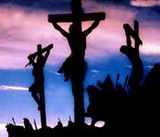 New Calvinism says you must live by faith alone in sanctification to keep your justification. Those are ill motives. The motive is not love, it’s to keep your just standing. It’s staying nailed to the cross in order to keep our salvation. In contrast, the thief on the cross readily recognized that he was going to be with Jesus in paradise that day, but if Christ had released him from that cross, he would have loved Christ with everything in him by obeying everything Christ commanded. “If you love me, keep my commandments.”



2 comments