
Romans Series Interlude: Predestination, a Potter’s House Journey; Part 2

I am very concerned with knowing the right wisdom that determines how we function as Christians. Another major concern of mine is evangelism. Evangelism has always been a struggle among Protestants, and it would seem that when it does happen the incentive is misguided.
I believe one of the major problems among Christians in our day is lazy thinking. When it gets right down to it, the human condition is predicated on good ideas versus bad ideas. Ideas are extremely important. Faith, by no means, is a license for simplicity. Angels, who need not faith, or trust, or hope, have not been given all of the answers on a silver platter. Yet, being holy, they “desire” to investigate the gospel (1Peter 1:12).
What we think, how we think, and what we believe forms our logic, and our logic will determine what we do. What we do is very important to me. What we do is very important to God. Here is a problem: when we hear someone talk about their “Christian worldview,” we assume this is a generic term that means the same to everyone and I find that assumption chilling. What we believe about predestination is very important. Be sure of this: the premise of every third world country and its misery following is a certain belief about predestination.
Predestination, or election, is in the Bible, I grant that. But I also think we should be sure of what we speak of when we use those terms. I know the prevailing views of our day, and I also know that accepting those views as our own without investigation is a big mistake. That is the journey we are on, and I have chosen 2Peter 3:1-18 as our foundation.
This is now the second letter that I am writing to you, beloved. In both of them I am stirring up your sincere mind by way of reminder, 2 that you should remember the predictions of the holy prophets and the commandment of the Lord and Savior through your apostles, 3 knowing this first of all, that scoffers will come in the last days with scoffing, following their own sinful desires.
I use the English Standard Bible (ESV). It is a Neo-Calvinist translation heavily slanted towards authentic Reformed doctrine. Throughout the Bible, we find that the redeemed part of the believer is their mind (http://wp.me/pmd7S-FH). The KJV states that our Christian minds are “pure.” The ESV tempers that with the weaker idea of “sincere.” The following is the actual word:
g1506. εἰλικρινής eilikrinēs; from εἵλη heilē (the sun’s ray) and 2919; judged by sunlight, i. e. tested as genuine (figuratively):— pure, sincere. AV (2)- sincere 1, pure 1; pure, sincere, unsullied found pure when unfolded and examined by the sun’s light.
What we have here is a sanctification principle stated by Peter. The apostles had taught so much to the believers of that day they forgot much of it, and this exposed them to the possibility of being led astray by false teachers. Note false teachers of that day often led believers astray by misrepresenting Bible prophecy:
4 They will say, “Where is the promise of his coming? For ever since the fathers fell asleep, all things are continuing as they were from the beginning of creation.” 5 For they deliberately overlook this fact, that the heavens existed long ago, and the earth was formed out of water and through water by the word of God, 6 and that by means of these the world that then existed was deluged with water and perished. 7 But by the same word the heavens and earth that now exist are stored up for fire, being kept until the day of judgment and destruction of the ungodly.
Let me also note what the standard of truth was for them in that day:
This is now the second letter that I am writing to you, beloved. In both of them I am stirring up your sincere mind by way of reminder, 2 that you should remember the predictions of the holy prophets and the commandment of the Lord and Savior through your apostles,
The Scriptures are the standard of truth taught by teachers and confirmed by the saints:
Acts 17:10 – The brothers immediately sent Paul and Silas away by night to Berea, and when they arrived they went into the Jewish synagogue. 11 Now these Jews were more noble than those in Thessalonica; they received the word with all eagerness, examining the Scriptures daily to see if these things were so. 12 Many of them therefore believed, with not a few Greek women of high standing as well as men.
The more I study the Bible, the more I am convinced that the primary strategy of the kingdom of darkness is to lead us away from transforming our mind and lives with the truth of God’s word (Eph 4:20-24). What better way than to teach every verse in the Bible is about justification, and that God has preordained everything? What better way than to teach Christians can only experience the works of Christ without direct participation in obedience? What better way than to teach that our choices have no cause and effect? What better way than to teach we will only be judged on how well we let Jesus do everything for us?
If we had no choices, God wouldn’t motivate us with incentives, and one of those incentives is the imminent return of Christ like a thief in the night. At a time when we think not, Christ will return and a sudden, horrific seven-year judgment will unfold on the earth. This is where we must be careful about biblical words like “salvation.” This word does not always mean eternal salvation for the Christian. Christ, speaking to the assembly at Philadelphia said the following:
Revelation 3:10 – Because you have kept my word about patient endurance, I will keep you from the hour of trial that is coming on the whole world, to try those who dwell on the earth. 11 I am coming soon. Hold fast what you have, so that no one may seize your crown.
Christians in this age have already been saved for eternity, will be saved from coming judgment, will be saved from this weak, sinful and mortal body (Rom 7:24,25), and Christians during the tribulation will be saved alive if they follow the Lord’s instructions (Matt 10:22,23). When we use biblical words, we must be careful to mean what the Bible means. Interpreting salvation as always meaning eternal salvation proffers the idea that salvation is a process that requires our perseverance in order to finish it. That’s a bad idea.
I want to use 2Peter 3:1-18 for our foundation because we learn from it that God prolongs His coming so that more people will be saved. It is not His intention to predetermine people to eternal judgment:
9 The Lord is not slow to fulfill his promise as some count slowness, but is patient toward you, not wishing that any should perish, but that all should reach repentance.
As I explained in a post last week (http://wp.me/pmd7S-32O), the ESV uses the pronoun “you” instead of “us-ward” (KJV [hemas]) which means “us” or “we.” The ESV actually uses a word that is second person singular, and only draws a possible plural meaning from the context. It’s obvious that the ESV translators wanted to confine the object of God’s patience to the elect only, or if you will, believers. The KJV rendering could go either way in regard to the idea of mankind in general or just Christians. But as we will see, “us-ward” refers to mankind in general.
Because of the way the sentence is constructed, the “any” or the “all” is determined by “us-ward” or “you.” The idea that God prolongs judgment because He does not intend (g1014. βούλομαι boulomai: stronger than g2309. θέλω thelō which denotes preference) that any perish does violence to the idea of predetermination. If you put this together with 1Timothy 2:1-4 which uses thelo, we can conclude that God prefers that all come to a knowledge of the truth while not condemning anybody with intentionality. He prolongs judgment so that as many people as possible will be saved. However, God will not strive with man forever (Gen 6:3). Indeed, now is the time to be reconciled to God for the time is short (2Cor 6:2).
Who are the “us-ward”?
The predetermination crowd say the text means that God is only patient for the sake of those he has elected beforehand; once the fullness of His elect believe, the judgment will then come because He is not willing that any of the elect parish. If they are to exclude mankind from God’s intent to predetermine condemnation, they must restrict “us-ward” to the elect only:
God is patient to ______→ determines the “any” and “all” that are the object of God’s patience and unwillingness to condemn.
CLICK TO ENLARGE

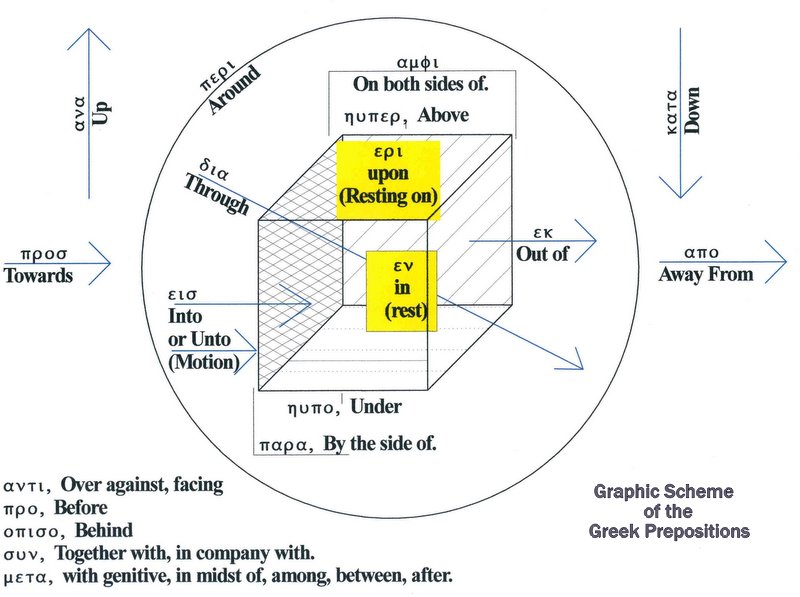
The only problem is, the preposition “to” is irrefutable in the text. It is the Greek preposition eis and is a primary preposition.
To say that God is patient to mankind for the sake of the elect or because of the elect would require a modification of the sentence structure in regard to adding another prepositional phrase.
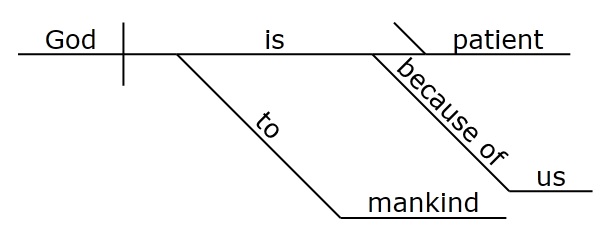
The actual sentence:

Also, Peter could have stated definitively that the elect alone are in view:
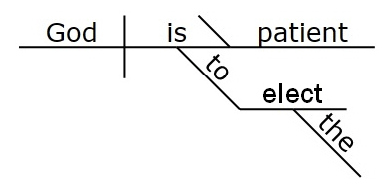
Therefore, supposedly, the elect are the sole object of God’s patience. However, this makes the elect subjects that need God’s patience in order to dissuade judgment. This makes the elect worthy of God’s judgment; therefore, he must be patient towards them in successive generations for the sake of the elect themselves. This is unavoidable unless you add another prepositional phrase to the text: God is patient towards the judgment-deserving elect for the sake of the elect.
This fits perfectly with Reformed soteriology, Calvinism if you will. The elect are still under the condemnation of the law, and mankind in general, or the non-elect, are not the beneficiaries of God’s patience in the least. God is only patient with the elect, because they are worthy of judgment, for the sake of the elect until they all believe.
So, you are going to interpret this Scripture according to your view of justification/salvation. Making “us-ward” the elect only fits with the idea that Christians are looking for a final salvation:
14 Therefore, beloved, since you are waiting for these, be diligent to be found by him without spot or blemish, and at peace. 15 And count the patience of our Lord as salvation,
Again, this fits because part and parcel with a predestined view of salvation and Calvinism is the idea that Christians, or the elect, still need God’s patience unto salvation. The “salvation” in verse 14 doesn’t pertain to the whosoever will of mankind, it pertains to the elect only. The elect still need God’s patience unto salvation. Why does God need to be patient? Because of sin, What kind of sin? The kind that deserves the judgment to come.
Certainly, God is patient with us, but it is a fatherly patience. If you don’t believe that Christians still need a patience that dissuades the final judgment until the other elect believe, “us-ward” must mean mankind in general. This presents the idea that Christians “hasten” the day of Christ’s coming (they anxiously await for it) while understanding that the Lord’s patience means salvation. Salvation for whom? Well, Christians already have salvation.
The former idea asserts that Christians need God’s patience because they deserve judgment, and God is patient with them because He is not willing that any of the other elect perish.
Unless you interpret this text with a proper view of salvation, “us-ward” is ambiguous. However, assessing the text with a proper view of salvation makes “us-ward” mankind because Christians are not the cause of the coming judgment—God doesn’t need to be patient with Christians in that way.
Once again, we see that eschatology is far from being a “secondary” issue. False teachers have always used eschatology to throw Christians off track (here and 2Thess 2:1-12). We live in an age when the return of Christ is imminent, and we are to be found faithful upon His arrival. This is a time of urgency seen in this text. While we hasten the day of the Lord, we understand that His patience means salvation for many. We are to work while it is still daylight:
Romans 13:11 – Besides this you know the time, that the hour has come for you to wake from sleep. For salvation is nearer to us now than when we first believed. 12 The night is far gone; the day is at hand. So then let us cast off the works of darkness and put on the armor of light.13 Let us walk properly as in the daytime, not in orgies and drunkenness, not in sexual immorality and sensuality, not in quarreling and jealousy.14 But put on the Lord Jesus Christ, and make no provision for the flesh, to gratify its desires.
Ephesians 5:15 – Look carefully then how you walk, not as unwise but as wise, 16 making the best use of the time, because the days are evil. 17 Therefore do not be foolish, but understand what the will of the Lord is. 18 And do not get drunk with wine, for that is debauchery, but be filled with the Spirit, 19 addressing one another in psalms and hymns and spiritual songs, singing and making melody to the Lord with your heart, 20 giving thanks always and for everything to God the Father in the name of our Lord Jesus Christ, 21 submitting to one another out of reverence for Christ.
Where is our urgency? It’s missing because we don’t have a dog in the fight, everything is predetermined—there is no cause and effect. Que, sera, sera, what will be will be. Who the “us-ward” are in this passage determines how we will function as Christians. I find the Reformed talking point that evangelism is exciting because it makes us a part of God’s predetermination wanting. You can add to that John MacArthur’s “because God said so” assertion, and God is glorified by people rejecting Him because of the “savor of death.”
Again, the Reformers didn’t even have salvation right, we must be Bereans and see for ourselves what is true about this issue. But in the final analysis, a view of God’s predestination must be tempered with the knowledge that God desires for all men to be saved and does not select people for damnation with intent. God takes no pleasure in the death of the wicked (Eze 18:32, 33:11). God does not seek glory in condemning people to eternal judgment:
http://www.jimmcguiggan.com/reflections3.asp?status=Calvinism%2C+worst+face+of&id=913
Predestination is Not True: 2Peter 3:1-13
 As PPT/TANC will invariably move toward a more solution oriented vision while moving away from blogosphere drama that seeks to save the institutional church, which is un-save-able, and founded on the false gospel of Protestantism, evangelism is a very important subject to us. And let’s face it; a Protestant view of predestination/election is a disincentive to evangelize. I have been a Protestant Baptist for many years, and know full well that most Protestants would rather kiss an alligator than witness. I believe this indifference to the Great Commission can be laid at the feet of Protestant orthodoxy.
Don’t get me wrong, my argument isn’t based on a desire to see more evangelism. If predestination is true, so be it. But the fact is—it’s not biblical. It has taken many years for me to come to this conclusion, and there are still a lot of pieces to put together, but in all my research on this issue of late, 2Peter 3:1-13 is the passage that has led me to this foundational conclusion:
God did not predetermine or choose some for salvation and others for hell. Man can be persuaded to believe.
I know that the typical lazy thinking Protestant Calvinists will call me an “Arminian,” but I have never read Jacobus Arminius, nor have I read anything about him. My conclusions come from reading the Calvin Institutes and the Bible. I also find it interesting that Neo-Calvinists find the same angle that I have settled on so intimidating that they changed words in the ESV to hide the meaning of “willing.” That doesn’t exactly dissuade me from thinking that I am on to something.
In 2Peter 3:1-13, Peter is reminding Christians of the following:
3 knowing this first of all, that scoffers will come in the last days with scoffing, following their own sinful desires. 4 They will say, “Where is the promise of his coming? For ever since the fathers fell asleep, all things are continuing as they were from the beginning of creation.” 5 For they deliberately overlook this fact, that the heavens existed long ago, and the earth was formed out of water and through water by the word of God, 6 and that by means of these the world that then existed was deluged with water and perished. 7 But by the same word the heavens and earth that now exist are stored up for fire, being kept until the day of judgment and destruction of the ungodly.
Notice that men “deliberately” overlook the truth because it is inconvenient to their own desires. That’s a choice. Men are not completely blinded, they are aware of the truth, but they deliberately suppress it (Rom 1:18,19). In this case, they deny the second coming by pointing to how long the earth has been functioning normally for thousands of years. Peter then defines their deliberate and false assertion:
8 But do not overlook this one fact, beloved, that with the Lord one day is as a thousand years, and a thousand years as one day. 9 The Lord is not slow to fulfill his promise as some count slowness, but is patient toward you, not wishing that any should perish, but that all should reach repentance.
The first discrepancy is the ESV’s (a Neo-Calvinist translation) use of “you”—but is patient towards you. This implies a second person plural which infers a continuing same salvation for believers as well as unbelievers. The correct translation (KJV) that fits with the context is “us-ward” (third person plural) which implies mankind in general and their need for salvation. The second person plural goes hand in hand with Calvinism’s progressive justification.
More interesting is how the ESV translates the word “willing” as “wishing” in this text—not wishing that any should perish. The actual word follows:
g1014. βούλομαι boulomai; middle voice of a primary verb; to “will,” i. e. (reflexively) be willing:— be disposed, minded, intend, list, (be, of own) will (- ing).
The idea is “intent,” or to “will.” This is what settled the issue for me. It is clearly NOT God’s “will” or “intent” that any parish. If God predestined certain men for destruction, that is clearly His intent and will. But that is not the case. But it gets better: on the one hand, God does not predetermine people for destruction because that is not His will or intent, and on the other hand, he desires all men to be saved:
1Timothy 2:1 – First of all, then, I urge that supplications, prayers, intercessions, and thanksgivings be made for all people, 2 for kings and all who are in high positions, that we may lead a peaceful and quiet life, godly and dignified in every way. 3 This is good, and it is pleasing in the sight of God our Savior, 4 who desires all people to be saved and to come to the knowledge of the truth.
The word for “desires”—who desires all people to be saved is,
g2309. θέλω thelō; to determine (as an active option from subjective impulse; whereas 1014 properly denotes rather a passive acquiescence in objective considerations), i. e. choose or prefer (literally or figuratively); by implication, to wish, i. e. be inclined to (sometimes adverbially, gladly);
Here, the ESV uses a proper word; God desires for all people to be saved, but of course, that’s not going to happen. But on the other hand, he doesn’t will or intend for people to be eternally condemned. That must mean it’s by their own choice, and contrary to God’s desires, will, or intent. Calvinists plainly do not like these renderings in holy writ and consider them a threat to their doctrine of predestination. They replace “will” and “intent” with the idea of thelo, or “wish.” Also, Note how the ESV translates Matthew 11:27.
All things have been handed over to me by my Father, and no one knows the Son except the Father, and no one knows the Father except the Son and anyone to whom the Son chooses to reveal him.
The ESV uses the word “chooses”—anyone to whom the Son chooses to reveal him. Shockingly, this is the exact same word used in 2Peter 3:9—βούλομαι boulomai. In 2Peter it is wishful thinking according to the ESV, but the same word in Matthew 11:27 is a CHOICE or a choosing, or predestination on the part of the Son. Here is how the KJV properly translates the verse:
All things have been delivered to Me by My Father, and no one knows the Son except the Father. Nor does anyone know the Father except the Son, and the one to whom the Son wills to reveal Him.
If the ESV was consistent with their questionable rendering of the word in Matthew 11:27, here is how 2Peter 3:9 would read:
The Lord is not slow to fulfill his promise as some count slowness, but is patient toward you, not choosing that any should perish, but that all should reach repentance.
Well then, the long list of Calvinist scholars that endorse the ESV agree with me:
God has not chosen anyone for condemnation.
paul
Addendum:
The word for “choose” follows: “g1586. ἐκλέγομαι eklegomai; middle voice from 1537 and 3004 (in its primary sense); to select:— make choice, choose (out), chosen. AV (21)- choose 19, choose out 1, make choice 1; to pick out, choose, to pick or choose out for one’s self.” Selecting the English word “choose” for boulomai (“willing”) in one place, and “wishing” in another seems to be a deliberate attempt to skew intended meaning.



leave a comment