Simple Post Title by Rick Phillips Reveals Presbyterian False Gospel
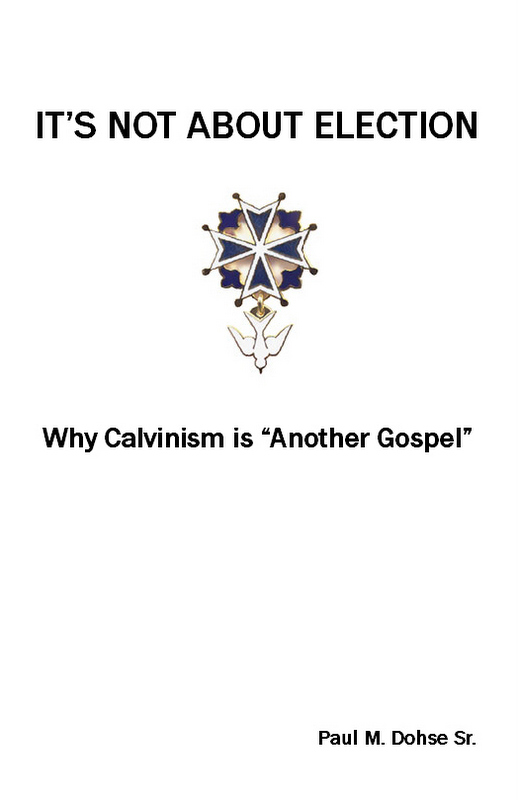 Call yourself a Presbyterian if you will, but it is a denomination fathered by John Calvin. Call yourself a Calvinist if you must, but he clearly believed that Christians remain under the law and its demand for perfection. Therefore, sanctification must be lived by faith alone for the following efficacious result: the perfect obedience of Christ performed during His life on earth as a man will be “imparted” to our Christian lives to fulfill the law and keep us justified. This is called, double imputation. Christ died on the cross to “impute” righteousness (justification) positionally, and lived a perfect life so that righteousness could also be “imparted” to our sanctification (Christian life).
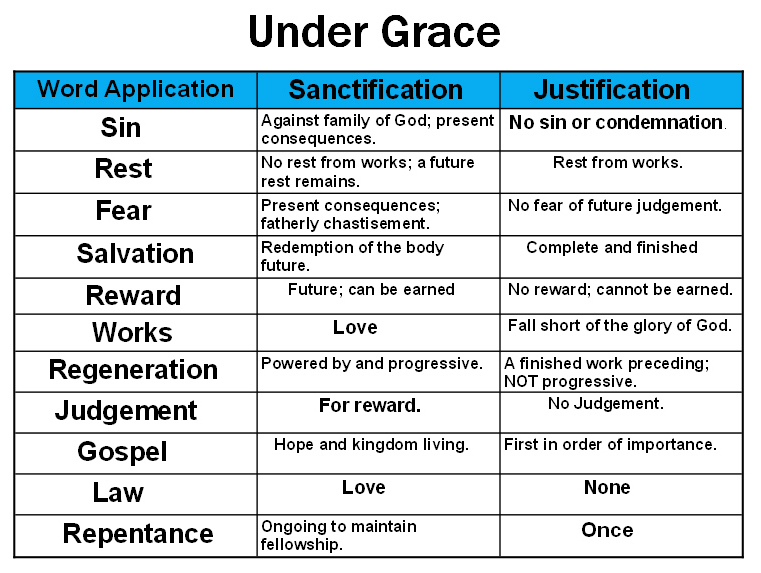
Presbyterians not well endowed in nuance will often state it this way: “Christ died for our justification and lived for our sanctification.” That’s a false gospel. Why? Because it keeps Christians under the law. It denies that Christ came to end the law. And it posits the idea that there is a law that can give life. And it denies Christians the ability to fulfill the law by love because their focus must be living by the same gospel that saved us so Christ will keep the law satisfied for us. Supposedly, it’s ok to be under the law because Jesus keeps it for us. Jesus didn’t come to fulfill the law of love through us, He came so that we could fulfill the law of condemnation through Him. In the final analysis, that defines Christianity as unregenerate; under law and NOT under grace.
This is simple theological math, and the final equation is keeping ourselves saved by faith alone. Sanctification becomes a complicated affair of defining what is a work in the Christian life and what isn’t a work in the Christian life. We must “live by the same gospel that saved us” in order to keep ourselves saved. We are not free to focus on the law as an instruction book of love, but the focus is not “making the fruit of sanctification the root of our justification.” Justification isn’t a finished work, it is a growing tree that must bear its own fruit. If the fruit comes from us, that’s “making the fruit the root.” That’s “fruit stapling.”
Salvation doesn’t grow. It is finished. I believe the doctrine of election completely eradicates works from justification, makes justification a finished work before the foundation of the world, and creates an infinite dichotomy between justification and sanctification. This does not negate our free will to choose in time, but seals our future glory in the Holy Spirit. God throws our sins as far as the east is from the west. All of our sins were under the law, and Christ ended the law. Where there is no law there is no sin. The law now works through love, not condemnation. A Christian cannot sin against the law of condemnation; what law? As Christians, our sin is not covered—it’s ENDED. We don’t keep ourselves saved by perpetually accessing imputation and impartation by doing certain things “by faith.”
Unlike what Calvin taught, the Christian life is not a rest, we rest in justification, but sanctification is a labor of love. And there remains another rest for God’s people, but that is not now. We don’t continue to rest in justification in order to keep ourselves saved. Doing ANYTHING to keep ourselves saved is a work, even when under the auspices of rest. When you are resting, you are doing something by default. If nothing else, rest is a decision. You are doing something to keep yourself saved. Justification is finished; sanctification is not. Sanctification is progressive; justification is not. Sin is ended; not covered. The law of justification covered, but it was ended on the cross; now the law only works through love.
Stop fearing the law and start loving—there is no fear in love. Calvin clearly taught a Christian Sabbath by faith alone motivated by fear of condemnation. This is not arguable on any level. I painstakingly document these facts in It’s Not About Election. Of course Christians are totally depraved according to Calvin; according to him, we are still under the law. When we are under grace, we obey the law out of no other motive but love, IF we know that justification is finished and we are free to aggressively obey the law for love…
“If you love me, keep my commandments.”
Among many other egregious tenets generated by this false gospel, Calvin insisted that all sins committed by Christians cause them to fall from grace, and there must be a perpetual forgiveness imputed to the “believer,” and the perpetual forgiveness for falling short of the law of condemnation can only be found in the institutional church overseen by preordained Reformed elders. Hence, church membership is primarily about receiving perpetual forgiveness for sins committed under law which demands perfection. This is also why any Presbyterian criticism of Romanism is a mockery of the true gospel. Both propagate the same progressive justification that keeps “Christians” under law. Different means of being able to “stand in the judgment” will not save any of them.
This brings me to a post sent my way written by Rick Phillips titled, “The Gospel Includes Sanctification.” Regardless of all of the whining about Tullian Tchividjian who they use for cover, they believe no whit different on any wise than Tchividjian or any other person propagating works salvation by antinomianism. Who keeps the law or kept the law for us is not the issue—law in justification is the issue, and this can be seen in the simple title of the aforementioned post by Phillips.
Phillips employs the usual nuance that masks the Presbyterian false gospel by replacing words; in this case, “justification” for the more ambiguous, “gospel.” What the title really states is…
Justification Includes Sanctification.
Would Phillips deny this? Would he deny that “gospel” includes the idea of justification? This clearly makes justification a process, and not a finished work. This is the Achilles’ heel of Presbyterianism and Calvinism in particular. If we are in-between a beginning justification and a “final justification,” we are somehow involved in the finishing of justification; there is no way around this. Phillips flavors this progressive justification with the idea that salvation saves the “whole man” with both “imparted” and “imputed” righteousness. “Wholeness” does not occur completely at the new birth, it makes regeneration a progression of justification. Therefore, sanctification is not a result of justification; it is part of the justification process. This makes sanctification a spiritual minefield with a focus away from aggressive, worry-free love, and instead, a fearful concern that we will make “the fruit of sanctification the root of justification.” There is a danger of this because as fellow Presbyterian Lou Priolo notes; like our computers, justification is the program always running in the background.
Go figure, by everyone’s assessment, the confusion concerning sanctification in our day is rampant; yet, in no time ever have we had more highly paid Reformed academics waxing eloquent from coast to coast. It’s not that they are overpaid communicators; it’s a clear case of a gospel that doesn’t add up biblically. That’s where the confusion is coming in—the problem is not in your set.
Unless of course, they are your best shot at being able to “stand in the judgment.” Their father clearly stated that Reformed elders have the “power of the keys,” and whatever they bind or loose on earth will be the same in heaven. Let me interpret that for you: if Rick Phillips or Lou Priolo like you, you’re in.
That’s an equation that adds up perfectly.
paul
“< Tweet, Tweet

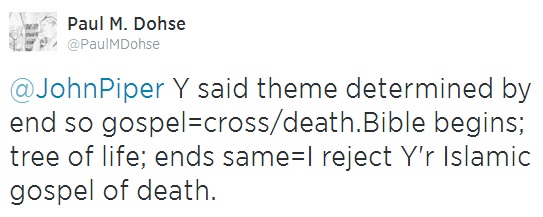
@JohnPiper Y said theme determined by end so gospel=cross/death.Bible begins; tree of life; ends same=I reject Y’r Islamic gospel of death.
“< Tweet, Tweet
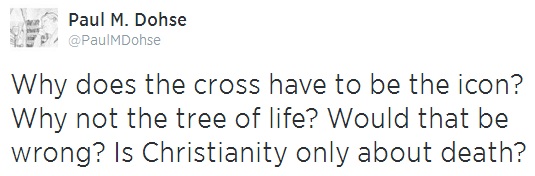
Why does the cross have to be the icon? Why not the tree of life? Would that be wrong? Is Christianity only about death?
The Protestant Culture of Death and the Folly of Discernment Blogging
 “So, anti-spiritual abuse blogs are confronting a religion that they remain a part of while that religion looks to suffering as a means of properly understand reality itself. Good luck with that.”
“This should also be instructive for discernment bloggers; even if you succeed in making the Calvinist abusers feel guilty what is going to be the result? A return to the foot of the cross and nothing else.”
When Protestants started rediscovering their real roots in 1970, many “gospel recovery movements” started a “quiet revolution” to take the church back from modern-day “legalistic Pharisees.” Few knew anything was going on until 2006, and even then it was the realization that something was going on, but nobody knew exactly what it was. In 2009 discernment blogs exploded in response to the spiritual abuse tsunami sweeping across the evangelical church.
2014 has ushered in the realization that discernment blogs are pointless because they confront Protestantism and Calvinism in particular about its bad behavior while remaining in the institutional church, and in many cases, Calvinism itself.
The cat is out of the bag. The rabbit is out of the hat. The elephant is out of the barn. However you want to state it, spiritual abuse is happening in the church; and if not abuse, rampant sin, and if not sin; boredom, because Protestantism is the same old ancient doctrine of death ideology as Islam or anything else. There is only one historical difference between Protestantism and Islam in regard to degree of abuse: American rule of law, and the separation of force and faith. Calvinists in our day state plainly that they would “go Old Testament” on dissenters if they were allowed. What is our first clue that something isn’t right? Presently, they are limited to character assignation and having your name removed from the book of life. Openly, they bemoan the loss of days gone by when burning stakes were as common as road signs while the average pew sitter makes no correlation between history and ideology whatsoever. Calvinists like Wade Burleson can actually brag about being a modern-day Puritan while at the same time claiming to be an advocate for the spiritually abused. The disconnect in logic is stunning.
It is extremely important to make a distinction between doctrine and ideology. The same ideology can take on many different expressions of doctrine; biblical or secular. Doctrine is the stated ethic of the ideology which usually comes from what we believe about the state of being. A lot of the debate noise on the internet, if not most of it, is from people with the same ideology either aware or unaware, debating doctrine. They think they have relevant differences because they disagree on doctrine. No, doctrine is the tentacles of the ideological octopus.
Epistemology is the “how” we know the state of being (what is), and perhaps why it is. For original Protestantism, reality is perceived through suffering. Christ came to die on the cross so man could obtain life. That’s true in respect to salvation, but Luther (following the lead of Augustine) made that an ongoing need for understanding reality and experiencing the wellbeing of the invisible. This led to the false doctrine of progressive justification and made understanding reality part and parcel with salvation. This drives a lot of the mentality behind the evangelical homeschool movement. The public schools are evil because unbelieving teachers do not have a proper grasp of reality.
So, anti-spiritual abuse blogs are confronting a religion that they remain part of while that religion looks to suffering as a means of properly understand reality itself. Good luck with that. They have been blogging their guts out for five years now, and where are the results? You are dealing with people who will never be appalled at suffering because it is key to understanding reality.
Let’s look at an example:
The ugly reality of crucifixion looms over the lives of Christ’s followers today, as it did Peter’s life. In the gospel, we are confronted with the unvarnished horror of ourselves—damned and cursed and exiled. We find ourselves ensnared in the curse itself—in Jesus, writhing in torture on a stake (John 3:14).
Gathering each week, we reenact the horror of Jesus’ sacrificial death. In baptism, we see the flood of God’s judgment against sin (1 Pet. 3:20-21). At the Lord’s Table, we swallow and digest the sign of our Lord’s torn skin and spattered blood (Justin Taylor: The Gospel Coalition .org blog; The Gospel at Ground Zero | Sept. 9, 2011).
So, when you go to church every week, for all practical purposes, it is really a celebration of death. And what to do when your conscience bothers you?
And whenever our consciences accuse, the gospel takes us away from denial or preoccupation and right back to Ground Zero—to the Cross (Ibid).
This should also be instructive for discernment bloggers; even if you succeed in making the Calvinist abusers feel guilty what is going to be the result? A return to the foot of the cross and nothing else. One does not keep a clear conscience before God through obedience, that would be, “trying to be the gospel rather than preaching the gospel.” Hence, the often espoused, “I have no problem with Christ, it’s His followers I disdain” has unfortunate merit. Classic Protestantism is unabashed in promoting a talk instead of a walk—a walk is works salvation—we must let Jesus do the walking for us. “It’s not about what we do—it’s about what Jesus has done.” This mindset is unsalvageable—come out from among them. Unfortunately, once someone experiences a way of life that answers every question with the fatalistic easy-button while vanquishing real responsibly for the sum and substance of their own life, repentance is extremely unlikely unless God intervenes.
What’s the solution? Abandon the institutional church and return to church as it was meant to be. Believers at large are the priesthood, not Protestant academia. There needs to be an exodus to explore the real truth marred by 500 years of the traditions of men.
Why are we begging the institutional church to do what’s right? Why have we been begging since 2009, and to no avail? Why are toothless tigers like Boz Tchividjian heroes for merely crying foul on behalf of victims? Have you noticed how discernment bloggers are constantly clamoring at the doors of the institutional church with bated breath for some notable evangelical to throw them a verbal breadcrumb? It goes viral because some stuffed shirt orthodox lackey states something along the lines of God’s displeasure with pedophilia. It’s pathetic.
Victims need to understand that their suffering is a Protestant epistemology that is deemed not only a necessary evil, but the only gateway to spiritual wellbeing. Hold out your begging cup named justice till the second coming if you must, but you have been doing so since 2009, and you will continue to do so with the same results. Stop suing them and being sued by them, stop begging them, and for crying out loud, stop giving them your money!
Come out from among them and be separate. Only truth sanctifies. Be honest; what is your real goal in life? Retool and start blogging about the solution; that’s the new spiritual frontier. Stop being enslaved to a spiritual caste system, Christ came to set you free.
paul



leave a comment