Betrayal Never Had a Bigger Smile
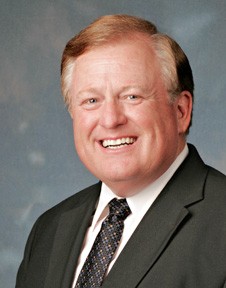 On January 23, 2015, Dr. John Street will make the statement loud and clear on behalf of John MacArthur’s Grace Community Church and the Association of Certified Biblical Counselors that clergy has the right to do whatever they want to the laity in general, and counselees specifically. John Street, the founding pastor of Clearcreek Chapel, is the featured speaker there for the Chapel’s 2015 “Family Enrichment Conference.” Right.
The title of Street’s message for the affair makes it apparent that he has bought into the progressive justification false gospel that has swept the institutional church: “The Gospel-Centered Marriage: Unique Challenges and Hope.” I guess I shouldn’t be surprised, but what is disturbing is the absence of common decency that is part and parcel with this doctrine. Earlier today, I sent this letter to the executive director of the Association of Certified Biblical Counselors suggesting that the biblical counseling movement recommend itself with some measure of common decency. Not holding my breath.
God’s people should not be deceived; there is no real disagreement among the tyrants that rule over the institutional church and make merchandise of God’s people. They all fuse justification and sanctification together resulting in some form of salvation via institution.
As one who served as an elder with John Street for five years and even considered him a mentor, this is indeed the deep pains of betrayal. However, it has now come into full focus why my pleadings for intervention were ignored. They all believe the same thing, and always have.
But this is clear: anyone participating in the institutional church is totally on their own. This is spiritual caste on steroids. Think about SGM, ABWE, etc.; there is a reason why the victims are summarily dismissed. There is a reason for all of the silence.
I look forward to the new possibilities ahead now that I see things clearly for what they are: I was naive; there was never any real love in the institutional church. It is void of the common decency that does unto others as you would want others to do to you.
John and I are now separated by differing gospels, and differing fruit for I never passed on an opportunity to defend him. Let it be so, everyone must choose their own path.
paul


Acts Lesson 37
Archives: ttanc.com

Tonight’s Text – Acts 14:8-20
Brief review
- Lame man of Lystra
- Similarities with the lame man of Acts 3
Lame from birth
In a public place
His healing draws attention
- A resident of Lystra
- There to hear Paul and Barnabas teach
- Perception of faith
- The people misunderstand the miracle
- Astonishment similar to the people in Jerusalem
- Wrongly attribute the source of power
- Gods in the form of men
Barnabas à Jupiter
Paul à Mercury
- Rending of the clothes
Jewish tradition
– For mourning
– For deep regret or grief
- Paul calls them to turn from “vanities”
ματαιως (ma-tai-ohs) – empty, without purpose
- And turn to
– The Living God
– The Creator
– The One Who is Longsuffering
– The One Who has revealed Himself
- Unable to get the people to stop.
The Jealous Jews
- From Antioch and Iconium
- Are these the same ones from the synagogues?
– Already looking for Paul and Barnabas.
– Discover the uproar.
– Provoke the crowd to action
- Concluding thoughts for consideration
– Jews’ rejection of gospel
– Reaction in Lystra to the miracle
– Jews’ jealousy
An Open Letter to Heath Lambert: Does the Biblical Counseling Movement Possess Common Decency?
Paul M. Dohse
Xenia, Ohio
Heath Lambert
Executive Director
Association of Certified Biblical Counselors
Mr. Lambert,
Let me begin this letter with my honest assessment: I believe that ACBC, “the largest biblical counseling organization in the world with certified counselors and counseling training centers in 17 countries,” is an organization driven by the false gospel of progressive justification. Furthermore, sanctification is not a Sabbath rest regardless of what John Calvin believed, and your Gnostic gospel contemplationism will help no one. I realize that it appears you help people by making them indifferent to reality, but that is a false hope. I believe that ACBC is the biggest scam ever perpetrated on God’s people in the history of the church.
Nevertheless, perhaps you can show disagreement by first illustrating that you have some common decency. For certain, Christians should cover many offences with love, but some offences should not be forgotten if they reveal fundamental character flaws that threaten the wellbeing of other people and families. You may believe one family is expendable for the good of the whole, yet the unrepentant judgment of those who destroy one family will continue to destroy many others. Why is that acceptable to you?
Regardless of multiple letters to your board members and others, you insist on endorsing Clearcreek Chapel in Springboro, Ohio as one of your training centers, and refer hundreds of hurting people there each year. You do this in the face of the facts surrounding their direct actions that wrongly divided my family. They have remained resolute and unrepentant in their outrageous behavior; yet, you will not even require them to admit mistakes were made that will not be repeated. Instead, you proudly endorse them without apology.
Let us review the facts that reveal the character of those whom you readily associate yourself:
In 2007, I issued a letter to the Chapel elders informing them that I was vacating my membership there. In a paranoid cult-like response stemming from fear that I would reveal the doctrine that they were teaching, they sought to exaggerate some struggles I was having at the time and used them as an excuse to bring me under church discipline. As will be demonstrated by the facts, they did not deem these struggles worthy of church discipline before I issued the letter. What they attempted to do follows: they knowingly conspired to make it look like my letter was an attempt to circumvent an ongoing church discipline process that was already in the first step. This is irrefutable and reveals their base character.
Sadly, I was years away from understanding what they were teaching at the time. If they would have simply let me leave with my family, my premonitions would have been ignored by the congregation even if I had ventured to complain to others about it. Again, their overestimation of my ability to articulate what they are teaching can only be attributed to cult-like paranoia.
Some days after my letter of departure was issued, two elders arrived at my home unannounced and attempted to place me under discipline, and demanded that I return to the Chapel with my family. This ambush was inappropriately prearranged with my wife without my knowledge. Dazed and confused by the event, I did have the presence of mind to confirm that this meeting was the “first step” of church discipline, and asked them to state the specific sin that was the cause. In the beginning of what would be a long narrative version of spiritual Keystone Cops, the two elders argued in front of me concerning the specifics of the sins. In other words, they came to my house to place me under discipline, but were not on the same page in regard to the cause.
Therefore, I insisted that the offences be put in writing, and informed them that I would pray about the situation. Meanwhile, I sought counsel from longtime friend, Pastor Rick Wilson. It became obvious that Rick and some of the elders at his church disagreed with what was going on. In fact, Rick Wilson contacted PeaceMaker Ministries and asked them to get involved; this alone should speak for itself. In an act of unparalleled cronyism, the representative stated to Rick that since I was technically declared an unbeliever, and they only involve themselves in issues between believers, they would decline.
Rick then recommended that since I had been a member there for 20 years, and a former elder, that perhaps the best thing to do would be to go back and play along for a “couple of weeks” and thereby leave in peace. I took his advice, but two weeks turned into four months! It became obvious that I was not going to be free to leave without being declared an unbeliever in Reformed circles unless I converted to their doctrine. Also, the longer I foolishly stayed, the more their case was being established that I acknowledged the validity of their church discipline when I only submitted to it for the sake of a peaceful ending.
And by the way, preventing someone from performing a lawful act under threat of public humiliation is a criminal act. For all practical purposes, I was being held hostage under threat of losing the community that had come to define my whole life in regard to friendships and even financial income. Using that reality to control me because of their paranoia speaks further to their base character.
When I finally decided to take my family and leave at all cost, the Clearcreek elders made good on their promise to humiliate me before the congregation. This also greatly disappointed many that I had ministered to as an elder. My testimony and everything I stood for was destroyed for no valid reason. My 20 years of service to Clearcreek Chapel was flushed down the toilet in a twenty-minute ceremony.
But that wasn’t enough. In an attempt to bring me back under their control, they sent a confidential letter to my wife, which I obtained. The letter stated that I no longer had any right to make decisions with my family, and that she was obligated by God to return to the Chapel without me where they could rightfully “shepherd” her. They also coordinated this with a letter writing campaign by the congregation which was suggested by them publically. So, at the same time that my wife received a document from the elders entitled, “Elder’s Resolution,” she was bombarded with love-bombing letters from the congregation. I have copies of the letters, and many confirm the rumors that the Clearcreek elders were circulating about me in the flock groups off the record; charges they would not put in writing. I also received an email from a member that assured me that she saw through the new security measures at the Chapel as a veiled accusation against me. Another member was not fooled (according to the report) by the Chapel elders spending the night in a hotel to send the message that I am a dangerous and violent person. These men are despicable human beings.
In response to a letter that I sent to several Reformed churches and individuals that are on ACBC’s board, a letter begging for intervention, the Clearcreek elders responded by stating (in a letter) that my original letter did not state specifically that I was removing myself from membership. Hence, if I would have used different wording, the departure letter would have denoted a valid departure.
Ironically, this is my primary concern in regard to you referring troubled people to this counseling center; it is run by grown men who collectively participated in a childish downward spiral of telling lies to cover for prior lies. Obviously, if my life was full of sin worthy of church discipline, and my letter was an attempt to flee sin that was in process of being dealt with, why would the specific wording of the letter make any difference? In their correspondence to me they clearly state they were justified to disregard the letter because of the specific wording, not the circumvention of an ongoing process. The silliness of the argument staggers the imagination, but on the other hand, they knew they could not establish that the first step of discipline had been put in motion before the letter.
In other correspondence, they deny that they instructed my wife to divorce me when the wording of their “Elder’s Resolution” clearly states otherwise. Furthermore, the attorney that they hired at the church’s expense to represent my wife has a reputation as being one of the most incompetent lawyers in the Dayton, Ohio area. According to my attorney, this doubled my legal fees because, “this is going to drag on because her attorney doesn’t know the law.” My point here is that this elder body is a perpetual comedy of errors and missteps. They are utterly incompetent.
In another attempt to defend themselves, and in writing, they claimed that I was issued a formal letter by the elders concerning a second step of church discipline. I denied this, and demanded that they produce the letter. I also suggested that they would never produce the letter because it never existed, and accused them of lying about it. Their response, in writing, acknowledged that indeed there was never such a letter, and the claim was made due to the errant recording of minutes during an elders meeting. Keep in mind, this is a church of about 300 people. So, in the process of wrecking my life, the process was obviously marred by total confusion and lies.
Be sure of this: unlike you, I don’t just talk about caring for families, I really do care about families, and that is why I will not stand by while you refer troubled people to this den of spiritual misfits. Our ministry often receives emails from people seeking counsel after dealing with Clearcreek’s counselors, and these are people who have no idea that I have a past history with Clearcreek. The accounts are surreal.
I am sure you stand ready to defend the false gospel that drives your so-called biblical counseling, but surely you agree that such a defense should be adorned in a show of common decency. “Repentance” is a major pillar of your counseling construct, but apparently you do not require it of those who oversee your training centers—that’s hypocrisy.
Mr. Lambert, I have read your concerns about “first generation” counseling that isn’t vertical enough, but what about counseling performed by habitual liars and your endorsement of them? This is your chance to show what you are really about. If you can show some common decency, maybe I will take a closer look at your bogus gospel. But more than likely, the rotten fruit of your organization flows from such. In the final analysis, we will see if you are indifferent to me being wrongfully deprived of living with my son full time during his most formable years.
Look in the mirror Mr. Lambert, what do you see?
Truly,
Paul M. Dohse Sr.



leave a comment