The Furry Fandom Part 4; The Normal Minority, The Socially Awkward, The Mentally Ill, and The Sexual Deviants
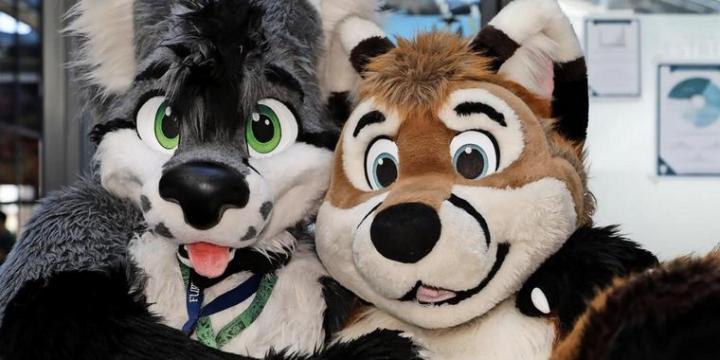
Normal Joes and Janes are going to be a minority in the Fandom. This is because the Fandom doesn’t really offer anything that normal people need, or want. What is normal? A normal person likes himself/herself based on the truth. A normal person remains normal because he/she partakes in person-building, and become good at following their consciences.
This is a blog, and therefore, informal, but Susan and I have decided to develop these posts into a book publication that can be used to inform people about this sect, particularly, family law professionals. The publication will use the works of Psychologist O. Hobart Mowrer to develop our point about mental illness within Fandom. Mowrer was president of the American Psychological Association in 1954, and initiated counseling movements that helped people more than any other noted psychological theories.
Before I get into the mental illness aspect, I want to address the primary factor that leads people into becoming Furries; acceptance. When you are not your own best friend, because you have no good reasons to like yourself, the standards for your friendships become low; you will befriend anyone who accepts you. And unfortunately, this acceptance is often like a spider web, and the one needing the acceptance is not the spider. Accepting the socially awkward, or being socially awkward within Fandom is not difficult because identity and behavior is incognito, and Furry characters are expected to be on the unusual side of behavior anyway. However, here is the problem: this acceptance is an unhealthy shortcut for the socially awkward. Whoever you are, self-esteem and self-worth, as well as a valid worth to others (which EVERYONE has), is critical to wellbeing. By joining this sect, the socially awkward partake in cheap, unearned acceptance based on who they really are as a person. And invariably, low self-worth leads to depression. Obviously, people who kill themselves don’t like themselves very much or their lives. Curiously, among those in the Furry sect, a popular verbal slight is to tell someone to kill themselves. A comment by a Furry advocate here on PPT reflects such, and this is something I am seeing often in my research.
The first reason that introducing children into this movement is detrimental follows: they are being taught to forfeit their self-esteem by people who have already done so and to abandon person-building. It is apparent that when you are investing in a make-believe character, you are not investing in the real you. In fact, Furries would suggest that Furism is a way to “discover yourself.”* In reality, Furism replaces who you really are with something else. It also allows you to interact with people in a way that is completely detached from who you really are. A desire to do so cannot speak to self-worth in any way, shape, or form. This will destroy a child psychologically.
Furthermore, it will lead a child to devalue real reality; if not disdain it altogether. One example is school. If Furism offers carte blanche acceptance according to terms that fit a contra-reality, the kind of tools found at school that build a foundation for the future will be deemed worthless. If you are, say, Lucky the Racoon who has superpowers and has found the epitome of “love” in the Furry community, what do you need school for? This isn’t dressing up for a Halloween party once a year; this is encouraging children to dwell in a contra-reality that is supposedly more valid and valuable than normative reality. Let that sink in. The last point in this post concerning sexual deviance and the ramifications for children pretty much speaks for itself. Regardless of the Wikipedia criticism we hear you can see that the following excerpt is heavily referenced with among other things, a UCLA study.
When compared with the general population, homosexuality and bisexuality are over-represented in the furry fandom[15] by about a factor of 10. Of the US population, about 1.8% of persons self-identify as bisexual and 1.7% as homosexual according to a 2011 study from scholars at UCLA.[39] In contrast, according to four different surveys 14–25% of the fandom members report homosexuality, 37–52% bisexuality, 28–51% heterosexuality, and 3–8% other forms of alternative sexual relationships.[12][14][40][41] Approximately half of the respondents reported being in a relationship, of which 76% were in a relationship with another member of furry fandom.[12] Examples of sexual aspects within furry fandom include erotic art and furry-themed cybersex.[42][43] The term “yiff” is sometimes used to indicate sexual activity or sexual material within the fandom—this applies to sexual activity and interaction within the subculture whether in the form of cybersex or offline.[44][45]
Sexual attraction to furry characters is a polarizing issue. In one survey with 4,300 furry respondents, 37% answered that sexual attraction is important in their furry activities, 38% were ambivalent, and 24% answered that it has little or nothing to do with their furry activities.[41] In a different online survey, 33% of furry respondents answered that they have a “significant sexual interest in furry”, another 46% stated they have a “minor sexual interest in furry”, and the remaining 21% stated they have a “non-sexual interest in furry”. The survey specifically avoided adult-oriented websites to prevent bias.[14] Another survey found that 96.3% of male furry respondents reported viewing furry pornography, compared with 78.3% of female; males estimated 50.9% of all furry art they view is pornographic, compared with 30.7% female. Furries have a slight preference for pornographic furry artwork over non-pornographic artwork. 17.1% of males reported that when they viewed pornography it is exclusively or near-exclusively furry pornography, and only about 5% reported that pornography was the top factor which got them into the fandom.[46]
A portion of the fandom is sexually interested in zoophilia (sex with animals), although a majority take a negative stance towards it. An anonymous survey in 2008 found 17% of respondents reported zoophilia. An earlier survey, conducted from 1997 to 1998, reported about 2% of furry respondents stating an interest in zoophilia, and less than 1% an interest in plushophilia (sexually aroused by stuffed animal toys). The older, lower results, which are even lower than estimated in the general population, were due to the methodology of questioning respondents face-to-face, which led to social desirability bias.[40][47] In contrast, one comparative study from 1974 and 1980 showed 7.5% of sampled students at University of Northern Iowa reporting zoophilia,[48] while other studies find only 2.2%[49] to 5.3%[50] expressing fantasies of sex with animals.
The very definition of mental illness follows: it is an inability to deal with, or cope with reality. As will be documented in the book according to those who followed Mowrer, guilt is the lynchpin of mental illness. Guilt leads to all kinds of fear, and fear/anxiety is present in EVERY mental illness.** Conditions such as schizophrenia are attempts to replace a guilty party; namely, yourself, with someone else. If you are “Bob,” you didn’t do it, your other personality, “Joe,” is guilty. The book will show case histories of people cured of schizophrenia by dealing with Bob’s guilt, and thus making Joe unnecessary. Dr. Jay Adams, the father of biblical counseling which was inspired by Mowrer though Mowrer was irreligious, called schizophrenia “a lie” and was able to help many with that problem accordingly. Of course, this does not include physiological problems that cause hallucinations and affect the brain in other ways.
Is the point being made here that people become Furries as an alternative to dealing with personal guilt? ABSOLUTLEY. Other than the acceptance factor, this is the second most significant purpose for becoming a Furry. And, of course, guilty people don’t like themselves very much which speaks to the self-esteem issue.
Lastly, the third purpose for becoming a Furry follows: it is merely a practical venue for practicing sexual deviance. Many argue that this is the main thrust of the movement. In other words, unlike many in the movement who have genuine interest in Fandom ideology, sexually deviant individuals see it as a mere means to fulfill sexual desires. Indeed, alternative identities and role playing make it barely less than perfect for that purpose.
These posts reflect long held views by this ministry as applied to the Furry sect, and it is interesting to note that THIS testimony by an individual who is leaving the group confirms many of our assessments. We will have much, much, more to say about this testimony in future posts. WARNING, strong language. This video has over a million views in less than one year.
In addition, we will be applying the five elements of philosophy to this issue, which are metaphysics, epistemology, politics, ethics, and aesthetics (art). The latter (art) is absolutely huge in regard to this subject, and speaks volumes concerning Fandom. It could well be argued that it is the smoking gun altogether.
The biggest argument for Fandom follows: “This is so unfair! You are painting the whole movement with a broad brush because of a few!” This, of course, is an entirely lame argument. Healthy people who partake in life-building and esteem themselves highly for good reasons resulting from hard work are few and far in-between in this movement. The vast majority of those in this sect fall under the three aforementioned categories of this post. And, because bad company corrupts good manners, those who enter this movement with issues will only add more issues to their existing deficient self-value.
paul
https://www.wikihow.com/Be-a-Furry
** This is not the same as physiological problems that affect the brain.
The Furry Fandom Part 3; Why All the Shame in the Game?
Well, well, it seems that we have struck a nerve with our Furry series. In the two part introduction we outline the likely deflections used to refute criticism of this group, and guess what? In the roughly 50 comments that followed from Furries and Furry advocates, all of the familiar defenses were used. Those who read our blog will recognize these exact same arguments from our New Calvinist friends. Primarily, these arguments seek to discredit the source of the information through subtle and not so subtle character assassination, and the go-to mainstay of questioning motives for writing the series.
Likewise, it is said that I only write about Protestantism because I experienced, “church hurt.” In this case, supposedly, I am only writing this series because I lost a custody case. Truly, there is no new thing under the sun. Note that credentials are really important to the detractors, but the credentials of firsthand experience don’t count because that involves “motives.” The issue being brought to your attention by coming into your life disqualifies you, and you must also be a world-renowned author to be taken seriously. Oh, and of course, we need to footnote every obvious observation. Don’t worry, plenty of referencing is forthcoming. And, as it turns out, we are totally in our venue because Furries have a strong presence in the church. Fursure, church wouldn’t want to miss out on anything trending in the culture. However, it did surprise me in regard to the zeal with which Churchians defended Furryism.
Be sure of this: whether cults or predatory subcultures, their worst nightmare is the internet and the way it empowers individuals.
As stated in the introductions, parts one and two, Fandom fulfills various and sundry personal needs which draws people into the movement. Our focus is the WHY, not the WHAT, but the WHAT will be focused on later in the series as a way of showing how ideology always leads to some sort of action. Keep in mind: Fandom is a way of life and an identity that takes no prisoners; it is a hardcore ideology rivaled by no religion whatsoever. Whether 911 Truthers, Never Trumpers, NOW (National Organization of Women), or Planned Parenthood, zeal for their ideology can’t hold a candle to the Furries.
So, why all of the shame in their game?
You want a reference? Here it is: in the, at least 9 years that we know of, that is, Susan and I, maybe longer, the family member involved in this group kept it from us. Also, his Furry family—that is, those living with him deemed family (we will be looking at the Furry family concept)—also kept it from us. Said family member was also involved in Larping and is a Trekker, but was always very open about those hobbies. Susan even made the uniforms for the Larping. But why was the Fandom kept from us?
Because it’s not a hobby; that’s a lie. Fandom is a lifestyle and contra-reality deemed superior to normative reality complete with things like its very own English language ( http://www.furcen.org/fgc/glossary.html#S ).
That’s why there is shame in their game. Fandom is a hardcore sect off the beaten path of reality. Older people join this sect to fulfill personal needs resulting from shortcomings, but the recruitment of adolescents is a major concern because those shortcomings are then projected onto children who would not necessarily develop those shortcomings. The big one is low self-esteem. Obviously, if you think highly of yourself for good reasons that are true, you don’t need to be something else, least of all an animal. Furthermore, self-esteem is earned in reality, but in the Fandom reality, you can purchase your self-esteem through a contra-reality. Secondly, as with all contra-realities, you can dismiss your guilt by being someone else or something else. Adolescents need to be encouraged to esteem themselves highly and to engage in personal building, not an endeavor to be something else that implies lack of individual worth by default. Person-building is hard work, choosing a contra-reality to identify with is easy.
No shame in the game because it’s just a hobby? Then why do Furries need hundreds of instruction videos and articles on how to tell people you are a Furry? Do you really need an instruction video on how to tell your friends you have taken up golf as a hobby? So, here comes the criticism;
I am not citing references…
…as if you couldn’t simply google it and have hundreds of references inside of 5 seconds. Nevertheless, here you go:
And, if you are a teen, or younger, you need an instruction video on how to tell your parents you want to join the 4H club? Or the Drama club, or the Debate club? Nevertheless, here you go:
Furries have to keep secret who they are because it’s not merely a hobby; a hobby is something you do for entertainment, a lifestyle identity is who you are which is an ideology that leads to living a certain way, and people know it. That’s why a city councilman had to resign when his “secret life” as a Furry was discovered.
The following posts will be categorized by the Furry reality, acceptance, and coping, and how these relate to the Furry philosophy leading to its behavior.
paul

 Paul's Passing Thoughts
leave a comment