It always seemed odd that in the entire New Testament, the word “atonement” was absent except in Romans 5:11 in the KJV. Even there, the KJV translators went off script, it seemed, because the word in 5:11 translated as “atonement” is everywhere elsewhere translated “reconciling” or “reconciliation,” and the immediate context of 5:10 is about how we have been reconciled to God. Most every other translation besides the KJV now translates this word as “reconciliation” in 5:11 rather than as “atonement,” and that is a better choice by way of consistency of words and following the flow of Paul’s logic within that context.
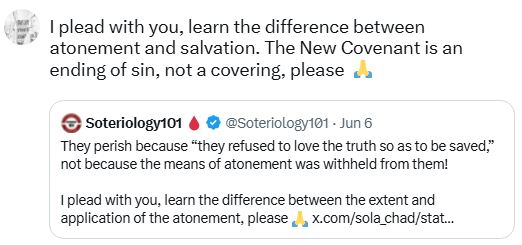
So the Reformation arguments over limited vs. unlimited “atonement” seemed out of place as the Old Testament idea of atonement does not appear to be carried over into the New Testament. Why not? Because in 1 John 1:7, the Christian is told that “the blood of Jesus Christ his [God’s] Son cleanses us from all sin.” The sin is dealt with not by atonement / covering it over, but rather sin is cleansed out, washed away from the Christian. This is an important part of the High Priestly role of the Christ, though I admit I am still at the beginning of understanding that role theologically.
But that sin is cleansed away, not merely covered over (“atoned”), for those who are in Christ.
SPOT ON. And, if sin is ended, and not merely covered, salvation is finished, and there is no premise to control people and no marketing strategy to sell salvation. Yep, what could be more profitable than, “If you don’t buy insurance through us (tithing), you are going to spend eternity in hell.”

 Paul's Passing Thoughts
Mr. Dohse,
It always seemed odd that in the entire New Testament, the word “atonement” was absent except in Romans 5:11 in the KJV. Even there, the KJV translators went off script, it seemed, because the word in 5:11 translated as “atonement” is everywhere elsewhere translated “reconciling” or “reconciliation,” and the immediate context of 5:10 is about how we have been reconciled to God. Most every other translation besides the KJV now translates this word as “reconciliation” in 5:11 rather than as “atonement,” and that is a better choice by way of consistency of words and following the flow of Paul’s logic within that context.
So the Reformation arguments over limited vs. unlimited “atonement” seemed out of place as the Old Testament idea of atonement does not appear to be carried over into the New Testament. Why not? Because in 1 John 1:7, the Christian is told that “the blood of Jesus Christ his [God’s] Son cleanses us from all sin.” The sin is dealt with not by atonement / covering it over, but rather sin is cleansed out, washed away from the Christian. This is an important part of the High Priestly role of the Christ, though I admit I am still at the beginning of understanding that role theologically.
But that sin is cleansed away, not merely covered over (“atoned”), for those who are in Christ.
As always, thank you for your consideration.
LikeLike
SPOT ON. And, if sin is ended, and not merely covered, salvation is finished, and there is no premise to control people and no marketing strategy to sell salvation. Yep, what could be more profitable than, “If you don’t buy insurance through us (tithing), you are going to spend eternity in hell.”
LikeLike