Why Man is ABLE to Choose Salvation
 It would seem that God pursues man and gives him every opportunity to be saved. It would seem that God corners man with the truth and does everything but make the decision for him. Much could be discussed on this wise, but this post is about inside and outside law.
Man is created with the works of God’s law written on his heart. The conscience then judges according to that law by excusing or accusing one according to their conduct in what they think or what they do (Romans 2:14-16). Also, the Spirit uses the same law to…
John 16:7 – Nevertheless, I tell you the truth: it is to your advantage that I go away, for if I do not go away, the Helper will not come to you. But if I go, I will send him to you. 8And when he comes, he will convict the world concerning sin and righteousness and judgment: 9concerning sin, because they do not believe in me; 10concerning righteousness, because I go to the Father, and you will see me no longer; 11concerning judgment, because the ruler of this world is judged.
Creation also speaks to God’s existence and righteousness (Rom 1:20). Hence, man is pressed upon from the inside and outside from four different sources: conscience, the Spirit, creation, and evangelism. Christians should be greatly encouraged to evangelize because they have the other four working with them.
Man is constantly convicted from the inside and outside concerning his sin and need to be saved from the judgement to come. Nevertheless, his tendency is to hide from God as Adam and Eve did and to deliberately suppress truth in unrighteousness (Rom 1:18). But, when we evangelize, we are being like our Father who sought out Adam and Eve in the garden.
Much is made of the ordos solutus or “order of salvation.” Of course, predeterminists insist that regeneration must take place first which prompts the “believer” to then make the choice—being unable prior to the Spirit’s choosing. The Reformed also use John 3 to make the case that the Spirit regenerates first which invokes saving faith. This is why we have seemingly strange events recorded in Scripture—so we will not be in the dark regarding these questions.
Clearly, the biblical order is the hearing of the word, belief/trust, followed by the baptism of the Spirit. This can not only be seen in Acts 10, but…
Acts 2:37 – Now when they heard this they were cut to the heart, and said to Peter and the rest of the apostles, “Brothers, what shall we do?” 38 And Peter said to them, “Repent and be baptized every one of you in the name of Jesus Christ for the forgiveness of your sins, and you will receive the gift of the Holy Spirit. 39 For the promise is for you and for your children and for all who are far off, everyone whom the Lord our God calls to himself.”
Repent (believe), and you “will” receive the “gift” of the Spirit or the baptism of the Spirit. Faith comes by hearing the word of God followed by the baptism of the Spirit which puts the old man to death and resurrects him to new life. This also unites the called, that is, Jew and Gentile both into one body. This uniting of the called (Jew and Gentile) is referred to as a mystery that is revealed in the New Covenant (Eph 3:6). The emphasis is that God has called both Jew and Gentile to be saved and united into one body—not some particular calling of individuals preselected for salvation.
At any rate, clearly, belief comes first as a response to hearing the word of God before Spirit baptism which is the gift that follows. Regeneration does not come before belief. Apparently, the four resources that come to bear on those under law are enough to enable one to make a choice.
paul
Children, and the “Gospel of Sovereignty”
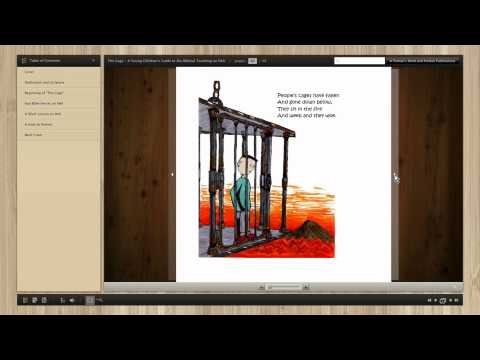 Video post by @PaulMDohse.
Why Calvinist Husbands are Pathetic Cowards
 In order to shorten the title, I would like to also include husbands who function like Calvinists while denying the doctrine intellectually.
First, they deny the very gospel they proclaim and deny it with their lives. They would say “amen” to the whole idea that God removed the partition between the outer room and the Holy of Holies to give them free access to the throne of God without fear of condemnation, but they will not enter that room without the elders present or without permission from the elders. While saying “amen” to the whole idea of “one mediator between God and man,” they will hardly try any new thing in bed without permission from the elders, much less teach their wives something from their own God-given mind.
Pathetic.
Nor will they enter that room alone with their own thoughts and gifts on behalf of their wives who they are responsible to sanctify with the water of the word. They will not accept God’s invitation to meet face to face without hiding behind the elders for fear of being wrong about something. They do not approach the alter boldly on behalf of their wives, but rather bring other men to think for them and speak for them. They enter the room cowering behind the elders holding only what was originally given after digging it up in the back yard. They are under condemnation and therefore know that they always invest errantly—except when they obey the elders.
Pathetic.
And when their wives demand that they be real men and deliver on what they expected when they agreed to marry them, they run to the elders and have their wives brought up on church discipline which is NOT in Mathew 18 by the way. Nor or the elders by the way.
And by the way, that’s pathetic.
Nor will they defend those who have the courage to believe that Christ is the only mediator between God and men. They will stand by and watch injustice because they have given their souls to the elders. They clearly fear men more than God.
Pathetic.
And, for those who have wives who want mindless cowards for husbands, they fear their wives more than they fear God, in addition to the elders also. Who do they love more, and who are they really one with? If they are to leave parents and cleave to the wife, how much more should they leave the elders?
Sad.
paul
The Gospel of Sovereignty? Romans Series Interlude: Predestination, a Potter’s House Journey; Part 7
 Originally posted June 30, 2014 sov·er·eign·ty [sov-rin-tee, suhv-] noun, plural sov·er·eign·ties. 1. the quality or state of being sovereign. 2. the status, dominion, power, or authority of a sove…
Source: The Gospel of Sovereignty? Romans Series Interlude: Predestination, a Potter’s House Journey; Part 7

 Paul's Passing Thoughts
1 comment