Connecting the Dots: Tullian Tchividjian and Luther’s Theologian of the Cross
 The Magnum Opus of the Reformation: Martin Luther’s Heidelberg Disputation; Part 5
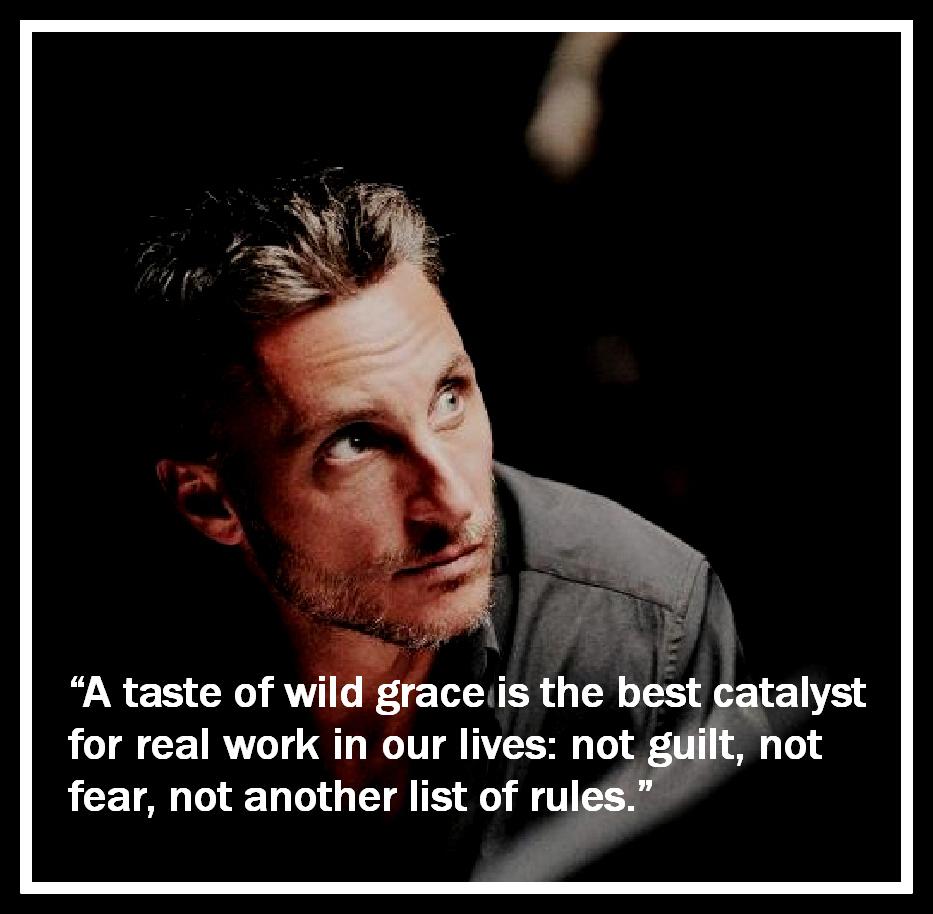
The Reformed community will hardly shed a tear in regard to the recent demise of Tullian Tchividjian. A consummate theologian of the cross in accordance with Martin Luther’s Heidelberg Disputation, his lack of nuance drove other Reformed leaders to distraction.
Tchividjian is the premier example of the authentic Reformed gospel applied in our day. His life and teachings will be compared to what we have learned thus far from the foundational doctrinal statement of the Reformation.
Join the discussion @ 7pm on Friday, 6/26/2015. Program link:

 Paul's Passing Thoughts
Nothing like a preacher having sex to confirm the Reformed doctrine.
You know they will say that the reason he was in sin is BECAUSE he wasn’t nuanced enough. I’d bet money that they will say his failure of “nuance” is the same as doctrinal error . . .
LikeLike
Four ideas from Scripture come to mind. First appropriate thoughts, I trust from the sermon on the mount. We are not to judge (Matt.7.1-4) and at the same time we are to discern and evaluate dogs (verse4) lest they trample you and false prophets who come to you in sheep’s clothing but inwardly are ravenous wolves. You will recognize them by their fruits. (verses 15,16).
Secondly, refer to Hebrews 12…with grace comes discipline. do not regard lightly the discipline of the Lord. (Hebrews 12:5.) The next few verses are clear and concise, to children of the Father, disciple is painful but yields the peaceful fruit …(verse 11) therefore let us be grateful for receiving a kingdom that cannot be shaken and thus let us offer to God acceptable worship, with reverence and awe, for our God is a consuming fire. Careful study of Hebrews 12 is in order.
Thirdly, There but for the grace of God , go I. (1 COR. 1:26-31)
Lastly, we trust God is always good and sovereign, and we have little understanding but what He allows.
(Genesis 50:20 ; Romans 8:28)
LikeLike
CC,
Since you state that you are new to PPT I am going to go out on a limb and assume that you were led here (and to this article in particular) after doing an internet search on Tullian Tchividjian (hereafter known as “TT”). It is always encouraging to see those who are genuinely seeking answers and solutions. That is what sets PPT and TANC ministries apart from the “discernment blogs”; not only do we want to be a place of refuge for those who are hurting, but TANC ministries is about ideas, and we want to strive to give people real solutions to the problems that plague the institutional church. These are problems that are endemic to Protestantism from its very inception. We are simply seeing the fruit of that. Other men have attempted to dig down and fertilize around the roots, but the tree still produces the same rotten fruit. It’s time to cut down that tree altogether.
I want to respond to each of your points briefly. I want to be careful not to respond in frustration (since you are new to PPT), because your points are grounded in ignorance (this is not a criticism, merely an observation). Had you taken some time to simply research the site further you would have had a better context in which to make a more informed response. So having said that, let’s examine each of the points you make.
-“We are not to judge (Matt.7.1-4) and at the same time we are to discern and evaluate dogs (verse4) lest they trample you and false prophets who come to you in sheep’s clothing but inwardly are ravenous wolves. You will recognize them by their fruits. (verses 15,16).”
Ok, making a distinction between “judging” and “calling out” false teaching. This point is interesting to me since you failed to define what Jesus meant by “judge not”. Absent this definition, your point appears to be nothing more than a passive/aggressive attempt to accuse Paul of being judgmental in his assessment of TT. Do you think you could clarify your intentions some more?
– “Secondly, refer to Hebrews 12…with grace comes discipline. do not regard lightly the discipline of the Lord. (Hebrews 12:5.) The next few verses are clear and concise, to children of the Father, disciple is painful but yields the peaceful fruit …(verse 11) therefore let us be grateful for receiving a kingdom that cannot be shaken and thus let us offer to God acceptable worship, with reverence and awe, for our God is a consuming fire. Careful study of Hebrews 12 is in order.”
I noticed your use of the word “grace”. With “grace” comes discipline. Interesting your use of the word “grace” here. That’s not a word that one would choose on his own to use in this context. Such a phrase is indicative of one who has been influenced by the reformed mindset. In the reformed construct, “grace” is doublespeak for “salvation”. So what you are really saying here is that with salvation comes discipline. This is not necessarily a wrong assessment, since, as you say, believers are children of God, and God disciplines His children as any father would. However in the reformed construct you must understand that such discipline serves the purpose of furthering salvation. The teaching is that discipline brings one to a place of deep repentance so that he may be put back in to the “grace” of God and thus maintain his salvation.
– “Thirdly, There but for the grace of God , go I. (1 COR. 1:26-31)”
I’m not sure why you chose this reference to make this point. Most who hold to a reformed doctrine will use 1 Timothy 1:15 as their proof text. Nevertheless, such a concept runs contrary to the reality of the believer being a new creature. It denies the new birth. It lays claim to a notion that believers are still dirty, filthy, rotten sinners. It suggests that believers have NOT changed and are still incapable of making good choices unless God compels it. Furthermore, there are plenty of unregenerate UNSAVED people who do NOT commit adultery. What does that say about man in general? That he indeed has a free will and ABILITY to chose to do that which is morally right regardless of his eternal condition.
– “Lastly, we trust God is always good and sovereign, and we have little understanding but what He allows.
(Genesis 50:20 ; Romans 8:28)”
If we have little understanding of what happens in this world it is only because we are operating from a flawed premise. We are attempting to interpret reality from a false presupposition about God and about man. It is not because God has not “allowed” us to understand it, that it is somehow “hidden” from our understanding. Is the suggestion here that we cannot understand why God “allowed” these things to happen to TT and Coral Ridge? If so, it is that very same mindset that resulted in such things as this to happen in the first place, and even more egregious displays of spiritual and physical abuse elsewhere, such as child molestation, and what will allow it to happen again. This is an indictment against God, and this is the very reason why so many people want nothing to so with religion and why we see men go on news programs and call God a sadistic monster. I would agree with them, such a god, the god of Luther and Calvin, IS a sadistic monster. But that is not the God who revealed himself to us in His word. That God said to man, “come let us reason together”. That God WANTS us to know and understand him. So when we read stories like the one with TT, we cannot just punt it into the eternal abyss of “mystery”. We must have a rational explanation.
And the purpose of this blog and TANC ministries is to provide rational explanations for why the things that are happening are happening. In a nutshell, it all boils down to a flawed theology that has resulted from a flawed interpretation of reality and a flawed view of God and man. I highly encourage you to invest some time on this site researching the other articles that give detailed explanations as to how we arrived at these conclusions. To quote John Immel (more like a paraphrase), when you see large masses of people engaging in the same destructive behavior, find the assumption, and you will find the reason for the behavior. Paul has simply identified the assumption that resulted in TT’s behavior.
LikeLike
Pearl! Yes! Very new! Like, kindegarden new.
LikeLike
Andy, thank-you for that excellent analysis!
LikeLike
Andy! Wow! Thank you for the feedback. Yes, I searched TT, exactly as you thought. And you asked in your remarks from point 1, Do you think you could clarify your intentions some more? Gladly. I started with Matthew 7:1-4. That should be clear. Children understand these verses. I think now it would have been better if I put in the entire four verses and not just the reference. No hidden meaning. Only a few people are employed as judges. I am not a judge. If I point at somebody with my index finger to find fault, I have my own three fingers curled back pointing back to me. Do not judge but we know hypocrites, dogs and wolves.
Why did TT not say simply ,” We agreed I will step down for personal reasons. Please, I want now to respect my family privacy. Good bye.” ?
LikeLike
Hi CC,
In kind response to you, one of the issues in modern evangelicalism that really really bothers me is the issue of not “judging” others. And I firmly believe that it is fundamentally wrong to not use sound judgement. If we do not use clear rational sound judgement, we lose all sense of justice. And when there is a lack of justice, this leads to abuse and ultimately tyrranny. What the Lord Jesus Christ is describing in Matthew 7:1-4 is to not use UNLOVING and UNJUST judgement.
You say that you are not a judge. And judging from your comments, it appears as if you are talking about judges employed by the state to decide legal issues in a courtroom or in an inquiry or in other such venues. Point taken. But I’ll bet you do make judgements all the time, about what type of food to eat, what type of car to drive, and whether or not to attend that Saturday or Sunday morning service at your favourite institutional church. :o) [Had to get my digs in on the Seventh-Day Adventists] And I’m willing to bet that you also make judgements about PEOPLE too, such as that man you see walking down the street who wears a heavy metal t-shirt [gasp!] and who works as a statistician.
I make judgements all the time about people, and it is a part of human nature. In fact, it is a good thing, for it has kept out of pain and trouble at times, and has kept me from being involved with destructive personalities such as narcissists and psychopaths. I fully admit to judging people and their actions, and I thank God that he gave me and many others the brain and wisdom to do so.
It has been my experience in the past that those who often quote “judge not lest you be judged” are the most hypocritical people who use unloving and unjust judgement. It is very similar to those who like to preach “tolerance”, yet who are the most intolerant people I’ve ever met. I tell people not to preach tolerance, but to BE tolerant. You see, it is really easy to claim the moral high ground and tell people not to judge. But the “more excellent way” is to judge calmly and rationally, and to try to do it with a loving and just temperment.
LikeLike
Ryan,
You have hit the central issue of CC’s comment: He is advocating the abandonment of judgment as such. The bromide about pointing fingers and the proof texts scattered through his comments are really an attack on the means of man’s life.
Man cannot live unless he distinguishes food from poison, unless he identifies the harmful and the good. And this process of judgment included ideological hypocrisy, meaning if man can’t identify philosophical inconsistency (the disconnect between idea and action) and say that the ideas/actions are harmful then man is left adrift in an ocean of the unknowable. Man dooms himself when he fails to identify other people’s errors.
LikeLike
Thank-you John, you summed it up perfectly. By the way, Blight in the Vineyard was a great read!
LikeLike
Ryan,
We still have one free room left for the conference.
LikeLike
Tullian’s theology said that believers should expect failure, instead of seeking to overcome. It’s pretty easy to extrapolate from Tullian’s teachings that if he were to be tempted, he would fall to that temptation. Which leads to the question, why did they fire him? He was just being consistant with what he taught.
LikeLike
Greg,
I find the fact that these guys have to resign totally befuddling. However, Tullian is close friends with a Lutheresque Presbyterian pastor who lived in open decadence for years and never had to resign.
LikeLike
Ryan, thanks . . . I am thrilled that people are reading Blight in the Vineyard.
LikeLike