PPT Top 10 Gnostics of the American Church
 The present day New Calvinism movement is a return to the exact same viral Gnosticism that plagued the New Testament church. New Calvinists proudly claim St. Augustine who was an avowed Neo-Platonist. Platonism later became various forms of Gnosticism. Martin Luther’s theology of the cross laid the foundation for the functioning Platonism that has plagued the church sense the 16th century. Luther, in his endeavor to define Augustinian philosophy for the Reformation, made the cross a Platonist hermeneutic that transcends the material world and the five senses. This was Luther’s definition of a true theologian. Said Luther:
That person does not deserve to be called a theologian who looks upon the »invisible« things of God as though they were clearly »perceptible in those things which have actually happened« (Rom. 1:20; cf. 1 Cor 1:21-25).
This is apparent in the example of those who were »theologians« and still were called »fools« by the Apostle in Rom. 1:22. Furthermore, the invisible things of God are virtue, godliness, wisdom, justice, goodness, and so forth. The recognition of all these things does not make one worthy or wise.
He deserves to be called a theologian, however, who comprehends the visible and manifest things of God seen through suffering and the cross.
The manifest and visible things of God are placed in opposition to the invisible, namely, his human nature, weakness, foolishness. The Apostle in 1 Cor. 1:25 calls them the weakness and folly of God. Because men misused the knowledge of God through works, God wished again to be recognized in suffering, and to condemn »wisdom concerning invisible things« by means of »wisdom concerning visible things«, so that those who did not honor God as manifested in his works should honor him as he is hidden in his suffering (absconditum in passionibus). As the Apostle says in 1 Cor. 1:21, »For since, in the wisdom of God, the world did not know God through wisdom, it pleased God through the folly of what we preach to save those who believe.« Now it is not sufficient for anyone, and it does him no good to recognize God in his glory and majesty, unless he recognizes him in the humility and shame of the cross. Thus God destroys the wisdom of the wise, as Isa. 45:15 says, »Truly, thou art a God who hidest thyself.«
So, also, in John 14:8, where Philip spoke according to the theology of glory: »Show us the Father.« Christ forthwith set aside his flighty thought about seeing God elsewhere and led him to himself, saying, »Philip, he who has seen me has seen the Father« (John 14:9). For this reason true theology and recognition of God are in the crucified Christ, as it is also stated in John 10 (John 14:6) »No one comes to the Father, but by me.« »I am the door« (John 10:9), and so forth.
~ The Heidelberg Disputation to the Augustinian Order of 1518: Thesis 19, and 20.
Hence, the visible is evil, and man is visible. Like Plato’s theory of the pure forms, the invisible is the true, good, and beautiful. The material is the world of shadows. Any wisdom connected to the material world is the “theology of glory.” Luther stated it in no uncertain terms:
The manifest and visible things of God are placed in opposition to the invisible…
John Calvin then articulated Luther’s theology of the cross by developing a full-orbed philosophical application in his Institutes of the Christian Religion. Calvin also affirmed the foundations of Augustinian Neo-Platonism by citing Augustine, on average, on every 2.25 pages of the Institutes.
Like certain Platonic disciplines that were immutable gateways to the immutable true ideas in the mutable shadow world, Luther merely made such the cross. Plato’s philosopher kings were able to transcend the five senses enslaved to the material world and extract the ideas of the true forms for the betterment of the Republic. Luther’s “true theologian” is the present-day philosopher king dressed in biblical garb. The top ten follow:

#10 Elyse Fitzpatrick

#9 Albert Mohler

#8 Mark Driscoll

#7 Phil Johnson
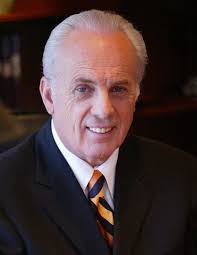
#6 John MacArthur Jr.

#5 Mark Dever

#4 Michael Horton

#3 Tullian Tchividjian

#2 Tim Keller

#1 John Piper
 “The New Calvinists are not worried; they don’t believe the American church has the intellectual wherewithal to grasp the fact that John Calvin was a Platonist philosopher. It is time for that theory to be vigorously tested. Even if that theory is believed, it can be attributed to Reformed orthodoxy predicated on the incompetence of the human race wondering about in the shadow world while rejecting the idea that the new birth makes a difference. The new birth is not the mere experience of a changed realm; it is the reality of a changed person, a person that is not only justified positionally, but changed into a just person living for God’s glory. Christians don’t merely “reflect” the glory of God, they are not merely “transformed into an image” of God’s glory, they are new creatures who glorify God with their own actions. The Spirit does not merely manifest Christ in a realm, he colabors with the new creature in the truest sense.”

 Paul's Passing Thoughts
Reblogged this on Clearcreek Chapel Watch.
LikeLike
You contradict yourself, since you quote Luther as saying “the manifest and visible things of God”, but you also state that Luther was saying that ‘visible was evil’. Unless you’re accusing him of saying that God was evil you have a bad argument there.
LikeLike
Lance,
Your rebuttal makes no distinction between Luther’s Platonist worldview and his hermeneutic.
LikeLike
No, no, no! The gnostic view says that suffering, being of this world, of the flesh rather than the spirit, is either unimportant or illusory. Luther takes the opposite view: that God is more visible in our world through suffering than through “glory” – that the (real, physical) suffering of Christ on the cross is the way we truly recognize God’s presence in this fallen world.
LikeLike
Mark,
So, there is a practical difference in “illusory” and an epistemology of suffering? Luther’s hermeneutic is Platonist and false. It completely separates good and evil between material and immaterial, the glory story versus the cross story. Once people understand this, there is no place for the Reformers to run or hide. Christ came (supposedly) to implement an epistemology of suffering–this turns biblical metaphysics completely upside down. One example: king David said there is GOODNESS in the land; PS 27:13. Furthermore, man himself can be “good” (ROM 15:14). This turns Reformed theology completely upside down.
LikeLike
According to the Luther quote, it would seem that the only “good” in the material or visible is manifest in our suffering rather than our “glory”, since suffering is what would direct our minds back to the cross. Thus, this would be completely consitent with Luther’s theology of the cross.
– That the only good manifestation of God in the visible or material is suffering.
This sort of teaching certainly explains why the NCists don’t do much about addressing child abuse, sexual abuse, spousal abuse, et al, in their midst, because that is supposedly a visible manifestation of suffering from God to point them back to the cross.
These sort of things Luther would have no problem with if he were alive today.
LikeLike
…and this is what the discernment bloggers need to get–Reformed ideology is THE problem.
LikeLike
“According to the Luther quote, it would seem that the only “good” in the material or visible is manifest in our suffering rather than our “glory”, since suffering is what would direct our minds back to the cross. Thus, this would be completely consitent with Luther’s theology of the cross.
– That the only good manifestation of God in the visible or material is suffering.”
This is it, and while speaking for itself, should raise many, many troubling questions in regard to Calvinism.
LikeLike
What hermeneutic is anti-Platonic, and true? How is Catholic or Orthodox hermeneutics not Platonic? Not Gnostic? Is the accurate perception that there is only good in the visible and invisible? Evil is a temporary illusion because the redemption and atonement of creation and all creatures has already been accomplished in God’s grace, but just has not been “realized” by the human animal nature? 1 Corinthians 15:20-28 speaks of this temporary condition of creation until the end. Is anti-Platonic, anti-Gnosticism, Christian faith the evidence, the hope, the reality that even finite time (as we experience it prior to infinite eternity and as we understand it scientifically) is both good and evil, corruptible – and the only incorruptible is the Godhead and the prophets, apostles and saints which are already in union with the Godhead? Alienation is only temporary and not evil in and of itself?
LikeLike
Gary,
Let’s adjust the picture with the real issue that comes out of the wash: “The new birth is not the mere experience of a changed realm; it is the reality of a changed person, a person that is not only justified positionally, but changed into a just person living for God’s glory. Christians don’t merely “reflect” the glory of God, they are not merely “transformed into an image” of God’s glory, they are new creatures who glorify God with their own actions. The Spirit does not merely manifest Christ in a realm, he colabors with the new creature in the truest sense.”
LikeLike
Eh?
LikeLike
David,
Let me explain something to you. Here at PPT, we don’t believe that Reformed academiacs possess gnosis that the commoners don’t possess. So, when we read your profound comment, trust me, we did not fret over the possible meaning of it.
LikeLike
So it ought to be my first priority as a renewed born again Christian desiring to worship in spirit and in truth to ignore Calvanism, Lutheranism, Catholicism, etc (indeed ignore all theology as common sense available to every Christian) and simply focus on Christ as the Holy Spirit reveals Him. Trust wholly in …? Am I expected to do this alone without human help, relying only upon my opinion of what scripture means? Just rely on asking for the Holy Spirit for help? Just trust in being justified, that I am already in Christ as in “if any man is in Christ, he is a new creature. Old things have passed away and all things have become new.” I’d like to believe that my actions glorify God, but my experience teaches me otherwise.
LikeLike
Gary,
I reject the Reformed MO of either/or conclusions; ie., “If not the Reformers, then who!?” Furthermore, your words expose one of the primary pillars of Calvin’s false gospel: We must be considered justified apart from this life because we are not perfect. Problem: that’s not being justified APART from the law–the law is still the standard. Why is this a problem for Calvin? Because it fuses goodness with mortality. It violates Platonism. We can please God because His seed is within us, we are new, and the old us died with Christ, and where there is no law there is no sin. There is no law in justification while the law informs our sanctification–the two are separate. The Reformers fused justification with sanctification in order to stay true to Platonist metaphysics.
LikeLike
I’m just a fool seeking the truth. I guess I understand that the law informs our sanctification due to the good seed can grow to perfection. We can live the royal law after receiving the new birth. We can fulfill the law by loving God, loving our neighbors and loving one another as Christ Jesus loves us. Separating justification and sanctification allows for the rejection of a false gospel and false metaphysics?
LikeLike
Gary,
Yes, justification and sanctification must be separate because Christ died so that the law can be fulfilled in us, and the works of the devil DESTROYED as well (Romans 8 and many more). This fuses the good with the material–a huge problem for Platonist metaphysics.
LikeLike
This teaching has big implications. If what you say is true, it has primal authority beyond Plato and the Reformation, yet it’s not anything new. Who else is teaching this? Did Spinoza teach anti-Platonic metaphysics without the scriptures?
LikeLike
Gary,
Most of the New Testament is a pushback against Gnosticism. Why do you think Christ came back after His resurrection and ate with the disciples as well as challenging Thomas to touch Him? Philo had integrated Platonism into Jewish orthodoxy. Curiously, I was emailed last week in regard to a popular New Calvinist teaching that Christ did not have the same kind of flesh that we have.
LikeLike
Also Gary, I am not sure how much more we need to know other than the fact that Total Depravity also applies to the saints in Reformed thought, a detail that they conveniently,and deliberately leave out.
LikeLike
Mark Hanson said:
“No, no, no! The gnostic view says that suffering, being of this world, of the flesh rather than the spirit, is either unimportant or illusory. Luther takes the opposite view: that God is more visible in our world through suffering than through “glory” – that the (real, physical) suffering of Christ on the cross is the way we truly recognize God’s presence in this fallen world.”
This is a distinction without a distinction.
Where to start with this?
Plato metaphysic —the metaphysical foundations of Augustine and Luther and Calvin metaphysics –says that this world is all illusory. The material world is by definition a shadow world … hence illusion. This foundation dominated the whole of the ancient world and impacted the Sophists, Cynics and the Stoics. It is from these movements that the Gnostic movement of the late first and second century emerged.
Gnosticism was a category of mystery religion that used the Platonic metaphysic –echoed in the Stoic and Cynic philosophies—as a starting point and applied it to their given mystery cult. The point is they all held the same root presumption: the material world was an evil shadow of a pure other worldly form.
The question the mystery cults sought to answer was: “how then does man (being evil) every get truth?”
Those who insisted they were the truly spiritual were said to hold the Gnosis . . . hence Gnostics. How each “Gnostic” sect qualified themselves to receive this mystery truth is irrelevant to the point. The foundational assumption is that Man is metaphysically divorced from truth by the very nature of his physical, fleshly existence. Real “truth” as it were is revealed from an ineffable other worldly perfection.
This was nothing new in ancient thought. The idea of the evil material world, the soul body dichotomy, found its first form in Pythagoreans and was carried forward in the Sophists, Stoics and Cynics. Plato’s metaphysics—while deviating on some points with each of the aforementioned—still presumes the soul body dichotomy and devises a dialectical reality. So the Mystery religions of the late first century were merely capitalizing on the intellectual trends of the day that said for man to have “Truth” he must abandon this material world—somehow—and have the pure form of “gnosis” revealed to his non material self.
So while you are aiming at a contrast, (as you have represented Luther’s position) Luther’s root assumption presumes the same metaphysical starting point: God’s reality is another worldly source for truth. The MEANS of identifying that truth is suffering (Which is pretty much what the Cynics said.)
This is the exact same premise. The only distinction is that Luther moves the means of acquiring Platonic wisdom FROM study and contemplation TO the pain projected into human flesh. It doesn’t matter that it takes symbolic form in the Cross, in both instances the source of the REAL, the TRUTH, the GNOSIS is from another realm that is revealed to the lesser “fallen” realm. That is why I said you comment is a distinction without a distinction.
At the end of the day Luther still presumed that truth was reserved for a select few. It was NOT a commodity for the masses. It was reserved for those appointed by God to be stewards of the revelation. So just like the Gnostics of old, he held the position that only the initiated can know the truth and everyone else is S.O.L. There is no rational argument ever . . . because the source of “Gnosis” is revelation.
And this is exactly what the mystic despots listed on Paul’s Top Ten Gnostics believe . . . because this is what Gnostics have always believed.
LikeLike
And may I add the following quote from Al Mohler to accent John’s very apt historical lesson:
“The main means by which God saves his people from ignorance is the preaching and teaching of the word of God. That’s why a conference like this is so important. It’s not just because we think of the pastorate as a profession set along side other professions so that we can gather together for a little professional encouragement to go out and be a little better at what we do.
No, we’re here because we believe that those who teach and preach the word of God are God-appointed agents to save God’s people from ignorance.”
We also think of Steve Lawson’s plea at a pastors conference for them to “come out from the shadows.”
LikeLike
Would your view of these people have anything to do with the fact that you were excommunicated from a Reformed church? You didn’t really seem to say much in this article other than “I don’t like Reformed people.”
LikeLike
If you were excommunicated from a church that preached a false gospel, whether the Mormon church or a Reformed Calvinist church, would that be a bad thing? The real issue seems to be the true gospel versus false ones. Ought we to exercise at least the attempt at discernment?
LikeLike
Why yes Liz, it has very much to do with the fact that I was excommunicated from a Reformed church, thanks for bringing that up. It was a church that I was a member of for more than 20 years, and was one of the pastors for almost 5. Like the other pastors, I was a half pregnant Calvinist, or Calvin Light. Hybrid Calvinists hold to interpreting reality and the Scriptures grammatically. When John Street, the founding pastor left to serve under John MacArthur, a group of Neo-Calvinists, or authentic Calvinists that came out of the 1970 resurgence infiltrated the Chapel. I didn’t know what was going on, but unfortunately, my wife of 24 years was indoctrinated right under my nose. Her indoctrination came primarily from a Sunday school class that was restricted and featured the book, “How People Change” by Paul David Tripp. When I started asking questions, I was put under church discipline for no official stated reason. When two elders came to my house to announce that I was under church discipline, and under false pretense for the reason they came, 3 days after leaving by letter with NO outstanding issues with me by others, 4 reasons were stated that they later refused to put in writing. Also, the two elders argued in my presence about what the specific reasons were. Under counsel by other pastors, I was told to agree with the discipline, satisfy their wishes, whatever they were exactly, and thereby leave peacefully. 4 months later, I was still there and clueless as to what was going on. When I said I was leaving, they threatened to humiliate me publicly by excommunicating me. I insisted that if they were going to, then they needed to state the charges publicly. They refused, and left the congregation to their own imagination. Pastor Rick Wilson, now deceased, tried to get PeaceMaker Ministries involved. They refused based on the fact that they only do mediation between Christians. Rick brought up the fact that I was declared to be an unbeliever unjustly, but to no avail. My wife was then told that I was leading the family to hell because I was leading her and our son away from the sanctification and authority of the church. She bought it, and I was told that unless I came back under the authority of the Chapel, she would divorce me.
Yes Liz, that event so ripped my extended family apart, and the wounds were so deep, that I set out on a journey to thoroughly understand why it happened. If I knew then what I know now, that group of men wouldn’t have even been allowed to use the latrines at that church. Hence, I have devoted my life to give others what I didn’t have.
Does that answer your question? I see where hundreds of people are reading my sermons and articles Susan has written in conjunction with this post going viral. You have to get personal when you have not the truth. That would be you missy.
LikeLike
Ah, Liz, bless your heart, you go to Mark Dever’s church. I also saw where he read the post. Did he enjoy it?
LikeLike
Would your view of these people have anything to do with the fact that you were excommunicated from a Reformed church? You didn’t really seem to say much in this article other than “I don’t like Reformed people.”
LikeLike
Why yes Liz, it has very much to do with the fact that I was excommunicated from a Reformed church, thanks for bringing that up. It was a church that I was a member of for more than 20 years, and was one of the pastors for almost 5. Like the other pastors, I was a half pregnant Calvinist, or Calvin Light. Hybrid Calvinists hold to interpreting reality and the Scriptures grammatically. When John Street, the founding pastor left to serve under John MacArthur, a group of Neo-Calvinists, or authentic Calvinists that came out of the 1970 resurgence infiltrated the Chapel. I didn’t know what was going on, but unfortunately, my wife of 24 years was indoctrinated right under my nose. Her indoctrination came primarily from a Sunday school class that was restricted and featured the book, “How People Change” by Paul David Tripp. When I started asking questions, I was put under church discipline for no official stated reason. When two elders came to my house to announce that I was under church discipline, and under false pretense for the reason they came, 3 days after leaving by letter with NO outstanding issues with me by others, 4 reasons were stated that they later refused to put in writing. Also, the two elders argued in my presence about what the specific reasons were. Under counsel by other pastors, I was told to agree with the discipline, satisfy their wishes, whatever they were exactly, and thereby leave peacefully. 4 months later, I was still there and clueless as to what was going on. When I said I was leaving, they threatened to humiliate me publicly by excommunicating me. I insisted that if they were going to, then they needed to state the charges publicly. They refused, and left the congregation to their own imaginations. Pastor Rick Wilson, now deceased, tried to get PeaceMaker Ministries involved. They refused based on the fact that they only do mediation between Christians. Rick brought up the fact that I was declared to be an unbeliever unjustly, but to no avail. My wife was then told that I was leading the family to hell because I was leading her and our son away from the sanctification and authority of the church. She bought it, and I was told that unless I came back under the authority of the Chapel, she would divorce me.
Yes Liz, that event so ripped my extended family apart, and the wounds were so deep, that I set out on a journey to thoroughly understand why it happened. If I knew then what I know now, that group of men wouldn’t have even been allowed to use the latrines at that church. Hence, I have devoted my life to give others what I didn’t have.
Does that answer your question? I see where hundreds of people are reading my sermons and articles Susan has written in conjunction with this post going viral. You have to get personal when you have not the truth. That would be you missy.
LikeLike
Ah, Liz, bless your heart, you go to Mark Dever’s church. I also saw where he read the post. Did he enjoy it?
LikeLike