“Lifeway” Publishers Now Serving Antinomian Koolaid to Our Youth: Part 1
 Just yesterday, a youth leader from the Southern Baptist church Susan and I attend brought me a copy of a recent edition of “EC,” a magazine published for teens by Lifeway Publishers. By way of description, their website says the following:
“LifeWay Christian Resources was originally created as the Sunday School Board of the Southern Baptist Convention in 1891. As a denominational publisher, LifeWay provides resources for use in Southern Baptist churches and for the general public. LifeWay publications include curriculum study materials, ministry periodicals, personal growth materials, leisure-reading periodicals, multimedia and Internet resources, and books.”
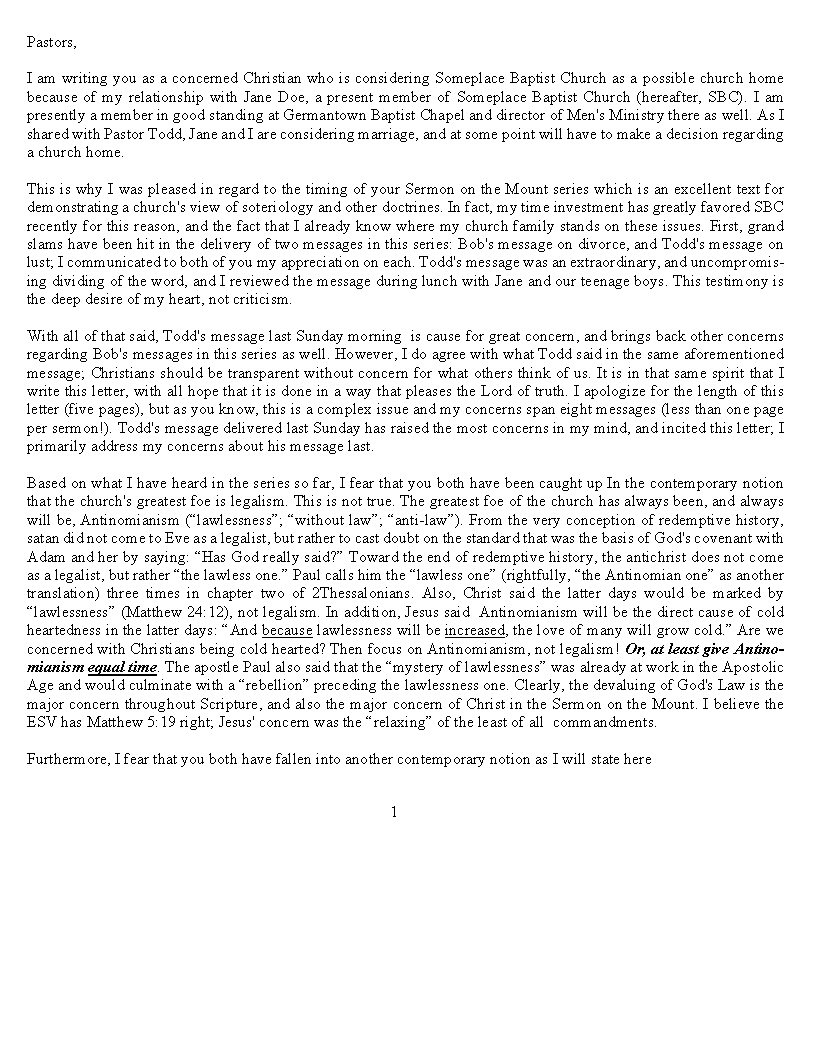
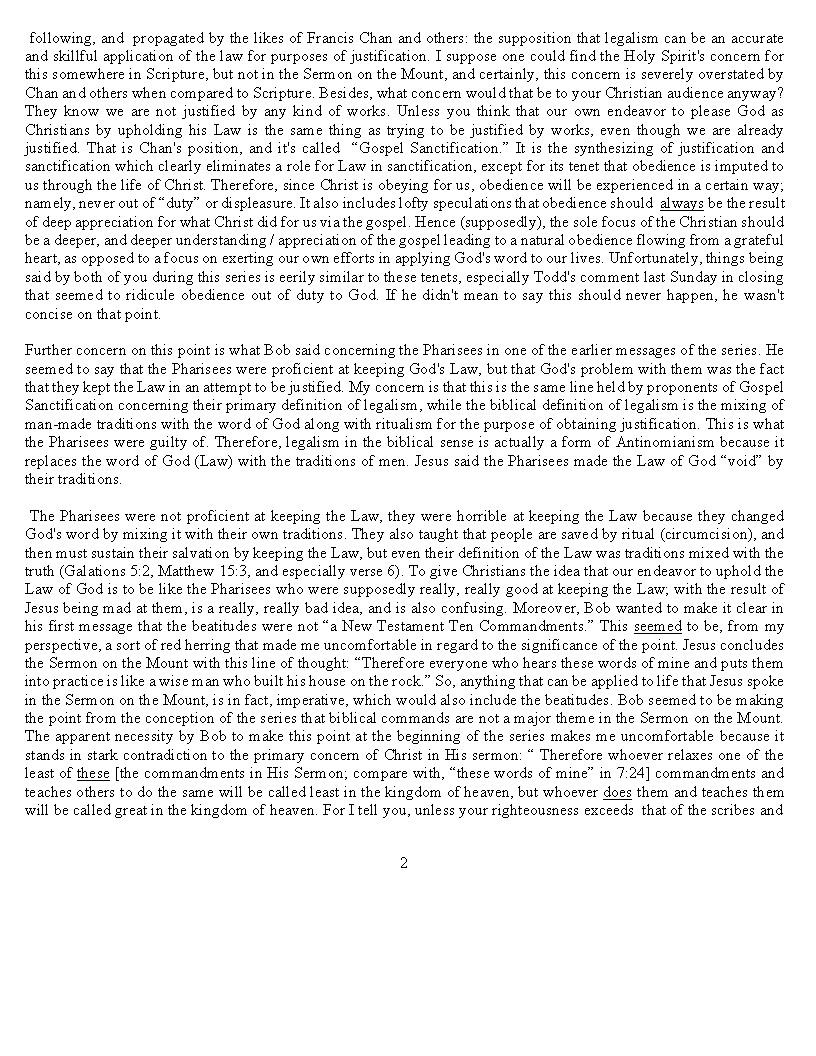
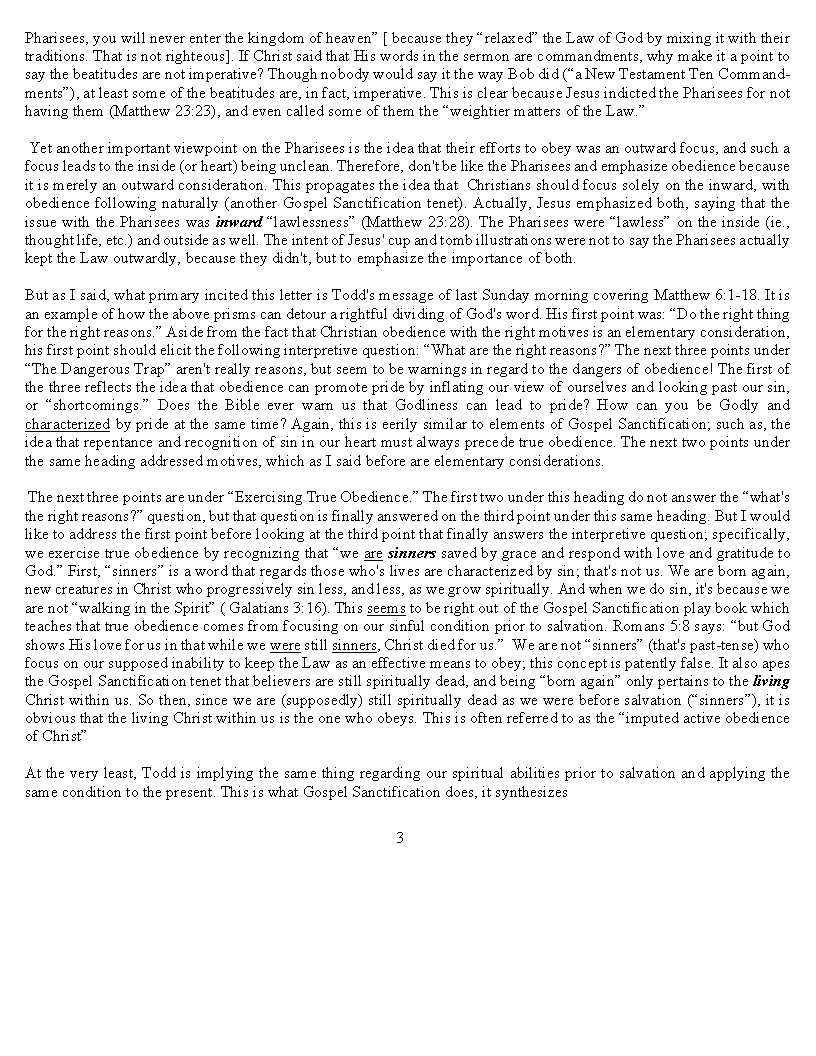
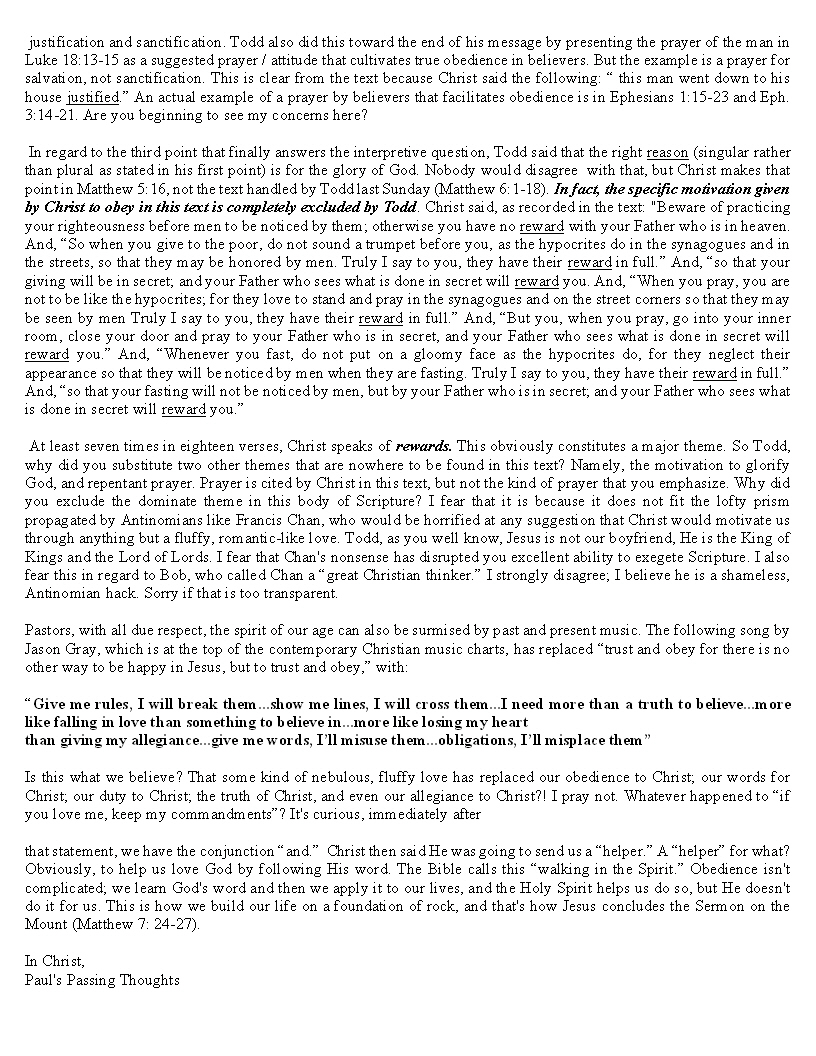
The leader also brought me a copy of “Life Focus,” the student learning guide for teens. He also suggested that while both were saturated with contemplative spirituality, the student guide was much more nuanced than the magazine because the student guide would involve participation by adult leaders. It wouldn’t surprise me. For purposes of introducing this problem to our church, I will be writing a series on the one edition presented to me which has almost all the tenets of New Calvinism, Gospel Sanctification, New Covenant Theology, Sonship Theology, etc.
I will get the ball rolling in this first part by addressing a concept from page 49 of the July 2011 edition of EC. Don’t get discouraged if this first part is hard to understand—I will have more time to better articulate in the following parts. It states the following to our youth:
“You know you love Christ, and you know how He is calling you to live—and you obey from the heart. That means that the reason you’re obedient to God isn’t because you think you have to, that being “good” will earn you His favor, or that the way to live the Christian life is to follow a bunch of rules. It means that you obey Christ’s commands out of love, recognizing who He is and what He has done for you. When you understand the cost Christ paid to set you free from sin and the depth of His love for you, you simply can’t pursue a life characterized by sin.”
Where to even start? This statement, though nuanced, and as the youth leader also suggested; speaks of the sanctification process in a justifying way, is fraught with error and a twisting of phraseology. Notice that the sanctification concept of “making it our goal to please Him” (2Cor. 5:9) is twisted into the concept of earning God’s favor for salvation by trying to be “good” (the implication is perfection, which we know will not happen until glorification). Of course, the error plays on the fact that most Christians, especially youth, do not know the difference between justification, sanctification, and glorification. Hence, trying to please God in sanctification is synonymous with trying to earn His favor for justification.
Then the most disturbing statement: “….or [notice “or”:other than; what?] that the way to live the Christian life is to follow a bunch of rules.” Notice how Christ’s mandate to put all that He has said into “practice” (Matt.7:26,27) is reworded as “a bunch of rules.” Clearly, the statement doesn’t qualify what “rules” are being talked about (the Psalms calls God’s word “rules” in many places), and the qualification thereof in the following sentences insinuates that obedience “from the heart” comes from one thing and one thing only: a deeper and deeper appreciation of what Christ did for us on the cross.
And that is what I am going to focus on here in the first part. This is the same contemplative spiritually presently overrunning the American church like a giant Tsunami. It holds that obedience flows naturally from a gushy, romantic like love that is produced from our gratitude for what Christ did for us on the cross, and is propagated by highly acclaimed teachers such as Francis Chan, John Piper, and Michael Horton. Supposedly, disobedience is always the result of lack in a “deeper and deeper” understanding of the gospel, who Christ is as a “real person” (whatever that means), and the depth of His love for us, as seen in the EC quotation:
“It means that you obey Christ’s commands out of love, (= the following) recognizing who He is and what He has done for you. When you understand the cost Christ paid to set you free from sin and the depth of His love for you, you simply can’t pursue a life characterized by sin.”
Of course, this assumes that Christ wanted Peter, who witnessed what Christ did firsthand, to qualify his love for Him this way: Do you love me? Then always contemplate what I did this week. Do you love me? Then study my personhood. Do you love me? Then figure out how much I love you. And by the way, teach my sheep to do the same thing.
Francis Chan, in his highly acclaimed book “Crazy Love,” compares this love to what it feels like when we fall in love with a girlfriend: “Because when you’re wildly in love with someone, it changes everything” (back cover forward: “Crazy Love”). Throughout the book, like his good friend John Piper, the legitimacy of love toward God is determined by feelings only. Francis Chan writes in the same aforementioned book on page 110: “When we work for Christ out of obligation, it feels like work. But when we truly love Christ, our work is a manifestation of that love, and it feels like love” So much for the Evangelical battle cry of past years: “Love is a verb.” Completely absent in Chan’s book is the concept of love that beseeches God Almighty for a passing of the cup of suffering if it be His will while sweating great drops of blood. On page 100, he says Christ was his grandmother’s “lover.” On page 101, Chan eludes to the New Covenant Theology concept of God’s law being replaced with a single law of love that is always accompanied by giddy, romantic feelings: “When we love, we’re free! We don’t have to worry about a burdensome load of commands, because when we are loving, we can’t sin. Do you feel free in your Christian life?” Notice: Chan’s standard for loving obedience in the Christian life is clearly; “Do you feel free in your Christian life?”
Michael Horton puts this in systematic theological terms with the following formula: Gratitude > Doxology > Obedience. I will now conclude this first post of the series with an excerpt from another article written to answer a reader’s question concerning this theological formula:
So, help me understand. I pulled the following quote from an article published in Modern Reformation, posted here, http://www.ouruf.org/d/cvt_sanctification.pdf. Why are you so against this way of thinking about the Christian life. If I am not motivated to obey the commands of scripture by the fact that I am already justified, then what would you suggest should be my motivation?
“I began to see that we stand before God today as righteous as we ever will be, even in heaven, because he has clothed us with the righteousness of his Son. Therefore, I don’t have to perform to be accepted by God. Now I am free to obey him and serve him because I am already accepted in Christ (see Rom. 8:1). My driving motivation now is not guilt but gratitude.”
And my answer:
Great question. One: Modern Reformation (MR) presents “gratitude” as the primary motivation for obedience to the exclusion of almost everything else. Second point under One: supposedly, our gratitude is increased by pondering / contemplating / meditating on the “gospel” or works of Christ which results in obedience that is qualified as acceptable before God because it is accompanied by joy, and a willing spirit. This is exactly what John Piper believes also; the moral character of obedience is ALWAYS determined by joy. Both of these points are indicative of Quietist, contemplative spirituality that Matt mentioned in the comment section of the other post.
Two: “I began to see that we stand before God today as righteous as we ever will be, even in heaven, because he has clothed us with the righteousness of his Son.” This is true, but MR believes that any attempt on our part to apply that righteousness horizontally is to take away from Christ’ righteousness that has been granted to us. This error is very subtle and is clothed in truth. We are not only righteous positionally, but we are also enabled to be righteous practically. It is up to us to “put on” the righteousness we have been given and to “put off” the remnant of sin left in our mortal bodies (Eph 4:20-24). This process will be EXPERIENCED IN A MYRIAD OF WAYS and will use a wide range of spiritual weapons granted to us, NOT JUST an endeavoring to be thankful for what Christ has done for us. In fact, making use of our complete arsenal is what will lead to deeper gratitude, not the limitation thereof. Paul said to put on the “full armor of God.”
But now let me hasten to reference what I said above (“MR believes that any attempt on our part to apply that righteousness horizontally is to take away from Christ’ righteousness that has been granted to us.”): On page 62 of “Christless Christianity” M. Horton says that spiritual growth only takes place when we, like unbelievers as well, “encounter the gospel afresh.” In other words, contemplation on the gospel is the only thing that produces spiritual growth. Furthermore, this eliminates the purpose of instruction from use of the Scriptures because the Spirit only works “through the gospel.” This is known as the “Christocentric” or Gospel-centric hermeneutic. Also, on pages 189-191 of the same book, Horton propagates the idea that corporate worship is strictly a contemplative affair and that we are a valley of dead bones coming to receive life through the corporate presentation of the gospel and sacraments. Of course, this is a blatant contradiction of Hebrews 10:23-25. In addition, on pages 117-119, Horton says that any attempt on our part to be a testimony with our good works (as Christians) is an attempt to “be the gospel” rather than presenting the gospel. In other words, our own efforts in evangelism is an attempt t to replace the works of Christ with our works. Of course, this is a blatant contradiction to Matthew 5:16 and 1Peter 3:1,2.
Three: “Therefore, I don’t have to perform to be accepted by God.” No, not for justification, but we need to dependently perform in sanctification in order to “PLEASE God” (2Cor 5:9). Note 2Cor 5:9 carefully–for crying out loud, it will even be our goal in heaven to please Him–except we will be unhindered by the flesh, but it will be no less us obeying Him than now, just more, and too perfection. Christ will not be obeying for us in heaven while we please Him there because we will be “like Him.” Neither does He obey for us now, though no doubt, we need to depend on His strength and knowledge to do so, but we are definitely WORKING with God (1Cor 3:9 1Thess 3:2). But Horton believes that justification and sanctification are the same thing. Therefore, any effort to be “accepted”(a salvation concept) by Him in sanctification (a misnomer) equals an effort to be justified by Him as well. This is very subtle and deceptive. However, he states plainly on page 62 in “Christless Christianity” that any effort to grow spiritually apart from contemplation on the gospel will result “in the LOSS of BOTH.” Both what? Answer: both justification and sanctification; ie, your lost!
Four: The Bible designates several other motivations for obedience other than gratitude. Let’s start with MR’s use of guilt because they / Horton know that our society has been conditioned to view guilt as an ill motivation or bad thing. “My driving motivation now is not guilt but gratitude.” This statement insinuates that the sum of sanctification is either / or. Not so. The apostle Paul instructed Timothy to “Keep a clear conscience before God” (1Tim 1:5, 1:19, 3:9, 4:2, 2Tim 1:3). Clearly, one of the goals in sanctification is the consideration and motivation to KEEP a clear conscience. Secondly, under Four, fear of discipline is used to motivate (Acts 5:10-16 1Thess 4:6 1Tim 5:20). Thirdly, the awesome motivation to discipline self to prevent the Lord’s discipline. What a wonderful motivation / promise from our Lord! (1Cor 11:27-32). Fourthly, we are motivated by being promised blessings IN (a preposition) the DOING, (James 1:25) not IN CONTEMPLATION.
Fifthly, God motivates us to good works via REWARDS. Really, hundreds of verses could be cited to make this point, but I will mention Matthew 6:6. Also note that contemplation is not the cure for hypocritical prayer in the context of Jesus’ counsel here, but the practice of private prayer. I will stop here as the biblical points that could be cited on this are endless, but let me say that I am very concerned with contemplation replacing biblical instruction in regard to helping Christians with serious life problems, and being complete before the Lord, lacking nothing (2Timothy 3:16).
Five: MR fails to recognize the all important biblical concept of self-sacrifice. Often, our faith will drag ourselves kicking and screaming into obedience in order to please God; and the belief that blessings will be our reward, though delayed for the time-being. Joy does not always walk with obedience at every moment. In fact, faith often does not care about self at all, but rather takes pleasure in the fact that God is pleased regardless of how we feel at the time. Here, beating our bodies into subjection and self-death is the motivation / goal. Do we always seek to please God because we are mindful of his sacrifice? Or is it our love for Him that is many faceted with gratitude included?
Six: Gratitude alone does not bring us near to God; “adding” to our faith does (2Peter 1:5-11).
Bottom line: The MR quote above is fraught with deception. Contemplative spirituality is a roadway to destruction.
paul


Clearcreek Chapel’s “All in the Family”
“I gathered up jewels that others here and there had mined, and just put it together in a way that seemed clear and important to me. If I could, it would be easier to reply that I had copied the package from somewhere in particular, but I am not able to do that. What I was on about impacted others and sharpened others up – like Paxton and Goldsworthy – and Jons [as confirmed later: Jon Zens] and a guy called Edward Fudge and others along the way.” ~ Robert Brinsmead
Clearcreek Chapel in Springboro, Ohio is a good representation of the kinship between all of the elements in our genealogy chart ( http://wp.me/pmd7S-K7 ). One of the joys of this ministry is reconnecting family members with long-lost relatives. It is intriguing to see how remnants of the genealogy chart are all gathered at the bottom—thirty-something years later, but with family members like Robert Brinsmead and Jon Zens (the original patriarchs) missing. Heartbreaking.
Not only that, credit is not being given where credit is due; for example, Jack Miller’s Sonship Theology, which pumped new life into the centrality of the objective gospel (aka Gospel Sanctification and New Covenant Theology) after it received a brutal beating from Walter Chantry and others on the left side of the chart, is never mentioned at T4G, TGC, and SGM gatherings, even though the primary disciples of Jack Miller (Tim Keller and David Powlison) are major players in those movements. Could it be because the Sonship label was shot full of holes by Jay Adams and Chad Van Dixhoorn on the right side of the chart? It would really do my heart good to see the Sonship label proudly displayed at the 2012 T4G. I mean, we’re talking family here.
Though I will be writing about many of these bottom-of-the chart family reunions, Clearcreek Chapel is an excellent specimen. The “elder” in charge of their “adult education” is Christian radio personality Chad Bresson, who authors a blog dedicated to Geerhardus Vos. Bresson is a member of the Earth Stove Society which promotes New Covenant Theology. Bresson has recently posted a lengthy article on eighty elements of New Covenant Theology followed by four articles on the writings of Graeme Goldsworthy. Also, a post by Bresson that articulates how New Calvinists interpret the Bible using a lengthy excerpt from the writings of Robert Brinsmead drew a lot of heat from some readers: http://goo.gl/qbeS4 .
Bresson was a recent speaker at the John Bunyan Convention which is a yearly conference that fictitiously uses the name of Bunyan to promote New Covenant Theology (NCT). This year’s conference included two primary figures of NCT, Fred Zaspel and John Reisinger. The conference was held at Reformed Baptist Church in Lewisburg, PA and I have not ascertained whether or not it is a Continental Baptist church which are a small fellowship of NCT churches that split from Reformed Baptist circles over the NCT issue. The debate that fueled the split was primarily between the father of NCT, Jon Zens, and Walter Chantry. Reformed Baptist protestants staunchly proclaimed NCT to be Antinomianism and were not the least bit apologetic about the accusation. Jon Zens is now in the background, probably because of his close association with the likable, but controversial Robert Brinsmead.
While Bresson shows Clearcreek’s kinship with Jon Zens, Brinsmead, and Goldsworthy, the Chapel leadership as a group focuses heavily on David Powlison’s Theology of the Heart ( http://goo.gl/8UnBe ) and John Piper’s Christian Hedonism. In fact, the pastor of Clearcreek is a well known rabid follower of John Piper. It is my understanding that Piper’s Christian Hedonism is presented yearly in the adult Sunday school class. Paul David Tripp is a frequent speaker there and the Chapel was one of the pilot churches that “tested” Tripp’s book How People Change, which is based on Powlison’s Dynamics of Biblical Change.
The common thread that ties all of the family members together is the Australian Forum’s centrality of the objective gospel (COG). This core thread (COG) was primarily developed by Brinsmead and Zens. Though it includes what Brinsmead describes (in our interview) as a collection of jewels, there is no doubt that Brinsmead and Zens formulated the basic systematic theology that makes its present-day life possible. In regard to any such system prior to the Forum, Brinsmead stated: “I gathered up jewels that others here and there had mined, and just put it together in a way that seemed clear and important to me. If I could, it would be easier to reply that I had copied the package from somewhere in particular, but I am not able to do that. What I was on about impacted others and sharpened others up – like Paxton and Goldsworthy – and Jons [as confirmed later: Jon Zens] and a guy called Edward Fudge and others along the way.”
COG states that all spiritual growth comes from contemplating the gospel outside of us. Any truth that is placed in the same priority at any given time is said to eclipse Christ. Inside considerations (the inner us [subjective]) would be included, which relegates the new birth to a position of insignificance—paving the way for the total depravity of the saints, “The same gospel that saved you also sanctifies you,” and “we must preach the gospel to ourselves everyday” (coined by Jack Miller and aped excessively by Jerry Bridges). As this foundational thread (system) has weaved through contemporary church history, it has been endowed with an explanation of how it is experienced (Christian Hedonism); how it applies to life (Heart Theology); its view of covenants (New Covenant Theology); and an interpretive model that enables outcomes that fit together logically (The Goldsworthy Trilogy [research on how the Dutch Reformed movement and Vos may have influenced Goldsworty is still pending]).
In an introduction to a Christian Hedonism class at Clearcreek Chapel, Chad Bresson said, “This is what makes us unique.” While one wonders why the goal is to be unique, we all can agree that it’s family that makes it all so special.
paul

 Paul's Passing Thoughts
leave a comment